Key takeaways
- Most AI visibility tools track your brand mentions but stop there -- true competitor benchmarking requires side-by-side comparison across multiple AI models, prompt-level data, and content gap analysis
- The platforms with the strongest benchmarking features in 2026 are Promptwatch, Profound, Evertune, Scrunch, and Otterly.AI -- each with different strengths depending on team size and budget
- Monitoring alone won't close the gap on competitors; you need a platform that also tells you why rivals are winning and helps you create content to catch up
- Pricing ranges from ~$49/mo for basic trackers to enterprise contracts for full-suite platforms -- the right choice depends on how many competitors you're tracking and whether you need content generation alongside monitoring
If you've spent any time in the AI search space recently, you've probably noticed the same frustrating pattern: you set up a monitoring tool, watch your brand visibility score tick up and down, and then... nothing. No clear picture of whether your competitors are pulling ahead. No explanation of which prompts they're winning. No path forward.
That's the gap this guide addresses. Competitor benchmarking in AI visibility isn't just about knowing your own score -- it's about understanding the full competitive landscape across ChatGPT, Perplexity, Claude, Gemini, and the rest. This breakdown covers the platforms that actually do this well in 2026, what separates them, and which one makes sense for your situation.
What good competitor benchmarking actually looks like
Before getting into specific tools, it's worth being clear about what "competitor benchmarking" means in the context of AI visibility -- because a lot of platforms use the term loosely.
Real benchmarking should give you:
- Your brand's mention rate vs. named competitors across specific AI models
- Which prompts competitors appear in that you don't (the gaps)
- Sentiment comparison -- are AI models describing your brand positively, neutrally, or negatively relative to rivals?
- Source analysis -- what content is getting competitors cited, and from where?
- Trend data over time, not just a snapshot
A tool that shows you your own visibility score without any competitor context is a monitoring tool, not a benchmarking tool. Keep that distinction in mind as you evaluate options.
The top platforms for competitor benchmarking in 2026
Promptwatch
Promptwatch is the platform that comes closest to a complete benchmarking workflow. Where most tools show you a dashboard of your own metrics, Promptwatch is built around the competitive gap -- specifically, which prompts your competitors appear in that you don't.
The Answer Gap Analysis feature does this directly: you enter your competitors, and the platform surfaces the exact prompts where rivals are getting cited by ChatGPT, Claude, Perplexity, and others while your brand is absent. That's not just useful for benchmarking -- it's a content roadmap.
The competitor heatmaps are particularly good for benchmarking at a glance. You can see, across all the AI models Promptwatch monitors, who's winning for each prompt category and by how much. Combine that with prompt volume estimates (so you know which gaps actually matter) and you have a prioritized list of where to focus.
What separates Promptwatch from most competitors is that it doesn't stop at the data. The built-in AI writing agent generates content specifically designed to close those gaps -- articles, listicles, and comparisons grounded in citation data from 880M+ analyzed sources. Most benchmarking tools hand you a problem and leave you to solve it elsewhere. Promptwatch hands you the problem and a draft solution.
It also covers 10 AI models (ChatGPT, Perplexity, Claude, Gemini, Google AI Overviews, DeepSeek, Grok, Copilot, Meta AI, Mistral), tracks AI crawler activity on your site, and includes Reddit and YouTube source analysis -- channels that directly influence AI recommendations but that most platforms ignore entirely.
Pricing starts at $99/mo for the Essential plan (1 site, 50 prompts, 5 articles) and goes to $249/mo for Professional (2 sites, 150 prompts, crawler logs, city-level tracking). A free trial is available.

Profound
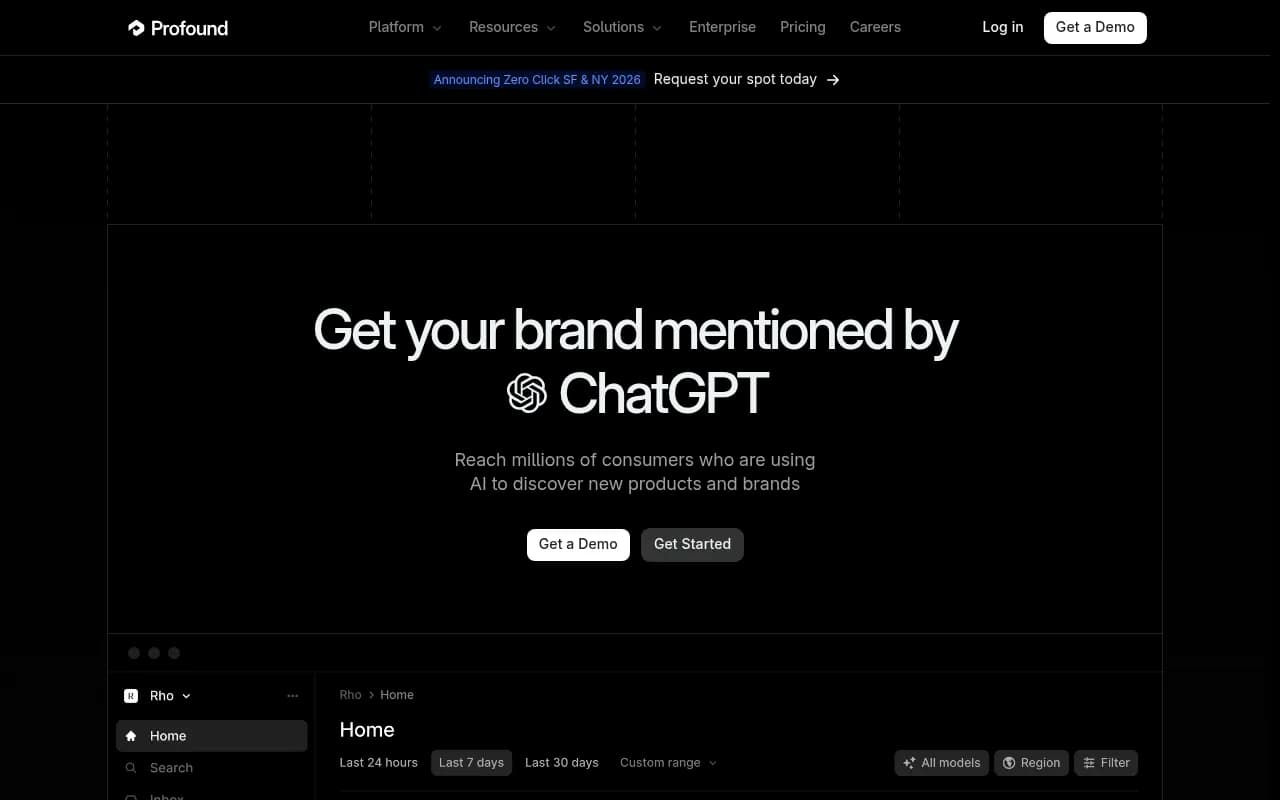
Profound is the other platform consistently mentioned in the same breath as enterprise-grade AI visibility. Its benchmarking features are strong: you can track share of voice across AI models, compare your brand against specific competitors, and see how visibility shifts over time.
Where Profound excels is depth of enterprise integration and the quality of its reporting. For large brands running regular executive reporting on AI visibility, the dashboards are polished and the data is detailed. It covers the major AI models and gives you prompt-level breakdowns.
The limitation is price and scope. Profound is positioned at the enterprise end of the market, which means the cost can be significant for mid-market teams. It also lacks some of the content generation and optimization features that make Promptwatch more of an end-to-end platform -- Profound is primarily a monitoring and intelligence tool, not a content tool.
Evertune
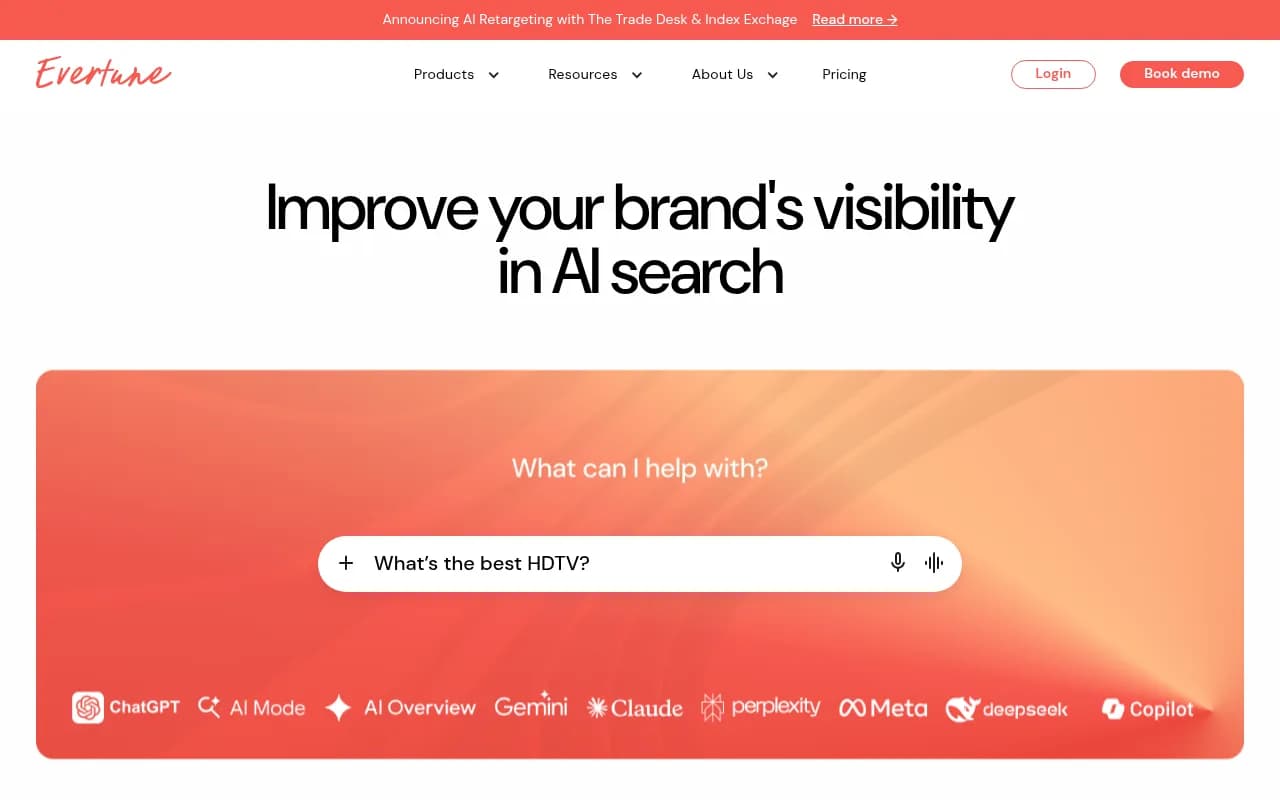
Evertune positions itself as a comprehensive end-to-end platform and has built a strong reputation with Fortune 500 brands. For competitor benchmarking specifically, it offers brand vs. competitor share of voice tracking, sentiment analysis across AI responses, and multi-model coverage.
The platform's strength is breadth of analysis. Evertune goes beyond simple mention counts to analyze how AI models describe your brand relative to competitors -- the language used, the context, the attributes associated with each brand. For companies where brand perception is as important as raw visibility, that's genuinely useful.
The trade-off is accessibility. Evertune is built for enterprise teams with dedicated resources, and the platform reflects that in its complexity and pricing. Smaller teams or agencies managing multiple clients may find it over-engineered for their needs.
Scrunch
Scrunch takes a more focused approach. It's built specifically for AI search monitoring and offers solid competitor benchmarking through its share-of-voice tracking and prompt-level comparison features. You can set up competitor tracking, monitor how your brand and rivals appear in AI responses, and get alerts when visibility shifts.
Scrunch is a reasonable middle-ground option: more capable than basic monitoring tools like Otterly.AI, but less comprehensive than Promptwatch or Profound. It doesn't have content generation built in, so you'll need to act on the benchmarking data yourself. For teams that already have a content workflow and just need better competitive intelligence, that's fine.
Otterly.AI
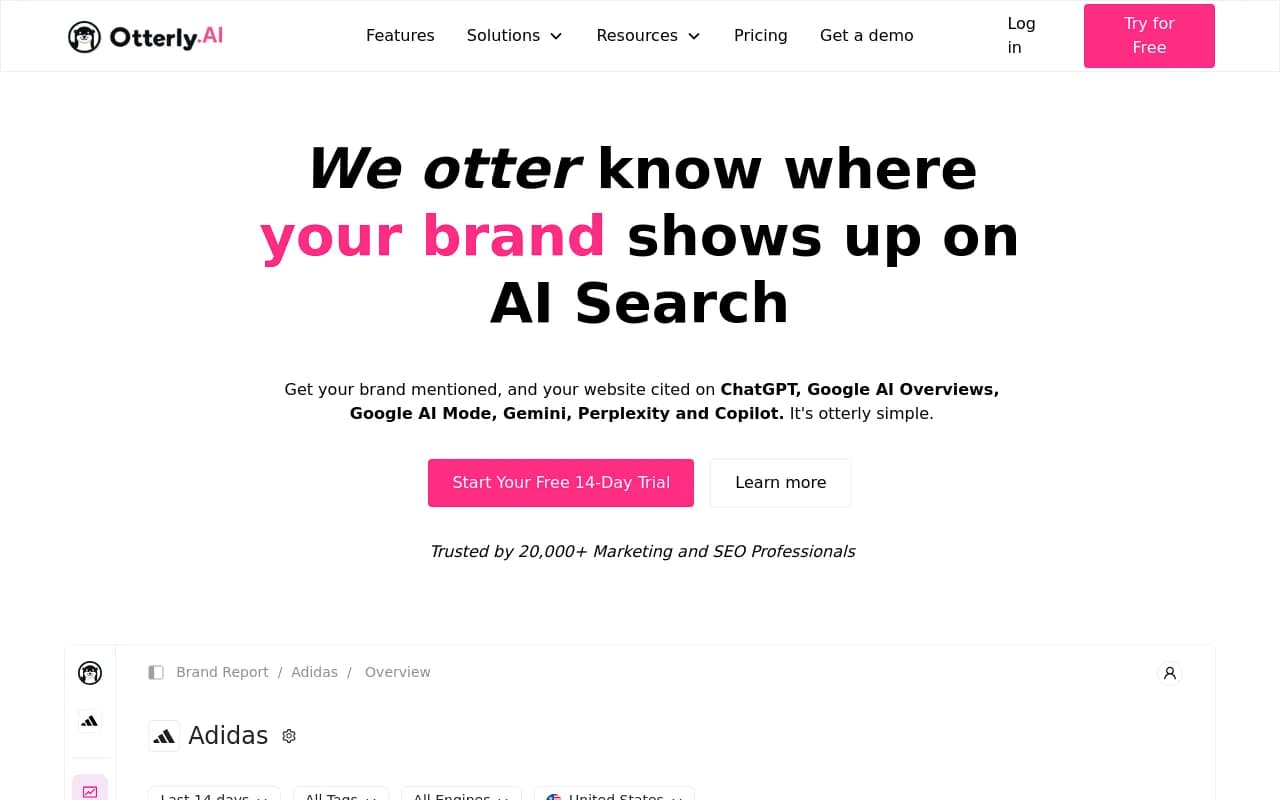
Otterly.AI is one of the more accessible entry points into AI visibility monitoring. It covers the major AI platforms, lets you track competitors, and gives you a basic share-of-voice view. For small teams or those just starting to think about AI visibility, it's a low-friction way to get started.
The honest limitation is that Otterly.AI is primarily a monitoring tool. The competitor benchmarking features are relatively surface-level -- you can see that a competitor is appearing more often than you, but the platform doesn't go deep on why or what to do about it. No crawler logs, no content gap analysis, no content generation. It's a good starting point, not a complete solution.
Peec AI
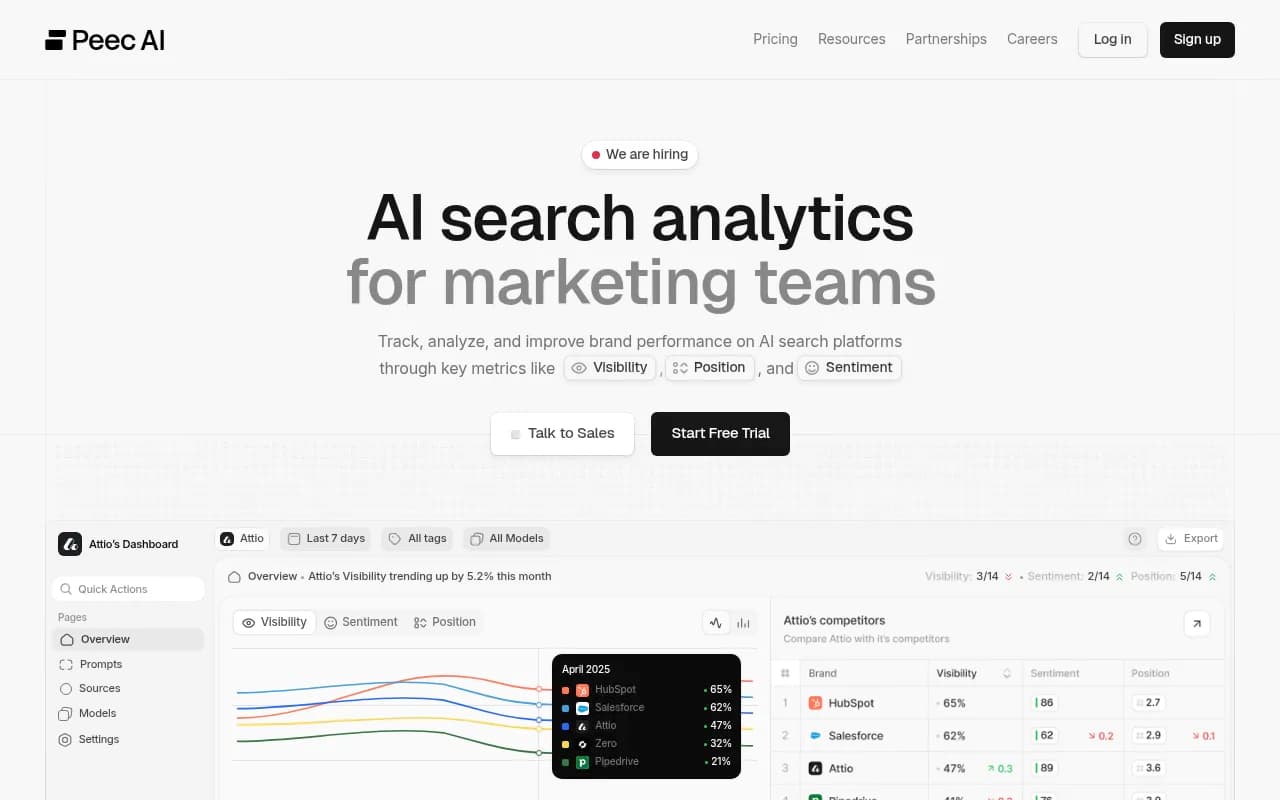
Peec AI is worth mentioning for teams with international scope. Its multi-language support is genuinely strong, and for brands monitoring AI visibility across multiple markets and languages, it covers ground that many competitors don't. Competitor benchmarking is available, though the feature set is more limited than Promptwatch or Profound.
Semrush and Ahrefs Brand Radar
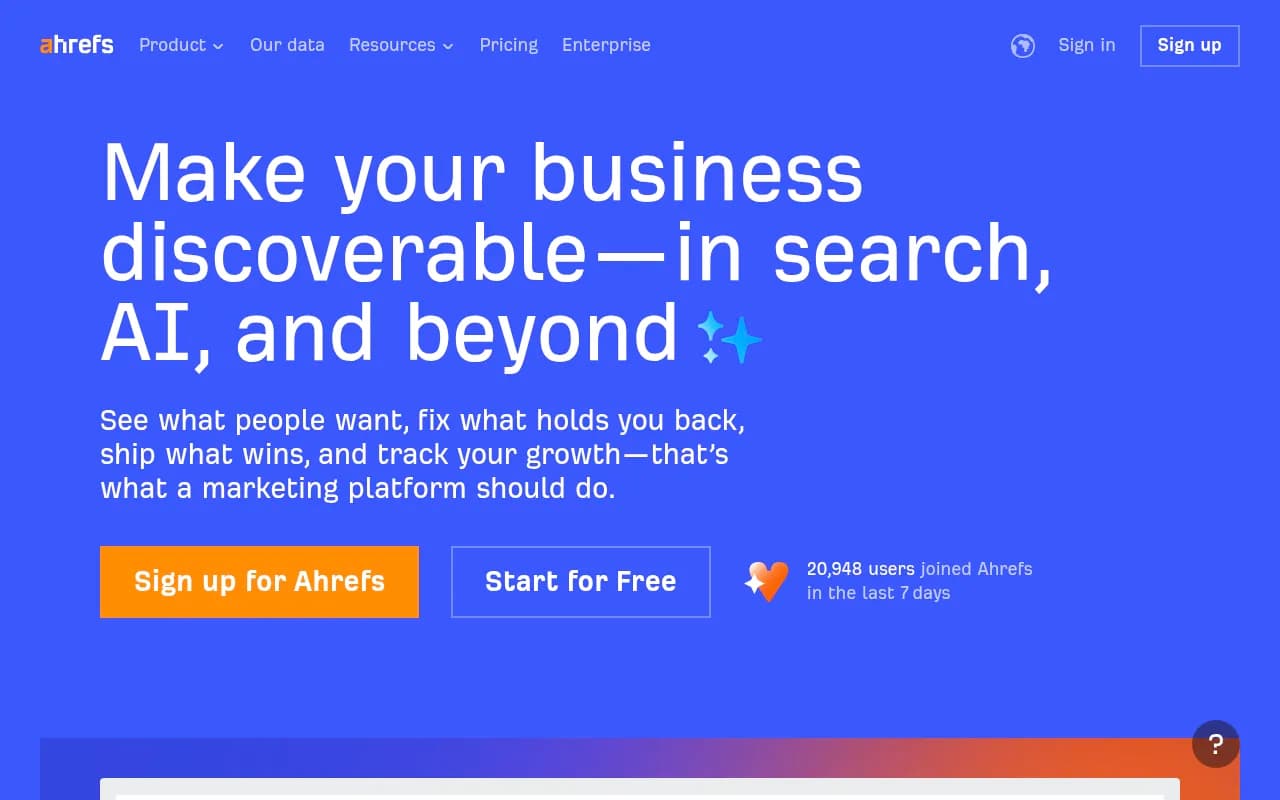
Both Semrush and Ahrefs have added AI visibility features to their existing SEO platforms, which makes them appealing to teams already using those tools. The integration with traditional SEO data is a real advantage -- you can see AI visibility alongside organic rankings in one place.
The limitation for competitor benchmarking specifically is that both platforms use fixed prompt sets. You can't customize the prompts to match your actual competitive landscape, which means you're benchmarking against a generic set of queries rather than the specific questions your customers are asking. Ahrefs Brand Radar also lacks AI traffic attribution, so it's hard to connect visibility data to actual business outcomes.
For teams that want a single platform for both traditional SEO and AI visibility, these are reasonable options. For teams where AI visibility benchmarking is the primary need, they're not the strongest choice.
Feature comparison table
| Platform | Competitor benchmarking | Content gap analysis | Content generation | AI models covered | Crawler logs | Custom prompts | Starting price |
|---|---|---|---|---|---|---|---|
| Promptwatch | Strong (heatmaps, gap analysis) | Yes | Yes (built-in) | 10 | Yes | Yes | $99/mo |
| Profound | Strong (share of voice, trends) | Partial | No | 6+ | No | Yes | Enterprise |
| Evertune | Strong (sentiment + visibility) | Partial | No | Multiple | No | Yes | Enterprise |
| Scrunch | Moderate (share of voice) | No | No | Multiple | No | Yes | Mid-market |
| Otterly.AI | Basic (mention tracking) | No | No | Multiple | No | Limited | ~$49/mo |
| Peec AI | Moderate | No | No | Multiple | No | Yes | Mid-market |
| Semrush | Basic (fixed prompts) | No | No | Limited | No | No | $139/mo+ |
| Ahrefs Brand Radar | Basic (fixed prompts) | No | No | Limited | No | No | $129/mo+ |
How to actually use benchmarking data
Having competitor benchmarking data is only useful if you act on it. Here's a practical workflow:
Step 1: Identify the gaps that matter. Not every prompt where a competitor outranks you is worth pursuing. Filter by prompt volume -- focus on the queries that get asked frequently and where your brand is absent. Tools like Promptwatch give you volume estimates directly; with others, you'll need to make educated guesses.
Step 2: Understand why they're winning. Look at what content is being cited. Is it a specific article, a Reddit thread, a YouTube video? Source analysis tells you where to publish and what format to use. If competitors are getting cited from Reddit discussions, publishing a blog post alone won't close the gap.
Step 3: Create content designed for AI citation. This is where most teams get stuck. Generic SEO content doesn't reliably get cited by AI models. The content needs to directly answer the questions AI models are responding to, in a format that's easy to extract and cite. Platforms with built-in content generation (Promptwatch being the main one) can accelerate this significantly.
Step 4: Track the change. After publishing, monitor whether your visibility improves for the targeted prompts. Page-level tracking shows which specific pages are getting cited and by which models. This closes the loop and tells you what's actually working.
Which platform should you choose?
The honest answer depends on what you need benchmarking to do for you.
If you want to understand the competitive landscape and then fix it -- not just watch it -- Promptwatch is the strongest option. The combination of gap analysis, heatmaps, and built-in content generation means you're not just collecting data, you're acting on it. The $99/mo entry point is also reasonable for what you get.
If you're an enterprise team with dedicated analysts and a separate content workflow, Profound or Evertune may be worth the higher investment for their depth of reporting and integrations.
If you're just starting out and want to understand the basics before committing to a more expensive platform, Otterly.AI is a low-risk starting point -- just know you'll likely outgrow it.
The one thing to avoid is treating competitor benchmarking as a passive activity. The brands winning in AI search right now are the ones using visibility data to drive content decisions, not just to generate reports. The platform you choose should support that loop, not just the monitoring half of it.
A few tools worth exploring alongside your main platform
Depending on your workflow, a few supplementary tools are worth knowing about:
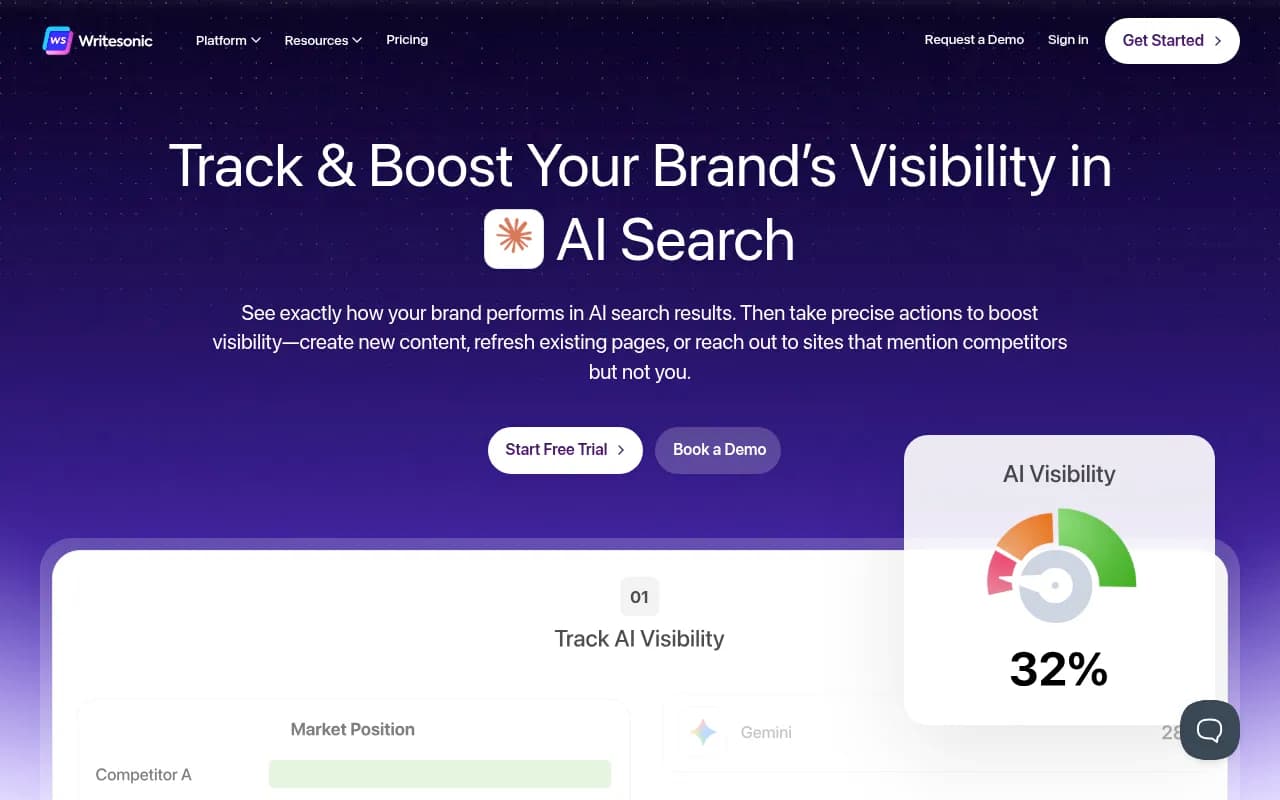
- Writesonic has added AI visibility tracking features that work alongside its content creation capabilities -- useful if you want a lighter-weight option that combines both functions.
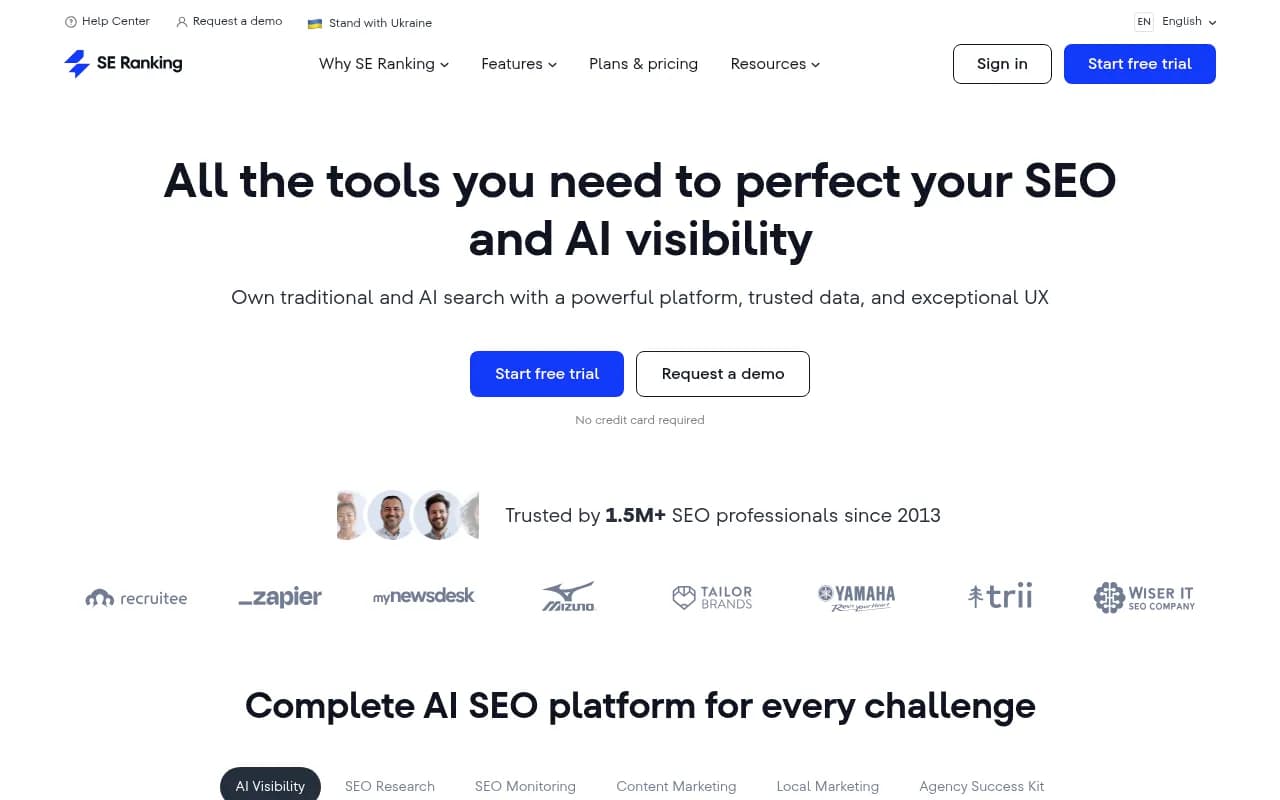
- SE Ranking includes AI visibility monitoring as part of its broader SEO suite, which can be convenient for teams already using it for traditional rank tracking.
- BrightEdge is the enterprise option for teams that need AI visibility integrated with a full content performance platform.
The AI search landscape is moving fast, and the gap between brands that are visible in AI responses and those that aren't is widening. Competitor benchmarking is how you find out where you stand -- and more importantly, where you need to go.