Key takeaways
- AI Overviews now appear on roughly 48% of Google queries, and cited pages change constantly. Authoritas found that about 70% of pages cited in AI Overviews changed over a two-to-three month period, without any corresponding shift in traditional organic rankings. Weekly tracking is the sweet spot between reacting to daily noise and discovering problems a month late.
- Google Search Console now has a native generative AI performance report (launched June 3, 2026), but it only shows impressions. GA4's new AI Assistants channel explicitly excludes AI Overviews and AI Mode traffic, which lands in Organic Search instead. Free sources alone leave real gaps.
- A sustainable weekly routine fits in about an hour if you track the right five metrics: trigger rate, citation rate, citation position, competitor movement, and traffic attribution.
- Watch what AI Overviews cite, not just whether they cite you. In July 2026, product pages overtook listicles as the most-cited content type for the first time, per Promptwatch Data.
- Tools like Promptwatch can automate most of this, including weekly reports and crawler logs that show whether Google's AI systems can even access your pages.
Why weekly is the right cadence
Daily tracking of AI Overviews will make you miserable. The results fluctuate constantly: Ahrefs found AI Overview content changes about 70% of the time between observations, and citations change 46% of the time. Check every day and you'll spend your week chasing ghosts.
Monthly tracking has the opposite problem. Authoritas research found that over two to three months, about 70% of the pages cited in AI Overviews turned over completely, and those changes had no connection to traditional ranking movements. Your rank tracker would show nothing while your AI Overview presence quietly evaporated.
Weekly sits in the middle. Citation patterns are relatively stable week-to-week for established queries, but shift quickly when Google updates its models or new content enters a topic. A weekly check catches the second thing without overreacting to the first.
There's also a business reason to bother at all. Pew Research found users click a traditional result only 8% of the time when an AI Overview appears, versus 15% without one. Ahrefs' December 2025 analysis of 300,000 keywords put the CTR reduction for the top-ranking page at 58%. If an AI Overview suddenly appears on a keyword that drives your revenue, you want to know within days, not at the end of the quarter.
What to actually track
Before the routine, define the metrics. There are five that matter, and a few that don't.
The five metrics worth your Monday morning
- AIO trigger rate. The percentage of your tracked keywords that produce an AI Overview. If this jumps from 40% to 60% in a week, something changed in your niche and you need to look closer.
- Citation rate. Of the keywords that trigger an AI Overview, how many cite your domain. This is the number you're ultimately trying to grow.
- Position within the overview. Being cited first in an AI Overview gets you more attention than being buried in slot eight. Track where you appear, not just whether you appear.
- Competitor movement. Which competitors gained citations you lost, and on which queries. This is your content to-do list.
- Traffic and conversions from AI surfaces. Mentions without traffic are ego; traffic without context is a mystery. GA4 and Search Console fill different halves of this, which brings us to the measurement gap.
Metrics to ignore
Skip "AI position #3" precision claims. AI outputs are personalized and non-deterministic; run the same query twice and the brand order often differs. Treat position as directional, not as a ranking you can report to the decimal. Also ignore single-day drops. A one-day swing in your visibility score is noise, not a trend.
The measurement gap you need to know about
Here's where most tracking setups go wrong, and it's worth five minutes of setup before you build any routine.
Search Console. On June 3, 2026, Google launched dedicated generative AI performance reports in Search Console, showing impressions of your URLs within AI Overviews and AI Mode, broken down by pages, countries, devices, and dates. It was rolling out to a subset of websites first, so check whether your property has it. Two caveats: it reports impressions only, not clicks or CTR for AI features, and it won't tell you anything about your competitors.
GA4. Google added a native "AI Assistants" channel on May 13, 2026, but Google's own documentation confirms that clicks from AI Overviews and AI Mode are counted as Organic Search, not AI Assistants. So GA4's AI channel will show you ChatGPT and Perplexity traffic while hiding the exact traffic this guide is about. You need Search Console for the Google AI piece. For the rest, build a custom channel group (Admin, Data display, Channel groups) and position the AI rule above Referral so Perplexity doesn't get swallowed there. Even then, an estimated 60-70% of AI-referred sessions arrive with no referrer and land in Direct, so treat GA4 as a floor, not a ceiling.
The practical takeaway: free tools cover your own impressions and rough traffic. They don't cover trigger rates on keywords you don't rank for, competitor citations, or what the AI Overview actually says. That's the gap a dedicated tool fills, and we'll get to tool selection later.
The Monday routine: 60 minutes, five steps
This is the part that keeps you sane. Timebox it. Same slot every week, same order, same template. If it takes more than an hour, you're doing analysis instead of tracking, and analysis belongs in a separate, occasional session.
Step 1: Check the macro environment first (10 minutes)
Before looking at your own data, check whether Google itself changed something. This single habit prevents most false alarms. Two useful signals:
- Sources per response. Google AI Overviews cite roughly 10 sources per answer on average, and per Promptwatch's data this figure is notably steady over time. If your tracked queries suddenly show three citations instead of ten, that's a Google-side change, not a you-side problem.
- Citation type shifts. Per Promptwatch Data, product pages overtook listicles as AI Overviews' most-cited content type starting July 28, 2026, ending the month at 17.9% of citations versus 16.2% for listicles. Listicles averaged around 26% in Q1 2026 and have been declining since. If your visibility dropped in the same window and your content is listicle-heavy, the cause might be format, not quality.
One warning from the same research: month-to-date snapshots can overstate momentum for fast-rising domains. Promptwatch's June 2026 AI Overview citation share report found google.com's share doubled from May to June (1.15% to 2.30%), but part of that trajectory looked steeper mid-month than it finished. Cross-check partial-month numbers before acting on them.
Step 2: Pull your core numbers (15 minutes)
Export or screenshot your five metrics into the same spreadsheet or dashboard, week after week, in the same columns. Consistency in how you record matters more than sophistication in what you record. A simple sheet with one row per week and columns for trigger rate, citation rate, new citations, lost citations, and notable competitor gains will beat a fancy dashboard you rebuild every month.
If you use a dedicated platform, this step is a report download. Promptwatch, for instance, lets you schedule weekly PDF reports and pushes a weekly action digest, which turns this whole step into opening an email.

Step 3: Investigate anomalies, nothing else (20 minutes)
Only dig into things that changed meaningfully. "Meaningfully" needs a threshold: I'd suggest a 20%+ change in citation rate week-over-week, any high-value keyword that gained or lost an AI Overview trigger, or a competitor that appeared on three or more of your priority queries where they weren't last week.
For each anomaly, ask one question: did my site change, or did the answer change? Check whether Google updated the AI Overview's sources (a competitor published something better), whether your page changed (did someone push a redesign last Tuesday?), or whether the overview itself got longer or shorter. Cross-reference any sudden organic ranking improvement with your AI Overview trigger data too. Sometimes you rank #1 and the AI Overview still doesn't cite you.
Step 4: Check who's capturing citations you lost (10 minutes)
Look at the specific queries where you dropped out and see who replaced you. Domain-level context helps here. Per Promptwatch's June 2026 data, YouTube (4.16%), Reddit (2.72%), and google.com (2.30%) were the top three cited domains that month, together holding over 9% of all AI Overview citations, roughly double their January share. If a Reddit thread or YouTube video is taking your citation slot, no amount of on-page SEO fixes that directly. You need presence on that platform, or content good enough to be cited alongside it.
Step 5: Write three action items and stop (5 minutes)
End every session by writing down, at most, three things to do before next Monday: a page to update, a gap to flag for content, a technical issue to check. Three. Not ten. The routine's value compounds only if it stays sustainable, and a 30-item backlog is how people quit by week six.
Here's what a full week-to-week rhythm looks like:
| Cadence | What you do | Time |
|---|---|---|
| Weekly | Run the five-step routine above, log metrics, pick three actions | ~60 min |
| Weekly, automated | Scheduled report arrives; you review exceptions only | ~15 min |
| Monthly | Competitor benchmark, topic-level gap analysis, format trends | ~2 hrs |
| After big content pushes | Check the affected queries specifically, 3-7 days post-publish | ~20 min |
Tool selection: when free stops being enough
Manual tracking works for a first baseline. Block off two hours, run your priority queries yourself, and write down who appears and whether the information is accurate. But manual checks have a ceiling: you can't watch a keyword set of any real size weekly, you can't see the UI-level results across locations, and you'll burn out.
A few tools worth knowing, at different budgets:
| Tool | AI Overview coverage | Pricing (2026) | Best for |
|---|---|---|---|
| Promptwatch | AI Overviews, AI Mode, plus ChatGPT, Claude, Gemini, Perplexity and others | From $95/mo (Essential, 7-day trial); free Explore tier | Teams that want tracking plus automated fixes and weekly reports |
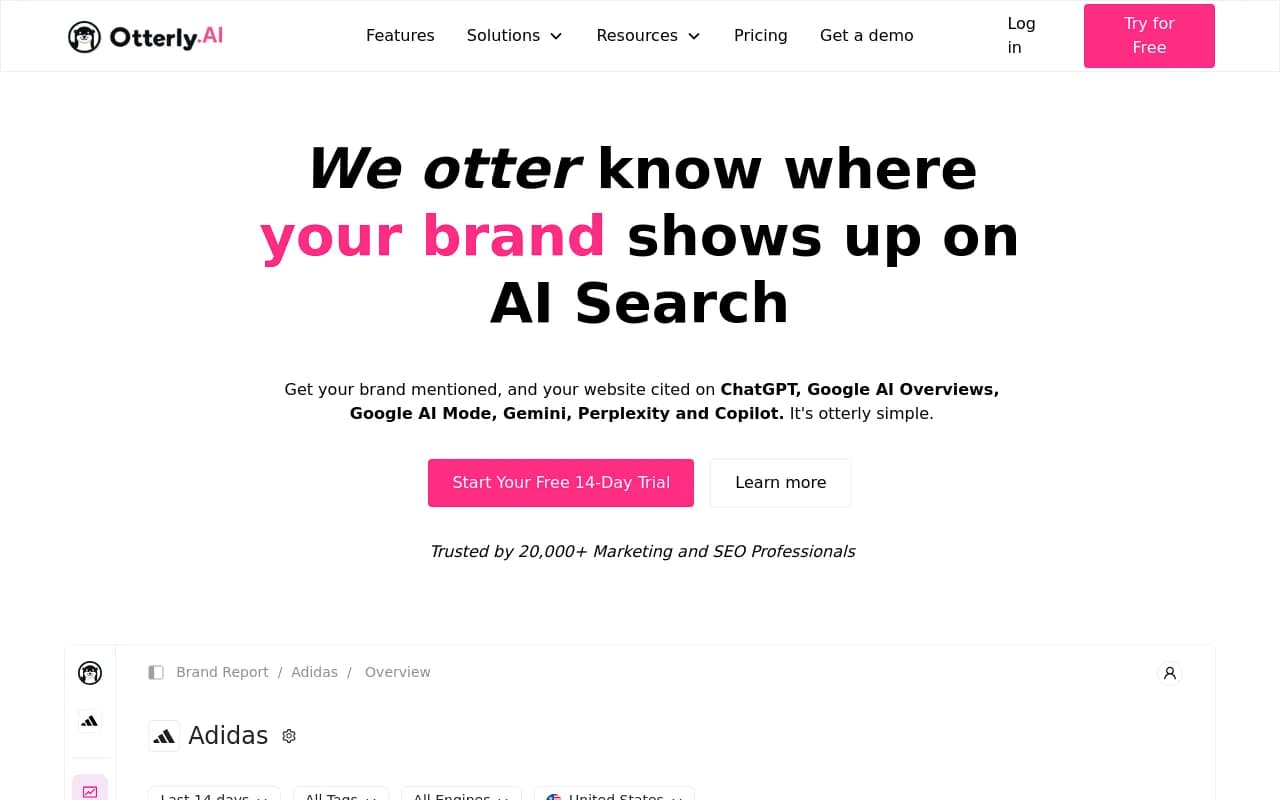
| Otterly.AI | AI Overviews in base plans; AI Mode, Gemini, Claude are paid add-ons | $29-$489/mo; a Standard plan with Claude and Gemini added runs ~$357/mo | Budget-conscious prompt tracking |
| ZipTie | AI Overviews in trial and paid plans; AI Mode on paid only | Configurator pricing; prompt slots billed by cadence pool | Teams that want to control exactly what they pay for |
| Semrush | AI Overview tracking in Position Tracking, daily updates | Semrush subscription, from ~$140/mo | Teams already paying for Semrush |
| Ahrefs Brand Radar | AI Overview citations alongside broader brand mentions | Ahrefs subscription | Ahrefs shops tracking citations at scale |
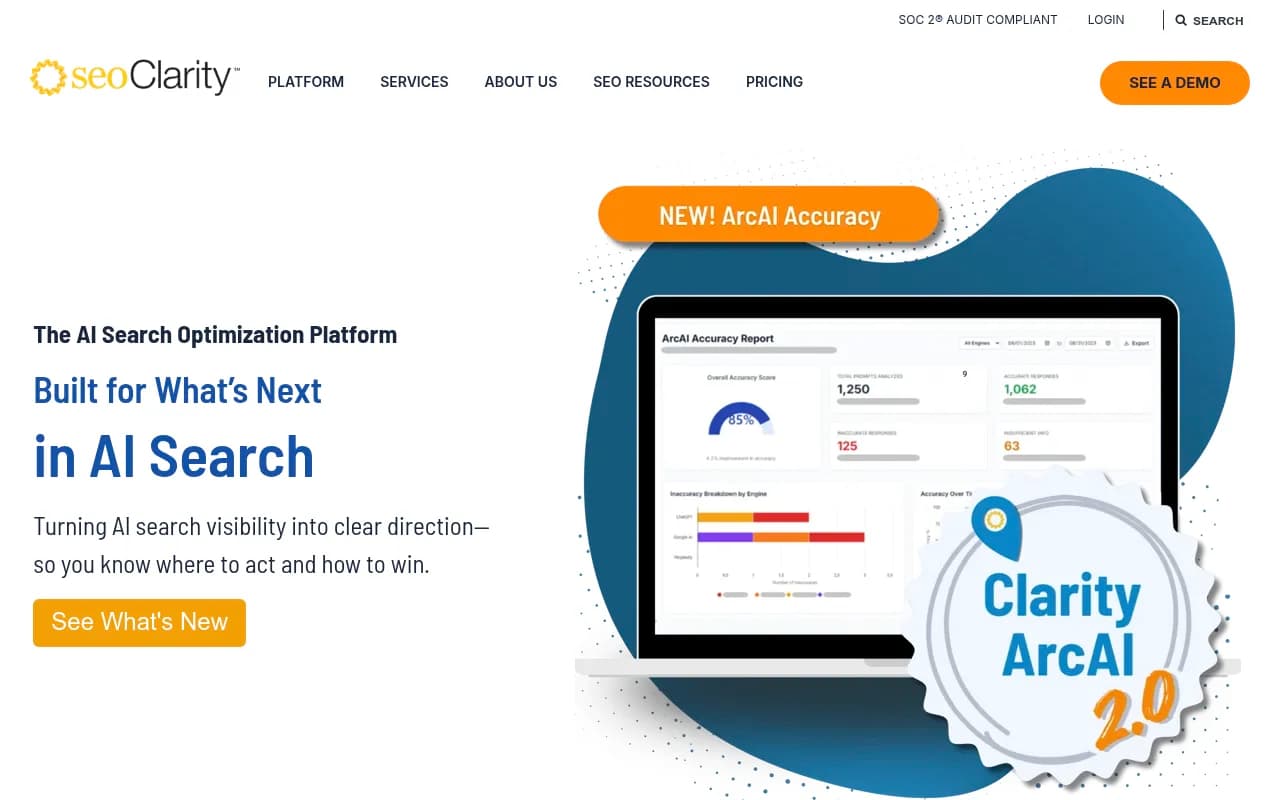
| seoClarity | Full AI Overviews module on enterprise platform | Custom quotes, roughly $2,500-$4,500/mo platform | Enterprise keyword portfolios |
A note on choosing: don't pay for daily refresh cycles if you're only going to review weekly. Some tools, like ZipTie, bill prompt slots by cadence pool, so a weekly-refresh prompt costs differently than a daily one. Match the tool's data cadence to your actual review cadence. And when comparing candidates, the directories at ai-rank-tools.com and bestgeosoftware.com cover the current field more completely than any single roundup.
One differentiator worth weighing: most trackers stop at "was my brand mentioned." The more useful ones show why. Promptwatch, for example, includes crawler logs that show when Google's AI systems actually visit your pages and whether they hit errors, which is often the real explanation behind a visibility dip that looks mysterious in the tracking data. If your AI Overview presence dropped and you can't figure out why from citations alone, crawl access is the first thing to rule out.
Sanity checks: how to not lose your mind
The routine only works if you protect yourself from false signals. Four habits do most of the work:
Fix your sampling conditions. AI Overviews are personalized. Track from the same location, device, and browser profile every week (or better, let a tool do it from fixed infrastructure). Mixing samples is the fastest way to see "changes" that aren't real.
Don't react to single-run results. Ahrefs found the underlying meaning of AI Overviews is highly stable even when wording changes. If the answer's substance is the same and only the phrasing moved, that's not a change worth logging. Compare meaning, not sentences.
Expect format experiments. Google A/B tests AI Overview formats, lengths, and source selections regularly. If your metrics dip for one week across all queries simultaneously and recover the next, you probably caught a test. Log it and move on. One exception: if citation counts per response collapse far below the usual ~10-source baseline across many queries, that's a behavior change worth flagging.
Separate tracking from analysis. The Monday hour is for logging and anomaly-spotting. Deep dives, competitor content audits, and strategy changes happen on their own schedule, when the data warrants it. If you let analysis bleed into every weekly session, the session grows until you dread it, and then you stop doing it. That's the actual failure mode of most tracking efforts.
A starter checklist for this week
Day one:
- Check whether your Search Console property has the generative AI performance report; if yes, bookmark it and note your baseline impressions
- Set up a GA4 custom channel group for AI sources, positioned above Referral
- Pick your top 20-30 keywords and run a manual baseline: which trigger AI Overviews, which cite you, which cite competitors
This month:
- Pick and trial one dedicated tracking tool against your manual baseline
- Build the weekly spreadsheet and calendar block; run the routine four times before judging it
- Add one platform play if the citation data points there. Reddit and YouTube are the two most-cited non-Google domains in AI Overviews per Promptwatch's June 2026 data, and most brands aren't competing on either
Ongoing:
- Keep the Monday hour sacred, cap your action list at three, and re-baseline your keyword set quarterly as your topic coverage grows
The whole point of a routine is that it survives contact with your actual workload. Sixty minutes, five metrics, three actions, one consistent setup. Do that every week and AI Overviews stop being a source of anxiety and start being what they should have been all along: a measurable channel with a to-do list attached.