Key takeaways
- AI Mode uses query fan-out: one question becomes multiple parallel searches across the web, the Knowledge Graph, and Google's own data sources. Your page can get pulled into a sub-query you never targeted.
- AI Mode citations barely overlap with classic rankings. Moz found only 12% overlap between AI Mode's cited URLs and the organic top 10 — while AI Overviews showed 88% overlap. Ranking #1 no longer guarantees being cited.
- Google cites itself heavily in AI Mode. In June 2026, google.com alone took 7.31% of AI Mode citations — more than YouTube and Reddit combined — and Google-owned properties took over 10% of the mix.
- Clicks behave differently. Informational queries see near-zero clicks, but transactional research in AI Mode tells another story: 69% of users visited a website, and 89% clicked more than one business.
- The optimization playbook shifts from "rank #1 for a head term" to "be retrievable across many sub-questions, with fresh, structured, entity-rich content."
If you've been doing SEO for a while, you've probably built your whole mental model around one mechanic: a user types a query, Google ranks pages, the best page wins the click. AI Mode breaks that model in a few specific, measurable ways. Not in vague "AI is changing everything" ways — in ways you can see in crawl logs, citation data, and click studies.
Let's get specific.
How AI Mode retrieves your content: query fan-out
In classic Search, one query produces one ranked list. Your page competes for a position on that list. Simple, brutal, familiar.
AI Mode works differently. Google's own documentation describes a query fan-out technique: the system takes a user's question and issues multiple related searches across subtopics and data sources, then synthesizes the results into a single response. Instead of one retrieval event, your page might be pulled into three, five, or eight separate sub-queries — any of which could surface your content.
This changes what "being visible" means:
- In classic Search, you win by ranking for the head term.
- In AI Mode, you win by being retrievable across the fan-out — the comparisons, the pricing questions, the "is X legit" sub-queries, the how-to variants.
Promptwatch's data on query fan-outs shows how this plays out in practice: fan-out queries tend to be short, keyword-style searches rather than full conversational questions, and each one is a separate retrieval opportunity. If your site covers a topic in one broad mega-page, you're competing once. If you cover the sub-questions as separate, tightly-focused pages, you're competing many times.
There's a second implication that's easy to miss: because AI Mode synthesizes across multiple searches, the pages it cites don't have to be the same pages that rank. And mostly, they aren't.
The overlap problem: AI Mode citations ≠ organic rankings
This is the finding that should reframe how you think about AI Mode.
Moz analyzed nearly 40,000 queries across the US and UK and found that only 12% of the top-10 URLs in AI Mode citations matched the top-10 organic results for the same query. 88% of AI Mode citations came from outside the classic top 10.
Compare that to AI Overviews: Moz found 88% overlap between AI Overview citations and the organic results sitting directly beneath them. AI Overviews are largely "retrieve-then-generate" — they summarize pages Google's ranking systems already surfaced. AI Mode runs parallel sub-queries across the index, the Knowledge Graph, and real-time data, which pulls in a much wider, less rank-correlated set of sources.
seoClarity's research points the same direction: across 1,000 queries and 12,011 AI Mode citations, only 19% of citations came from the top-20 organic results, even though 81% of queries had at least one citation from the top 20.
| Surface | Overlap with organic top 10 | Retrieval model | What it means for you |
|---|---|---|---|
| Classic Search | 100% (it is the ranking) | Single ranked list | Rank well or be invisible |
| AI Overviews | ~88% overlap (Moz) | Retrieve-then-generate, grounded in existing results | Classic rankings still matter a lot |
| AI Mode | ~12% overlap (Moz) | Fan-out across index, Knowledge Graph, real-time data | Rankings alone won't get you cited |
One more wrinkle from Ahrefs' data: pages that rank across multiple parallel fan-out sub-queries are about 161% more likely to be cited in AI Mode. And AI-cited URLs skew roughly 26% fresher than organic results. Freshness and breadth of coverage are doing real work here.
So if you've been ranking #1 for your head term and assuming AI Mode will cite you — check. It might not.
Google cites itself first
Here's something unique to AI Mode among answer engines: Google heavily cites its own properties.
According to Promptwatch's June 2026 data on AI Mode citation share, google.com alone captured 7.31% of all AI Mode citations — more than YouTube (2.88%) and Reddit (2.52%) combined. Counting YouTube, Google-owned properties took over 10% of the citation mix. AI Mode routinely resolves queries through Google's own Maps listings, Business Profiles, and support content before reaching the open web.
This is accelerating, too: google.com's share climbed from 4.24% in May 2026 to 7.31% in June — a 72% jump on top of a sixfold increase the month before.
For comparison, in ChatGPT's June 2026 citation data, Reddit leads and google.com doesn't even rank near the top. Google's self-preference is an AI Mode-specific problem, and it means:
- Your Google Business Profile, Maps presence, and Google-hosted support content are now part of your AI Mode visibility strategy, not side projects.
- Below the top three domains (google.com, YouTube, Reddit), every other domain's citation share drops under 1%. Independent-site opportunity lives in the long tail — you're not trying to win one big citation slot, you're trying to be cited across many small ones.
What content AI Mode actually cites
The type of content Google's AI features pull into answers has shifted noticeably through 2026, and the direction matters for your content strategy.
Promptwatch's July 2026 data on AI Overviews citation types shows the trend clearly: listicles, which led for most of the year at around 26% of citations in Q1, fell to about 18% by July. Product pages nearly doubled from roughly 9% in January to 16–18%, and from July 28 onward, product pages overtook listicles as the single most-cited format — the first time listicles lost the top spot. Video climbed from about 2.7% to over 6%.
The read: AI search is shifting toward brand-owned commercial pages over generic list content. That "10 best X" listicle you published in 2023? It's losing citation share to the actual product pages it used to outrank.
This has a practical consequence. If your strategy is "publish listicles to rank for commercial terms," you're optimizing for a citation mix that's shrinking. If your strategy is "make our product pages genuinely informative — pricing, specs, comparisons, use cases," you're optimizing for a mix that's growing.
How clicks differ: it depends on the query
The traffic story is more nuanced than "AI kills clicks."
For informational queries, the numbers are grim. AI Overviews have a widely reported 93% zero-click rate. A separate user study of AI Mode found nearly 80% of sessions resulted in zero external visits. If your business runs on how-to content and ad impressions, this hurts.
But a UX study focused specifically on transactional intent (52 participants, published on Search Engine Land) tells a different story:
- 69% of AI Mode users visited a website when researching high-involvement services like choosing a dentist.
- Only 27% felt ready to decide from the AI summary alone.
- 89% clicked more than one business — AI Mode breaks the "rank #1 = winner-takes-all" dynamic. Users build a consideration set and compare.
- Only 16% relied solely on above-the-fold content.
| Query type | Click behavior | What it means |
|---|---|---|
| Informational (how-to, definitions) | Near-zero clicks; ~80% zero-visit sessions | Being cited matters more than being clicked |
| Transactional / high-involvement | 69% visit a site; 89% compare multiple businesses | Get into the consideration set; win with social proof |
The strategic takeaway: for informational queries, your goal is to be cited and remembered, because the citation is the impression. For transactional queries, your goal is to be in the consideration set — which means reviews, structured data, and a page that answers comparison questions directly.
What AI Mode wants from your pages
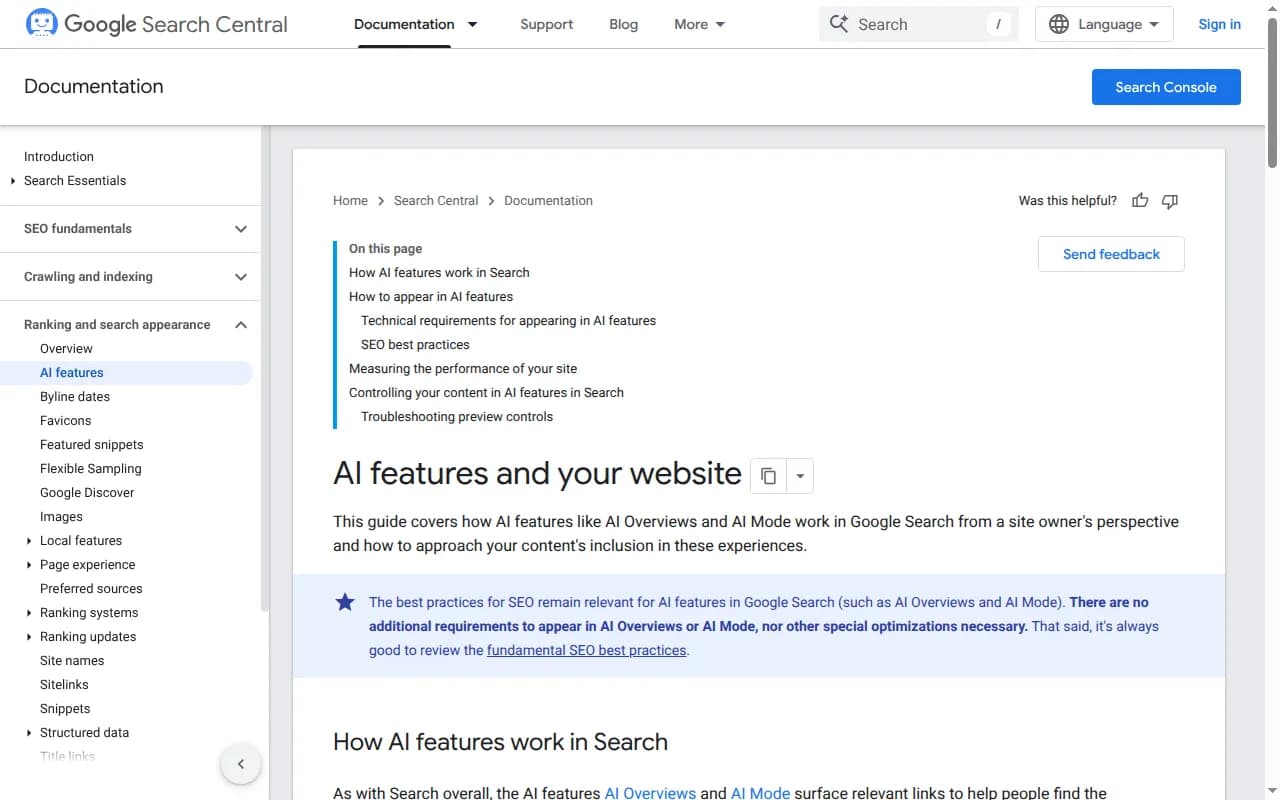
Google's own guidance is refreshingly blunt: there are no additional technical requirements to appear in AI features. If your page is indexed and eligible to show with a snippet in classic Search, it's eligible for AI Mode. Google has also explicitly pushed back on GEO/AEO "hacks" like content chunking, unnecessary llms.txt files, and chasing inauthentic mentions — the fundamentals still carry the weight.
That said, the fundamentals play out differently under fan-out retrieval. Here's what matters most:
Cover the fan-out, not just the head term
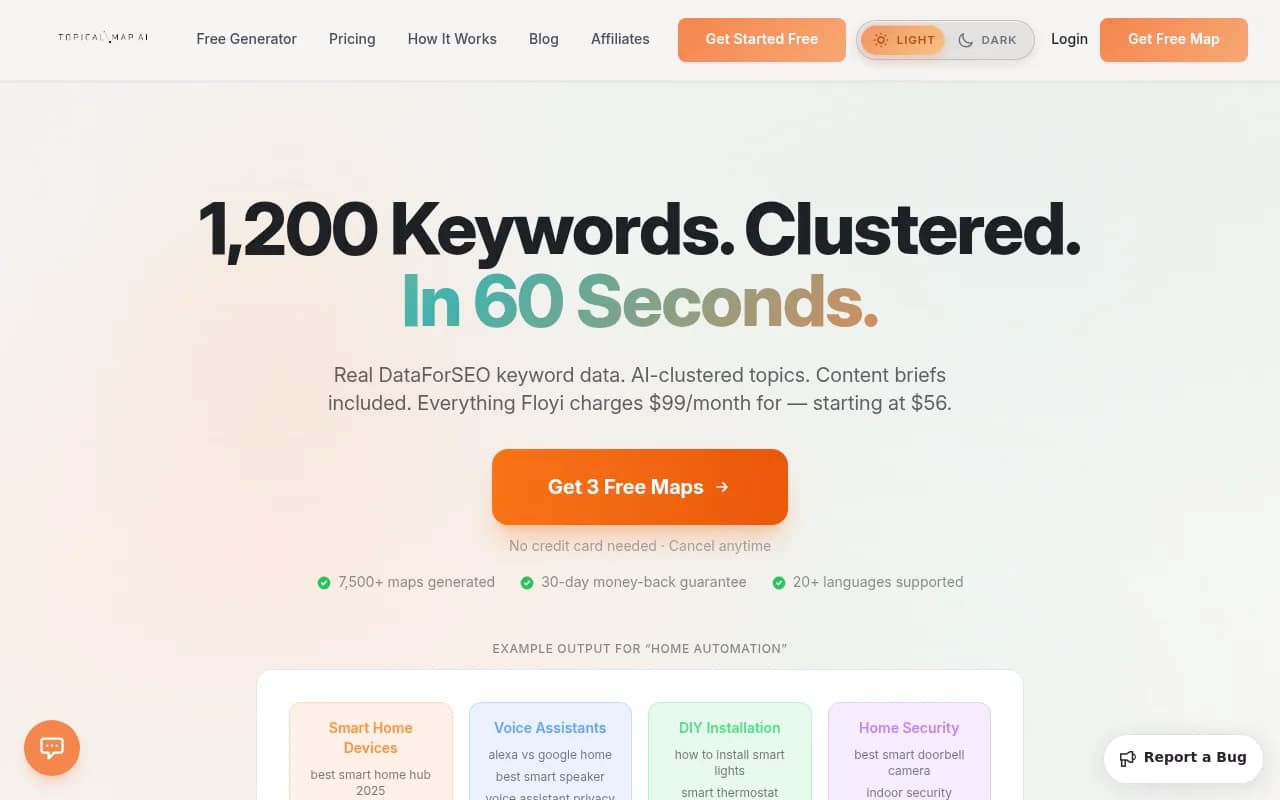
Map the sub-questions a complex query breaks into — comparisons, pricing, alternatives, how-tos, "is X worth it" — and cover them as focused pages or well-structured sections. Each sub-query is a separate retrieval opportunity. Tools like Topical Map AI can help you build out the topic coverage that fan-out retrieval rewards.
Keep content fresh
AI-cited URLs skew about 26% fresher than organic results. A stale 2022 post rarely surfaces in 2026 AI answers. Set a refresh schedule for your money pages, and update dates, data, and examples — not just the year in the title.
Use structured data so AI doesn't have to guess
Without schema markup, AI systems must infer what your page is about. Product, FAQ, HowTo, and Organization schema give the model clean, unambiguous signals about what you offer and how you compare.
Make your product pages do the work
Given the citation shift toward product pages, invest in making them genuinely informative: pricing transparency, comparison tables, use cases, specs. The generic listicle is losing ground.
Don't neglect the base layer
Core Web Vitals, crawlability, internal linking, and backlinks still matter — Google's AI features still lean on its existing ranking and safety systems. AI Mode optimization is an evolution of SEO, not a replacement for it.
How to measure whether AI Mode is using your site
This is the part most teams are behind on. You can't manage what you don't measure, and AI visibility requires different measurement than rank tracking.
A few things worth tracking:
- Which of your pages get cited in AI Mode, for which prompts, and how that changes over time.
- AI crawler activity on your site — which pages Google's AI crawlers read, and whether they hit errors.
- Actual traffic and conversions from AI Mode — not just mentions, but visits.
- Competitor citation share — who's getting cited in your place.
Tools like Promptwatch can help you track all of this — citation analytics, AI crawler logs, and AI-driven traffic attribution — so you can see not just whether you're visible in AI Mode, but why, and what to fix.

For a broader look at what's available, the GEO software directory at bestgeosoftware.com covers the full category.
The bottom line
AI Mode doesn't reward the same things classic Search rewards, at the same strength, in the same order. Fan-out retrieval means breadth of coverage beats single-keyword dominance. Citation data shows rankings and citations are decoupling. Google's self-citation means your Business Profile is now an SEO asset. And click behavior splits by intent: informational queries are near-clickless, while transactional research still sends real traffic to sites that make it into the consideration set.
If you take one thing from this: stop optimizing for one query and start optimizing for the dozen sub-questions it explodes into. That's where AI Mode decides whether to use your site.