Key takeaways
- Reddit's share of ChatGPT Search citations fell from roughly 3.8% to 0.5% in a matter of days in August 2026, with no announcement from OpenAI. Google's AI Overviews and AI Mode declined far more gradually over the same window.
- The drop correlates with a retrieval-layer change: on August 8, 2026, ChatGPT Search started using the
site:operator at scale in its background queries, jumping from ~0.4% to ~17% of fan-out queries overnight. - This is a pattern, not a one-off. GPT-5.3 (March 2026) cut citations per response by ~27% across all models, and Sistrix documented a 47% shift in domain citation distribution within 48 hours of the GPT-5.5 switch in May 2026.
- A domain can lose AI citation share without losing rankings, backlinks, or content quality. That failure mode has no real equivalent in classic SEO.
- The teams that survive these shifts track citations-per-response and platform-level baselines, diversify across sources, and optimize for domain-level presence rather than single URLs.
What happened in August 2026
If you run GEO for a brand and you woke up in mid-August 2026 to a dashboard full of red, you were not alone.
Reddit had held a steady average of about 3.83% of ChatGPT Search citations from July 18 through August 7, 2026. Then the floor gave way. By August 14, reddit.com's share of ChatGPT citations was under 1%, and the August 14–17 average landed at 0.52%. That is an 86.4% relative drop in days, according to Promptwatch's daily tracking of the Reddit citation collapse — and the slide kept going, with the trailing 7-day average down another 54% by the report date.

The first thing worth saying: OpenAI never announced anything. No blog post, no changelog entry, no tweet. The change simply showed up in the data, which is exactly why it rattled people. Reddit's stock dropped roughly 10% in a single session the same week the citation charts circulated, the same week the company joined the S&P 500. Whether that reaction was proportionate is debatable. That it happened at all tells you how much the market now reads AI citation share as a proxy for platform relevance.
The second thing worth saying: Google's surfaces barely flinched. Reddit's share in Google AI Overviews fell from about 2.5% in early July to about 2.1% in August, an 11.3% relative decline spread over weeks. AI Mode fell about 30%, with the clearest step happening in late July. No cliff. This matters because it tells you the August event was a ChatGPT-specific retrieval decision, not something that happened to Reddit or to Reddit content generally.
Promptwatch itself flags the causation question honestly: a shift in ChatGPT's source selection is the obvious candidate, but a data-collection issue can't be fully ruled out, so treat the exact size of the drop as provisional. That kind of caveat is rare in this industry, and it's the right instinct.
The mechanism: retrieval changes, not content changes
Here's where it gets interesting for anyone who wants to understand how AI answers actually get built.
Six days before the cliff, on August 8, 2026, ChatGPT Search quietly changed how it searches. The share of background fan-out queries containing the site: operator jumped from roughly 0.37% to 16.8% overnight — a ~46x increase in a single day — and average fan-out queries per response nearly doubled, from ~1.08 to ~1.83. You can see the full timeline in Promptwatch's data on ChatGPT's site: operator fan-outs.
What does that mean in plain terms? ChatGPT started running a large share of its background searches scoped to specific domains rather than the open web. And because total queries per response went up in lockstep, this looks like an additive retrieval path, not a replacement. Your generic-web visibility chances survived; a new domain-scoped channel opened on top.
Reddit's share first slipped from the high-3s to the mid-2s on August 8, the same day. Then came the bigger break on the 14th. Two retrieval-layer changes, two steps down. I won't claim that's proof of causation, but the timing is hard to ignore, and it fits a structural reality: citations in AI search are determined by the interplay between a retrieval backend (which sources get fetched) and the model (what it judges worth citing). OpenAI can reweight either layer at any time, without notice, and the effect shows up in your metrics as if your content suddenly got worse. It didn't.
This is a pattern, not a one-off
The August event feels dramatic, but if you've been watching this space it's the third or fourth time something like it has happened. A quick history:
| Event | Date | What changed | Measured impact |
|---|---|---|---|
| ChatGPT's September disruption | Sept 2025 | Reddit citations on ChatGPT collapsed from ~60% of responses to under 10% | Reddit stayed a top-cited domain across other platforms anyway |
| GPT-5.3 rollout | March 4, 2026 | New model across ChatGPT | Citations per response fell ~27% (from ~6.4 to 4.7–4.9) across all models, no recovery a month later |
| GPT-5.5 switch | May 23, 2026 | Model swap in ChatGPT | Domain citation distribution shifted 47% within 48 hours in Sistrix's German-language dataset, vs. 1–2% normal daily drift |
| site: operator rollout | August 8, 2026 | New domain-scoped retrieval path | Fan-out queries with site: up ~46x; queries per response nearly doubled |
| Reddit citation drop | August 14, 2026 | Source selection shift (unconfirmed) | Reddit's ChatGPT citation share down 86.4% in days; Google surfaces down 11–31% gradually |
The GPT-5.3 case is worth dwelling on because of what it teaches about attribution. Around the March 4, 2026 rollout, average citations per ChatGPT response dropped across every model, including GPT-5.4 and GPT-5-Mini, and never recovered. Promptwatch's data on the post-GPT-5.3 citation drop shows the shift happened within a day of the rollout. Teams that saw their AI traffic dip that week and assumed their content had a problem spent weeks chasing a ghost. The whole platform was citing less. Everyone's slice of a smaller pie.
The GPT-5.5 case, documented by Sistrix across 3.8 million German-language responses, adds a wrinkle: reddit.com was the single biggest winner of that update, rising 59% in citations per 10k responses. The same domain that got crushed in August was the top gainer in May. If your Reddit strategy was built in June 2026, you had a great two months. If it was your entire strategy, August wiped you out.
Sistrix's framing is the best I've seen: a model version jump is less like a reweighting and more like a new ranking core, because it completely replaces the component that decides what's relevant. And their control case is instructive too — a separate May 2026 change (inline embedded images) moved citations not at all. Not every product change is a citation event. You need daily data to tell the difference.
The deeper problem: citation sources are structurally unstable
Beyond the headline events, there's a quieter problem that every GEO team should internalize. Sistrix's citation drift study — 82,619 prompts, 1.5 million snapshots, 17 weeks, six countries — found that the non-core portion of AI Mode citation sets rotates at 89% per week. About 86% of prompts have a small "fixed core" of stable domains, and everything else churns constantly. Drift rates held steady at 54–59% across all six countries for the entire 17 weeks, with no sign of leveling off. This is a structural feature of the platforms, not a temporary onboarding effect.
A few findings from that study that changed how I think about GEO:
- The question isn't "am I cited?" but "am I in the core or the carousel?" Core membership is durable; carousel membership is a coin flip that refreshes weekly.
- For 43% of brand-name queries, the brand's own domain appears in every single week studied — but the 12–15 domains cited alongside it rotate at 70% per week. Your position is anchored; your neighborhood is not.
- News articles are the least durable citation type: only 1.4% of news citations persist in the citation set. If your citation strategy leans on editorial coverage, you're renting, not owning. Evergreen content survives systematically better.
- URL-level drift runs about 15% higher than domain-level drift. Chasing single-URL "rankings" in AI answers is optimizing a metric that mostly measures noise.
Month-over-month reshuffling is the norm even without a shock event. In Promptwatch's May vs June 2026 ChatGPT citation share comparison, Reddit fell from 6.11% to 3.71% of citations in a single month — a ~40% decline months before the August collapse. Meanwhile GitHub and Trustpilot gained share. The pie redistributes constantly.
One more piece of context that makes ChatGPT drops hit harder there than elsewhere: ChatGPT cites roughly 5 sources per web-search-enabled answer, versus about 10 for Google AI Overviews and Perplexity, per Promptwatch's sources-per-response data. Half the slots means each slot is twice as contested. When a platform decides your category of source is out, you feel it.
Why Reddit got cited so much in the first place
To understand why the drop mattered, you have to understand why Reddit's citation share was so large.
Reddit has formal licensing agreements with both Google and OpenAI. Its content is literally in the training data, and its threaded Q&A format maps neatly onto how LLMs construct answers: a question, several answers, the best ones surfaced by crowd votes. Before the crash, ChatGPT was a genuine Reddit specialist — about 5.19% of its citations came from Reddit versus under 0.25% for any other social platform, while AI Overviews and Grok leaned on YouTube instead, per Promptwatch's social media citation data by model.
But the details of which Reddit content gets cited undercut most of the folklore. Promptwatch's January 2026 Reddit citation study found that ~71% of Reddit posts cited by ChatGPT had fewer than 10 upvotes, and posts with 500+ upvotes made up just 0.6% of citations. Megathreads with 250+ comments produced 10 citations out of roughly 19,500. Virality is not the mechanism. Topical relevance and extractable structure are.
The age data is the part I find most sobering: about 60% of cited Reddit posts were over six months old, and posts two or more years old were the single largest age bucket. Today's AI answers reflect your historical community footprint, not this week's posting sprint. Which cuts both ways — you can't fix a Reddit citation deficit overnight, and a citation collapse today partly reflects decisions made (or not made) two years ago.
What the Reddit data teaches every GEO team
Pull it all together and the lessons are pretty concrete.
1. Separate platform changes from your own problems before you panic
The single most valuable discipline: before attributing an AI-traffic dip to your content, check the date against known model releases and platform-level baselines. Track citations-per-response over time so you can distinguish "we lost visibility" from "the whole platform now cites less." When GPT-5.3 landed, teams that had this baseline saved themselves weeks of misdirected work.
A platform-monitoring tool makes this practical. Promptwatch tracks citation trends, prompt-level visibility, and crawler behavior across ChatGPT, Claude, Gemini, Perplexity, and Google's AI surfaces, so a platform-wide shift shows up as exactly that rather than as a mysterious content failure.

2. Track platforms separately, because they move on different timelines
The August event was a ChatGPT story. AI Overviews drifted down 11% over a month; AI Mode stepped down 30% in late July. If your reporting lumps "AI visibility" into one number, you'll misdiagnose every event like this. ChatGPT, Google AI Overviews, and AI Mode each have their own retrieval stacks, source preferences, and update cadences. Treat them as separate channels with separate baselines.
3. Diversify your citation sources like your traffic depends on it, because it does
Burson's Steve Rubel said it well in the aftermath: don't pin all your GEO hopes on one mythical unicorn. Reddit's own CCO warned brands against treating the platform merely as a way to hack presence on an AI platform. The uncomfortable truth is that any single source — Reddit, YouTube, a review site, your own domain — can be reweighted out of the answer pipeline overnight by a retrieval change you'll never be told about.
The practical version: build presence across owned content, review platforms, community discussions, and third-party editorial, and watch which content types are gaining. Product pages became ChatGPT's most-cited content type by July 2026 at roughly a third of daily citations, nearly double their March share, per Promptwatch's ChatGPT citation types data. If your GEO program is still 100% blog posts, you're optimizing for a citation mix that's already shifted.
4. Optimize for domain-level presence, not URL-level wins
Given that URL-level drift runs 15% higher than domain-level drift, and that most of the citation set rotates weekly anyway, the durable goal is being a domain the platforms reach for across many prompts. That means topical depth across a cluster, consistent freshness signals, and content that answers questions in extractable formats — not one hero URL you hope holds its slot.
5. When a drop happens, diagnose before you react
Promptwatch's own recommended playbook for an event like the August crash is worth adopting as standard procedure: verify your data collection volume before concluding it's a real retrieval change; compare which specific URLs or subreddits were cited before versus after to see whether the loss is broad or topic-specific; and watch which domains gained the share you lost, because redistribution tells you where the platform is now looking.
6. Don't abandon Reddit — recalibrate it
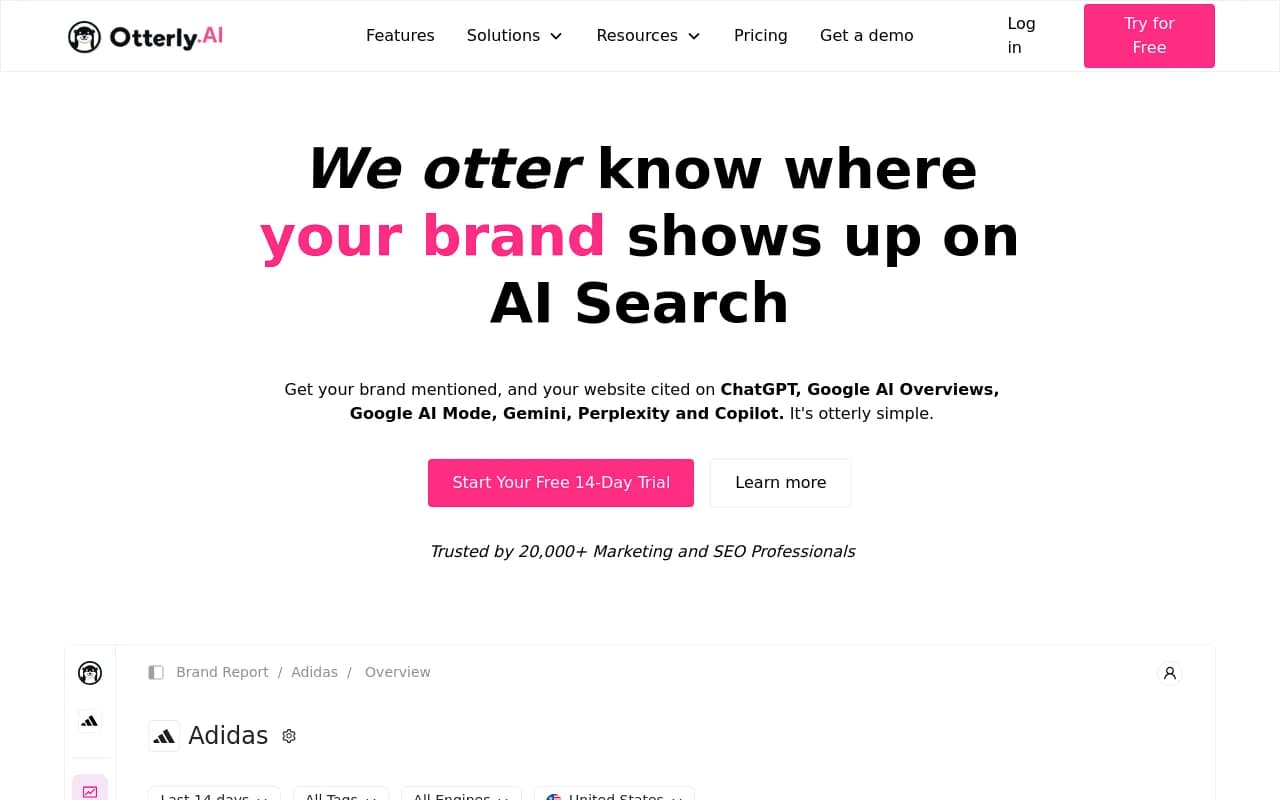
Here's my honest read: the worst response to August 2026 is pretending Reddit doesn't matter, and the second worst is pretending it's stable. Reddit remains a top-cited domain across platforms other than ChatGPT, and the engagement data still points the same direction it did before the crash. Otterly.ai's 60-day controlled experiment found an active subreddit generated 9x more AI citations than a dormant twin posting identical content, and that comment depth mattered far more than upvotes. Their broader dataset showed near-zero correlation between subreddit size and citation count — small, topic-specific communities punched far above their weight.
So keep participating in genuine Q&A, in narrow topic communities, with specific and structured answers. Just measure it as one channel among several, expect its ChatGPT share to stay volatile, and remember that the citations you earn today may surface six months or two years from now.
Building your early-warning system
None of this is manageable with quarterly spot checks. You need daily-ish data, per-platform baselines, and enough history to know what normal drift looks like for your category. A few options depending on your stack and budget:
| Tool | What it's good for | Best fit |
|---|---|---|
| Promptwatch | Full-stack AI visibility: citation trends, prompt tracking with volumes, AI crawler logs, content gap analysis, automated GEO content | Teams that want monitoring plus the ability to act on it |
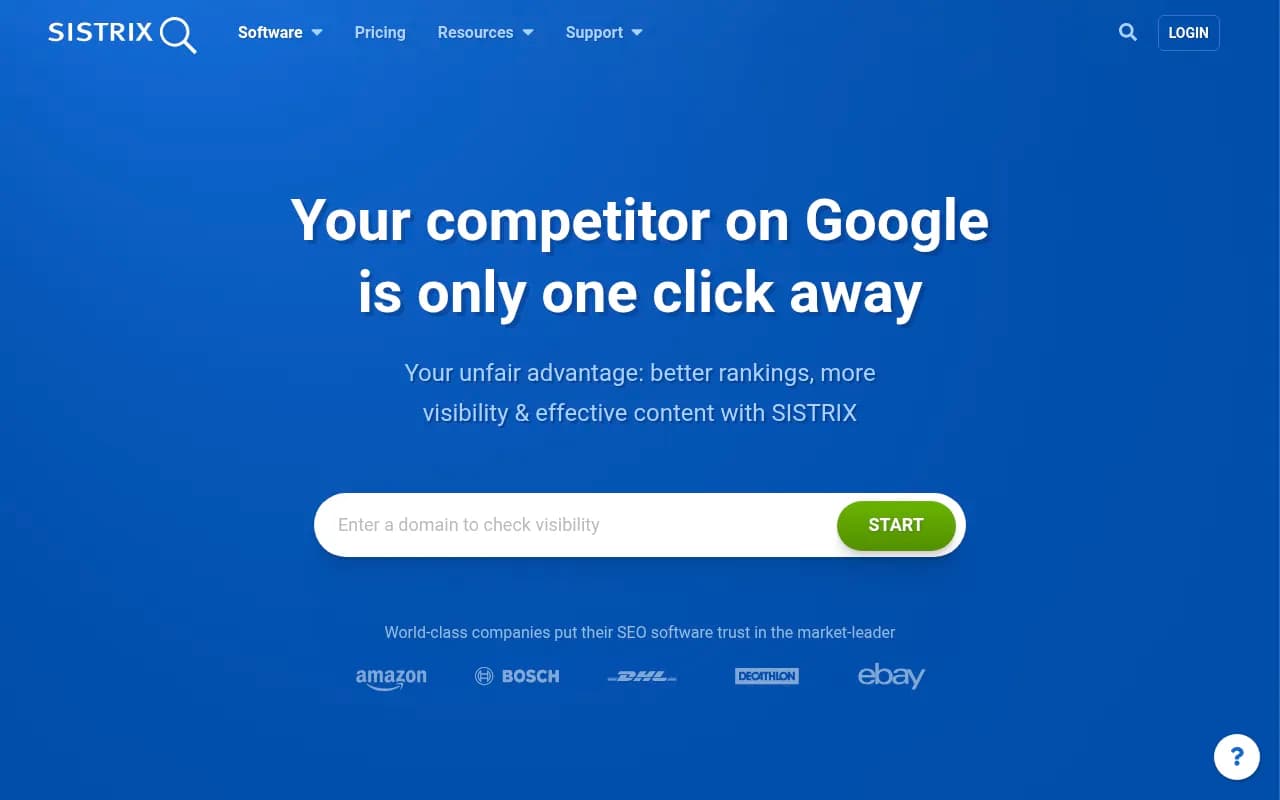
| Sistrix | Rigorous, large-sample citation distribution research and visibility indices | Data-driven teams and agencies that want methodological depth |
| Otterly.AI | Affordable prompt monitoring and citation tracking, strong Reddit/social experiments | Smaller teams and early-stage GEO programs |
| Semrush | Broad digital marketing suite with AI visibility features bolted on | Teams that already live in Semrush and want one dashboard |
| Profound | Enterprise-grade AI visibility monitoring | Large brands with dedicated budgets |
If you're comparing the broader market, the GEO software directory at bestgeosoftware.com covers the full category, and Promptwatch's own research hub at promptwatch.com/data publishes the daily citation-share and crawler datasets this guide draws on — worth bookmarking if you want to catch the next shift as it happens rather than reading about it after your stock drops.
The bottom line
The August 2026 Reddit collapse wasn't a content problem, a Reddit problem, or even really an OpenAI problem. It was a window into how AI search actually works: citation sources are chosen by retrieval systems and models that the platforms control entirely, update silently, and reweight without notice. Your rankings, backlinks, and content quality can all hold steady while your citation share halves in a week.
The GEO teams that will still be standing after the next update are the ones tracking platform-level baselines daily, diversifying across source types, building evergreen domain authority instead of chasing URL-level wins, and treating every sudden metric change as a question about the platform before a question about themselves. The updates will keep coming. The only real defense is a measurement setup that tells you, within a day, whether the ground moved under everyone or just under you.