Key takeaways
- Profound is a strong AI visibility tracker, but it's sales-gated, expensive, and built for analytics teams -- not for marketers who need to create content and close gaps.
- Most alternatives fall into two camps: monitoring-only tools (cheaper but still passive) and action-oriented platforms that combine tracking with content generation.
- If your team's goal is to actually improve AI visibility -- not just measure it -- you need a platform that closes the loop between data and content.
- Promptwatch is the only platform in this comparison rated as a "Leader" across all categories, with built-in content generation, crawler logs, and gap analysis that goes beyond what Profound or most alternatives offer.
- Budget matters: options range from $29/month for basic monitoring to enterprise tiers for full-stack GEO execution.
Profound raised $96M in February 2026, bringing its total funding to $155M. It now counts Target, Walmart, Figma, and Ramp among its customers, and over 10% of the Fortune 500 reportedly uses the platform. By any measure, it's the best-funded company in AI visibility.
But funding doesn't equal fit. Profound is sales-gated, designed for enterprise analytics teams, and -- this is the part that frustrates most marketers -- it's primarily a monitoring tool. It tells you where your brand appears (or doesn't) across AI search engines. What it doesn't do is help you fix it.
That gap is real. If you're a marketing team, an SEO lead, or a digital agency that needs to actually move the needle on AI visibility -- not just report on it -- Profound probably isn't the right tool. And even if it were, the enterprise pricing and sales cycle would rule it out for most teams.
This guide covers the best alternatives in 2026, with a specific focus on teams that need content generation and optimization capabilities, not just dashboards.
Why "monitoring-only" isn't enough anymore
The AI search landscape shifted fast. ChatGPT, Perplexity, Gemini, Claude, and Google AI Overviews now answer questions that used to send people to Google. If your brand isn't cited in those answers, you're invisible to a growing share of your audience.
The first wave of GEO tools (Generative Engine Optimization) solved the measurement problem: they showed you where you appeared, which prompts triggered your brand, and how often competitors showed up instead. That was useful. But it's table stakes now.
The teams winning in AI search in 2026 aren't just tracking their visibility -- they're identifying the specific content gaps that explain why AI models cite competitors instead of them, then creating content to fill those gaps, then watching their citation rates improve. That's a fundamentally different workflow from "check the dashboard, write a report, repeat."
Profound sits in the measurement camp. So do several of its most commonly cited alternatives: Otterly.AI, Peec AI, AthenaHQ. They're good at telling you what's happening. They're not built to help you change it.
How to think about this category
Before diving into specific tools, it helps to segment the market honestly. There are roughly four types of tools people compare against Profound:
- Monitoring-only tools at a lower price point (Otterly.AI, Peec AI, LLM Pulse, Trakkr.ai)
- Monitoring tools with some optimization features (AthenaHQ, Scrunch, SE Visible)
- Content platforms that added GEO tracking (Writesonic, SearchAtlas)
- Full-stack GEO platforms that combine tracking, gap analysis, and content generation (Promptwatch, Relixir, Conductor)
If you're leaving Profound because of price, category 1 solves that. If you're leaving because you want to actually do something with the data, you need category 3 or 4.
The best Profound alternatives in 2026
Promptwatch -- best overall for teams that need to act, not just track
Promptwatch is the most complete alternative to Profound for teams that want to close the loop between visibility data and content output. Where Profound shows you the problem, Promptwatch shows you the problem and helps you fix it.

The core workflow is straightforward: Answer Gap Analysis identifies which prompts competitors rank for that you don't -- down to the specific topics and angles AI models want answers to but can't find on your site. Content Agents then generate articles, listicles, comparisons, and briefs grounded in that prompt data. Page-level tracking shows you when new content gets crawled, cited, and which models are picking it up.
A few things set it apart from everything else in this list. First, it tracks real user-facing AI responses, not just API outputs -- which matters because what ChatGPT shows a user in its interface can differ from what the API returns. Second, it has AI crawler logs: real-time records of when ChatGPT, Claude, Perplexity, and other crawlers hit your site, which pages they read, and when those pages move from crawl to citation. Most competitors don't have this at all. Third, it covers 10 AI models including Google AI Overviews, Google AI Mode, Grok, DeepSeek, and Mistral -- not just the obvious three.
Pricing starts at $99/month (Essential: 1 site, 50 prompts, 5 articles), $249/month for Professional (2 sites, 150 prompts, 15 articles, crawler logs), and $579/month for Business (5 sites, 350 prompts, 30 articles). A free trial is available. For context, Profound doesn't publish pricing at all -- it's enterprise-only.
Used by 1,480+ brands and agencies including Booking.com, Center Parcs, and Elaboratum.
Writesonic -- best for content-led teams that want GEO baked in
Writesonic started as an AI writing platform and has since built out GEO tracking features. For teams whose primary workflow is content production, it's a natural fit -- you're already in the tool, and the AI visibility data sits alongside the writing environment.
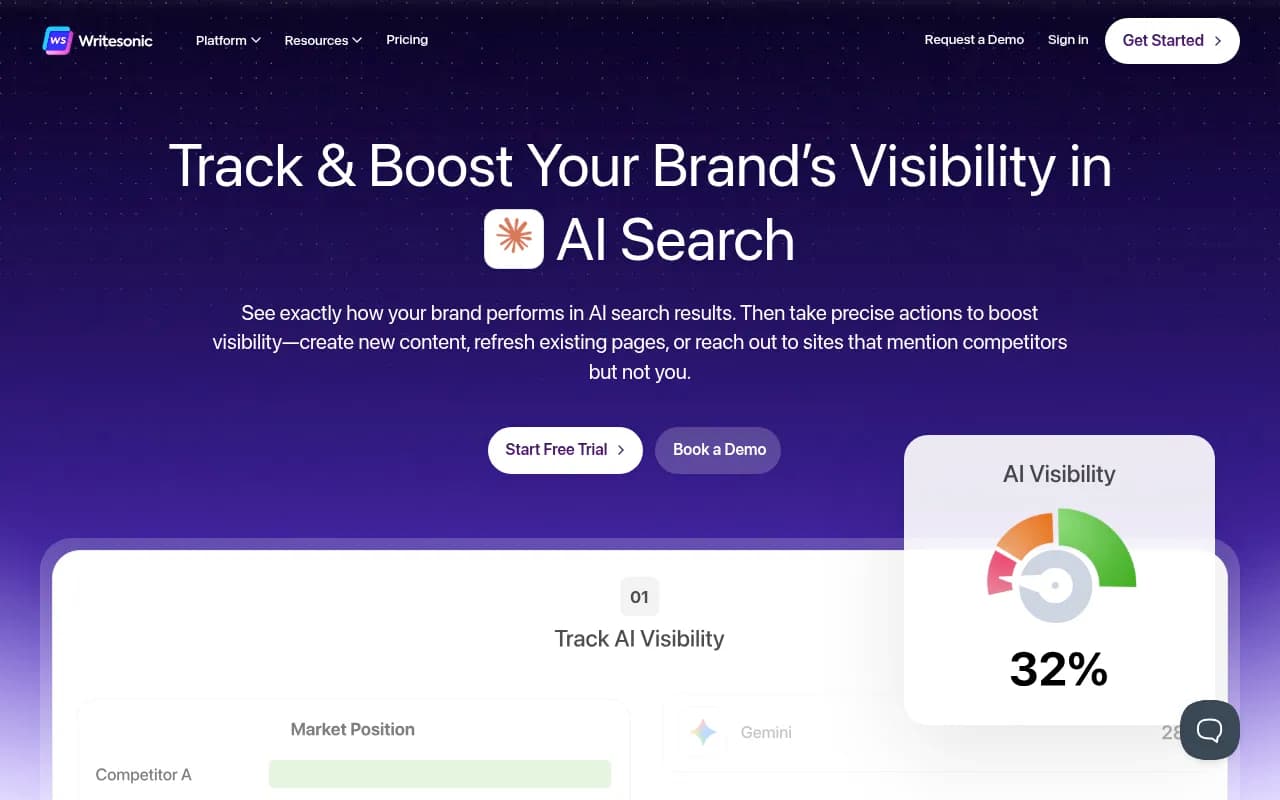
The GEO features cover prompt tracking, brand mention monitoring, and some optimization guidance. It's not as deep as Promptwatch on the analytics side -- no crawler logs, no query fan-outs, no page-level citation tracking -- but if your team's bottleneck is content volume rather than strategic gap analysis, Writesonic handles that well.
AthenaHQ -- closest enterprise peer to Profound
If you're evaluating Profound at the enterprise tier and want a direct comparison, AthenaHQ is the most similar product. It covers multi-region AI visibility tracking, AEO/GEO positioning, and has a strong analytics layer.
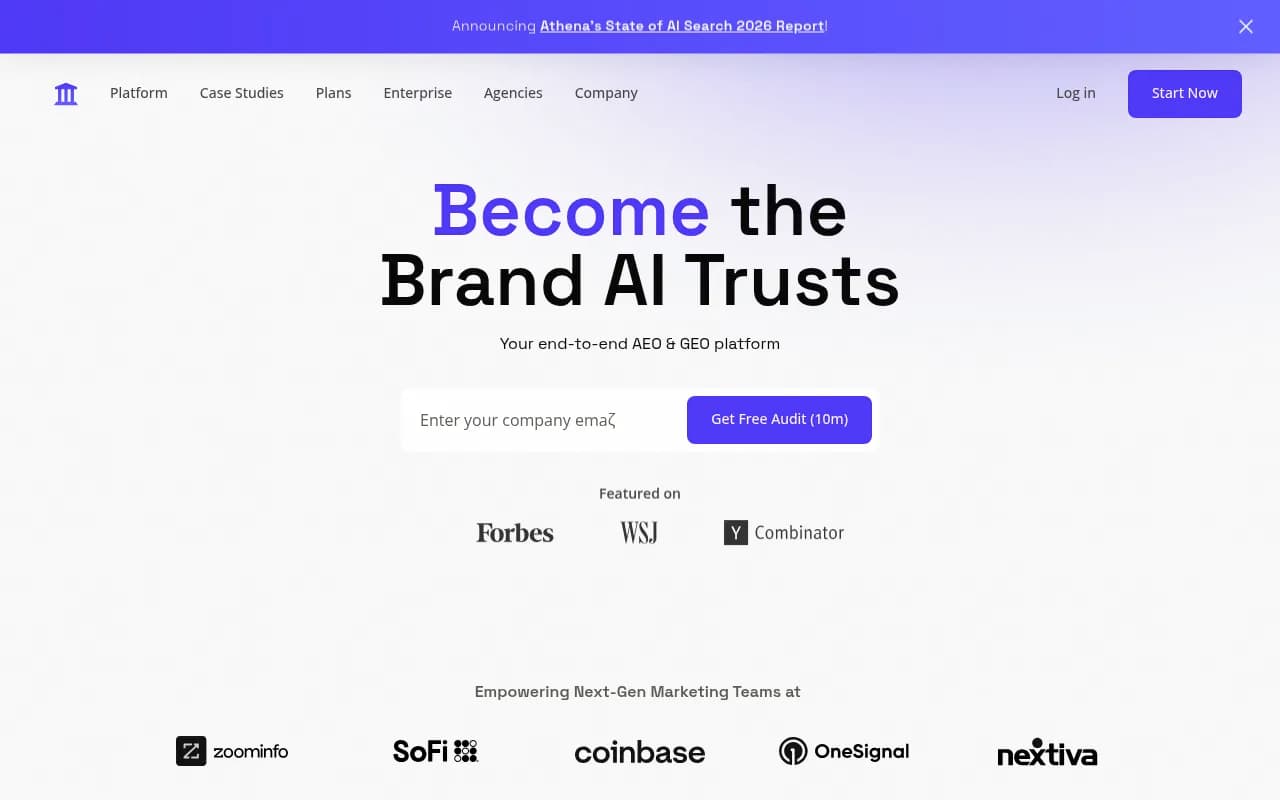
The honest limitation: AthenaHQ is still primarily a monitoring platform. It doesn't generate content or close the gap between "here's what's missing" and "here's the article that fills it." For pure analytics teams that just need better data than Profound offers, it's worth a look. For marketing teams that need to act on that data, it's another dashboard.
Otterly.AI -- best for teams that just need affordable monitoring
At $29/month, Otterly.AI is the cheapest credible entry point in this space. It covers 6 AI engines, tracks brand mentions, and gives you a baseline view of your AI visibility. There's no content generation, no crawler logs, and no gap analysis -- but if you're a small team that just needs to know whether you're showing up, it does that job.

The friction AI comparison (reviewed May 2026) positions Otterly as the right choice for price-sensitive teams who've already ruled out Profound. That's accurate. Just don't expect it to help you improve your numbers.
Peec AI -- best for unlimited-seat teams focused on prompt analytics
Peec AI's pricing model is unusual: unlimited seats, which makes it attractive for larger teams where per-seat costs add up fast. The platform is oriented around prompt-level analytics and action roadmaps -- it tells you which prompts to prioritize and gives some directional guidance on what to do.
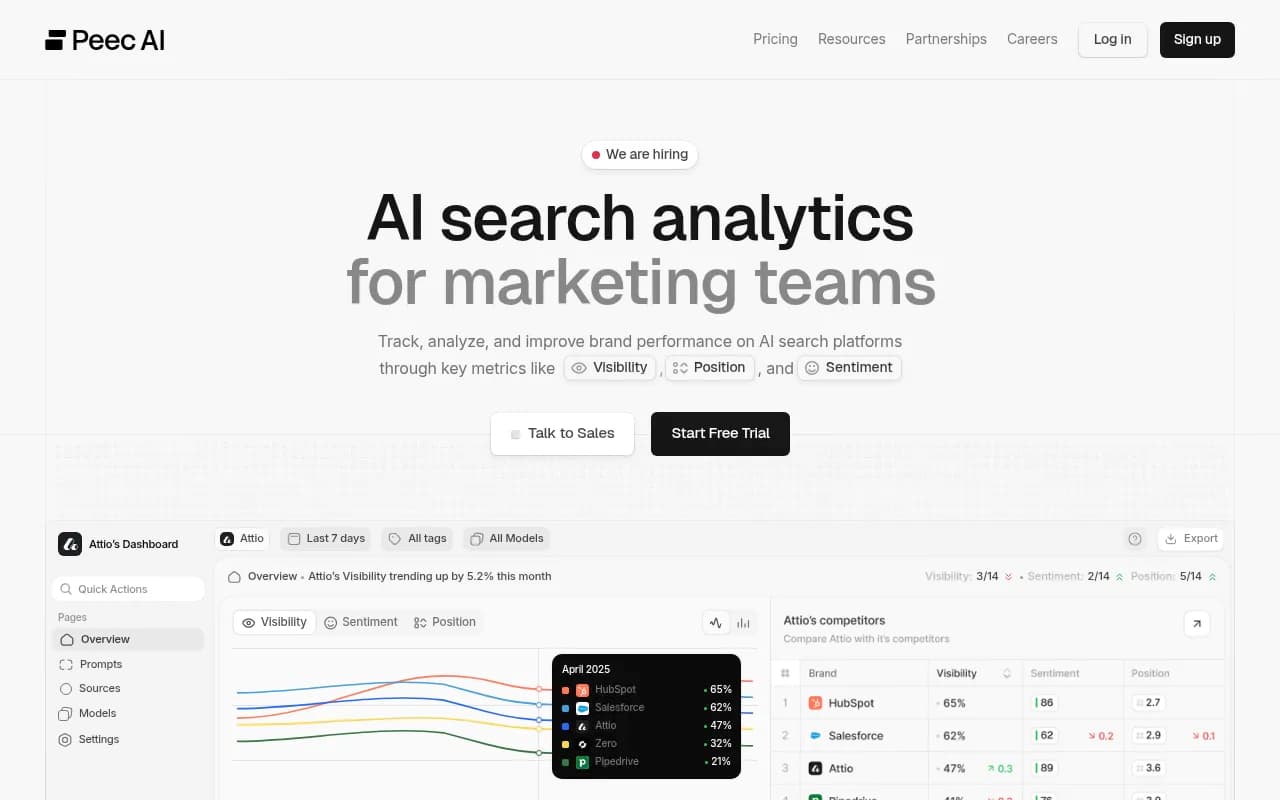
It sits between pure monitoring and full optimization. More opinionated than Otterly, less capable than Promptwatch on the content generation side. At $89/month, it's a reasonable middle ground for teams that want more than a dashboard but aren't ready to invest in a full GEO platform.
Relixir -- best for teams that want an all-in-one GEO platform with content generation
Relixir combines AI visibility tracking with content generation and analytics in a single platform. It's positioned similarly to Promptwatch in terms of ambition -- the goal is to close the loop from gap identification to content creation to citation tracking.
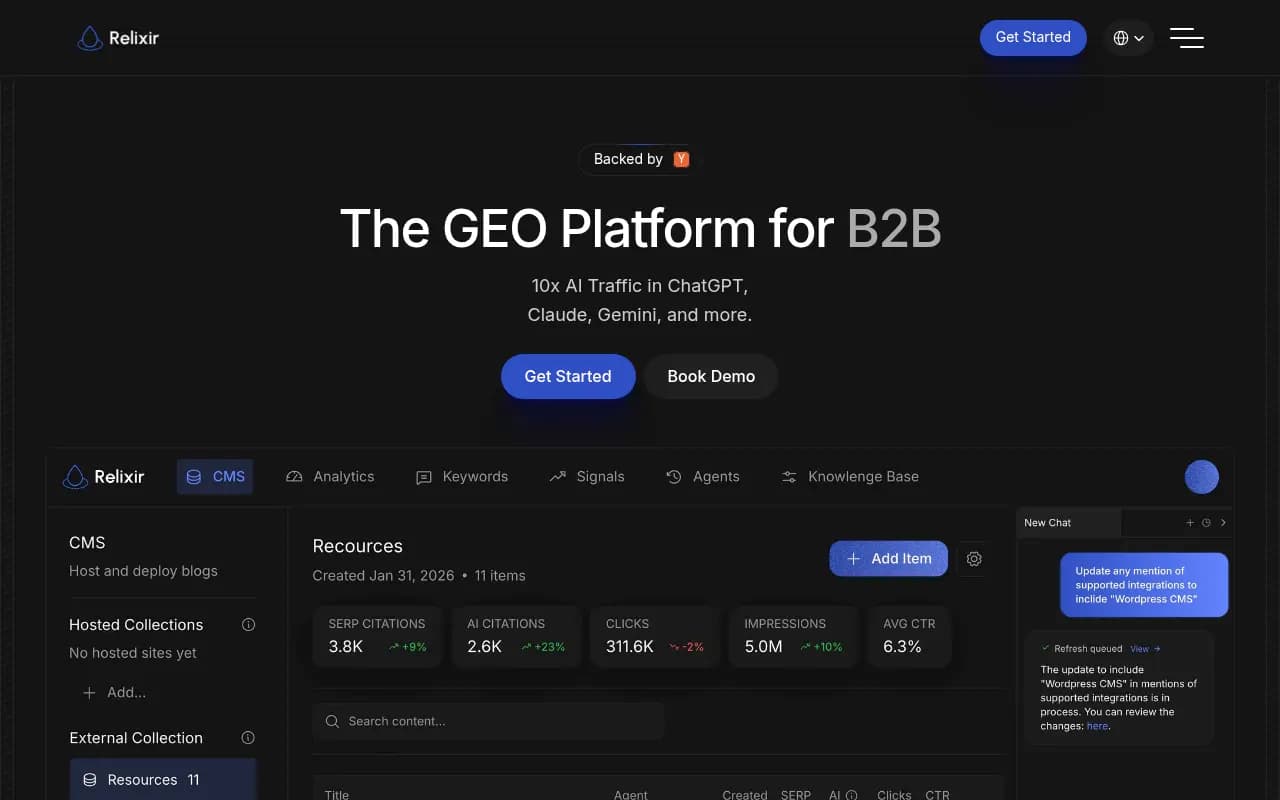
Worth evaluating if you want a Promptwatch alternative or want to run a direct comparison. The feature depth on crawler logs and multi-model tracking is less developed, but the content generation workflow is solid.
Conductor -- best for large enterprise teams with existing SEO infrastructure
Conductor is an enterprise SEO platform that has added AI visibility tracking and content creation workflows. If your team already uses Conductor for traditional SEO, the AI visibility layer integrates naturally. For teams starting fresh, the complexity and price point make it harder to justify.
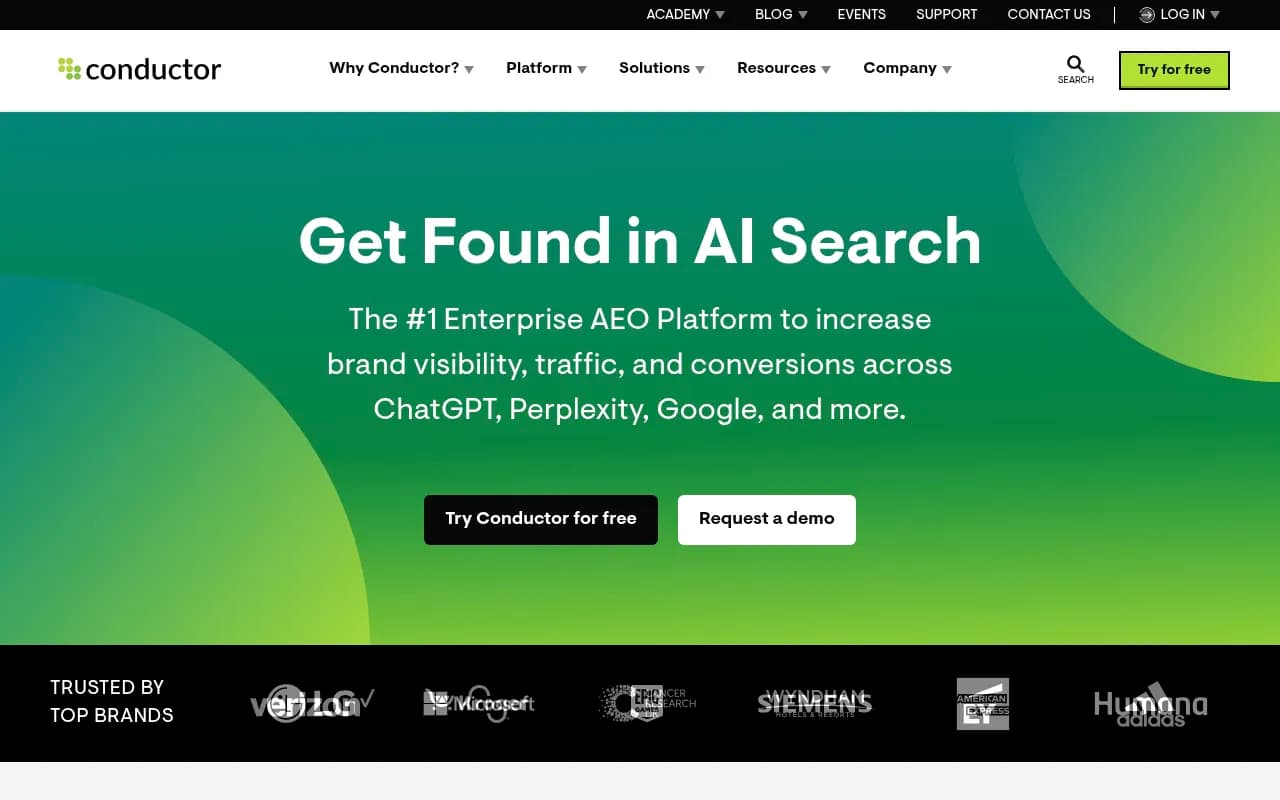
It's a strong product for large organizations with dedicated SEO teams. Less relevant for mid-market teams or agencies that need a purpose-built GEO tool.
SearchAtlas LLM Visibility -- best for teams that want SEO and GEO in one tool
SearchAtlas has built LLM visibility tracking into its broader SEO platform. If you're already using SearchAtlas for keyword research and on-page optimization, the GEO layer is a natural extension. It also has some content automation features that go beyond pure monitoring.

The GEO features aren't as deep as a dedicated platform, but the integration with traditional SEO data is genuinely useful -- you can see how your AI visibility correlates with your organic search performance.
Scrunch AI -- best for monitoring with some optimization guidance
Scrunch sits in the middle of the market: more than basic monitoring, less than full content generation. It tracks how AI assistants like ChatGPT and Claude respond to prompts about your brand, and gives some guidance on what to optimize.
Pricing is higher than Otterly and Peec, which makes the value proposition harder to justify unless the optimization guidance is genuinely useful for your team's workflow.
LLM Pulse -- best lightweight option for tracking brand visibility across models
LLM Pulse is a focused tool for tracking brand visibility across ChatGPT, Perplexity, and other models. It's lightweight, straightforward, and doesn't try to do too much. No content generation, no deep gap analysis -- just clean visibility data.
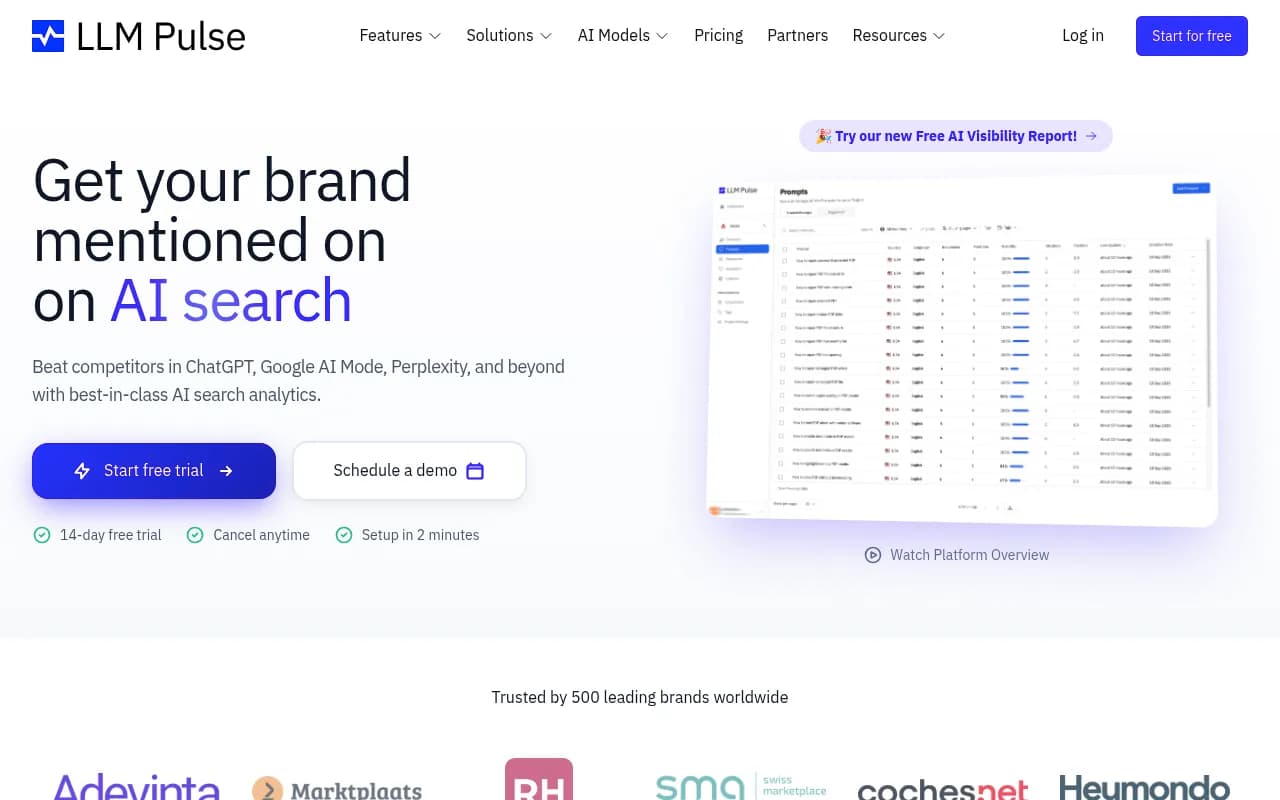
Good for teams that want a simple monitoring layer without committing to a full GEO platform.
Feature comparison table
| Tool | AI models covered | Content generation | Gap analysis | Crawler logs | Pricing |
|---|---|---|---|---|---|
| Promptwatch | 10 | Yes (Content Agents) | Yes (Answer Gap Analysis) | Yes | From $99/mo |
| Profound | Multiple | No | Limited | No | Enterprise (sales-gated) |
| Writesonic | Multiple | Yes (writing-first) | Limited | No | Varies |
| AthenaHQ | 8+ | No | Limited | No | Enterprise |
| Otterly.AI | 6 | No | No | No | From $29/mo |
| Peec AI | Multiple | No | Directional | No | From $89/mo |
| Relixir | Multiple | Yes | Yes | Limited | Varies |
| Conductor | Multiple | Yes (workflow) | Limited | No | Enterprise |
| SearchAtlas | Multiple | Partial | Limited | No | Varies |
| Scrunch AI | Multiple | Limited | Limited | No | Mid-market |
| LLM Pulse | Multiple | No | No | No | Low |
What to actually evaluate when comparing these tools
The feature list above is a starting point, but the real questions are more specific to your team's situation.
What's your primary bottleneck? If you're not tracking AI visibility at all yet, almost any tool solves that. If you're already tracking and the problem is that you don't know what to do with the data, you need gap analysis and content generation. If you're creating content but not seeing citation improvements, you need crawler logs and page-level tracking to understand why.
How many AI models do you care about? Most teams default to ChatGPT and Perplexity, but Google AI Overviews and Google AI Mode are increasingly important for organic traffic. Tools that only cover 3-4 models will miss a significant share of AI-driven visibility.
Do you need multi-region or multi-language support? If your audience is international, this matters a lot. Most tools in this list have limited multi-region support. Promptwatch covers any language and country with customizable personas.
What's your content production capacity? If you have writers who can take briefs and run with them, you need gap analysis and brief generation. If your team is stretched thin, you need a tool that generates the actual content, not just the brief.
How do you measure success? If success is "brand mentioned in AI responses," basic monitoring works. If success is "AI-driven traffic that converts to revenue," you need traffic attribution -- which most tools in this space don't have.
The honest case for going beyond monitoring
Here's the thing about most Profound alternatives: they solve the price problem but not the action problem. You get a cheaper dashboard that tells you the same story Profound would -- your brand appears X% of the time, competitors appear Y% of the time, here's a chart.
That data is useful context. It's not a strategy.
The teams that are actually improving their AI visibility in 2026 are doing three things: finding the specific prompts and topics where they're invisible, creating content that directly answers those prompts, and tracking whether that content gets picked up. That's a workflow, not a report.
Profound doesn't support that workflow. Neither do most of its alternatives. The tools that do -- Promptwatch most completely, Relixir to a lesser degree -- are worth the higher price point if content generation is genuinely part of your plan.
If it's not, if you just need to track and report, then Otterly.AI at $29/month or Peec AI at $89/month will serve you fine. Just be honest with yourself about which problem you're actually trying to solve.
Quick recommendation by use case
- Small team, budget-constrained, just need baseline monitoring: Otterly.AI
- Mid-market team, want prompt analytics and action roadmap: Peec AI
- Content-led team, want GEO tracking alongside writing tools: Writesonic
- Enterprise team, want Profound's peer at the same tier: AthenaHQ
- Any team that wants to close the loop from gap to content to citation: Promptwatch
- Agency managing multiple clients across regions: Promptwatch (Business or Agency tier)
The market has matured enough that "which tool tracks AI visibility" is no longer the interesting question. The interesting question is which tool helps you do something about it.