Key takeaways
- Goodie AI is a capable enterprise GEO platform, but its pricing and feature set don't suit every team size or budget
- The best alternatives go beyond monitoring -- they help you find content gaps, generate optimized content, and track results
- Most tools in this space fall into two camps: monitoring-only dashboards and full action-loop platforms; knowing which you need matters
- Platforms like Promptwatch, Writesonic, and Profound each serve different use cases -- this guide breaks down exactly who should use what
- A comparison table at the end makes it easy to match your team size and goals to the right tool
If you've been evaluating Goodie AI and something doesn't quite fit -- the price, the feature scope, the workflow -- you're not alone. The GEO and AI visibility space has grown fast in 2026, and there are now genuinely good alternatives depending on what you actually need.
This guide covers 9 platforms worth considering. Not every tool here does the same thing. Some are monitoring dashboards. Some are full optimization platforms. A few are built for agencies, others for in-house teams. I'll be direct about what each one is good at and where it falls short.
What Goodie AI actually does (and where it falls short)
Goodie AI tracks brand presence across AI search engines -- ChatGPT, Perplexity, Claude, Gemini, and others -- and gives you reporting dashboards on how often you appear, what sentiment looks like, and how you compare to competitors. It's one of the few tools that tracks Amazon Rufus, which is genuinely useful for e-commerce brands.
The platform is solid for enterprise reporting. Where it gets tricky: pricing is custom and enterprise-leaning, which prices out smaller teams. The action layer is also relatively light -- you get visibility data and dashboards, but the platform doesn't generate content or directly help you close the gaps it surfaces.
If your team needs more than a monitoring dashboard -- or needs a dashboard that doesn't cost enterprise rates -- here's what else is out there.
The 9 best Goodie AI alternatives in 2026
1. Promptwatch
Promptwatch is the most complete action-loop platform in this space. It doesn't just show you where you're invisible -- it helps you fix it. The Answer Gap Analysis surfaces exactly which prompts competitors rank for that you don't, and the built-in AI writing agent generates content engineered to get cited by ChatGPT, Claude, Perplexity, and other models.
What sets it apart from most alternatives: crawler logs that show which AI bots are hitting your site and what errors they encounter, prompt volume and difficulty scoring so you can prioritize winnable prompts, Reddit and YouTube citation tracking (most tools ignore these entirely), and ChatGPT Shopping monitoring. Traffic attribution closes the loop -- you can connect AI visibility to actual revenue through a code snippet, GSC integration, or server log analysis.
It covers 10+ AI models including Google AI Overviews, DeepSeek, Grok, and Mistral. Pricing starts at $99/month for the Essential plan (1 site, 50 prompts, 5 articles) and goes up to $579/month for Business (5 sites, 350 prompts, 30 articles). A free trial is available.

2. Writesonic
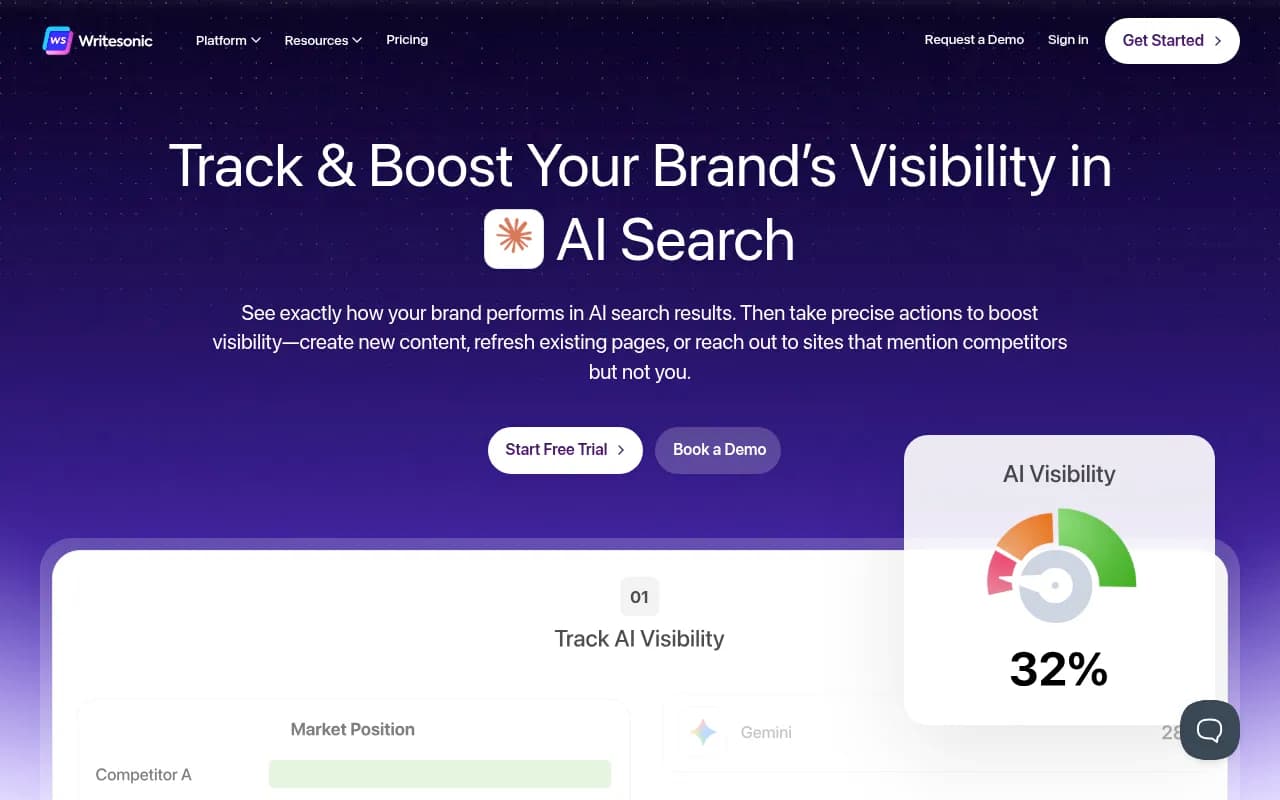
Writesonic has built a GEO layer on top of its existing AI writing platform, which gives it a practical advantage: you can spot a visibility gap and create content to fix it without leaving the tool. The workflow from "we're missing here" to "content is live" is faster than most alternatives.
It covers the major AI engines and includes prompt and crawler insights. The Professional GEO plan starts around $199/month. Best for startups and fast-moving marketing teams that want visibility tracking and content creation in one place.
3. Profound
Profound takes a different approach -- it's built for precision. The platform captures empirical snapshots of AI answers across 10+ engines, which makes it useful for compliance-heavy or analytics-heavy organizations that need to document exactly what AI models are saying about them at a given point in time.
The analytics depth is impressive. What it doesn't have: content generation or optimization tools. You get the data, but acting on it is up to you. Starter plans run around $99-$399/month, with custom enterprise pricing above that.
4. Conductor
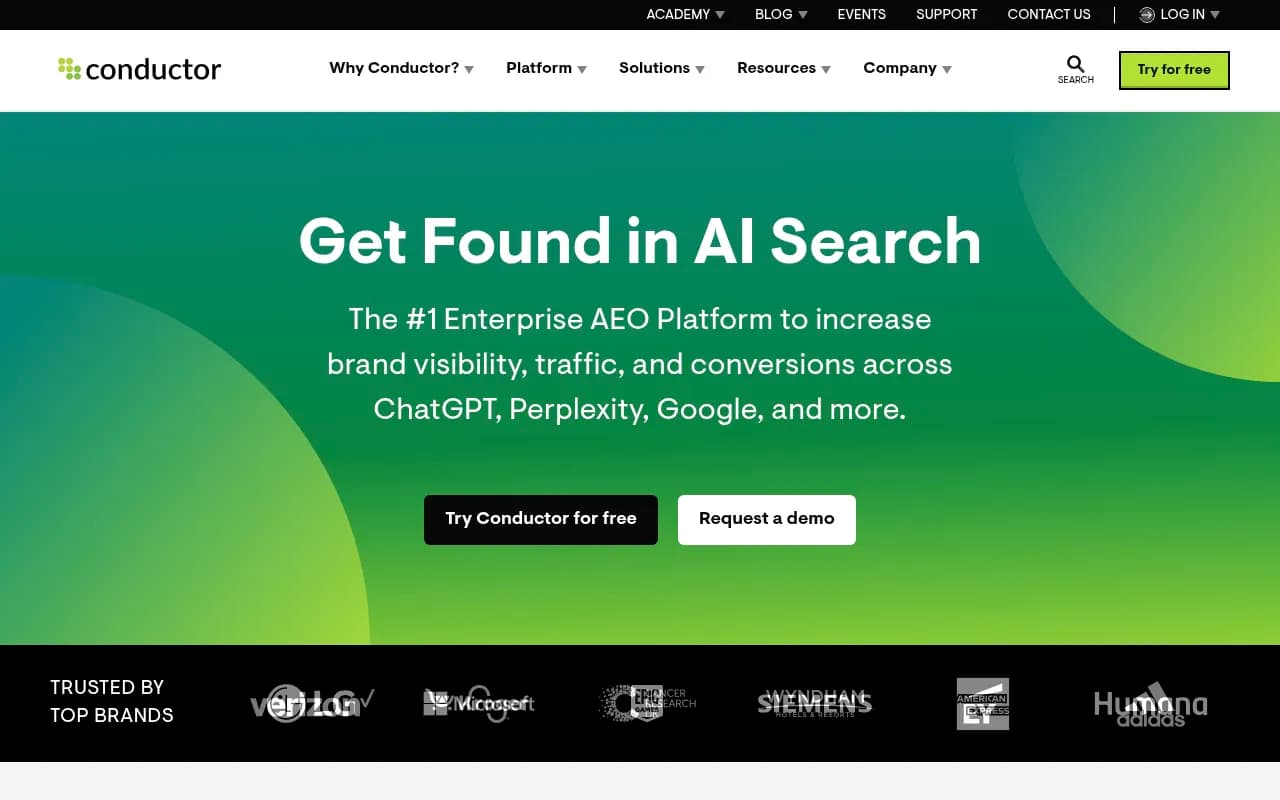
Conductor is an enterprise SEO suite that has added an AI visibility layer. If your team already runs Conductor for traditional SEO, the AI visibility module integrates cleanly into existing workflows. It's not a standalone GEO tool -- it's an addition to a broader platform.
The strength here is the unified view: SEO performance, content workflows, and AI visibility in one dashboard. The limitation is that it's priced and scoped for large organizations. Smaller teams will find it overkill.
5. Otterly.AI
Otterly is the budget-friendly monitoring option in this space. It tracks brand mentions across major AI engines and gives you a clean dashboard for reporting. Setup is quick, the interface is simple, and the price is accessible for smaller teams.
The honest limitation: it's monitoring only. No content generation, no crawler logs, no traffic attribution. If you need to understand your AI visibility at a basic level and don't yet need the action layer, Otterly is a reasonable starting point.

6. Peec AI
Peec AI focuses on multi-language AI visibility monitoring, which makes it stand out for brands operating across multiple markets. It tracks prompts in different languages and regions, which most tools handle poorly or not at all.
Like Otterly, it's primarily a monitoring tool. The multi-language angle is the differentiator -- if your brand operates in non-English markets and you need to track AI visibility there, Peec is worth a close look.

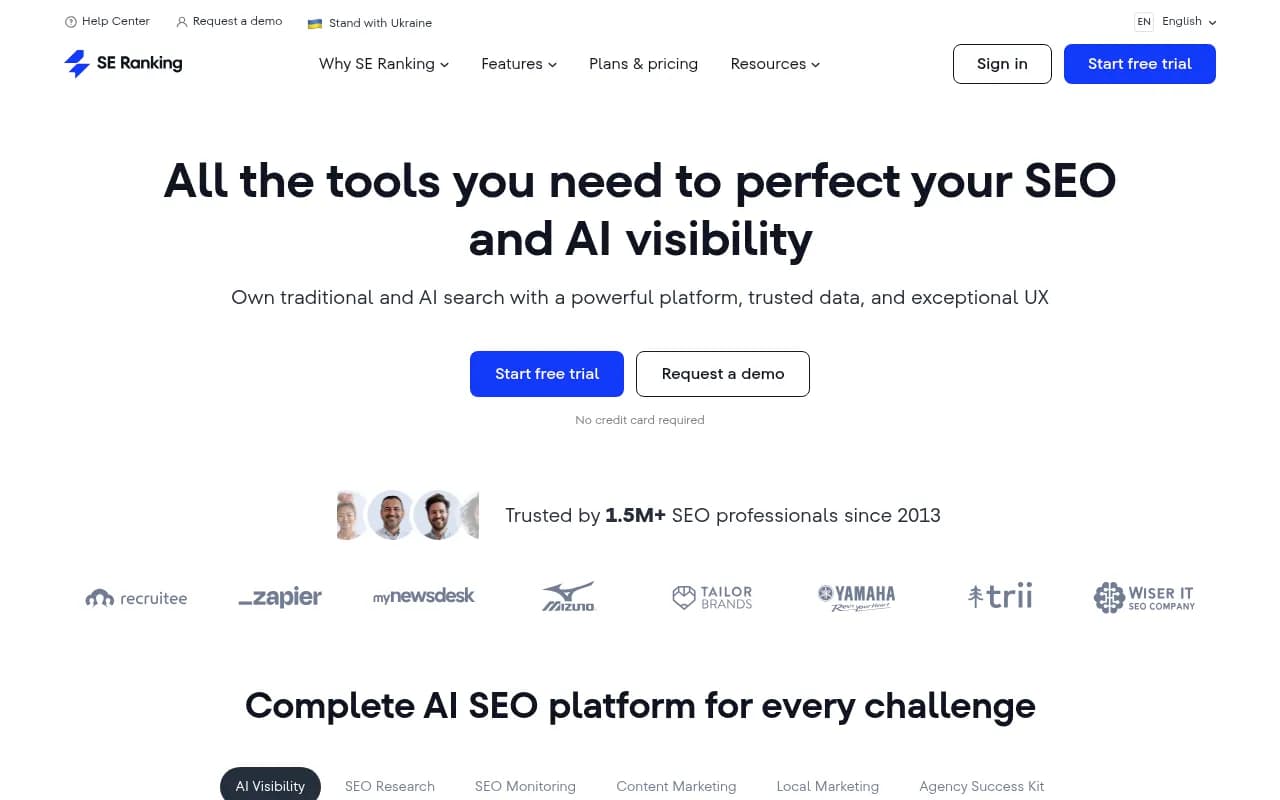
7. SE Ranking (SE Visible)
SE Ranking has added an AI visibility module called SE Visible that sits alongside its traditional rank tracking. For teams already using SE Ranking for SEO, it's a low-friction way to add AI monitoring without a separate tool subscription.
The AI visibility features are less deep than dedicated GEO platforms -- you won't get crawler logs or content generation here. But the combination of traditional SEO data and AI visibility in one place has real value for SEO-first teams.
8. Scrunch AI
Scrunch AI monitors how AI assistants like ChatGPT and Claude describe your brand and competitors. It's positioned toward brand and comms teams that care about sentiment and narrative -- how AI models talk about you, not just whether they mention you.
The reporting is clean and the competitive comparison features are solid. It's a narrower tool than Promptwatch or Writesonic, but for brand monitoring specifically, it does the job well.
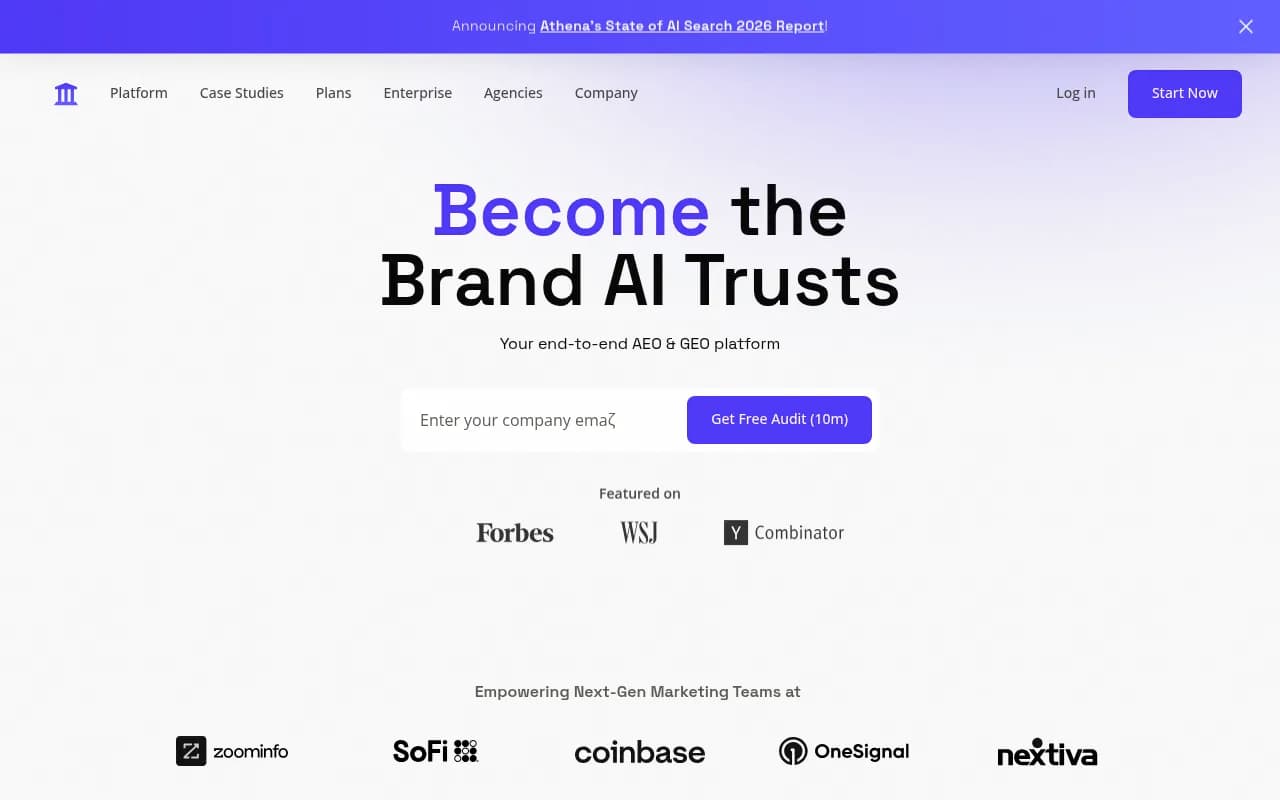
9. Athena HQ
Athena HQ tracks brand visibility across 8+ AI search engines with a focus on monitoring and competitive benchmarking. The interface is clean and the data is reliable. Like most monitoring-focused tools, it doesn't have content generation or optimization built in -- it shows you the problem but leaves the solution to you.
For teams that want a dedicated monitoring dashboard and handle content strategy separately, Athena HQ is a solid pick.
How these tools compare
Here's a side-by-side view of the key dimensions that actually matter when choosing between these platforms:
| Tool | AI engines covered | Content generation | Crawler logs | Traffic attribution | Reddit/YouTube tracking | Starting price | Best for |
|---|---|---|---|---|---|---|---|
| Promptwatch | 10+ (incl. DeepSeek, Grok, Mistral) | Yes (built-in AI writer) | Yes | Yes (GSC, snippet, logs) | Yes | $99/mo | Teams that want to monitor AND fix visibility |
| Goodie AI | 11 (incl. Amazon Rufus) | No | No | No | No | Custom/enterprise | Enterprise brand reporting |
| Writesonic | Major LLMs | Yes | Partial | No | No | ~$199/mo | Fast-moving teams, content-heavy workflows |
| Profound | 10+ | No | No | No | No | $99-$399/mo | Analytics-heavy, compliance-focused orgs |
| Conductor | Major LLMs | Partial (SEO-focused) | No | Partial | No | Enterprise | Large teams already using Conductor for SEO |
| Otterly.AI | Major LLMs | No | No | No | No | Low/accessible | Small teams, basic monitoring |
| Peec AI | Major LLMs (multi-language) | No | No | No | No | Mid-range | Multi-market brands |
| SE Ranking | Major LLMs | No | No | No | No | Bundled with SE Ranking | SEO teams wanting to add AI monitoring |
| Scrunch AI | Major LLMs | No | No | No | No | Mid-range | Brand/comms teams |
| Athena HQ | 8+ | No | No | No | No | Mid-range | Monitoring-focused teams |
How to choose the right one for your team
The single most useful question to ask is: do you need monitoring, or do you need optimization?
Monitoring tools (Otterly, Peec AI, Athena HQ, Scrunch AI) tell you where you stand. They're useful for reporting, for understanding the competitive landscape, and for flagging when something changes. If you're early in your GEO journey and just need visibility into what AI models are saying about your brand, any of these will work.
Optimization platforms (Promptwatch, Writesonic) go further. They show you the gaps and then help you close them -- through content generation, technical fixes, or both. If your team is actively trying to improve AI visibility and connect it to revenue, you need a platform in this category.
Enterprise-grade analytics tools (Profound, Conductor) sit in a different lane. They're built for organizations that need deep data, compliance documentation, or integration with existing enterprise SEO stacks. The price reflects that.
A few other factors worth considering:
- If you operate in non-English markets, Peec AI's multi-language support is hard to beat
- If you're an e-commerce brand that cares about Amazon Rufus specifically, Goodie AI is still the only tool tracking it -- though that gap may close
- If you're an agency managing multiple clients, look at platforms with multi-site support and white-label reporting (Promptwatch's Business and Agency plans, or Writesonic's agency tiers)
- If budget is tight, Otterly and the Essential tier of Promptwatch are the most accessible starting points
A note on the monitoring-only trap
One pattern worth flagging: a lot of teams buy a monitoring tool, get a dashboard full of data, and then... don't know what to do with it. The data shows you're invisible for 40 prompts your competitors own. Great. Now what?
This is where the distinction between monitoring and optimization really matters. Tools that stop at the dashboard leave you to figure out the "now what" on your own. Platforms with a built-in action loop -- content gap analysis, AI content generation, page-level tracking -- turn that data into a workflow.
It's not that monitoring tools are bad. It's that they're incomplete if your goal is actually improving your AI visibility, not just measuring it.
Bottom line
Goodie AI is a legitimate platform, especially for enterprise teams that need Amazon Rufus tracking and polished reporting dashboards. But it's not the right fit for every team, and the alternatives in 2026 are genuinely strong.
For most marketing and SEO teams that want to both understand and improve their AI visibility, Promptwatch covers the most ground -- monitoring, content generation, crawler logs, traffic attribution, and competitive analysis in one platform. For teams that need content creation speed, Writesonic is the closest alternative. For pure monitoring on a budget, Otterly gets the job done without the overhead.
Pick based on what you actually need to do with the data, not just which dashboard looks best in a demo.