Key takeaways
- AirOps is a capable AI content and GEO workflow platform, but its opaque pricing and steep learning curve make it a poor fit for many enterprise teams.
- The strongest alternatives split into two camps: full-cycle optimization platforms (Promptwatch, Relixir) and monitoring-first tools (Evertune, Searchable).
- Promptwatch is the only option in this comparison that covers the full loop: gap analysis, AI content generation, crawler logs, and traffic attribution -- all in one place.
- Pricing ranges from $99/month to well above $500/month depending on the platform and tier.
- Your choice should depend on whether you need to act on AI visibility data or just see it.
Why teams are looking for AirOps alternatives
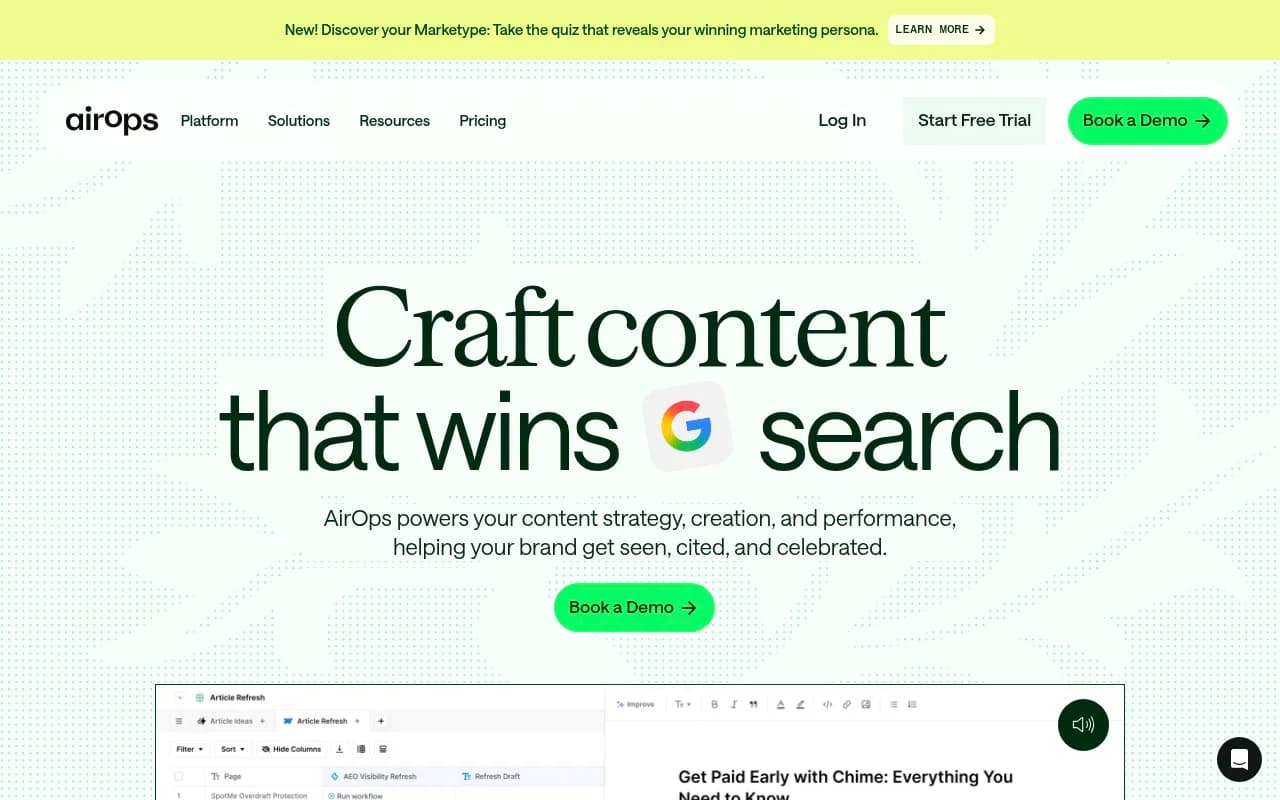
AirOps has done something genuinely impressive: it built a platform that connects AI content generation to real GEO outcomes. The case studies are hard to argue with. Webflow grew AI-attributed signups from 2% to over 10% in under a year. Chime tripled AI search citations in under four weeks. Those aren't made-up numbers.
But here's the friction. AirOps doesn't publish pricing for its Solo, Pro, or Enterprise tiers. You have to book a sales call before you can evaluate cost. Power Agents -- the core automation feature -- have a steep learning curve. The platform is desktop-only. And for teams that primarily need AI visibility monitoring with content generation layered on top, AirOps can feel like overkill in some areas and underpowered in others.
Enterprise teams in 2026 are asking a more specific question: which platform helps us understand where we're invisible in AI search, why, and then actually helps us fix it? That's a different question than "which tool automates content workflows."
This guide focuses on four alternatives that enterprise teams are seriously evaluating: Promptwatch, Relixir, Evertune, and Searchable. Each takes a meaningfully different approach.
How to think about this category
Before getting into the tools, it's worth being clear about what "AirOps alternative" actually means in practice, because the category has blurred.
Some tools are primarily AI visibility monitors -- they track how often your brand appears in ChatGPT, Perplexity, Gemini, and similar engines, and show you dashboards. That's useful, but it's the starting point, not the destination.
Others are GEO optimization platforms -- they go further by identifying content gaps, generating content designed to fill those gaps, and tracking whether that content actually starts getting cited. This is where the real ROI lives.
AirOps sits firmly in the second camp. So does Promptwatch. Relixir is close. Evertune and Searchable lean more toward the first.
Keep that distinction in mind as you read.
The four alternatives, ranked
1. Promptwatch -- best overall for enterprise GEO
Promptwatch is the most direct AirOps alternative for teams that want a complete optimization loop rather than just a monitoring dashboard.

The core workflow is straightforward but genuinely useful. Answer Gap Analysis shows you exactly which prompts your competitors are getting cited for and you aren't. You see the specific topics and questions AI models are surfacing in real responses -- not hypothetical gaps, but actual ones. From there, Content Agents generate articles, listicles, and briefs grounded in real prompt data, citation volumes, competitor analysis, and brand guidelines. Then page-level tracking shows whether those new pages start getting cited, by which models, and how often.
What sets it apart from most tools in this space is the AI Crawler Logs feature. You get real-time logs of when ChatGPT, Claude, Perplexity, and other crawlers hit your site -- which pages they read, errors they encounter, and how often they return. Most competitors don't offer this at all. For enterprise teams trying to understand why certain pages aren't getting cited, this is the missing piece.
Promptwatch also tracks Reddit and YouTube discussions that influence AI recommendations -- a channel that most platforms ignore entirely. And it covers 10 AI models: ChatGPT, Perplexity, Google AI Overviews, Google AI Mode, Claude, Gemini, Meta/Llama, DeepSeek, Grok, and Mistral.
Pricing is transparent: $99/month (Essential), $249/month (Professional), $579/month (Business), with agency and enterprise pricing available. That's a meaningful contrast to AirOps' sales-call-required model.
The one honest caveat: if your primary need is pure content workflow automation at scale -- bulk content production across hundreds of URLs -- AirOps' Grids feature is still more mature. Promptwatch's content generation is more targeted and prompt-data-driven, which is the right approach for GEO but not a replacement for high-volume SEO content factories.
2. Relixir -- strong for teams that want an all-in-one GEO platform
Relixir positions itself as an all-in-one GEO platform with AI content generation and analytics built together. It's a legitimate contender for enterprise teams that want visibility tracking and content creation in a single product without stitching together multiple tools.
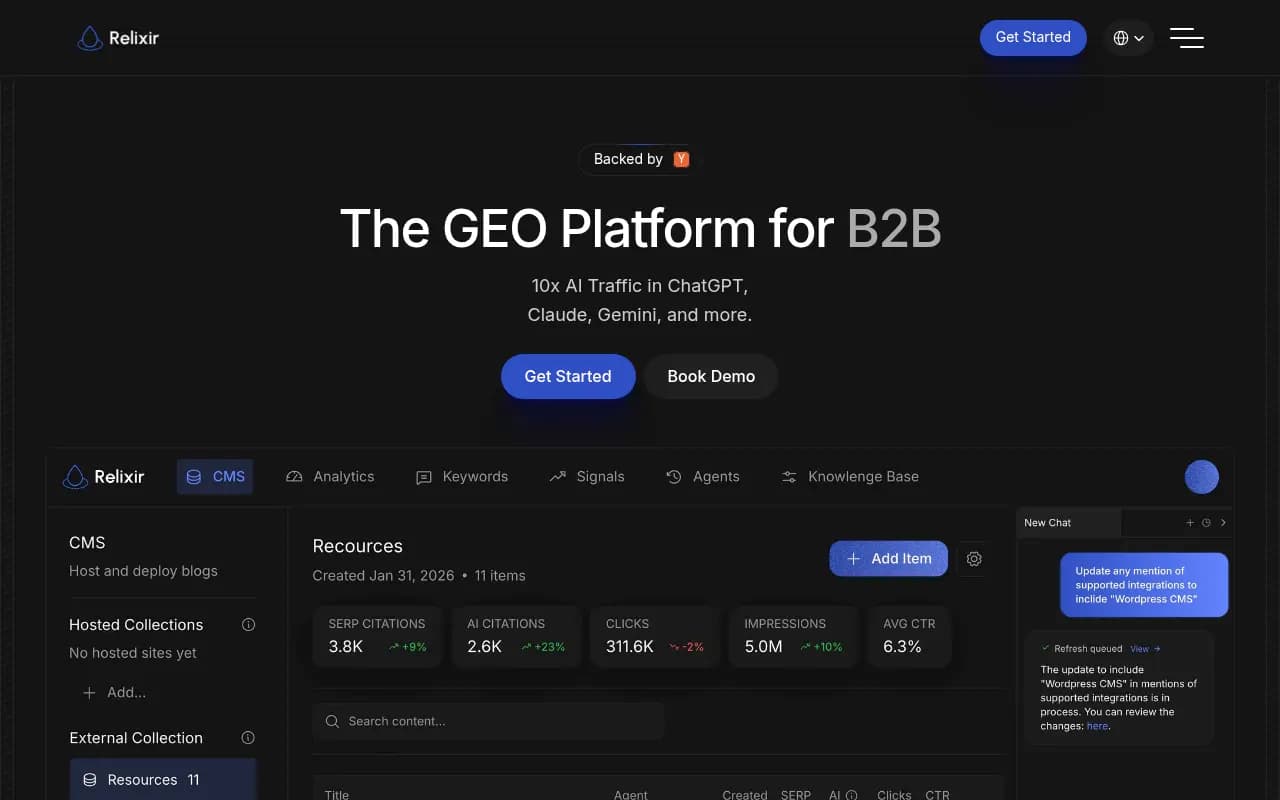
The platform covers the core GEO workflow: monitor AI responses, identify gaps, generate content to fill them. Where Relixir differentiates is in its analytics depth -- the platform puts particular emphasis on understanding how AI models are constructing their answers and which sources they're drawing from, which helps teams prioritize content investments more precisely.
For enterprise teams, Relixir's appeal is that it doesn't require a separate content team or agency to act on its data. The content generation is built in. That's the same pitch as Promptwatch, and the two are genuinely competitive.
The main consideration: Relixir is a newer entrant compared to Promptwatch, and its case study library and documented enterprise deployments are thinner. If your procurement team needs proof of scale, that matters.
3. Evertune -- best for enterprise monitoring with strong reporting
Evertune is a well-regarded AI visibility platform with a clear focus on enterprise brands. It shows up consistently in 2026 roundups as a strong monitoring tool, and its reporting capabilities are genuinely good -- the kind of dashboards that work for executive presentations and cross-functional teams.
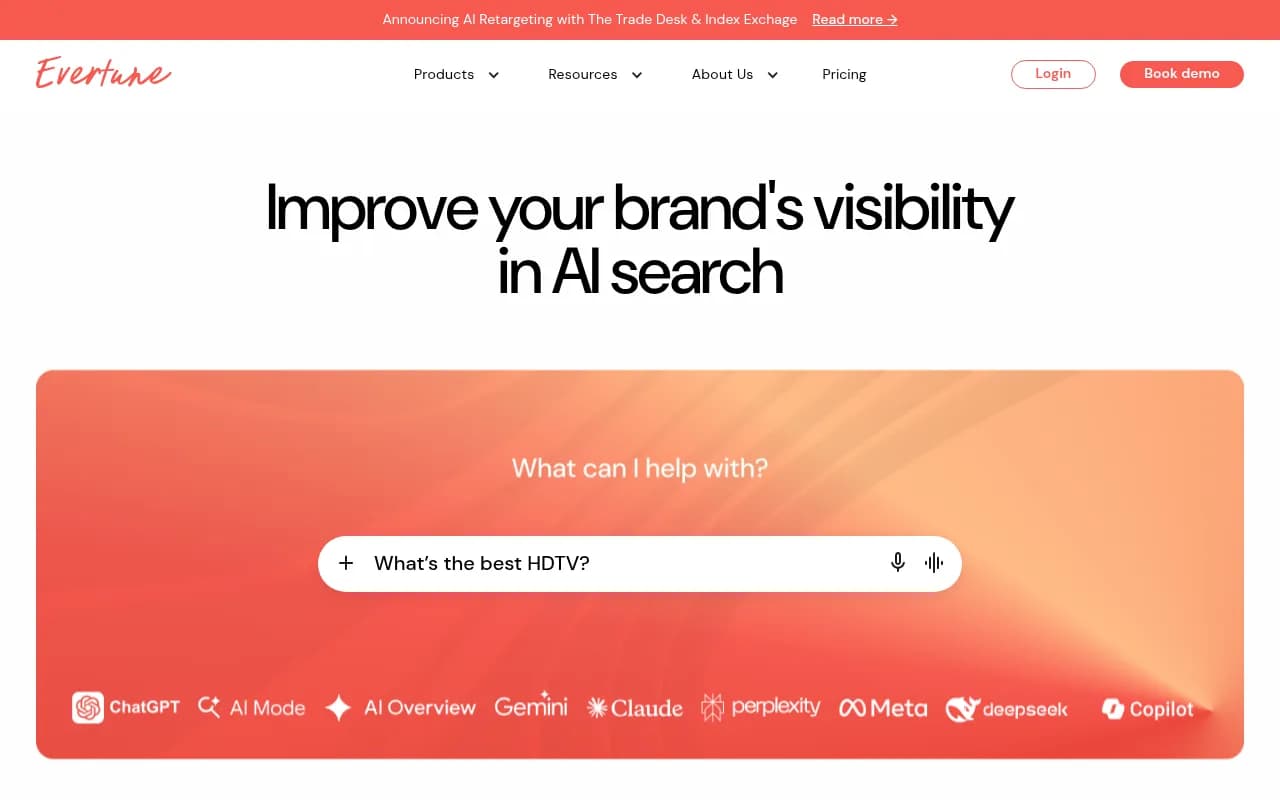
Where Evertune excels: breadth of AI model coverage, sentiment analysis, and historical tracking. If you need to show leadership how brand perception is shifting across AI engines over time, Evertune gives you the data to do that.
Where it falls short relative to AirOps or Promptwatch: it's primarily a monitoring platform. The optimization and content generation layer is less developed. You'll know where you're invisible, but the platform won't help you write the content to fix it. For enterprise teams with in-house content capacity, that's fine. For teams that need the full loop, it's a gap.
Evertune's pricing is enterprise-tier, which means it's not the right fit for smaller teams or agencies looking for an accessible entry point.
4. Searchable -- niche but worth knowing
Searchable is a more focused tool in this space. It appears in several 2026 AirOps alternative roundups, typically positioned as a lighter-weight option for teams that want AI search visibility data without the full platform complexity.
The honest assessment: Searchable is better suited to teams that are earlier in their GEO journey -- those that want to understand their AI visibility baseline before committing to a more comprehensive platform. It's not a direct enterprise AirOps alternative in the same way Promptwatch or Relixir are.
If you're evaluating Searchable against the others in this guide, the question to ask is whether you need a starting point or a full solution. Searchable works for the former.
Side-by-side comparison
| Platform | Starting price | AI models covered | Content generation | Crawler logs | Gap analysis | Best for |
|---|---|---|---|---|---|---|
| AirOps | Undisclosed (sales call) | Multiple | Yes (Power Agents, Grids) | No | Yes (Opportunities) | Content-heavy teams, bulk production |
| Promptwatch | $99/month | 10 | Yes (Content Agents) | Yes | Yes (Answer Gap Analysis) | Full GEO optimization loop |
| Relixir | Custom | Multiple | Yes | Limited | Yes | All-in-one GEO platform |
| Evertune | Enterprise pricing | Multiple | No | No | Limited | Monitoring, reporting, sentiment |
| Searchable | Lower tier | Limited | No | No | Basic | GEO beginners, baseline tracking |
What enterprise teams actually need from this category
The pattern that keeps coming up in 2026 evaluations of GEO platforms is this: most tools are good at showing you data. Very few are good at helping you act on it.
AirOps built its reputation on being action-oriented -- the Opportunities module, Power Agents, and Grids are all about doing something with the data, not just looking at it. That's the right instinct. The problem is the pricing opacity and complexity that comes with it.

Evertune's 2026 AI visibility tool comparison highlights the growing divide between monitoring-only platforms and full optimization platforms.
The best AirOps alternatives for enterprise teams share a few characteristics:
- They track real AI responses, not just API outputs. User-facing answers in ChatGPT or Perplexity can differ significantly from what you get through an API call. Platforms that only use API access miss this.
- They show prompt-level data, not just brand mention counts. Knowing you appeared in 40% of responses is less useful than knowing which prompts you're appearing in and which ones you're losing.
- They connect visibility to content. A platform that shows you gaps but can't help you fill them is half a solution.
- They track what happens after you publish. The feedback loop from content creation to citation is what separates optimization from guesswork.
Promptwatch hits all four. Relixir hits most of them. Evertune and Searchable are strong on the first two but weaker on the last two.
Which tool should you choose?
Here's a direct take based on common enterprise scenarios:
If you're replacing AirOps because of pricing opacity and want a full GEO optimization platform with transparent pricing, Promptwatch is the clearest choice. The Answer Gap Analysis, Content Agents, and Crawler Logs together replicate and in some ways extend what AirOps does -- and you can evaluate cost without a sales call.
If you want an all-in-one GEO platform and are open to a newer entrant, Relixir is worth a serious evaluation. The content generation and analytics are both solid, and the platform is actively developing.
If your primary need is enterprise-grade monitoring and reporting -- and you have a content team that can act on the data independently -- Evertune is a strong fit. The dashboards and sentiment tracking are genuinely good.
If you're earlier in your GEO journey and want to establish a baseline before committing to a full platform, Searchable is a reasonable starting point. Just know you'll likely outgrow it.
One thing worth saying plainly: the teams that are winning in AI search right now aren't the ones with the best monitoring dashboards. They're the ones that have a repeatable process for finding gaps, creating content to fill them, and tracking results. Whatever platform you choose, that process matters more than the tool.
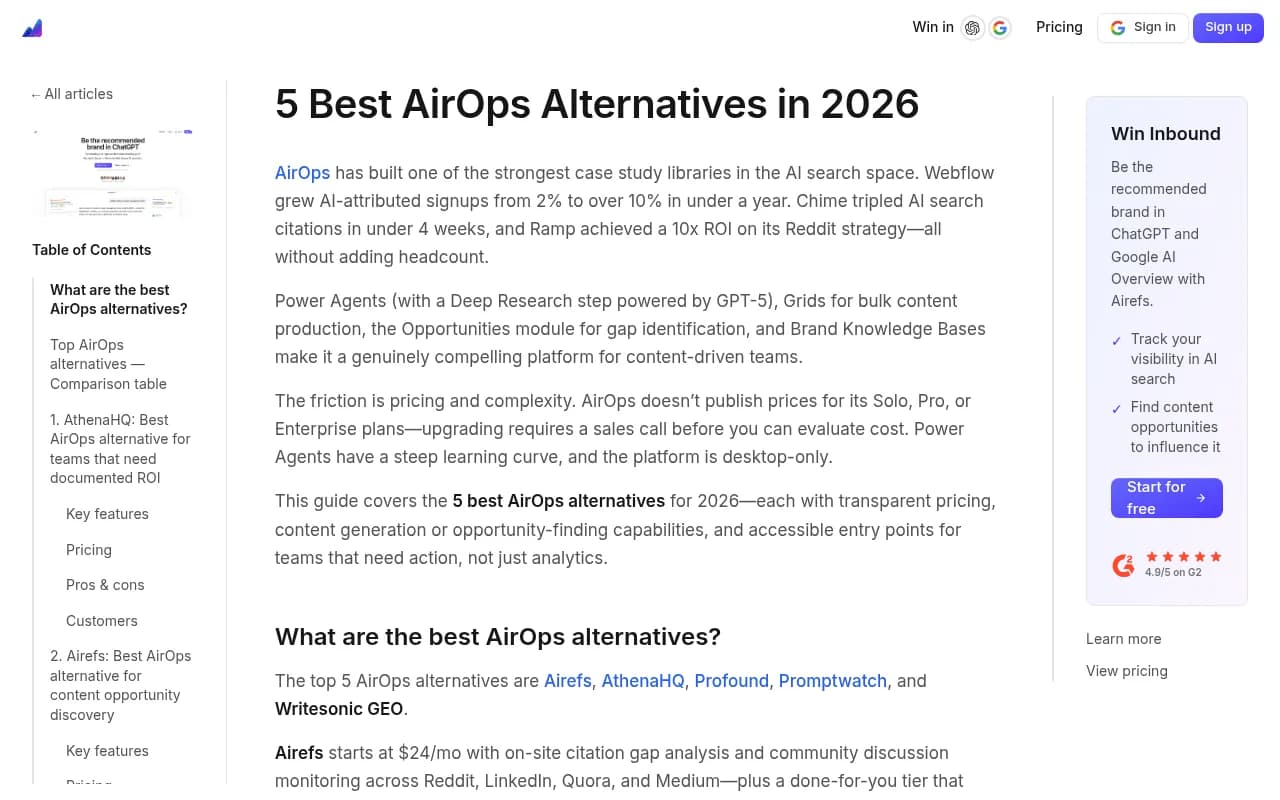
Airefs' 2026 breakdown of AirOps alternatives, showing how platforms differ on pricing transparency and content generation capabilities.
Other tools worth knowing
The four platforms above are the main focus of this guide, but a few others come up regularly in enterprise AirOps alternative discussions:
Profound is frequently cited as the G2 Winter 2026 Leader in this category, with strong enterprise credentials and an Agents module for AI-optimized content. Starting at $399-499/month, it's positioned at the higher end of the market.
AthenaHQ is YC-backed and has solid documented case studies. The Deep Research content optimization agent on Enterprise is genuinely capable. It's monitoring-focused but moving toward optimization.

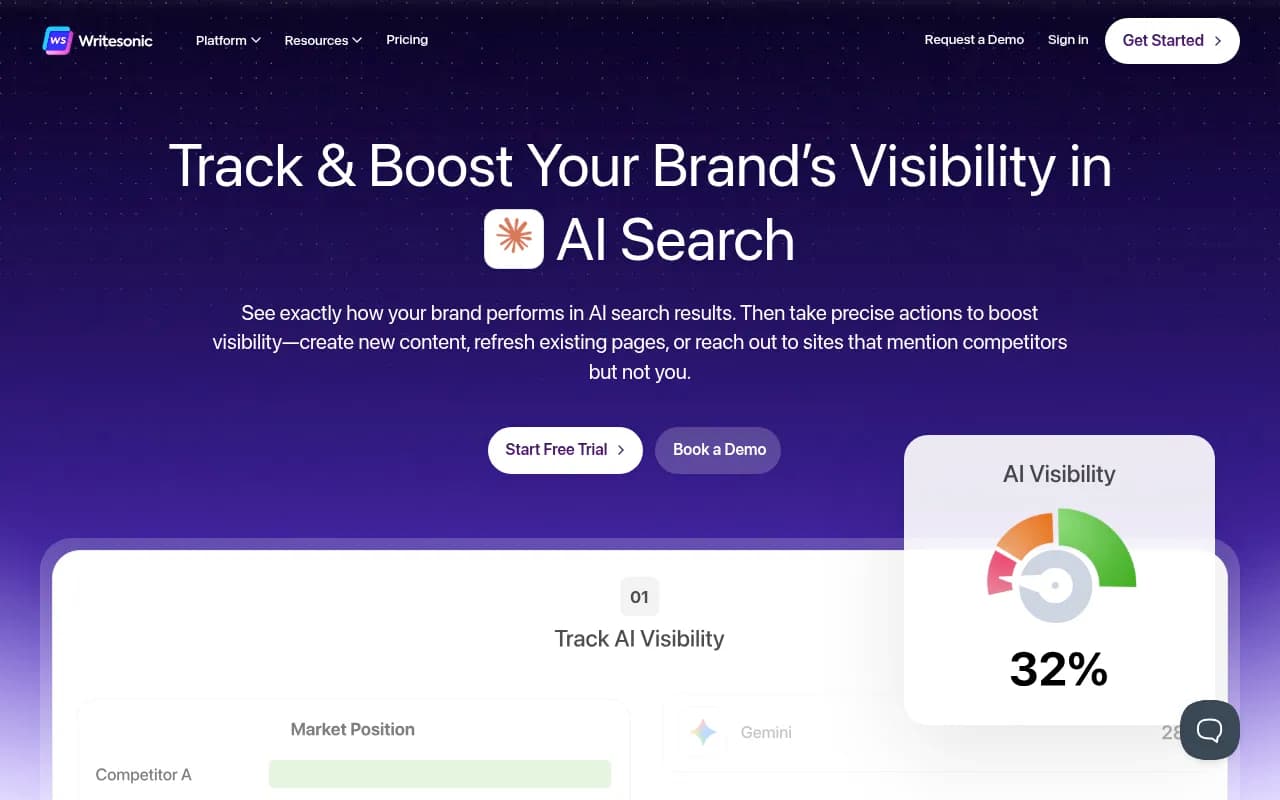
Writesonic GEO is the most direct content-generation competitor to AirOps at a lower price point. If bulk content production is the primary use case, it's worth evaluating alongside the platforms above.
Orchly.ai comes up in several 2026 roundups as a strong option for SEO teams that want automation without workflow complexity. Pre-built AI agents for end-to-end content automation, starting at $49/month.

Final thought
AirOps built something real. The frustration isn't with what it does -- it's with the friction of evaluating and buying it, and with the fact that some teams need a different balance of monitoring, optimization, and content generation than AirOps provides.
The GEO category is moving fast. Platforms that were monitoring-only a year ago are adding content generation. Platforms that started with content are adding deeper analytics. The gap between the best and the rest is narrowing in some areas and widening in others.
For enterprise teams that want to stop guessing and start optimizing, the combination of gap analysis, content generation, and crawler-level visibility data is the benchmark to hold any platform to. Promptwatch currently offers the most complete version of that combination at a transparent price point. Relixir and Evertune are strong in their respective lanes. Searchable is a reasonable entry point.
Pick the one that matches where your team actually is -- not where you hope to be in six months.