Key takeaways
- AI search engines do not agree on sources. In June 2026, ChatGPT's top cited domain was Reddit (3.71% of citations), while Google AI Mode's was google.com itself (7.31%) and Google AI Overviews led with YouTube (4.16%). Even Google's own two AI surfaces share only 13.7% of cited URLs for identical queries.
- Citation sets are volatile. Sistrix measured 56% weekly source turnover on Google AI Mode and 74% on ChatGPT. Reddit's share of ChatGPT citations collapsed roughly 86% in a matter of days in August 2026.
- Classic SEO rank no longer predicts AI citation. Only 38% of pages cited by AI Overviews also rank in the top 10 organic results, down from 76% six months earlier.
- The winning strategy is a shared foundation (retrieval-ready content, clean HTML, entity consistency, correct crawler access) plus light per-platform tailoring, tracked weekly across all engines.
- Tools like Promptwatch can monitor visibility, citations, and AI crawler behavior across every major engine in one place, so you're not guessing which platform changed its mind about you this week.

The same question, four different answers
Ask "best project management software" in ChatGPT, Google AI Overviews, Google AI Mode, and Perplexity, and you'll get four answers built on four largely different sets of sources. This used to be a curiosity. In 2026, it's the central fact of generative engine optimization.
The clearest proof comes from comparing citation shares across engines. In June 2026, ChatGPT Search's most cited domain was Reddit, at 3.71% of all citations, with Wikipedia a distant second at 0.56% (Promptwatch Data, June 2026). Google AI Mode's top source that same month was google.com itself at 7.31%, followed by YouTube at 2.88% and Reddit at 2.52% (Promptwatch Data, June 2026). Google AI Overviews cited YouTube most, at 4.16%, then Reddit, then google.com (Promptwatch Data, June 2026).
So the engine that leads with Reddit barely touches google.com, and the engines that lead with google.com treat Reddit as a secondary source. There is no single "AI search" to optimize for. There are several, and they disagree.
The disagreement runs inside Google's own house. An Ahrefs Brand Radar analysis of 3M+ US queries found that Google AI Overviews shares only 13.7% of cited URLs with Google AI Mode for identical queries, despite both products coming from the same company, the same index, and largely the same retrieval infrastructure. Conductor's seven-month study across seven engines reached the same conclusion: every AI engine has a persistent "editorial identity" that doesn't match the others, and even Google's three AI products (Overviews, AI Mode, Gemini) share a parent company but not source preferences.
Each engine has its own content diet
The differences aren't just about which domains get cited. They extend to content formats, social platforms, and even page types within a single platform.
Social media: every engine picks a different favorite
Promptwatch's analysis of social media citations by AI model found that each engine has a distinct "social diet." ChatGPT is a Reddit specialist, with Reddit at 5.19% of its citations, more than 20x its next-best social platform (LinkedIn, at 0.23%). AI Overviews and Grok lead with YouTube. Perplexity also leads with YouTube. Grok is the only engine that gives Facebook and Instagram meaningful citation share, and X never exceeds 0.25% on any engine, not even Grok.
If your offsite strategy is "get mentioned on Reddit," you're optimizing for roughly one engine's preferences and hoping the rest follow. They don't.
Content formats diverge too
In July 2026, ChatGPT's most cited format was product pages, at 32.8% of citations, nearly double their share in March. Listicles were the fastest-growing format that month (Promptwatch Data, July 2026). Google AI Overviews told a different story: listicles averaged 18% for the month but lost the top daily spot to product pages from July 28 onward, while video climbed to about 6.3% of citations by month-end, up from 2.7% in January (Promptwatch Data, July 2026).
Same month, same broad market, different format preferences. A product page that wins citations in ChatGPT may be invisible to AI Overviews, which still leans on how-to content and listicles far more heavily.
Even LinkedIn gets treated differently per engine
Here's a detail I find genuinely strange: the same platform gets carved up differently depending on which engine is reading it. Across all engines, LinkedIn Pulse articles get 37.67% of LinkedIn citations and regular posts 32.19%. But ChatGPT treats LinkedIn as a company directory, citing company pages 23.84% of the time and the LinkedIn homepage 22.55%, while giving Pulse articles just 8.77%. Google AI Mode is the most article-hungry, with Pulse articles at 44.85%. And Perplexity is the only engine where ordinary feed posts (41.88%) beat Pulse articles (Promptwatch Data).
So "be active on LinkedIn" is not a strategy. "Publish Pulse articles for Google's engines, keep the company page complete for ChatGPT, and post regularly for Perplexity" is.
Engines don't just disagree. They change their minds.
Disagreement between engines would be manageable if each engine's preferences were stable. They aren't.
Sistrix tracked 82,619 prompts across three platforms over 17 weeks and found that Google AI Mode replaces 56% of its cited sources weekly, and ChatGPT replaces 74%. AI Mode responses have a "fixed core" of sources stable for 86% of prompts, surrounded by a rotating carousel with 89% weekly turnover. The practical question stops being "am I cited?" and becomes "am I in the core or the carousel?" Their drift figures held at 54–59% across six countries with no sign of leveling off, which suggests this is structural, not a bug.
Then there are the step changes. Reddit held a steady ~3.8% share of ChatGPT Search citations from July 18 to August 7, 2026, then collapsed to an average of 0.52% by August 14, an 86% relative drop in days. Over the same window, Reddit's decline in AI Overviews (-11.3%) and AI Mode (-30.5%) was far more gradual (Promptwatch Data). Three engines, three different reactions to whatever changed, in the same week.
This has happened before. In September 2025, Reddit went from roughly 10–14% of ChatGPT citations to about 1% within days after changing its access terms, and never recovered in that window (Promptwatch Data). If your GEO strategy was "rank on Reddit," you lost 90% of your AI visibility overnight, on one platform, through no fault of your own.
Retrieval mechanics are shifting under our feet too. On August 8, 2026, ChatGPT Search started using the site: operator at scale, jumping from 0.4% to 16.8% of fanout queries overnight, with searches per response nearly doubling (Promptwatch Data). ChatGPT is now running domain-scoped searches on top of generic ones, which means the quality of your own site's indexation and internal structure now directly shapes what ChatGPT can find to cite. Meanwhile Meta-WebIndexer went from ~2% to nearly 38% of all tracked AI crawler requests in under a month, consistent with Meta building its own web index (Promptwatch Data). The number of players with their own retrieval stacks is growing, not shrinking.
Even the number of citation slots differs: ChatGPT averages about 5 sources per response, while AI Overviews and Perplexity each cite around 10, and Microsoft Copilot swings from under 2 to nearly 17 within weeks (Promptwatch Data). Ten citation slots is a very different competitive game than five.
Why this kills single-platform GEO strategies
Put the data together and the conclusion is uncomfortable but clear:
- Optimizing for one engine means losing on the others. Only 11% of domains appear simultaneously in both ChatGPT and Perplexity citations, per the 5W Public Relations 2026 citation index. A page cited by one platform is not automatically cited by another.
- Classic SEO rank no longer predicts AI citation. Only 38% of AI Overview-cited pages also rank in the top 10 organic results, down from 76% six months earlier. "We already rank #1" is no longer a reason to skip GEO work.
- Any third-party platform you bet on can be switched off. Reddit collapsed twice. News content barely persists: Sistrix found only 1.4% of cited news articles remain permanently in citation sets. Anyone planning a citation strategy around editorial news coverage is planning badly.
- Monthly reporting is too slow. With 56–74% weekly source turnover, a monthly snapshot shows you a world that has already moved on. Reacting to stale data means optimizing for behavior that no longer exists.
The multi-platform GEO strategy that actually works
The good news: the fundamentals that travel across engines are more important than any single platform trick. Build the shared layer first, then add light per-engine tailoring.
Layer 1: The shared foundation (works everywhere)
Write pages that answer a specific question fast. The opening lines under each heading should answer the implied question directly. AI systems retrieve passages, not pages, so distinct H2/H3 blocks with concise answers and tightly grouped evidence improve your odds at the passage level across every engine.
Increase evidence density. Where you make a strong claim, back it with a source, a data point, a benchmark, or an official reference. Citation-friendly content looks denser and more accountable, and retrieval systems across all engines reward it.
Keep critical content in server-rendered HTML. If your key information only appears after client-side rendering, or your CDN quietly blocks AI crawlers, your GEO strategy never reaches the starting line. Configure robots.txt and WAF rules per bot rather than treating AI access as a single on/off switch.
Invest in domains you control. Your own site is the only citation source that can't be switched off by someone else's business decision. Reddit collapsed twice. Wikipedia's share is under 1% on ChatGPT. Your domain is the asset that survives platform politics.
Build entity consistency off-site. Your brand name, author identities, and core claims should look the same across your site, LinkedIn, review platforms, and anywhere else AI systems look for corroboration. The broader web is part of the trust layer now.
Layer 2: Per-engine tailoring
| Engine | What it cites most | Where to focus your tailoring |
|---|---|---|
| ChatGPT Search | Reddit, Wikipedia, product pages, G2/Trustpilot | Reddit presence, Wikipedia entity, strong product pages, review platforms; site indexation quality (site: fanouts) |
| Google AI Overviews | YouTube, Reddit, google.com, how-tos, listicles | YouTube content, Schema markup, answer-first structure, Google Business Profile |
| Google AI Mode | google.com, YouTube, Pulse articles | Google Shopping/Merchant Center, YouTube, LinkedIn articles |
| Perplexity | YouTube, fresh content, LinkedIn posts, Reddit | Publishing cadence (freshness matters ~3x more here), LinkedIn posts, Reddit |
| Grok | YouTube, Facebook, Instagram | The broadest social footprint, including platforms other engines ignore |
Two notes on that table. First, Google's self-citation is accelerating: google.com went from 4.24% to 7.31% of AI Mode citations in a single month, and from 0.37% to 2.30% of AI Overviews citations in five months (Promptwatch Data, June 2026). If you sell products, your Google Merchant Center and Business Profile hygiene is now GEO work. Second, freshness weighs differently per engine: without regular publishing you lose roughly 3x visibility on Perplexity versus 20–40% on AI Overviews.
Layer 3: Measure weekly, across engines
You cannot manage what one platform shows you. A multi-platform strategy needs multi-platform measurement, checked weekly, with per-engine breakdowns of prompts, citations, and the sources your competitors are winning. This is where a dedicated visibility platform earns its keep, because it tracks all engines in one place instead of you manually prompting each one and recording answers in a spreadsheet.
Promptwatch, for example, tracks visibility across ChatGPT, Claude, Gemini, Perplexity, Grok, Copilot, AI Overviews, and AI Mode, adds AI crawler logs so you can see when bots visit and what errors they hit, and breaks down citations by source type, content type, and region. If Reddit's share of your ChatGPT citations drops 40% in a week, you want to know that week, not at month-end reporting.
There are solid alternatives depending on your budget and needs, and the market has fragmented fast on pricing:
| Tool | Starting price (2026) | Best for | | --- | --- | | Promptwatch | $95/mo | End-to-end: monitoring plus content generation and CMS publishing | | Peec AI | ~$80/mo | Budget-conscious prompt tracking with query fanout data | | Profound | ~$499+/mo, sales-led | Enterprise visibility with automated brand-mention remediation | | Ahrefs Brand Radar | $199/mo per engine index | Teams already on Ahrefs who want AI data next to classic SEO data | | Otterly.AI | Low-cost tiers | Simple, affordable prompt tracking |


If you're comparing the full category, the GEO software directory at bestgeosoftware.com keeps a current, curated list, and ai-rank-tools.com covers the AI rank tracking side specifically.
Common pitfalls to avoid
Treating all AI engines as one channel. Conductor's seven months of citation data says otherwise, plainly. A single AEO strategy cannot cover the full ecosystem anymore.
Optimizing for one platform only. The fix is to optimize for the patterns shared across engines while still tailoring by platform. Allocate roughly 20–30% of your content budget to GEO work rather than treating it as a side experiment you abandon after 4–6 weeks.
Using organic rank as a proxy for AI citation. The correlation has weakened dramatically (38% overlap and falling). Track citations directly.
Betting your strategy on a third-party platform. Reddit, news sites, any single external domain: these are rented visibility. Own the core, rent the amplifiers.
Reporting monthly on weekly volatility. A month is several citation generations in AI search. Set up weekly tracking or you're always optimizing for the recent past.
Where this is heading
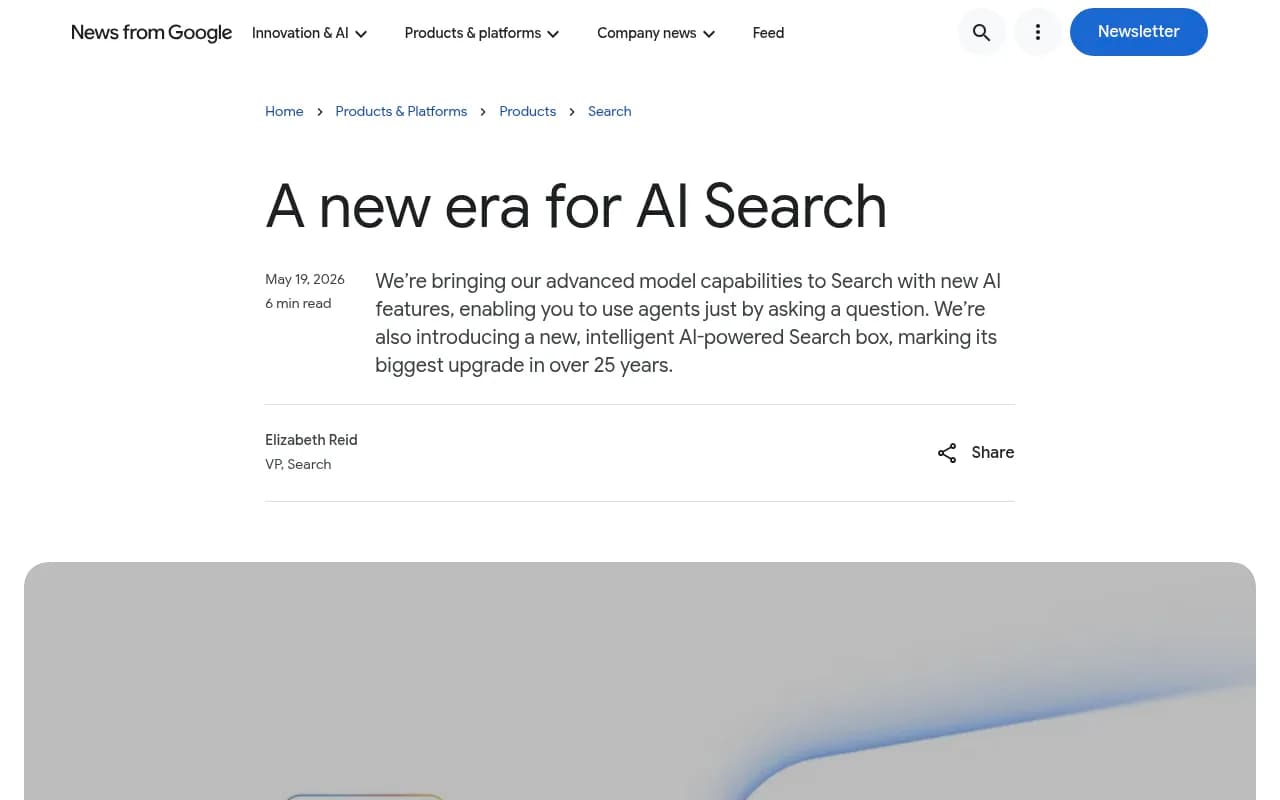
Google's I/O 2026 announcements pushed Search further toward agentic behavior, with AI Mode surpassing one billion monthly users and an AI-powered Search box the company calls its biggest upgrade in over 25 years.
More agentic search means more retrieval steps, more per-engine variation, and more platforms building their own indexes, as Meta's crawler surge shows. The disagreement between engines is not a phase that consolidation will smooth over. It's the new steady state.
That's actually good news for teams willing to do the work. If every engine cited the same sources, incumbents would win by default. Because they don't, a brand that publishes retrieval-ready content on its own domain, tailors lightly per engine, and tracks citations weekly across all of them can win visibility that competitors optimizing blindly for a single platform will never see.