Key takeaways
- AirOps is a capable GEO platform, but its opaque pricing and steep learning curve push many teams to look elsewhere
- The most valuable feature to look for in any alternative isn't just AI monitoring — it's answer gap analysis: knowing which prompts your competitors appear for that you don't
- Most tools in this space are monitoring-only dashboards; the ones worth paying for also help you create content that closes those gaps
- Promptwatch, Writesonic, and Profound are the strongest all-around alternatives for teams that want the full loop: find gaps, create content, track results
- Budget-conscious teams have solid options starting under $100/month
AirOps has built a genuinely impressive case study library. Webflow grew AI-attributed signups from 2% to over 10% in under a year using it. Chime tripled AI search citations in under four weeks. Those results are real, and they reflect what a well-executed GEO strategy can do.
But here's the friction: AirOps doesn't publish pricing. You need a sales call before you can evaluate cost. The Power Agents have a steep learning curve. And the platform is desktop-only, which is a surprisingly annoying constraint for distributed teams.
So if you're looking for alternatives — whether because of price, complexity, or just wanting to explore what else is out there — this guide covers nine tools that specifically include answer gap analysis. Not just monitoring. Not just rank tracking. Tools that show you which AI prompts your competitors are winning that you're not, and ideally help you do something about it.
That distinction matters more than it might seem. In 2026, a content gap isn't just a keyword you don't rank for. It's information you're not providing that causes AI models to cite your competitors instead of you. According to Ahrefs' December 2025 data, AI Overviews reduce clicks on the #1 organic result by 58%. If you're not appearing in AI responses, you're losing traffic that traditional SEO metrics won't even show you.

What to look for in an AirOps alternative
Before getting into the list, it's worth being clear about what separates useful tools from expensive dashboards.
The core workflow you want is: find which prompts your competitors appear for that you don't, understand why (what content they have that you're missing), create content that addresses those gaps, and then track whether AI models start citing you. That's the loop. Most tools only handle the first step.
When evaluating alternatives, look for:
- Answer gap analysis that shows competitor-level prompt visibility, not just your own
- Content generation or brief creation grounded in actual prompt data
- Tracking across multiple AI models (ChatGPT, Perplexity, Gemini, Claude, etc.)
- Prompt volume and difficulty data so you can prioritize
- Page-level citation tracking so you know what's working
The 9 best AirOps alternatives with answer gap analysis
1. Promptwatch
Promptwatch is the most complete alternative to AirOps for teams that want the full optimization loop, not just monitoring. It tracks how your brand appears across 10 AI models — ChatGPT, Perplexity, Google AI Overviews, Google AI Mode, Claude, Gemini, Meta/Llama, DeepSeek, Grok, and Mistral — and then actually helps you fix what's broken.
The Answer Gap Analysis feature is the core of its value proposition. It shows you exactly which prompts your competitors are visible for that you're not, with the specific content angles and topics that AI models want answers to but can't find on your site. From there, Content Agents generate articles, listicles, and comparisons grounded in real prompt data, citation patterns, prompt volumes, and competitor analysis. This isn't generic AI writing — it's content built around the specific gaps the analysis surfaces.
What sets Promptwatch apart from most competitors is the AI Crawler Logs feature. You get real-time logs of AI crawlers hitting your site — which pages they read, errors they encounter, how often they return, and when pages move from crawl to citation. Most tools in this space have no equivalent. It's the difference between guessing why you're not being cited and actually diagnosing the problem.
Pricing is transparent: Essential at $99/mo (1 site, 50 prompts, 5 articles), Professional at $249/mo (2 sites, 150 prompts, 15 articles, crawler logs), Business at $579/mo (5 sites, 350 prompts, 30 articles). A free trial is available.

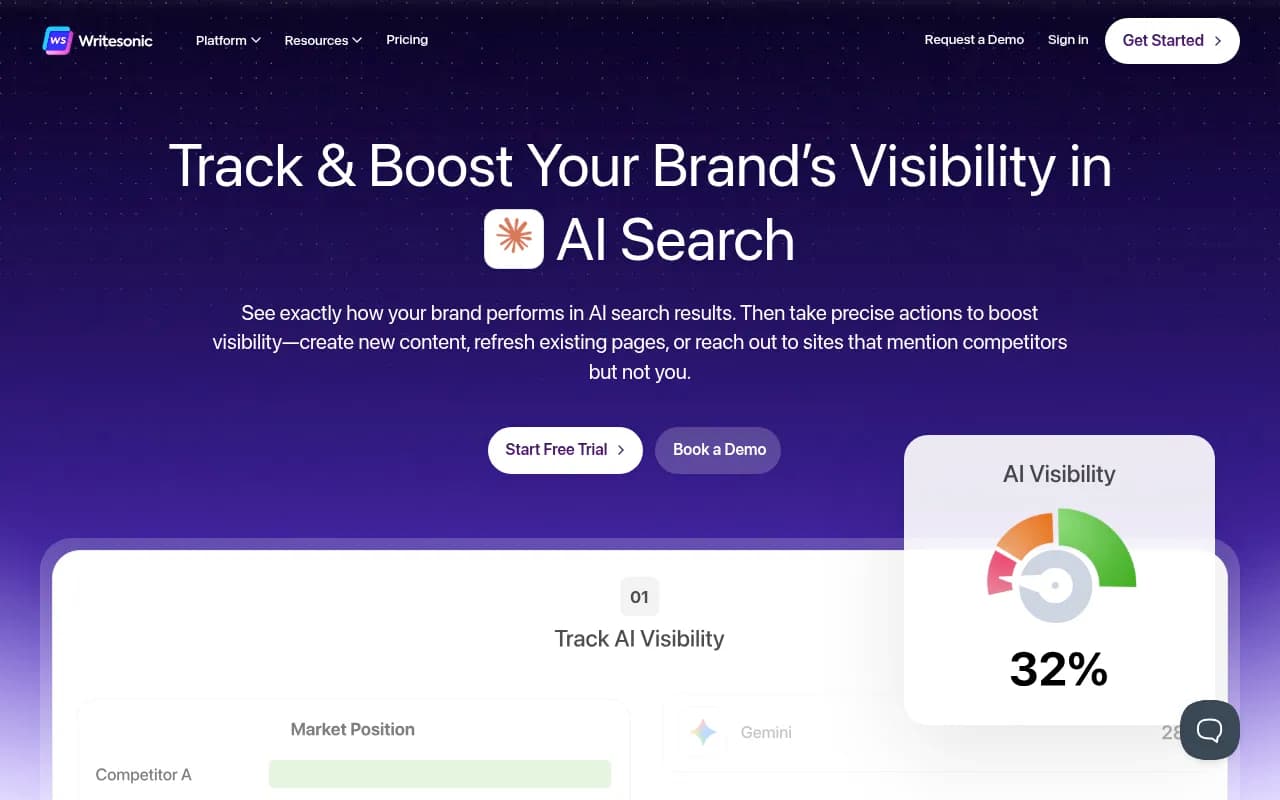
2. Writesonic GEO
Writesonic has evolved well beyond its origins as a copywriting tool. Its GEO module ($79/mo) is the most direct feature-for-feature AirOps competitor in terms of content volume — it produces 100+ source-backed articles with auto fact-checking, plus an AI Visibility Action Center for opportunity identification.
The Action Center is where the answer gap analysis lives. It surfaces prompts where competitors are visible and you're not, then feeds those directly into the content engine. The integration between gap discovery and content creation is tighter than most tools manage. If your primary bottleneck is content production volume rather than deep analytics, Writesonic is worth a serious look.
3. Profound
Profound is the G2 Winter 2026 Leader in AI visibility and has one of the stronger enterprise feature sets in the category. Its Agents module handles AI-optimized content generation, and the platform's analytics go deep on citation patterns and competitor visibility.
The answer gap analysis in Profound is solid — you can see which prompts competitors own and drill into what content is driving those citations. The main friction is price: it starts at $399/mo, which puts it in a different budget tier than most of the alternatives here. For larger teams with serious GEO budgets, it's a strong option.
4. Athena HQ
AthenaHQ is YC-backed and has some of the best-documented case studies in the GEO category. Its Deep Research content optimization AI agent (available on Enterprise) is genuinely impressive — it goes beyond surface-level gap identification to analyze what specific information your content is missing compared to what AI models are actually citing.
The monitoring capabilities are strong across 8+ AI search engines. The content optimization features are more focused on improving existing pages than generating net-new content, which makes it a better fit for teams with existing content libraries they want to optimize rather than teams starting from scratch.
Starting price is $295/mo.

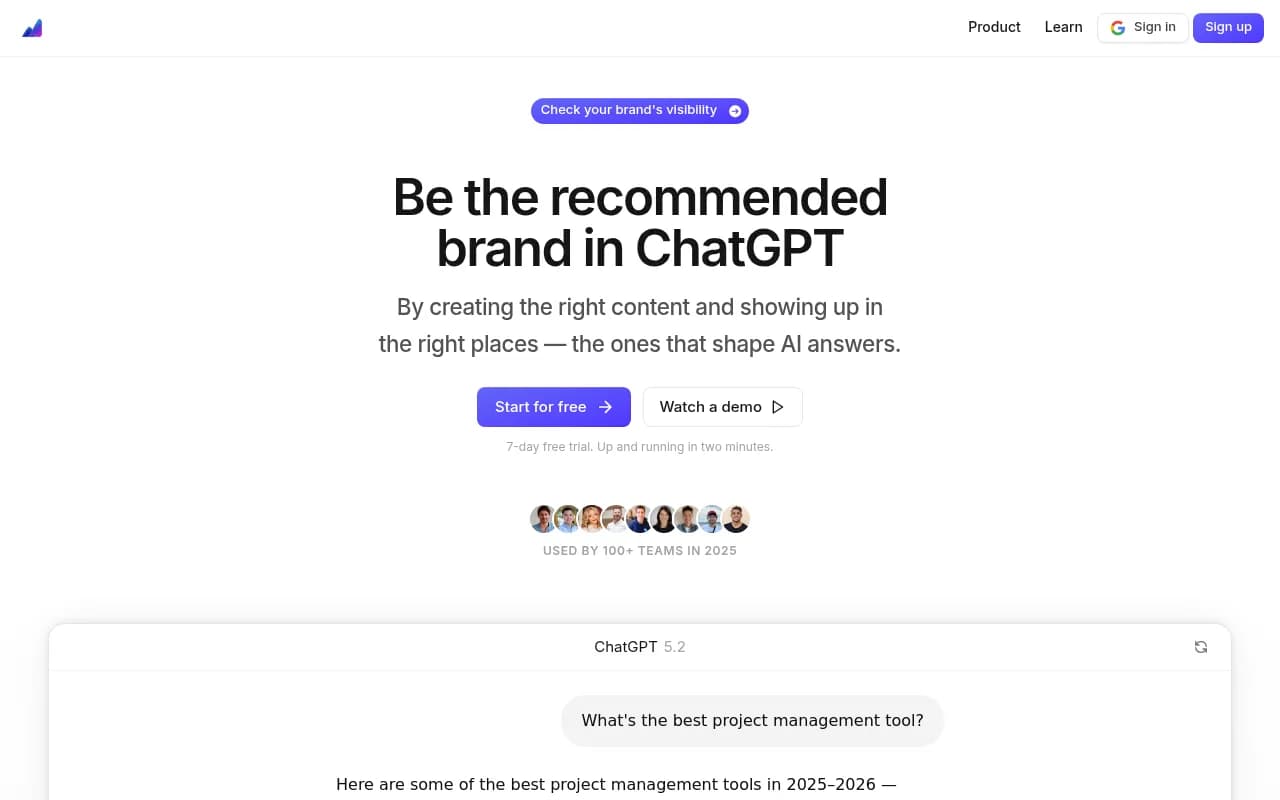
5. Airefs
Airefs is the budget-friendly option that punches above its weight on answer gap analysis. Starting at $24/mo, it includes on-site citation gap analysis and community discussion monitoring across Reddit, LinkedIn, Quora, and Medium — channels that directly influence what AI models cite but that most tools ignore entirely.
The done-for-you tier is interesting: it replaces the human-in-the-loop content workflows that AirOps offers at a fraction of the cost. If you're a small team or agency that wants actionable gap data without a four-figure monthly commitment, Airefs is worth evaluating.
6. MarketMuse
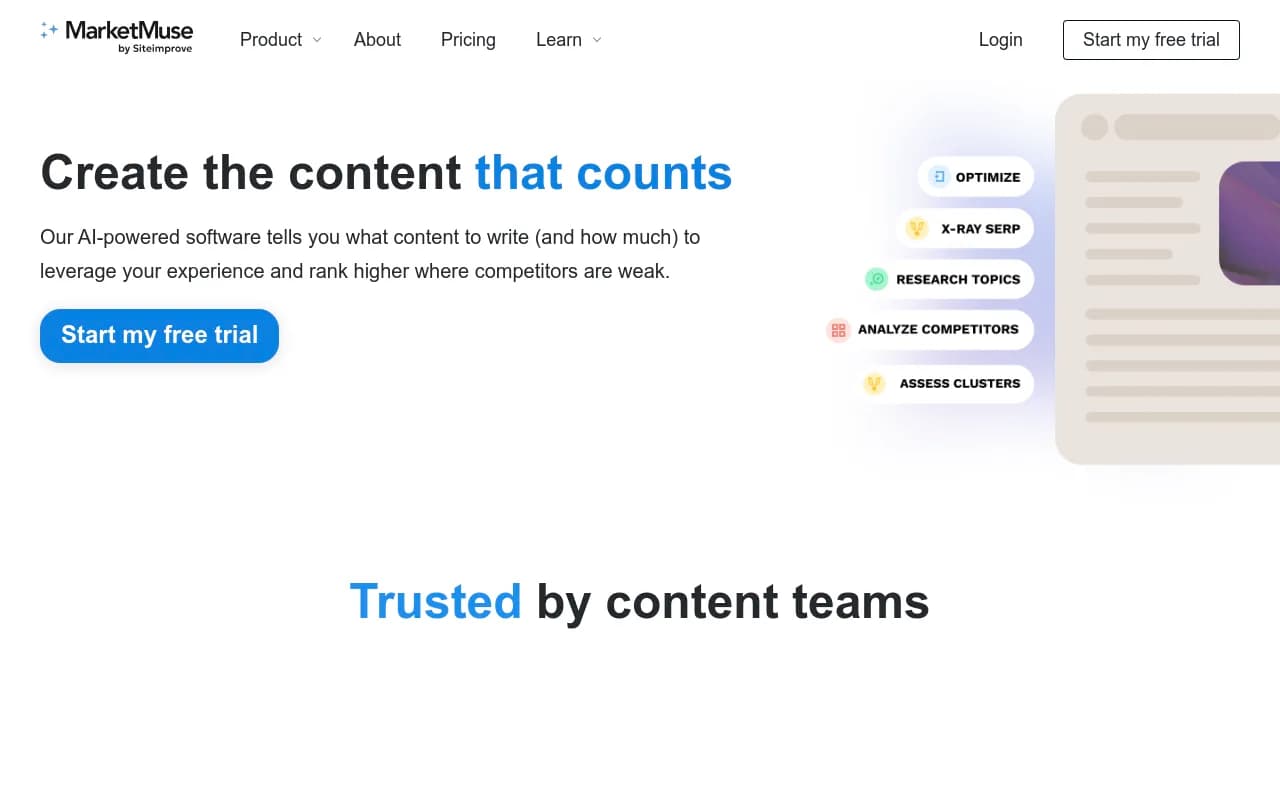
MarketMuse has been doing content gap analysis longer than most tools in this list have existed. Its AI-powered content strategy platform shows you what to write, how comprehensive to be, and where your existing content is leaving topics under-covered.
The gap analysis in MarketMuse is primarily topic and entity-based rather than prompt-based — it's excellent at showing you which subtopics your content is missing compared to what ranks well. For AI search specifically, this matters because AI models care about topical completeness. A page that covers 60% of the relevant entities for a topic will lose to one that covers 90%.
Where MarketMuse is weaker is in direct AI citation tracking. It doesn't show you which AI models are citing your competitors or why. It's a strong content strategy tool that complements AI visibility tracking rather than replacing it.
7. Surfer SEO
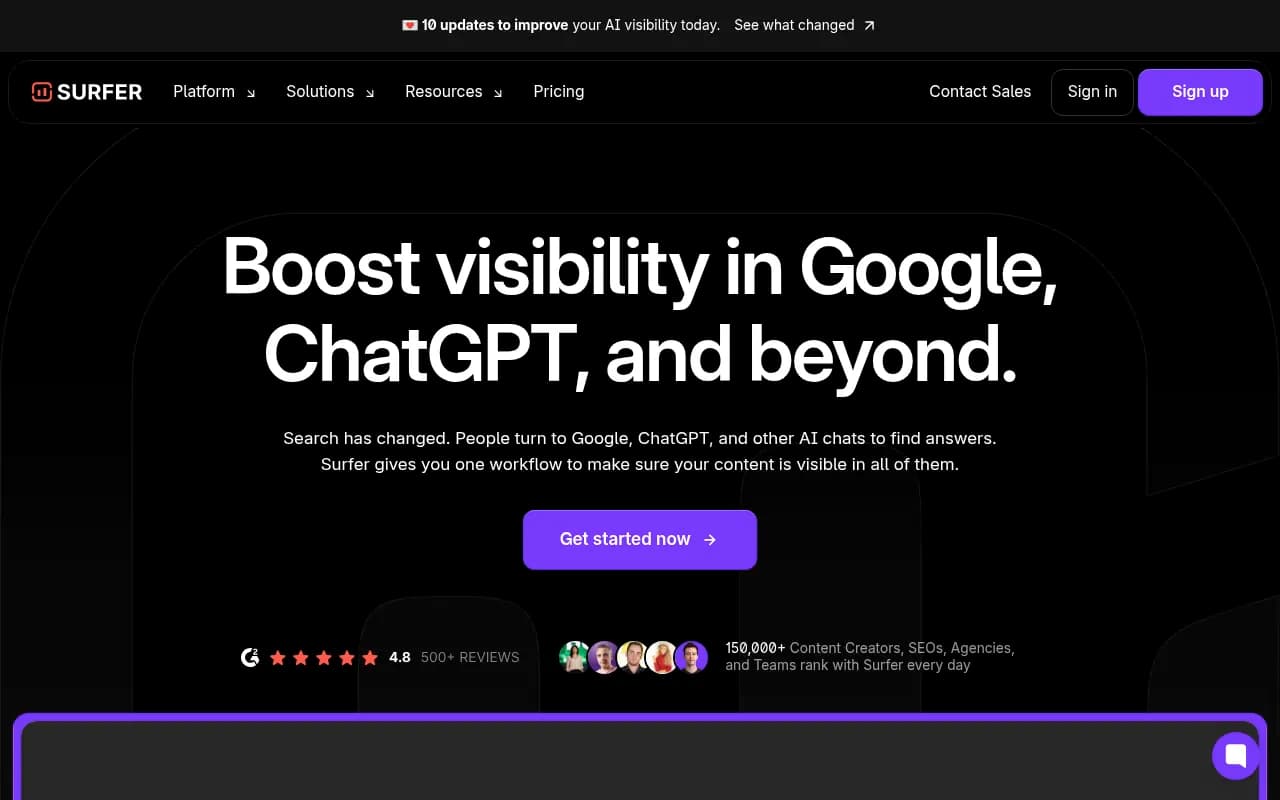
Surfer SEO's content optimization approach is built around NLP analysis of top-ranking pages, and its Content Editor gives you real-time feedback on what your content is missing. The gap analysis is keyword and entity-focused — you can see which terms and topics competitors cover that you don't, and the editor guides you to include them.
For AI search, Surfer's value is in helping you create content that's comprehensive enough to be cited. AI models favor pages that thoroughly cover a topic, and Surfer's scoring system pushes you toward that completeness. It doesn't track AI citations directly, but the content it helps you produce tends to perform better in AI responses.
The pricing is more accessible than most enterprise GEO tools, and the workflow is fast — you can go from brief to optimized draft in under an hour.
8. Frase
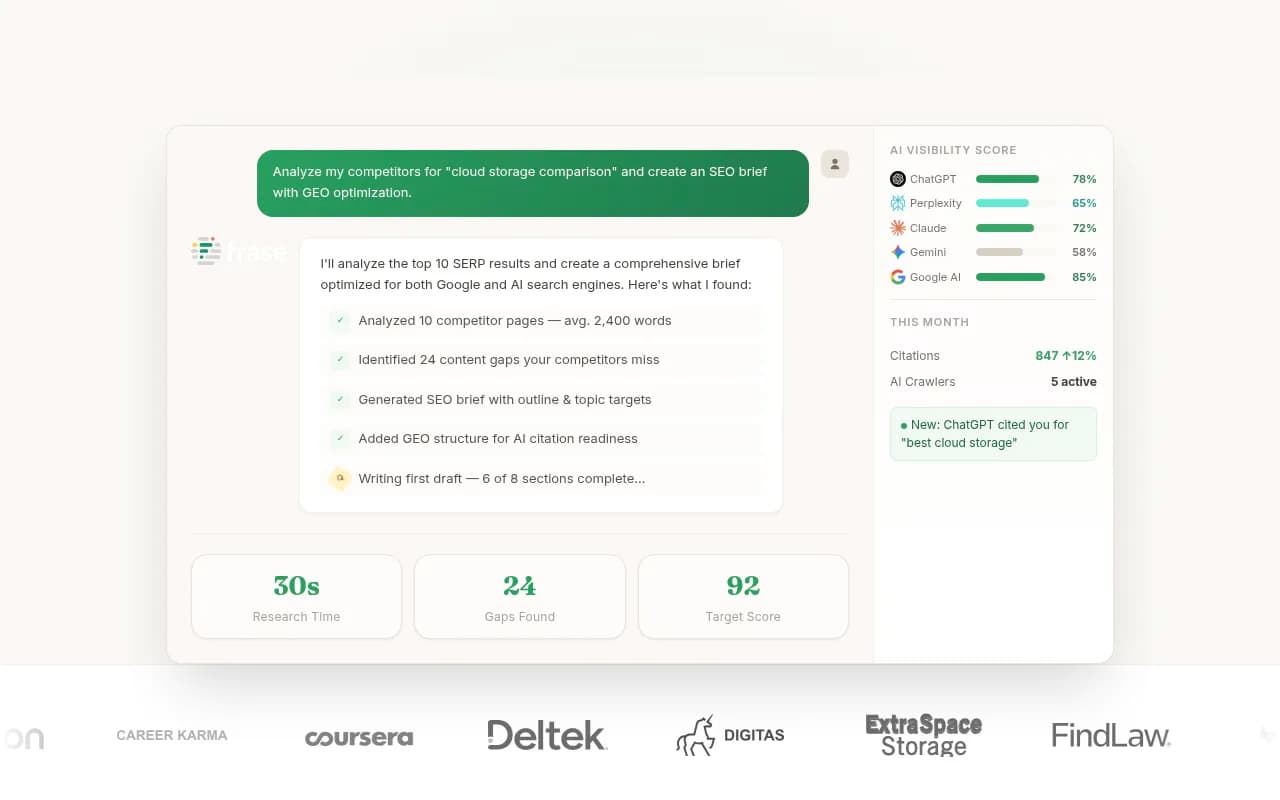
Frase is one of the more underrated tools in this space. Its research and brief creation workflow is genuinely fast — it pulls the top-ranking pages for a query, extracts the key topics and questions they cover, and shows you exactly what your content needs to include to compete.
The answer gap analysis in Frase is implicit rather than explicit: it doesn't show you "your competitor appears in ChatGPT for this prompt and you don't," but it does show you the content gaps that likely explain why. For teams that want to improve their AI citation rates through better content rather than through direct AI monitoring, Frase is a practical choice.
9. SearchAtlas LLM Visibility
SearchAtlas has expanded its platform to include LLM visibility tracking alongside its traditional SEO features. The LLM visibility module tracks how your brand appears across AI search engines and surfaces gaps where competitors are being cited and you're not.
What makes SearchAtlas interesting is that it doesn't just identify gaps — it can deploy fixes and content directly. The automation layer is more developed than most tools in this category, which matters if you're managing visibility at scale across multiple sites or clients.

Comparison table
| Tool | Starting price | Answer gap analysis | Content generation | AI models tracked | Best for |
|---|---|---|---|---|---|
| Promptwatch | $99/mo | Yes (prompt-level) | Yes (Content Agents) | 10 | Full GEO optimization loop |
| Writesonic GEO | $79/mo | Yes (Action Center) | Yes (100+ articles) | Multiple | High-volume content production |
| Profound | $399/mo | Yes | Yes (Agents) | Multiple | Enterprise teams |
| AthenaHQ | $295/mo | Yes (Deep Research) | Optimization-focused | 8+ | Optimizing existing content |
| Airefs | $24/mo | Yes (citation gaps) | Done-for-you tier | Multiple | Budget-conscious teams |
| MarketMuse | Custom | Topic/entity gaps | Brief generation | None (content focus) | Content strategy depth |
| Surfer SEO | ~$89/mo | Entity/keyword gaps | Content Editor | None (content focus) | Fast content optimization |
| Frase | ~$45/mo | Topic/question gaps | Brief + draft | None (content focus) | Research-heavy workflows |
| SearchAtlas | Custom | Yes (LLM-specific) | Yes (automated) | Multiple | Scale and automation |
The monitoring-only trap
One thing worth saying directly: a lot of tools in this space will show you impressive dashboards of where you're not appearing in AI responses. That data is real and it's useful. But if the tool stops there, you're paying for a problem statement without a solution.
The teams getting the best results from GEO in 2026 are the ones running a closed loop: they identify the specific prompts where competitors are visible and they're not, they create content that directly addresses those gaps, and they track whether that content starts getting cited. The monitoring is just the first step.
When evaluating any tool in this list, ask: "After I see the gap, what does this tool help me do about it?" The answer tells you whether you're looking at an optimization platform or an expensive reporting tool.
Which tool should you choose?
If you want the most complete alternative to AirOps with transparent pricing and a full gap-to-content workflow, Promptwatch is the strongest option. The combination of prompt-level gap analysis, Content Agents, and AI Crawler Logs gives you visibility into the full picture — not just where you're missing, but why, and what to do about it.
If budget is the primary constraint, Airefs at $24/mo or Frase at ~$45/mo give you meaningful gap analysis without the enterprise price tag.
If you're an enterprise team with a serious GEO budget and want the deepest analytics, Profound and AthenaHQ are both worth evaluating — though you'll want to request demos from both before committing.
If content production volume is your bottleneck more than analytics depth, Writesonic GEO's content engine is hard to beat at $79/mo.
The right choice depends on where you are in your GEO maturity. Early-stage teams often need to start with gap identification and content creation. More mature teams need the crawler logs, page-level citation tracking, and attribution data to know what's actually working. Pick the tool that matches where you are now, not where you hope to be in 18 months.
A note on traditional SEO tools
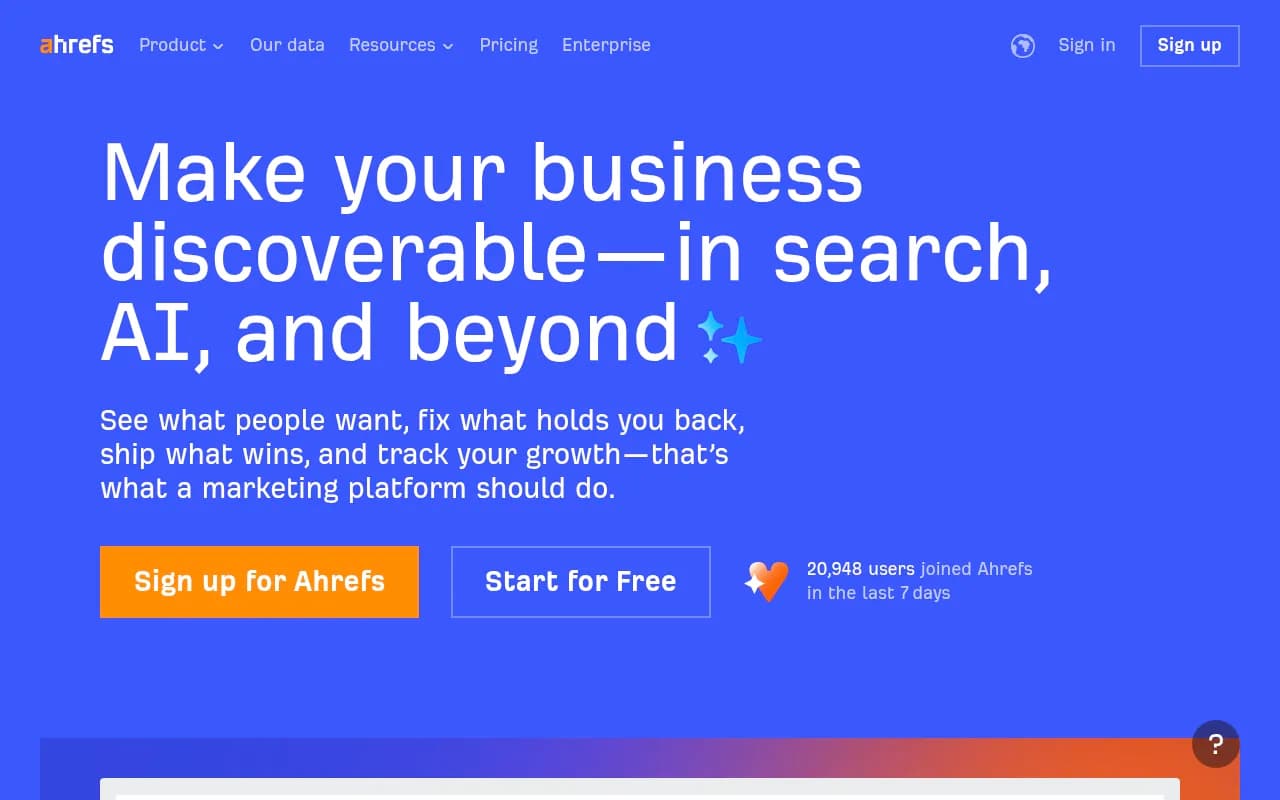
Semrush and Ahrefs both have features that touch on content gap analysis, and they're worth mentioning because many teams already have subscriptions. Semrush's content gap tool is solid for keyword-level gaps. Ahrefs Brand Radar tracks brand mentions in AI search. But neither was built for GEO, and it shows — fixed prompt sets, no AI traffic attribution, and limited ability to connect gap data to content creation workflows.
If you're already paying for one of these tools, don't cancel it — the traditional SEO data is still valuable. But don't expect it to replace a dedicated GEO platform for AI visibility work.
The bottom line
AirOps is a good platform. The case studies are real, the features are capable, and the Power Agents are genuinely useful for teams that invest in learning them. But "good" and "right for your team" aren't the same thing.
If the pricing opacity bothers you, if the learning curve is slowing you down, or if you just want to see what else is available before committing — the nine tools in this guide give you a solid range of options. The common thread worth prioritizing: find a tool that doesn't just show you the gap, but helps you close it.