GEO Metrics Review 2026
GEO Metrics is an AI search visibility monitoring platform that tracks how brands appear in ChatGPT, Perplexity, Gemini, and other LLMs. Built for marketers and SEO teams wanting to measure AI brand presence.
Key takeaways
- GEO Metrics is an AI search visibility monitoring tool focused on tracking brand presence across major LLMs like ChatGPT, Perplexity, and Gemini
- Monitoring-only platform: unlike Promptwatch, GEO Metrics does not appear to offer content gap analysis, AI content generation, AI crawler logs, or traffic attribution -- meaning you can see where you're invisible but have no built-in way to fix it
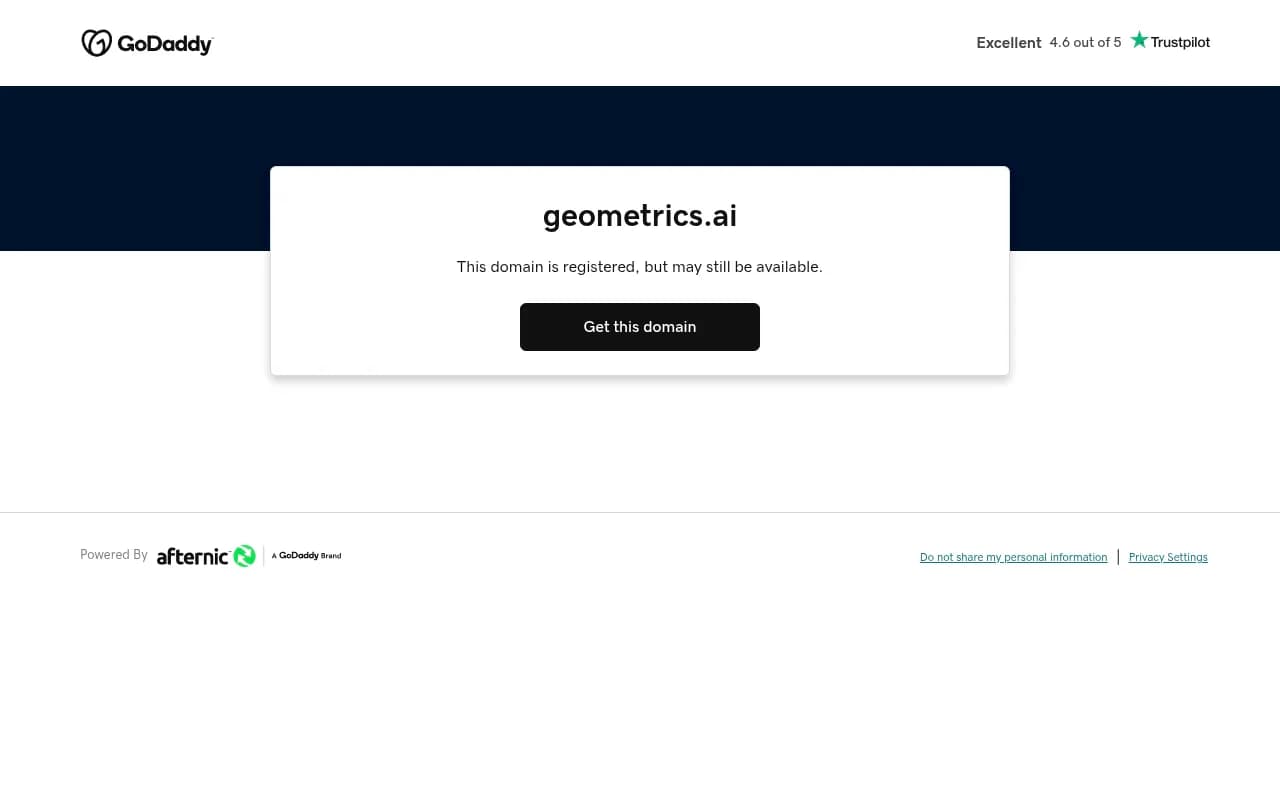
- Pricing starts at an accessible tier but scales quickly, and the website itself appears to be in a transitional state (the primary domain is currently listed as a GoDaddy parked/for-sale page)
- Best suited for small marketing teams or individual practitioners who want basic AI visibility data without a heavy feature set
- Teams that need to act on their AI visibility data -- not just observe it -- will likely outgrow this tool quickly
GEO Metrics positions itself as a brand visibility monitoring platform built specifically for the AI search era. The core promise is straightforward: track how your brand appears when people ask ChatGPT, Perplexity, Gemini, and other large language models questions relevant to your industry. As AI search has moved from novelty to a real traffic channel, a wave of tools has emerged to help marketers understand their presence in these systems. GEO Metrics is one of them.
The target audience appears to be marketing professionals, SEO practitioners, and small-to-mid-sized businesses that want to get a handle on AI search visibility without committing to an enterprise-grade platform. The tool's pricing structure -- with tiers aimed at individuals and dedicated professionals -- suggests it's not primarily chasing large agency or enterprise contracts, at least not at launch.
One important caveat before diving in: at the time of this review, the primary domain (geometrics.ai) resolves to a GoDaddy domain-for-sale landing page. This is a significant red flag for any prospective customer evaluating the tool's stability and longevity. It's possible the product operates from a subdomain or alternate URL, but the main domain situation raises legitimate questions about the company's current operational status. Pricing and feature information referenced here comes from search-indexed content and cached pages rather than a live product experience.
Key features
Brand mention tracking across LLMs The core feature is monitoring how often and in what context your brand name appears in AI-generated responses. GEO Metrics queries major AI models with prompts relevant to your industry and records whether your brand is mentioned, how prominently, and in what sentiment. This is table stakes for any AI visibility tool, and GEO Metrics covers the main models users care about: ChatGPT, Perplexity, and Gemini at minimum.
Visibility scoring Rather than raw mention counts, the platform translates monitoring data into a visibility score that gives marketers a single number to track over time. This is useful for reporting to stakeholders who don't want to wade through raw data. The score presumably accounts for mention frequency, position in the response, and sentiment -- though the exact methodology isn't publicly documented in detail.
Competitor comparison GEO Metrics lets you track competitor brands alongside your own, so you can see relative visibility rather than just absolute numbers. Knowing that your brand appears in 12% of relevant AI responses means more when you also know your main competitor appears in 34%. This competitive framing is standard across AI visibility tools but is genuinely useful for prioritization.
Prompt customization Users can define the prompts used to query AI models, which matters because the questions you track should reflect how your actual customers search. Generic prompts produce generic data. The ability to customize means a B2B SaaS company can track "what's the best project management tool for remote teams" rather than just broad category queries.
Trend reporting The platform tracks visibility over time, so you can see whether your AI presence is improving or declining week-over-week. This is important because AI model training and citation patterns shift -- a brand that was well-cited six months ago might have dropped off as models updated.
Transparent pricing tiers GEO Metrics advertises "no hidden costs, no surprises" pricing, which is a reasonable differentiator in a market where several competitors bury their real costs behind sales calls. The indexed pricing shows tiers aimed at individuals ($499) and professionals ($899), though whether these are monthly or annual figures isn't entirely clear from available information.
AI search-specific focus Unlike traditional SEO tools that have bolted on AI monitoring as an afterthought, GEO Metrics is built specifically for the AI search context. This means the interface and reporting are designed around LLM visibility concepts rather than adapted from keyword rank tracking.
Who is it for
GEO Metrics seems best suited for individual marketers or small in-house teams who are just starting to think about AI search visibility and want a dedicated tool without a steep learning curve or enterprise price tag. Think a solo SEO consultant managing a handful of clients, or a marketing manager at a 50-person company who needs to show leadership that the brand is (or isn't) showing up in AI answers. The lower pricing tier explicitly targets "individual learners looking to build their skills," which suggests the tool is also positioned as an educational entry point into GEO/AEO concepts.
The professional tier would fit a dedicated SEO or content strategist at a mid-market company who needs more prompt volume and more detailed reporting. Someone running AI visibility tracking as a core part of their role, not just a side project.
Who should probably look elsewhere: agencies managing 10+ client sites, enterprise brands with complex multi-region and multi-language requirements, and any team that needs to do more than monitor. If your goal is to understand your AI visibility gaps and then actually create content to close those gaps, GEO Metrics doesn't appear to offer the content generation, gap analysis, or traffic attribution features you'd need. You'd be paying for data and then figuring out what to do with it on your own.
Integrations and ecosystem
Based on available information, GEO Metrics does not appear to have a broad integration ecosystem. There's no clear evidence of native connections to Google Search Console, Looker Studio, Slack, or other common marketing stack tools. This is a notable gap -- most marketing teams want their AI visibility data to flow into their existing reporting infrastructure rather than live in a separate dashboard.
There's no public API documentation visible, which limits the tool's usefulness for teams that want to build custom workflows or pull data into their own systems. Export capabilities (CSV, PDF reporting) are likely present given the pricing tier structure, but aren't prominently documented.
No browser extension or mobile app appears to be available, which is consistent with the tool's positioning as a focused web dashboard rather than a full platform.
Pricing and value
From indexed pricing pages, GEO Metrics offers at least two tiers:
- Essentials: $499 -- described as "perfect for individual learners looking to build their skills"
- Professional: $899 -- described as "our most popular option for dedicated professionals"
It's not confirmed whether these are monthly or annual prices. If monthly, the Professional tier at $899/month is on the higher end for a monitoring-only tool, especially compared to platforms that offer significantly more functionality at similar or lower price points. If annual, the math changes considerably.
The "no hidden costs, no surprises" messaging is a genuine positive -- too many tools in this space require a sales call just to get a price. That said, the value proposition depends heavily on what's included at each tier in terms of prompt volume, number of brands tracked, and reporting depth.
For context: Promptwatch's Professional plan at $249/month covers 2 sites, 150 prompts, 15 AI-generated articles per month, crawler logs, and traffic attribution. If GEO Metrics is priced at $899/month for monitoring alone, the value comparison is difficult to justify unless the monitoring depth is substantially superior.
Strengths and limitations
What it does well
- Focused scope: Being purpose-built for AI search visibility means the interface isn't cluttered with legacy SEO features that don't apply to LLM monitoring
- Accessible entry point: The individual/learner tier suggests the tool is designed to be approachable for people new to GEO concepts, which has real value as a category education tool
- Transparent pricing: Publishing prices publicly without requiring a demo call is a genuine differentiator in a market where many competitors hide their costs
Honest limitations
- Monitoring only: This is the biggest issue. GEO Metrics, based on available information, tracks visibility but doesn't help you improve it. There's no answer gap analysis to show which prompts competitors rank for that you don't, no AI content generation to help you create content that gets cited, and no AI crawler logs to show how AI engines are actually reading your site. Promptwatch covers all of these in a single platform.
- No traffic attribution: Knowing your brand appears in AI responses is useful, but knowing whether those appearances drive actual website traffic and conversions is what makes the data actionable. GEO Metrics doesn't appear to offer the visitor analytics or server log analysis needed to close this loop.
- Domain stability concerns: The primary domain currently resolving to a for-sale page is a serious operational concern. Any tool you're paying hundreds of dollars per month for should have a stable, professional web presence.
- Limited integrations: No GSC connection, no API, no Looker Studio export means the data stays siloed in the GEO Metrics dashboard rather than flowing into your existing reporting stack.
- No Reddit or YouTube tracking: AI models frequently cite Reddit threads and YouTube content. Tools that ignore these sources are missing a significant part of the citation picture.
Bottom line
GEO Metrics is a monitoring-focused AI search visibility tool that could work for individual practitioners or small teams taking their first steps into GEO tracking. The transparent pricing and focused scope are genuine positives. But the monitoring-only approach, apparent lack of integrations, missing content optimization features, and the current domain situation all give pause.
For teams that need to do more than watch their AI visibility scores -- teams that want to find gaps, create content that actually gets cited, and connect AI appearances to real traffic -- Promptwatch is the more complete platform, covering content gap analysis, AI writing, crawler logs, and traffic attribution that GEO Metrics doesn't offer.
Best use case: A solo marketer or consultant who wants a simple dashboard to track brand mentions in AI search and doesn't yet need to act on the data.
Frequently asked questions
What is GEO Metrics?
How much does GEO Metrics cost?
Does GEO Metrics help you improve AI visibility, or just monitor it?
Who is GEO Metrics best for?
How does GEO Metrics compare to Promptwatch?
Does GEO Metrics integrate with other tools like Google Search Console?
Similar and alternative tools to GEO Metrics