Key Takeaways
- Promptwatch is the best alternative if you need end-to-end AI search optimization -- it doesn't just monitor where you appear in ChatGPT and Claude, it shows you exactly what content is missing and generates articles engineered to get cited
- Semrush works if you're already using their SEO suite and want basic AI visibility tracking bolted on, but it uses fixed prompts and lacks content gap analysis
- Surfer SEO is strong for traditional Google SEO with AI writing features, but has limited AI search optimization capabilities compared to dedicated GEO platforms
- Zapier excels at connecting 8,000+ apps with AI-powered workflows, but isn't built specifically for content creation or AI search visibility
- Jasper and Writer are enterprise AI platforms focused on brand-safe content automation at scale, not AI search optimization
AirOps positions itself as an "end-to-end content engineering platform" that helps brands create content that wins AI search. It combines workflow automation with GEO capabilities, starting at $200/mo for the Solo plan and scaling to $2,000/mo for Pro. But it's not the only option -- and depending on what you actually need, it might not be the best one.
The real question: are you trying to automate content workflows, optimize for AI search visibility, or both? Most AirOps alternatives lean heavily toward one or the other. Very few do both well.
Why Look for AirOps Alternatives?
AirOps markets itself around "content that wins AI search," but the reality is more nuanced. The platform is workflow-first -- it's built around automating repetitive content tasks at scale. The GEO features exist, but they're not the core strength.
Common reasons teams look elsewhere:
- Price: $200/mo minimum is steep if you're a small team or agency just testing AI search optimization
- Workflow complexity: The platform assumes you want to build multi-step automation workflows. If you just need to track AI visibility and generate optimized content, the setup feels like overkill
- Limited AI search intelligence: AirOps doesn't show you which prompts competitors rank for, what content gaps exist, or how AI models are actually citing your pages. It generates content, but without the deep prompt intelligence that dedicated GEO platforms provide
- Task-based pricing: Additional tasks cost $6-$9 per 1,000 depending on your plan. If you're running high-volume workflows, costs add up fast
If you're primarily focused on AI search visibility and content optimization for ChatGPT, Claude, Perplexity, and Gemini, you probably need a different tool. If you're automating complex marketing workflows that happen to include some content generation, AirOps makes more sense.
Promptwatch

Promptwatch is the top alternative if AI search visibility is your actual goal. It's the only platform rated as a "Leader" across all GEO categories in a 2026 comparison of 12 competitors, and the core difference is simple: most tools show you data and leave you stuck. Promptwatch shows you what's missing, then helps you fix it.
The action loop works like this:
- Answer Gap Analysis shows exactly which prompts competitors are visible for but you're not. You see the specific content your website is missing -- the topics, angles, and questions AI models want but can't find on your site.
- AI writing agent generates articles, listicles, and comparisons grounded in real citation data (880M+ citations analyzed), prompt volumes, persona targeting, and competitor analysis. This isn't generic SEO filler -- it's content engineered to get cited by ChatGPT, Claude, Perplexity, and other AI models.
- Page-level tracking shows your visibility scores improve as AI models start citing your new content. You see exactly which pages are being cited, how often, and by which models. Close the loop with traffic attribution (code snippet, GSC integration, or server log analysis) to connect visibility to actual revenue.
This cycle -- find gaps, generate content, track results -- is what makes Promptwatch an optimization platform instead of just another tracker.
What it does better than AirOps:
- AI Crawler Logs: Real-time logs of AI crawlers (ChatGPT, Claude, Perplexity, etc.) hitting your website -- which pages they read, errors they encounter, how often they return. Most competitors lack this entirely. AirOps doesn't have it.
- Prompt Intelligence: Volume estimates and difficulty scores for each prompt, plus query fan-outs that show how one prompt branches into sub-queries. Prioritize high-value, winnable prompts instead of guessing.
- Citation & Source Analysis: See exactly which pages, Reddit threads, YouTube videos, and domains AI models cite in their responses. Know where to publish and what to optimize.
- Reddit & YouTube Insights: Surface discussions that directly influence AI recommendations -- a channel most competitors ignore entirely.
- ChatGPT Shopping Tracking: Monitor when your brand appears in ChatGPT's product recommendations and shopping carousels.
- Competitor Heatmaps: Compare your AI visibility vs competitors across LLMs. See who's winning for each prompt and why.
Trade-offs:
Promptwatch is built specifically for AI search optimization. If you need complex workflow automation that connects dozens of tools and triggers multi-step processes, it's not the right fit. It doesn't try to be Zapier. It focuses on one thing: making your brand visible and cited in AI search results.
Also, the content generation is optimized for AI search, not traditional Google SEO. If you're still primarily focused on ranking in Google's blue links, Surfer SEO or Semrush might be better starting points.
Pricing:
- Essential $99/mo (1 site, 50 prompts, 5 articles)
- Professional $249/mo (2 sites, 150 prompts, 15 articles, crawler logs, state/city tracking)
- Business $579/mo (5 sites, 350 prompts, 30 articles)
- Agency/Enterprise custom pricing available
Free trial available. Annual billing discounts.
Best for: Marketing teams, SEO teams, digital agencies, and any brand that wants to be visible and rank in AI search results. If you're serious about GEO and want a platform that actually helps you improve -- not just monitor -- this is the top choice.
Semrush
Semrush is the all-in-one digital marketing platform most SEO teams already use. In 2025-2026, they added AI Visibility tracking as a $99/mo add-on to their existing plans. If you're already paying for Semrush and want basic AI search monitoring bolted on, it's convenient. But it's not a dedicated GEO platform.
What it does:
- Tracks brand mentions in ChatGPT, Perplexity, Gemini, and Google AI Overviews
- Shows sentiment and competitive perception
- Provides AI optimization tips based on traditional SEO data
- Integrates with Semrush's existing keyword research, backlink analysis, and site audit tools
How it compares to AirOps:
Semrush is monitoring-focused. It shows you where you appear in AI responses, but it doesn't help you create content optimized for AI search. AirOps at least has workflow automation and content generation built in. Semrush expects you to take the insights and execute elsewhere.
The AI Visibility add-on uses fixed prompts -- you can't customize the questions being tracked or add your own. This is a major limitation if you're in a niche industry or want to track specific use cases. Promptwatch, by contrast, lets you track any prompt you want.
Trade-offs:
Semrush is a traditional SEO tool that added AI visibility as an afterthought. It doesn't have crawler logs, no visitor analytics, no content gap analysis, and no AI traffic attribution. The AI Visibility add-on is essentially a dashboard that shows you data without helping you act on it.
If you're already a Semrush customer and want to dip your toes into AI search monitoring, the $99/mo add-on is a low-risk starting point. But if AI search is a real priority, you'll quickly hit the limits and need a dedicated platform.
Pricing:
- Pro+ $249/mo (includes traditional SEO tools)
- Business+ $499/mo
- AI Visibility add-on: $99/mo on top of base plan
- 7-day free trial
Best for: Existing Semrush customers who want basic AI visibility tracking without switching platforms. Not ideal if AI search optimization is a core focus.
Surfer SEO
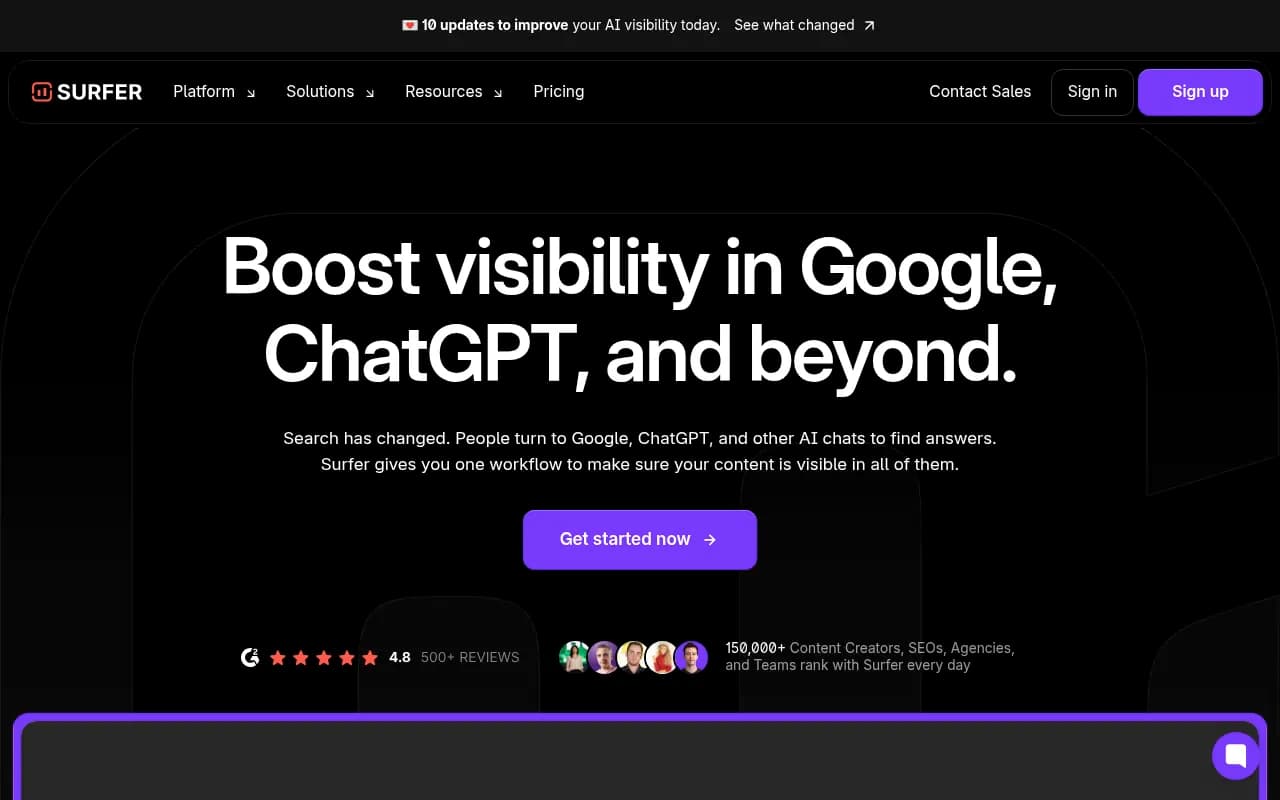
Surfer SEO is a content optimization platform built around traditional Google SEO. It analyzes top-ranking pages and suggests optimizations to improve search visibility. In 2025-2026, they added features to help with AI search, but the core product is still Google-first.
What it does:
- AI content writing with real-time on-page SEO recommendations
- Analyzes top-ranking Google pages and suggests keyword density, heading structure, content length
- Content audit tools to identify underperforming pages
- SERP analyzer to understand what's ranking and why
How it compares to AirOps:
Surfer is focused on creating content that ranks in Google. AirOps is focused on workflow automation with some GEO capabilities. Neither is a pure AI search optimization platform, but they approach content creation from different angles.
Surfer's AI writing is optimized for Google's algorithm -- keyword density, semantic relevance, content structure. It doesn't analyze how ChatGPT or Claude cite content, what prompts drive AI recommendations, or which sources AI models prefer. If you're trying to rank in AI search, Surfer's recommendations won't get you there.
Trade-offs:
Surfer is excellent for traditional SEO. If you're still focused on Google rankings and want AI-assisted writing, it's a solid choice. But it's not built for AI search optimization. No prompt tracking, no citation analysis, no crawler logs, no AI traffic attribution.
The pricing is also article-based. You get 30 articles/mo on the Essential plan, 300 articles/mo on the Max plan. If you're creating high volumes of content, costs scale quickly.
Pricing:
- Essential $99/mo (30 articles, 1 user)
- Advanced $199/mo (100 articles, 5 users)
- Max $399/mo (300 articles, 10 users, 30 AI articles)
- 7-day money-back guarantee
- Annual billing saves 20%
Best for: Teams focused on traditional Google SEO who want AI-assisted content writing. Not ideal if AI search visibility is the primary goal.
Copy.ai
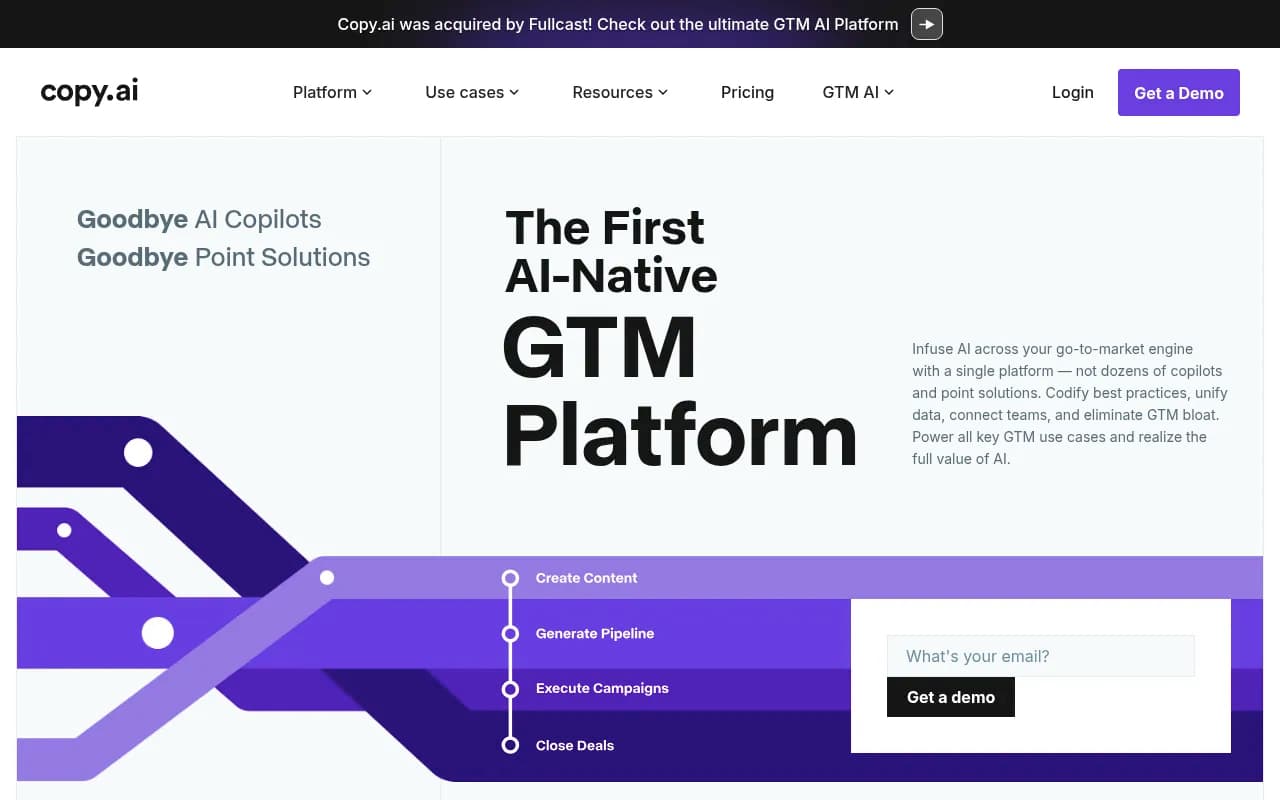
Copy.ai started as an AI copywriting tool for marketing content -- social posts, ad copy, email campaigns. Over time, it evolved into a broader GTM (go-to-market) AI platform. In 2025, Copy.ai was acquired by Fullcast, and the product is now positioned as an "AI-native GTM platform" that infuses AI across sales, marketing, and operations.
What it does:
- AI copywriting templates for marketing content (ads, emails, social posts, blog intros)
- Workflow automation for GTM processes (lead routing, sales enablement, campaign execution)
- Integrations with CRM, email, and marketing tools
- AI agents that can execute multi-step tasks
How it compares to AirOps:
Copy.ai and AirOps are both workflow automation platforms with AI content generation. The difference is focus: Copy.ai is GTM-first (sales, marketing, operations), while AirOps is content-first (SEO, GEO, content engineering).
Neither is built specifically for AI search optimization. Copy.ai doesn't track AI visibility, analyze citations, or help you understand how ChatGPT and Claude recommend brands. It's a copywriting and workflow tool, not a GEO platform.
Trade-offs:
Copy.ai is strong if you need AI-powered GTM workflows -- automating lead routing, sales follow-ups, campaign execution. It's not strong if you need to optimize for AI search visibility. No prompt tracking, no citation analysis, no crawler logs.
The pricing is also usage-based with credits. Pro plan is $249/mo for 10k credits. Enterprise starts around $1,000-$2,000/mo. If you're running high-volume workflows, costs add up.
Pricing:
- Pro $249/mo (10k credits)
- Enterprise custom pricing (starts ~$1,000-$2,000/mo)
Best for: GTM teams (sales, marketing, operations) who need AI-powered workflow automation. Not ideal for AI search optimization or GEO.
Jasper
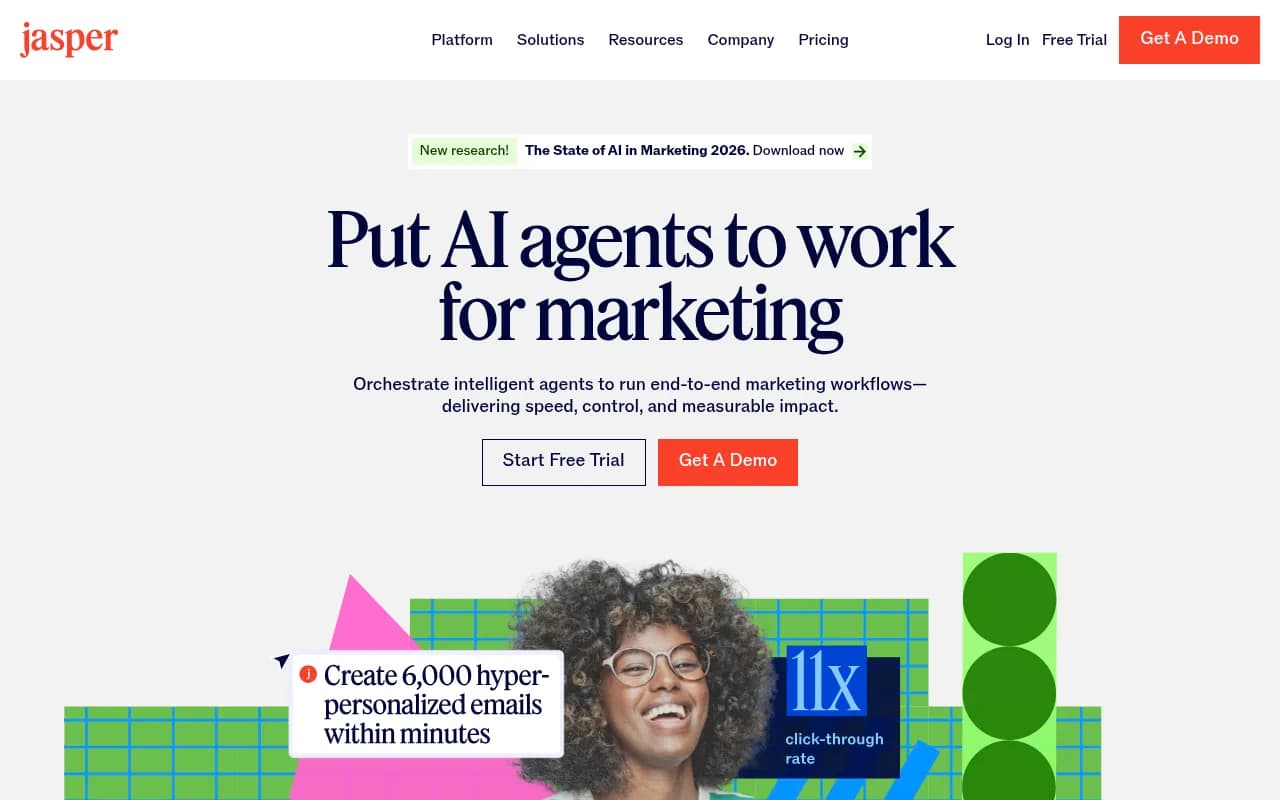
Jasper is an enterprise AI content platform focused on brand-safe, on-brand content creation at scale. It's used by large marketing teams that need to produce high volumes of content while maintaining strict brand guidelines and compliance.
What it does:
- AI content generation with brand voice and style guide enforcement
- Visual guidelines to ensure on-brand images and design
- Workflow orchestration with AI agents that execute multi-step marketing tasks
- Enterprise-grade governance, security, and compliance
How it compares to AirOps:
Jasper is enterprise-first. It's built for large marketing teams at Fortune 500 companies that need to produce thousands of assets per month while maintaining brand consistency. AirOps is more accessible to mid-market teams and agencies.
Neither is built specifically for AI search optimization. Jasper focuses on brand-safe content creation, not AI visibility tracking or GEO.
Trade-offs:
Jasper is expensive. Creator plan is $49/mo, Pro is $59/mo, but the real value is in the Business plan, which starts around $500-$1,000/mo. It's overkill for small teams or agencies.
It also doesn't track AI search visibility, analyze citations, or help you understand how AI models recommend brands. It's a content creation platform, not a GEO platform.
Pricing:
- Creator $49/mo
- Pro $59/mo
- Business custom pricing (starts ~$500-$1,000/mo)
- 7-day free trial
- Annual billing saves 15-20%
Best for: Enterprise marketing teams that need brand-safe, high-volume content creation with strict governance. Not ideal for AI search optimization.
Zapier
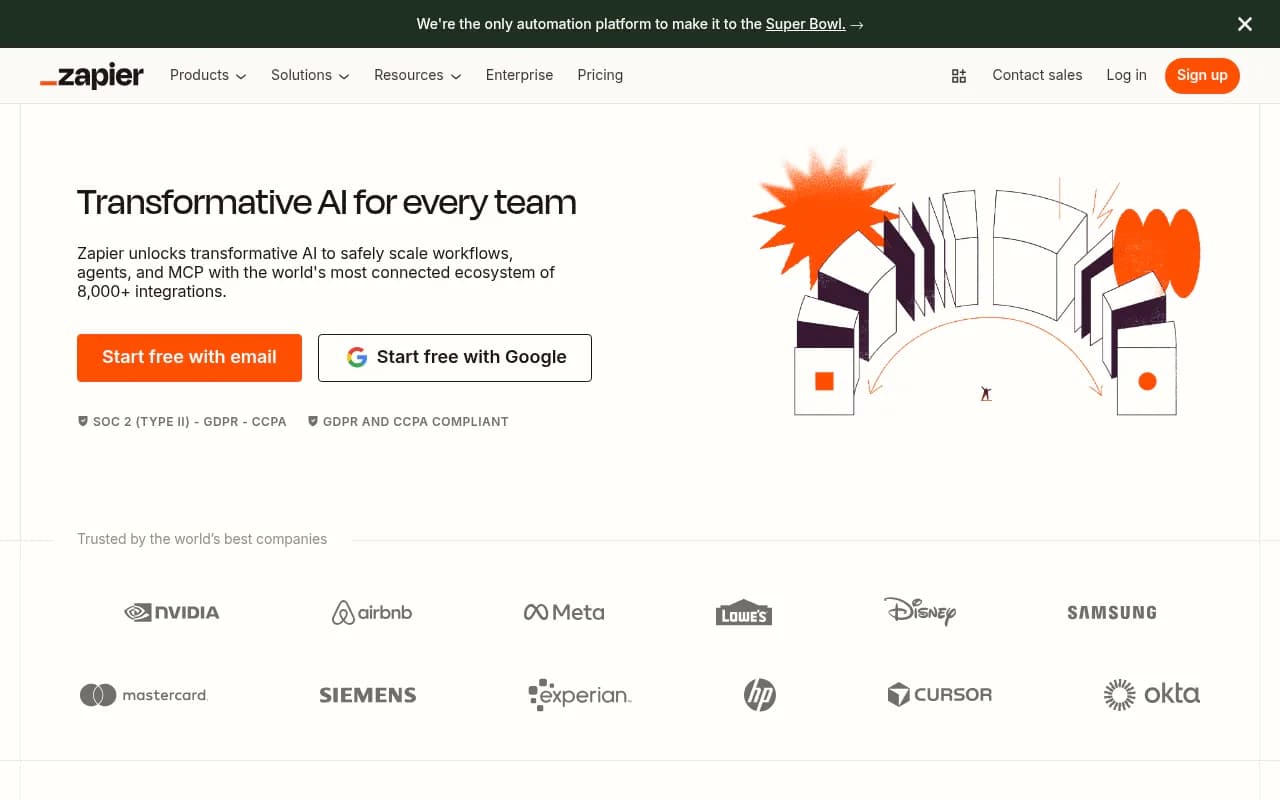
Zapier is the leading automation platform that connects 8,000+ apps and services. It's not a content creation tool or a GEO platform -- it's a workflow automation tool that lets you build multi-step processes without coding.
What it does:
- Connects 8,000+ apps (Google Sheets, Slack, HubSpot, Salesforce, etc.)
- AI-powered workflows, agents, and chatbots
- Automates repetitive tasks (lead routing, data entry, notifications, reporting)
- No-code interface for building complex workflows
How it compares to AirOps:
Zapier is pure automation. It doesn't generate content, track AI visibility, or optimize for AI search. AirOps has workflow automation built in, but it's focused on content creation and GEO. Zapier is broader and more flexible -- you can automate anything, not just content workflows.
Trade-offs:
Zapier is excellent at connecting apps and automating workflows. It's not built for content creation or AI search optimization. If you need to track AI visibility, generate GEO-optimized content, or analyze citations, Zapier won't help.
You could theoretically build a workflow that triggers content generation in another tool when certain conditions are met, but you'd still need a separate platform for the actual content and GEO work.
Pricing:
- Free tier available
- Starter $19.99/mo
- Professional $49/mo
- Team $69/mo
- Company $103.50/mo
- Enterprise custom pricing
Best for: Teams that need to automate workflows across dozens of apps. Not ideal for content creation or AI search optimization.
Writer
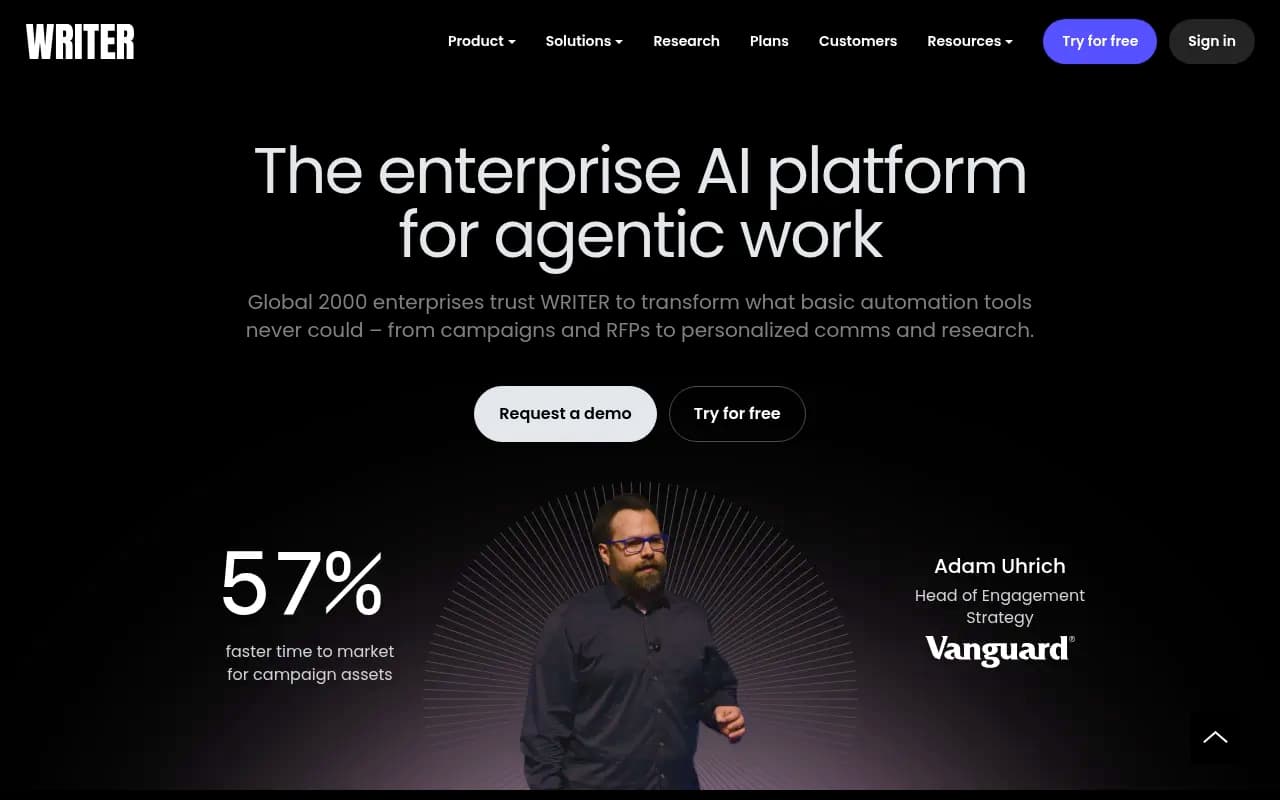
Writer is an enterprise AI platform focused on governed, agentic workflows. It's built for Global 2000 companies that need to deploy AI agents to automate complex processes -- campaign creation, RFPs, personalized communications, research.
What it does:
- AI agents that execute end-to-end workflows (campaign creation, RFP responses, personalized emails)
- Knowledge graphs and brand controls to ensure on-brand, compliant output
- Deep integrations with enterprise systems (CRM, CMS, marketing automation)
- IT-grade governance and security
How it compares to AirOps:
Writer is enterprise-first, like Jasper. It's built for large organizations that need AI agents to automate complex, high-stakes workflows. AirOps is more accessible to mid-market teams.
Neither is built specifically for AI search optimization. Writer focuses on workflow automation and brand governance, not AI visibility tracking or GEO.
Trade-offs:
Writer is expensive. Team plan is $18/user/mo (annual), but the real value is in the Enterprise plan, which typically costs $50-$150/user/mo. It's overkill for small teams or agencies.
It also doesn't track AI search visibility, analyze citations, or help you understand how AI models recommend brands. It's a workflow automation platform, not a GEO platform.
Pricing:
- Team $18/user/mo (annual)
- Enterprise custom pricing (typically $50-$150/user/mo)
- 14-day free trial
Best for: Enterprise teams that need governed AI agents to automate complex workflows. Not ideal for AI search optimization.
Which AirOps Alternative Should You Choose?
The right alternative depends on what you're actually trying to accomplish:
If AI search visibility is your primary goal: Promptwatch is the clear winner. It's the only platform that shows you what content is missing, generates articles engineered to get cited by AI models, and tracks the results with page-level visibility and traffic attribution. It's built specifically for GEO, not bolted on as an afterthought.
If you're already using Semrush for SEO: The AI Visibility add-on is a low-risk way to start monitoring AI search. But expect to hit limitations quickly -- fixed prompts, no content gap analysis, no crawler logs.
If you're focused on traditional Google SEO: Surfer SEO is strong for creating content that ranks in Google. Just don't expect it to help with AI search optimization.
If you need GTM workflow automation: Copy.ai or Writer are better fits than AirOps. Copy.ai is more accessible, Writer is more enterprise-focused.
If you need general workflow automation: Zapier is the most flexible option. It connects 8,000+ apps and lets you automate anything. Just don't expect it to help with content creation or GEO.
If you need enterprise-grade content creation with strict brand governance: Jasper or Writer are built for that. Expensive, but powerful.
The mistake most teams make is trying to use a general-purpose tool for a specialized job. If AI search visibility is a real priority, you need a platform built specifically for GEO. Promptwatch is the only alternative that delivers the full action loop: find gaps, generate content, track results.