Summary
- The GEO market exploded from near-zero to 60+ platforms in 18 months, but most are shallow monitoring dashboards without strategic value
- Winners in 2026 share three traits: action-oriented workflows (not just tracking), crawler log access, and content optimization capabilities
- Losers are stuck in the "monitoring-only" trap -- pretty dashboards that show you're invisible but leave you there
- Pricing compression is hitting hard: platforms charging $500+/mo without differentiation are losing to $99-249/mo alternatives with better features
- The market is splitting into three tiers: commodity trackers (dying), action platforms (thriving), and enterprise solutions (consolidating)
The 2024-2025 land grab created a mess
In early 2024, tracking your brand's visibility in ChatGPT or Perplexity required custom scripts or manual checks. By mid-2025, you had 60+ SaaS platforms competing for your attention. Most launched with the same pitch: "See how often AI models cite your brand."
The problem? Monitoring alone doesn't move the needle. Knowing you're invisible in ChatGPT is step one. Fixing it is the actual work. Most platforms stopped at step one and called it a product.
According to a market analysis by Maximus Labs, the GEO opportunity is massive -- $110B with 182% projected growth -- but the tooling layer is "60+ commodity products" offering "shallow tracking dashboards without strategic implementation." Translation: lots of noise, very little signal.
That's changing in 2026. The shakeout is here.
What separates winners from losers
The platforms gaining market share in 2026 share a pattern: they help you take action, not just observe problems.
Winners close the loop
The best GEO platforms follow an action loop:
- Find the gaps: Show you which prompts competitors rank for but you don't. Specific content your site is missing.
- Create content that ranks: Built-in AI writing agents or optimization tools that generate articles grounded in citation data, not generic SEO filler.
- Track the results: Page-level visibility tracking that shows which content is getting cited and by which models.
Promptwatch is the clearest example of this approach. Its Answer Gap Analysis shows exactly which prompts your competitors are visible for but you're not -- the specific topics, angles, and questions AI models want answers to but can't find on your site. Then its AI writing agent generates content engineered to get cited by ChatGPT, Claude, and Perplexity, grounded in 880M+ citations analyzed. Finally, page-level tracking shows your visibility scores improve as AI models start citing your new content.

Compare that to monitoring-only platforms like Otterly.AI or Peec.ai. They show you the problem but leave you stuck. No content gap analysis. No optimization tools. Just dashboards.
Crawler logs are table stakes
Real-time logs of AI crawlers (ChatGPT, Claude, Perplexity) hitting your website -- which pages they read, errors they encounter, how often they return -- are now a baseline expectation for serious platforms.
Most competitors lack this entirely. They track what AI models say in responses but have no visibility into how those models discover and index your content in the first place. It's like doing SEO without access to Google Search Console.
Platforms with crawler log access (Promptwatch, Profound, Bluefish AI) can diagnose indexing issues, optimize crawl budgets, and understand how AI engines discover content. Platforms without it are flying blind.
Prompt intelligence beats vanity metrics
Early GEO tools showed you citation counts and visibility scores. Useful, but not actionable. You need to know which prompts to target.
The winners in 2026 provide:
- Volume estimates: How often is this prompt actually being used?
- Difficulty scores: How hard is it to rank for this prompt?
- Query fan-outs: How does one prompt branch into sub-queries?
This is the difference between "you're cited 47 times" (so what?) and "this prompt gets 12K monthly searches, has medium difficulty, and fans out into 8 sub-queries you should also target" (now we're talking).
Promptwatch and Profound lead here. Most competitors are still stuck on vanity metrics.
The three tiers emerging in 2026
Tier 1: Commodity trackers (dying)
These platforms launched fast in 2024-2025 with basic monitoring dashboards. They track citations across a few AI models, show you visibility scores, maybe some competitor comparisons. That's it.
Examples: Otterly.AI, Peec.ai, AthenaHQ, Airefs, LLMrefs, Mentions.so
What's killing them:
- No differentiation. They all do the same thing.
- Pricing compression. Why pay $300/mo for a dashboard when you can get better features for $99/mo?
- No action layer. Monitoring alone doesn't justify a subscription.
Some will survive by going freemium or pivoting to agencies. Most will shut down or get acqui-hired.
Tier 2: Action platforms (thriving)
These platforms combine monitoring with optimization tools. They show you what's wrong and help you fix it.
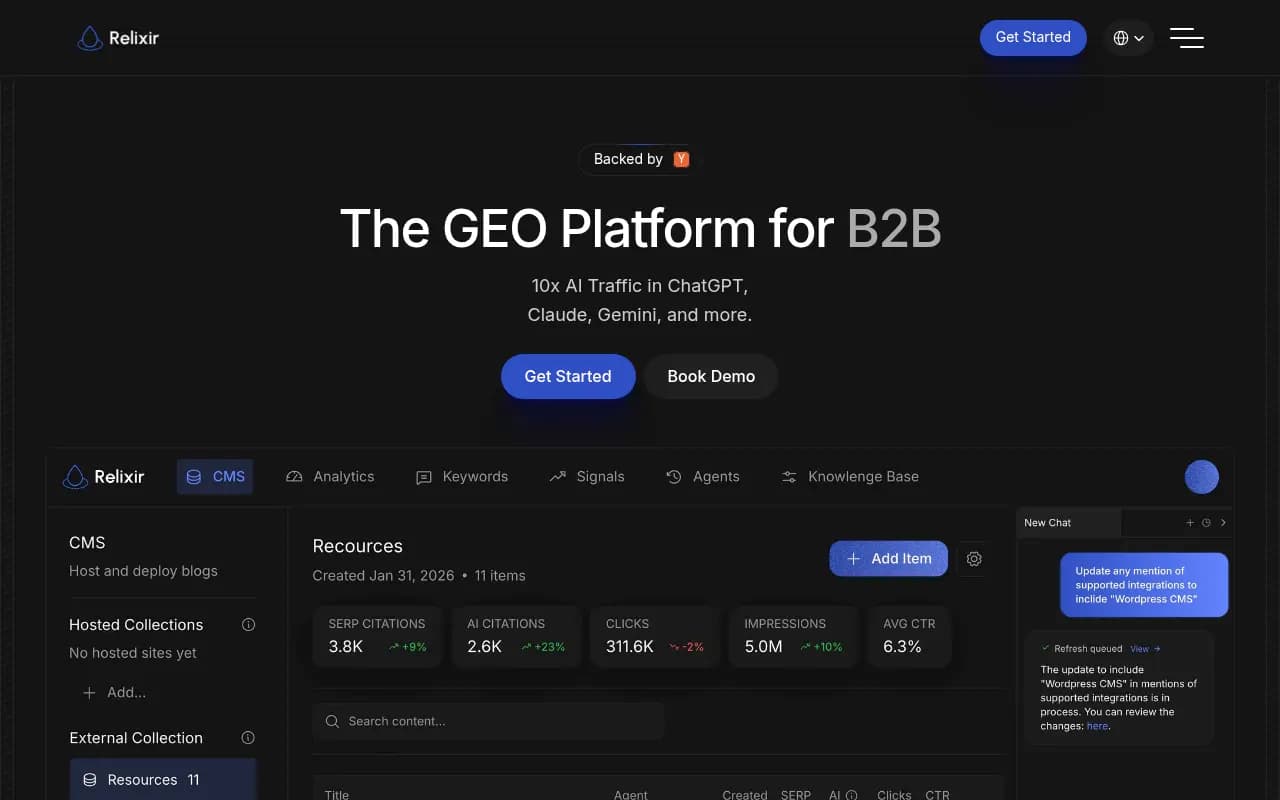
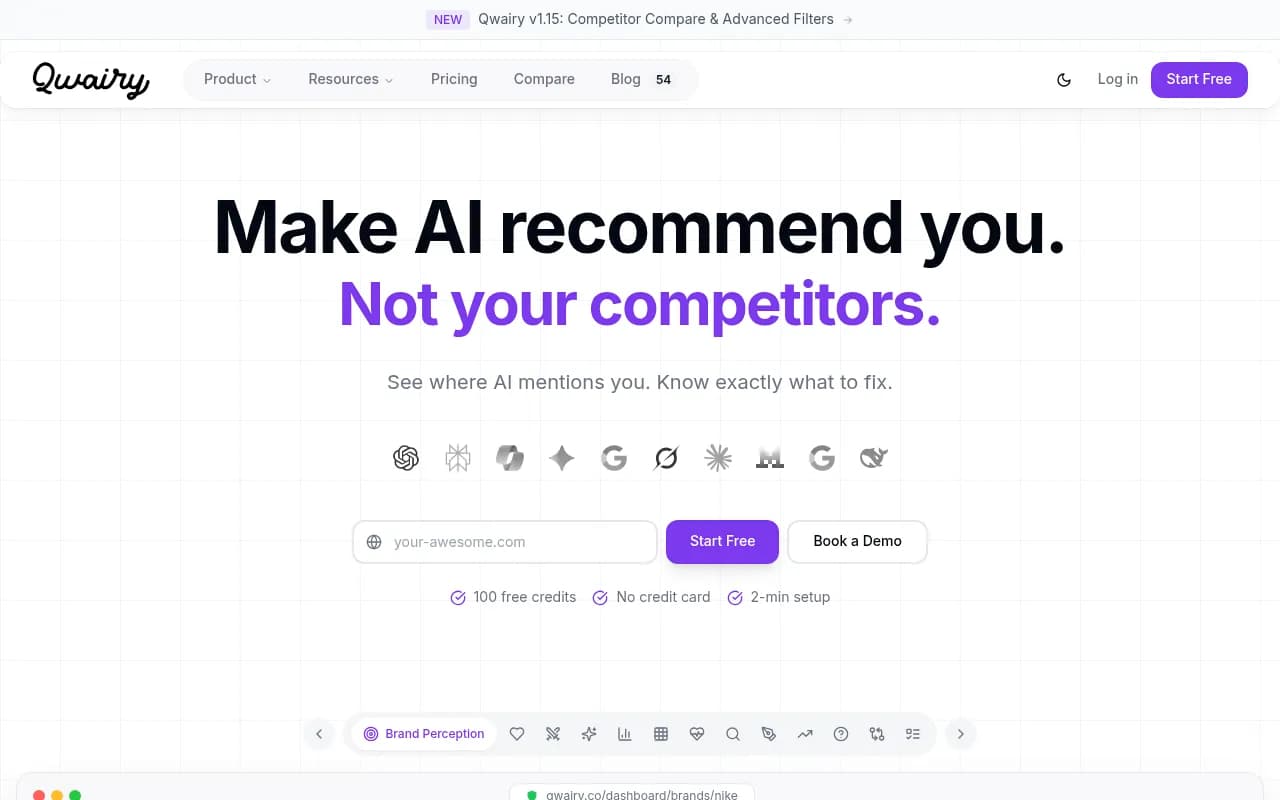
Examples: Promptwatch, Relixir, Qwairy, Scrunch AI, Brandlight.ai
What's working:
- Content gap analysis and AI writing agents (Promptwatch, Relixir)
- Crawler log access and indexing diagnostics (Promptwatch, Scrunch AI)
- Prompt intelligence with volume and difficulty scoring (Promptwatch, Brandlight.ai)
- Traffic attribution via code snippets or GSC integration (Promptwatch, Qwairy)
These platforms are winning mid-market customers (marketing teams, SEO agencies, growth-stage startups) who need tools that actually move the needle.
Pricing is rational: $99-579/mo depending on features and scale. Annual contracts are common. Free trials help with conversion.
Tier 3: Enterprise solutions (consolidating)
These platforms target Fortune 500 brands and agencies managing dozens of sites. They offer white-label options, custom integrations, dedicated support, and agency-specific features.
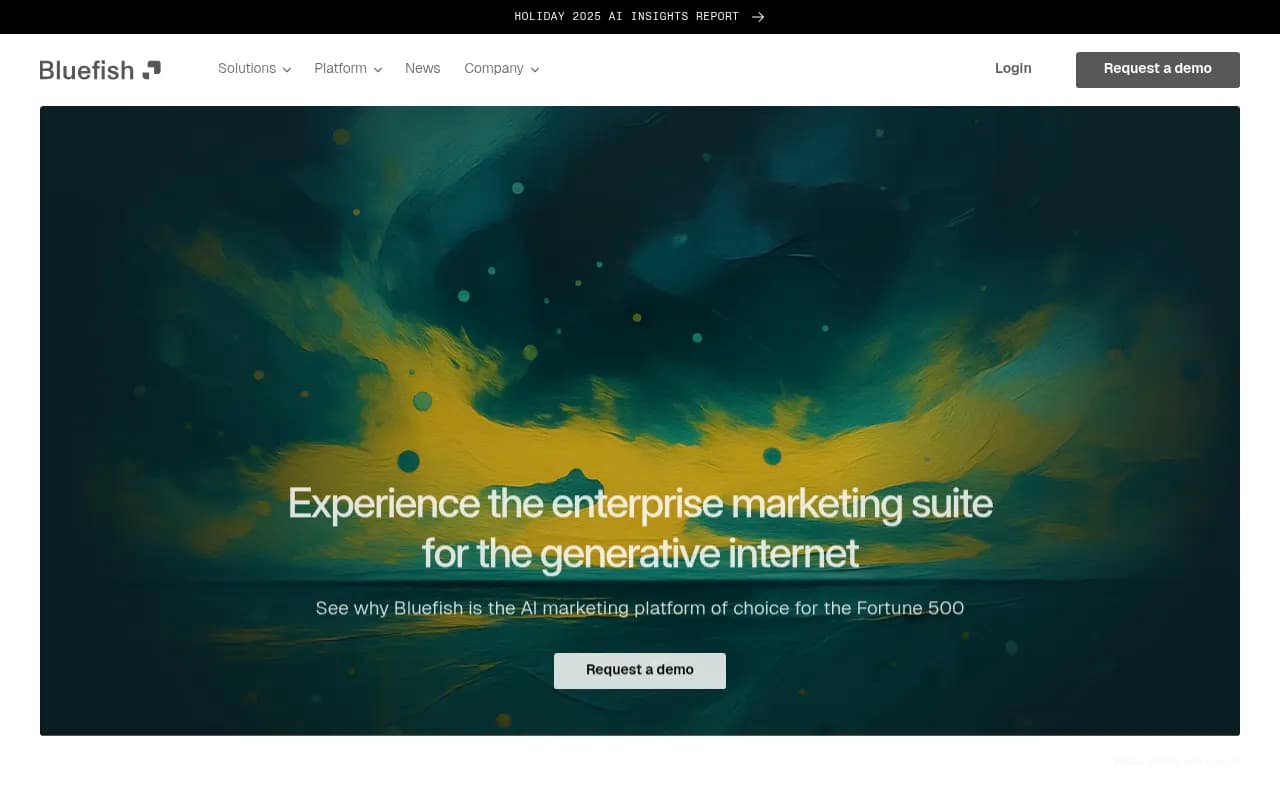
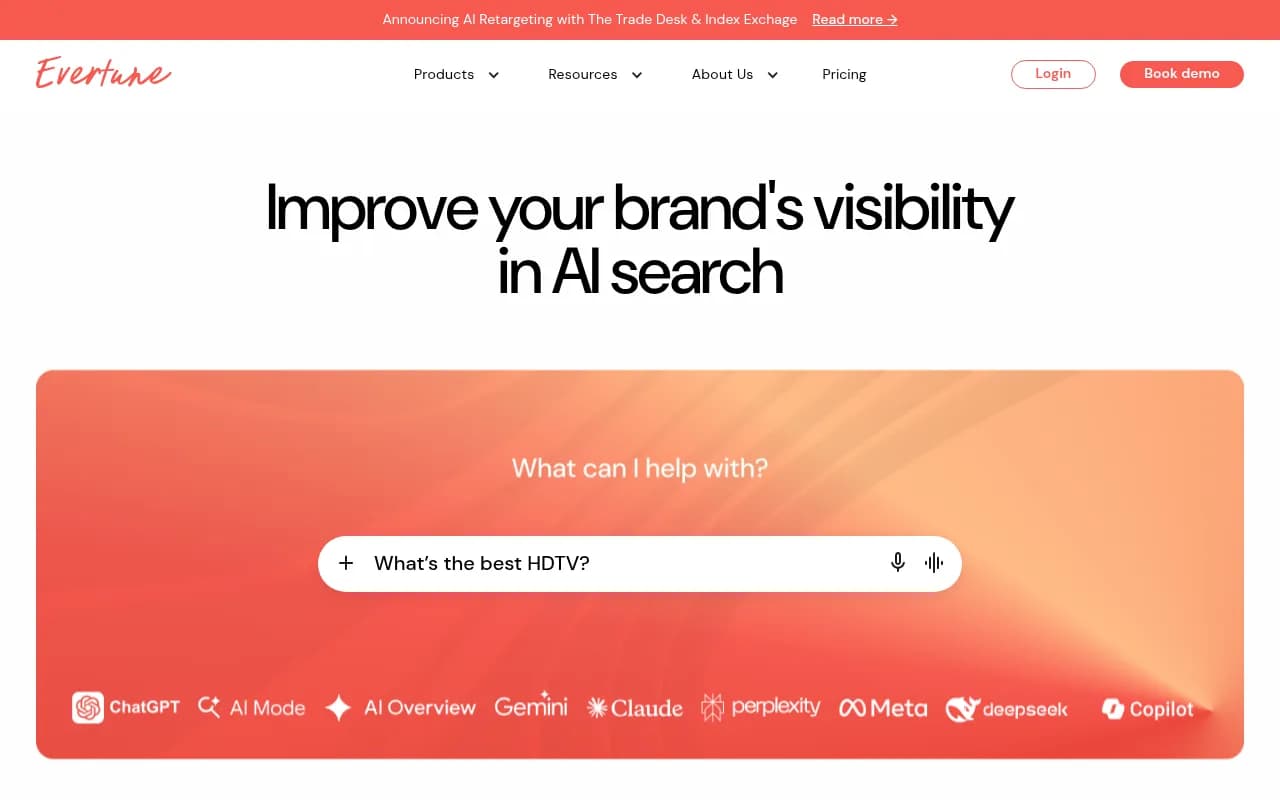
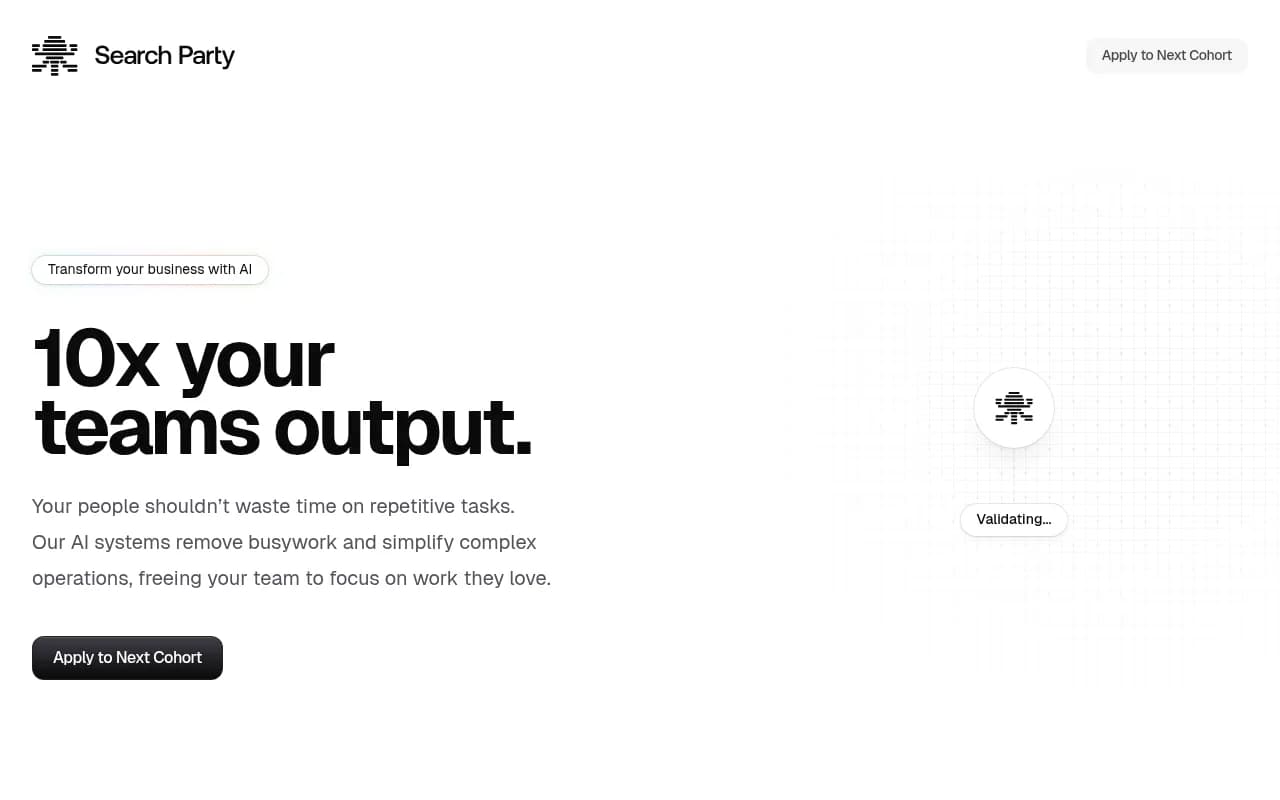
Examples: Profound, Bluefish AI, Evertune, Search Party
Search Party
What's happening:
- Consolidation through acquisition. Larger players are buying smaller competitors for their tech or customer base.
- Vertical specialization. Some are focusing on specific industries (e-commerce, SaaS, local businesses).
- Agency partnerships. White-label deals with digital agencies who resell the platform to clients.
Pricing is custom, often $1K+/mo with annual minimums. Sales cycles are longer but contracts are stickier.
The risk: enterprise deals take time to close. If these platforms can't land enough big fish in 2026, they'll struggle with burn rate.
The Semrush and Ahrefs problem
Traditional SEO platforms tried to bolt on AI search monitoring in 2025. It didn't go well.
Semrush launched AI search tracking with fixed prompts -- you can't customize them. Ahrefs Brand Radar has the same limitation plus no AI traffic attribution. Both feel like afterthoughts, not core products.
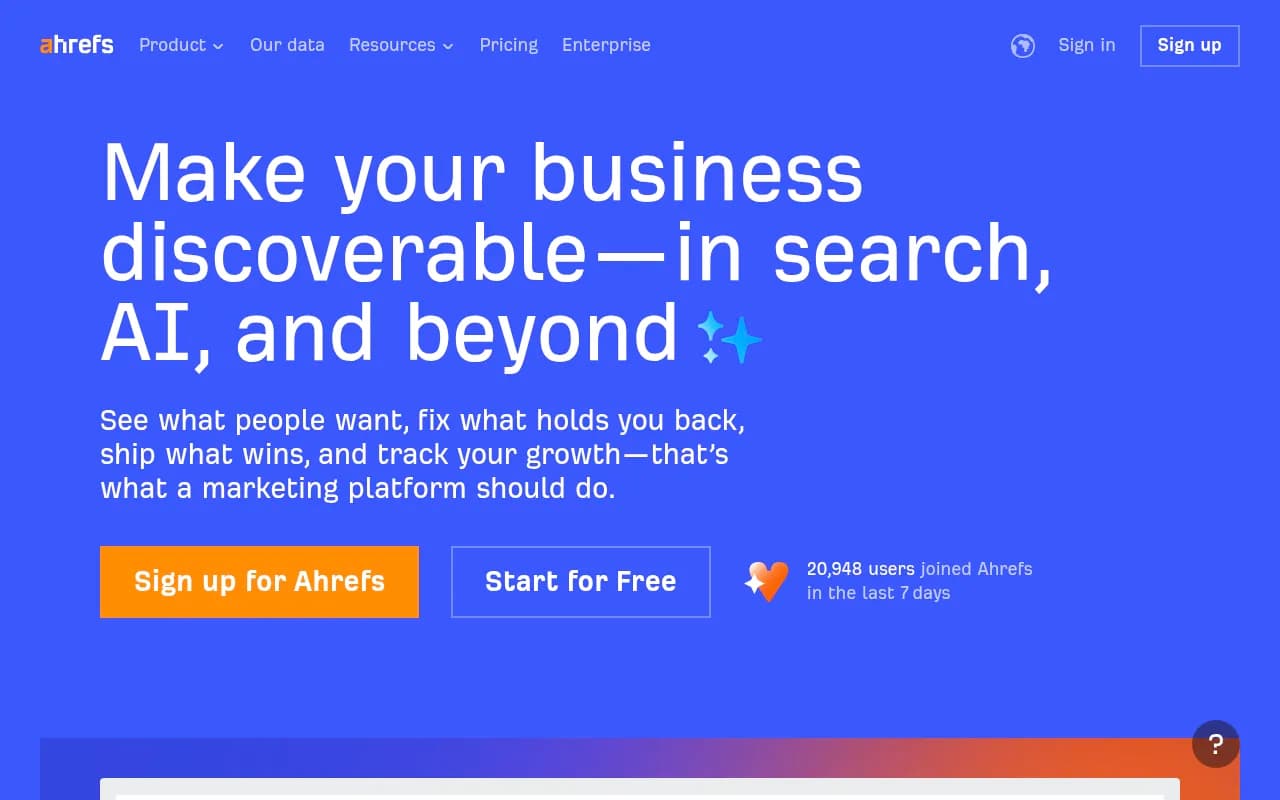
The issue: these platforms are optimized for traditional SEO (keywords, backlinks, SERP tracking). AI search is a different game. You need prompt intelligence, citation analysis, crawler logs, and content optimization tailored to how LLMs work.
Semrush and Ahrefs will keep their core SEO customers, but they're not winning the GEO market. Dedicated platforms like Promptwatch are eating their lunch on the AI visibility side.
Reddit and YouTube: the ignored channels
Most GEO platforms track citations from websites and PDFs. A few track Reddit threads. Almost none track YouTube.
That's a mistake. AI models cite Reddit discussions and YouTube videos constantly, especially for product recommendations and how-to queries. If you're not monitoring these channels, you're missing a huge piece of the puzzle.
Promptwatch tracks both Reddit and YouTube insights -- surfacing discussions and videos that directly influence AI recommendations. Most competitors ignore this entirely.
ChatGPT Shopping is the new battleground
OpenAI launched ChatGPT Shopping in late 2025, turning ChatGPT into a product recommendation engine. Brands that appear in shopping carousels and product suggestions are seeing real revenue impact.
Tracking ChatGPT Shopping visibility is now a must-have feature. Promptwatch added it early. Most competitors are still catching up.
This is a pattern: the platforms that move fast on new AI model features (ChatGPT Shopping, Claude Projects, Perplexity Pages) gain an edge. The platforms that wait lose momentum.
Pricing compression is brutal
In early 2025, some GEO platforms charged $500-1000/mo for basic monitoring. That's over.
Pricing in 2026 looks like this:
| Tier | Price range | What you get |
|---|---|---|
| Entry | $99-149/mo | 1-2 sites, 50-100 prompts, basic tracking |
| Professional | $249-399/mo | 2-5 sites, 150-250 prompts, crawler logs, content tools |
| Business | $579-999/mo | 5-10 sites, 350-500 prompts, AI writing, advanced analytics |
| Enterprise | Custom | Unlimited sites, white-label, API access, dedicated support |
Platforms charging above-market rates without differentiation are losing customers. Platforms with strong feature sets at competitive prices (Promptwatch, Relixir, Qwairy) are winning.
Multi-language and multi-region matter
AI models respond differently based on language and location. A prompt in English from New York gets different results than the same prompt in German from Berlin.
Platforms that support multi-language and multi-region tracking (Promptwatch, Peec AI, Profound) have an edge with global brands. Platforms locked to English-only or US-only are limited to a smaller market.

The agency play
Digital agencies managing multiple clients need white-label options, bulk pricing, and client reporting tools. A few platforms are nailing this:
- Search Party: agency-oriented from day one, but limited prompt metrics
- Profound: strong agency features, higher price point
- Promptwatch: agency/enterprise tier with custom pricing and white-label options
Agencies are sticky customers with high lifetime value. Platforms that win agency partnerships in 2026 will have a durable revenue base.
What to watch in H2 2026
A few predictions for the second half of 2026:
-
LLMs will start sharing visibility metrics -- not out of generosity, but because they'll ramp up paid media capabilities beyond shopping. If they want brands to sponsor prompt responses, they'll need to share how often those prompts appear and the click metrics for citations. It won't be anywhere near the level GEO specialists want, but it will be a start. (This insight comes from Firebrand's 2026 predictions.)
-
Consolidation through M&A -- expect 3-5 acquisitions as larger platforms buy smaller competitors for their tech, customer base, or team. The 60+ platform landscape will shrink to 20-30 by end of year.
-
Vertical specialization -- some platforms will focus on specific industries (e-commerce, SaaS, local businesses) with tailored features and benchmarks.
-
Integration with traditional SEO tools -- more platforms will integrate with Google Search Console, Google Analytics, and traditional SEO tools to show the full picture of organic visibility (traditional search + AI search).
-
AI traffic attribution becomes standard -- platforms that can't connect AI visibility to actual website traffic and revenue will struggle. Code snippets, GSC integration, and server log analysis will be table stakes.
How to choose a GEO platform in 2026
If you're evaluating GEO tools right now, here's what to prioritize:
-
Action over monitoring: Does the platform help you create and optimize content, or just show you dashboards? If it's monitoring-only, skip it.
-
Crawler log access: Can you see which AI crawlers are hitting your site, which pages they're reading, and errors they encounter? If not, you're missing critical data.
-
Prompt intelligence: Does the platform show volume estimates, difficulty scores, and query fan-outs? Or just citation counts?
-
Content optimization tools: Built-in AI writing agents, content gap analysis, or optimization recommendations? Or do you have to figure it out yourself?
-
Traffic attribution: Can you connect AI visibility to actual website traffic and revenue? Code snippet, GSC integration, or server log analysis?
-
Multi-model coverage: Does it track 8+ AI models (ChatGPT, Claude, Perplexity, Gemini, etc.) or just 2-3?
-
Pricing: Is it competitive for the feature set? Or are you paying for a brand name?
Platforms that check most of these boxes: Promptwatch, Relixir, Qwairy, Profound, Bluefish AI.
Platforms that check 1-2 boxes: Otterly.AI, Peec.ai, AthenaHQ, Airefs, LLMrefs.
Comparison: Leaders vs laggards
| Feature | Leaders (Promptwatch, Relixir, Profound) | Laggards (Otterly.AI, Peec.ai, AthenaHQ) |
|---|---|---|
| Monitoring | 8-10 AI models | 3-5 AI models |
| Crawler logs | Yes | No |
| Content gap analysis | Yes | No |
| AI writing agent | Yes | No |
| Prompt intelligence | Volume, difficulty, fan-outs | Citation counts only |
| Traffic attribution | Code snippet, GSC, server logs | No |
| Reddit/YouTube tracking | Yes | No |
| ChatGPT Shopping | Yes | No |
| Multi-language/region | Yes | Limited or no |
| Pricing | $99-579/mo | $200-500/mo |
The gap is widening. Leaders are adding features every month. Laggards are stuck.
The bottom line
The GEO market in 2026 is splitting into winners and losers. Winners help you take action -- find content gaps, generate optimized content, track results. Losers show you pretty dashboards and leave you stuck.
If you're a brand or agency investing in AI visibility, choose a platform that closes the loop. Monitoring alone is a dead end.
If you're a GEO platform founder, you have 6-12 months to differentiate or die. Add crawler logs, content optimization, and traffic attribution. Or prepare to be acquired or shut down.
The shakeout is here. Most platforms won't make it to 2027.