Key takeaways
- Scrunch AI is a solid monitoring tool, but its Core plan limits you to 4 LLMs, lacks prompt volume data, and offers minimal optimization guidance -- leaving teams with data but no clear path forward.
- Most alternatives fall into the same trap: they show you where you're invisible but don't help you do anything about it.
- The best platforms in 2026 combine tracking with content gap analysis, AI content generation, and traffic attribution -- closing the loop from insight to action.
- Pricing varies wildly: from $24/month for entry-level monitoring to $1,000+/month for enterprise platforms with full optimization stacks.
- If you want one platform that monitors AND optimizes, Promptwatch is the only tool in this comparison rated as a leader across all GEO categories.
Why people leave Scrunch
Scrunch AI has real strengths. It raised $15M+, counts Lenovo and Crunchbase among its customers, and its AXP (Agent Experience Platform) -- which serves AI-optimized content directly to crawlers, reducing page size by up to 98% -- is genuinely unlike anything else in the category.
But the frustrations are well-documented. The Core plan at $250/month covers only 4 LLMs: ChatGPT, Perplexity, Google AI Overviews, and Copilot. Claude, Gemini, Meta AI, Grok, and AI Mode all require an Enterprise contract. The AXP feature -- the most compelling part of Scrunch's pitch -- is also Enterprise-only.
On G2, where Scrunch holds a 4.6/5 rating across 50+ reviews, users flag that prompt credits deplete quickly when tracking multiple engines, there's no way to generate reports, and optimization suggestions are described as "minimal." One practitioner on r/SEO put it plainly: "Scrunch provides prompt and citation tracking but doesn't share prompt volume data -- and its prompt trend feature is too basic to be actionable."
For teams managing serious marketing budgets, a dashboard that shows problems without helping you fix them is expensive. That's the gap these alternatives are trying to fill.
The monitoring-only trap
Before getting into specific tools, it's worth naming the pattern. Most GEO platforms -- including many of the alternatives below -- are monitoring dashboards. They show you your visibility score, which prompts competitors rank for, and which AI models cite your site. That's useful. But it leaves you staring at a gap with no clear next step.
The tools worth paying attention to in 2026 are the ones that complete the loop: find the gap, generate content to fill it, track whether it worked. Keep that in mind as you read through the options.
10 Scrunch alternatives worth considering
1. Promptwatch
Promptwatch is the most complete platform in this comparison. Where most tools stop at monitoring, Promptwatch is built around an action loop: find gaps, create content, track results.

The Answer Gap Analysis shows exactly which prompts competitors rank for that you don't -- not just that a gap exists, but the specific topics and questions AI models want answers to that your site doesn't cover. From there, the built-in AI writing agent generates articles, listicles, and comparisons grounded in 880M+ citations analyzed. This isn't generic content -- it's engineered to get cited by ChatGPT, Claude, Perplexity, and other models.
A few things set it apart from the field. AI Crawler Logs show real-time data on which AI crawlers are hitting your site, which pages they read, and what errors they encounter -- most competitors lack this entirely. Prompt Intelligence includes volume estimates and difficulty scores, so you can prioritize high-value prompts instead of guessing. And traffic attribution (via code snippet, GSC integration, or server log analysis) connects AI visibility to actual revenue.
It monitors 10 AI models including DeepSeek, Grok, and Mistral -- models that Scrunch reserves for Enterprise. Pricing starts at $99/month for the Essential plan (1 site, 50 prompts, 5 articles), with Professional at $249/month and Business at $579/month. A free trial is available.
In a 2026 comparison of 12 GEO platforms, Promptwatch was the only one rated as a "Leader" across all categories. That's not a marketing claim -- it reflects the gap between monitoring-only tools and a platform that actually helps you do something.
2. Profound
Profound is the go-to for enterprise teams that need depth and governance. It covers AI visibility tracking across major models, offers strong competitive intelligence, and has a cleaner UI than most enterprise tools.
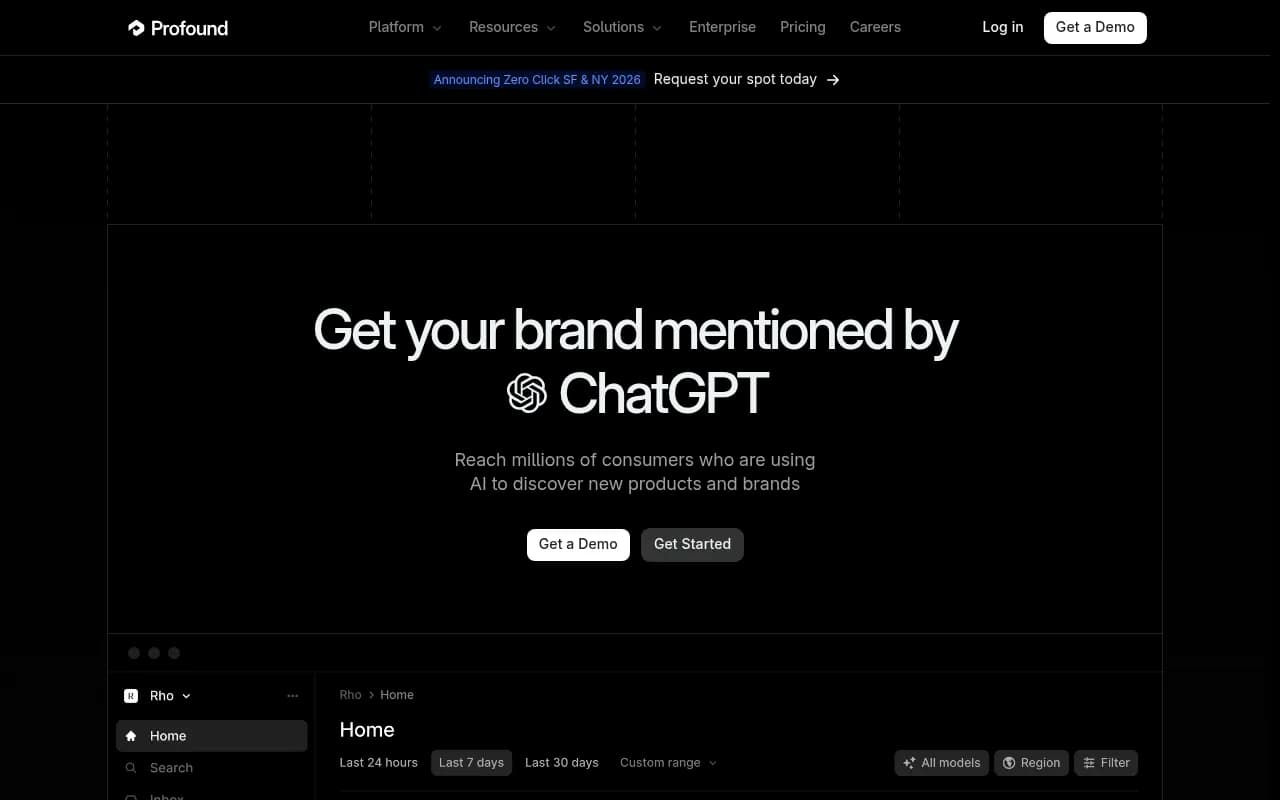
The main limitation is price -- Profound's Starter plan is more expensive than Scrunch's Core, and the platform is clearly built for large teams with dedicated SEO resources. It also doesn't offer content generation, so you'll still need a separate workflow to act on what you find. Strong for monitoring and competitive analysis; weaker on the optimization side.
3. Otterly.AI
Otterly.AI is one of the more affordable options in the category, and it's popular with agencies that need client-ready reports without a steep learning curve.

It covers the major AI models, offers share-of-voice tracking, and produces clean reports. The trade-off: it's firmly in the monitoring-only camp. No content generation, no crawler logs, no traffic attribution. If you need a simple dashboard to show clients where they stand in AI search, Otterly works well. If you need to actually improve those standings, you'll hit a wall quickly.
4. Peec AI
Peec AI positions itself as a dashboard-first tool for marketers who want clean, simple AI visibility data without a lot of configuration overhead.

It covers major LLMs and gives you a clear view of brand mentions, citation sources, and competitor comparisons. The interface is genuinely easy to use -- one of the cleaner experiences in this category. But like Otterly, it's a monitoring tool. No content gap analysis, no writing tools, no crawler data. Good for teams that just need visibility metrics and don't yet have a workflow for acting on them.
5. AthenaHQ
AthenaHQ is more strategy-oriented than most monitoring tools. It's built around helping teams develop a GEO strategy, not just track metrics.
It covers 8+ AI search engines and offers competitive benchmarking, topic gap identification, and some guidance on content priorities. The gap is execution: AthenaHQ will tell you what to work on, but it doesn't help you create the content. Teams that already have strong content production capacity will get more out of it than those who need end-to-end support.
6. SE Ranking AI Visibility
SE Ranking is primarily known as a traditional SEO platform, and its AI visibility module sits inside that broader suite. For teams already using SE Ranking for keyword tracking and site audits, adding AI visibility monitoring is a natural extension.
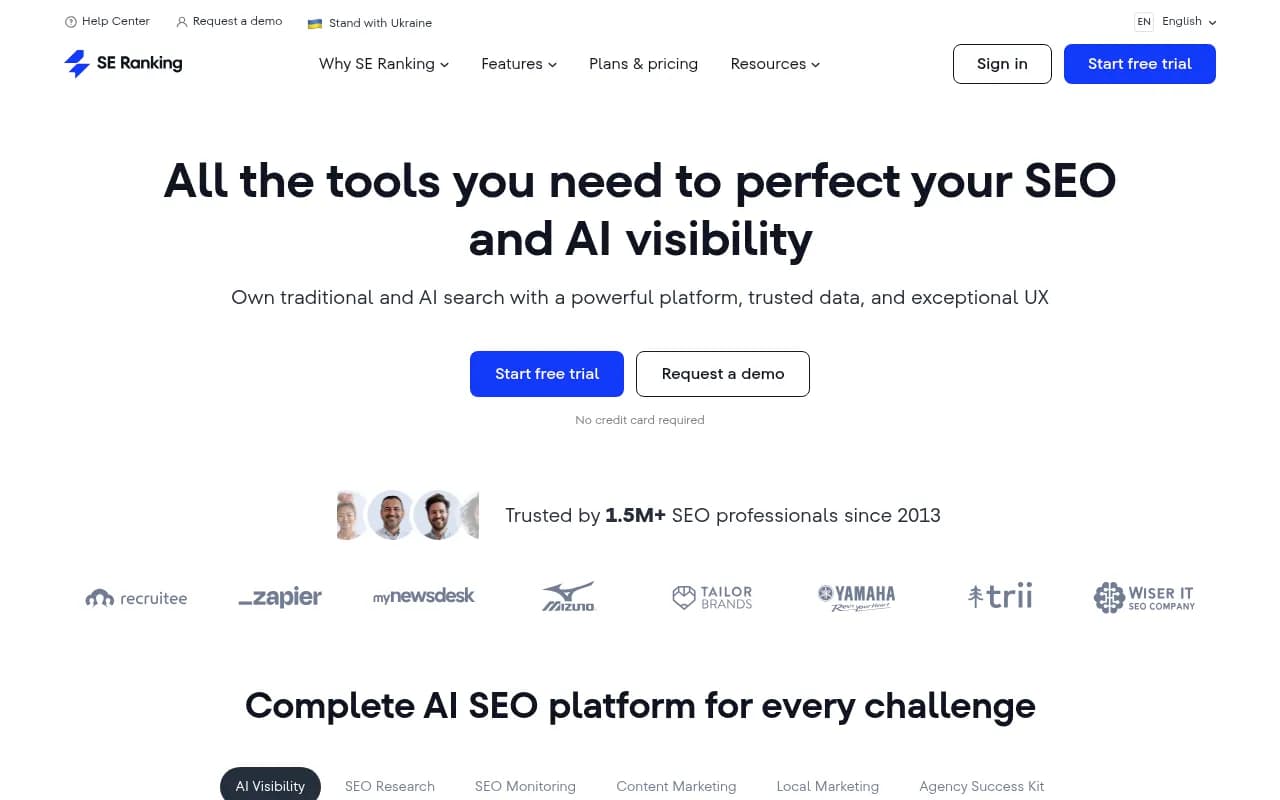
The advantage is consolidation -- one platform for traditional SEO and AI search monitoring. The disadvantage is depth: the AI visibility features are less mature than dedicated GEO platforms, and the prompt coverage is narrower. Worth considering if you want to reduce tool sprawl, less compelling if AI visibility is your primary focus.
7. Radarkit
Radarkit uses real-browser agents to simulate how AI models actually experience your site, which gives it a different angle than tools that query APIs directly.
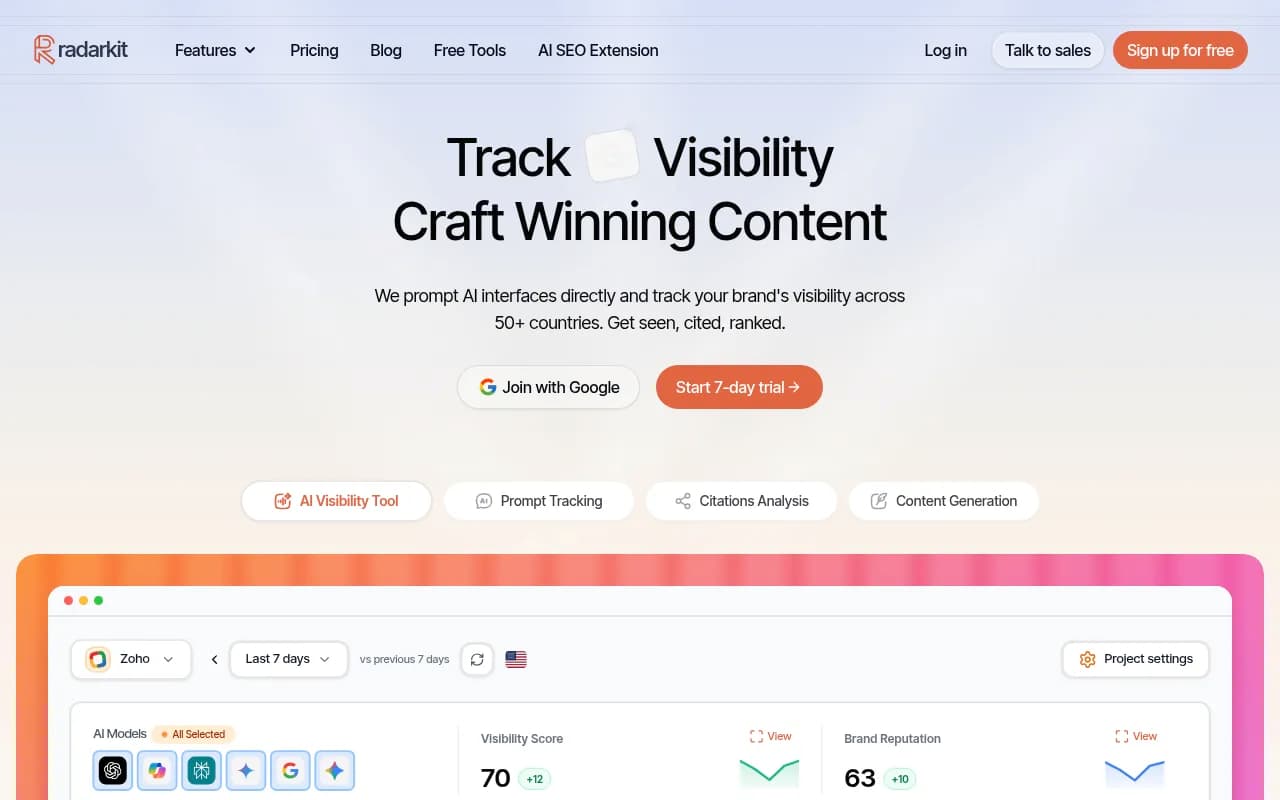
It has strong citation and competitor data, and it includes some GEO content tools. The starting price of $29/month makes it one of the more accessible options. Limitations include a desktop-first UX that some users find clunky, slower refresh rates on lower tiers, and prompt limits on small plans. A solid mid-market option for teams that want more than basic monitoring without enterprise pricing.
8. LLM Pulse
LLM Pulse focuses on tracking brand visibility across ChatGPT, Perplexity, and other major models, with an emphasis on citation tracking and source analysis.
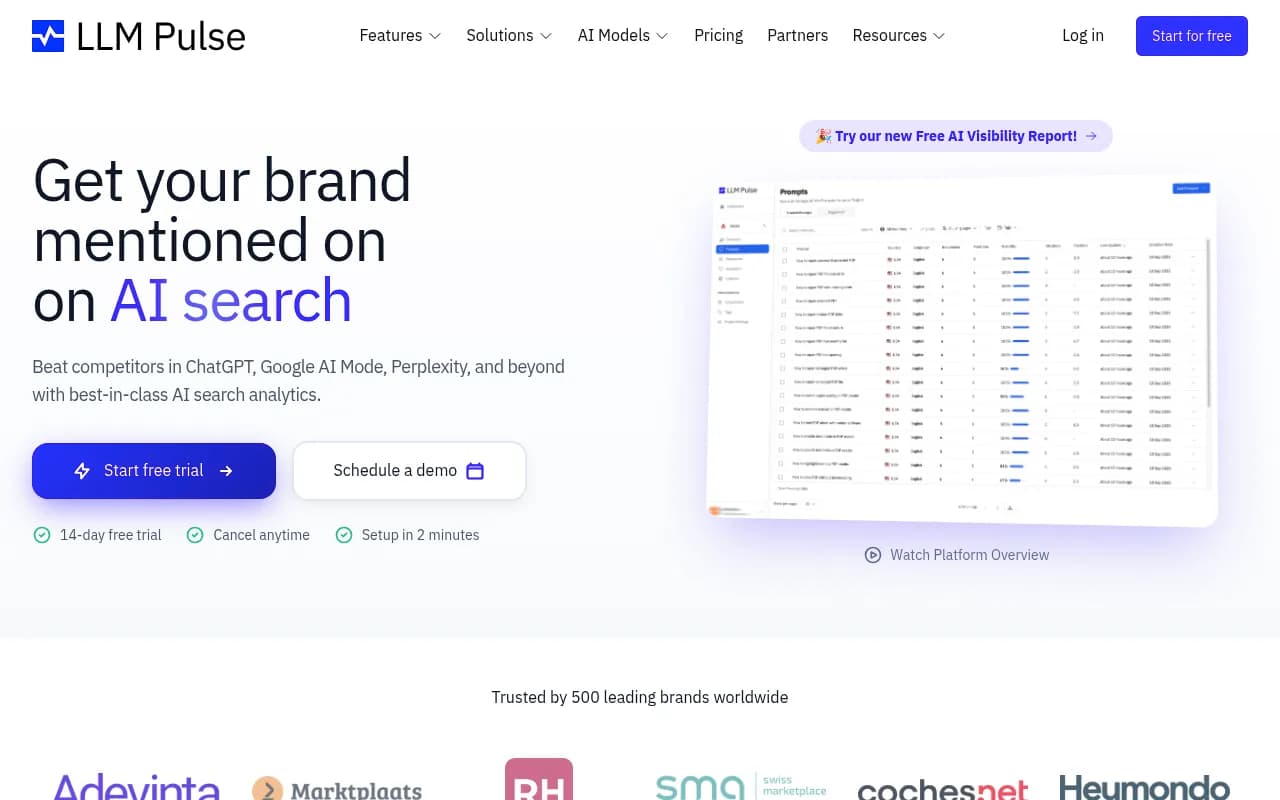
It's a clean, focused tool that does what it says. The coverage is good, the interface is straightforward, and it's priced accessibly. Like most tools in this list, it's primarily a monitoring platform -- the optimization workflow is on you. But for teams that want reliable tracking without complexity, it's worth a look.
9. Airefs
Airefs is the most affordable full-stack option in this comparison at $24/month. It includes Reddit monitoring, a ChatGPT and Google AI Overview methodology, and an optional done-for-you agency service.
The price point is genuinely competitive, and the Reddit monitoring is a differentiator -- most platforms ignore Reddit entirely, even though it's one of the primary sources AI models cite. The platform is less mature than Promptwatch or Profound, and the content generation capabilities are limited. But for small teams or solo marketers who want to get started with AI visibility tracking without a large budget, Airefs is a reasonable entry point.
10. Brandlight.ai
Brandlight.ai is the enterprise counterpart to the more accessible tools in this list. It covers 11+ AI engines including Llama and Amazon Rufus, and counts Mastercard, Humana, and Estée Lauder among its customers.
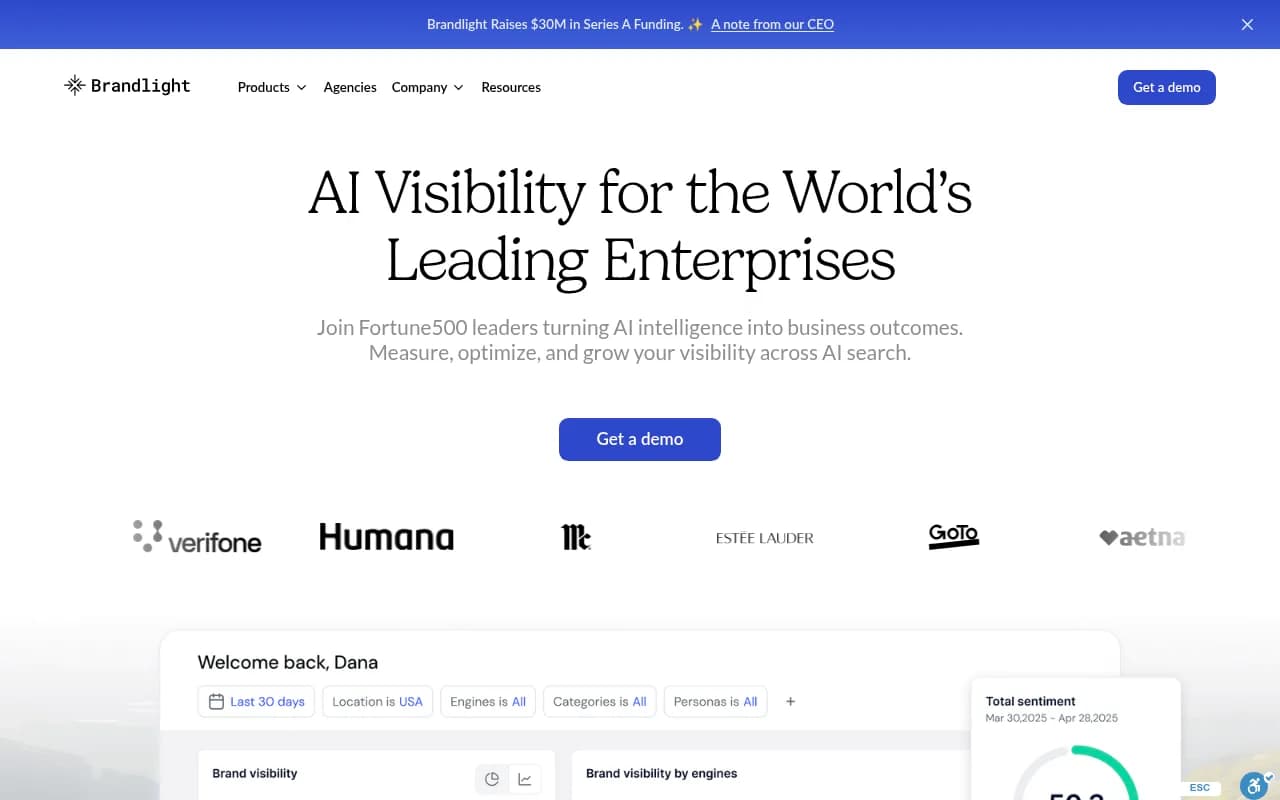
CB Insights ranked it as the #1 AEO platform, and the depth of coverage -- particularly for e-commerce brands that need to track AI-powered shopping recommendations -- is hard to match. The trade-off is price and complexity. Brandlight is built for large enterprise teams with dedicated resources. If you're a mid-market brand, the cost and onboarding overhead may outweigh the benefits.
Side-by-side comparison
| Platform | Starting price | LLMs covered | Content generation | Crawler logs | Traffic attribution | Best for |
|---|---|---|---|---|---|---|
| Promptwatch | $99/mo | 10 | Yes | Yes | Yes | Teams that want to monitor AND optimize |
| Scrunch | $250/mo | 4 (Core) | No | No | No | Teams focused on AXP agent delivery |
| Profound | Higher than Scrunch | Major models | No | No | No | Enterprise monitoring and governance |
| Otterly.AI | Affordable | Major models | No | No | No | Agency reporting |
| Peec AI | Mid-range | Major models | No | No | No | Simple dashboard visibility |
| AthenaHQ | Mid-range | 8+ | No | No | No | GEO strategy planning |
| SE Ranking | Bundled with SEO suite | Limited | No | No | No | Teams already on SE Ranking |
| Radarkit | $29/mo | Major models | Limited | No | No | Mid-market teams |
| LLM Pulse | Accessible | Major models | No | No | No | Clean, focused tracking |
| Airefs | $24/mo | Major models | Limited | No | No | Budget-conscious teams |
| Brandlight.ai | Enterprise | 11+ | No | No | No | Large enterprise, e-commerce |
What to look for when choosing
The monitoring vs. optimization distinction is the most important factor. Most platforms in this category will show you your AI visibility score. Fewer will tell you specifically what content is missing. Almost none will help you create that content and then track whether it improved your citations.
A few other things worth checking before you commit:
LLM coverage. How many AI models does the platform actually track on your plan -- not just on Enterprise? Scrunch's Core plan covering only 4 LLMs is a real limitation when Claude, Gemini, and Meta AI are all sending meaningful traffic.
Prompt volume data. Knowing that a prompt exists isn't enough. You need to know how often people are asking it and how competitive it is. Tools that skip this leave you optimizing for prompts that don't matter.
Reddit and YouTube tracking. AI models cite Reddit threads and YouTube videos constantly. Platforms that ignore these sources are missing a significant part of the picture.
Traffic attribution. Can the platform connect AI visibility to actual website traffic and revenue? This is what separates tools that inform strategy from tools that justify budget.
Pricing transparency. Some platforms advertise low entry prices but charge per user or per AI model, which compounds quickly. Get the real number for your team size and coverage needs before signing up.
The honest summary
If you're leaving Scrunch because of the LLM coverage limits on the Core plan, most alternatives will solve that immediately -- even at lower price points.
If you're leaving because you want the data to actually drive decisions, that's a harder problem. Most alternatives are still monitoring dashboards. They'll show you a different set of numbers, but you'll face the same question: now what?
The platforms that answer "now what" -- with content gap analysis, AI writing tools, crawler logs, and traffic attribution -- are still a minority. Promptwatch is the most complete version of that in 2026. Radarkit and Airefs offer partial versions at lower price points. Brandlight covers the enterprise end.
Pick based on where you actually are: if you need to understand your AI visibility baseline, almost any tool on this list will work. If you need to improve it, be more selective.