Key takeaways
- Profound is a capable AI visibility platform, but its pricing and complexity make it a poor fit for most startups and small teams.
- Several alternatives offer solid monitoring for $29-$99/month, though most stop at tracking and don't help you act on what they find.
- The most important distinction in 2026 isn't which tool has the prettiest dashboard — it's whether the tool helps you close the gap between "you're invisible in AI search" and "here's how to fix it."
- Promptwatch is the only platform in this comparison that covers the full loop: gap analysis, AI content generation, and page-level citation tracking — at a price startups can actually afford.
- If you're purely budget-constrained, Otterly.AI ($29/mo) and LLMrefs are reasonable starting points, but expect to hit walls quickly.
Why startups are leaving Profound (or never signing up)
Profound built a genuinely impressive product. It tracks brand mentions across AI search engines, maps citation sources, and gives enterprise marketing teams a detailed picture of their AI visibility. If you're a Fortune 500 company with a dedicated GEO team, it probably earns its keep.
But if you're a 15-person SaaS startup or a boutique agency managing a handful of clients, Profound's pricing and onboarding overhead are hard to justify. The platform is built for scale, which means you're paying for a lot of infrastructure you won't use. Teams on LinkedIn and in various SEO communities consistently flag the same issues: the contract is too long, the setup takes too long, and the outputs are dashboards rather than actions.
That last point matters more than it might seem. Knowing you're invisible in ChatGPT is useful. Knowing why and what to do about it is what actually moves the needle.
So what are the real options in 2026? Let's go through them honestly.
What to actually look for in a Profound alternative
Before the tool list, it's worth being clear about what separates a useful platform from a monitoring dashboard that collects dust.
The things that matter for startups specifically:
- Pricing that doesn't require a procurement process
- Coverage of the AI engines your customers actually use (ChatGPT, Perplexity, Google AI Overviews at minimum)
- Prompt-level data, not just brand mention counts
- Some path from "here's the gap" to "here's how to close it"
- Fast setup — you don't have a dedicated GEO analyst
The things that sound impressive but rarely matter at the startup stage:
- Tracking 15+ AI models (most of your traffic comes from 3-4)
- Enterprise SSO and custom SLAs
- White-label reporting before you have clients to report to
With that framing, here's how the main alternatives actually stack up.
The best Profound alternatives for startups in 2026
Promptwatch — best overall for startups that want to act, not just monitor
Promptwatch is the most complete option here, and the one I'd recommend first for any startup that's serious about AI search visibility rather than just curious about it.

The core difference from most alternatives: Promptwatch doesn't stop at showing you where you're invisible. Its Answer Gap Analysis identifies the specific prompts where competitors are getting cited and you're not — the exact questions AI models are answering without referencing your site. From there, Content Agents generate articles, comparisons, and briefs built around that gap data. Then page-level tracking shows whether the new content is actually getting crawled and cited.
That loop — find the gap, create content to close it, track whether it worked — is what makes it an optimization platform rather than a monitoring tool. Most competitors in this list only do step one.
For startups, the pricing is actually accessible: $99/month for the Essential plan (1 site, 50 prompts, 5 articles), $249/month for Professional (2 sites, 150 prompts, crawler logs, city-level tracking). There's a free trial, and annual billing brings costs down further.
It covers 10 AI models including ChatGPT, Perplexity, Google AI Overviews, Claude, Gemini, Grok, and DeepSeek. The AI Crawler Logs feature — which shows you exactly which pages AI crawlers are hitting, how often, and what errors they encounter — is something most competitors don't offer at all.
For a startup that wants to invest in AI search visibility as a real channel, not just monitor it as a curiosity, Promptwatch is the clearest choice.
Otterly.AI — best for tight budgets and basic monitoring
Otterly.AI is the most affordable option in this space, starting at $29/month. It covers ChatGPT, Perplexity, and Google AI Overviews, and the setup is genuinely fast — you can be tracking prompts within an hour.

What you get: brand mention tracking, sentiment analysis, basic competitor comparisons, and email alerts when something changes. It's clean, it works, and it doesn't overwhelm you.
What you don't get: any path from monitoring to action. There's no content generation, no gap analysis, no crawler logs. If Otterly tells you a competitor is appearing in 40% more AI responses than you, you're on your own figuring out what to do about it.
For a startup that just wants to establish a baseline and check in monthly, Otterly is fine. For a startup that wants to actually improve its AI visibility, you'll outgrow it quickly.
Peec AI — best for prompt-level analytics
Peec AI sits a step above Otterly in terms of depth. It's built around prompt-level tracking, meaning you can see how specific questions perform across different AI engines rather than just tracking your brand name.

The interface is clean and the data is genuinely useful for understanding which prompts are driving AI visibility in your category. Pricing is in the $49-$89/month range depending on the plan.
The limitation is the same as most tools here: it's a monitoring platform. Peec shows you the data; what you do with it is your problem. There's no content generation, no gap analysis workflow, and no crawler-level visibility into how AI engines are actually reading your site.
Good for marketing teams that want detailed prompt analytics. Less useful if you need the whole workflow.
LLMrefs — best for teams coming from traditional rank tracking
LLMrefs is worth mentioning because it's the most familiar-feeling tool for anyone who's spent years in traditional SEO. The interface resembles a rank tracker, which makes onboarding easy for SEO-native teams.
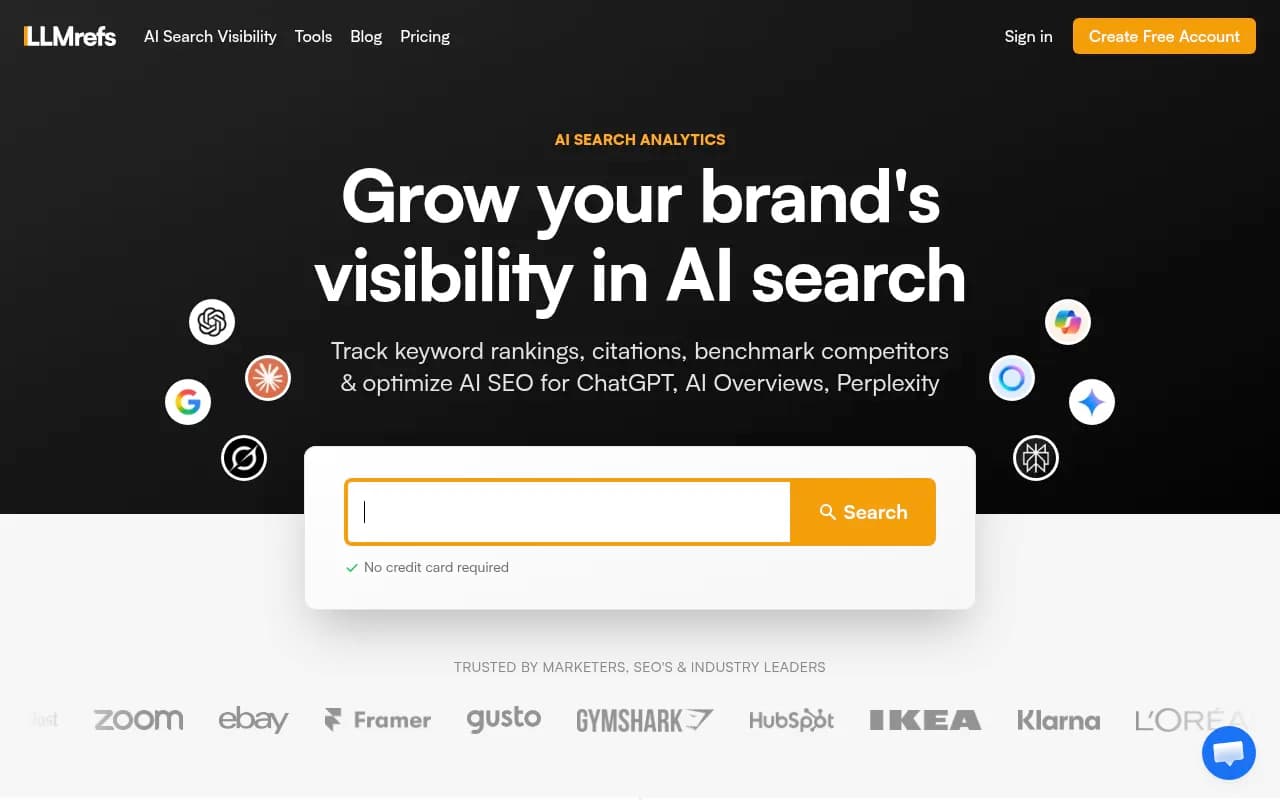
It tracks brand visibility across ChatGPT, Perplexity, and a handful of other models, and the keyword-driven approach means you can map AI visibility to the same terms you're already tracking in Google. Entry-level pricing is around $29-$49/month.
The trade-off: the rank-tracker mental model doesn't fully translate to AI search, where the answer is the product and citation patterns matter more than position. LLMrefs is a reasonable bridge tool for teams transitioning from SEO to GEO, but it's not built for the nuances of AI search optimization.
SE Ranking — best for teams that want AI tracking inside a full SEO suite
SE Ranking has been expanding its AI search tracking capabilities, and for teams that already use it for traditional SEO, the AI Overviews tracking module is a natural add-on.
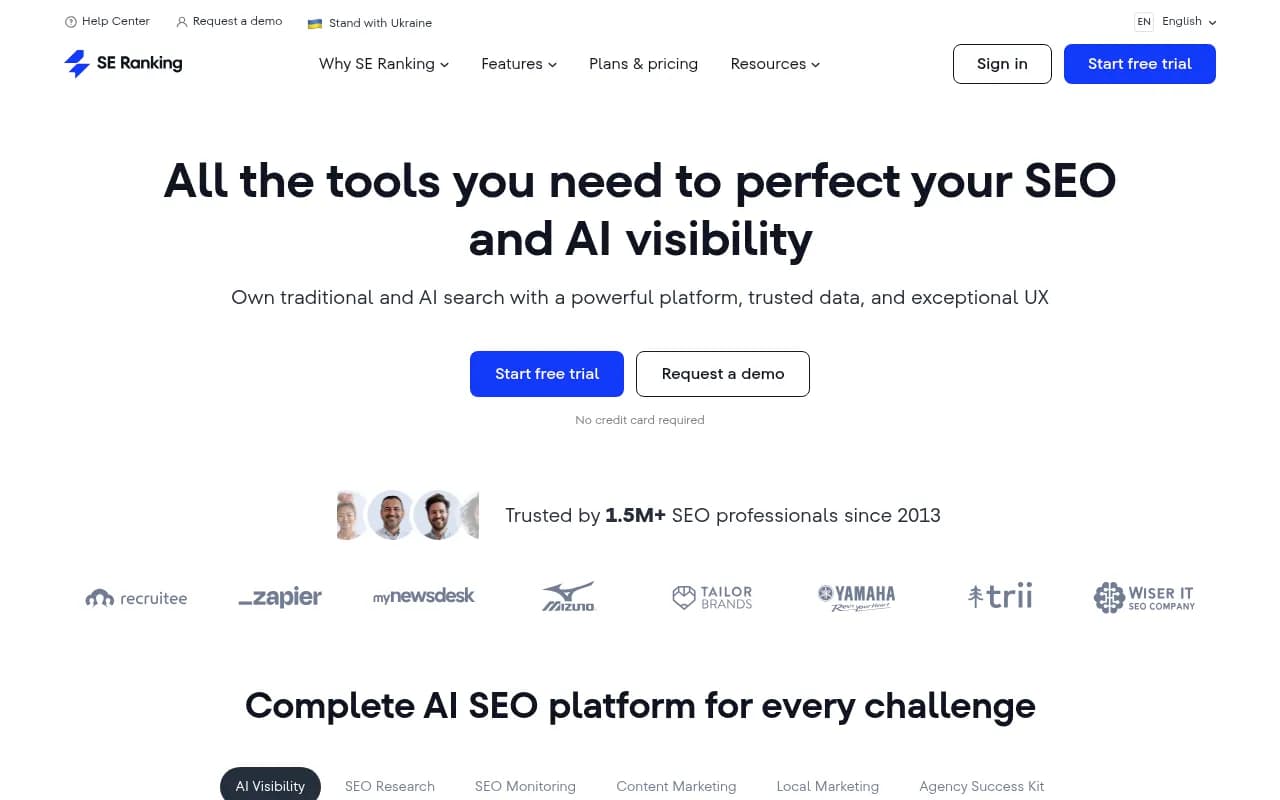
The advantage is consolidation: one platform for keyword tracking, site audits, backlink analysis, and AI visibility. For a startup that can't afford multiple tools, that matters.
The limitation is depth. SE Ranking's AI tracking is Google AI Overviews-focused, which means you're not getting the same coverage of ChatGPT or Perplexity that dedicated GEO tools provide. If Google AI Overviews is your primary concern, it's a solid option. If you care about the full AI search landscape, it's incomplete.
Radarkit — best for agencies managing multiple clients
Radarkit is positioned more toward agencies and SEO teams managing multiple brands, but it's worth considering for startups with agency-style needs.
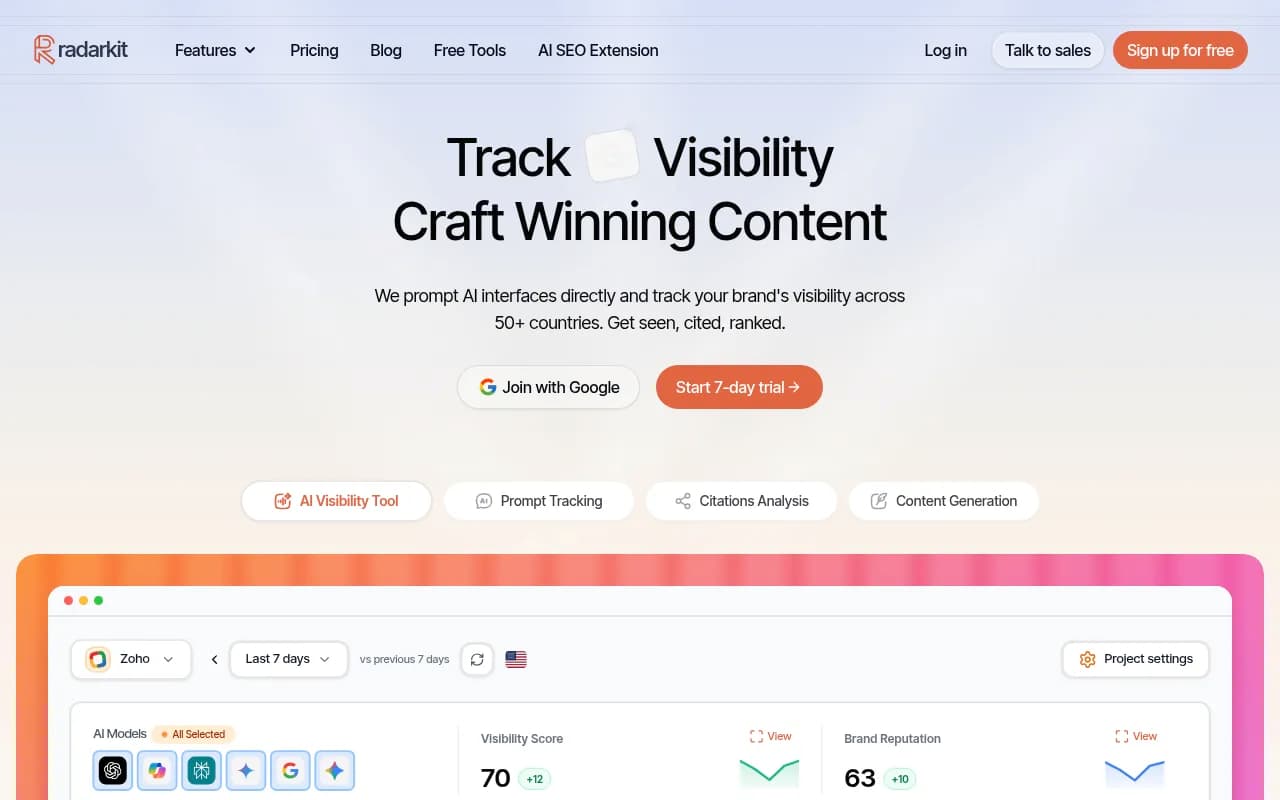
It covers the major AI engines, offers competitor tracking, and has a cleaner multi-client workflow than most tools in this price range. Pricing starts around $49/month.
Like most alternatives here, it's primarily a monitoring tool. The data is good; the action layer is thin.
AthenaHQ — best for startups with enterprise ambitions and the budget to match
AthenaHQ is a more complete platform than most alternatives here, with stronger automation and revenue attribution features. It's also priced closer to Profound than to the budget options.
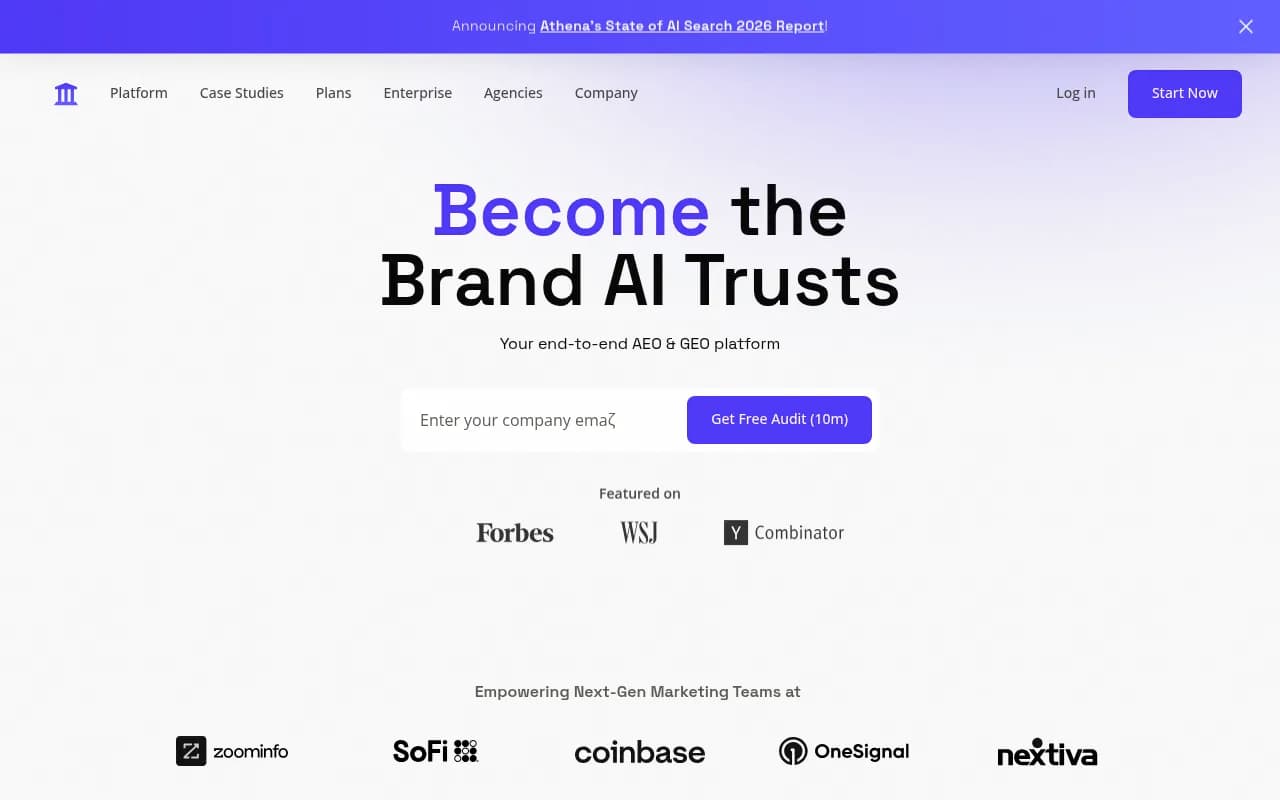
If you're a well-funded startup that needs enterprise-grade GEO capabilities and you've ruled out Profound specifically for feature or coverage reasons rather than price, AthenaHQ is worth evaluating. If price is the primary concern, it's probably not the answer.
ZipTie — best for visual answer auditing
ZipTie takes a different approach: it focuses on the actual AI-generated answers rather than just tracking whether your brand appears. You can see what ChatGPT, Perplexity, and Google AI Overviews are saying in response to specific prompts, which is useful for understanding the context of your citations (or lack thereof).
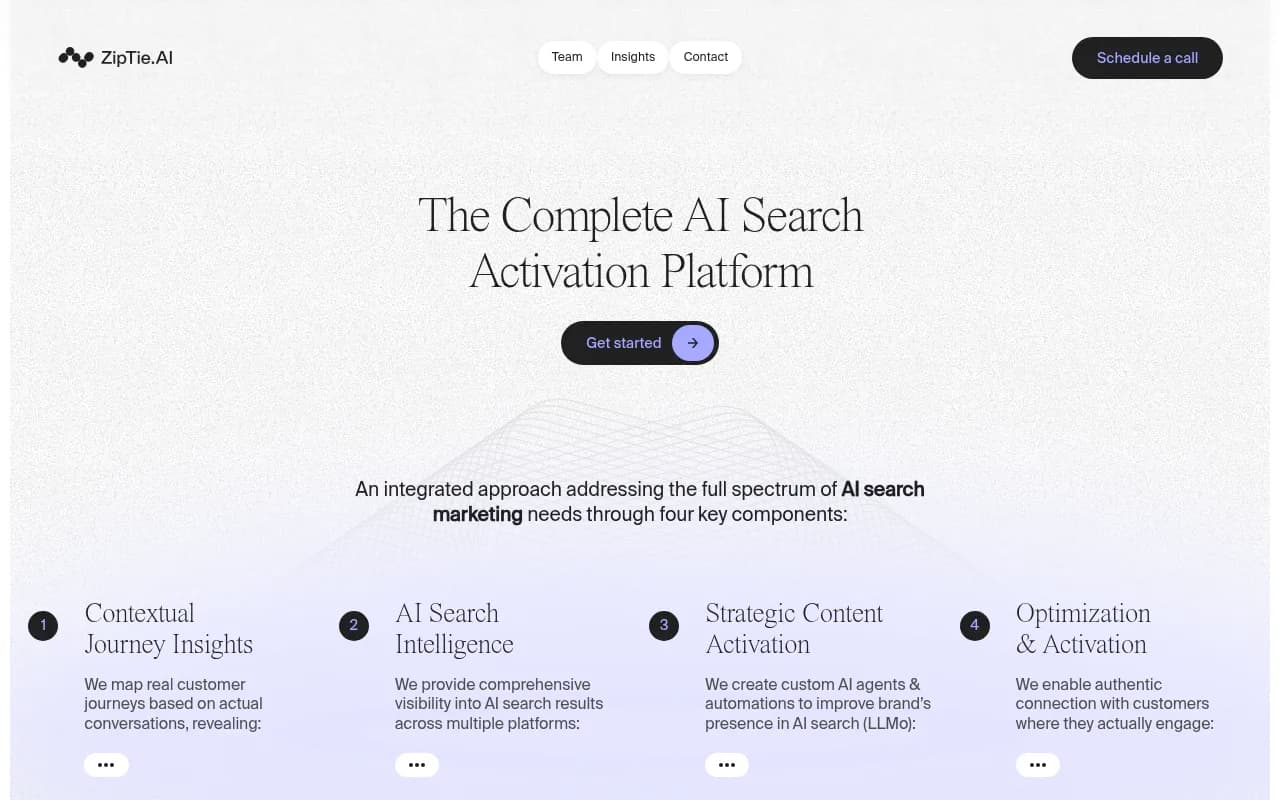
It's a more qualitative tool than most in this list, which makes it a good complement to a quantitative tracker rather than a standalone solution. Useful for content teams that want to understand the "why" behind visibility patterns.
Side-by-side comparison
| Tool | Starting price | AI engines covered | Content generation | Crawler logs | Gap analysis | Best for |
|---|---|---|---|---|---|---|
| Promptwatch | $99/mo | 10 (ChatGPT, Perplexity, Gemini, Claude, Grok, DeepSeek, Copilot, Meta AI, Google AIO, Google AI Mode) | Yes | Yes | Yes | Startups wanting full optimization loop |
| Otterly.AI | $29/mo | 3-4 | No | No | No | Budget monitoring |
| Peec AI | ~$49/mo | 4-5 | No | No | No | Prompt-level analytics |
| LLMrefs | ~$29/mo | 3-4 | No | No | No | SEO-native teams |
| SE Ranking | Varies (add-on) | Primarily Google AIO | No | No | No | Existing SE Ranking users |
| Radarkit | ~$49/mo | 4-5 | No | No | Limited | Agencies |
| AthenaHQ | Higher tier | 8+ | Limited | No | Limited | Well-funded startups |
| ZipTie | Varies | 3 | No | No | No | Answer auditing |
The monitoring-only problem
Something worth saying plainly: most tools in this space are monitoring dashboards. They tell you your AI visibility score, show you a competitor heatmap, and send you alerts. That's useful context, but it doesn't move the needle on its own.
The analogy that fits: imagine a fitness tracker that tells you you're out of shape but doesn't suggest any exercises. You can see the problem clearly. You still don't know what to do.
For startups specifically, this matters because you don't have the bandwidth to translate monitoring data into content strategy manually. You need a tool that closes that loop — or you need to be honest that you're buying a dashboard, not a growth tool.
That's the core reason Promptwatch stands out in this comparison. The Answer Gap Analysis + Content Agents combination means you can go from "I'm invisible for this prompt" to "I have a published article targeting that gap" in a single workflow. The page-level tracking then tells you whether it's working.
Most alternatives stop at the first step. Some are building toward the second. Promptwatch has had the full loop in production for a while, which is why it's used by brands like Booking.com and Center Parcs alongside much smaller teams.
How to choose the right tool for your startup
A few honest decision points:
If your monthly marketing budget is under $200 and you just want to understand your baseline AI visibility, start with Otterly.AI or LLMrefs. They're cheap, they work, and they'll give you enough data to know whether AI search is a real channel for you.
If you're past the "is this real?" question and want to actually improve your AI visibility, the monitoring-only tools will frustrate you. You'll see the gaps but have no workflow to close them. At that point, Promptwatch at $99-$249/month is the more honest investment — you're paying for a tool that helps you act, not just observe.
If you're an agency managing multiple clients and need white-label reporting and multi-site workflows, look at Radarkit or Promptwatch's agency/enterprise tier.
If you're already deep in the SE Ranking or Ahrefs ecosystem and just want to add AI visibility tracking without switching platforms, use their native features — the coverage won't be as deep, but the consolidation is worth something.
The bottom line
Profound is a solid platform. It's just not built for startups, and the pricing reflects that. The good news is that the alternatives have matured significantly in 2026 — you're not choosing between Profound and nothing.
The honest ranking for startups: Promptwatch for teams that want to optimize, Otterly.AI for teams that want to monitor cheaply, Peec AI for teams that care about prompt-level depth, and SE Ranking for teams that want to consolidate.
What I'd avoid: spending months on a monitoring-only tool and wondering why your AI visibility isn't improving. The data is only useful if you do something with it.