Key takeaways
- GetMint.ai is a solid AI visibility monitoring tool, but it stops at tracking -- it doesn't help you act on what you find.
- B2B companies have specific needs that generic brand trackers miss: account-level attribution, competitor gap analysis, content optimization, and multi-model coverage.
- The best alternatives in 2026 range from full-stack GEO platforms (Promptwatch, Profound) to niche trackers and content-first tools.
- If your goal is to actually improve your AI search visibility -- not just measure it -- you need a platform with content generation and optimization built in, not bolted on.
- Most tools in this space launched in 2024-2025, so public reviews are thin. Feature documentation and pricing transparency matter more than star ratings right now.
Why B2B teams outgrow GetMint.ai
GetMint.ai does what it says on the tin: it monitors how your brand appears across LLM-powered search engines like ChatGPT and Perplexity. For a lot of teams, that's a useful starting point. You get a dashboard, you see where you're showing up, and you get a rough sense of how you compare to competitors.
The problem is that "a rough sense" isn't enough for most B2B marketing teams in 2026. When your sales cycle is long, your buyer is doing research across multiple AI engines before they ever fill out a form, and your competitors are actively publishing content engineered to get cited -- monitoring alone starts to feel like watching a race from the stands.
B2B teams specifically tend to hit a few walls with GetMint.ai:
- No content gap analysis to show which prompts competitors rank for but you don't
- No built-in content generation or optimization workflow
- Limited prompt intelligence (volume estimates, difficulty scores, query fan-outs)
- No AI crawler logs to understand how AI engines are actually reading your site
- Publisher network model that works better for some brands than others
The GEO market is also moving fast. Most platforms in this space launched between 2024 and 2025, which means the gap between "monitoring dashboard" and "full optimization platform" has widened considerably in a short time. GetMint.ai's core value proposition -- its publisher network -- is genuinely useful for distribution, but it's not a substitute for owning your optimization process.
So if you're a B2B marketing team that wants to understand, track, and actually improve your AI search visibility, here's what the alternatives look like in 2026.
The alternatives, ranked by what B2B teams actually need
Promptwatch -- best for teams that want to close the loop
Promptwatch is the most complete option in this space right now. It's the only platform in a recent 12-tool comparison rated as a "Leader" across all categories -- and the reason is simple: it doesn't stop at monitoring.

Most tools show you where you're invisible. Promptwatch shows you where you're invisible, then helps you fix it. The core workflow is:
- Answer Gap Analysis identifies which prompts competitors are visible for but you're not -- the specific topics and questions AI models want answered but can't find on your site.
- A built-in AI writing agent generates articles, listicles, and comparisons grounded in real citation data (880M+ citations analyzed), prompt volumes, and competitor analysis.
- Page-level tracking shows exactly which pages are being cited, how often, and by which model -- with traffic attribution via GSC integration, code snippet, or server log analysis.
For B2B teams specifically, a few features stand out. The AI Crawler Logs show you in real time which pages ChatGPT, Claude, and Perplexity are actually reading on your site -- and which ones they're skipping or hitting errors on. That's the kind of technical insight that most monitoring tools completely ignore. Prompt Intelligence gives you volume estimates and difficulty scores for each prompt, so you can prioritize high-value, winnable queries instead of guessing. And the competitor heatmaps let you compare your visibility across LLMs side by side.
Pricing starts at $99/month for the Essential plan (1 site, 50 prompts, 5 articles) and $249/month for Professional (2 sites, 150 prompts, 15 articles, crawler logs). A free trial is available.
Profound -- best for enterprise teams with deep pockets
Profound is one of the more established names in GEO, and it's a serious tool. It covers AI visibility monitoring across multiple models, has solid analytics depth, and is built for larger organizations with complex reporting needs.
Where Profound falls short for most B2B teams is the price point -- it's positioned at the enterprise end of the market, which means it's often overkill for mid-market companies. It also lacks some of the execution-layer features that make Promptwatch useful day-to-day: no built-in content generation, no Reddit/YouTube tracking, no ChatGPT Shopping monitoring.
If you're a large enterprise with a dedicated SEO team and budget to match, Profound is worth evaluating. If you're a growth-stage B2B company that needs to move fast and show ROI, the cost-to-value ratio is harder to justify.
Scrunch -- best for monitoring-first teams
Scrunch focuses on monitoring how AI assistants like ChatGPT and Claude describe your brand, with a clean interface and decent multi-model coverage.
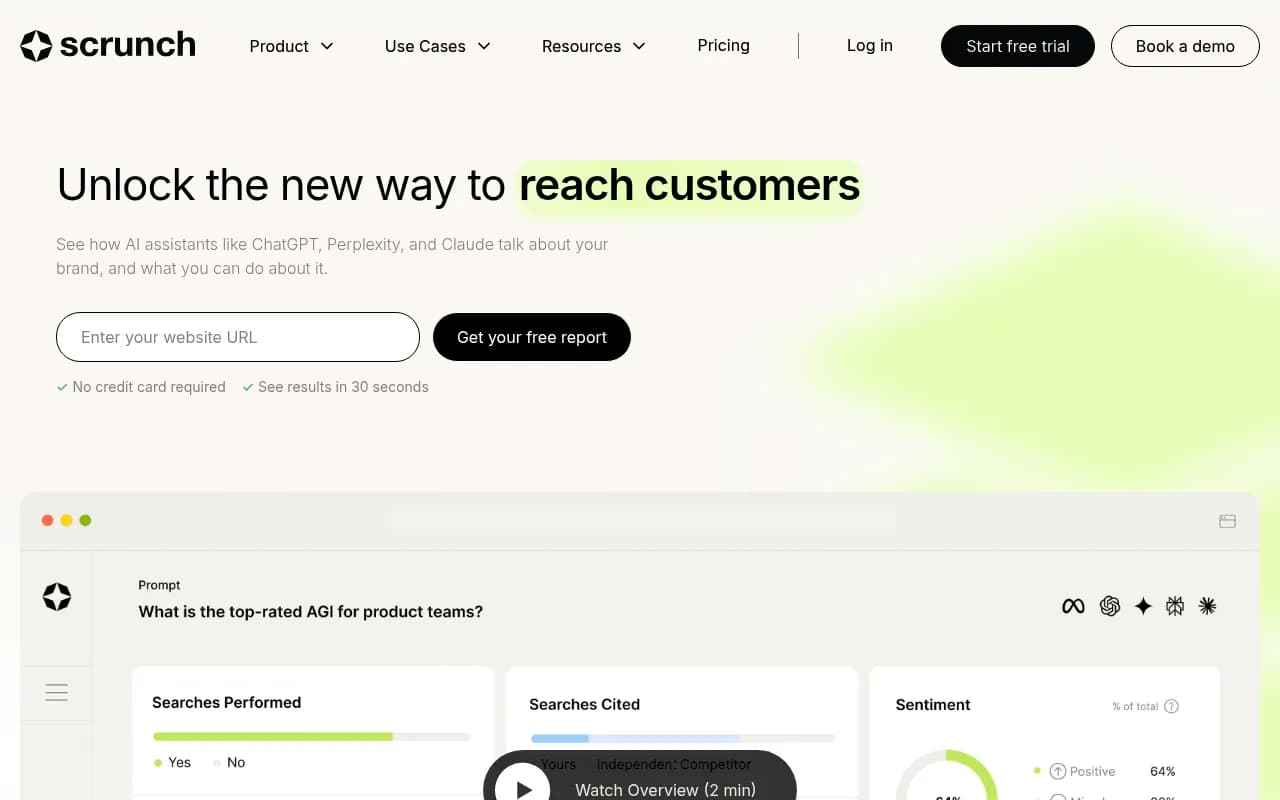
It's a reasonable choice if your primary need is visibility tracking and you don't need the content optimization layer. The trade-off is that Scrunch is largely a monitoring dashboard -- it shows you data, but the "what do I do about this?" question is left to you and your team.
For B2B companies with existing content operations and just need better AI visibility data to feed into them, Scrunch can work. For teams that need the full loop from gap identification to content creation to tracking, it's not enough on its own.
Otterly.AI -- best for teams on a tight budget
Otterly.AI is one of the more affordable options in the AI visibility space, and it covers the basics well: brand mention tracking across AI models, share-of-voice metrics, and basic competitor comparisons.
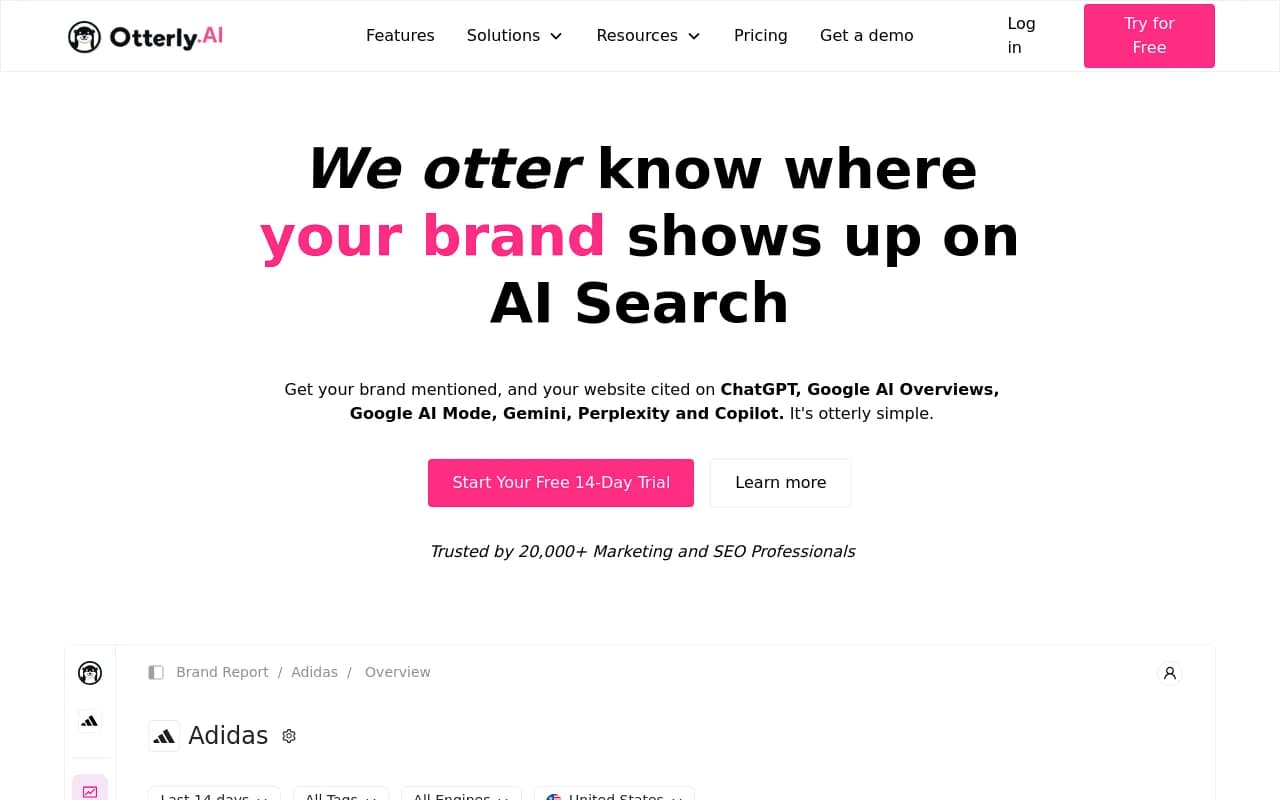
The limitations are real, though. No crawler logs, no visitor analytics, no content generation, and limited prompt intelligence. It's a monitoring tool, not an optimization platform. For a small B2B team that just wants to dip a toe into AI search visibility without committing to a larger platform, Otterly.AI is a reasonable starting point -- just know you'll likely outgrow it.
Peec AI -- best for lightweight monitoring
Peec AI sits in a similar category to Otterly.AI: solid for basic AI search monitoring, limited for teams that want to act on what they find.
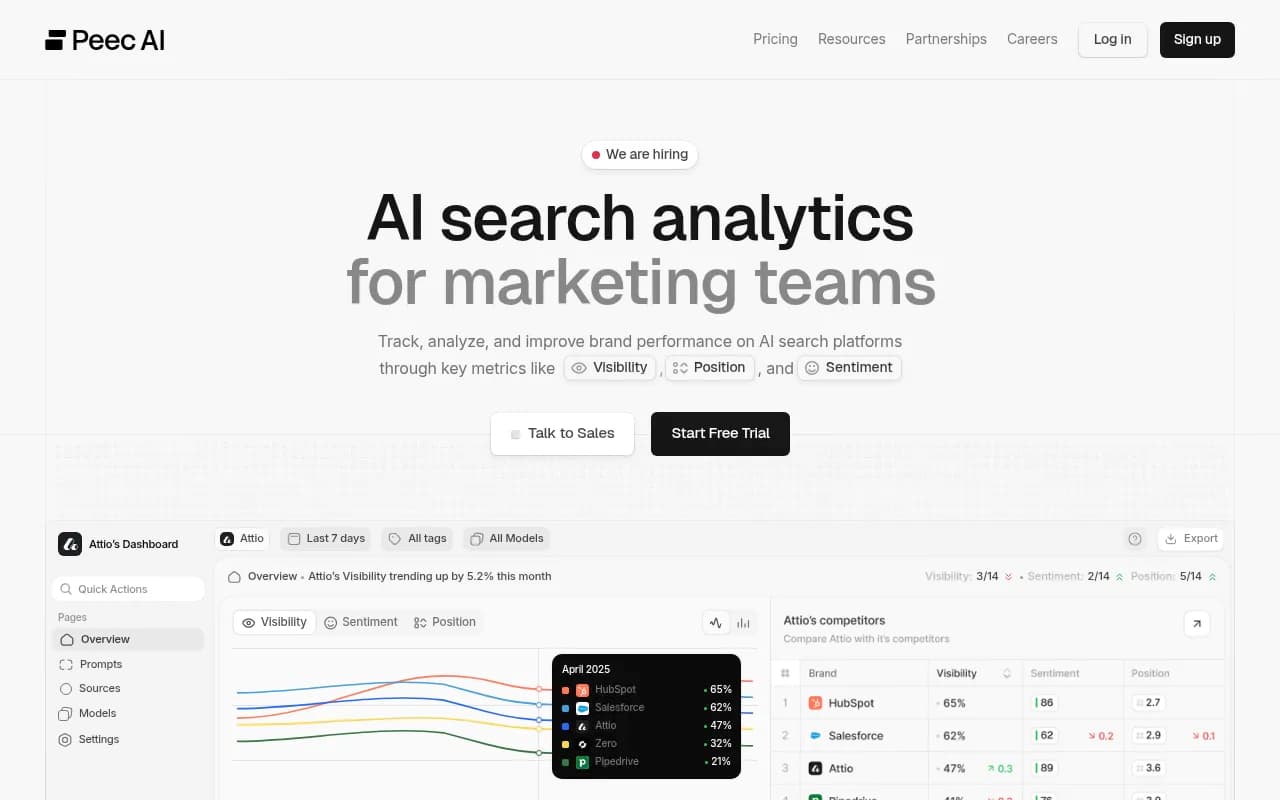
It has a clean interface and covers the core monitoring use case reasonably well. But like most tools in this tier, it stops at step one. There's no content gap analysis, no content generation, and no crawler log data. For B2B teams that need to connect AI visibility to actual pipeline, Peec AI doesn't give you enough to work with.
Athena HQ -- best for monitoring-focused teams that want competitor data
AthenaHQ covers 8+ AI search engines and has decent competitor tracking features. It's positioned as a monitoring and optimization platform, though the "optimization" part is lighter than the marketing suggests.
The main gap for B2B teams is the lack of content generation and the absence of traffic attribution. You can see where you're visible and where competitors are beating you, but turning that into action requires pulling data out and working in separate tools. For teams with strong in-house content capabilities, that's manageable. For teams that need the whole workflow in one place, it's a friction point.
Babylove Growth -- best for content-first teams that want GEO baked in
Babylove Growth takes a different angle: it's primarily a content automation platform that includes AI visibility tracking, rather than a GEO platform that includes content tools.
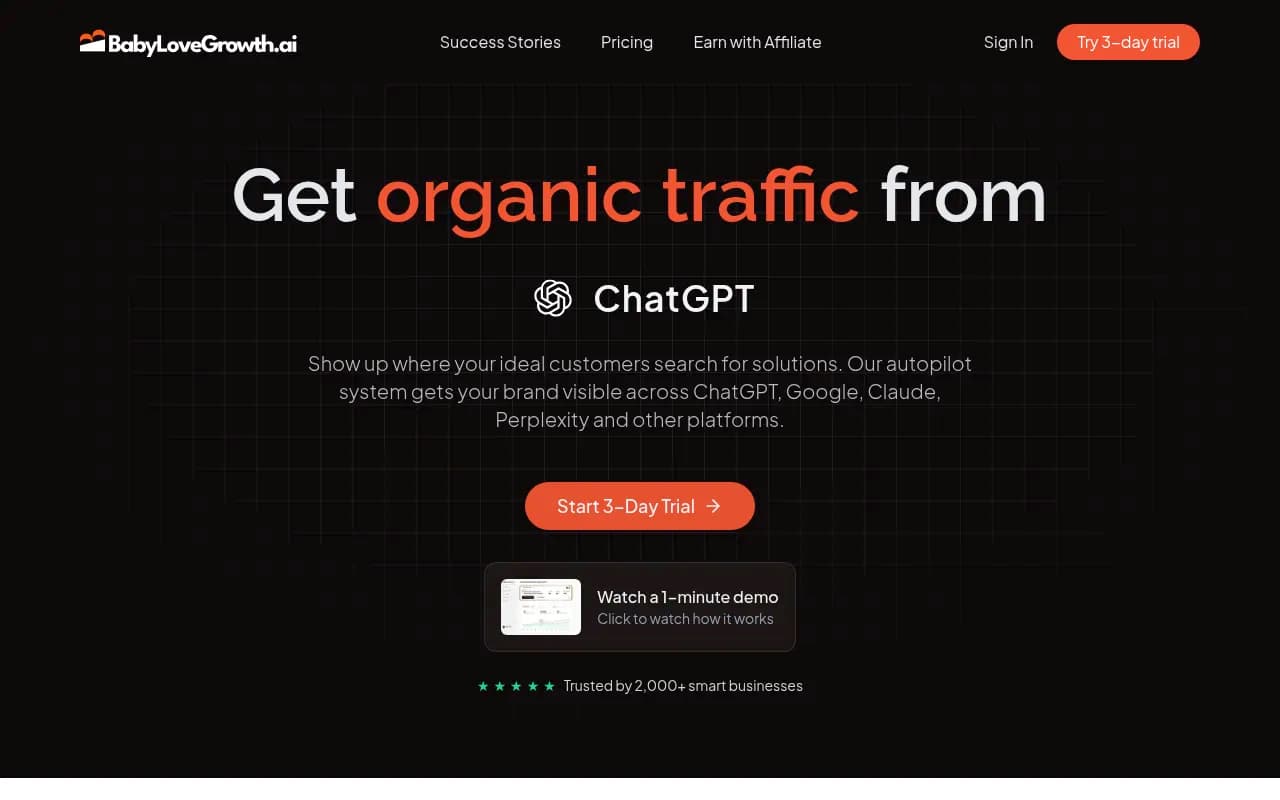
It generates brand-aligned articles optimized for Google and ChatGPT, automates publishing, builds contextual backlinks through a partner network, and tracks brand mentions across AI tools. The 30-day content calendar feature is genuinely useful for teams that struggle with content planning.
For B2B companies where content production is the bottleneck -- and AI visibility is a secondary concern -- Babylove Growth is worth a look. If AI search visibility is your primary focus and content is the means to that end, a platform like Promptwatch gives you more control over the optimization side.
SE Ranking / SE Visible -- best for teams already using SE Ranking for SEO
SE Ranking has added AI visibility features through its SE Visible product, which tracks brand visibility and sentiment across AI search engines alongside traditional SEO metrics.
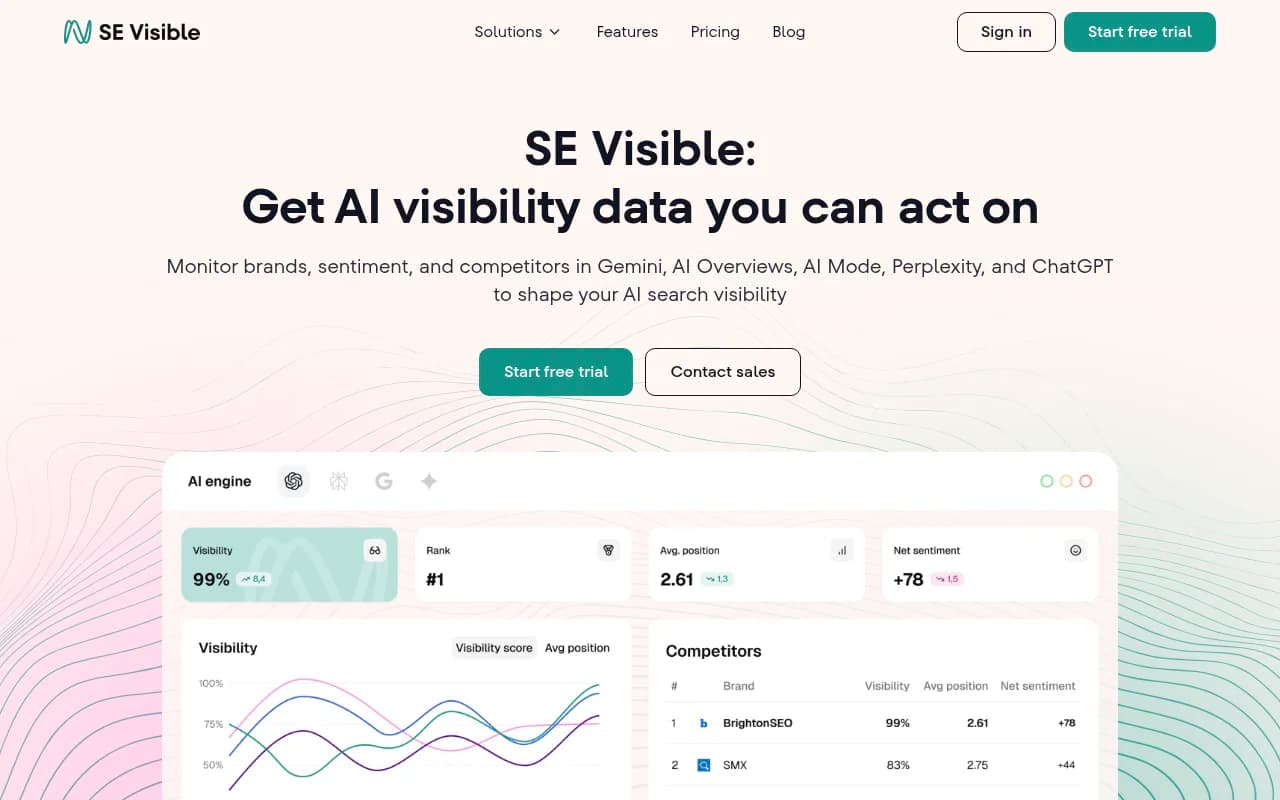
The main advantage here is consolidation: if you're already paying for SE Ranking, adding AI visibility tracking without switching platforms is a real benefit. The limitation is that SE Visible is still maturing -- it covers the monitoring basics but doesn't have the depth of dedicated GEO platforms on the optimization side.
Semrush -- best for teams that want everything in one platform (with trade-offs)
Semrush has added AI visibility features to its existing suite, which makes it attractive for teams that already use it for keyword research and rank tracking.
The honest assessment: Semrush's AI search monitoring is built around fixed prompts, which limits flexibility. It doesn't have AI traffic attribution, and the GEO features feel like additions to an SEO tool rather than a purpose-built AI visibility platform. For B2B teams that need serious GEO capabilities, Semrush is a supplementary tool, not a primary one.
Feature comparison: what B2B teams actually need
| Feature | Promptwatch | Profound | Scrunch | Otterly.AI | Peec AI | AthenaHQ | Babylove Growth |
|---|---|---|---|---|---|---|---|
| AI model coverage | 10+ | 6+ | 5+ | 4+ | 4+ | 8+ | 3+ |
| Answer gap analysis | Yes | Partial | No | No | No | Partial | No |
| Built-in content generation | Yes | No | No | No | No | No | Yes |
| AI crawler logs | Yes | No | No | No | No | No | No |
| Prompt volume/difficulty | Yes | No | No | No | No | No | No |
| Traffic attribution | Yes | No | No | No | No | No | No |
| Reddit/YouTube tracking | Yes | No | No | No | No | No | No |
| ChatGPT Shopping tracking | Yes | No | No | No | No | No | No |
| Competitor heatmaps | Yes | Yes | Partial | No | No | Yes | No |
| Multi-language/region | Yes | Yes | Partial | No | No | Partial | Yes |
| Starting price | $99/mo | Enterprise | Mid-market | ~$49/mo | ~$49/mo | Mid-market | Custom |
How to choose: a framework for B2B teams
The right tool depends on where you are in your AI visibility journey and what your team can actually execute on.
If you're just starting out
Start with a monitoring tool to understand your baseline. Otterly.AI or Peec AI can give you a quick read on where you stand without a big commitment. But set a 90-day deadline: if you're not turning the data into action, you need a platform that does more.
If you have content operations in place
You need gap analysis and tracking more than content generation. Promptwatch's Answer Gap Analysis is the most useful feature in this scenario -- it tells you exactly which prompts to target and which content to create, then tracks whether it worked.
If content is your bottleneck
Look at platforms that combine content generation with visibility tracking. Promptwatch's AI writing agent is built specifically for AI search citation (not generic SEO filler), which matters. Babylove Growth is worth considering if you want a more content-automation-first approach.
If you're an agency managing multiple B2B clients
Multi-site support and white-label reporting matter. Promptwatch's Business plan ($579/month) covers 5 sites with 350 prompts and 30 articles. Agency and enterprise pricing is available for larger portfolios. Search Party is another option worth evaluating for agency-specific workflows.
Search Party
If you're at enterprise scale
Profound and Evertune are the main options at the enterprise end of the market. Both have strong analytics depth and enterprise-grade support. The trade-off is price and the fact that neither has the full optimization loop that Promptwatch offers.
The B2B-specific things most GEO tools miss
One thing worth saying plainly: most AI visibility tools were built with B2C use cases in mind. Brand awareness, share of voice, consumer sentiment -- these matter for B2B too, but they're not the whole picture.
B2B buyers use AI search differently. They're asking longer, more specific questions: "What's the best [category] tool for [specific use case] at [company size]?" They're comparing vendors, reading about integrations, looking for case studies. The prompts that matter for a B2B SaaS company are very different from the prompts that matter for a consumer brand.
A few things to look for that most tools don't surface well:
- Persona-level tracking: Can you monitor how AI models respond to prompts from different buyer personas (e.g., a VP of Marketing vs. a Head of SEO)?
- Competitor gap analysis at the prompt level: Not just "your competitor is more visible" but "your competitor is visible for these 47 specific prompts and you're not."
- Content-to-citation attribution: Which specific pages on your site are being cited, and for which prompts? This is the B2B equivalent of keyword-to-conversion tracking.
Promptwatch covers all three of these. Most other tools in this space cover one or none.
Bottom line
GetMint.ai is a reasonable starting point if you want to understand your AI search visibility. But "understand" is only the first step. For B2B companies where AI search is becoming a meaningful part of the buyer journey, you need a platform that helps you act on what you find -- not just report on it.
The monitoring-only tools (Otterly.AI, Peec AI, Scrunch) are fine for baseline awareness. The enterprise platforms (Profound, Evertune) are solid if budget isn't a constraint. But if you want the full loop -- gap analysis, content generation, tracking, attribution -- Promptwatch is the only platform in this space that delivers all of it at a price point that makes sense for growth-stage and mid-market B2B teams.
The question to ask yourself: are you looking for a dashboard, or are you looking for results?