Key takeaways
- No peer-reviewed study ranks industries by how often AI gets brand facts wrong. The closest thing is a vendor study from First Page Sage (October 2026), so treat its numbers as directional.
- By topic, legal answers were wrong most often (23.8%), then financial (17.1%) and medical and health (15.3%). Product and brand details were wrong in about 1 in 5 responses.
- Errors cluster where facts change often (prices, rates, guidance) or where a brand's own site disagrees with third-party sources.
- Companies are legally on the hook for what their chatbots say. Moffatt v. Air Canada settled that question in 2024.
- The practical fix is boring: keep product and landing pages accurate, reconcile third-party listings, and monitor what AI says about you on a schedule.
The honest starting point: nobody has a clean industry ranking
The title of this guide promises a ranking, so here is the uncomfortable part first. I could not find an independent, peer-reviewed study that ranks industries by brand-fact error rate. What exists is a patchwork: vendor surveys, academic work on specific domains like law, incident reports, and warnings from bodies like the UN.
So this guide does something more useful than inventing a league table. It pulls the best available evidence by sector, flags how strong each source is, and gives you a way to measure your own exposure. If a number below comes from a vendor, I say so.
What the available data says
The closest thing to an industry split is a First Page Sage study from October 2026. It ran 4,182 prompts across 7 AI platforms between Sep 2 and Sep 29, 2026. It is a vendor study and its method has not been independently verified, but the pattern matches what academic work shows elsewhere.
| Topic or sector | Response-level error rate | Typical error | Evidence strength |
|---|---|---|---|
| Legal | 23.8% | Invented case law and statutes | Vendor study, backed by Stanford research |
| Financial | 17.1% | Outdated rates and figures | Vendor study |
| Medical and health | 15.3% | Outdated or misapplied guidance | Vendor study |
| Product and brand info | About 1 in 5 responses | Features a product never had, stale or invented prices | Vendor study |
The same study found a spread across platforms: Claude had the lowest response-level hallucination rate at 8.7% and DeepSeek the highest at 24.6%. Errors were most frequent when a brand's details differed between its own site and third-party sources. That last finding matters more than any ranking, because it is something you can actually control.
A caution on big dollar figures
You will see a claim online that hallucinations cost businesses $67.4 billion a year. Brilo traced that number to a content marketer, not primary research. Do not repeat it.
Sector by sector
Legal
Law is the best-documented case, and it is bad. A 2024 Stanford RegLab and HAI study found purpose-built legal AI tools hallucinated 17 to 33% of the time: Lexis+ AI about 17%, Westlaw AI-Assisted Research about 33%, against a GPT-4 baseline of 43%. Retrieval-augmented generation reduced errors but did not eliminate them. The "Large Legal Fictions" paper found general chatbots wrong on 58 to 88% of verifiable questions about real court cases.
For a law firm, the brand risk is less about the firm's name and more about AI inventing precedent or misdescribing what practice areas and jurisdictions you cover.
Finance
Financial answers fail mostly on freshness. Rates, fees, thresholds and product terms change, and models happily quote last year's version. The First Page Sage figure of 17.1% is vendor-run, but the failure mode (outdated rates and figures) is easy to reproduce yourself by asking an AI assistant about your own APR or fee schedule.
Finance also sits in the crosshairs of deliberate campaigns. Resolver reports analysts tracking a sharp rise in misinformation aimed at regulated industries: finance, pharma, energy and infrastructure. Its risk categories are ESG misstatement and compliance exposure, executive deepfake impersonation, and direct financial risk from fines, boycotts and stock volatility.
Healthcare and pharma
Healthcare is where errors are most dangerous, and ECRI named AI chatbot misuse in healthcare its top health-technology hazard for 2026. The First Page Sage study puts medical and health errors at 15.3%, mostly outdated or misapplied guidance.
Promptwatch Data shows where ChatGPT looks for answers in this sector. In its healthcare citation report (Sep 9 to Oct 8, 2026), NIH was the top cited source at 5.46% of healthcare citations, more than the FDA, NHS, CMS and SAMHSA combined. The FDA came second at 1.76% and the NHS third at 1.1%. Mayo Clinic (0.49%) and Cleveland Clinic (0.4%) were the only hospitals in the top 20. The top 20 domains together held just 15.54% of citations, so the source pool is wide and a brand has room to be cited, but only if its claims line up with those authorities.
Pharma brands also get hit by outright false narratives. Boehringer Ingelheim had to publish a fact-check page after persistent false claims linked it to Agent Orange production. That is a blunt but effective pattern: a dedicated, crawlable corrective page.
Airlines, travel and other customer-service sectors
The landmark case is Moffatt v. Air Canada (2024). The airline's chatbot invented a refund policy, and the tribunal held the airline liable, awarding C$812 in total. It rejected the argument that the chatbot was a separate legal entity, and found customers should not have to cross-check a chatbot's answer against other pages.
The amount was small. The precedent is not. If your own bot or an AI assistant misstates policy and a customer relies on it, "the AI said it" is not a defense you can count on.
For travel discovery more broadly, Promptwatch's travel citation data (Sep 28 to Oct 4, 2026) shows Skyscanner, Going and Tripadvisor leading ChatGPT citations, with booking and search sites holding more than half. In other words, third parties describe your brand more than you do.
Software and SaaS
Software brands mostly get hit on features and pricing, the exact error type the First Page Sage study flagged as most common for product information: features a product never had, and prices that were outdated or invented. Promptwatch's software citation report (Sep 28 to Oct 4, 2026) shows GitHub, Microsoft's docs and G2 leading, with documentation and help centers earning the largest share. So stale docs and old G2 listings are a direct route for wrong facts.
Automotive and retail
In Promptwatch's automotive data for August 2026, marketplaces like Autotrader and Cars.com outrank every car brand in ChatGPT citations, with Chevrolet the top manufacturer site. If dealer listings carry wrong specs or prices, that is what the model reads, regardless of what your brand site says.
Advertising and media
A different kind of risk. In an April 2026 brief, the UN's Department of Global Communications and the Conscious Advertising Network warned that unchecked AI adoption in advertising is accelerating risks across the information ecosystem, with annual ad spend topping $1 trillion. Columbia Business School's Gita Johar makes a related point: ad placement runs through opaque auction systems, so brands often do not know their ads appeared on misinformation sites, and AI will multiply the volume of such sites. NewsGuard's tracker listed 3,749 AI content farm sites as of its June 23, 2026 update.
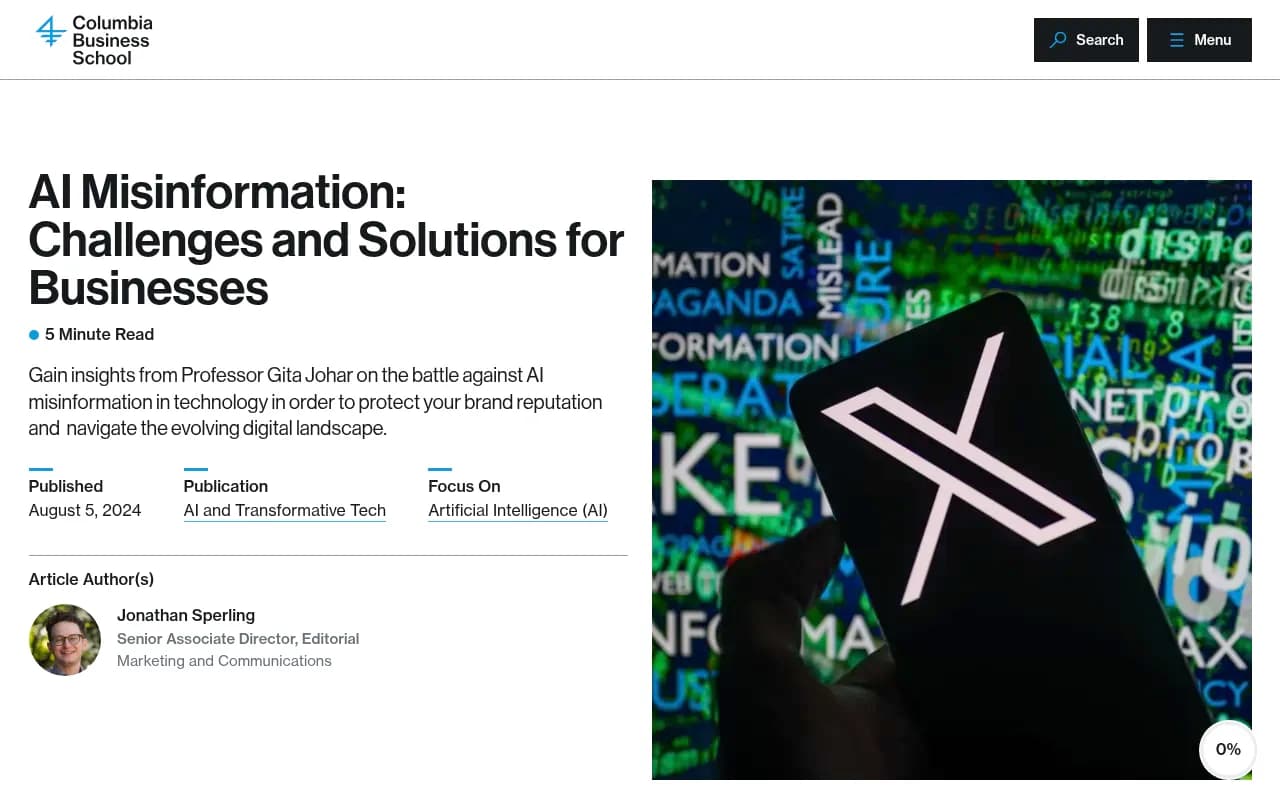
Johar's framework, the Three Ps of publishers, people and platforms, is a useful way to think about where your brand can intervene. Most brands can only really act on the publisher leg: what you publish and where.
Why some brands get it wrong more than others
Industry matters less than three structural factors.
- Fact volatility. Prices, rates, regulations and guidance change. Models lag.
- Source disagreement. The First Page Sage study found errors were most frequent when a brand's details differed between its own site and third-party sources.
- Citation concentration. If a few aggregators dominate answers in your category (marketplaces, booking sites, review platforms), they set your facts.
There is also a content-type angle. In Promptwatch Data's content type report (Sep 28 to Oct 4, 2026), product pages made up 22.4% of ChatGPT citations and landing pages 16.8%, so about 39% of citations go to pages describing what a company sells. For branded prompts, reviews rose to 5.6%, more than three times their share across all prompts. Practical reading: stale specs on your own pages flow straight into answers, and on branded queries third-party reviews carry real weight.
Content also ages at different speeds. Per Promptwatch's content half-life study, landing pages and docs stay cited longest, while news lost half its cited pages within 36 days. Wrong facts on durable pages persist.
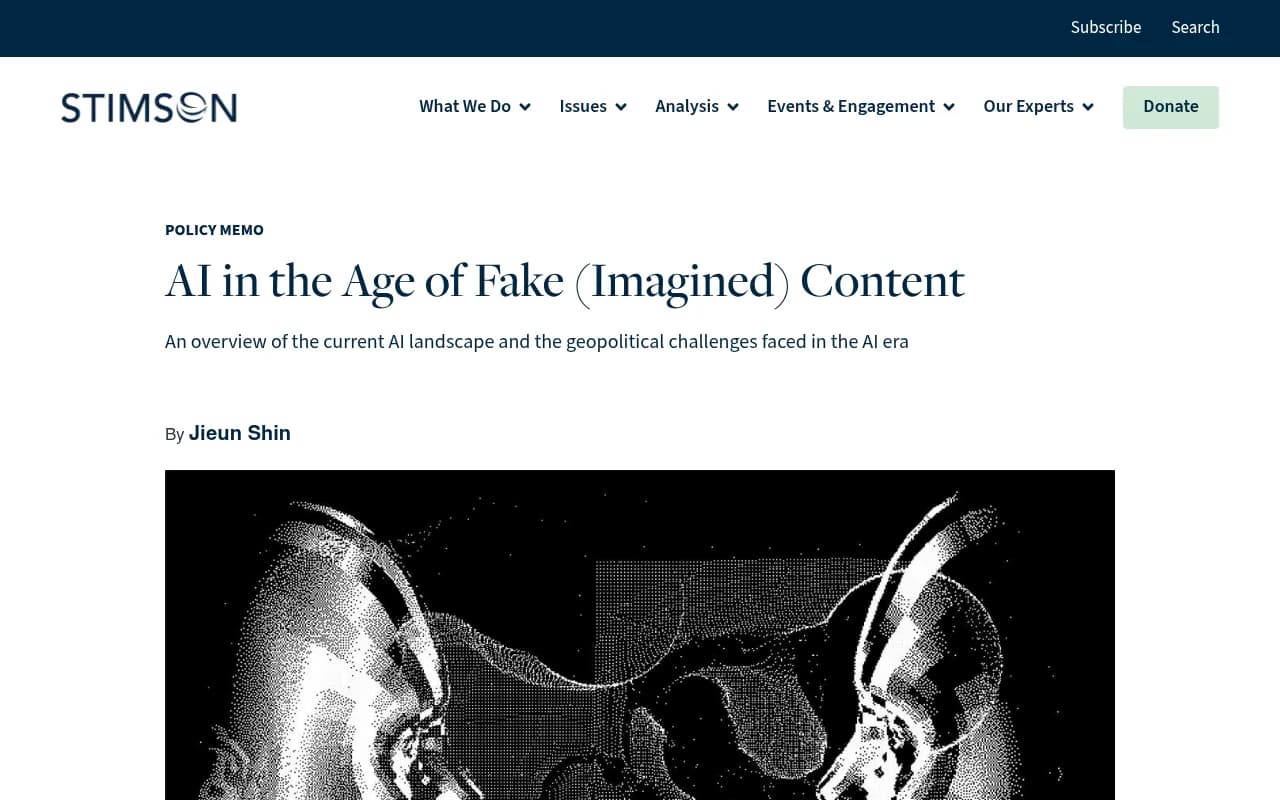
The Stimson Center memo (February 2026) argues for international guardrails, and notes most realistic fake content cases it reviewed were linked to elections. That is a reminder that deliberate disinformation and accidental hallucination are different problems needing different responses.
How to audit your own exposure
- List the facts that hurt when wrong. Pricing, eligibility, refund terms, medical claims, availability, compliance statements.
- Write 20 to 50 prompts your buyers would actually ask, including branded, competitor-comparison and "is X good for Y" prompts.
- Run them across several AI platforms and log every wrong claim, with the model and the source it cited.
- Trace each error to a page. Is it your own page, a marketplace listing, a review site, an old press release?
- Fix the source, not the symptom. You cannot edit a model. You can edit the page it learned from.
- Re-run monthly. Models change, and so do citations.
Tools that help
You can do steps 2 and 3 by hand, but it gets tedious fast. Promptwatch tracks what AI engines say about a brand across real interfaces, and its Brand Narrative feature pulls out the individual claims AI makes about you. Fact Check (on Business and above) lets you mark a claim inaccurate and then finds which crawled pages on your site state it, so you know which page to fix.

Some other options in the catalog take a narrower angle. LLMClicks advertises hallucination detection as part of its AI visibility tracking.
For broader mention monitoring outside AI answers, social listening tools like Brand24 cover the wider web, which matters for the advertising and disinformation side of the problem.
| Need | Approach | Example tool |
|---|---|---|
| Find wrong claims AI makes about you | Prompt monitoring plus claim extraction | Promptwatch |
| Spot hallucinations in tracked answers | AI visibility tracking with hallucination detection | LLMClicks |
| Catch false narratives on the open web | Social and media listening | Brand24 |
| See which pages feed AI answers | Citation and crawler analysis | Promptwatch |
If you want to compare more options, the GEO software directory at bestgeosoftware.com lists the wider field.
What to fix first, by sector
- Legal and professional services: state practice areas, jurisdictions and limits plainly. Publish clear "what we do not do" content.
- Finance: put effective dates on every rate and fee page, and keep one canonical page per product.
- Healthcare and pharma: back claims with peer-reviewed studies and link them on PubMed or PubMed Central, keep pages consistent with FDA, CDC, NHS and NICE guidance, and keep Doctify and WebMD profiles complete. These are the recommendations in Promptwatch's healthcare report.
- Travel, retail, automotive: audit marketplace and aggregator listings first. They outrank brand sites in citations.
- Software: treat docs and help centers as marketing pages. Update G2 profiles.
- Any regulated brand: consider a public corrective page for persistent false claims, the way Boehringer Ingelheim did.
Pitfalls
- Treating one scan as a verdict. AI answers vary run to run.
- Fixing your homepage while a marketplace listing still carries the wrong price.
- Quoting vendor statistics as settled fact, including the ones in this guide.
- Assuming your own chatbot is exempt from liability. Air Canada tried that argument and lost.
The bottom line
Legal, financial and health content get the most documented errors, and product details are wrong about one time in five. But the best predictor of whether AI gets your facts wrong is whether your facts are consistent everywhere a model can read them. Start with the five facts that would cost you most if misstated, check them across a handful of AI platforms this week, and trace every error back to a page you can change.