Key takeaways
- Profound starts at $499/month for a single company, which makes it impractical for agencies managing five, ten, or twenty clients at once
- Most Profound alternatives are still monitoring-only dashboards -- they show you data but don't help you act on it
- The best agency tools combine multi-client management, white-label reporting, and some form of content optimization or gap analysis
- Promptwatch is the only platform in this comparison rated as a "Leader" across all GEO categories, and it's the only one with a built-in AI writing agent that generates content engineered to rank in AI search
- Pricing ranges from ~$89/month (Peec AI) to enterprise-only (Profound) -- there's a real option for every agency size
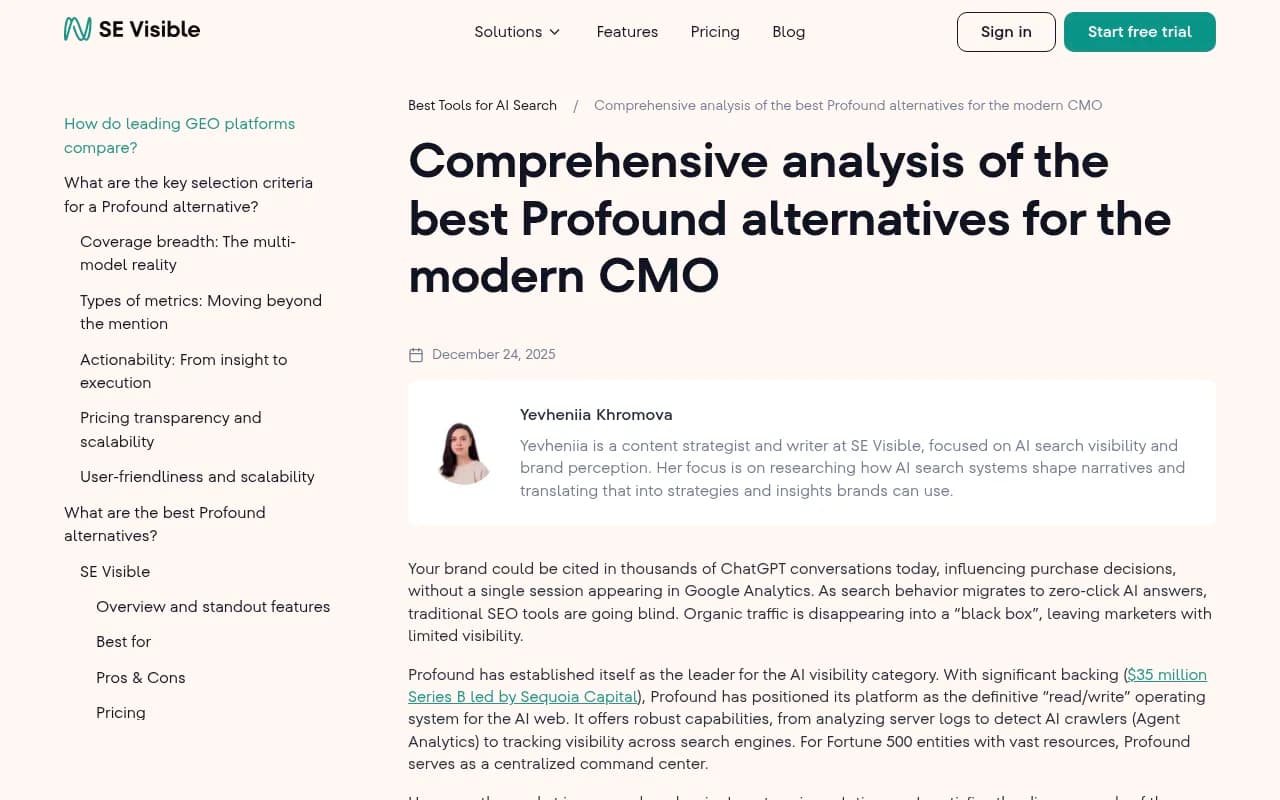
Profound has done something genuinely impressive: it built a category. When the company raised $35 million from Sequoia Capital, it validated that AI search visibility is a real discipline, not a passing trend. For Fortune 500 brands with dedicated teams and flexible budgets, Profound's "read/write operating system for the AI web" pitch makes sense.
For agencies, though, the math rarely works out. Profound's Lite tier starts at $499/month for one company. If you're managing ten clients, you're looking at a bill that would make most agency owners wince -- and that's before you factor in that Profound is primarily a monitoring tool. It tells you where you stand. It doesn't help you improve.
That gap is exactly what this guide covers. Below are seven alternatives worth considering in 2026, evaluated specifically through the lens of agency work: multi-client management, white-label reporting, actionability, and pricing that doesn't require a Series B to justify.
Why agencies have specific needs that Profound doesn't meet
Before getting into the alternatives, it's worth being precise about what makes agency use cases different.
An in-house marketing team optimizes one brand. An agency optimizes ten, twenty, sometimes hundreds. That changes everything:
- You need separate workspaces or projects per client, not a single dashboard
- Reporting has to be white-labeled or at least exportable in a format clients can read
- You need to show ROI across clients, which means tracking visibility changes over time, not just point-in-time snapshots
- You need content recommendations you can actually execute -- not just data that tells you you're losing
Profound's architecture is built around the enterprise single-brand use case. Some of the alternatives below were built with agencies in mind from day one.
The 7 best Profound alternatives for agencies in 2026
1. Promptwatch -- best overall for agencies that want to act, not just monitor
Promptwatch is the most complete GEO platform available right now, and it's the one I'd recommend first to any agency that's serious about AI search visibility.
The core difference from Profound (and most other tools on this list) is that Promptwatch doesn't stop at monitoring. It runs a full cycle: find the gaps, create content to fill them, track the results. For agencies, that means you can show clients not just where they're invisible, but what you're doing about it -- and then prove it worked.

A few specifics that matter for agency work:
The Answer Gap Analysis shows exactly which prompts competitors rank for that your client doesn't. You see the specific topics and questions AI models want to answer but can't find on your client's site. That's a content brief, not just a data point.
The built-in AI writing agent generates articles, listicles, and comparisons grounded in real citation data -- over 880 million citations analyzed. This isn't generic content; it's built to get cited by ChatGPT, Claude, Perplexity, and others.
AI Crawler Logs show you in real time which pages AI crawlers are visiting, how often, and what errors they're hitting. Most competitors don't have this at all.
Pricing runs from $99/month (Essential, 1 site) to $579/month (Business, 5 sites), with agency and enterprise plans available. Compared to Profound's $499/month for one company, the value calculation is obvious.
In a 2026 comparison of 12 GEO platforms, Promptwatch was the only tool rated as a "Leader" across all categories. That's not a marketing claim -- it's the outcome of having monitoring, optimization, and content generation in one place while competitors pick one or two.
2. Advanced Web Ranking -- best for reporting-heavy agencies at scale
If your agency's primary pain point is reporting efficiency across hundreds of clients, Advanced Web Ranking (AWR) deserves serious consideration. It's been in the rank tracking space for over 20 years, and that experience shows in how it handles scale.
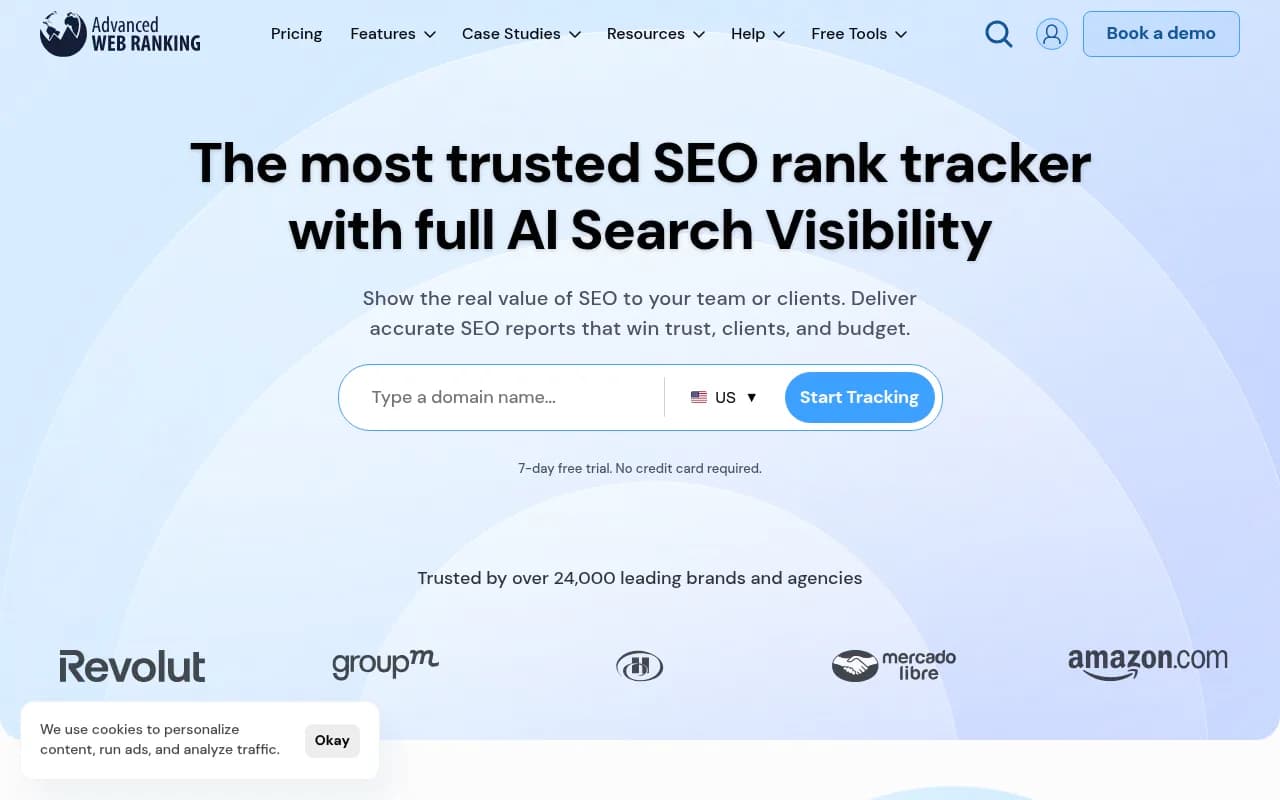
AWR's white-label reporting is genuinely flexible -- you can customize dashboards, schedule automated reports, and push data to clients without manual work. For large agencies where a team member would otherwise spend days every month assembling reports, that's a real operational win.
The AI visibility features are newer and less deep than dedicated GEO tools. AWR tracks AI Overviews and some LLM visibility, but it's not built around the GEO use case the way Promptwatch or Nightwatch are. Think of it as a reporting platform that has added AI tracking, rather than an AI tracking platform that has added reporting.
Best for: Agencies managing 50+ clients where reporting automation is the bottleneck.
3. Nightwatch -- best for teams that want SEO and AI tracking unified
Nightwatch has built a clean, well-designed platform that combines traditional rank tracking with AI search monitoring. The interface is genuinely pleasant to use, which matters more than people admit when you're logging in every day across multiple client accounts.
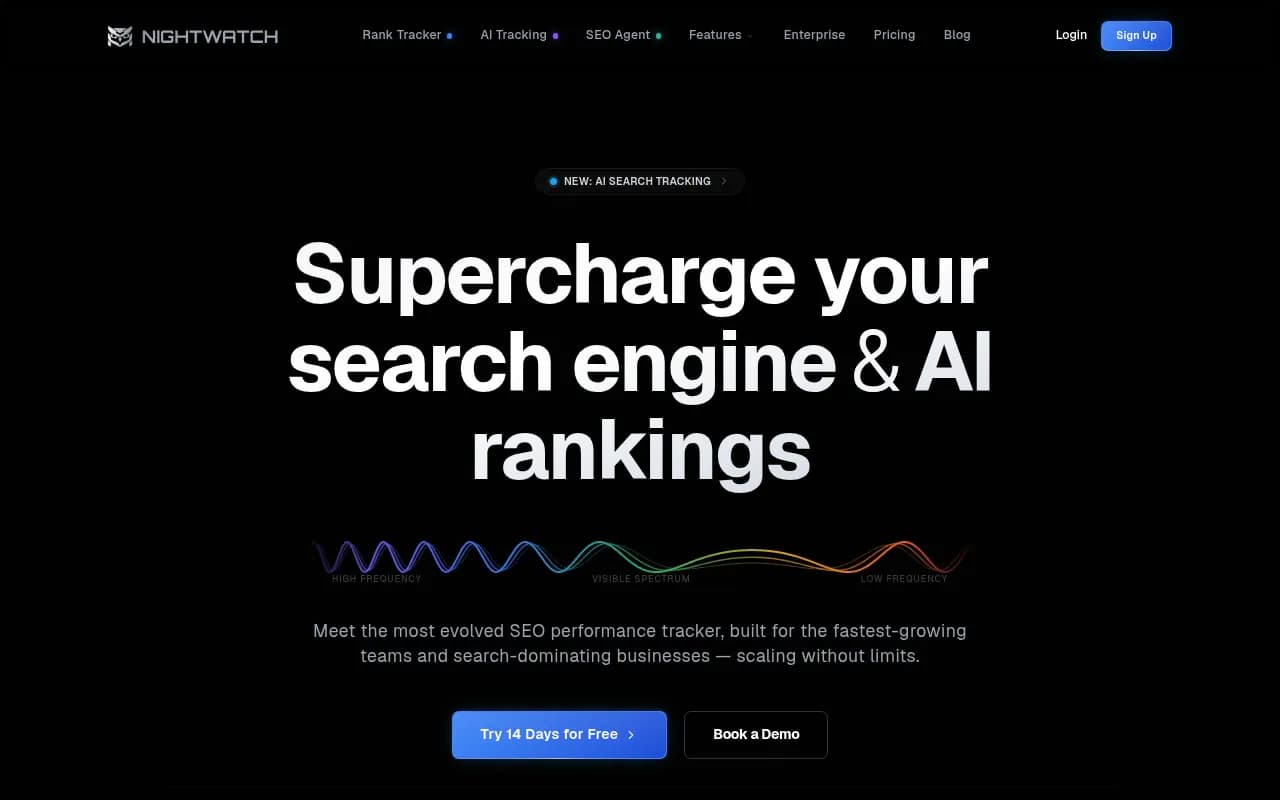
For agencies, Nightwatch's multi-site support and Looker Studio integration make client reporting manageable. The AI tracking covers Google AI Overviews and some LLM monitoring, and the prompt research features help identify which queries are worth targeting.
Where it falls short relative to Promptwatch: there's no content generation built in, no crawler logs, and the citation analysis isn't as deep. You'll get good monitoring data, but you'll need other tools to act on it.
Pricing is more accessible than Profound, which makes it a reasonable choice for agencies that already have content workflows and just need better visibility data.
Best for: SEO-first agencies that want to add AI tracking without switching platforms entirely.
4. SE Visible -- best for SEO agencies transitioning to GEO
SE Visible is SE Ranking's dedicated AI visibility product, and it occupies an interesting position: it's built for agencies that are already doing traditional SEO and want to layer in AI search monitoring without adopting a completely separate tool.
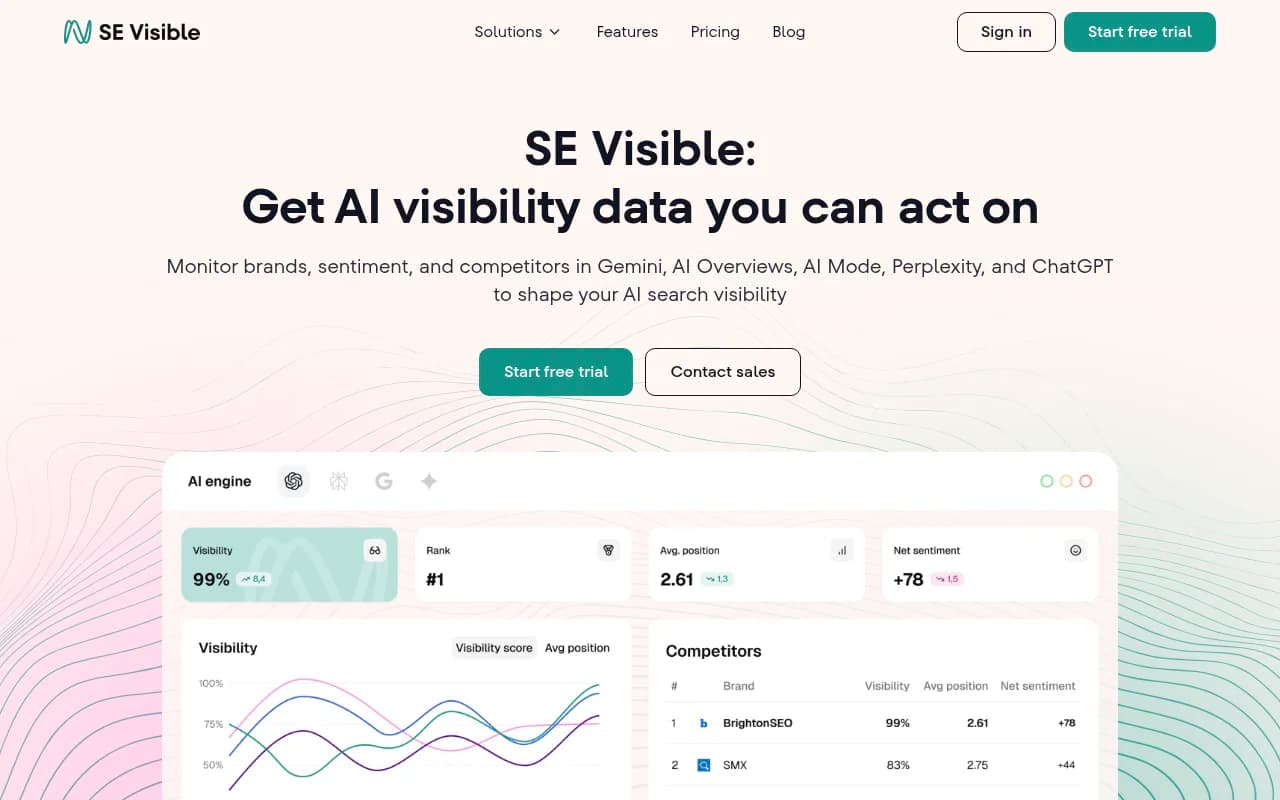
The source detection features are genuinely useful -- SE Visible shows you which sources AI models are pulling from when they answer queries in your client's space. That tells you where to publish and what to optimize, not just how you're currently performing.
The SEO data fusion (combining traditional ranking data with AI visibility data) is a differentiator. If your clients care about both Google rankings and ChatGPT citations, having both in one view saves context-switching.
Limitations: Like most tools here, it's primarily monitoring. The content optimization capabilities are limited compared to Promptwatch.
Best for: Agencies with existing SE Ranking subscriptions, or those whose clients have strong traditional SEO programs they want to extend into AI search.
5. Gauge -- best for competitive reporting across clients
Gauge is built around competitive intelligence in AI search. The core value proposition is showing you how your client stacks up against competitors across AI models -- which is exactly the kind of data clients want to see in a quarterly review.
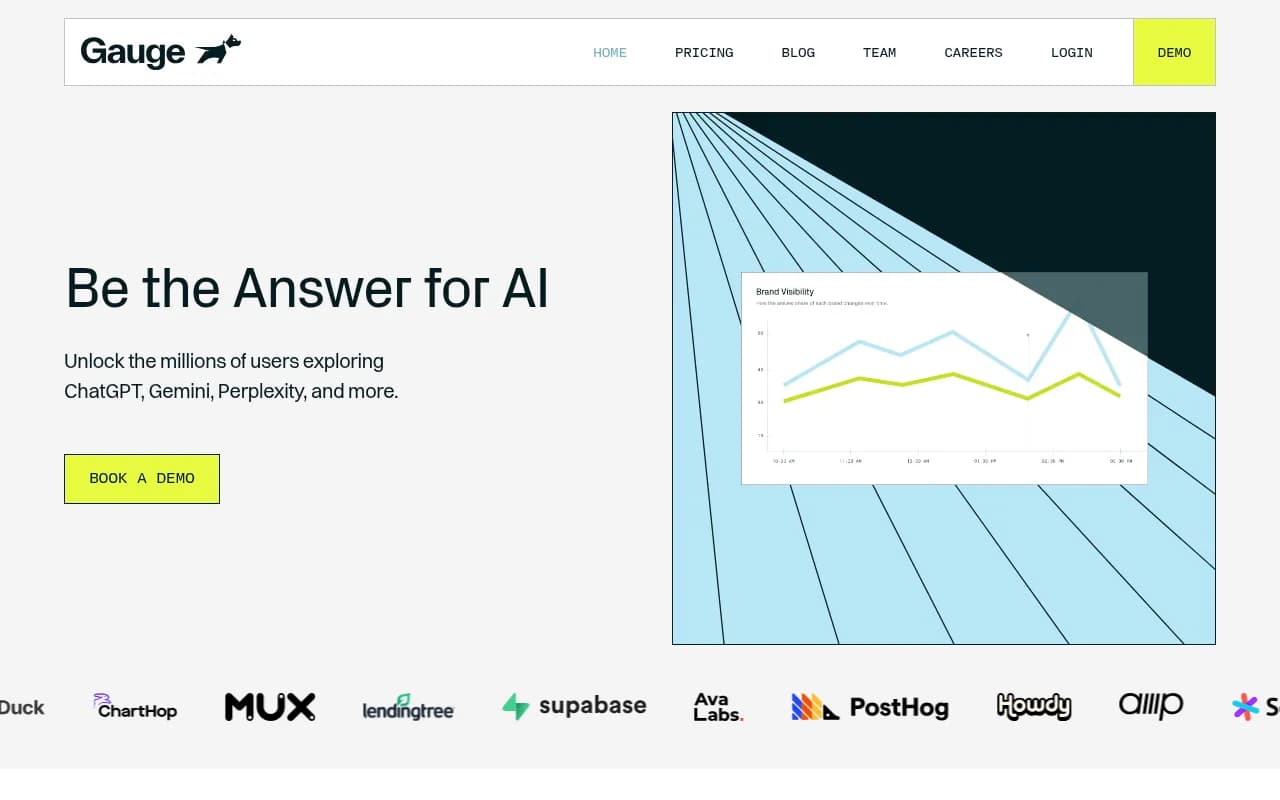
For agency use cases, Gauge's competitive reporting features work well. You can set up multiple client projects, track share of voice across LLMs, and generate comparison reports that make the "why AI search matters" conversation easier with skeptical clients.
The platform is more focused than some alternatives -- it does competitive monitoring well and doesn't try to do everything. That's a reasonable trade-off if competitive benchmarking is your primary deliverable.
Best for: Agencies that lead with competitive analysis in their client pitches and reporting.
6. Peec AI -- best for budget-conscious agencies and SMB clients
At €89/month, Peec AI is the most affordable credible option in this space. It's not the most powerful tool, but it covers the basics: brand monitoring across major AI models, multi-language support, and a clean interface that doesn't require a training session to navigate.

For agencies serving small and medium businesses where a $499/month Profound subscription would be absurd, Peec AI gives you something to offer. The monitoring data is solid for the price point, and the multi-language capabilities are genuinely useful for agencies with international clients.
The limitations are real: no content generation, no crawler logs, no deep citation analysis. You're getting monitoring, not optimization. But for clients who are just starting to think about AI search visibility, "monitoring" is often the right starting point.
Best for: Agencies serving SMBs, or as a starter tier for clients who aren't ready to invest in full GEO optimization.
7. Scrunch AI -- best for technically sophisticated agencies
Scrunch AI takes a different approach from most tools here. Its "AXP Shadow Site" technology is designed to help brands control how AI models represent them -- it's less about tracking visibility and more about actively shaping it at a technical level.
For agencies with technical SEO capabilities and clients who care deeply about brand accuracy in AI responses, Scrunch AI offers capabilities you won't find elsewhere. The platform is built for CTOs and technically-minded marketers who want to go beyond monitoring into actual infrastructure-level optimization.
The trade-off is complexity. Scrunch AI requires more technical setup than the other tools on this list, and it's not the right fit for agencies that need to onboard clients quickly and show results in the first 30 days.
Best for: Technically sophisticated agencies with clients in regulated industries or those with specific brand accuracy concerns in AI responses.
How these tools compare
| Tool | Multi-client support | Content generation | Crawler logs | White-label reporting | Starting price | Best for |
|---|---|---|---|---|---|---|
| Promptwatch | Yes (agency plans) | Yes (built-in AI writer) | Yes | Yes | $99/mo | Full GEO optimization |
| Advanced Web Ranking | Yes (hundreds of clients) | No | No | Yes (white-label) | Volume-based | Reporting-heavy agencies |
| Nightwatch | Yes | No | No | Partial (Looker Studio) | ~$39/mo | SEO + AI tracking unified |
| SE Visible | Yes | No | No | Partial | Add-on to SE Ranking | SEO agencies adding GEO |
| Gauge | Yes | No | No | Limited | Custom | Competitive reporting |
| Peec AI | Limited | No | No | No | €89/mo | SMB clients, budget |
| Scrunch AI | Yes | No | Partial | No | Monthly | Technical brand control |
| Profound | Single brand focus | No | Yes (Agent Analytics) | No | $499/mo | Enterprise single brands |
What to look for when choosing
The table above shows the feature differences, but the real question is what your agency actually needs right now.
If you're pitching AI search visibility as a new service line and need to show clients results quickly, you need a tool with content generation built in. Monitoring data alone doesn't close the loop -- clients want to see what you did and what changed. Promptwatch is the only tool here that covers the full cycle.
If you're a large agency where reporting efficiency is the bottleneck, AWR's white-label automation is worth the investment even if the AI features are shallower.
If you're serving SMBs who are just starting to think about AI search, Peec AI's price point makes it possible to offer this as a service without pricing yourself out of the market.
If your clients are technically sophisticated and care about brand accuracy at an infrastructure level, Scrunch AI does things the other tools don't.
The one thing I'd caution against: choosing a tool based purely on the number of AI models it monitors. Coverage breadth matters, but what you do with the data matters more. A tool that monitors 10 models but gives you no path to improvement is less useful than one that monitors 6 models and helps you actually rank in them.
The monitoring-only trap
Most of the tools in this space -- including Profound itself -- are fundamentally monitoring dashboards. They show you your share of voice, your citation rate, your sentiment score. That data is useful. But it's the starting point, not the destination.
The agencies that will build durable AI search practices in 2026 are the ones that close the loop: find the gaps, create content that fills them, track whether it worked. That's a workflow, not a dashboard.
Promptwatch is the only platform here built around that workflow end-to-end. For agencies that want to offer AI search optimization as a real service -- not just a reporting add-on -- that distinction matters.
The other tools on this list are worth considering for specific use cases. But if you're building an agency practice around GEO and want one platform that does the whole job, start there.