Key takeaways
- Omnia charges ~€3.16 per tracked prompt -- nearly 3x more than several alternatives -- and still has core features like sentiment analysis listed as "coming soon"
- Most Omnia alternatives fall into two camps: monitoring-only dashboards and full optimization platforms that also help you create content and fix gaps
- Promptwatch is the only platform in this comparison rated as a "Leader" across all GEO categories, covering 10+ AI models with built-in content generation and crawler logs
- If you're a small team on a budget, Otterly.AI and Peec AI offer solid entry-level monitoring; if you need to actually move the needle, you need something with an action layer
- AI model coverage varies significantly -- some tools skip Gemini, Claude, or DeepSeek entirely, which matters more as search traffic fragments across models
Omnia made headlines in late 2025 after raising €3.5 million in pre-seed funding. Fair enough -- that's a real vote of confidence. But funding doesn't ship features, and a closer look at Omnia's product reveals some uncomfortable gaps for a platform at that price point.
Sentiment analysis: still "coming soon." Data exports: locked behind the €279/month Pro plan. Cost per prompt: roughly €3.16, compared to competitors charging under €1. And Gemini coverage? Not clearly included in base plans.
That's not a knock on the team -- early-stage products have roadmaps. But if you're evaluating AI visibility tools right now, you need to know what's live, not what's planned. This guide ranks 10 Omnia alternatives on the things that actually matter: which AI models they cover, what features are actually shipped, and what you'll pay per prompt.
What to look for in an Omnia alternative
Before jumping into the list, it's worth being clear about what separates a good AI visibility tool from a mediocre one.
AI model coverage is the obvious starting point. ChatGPT and Perplexity are table stakes. But Claude, Gemini, DeepSeek, Grok, and Mistral are all sending traffic now. A tool that skips half the models is giving you half the picture.
Monitoring vs. optimization is the bigger divide. Most tools in this space show you a dashboard with your brand's mention rate and share of voice. That's useful for about five minutes. What you actually need is to know why you're not being cited and what to do about it. That requires answer gap analysis, content recommendations, and ideally a way to generate and publish content that AI models will actually cite.
Pricing transparency matters too. Credit-based models and per-prompt pricing that scales aggressively punish you for using the tool seriously. Look for flat-rate plans with reasonable prompt limits.
Integrations are often an afterthought until they're not. Looker Studio connectors, Google Search Console integration, and server log analysis are the difference between a standalone dashboard and something that fits into your actual workflow.
The 10 best Omnia alternatives in 2026
1. Promptwatch
Promptwatch is the most complete platform in this comparison. Where most tools stop at monitoring, Promptwatch runs a full optimization loop: find gaps, generate content, track results.

The Answer Gap Analysis shows exactly which prompts competitors are visible for that you're not -- not as a vague category, but as specific questions and topics your site isn't answering. From there, the built-in AI writing agent generates articles grounded in real citation data (880M+ citations analyzed), so you're not producing generic content and hoping for the best.
Coverage spans 10 AI models: ChatGPT, Perplexity, Google AI Overviews, Google AI Mode, Claude, Gemini, Meta/Llama, DeepSeek, Grok, Mistral, and Copilot. That's the broadest in this comparison. The AI Crawler Logs feature is also worth calling out -- it shows you in real time which AI crawlers are hitting your pages, which errors they're encountering, and how often they return. Most competitors don't have this at all.
Pricing starts at $99/month for the Essential plan (1 site, 50 prompts, 5 articles), $249/month for Professional (2 sites, 150 prompts, 15 articles, crawler logs), and $579/month for Business (5 sites, 350 prompts, 30 articles). Free trial available.
Best for: Marketing and SEO teams that want to move from tracking to actually improving AI visibility.
2. Otterly.AI
Otterly.AI is one of the more accessible entry points in the AI visibility space. It covers the major models -- ChatGPT, Perplexity, Claude, Gemini -- and gives you share of voice and brand mention tracking without a steep learning curve.
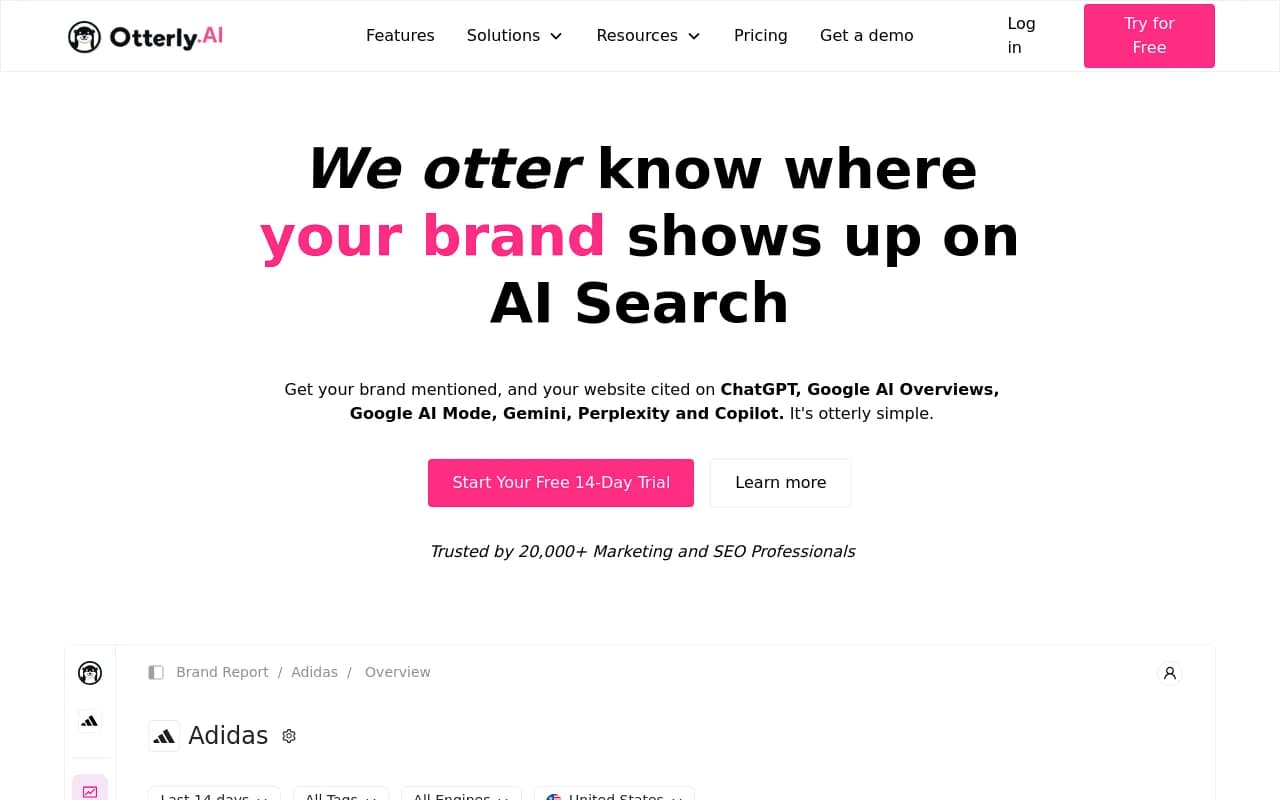
The honest limitation: it's a monitoring tool. You'll see where you're visible and where you're not, but the platform doesn't tell you what to do about gaps. For teams that already have content resources and just need the data, that's fine. For teams that need the full loop, it's a starting point, not a finish line.
Pricing is on the affordable end, making it a reasonable choice for smaller teams testing the AI visibility waters.
Best for: Small teams and solo marketers who want affordable monitoring without complexity.
3. Peec AI
Peec AI focuses on brand monitoring across AI search engines with clean reporting and a straightforward interface. It covers ChatGPT, Perplexity, and a handful of other models, with decent share-of-voice tracking.
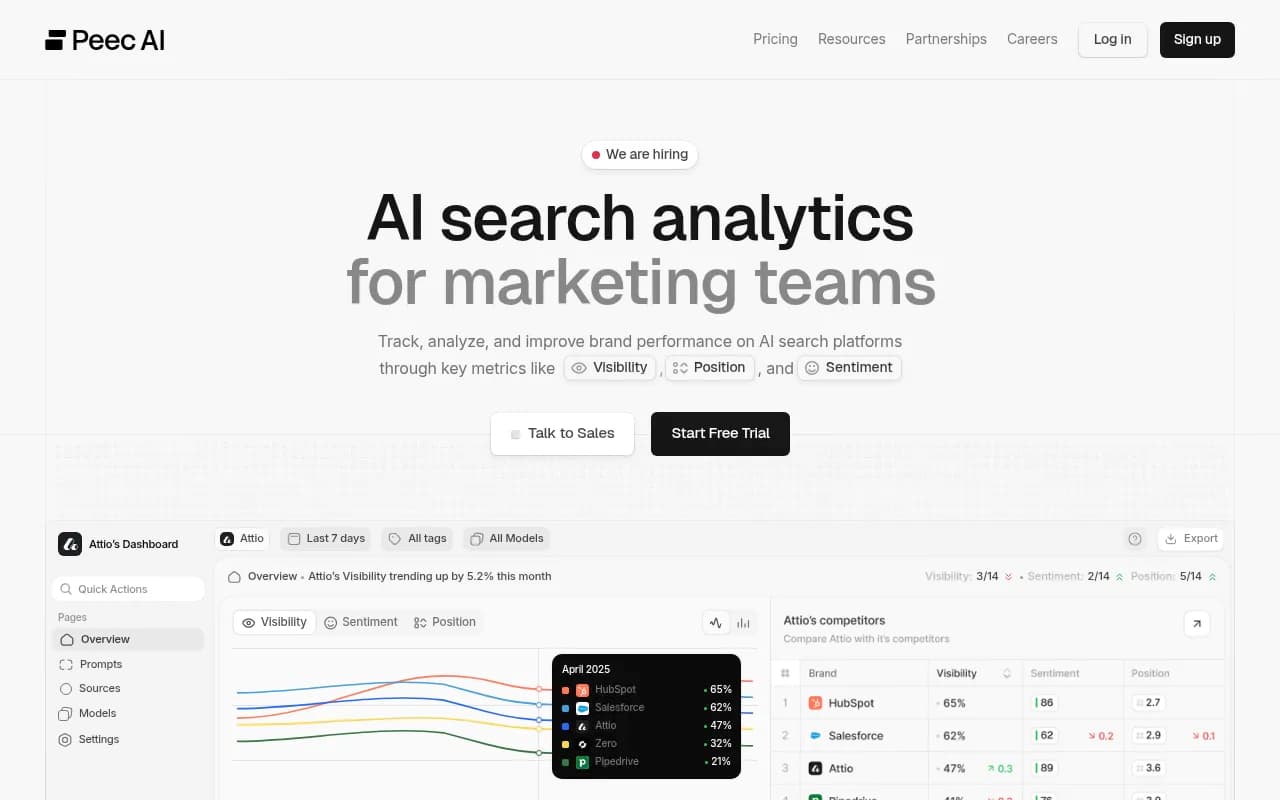
Like Otterly.AI, Peec AI sits firmly in the monitoring camp. There's no content generation, no gap analysis that tells you what to write, and no crawler log data. What it does, it does cleanly -- which is worth something when you're comparing it to tools that try to do everything and execute nothing well.
Best for: Teams that want clean, no-frills AI brand monitoring.
4. Profound
Profound is one of the more established names in enterprise AI visibility. It has strong citation tracking, solid model coverage, and a more polished enterprise experience than most competitors.
The tradeoff is price. Profound sits at a higher price point than most tools here, and it doesn't include Reddit or YouTube tracking (which matter because AI models frequently cite those sources). No ChatGPT Shopping tracking either. For large brands with dedicated teams, it's a serious option. For mid-market teams watching budget, the cost-to-feature ratio is harder to justify.
Best for: Enterprise brands with dedicated AI SEO functions and larger budgets.
5. LLM Pulse
LLM Pulse has built a reputation for transparent pricing and honest feature comparisons -- their breakdown of Omnia's gaps is actually what surfaced a lot of the data in this guide. The platform covers the core AI models and offers solid monitoring capabilities.
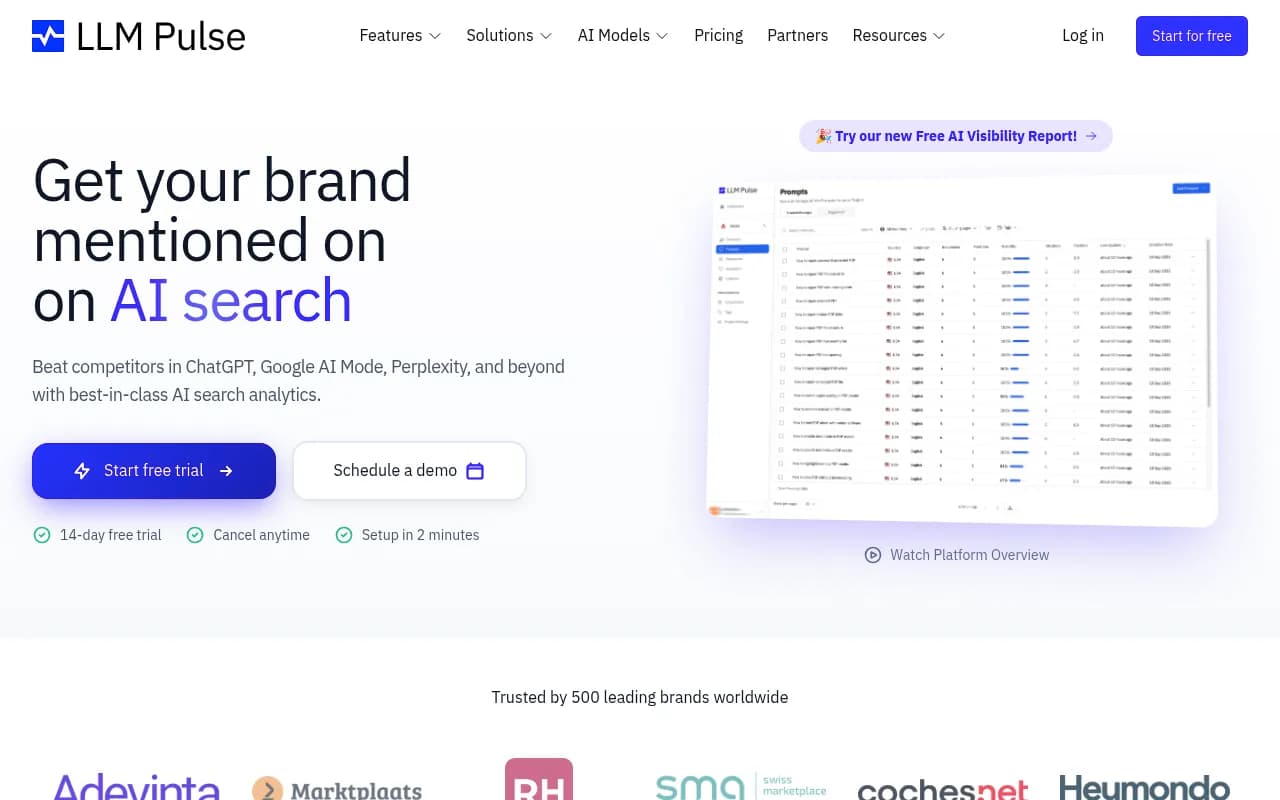
It's a leaner tool than Promptwatch or Profound, but the pricing is more accessible and the feature set is honest about what's live versus what's coming. Worth evaluating if you're mid-market and don't need the full enterprise feature stack.
Best for: Mid-market teams that want transparent pricing and honest feature delivery.
6. Scrunch AI
Scrunch AI focuses on helping brands understand how AI assistants like ChatGPT and Claude represent them, with particular attention to citation sources and content recommendations.
It has more of an action layer than pure monitoring tools, though it doesn't match Promptwatch's content generation capabilities. The citation source analysis is genuinely useful -- knowing which Reddit threads, YouTube videos, and third-party domains are influencing AI responses helps you decide where to publish and what to optimize.
Best for: Brands that want to understand citation sources and get some content direction.
7. AthenaHQ
AthenaHQ covers 8+ AI search engines and has a clean interface for tracking brand visibility and sentiment. It's monitoring-focused, which is its main limitation, but the model coverage is solid.

The platform lacks content optimization and generation capabilities, which means every insight is a homework assignment you have to execute elsewhere. That said, if you have a content team ready to act on the data, AthenaHQ gives you decent signal.
Best for: Teams with existing content resources who need solid multi-model monitoring.
8. SE Visible
SE Visible (from SE Ranking) tracks brand visibility and sentiment across AI search engines. The advantage here is that it sits inside a broader SEO platform, so if you're already using SE Ranking for traditional SEO, the AI visibility layer integrates naturally.
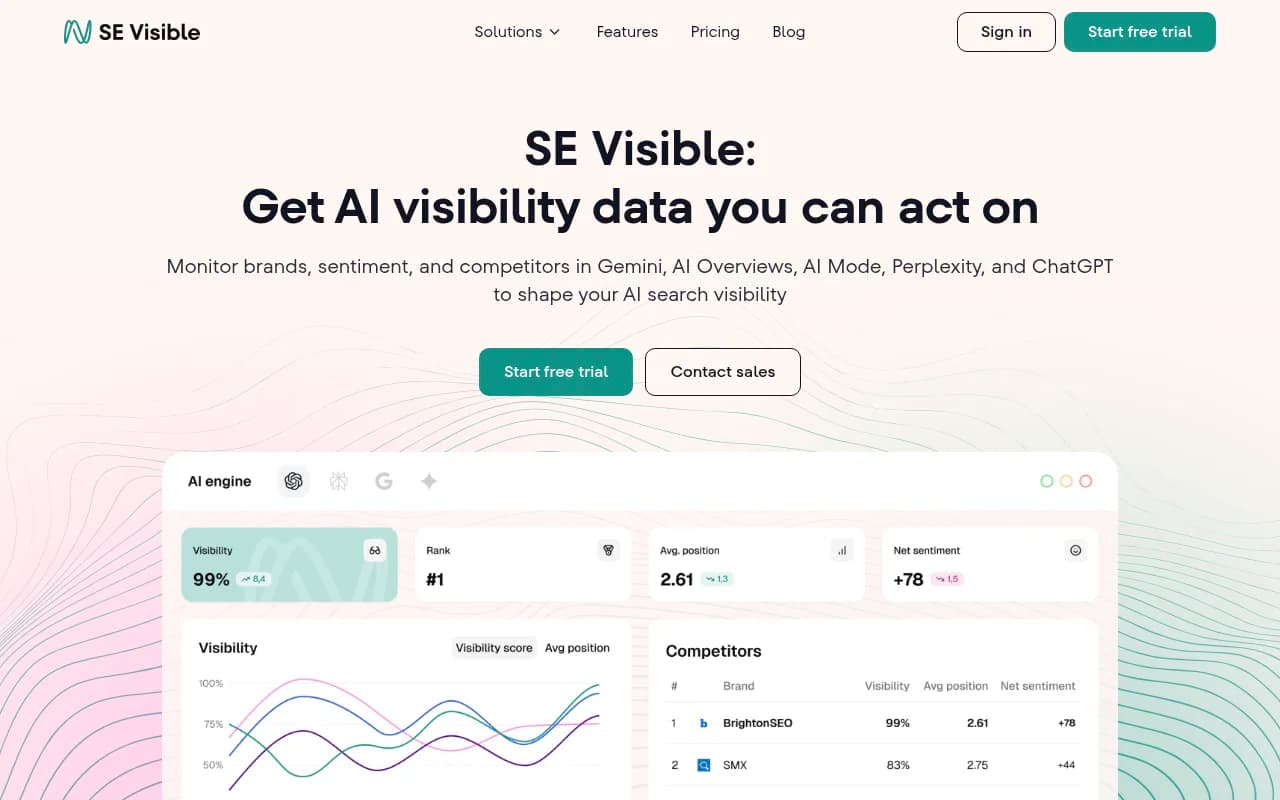
The AI visibility features are less deep than dedicated GEO platforms, but the integration with traditional SEO data is a real advantage. You can see how your AI visibility correlates with your organic rankings, which is useful context most standalone tools can't provide.
Best for: Teams already using SE Ranking who want to add AI visibility monitoring without switching platforms.
9. Rankscale
Rankscale tracks where your brand stands in AI-generated answers across multiple engines, with citation intelligence and share of voice metrics. It's a legitimate platform with decent coverage.
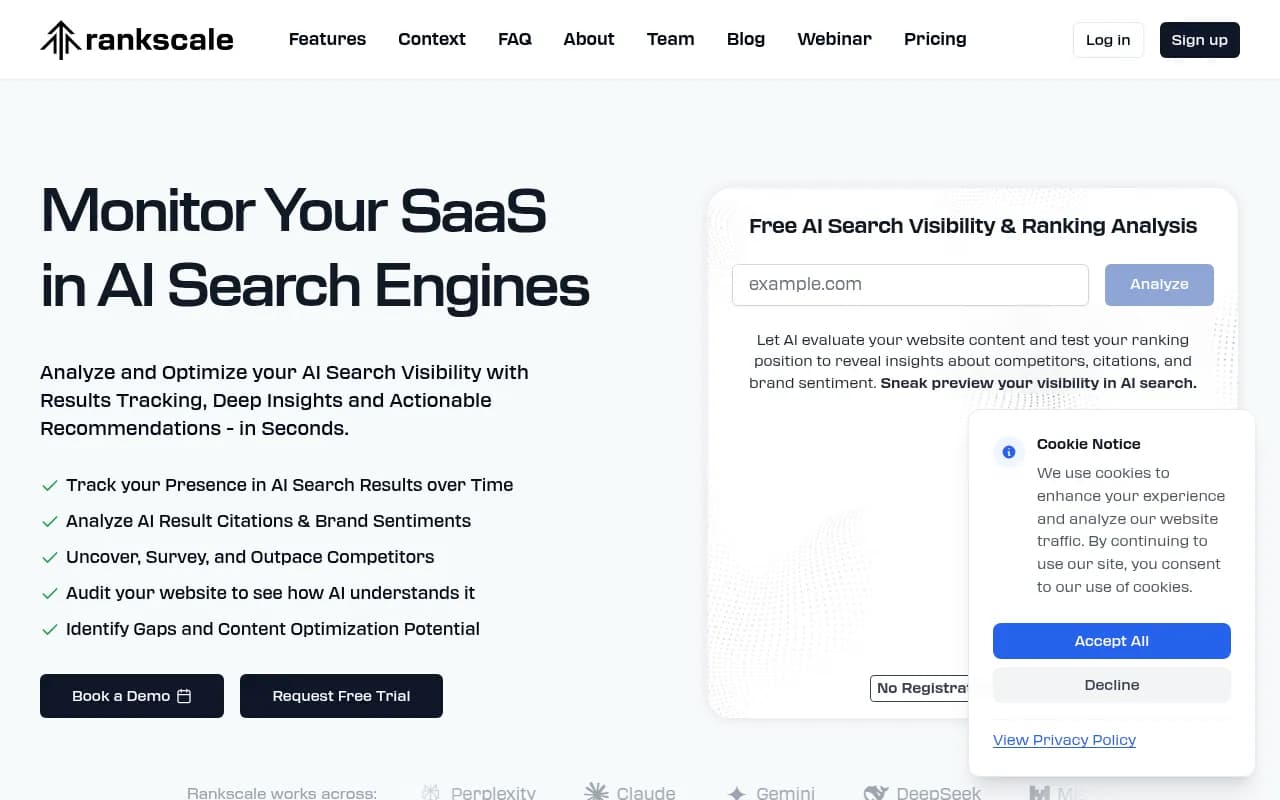
The main friction is its credit-based pricing model, which tends to make teams ration their queries. You end up checking fewer prompts and refreshing less often -- using the tool less at exactly the moments you need the most signal. The lack of an action layer is the other gap: Rankscale tells you where you stand, then largely leaves you there.
Best for: Teams that want solid monitoring and can work around the credit-based model.
10. Brandlight.ai
Brandlight.ai rounds out the list as a monitoring and optimization platform with a focus on brand sentiment and citation tracking across AI models.
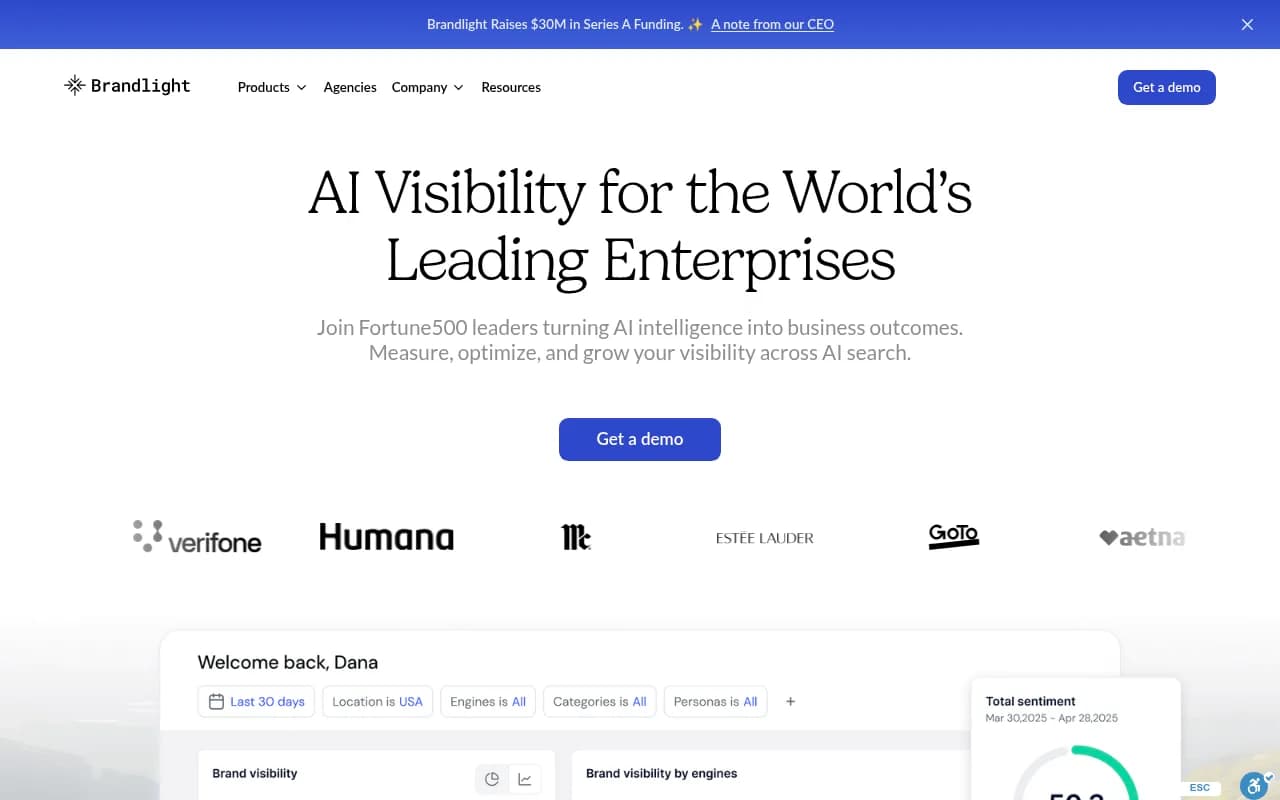
It covers the major models and has some content optimization guidance, though it's missing several capabilities that more comprehensive platforms offer -- no Reddit tracking, no ChatGPT Shopping monitoring, and limited traffic attribution. It's a reasonable option for brands that want something between a basic monitoring tool and a full enterprise platform.
Best for: Mid-market brands that want more than basic monitoring but don't need the full enterprise stack.
Feature and pricing comparison
| Tool | AI models covered | Content generation | Crawler logs | Reddit/YouTube tracking | Starting price |
|---|---|---|---|---|---|
| Promptwatch | 10+ (ChatGPT, Claude, Gemini, Perplexity, DeepSeek, Grok, Mistral, Copilot, Meta/Llama, AI Overviews) | Yes | Yes | Yes | $99/mo |
| Omnia | ChatGPT, Perplexity, AI Overviews, AI Mode | No | No | No | €79/mo (25 prompts) |
| Otterly.AI | ChatGPT, Perplexity, Claude, Gemini | No | No | No | Affordable entry |
| Peec AI | ChatGPT, Perplexity + others | No | No | No | Entry-level |
| Profound | Multiple (enterprise) | No | No | No | Custom/higher |
| LLM Pulse | Core models | No | No | No | Mid-market |
| Scrunch AI | ChatGPT, Claude + others | Partial | No | No | Mid-market |
| AthenaHQ | 8+ models | No | No | No | Mid-market |
| SE Visible | Core models | No | No | No | Part of SE Ranking |
| Rankscale | Multiple | No | No | No | Credit-based |
| Brandlight.ai | Core models | Partial | No | No | Mid-market |
The monitoring vs. optimization gap
This is the thing worth dwelling on. Most tools in this list -- and most tools in the GEO space generally -- are monitoring dashboards. They show you a number. Your brand's mention rate went up 4% this month. Competitor X is visible for 23 prompts you're not. Interesting. Now what?
The "now what" is where most platforms leave you stranded. You know there's a gap. You don't know which content to write, which angle to take, or which sources to target to close it. That gap between insight and action is where AI visibility budgets go to die.
The platforms that close this gap -- Promptwatch being the clearest example -- build the action layer into the product. Answer gap analysis tells you specifically what's missing. Content generation tools produce articles engineered to get cited, not just generic SEO filler. And traffic attribution connects the dots between AI visibility and actual revenue. That's a fundamentally different product category than a monitoring dashboard, even if both call themselves "GEO platforms."
How to choose the right alternative
A few honest questions to help narrow it down:
How many AI models do you actually need to track? If you're a US-focused brand and your customers mostly use ChatGPT and Perplexity, a tool with 4-model coverage might be fine. If you're international or your audience is fragmented across models, you need broader coverage.
Do you have a content team ready to act on the data? If yes, a monitoring-only tool might be enough -- you'll take the insights and execute independently. If no, you need a platform with built-in content generation, or the data will sit in a dashboard and nothing will change.
What's your real cost per prompt? Omnia's €3.16 per prompt is genuinely expensive. But also check how often prompts refresh, whether you're paying per evaluation or per prompt cluster, and what happens to your bill when you scale from 25 to 150 prompts. Some platforms look cheap until you try to use them seriously.
Do you need integrations? Looker Studio, Google Search Console, server log analysis -- these matter if you're reporting to stakeholders or trying to connect AI visibility to revenue. Most tools in this list don't have them. Promptwatch does.
Bottom line
Omnia is a real product with real backing, but it's not mature enough to justify its pricing for most teams right now. Sentiment analysis still isn't live. Data exports are paywalled. And at €3.16 per prompt, you're paying a premium for a feature set that competitors at half the price have already shipped.
The best alternative depends on what you actually need. For pure monitoring on a budget, Otterly.AI or Peec AI are honest, affordable choices. For mid-market teams that want more signal without enterprise pricing, LLM Pulse or Scrunch AI are worth evaluating. For teams that want to go beyond tracking and actually improve their AI visibility, Promptwatch is the most complete platform in this comparison -- it's the only one that covers the full loop from gap analysis to content generation to traffic attribution, across 10+ AI models.
The GEO space is moving fast. Whatever you pick, make sure the features you're paying for are actually live.