Key takeaways
- "AI SEO tool" covers two very different things in 2026: tools that use AI to speed up traditional SEO tasks (content, keywords, audits) and tools that track whether AI search engines like ChatGPT and Perplexity actually mention your brand.
- The best tool depends entirely on your job: content writers need different software than SEO managers tracking AI visibility.
- Most AI visibility tools stop at monitoring. A smaller number help you act on what you find -- closing the gap between "you're invisible" and "here's what to publish."
- For traditional AI-assisted SEO, Surfer SEO, Clearscope, and Frase lead on content optimization; Semrush and Ahrefs still dominate for research depth.
- For AI search visibility specifically, look for platforms that go beyond dashboards and actually help you create content that gets cited by LLMs.
The phrase "AI SEO tool" has become almost meaningless. Every platform slaps "AI-powered" on their homepage now, and most of the time it means they added a GPT-4 button to a feature that already existed. So before you evaluate anything, it helps to be clear about what you're actually trying to do.
In 2026, there are really two distinct jobs these tools need to handle:
- Making traditional SEO faster -- keyword research, content briefs, on-page optimization, technical audits
- Tracking and improving your visibility in AI search engines -- ChatGPT, Perplexity, Claude, Gemini, and the rest
Both matter. But the second one is where most teams are behind, and where the tools vary most dramatically in quality.
This guide breaks down the best options in each category, with honest notes on where they fall short.
The two categories you need to understand first
Traditional AI-assisted SEO
This is the older category. Tools like Surfer SEO, Clearscope, and Frase have been around for years, and they've gotten genuinely good at using AI to analyze top-ranking pages, generate content briefs, and score your content against competitors. Semrush and Ahrefs have layered AI features on top of their existing research databases.
These tools are useful if your primary goal is ranking in Google. They're less useful if you want to know why ChatGPT never recommends your brand.
AI search visibility (GEO)
This is the newer category, and it's moving fast. Tools here monitor what AI models say about your brand, which competitors they recommend instead, and which content gaps are keeping you out of AI-generated answers. Some stop at monitoring. A smaller number help you actually fix the problem.
The distinction matters more than most people realize. A dashboard that shows you're invisible in Perplexity is only useful if it also tells you what to do about it.
Best tools for traditional AI-assisted SEO
Surfer SEO -- content optimization
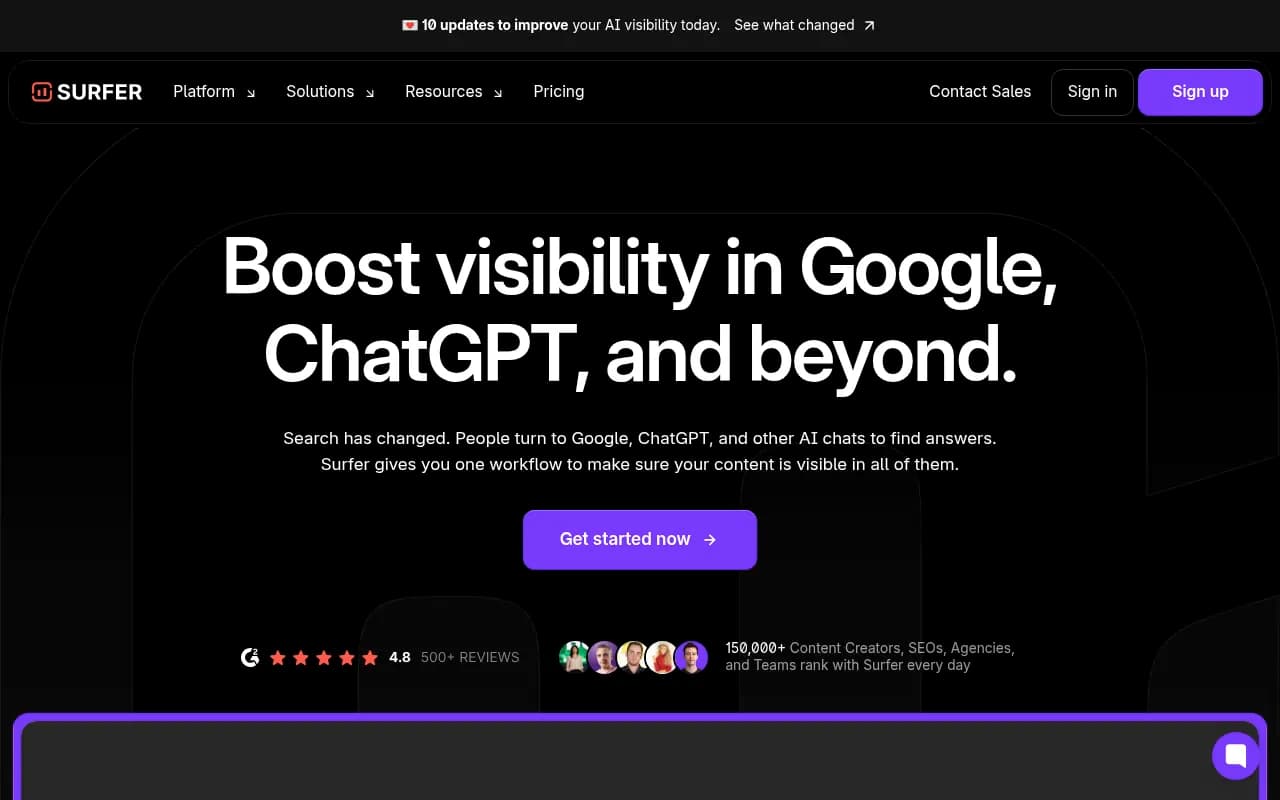
Surfer remains the go-to for teams that publish a lot of content and want data-driven guidance on what to include. Its Content Editor scores your draft in real time against the top-ranking pages for your target keyword, flagging missing topics, ideal word count, and semantic terms to include.
The AI writing features have improved significantly. You can generate a full draft inside Surfer now, though the output still needs editing -- it's a starting point, not a finished product.
Best for: Content teams that need consistent, optimized output at scale. Less useful if you're trying to understand AI search visibility.
Clearscope -- content grading
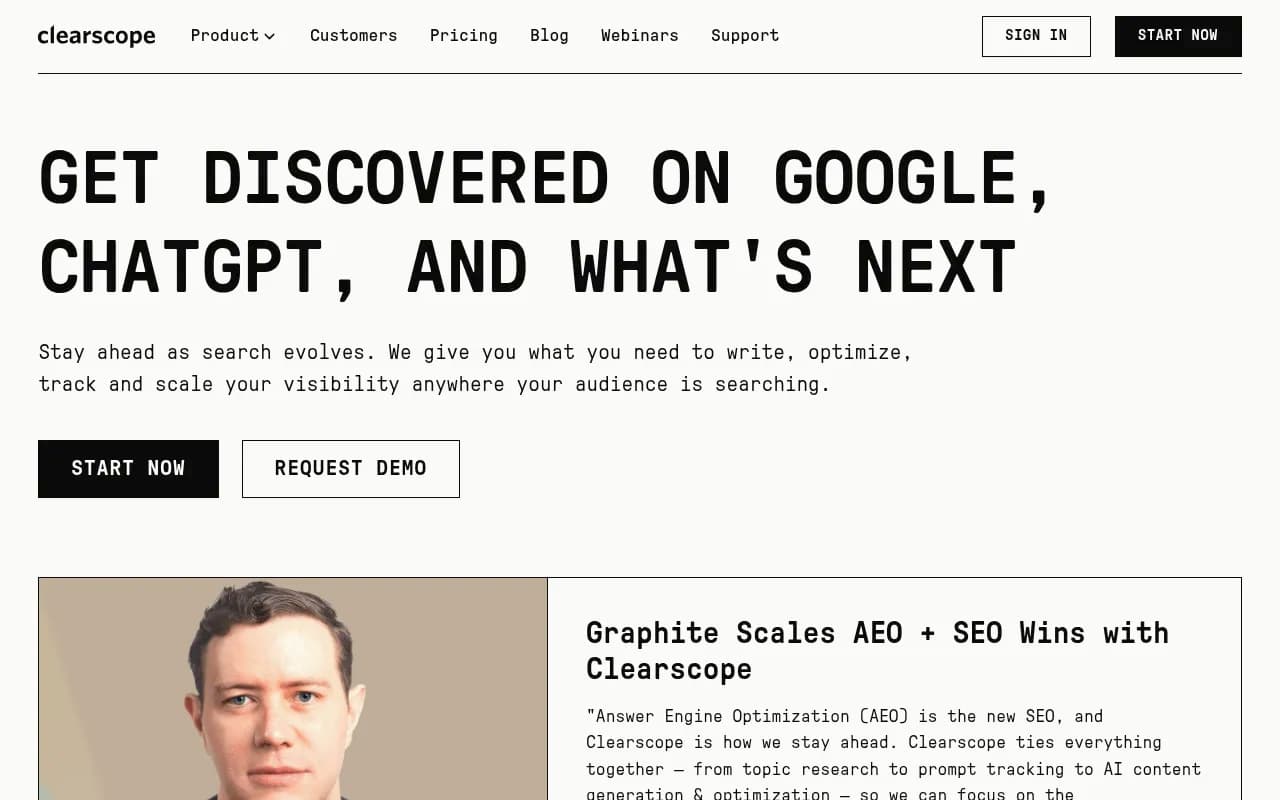
Clearscope takes a slightly different approach. It's more focused on the grading and editing experience than on generating content. You paste your draft, it tells you what's missing. The interface is clean, the recommendations are reliable, and it integrates with Google Docs and WordPress.
It's more expensive than Surfer per seat, but teams that care about content quality over volume tend to prefer it.
Frase -- research and briefs
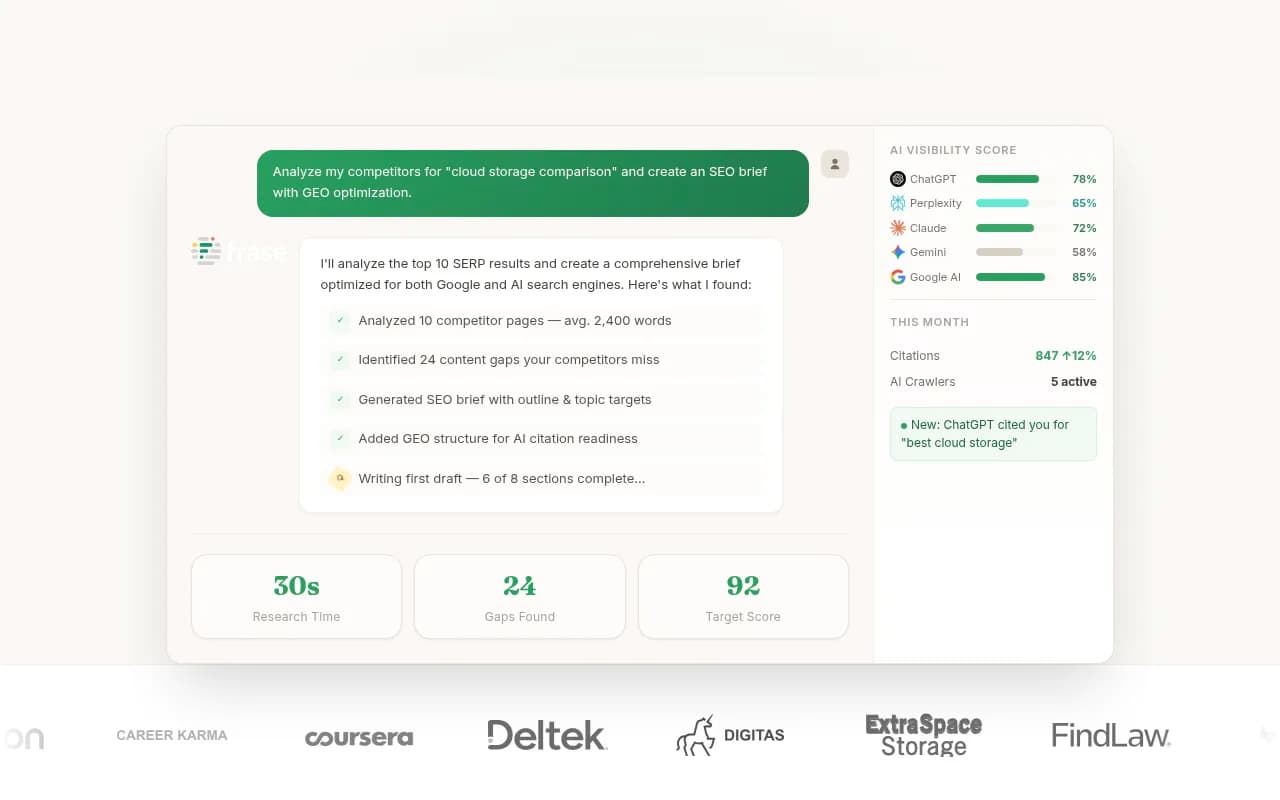
Frase is strong at the research phase. It pulls together what the top-ranking pages cover, generates a content brief automatically, and lets you write against that brief inside the same tool. The AI writing assistant is decent for outlines and introductions.
Where Frase falls short is depth -- it's not as comprehensive as Surfer for ongoing optimization, and it doesn't touch AI search visibility at all.
Semrush -- all-in-one research
Semrush is the default choice for teams that need keyword research, competitor analysis, backlink data, and site auditing in one place. The AI features -- ContentShake AI, the SEO Writing Assistant -- are genuinely useful additions, not just marketing.
The limitation in 2026 is that Semrush's AI visibility tracking uses fixed prompts, which means you're monitoring a set list of questions rather than the actual queries your potential customers are using.
Ahrefs -- keyword and backlink research
Ahrefs is still the best pure keyword and backlink research tool. The data is deep, the interface is fast, and the Site Audit is thorough. Brand Radar adds some AI visibility monitoring, but it's limited -- fixed prompts, no AI traffic attribution, and no content generation to act on what you find.
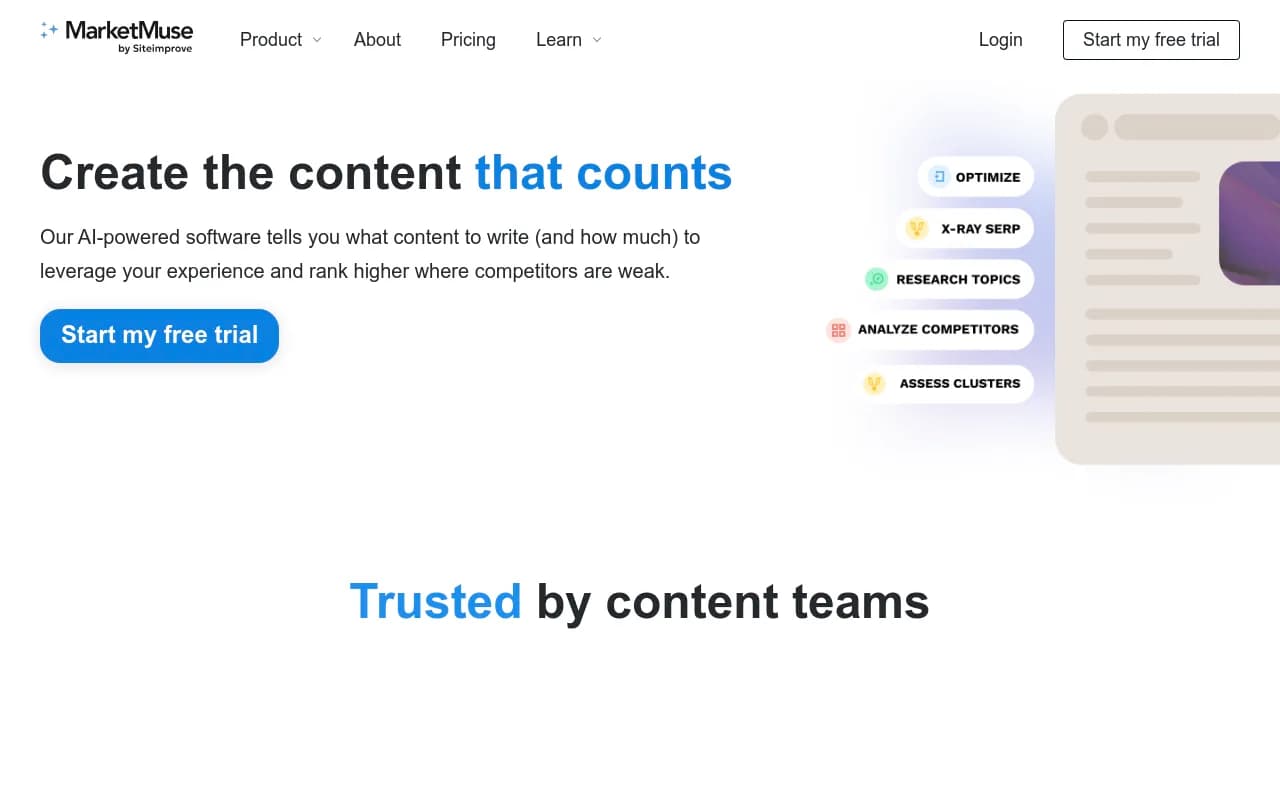
MarketMuse -- content strategy
MarketMuse sits above the content editor tools. It's more about content strategy -- figuring out which topics you should own, where your site has authority gaps, and how to prioritize what to write next. It's expensive, but for enterprise content teams it can replace a lot of manual research.
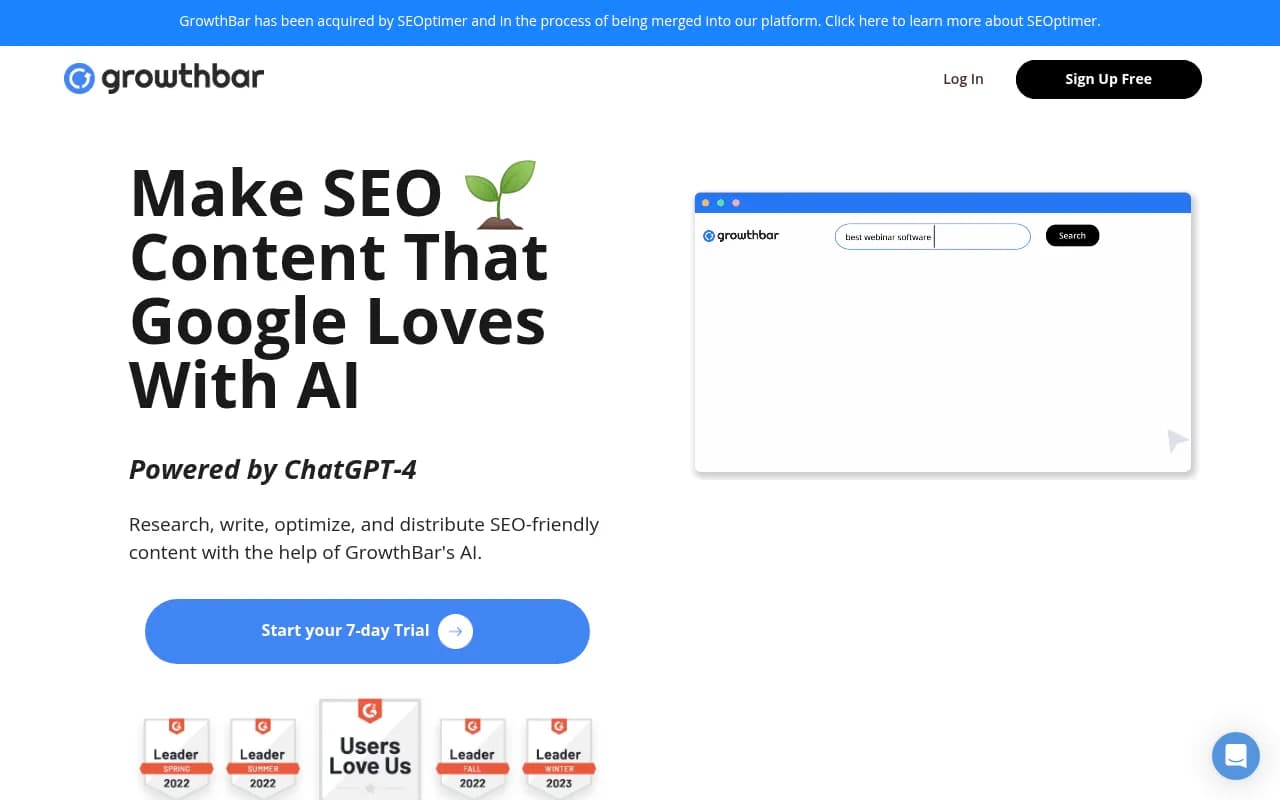
GrowthBar -- budget-friendly AI writing + SEO
GrowthBar is worth mentioning for smaller teams. It combines keyword research with AI content generation at a price point that makes sense for startups and solo marketers. It won't replace Semrush or Surfer for serious teams, but it covers the basics.
Best tools for AI search visibility
This is where things get more interesting -- and where the quality gap between tools is widest.
What to look for
Before getting into specific tools, here's what separates the good ones from the monitoring-only dashboards:
- Does it track multiple AI models (ChatGPT, Perplexity, Claude, Gemini, Grok, etc.) or just one or two?
- Does it show you which specific prompts your competitors are winning that you're not?
- Does it help you create content to close those gaps, or just show you the data?
- Does it track AI crawler activity on your site -- which pages AI bots are reading, how often, and what errors they hit?
- Can it attribute AI search visibility to actual traffic and revenue?
Most tools pass the first test. Very few pass all five.
Promptwatch -- visibility tracking + content generation
Promptwatch is the most complete option in this category. It monitors 10 AI models -- ChatGPT, Perplexity, Claude, Gemini, Grok, DeepSeek, Copilot, Mistral, Meta AI, and Google AI Overviews -- and tracks which prompts your brand appears in, which competitors appear instead, and what content is being cited.
What separates it from most competitors is the action loop. The Answer Gap Analysis shows you the specific prompts where competitors are visible and you're not. The built-in AI writing agent then generates content designed to get cited -- articles, listicles, comparisons -- grounded in citation data from over 880 million analyzed citations. Then you track whether the new content actually improves your visibility scores.
It also has AI crawler logs, which most competitors lack entirely. You can see in real time which AI bots are crawling your site, which pages they're reading, and what errors they're hitting. That's genuinely useful for diagnosing why certain content isn't getting picked up.

Pricing starts at $99/month for the Essential plan (1 site, 50 prompts, 5 articles). Professional is $249/month with crawler logs and city-level tracking. Business is $579/month for 5 sites.
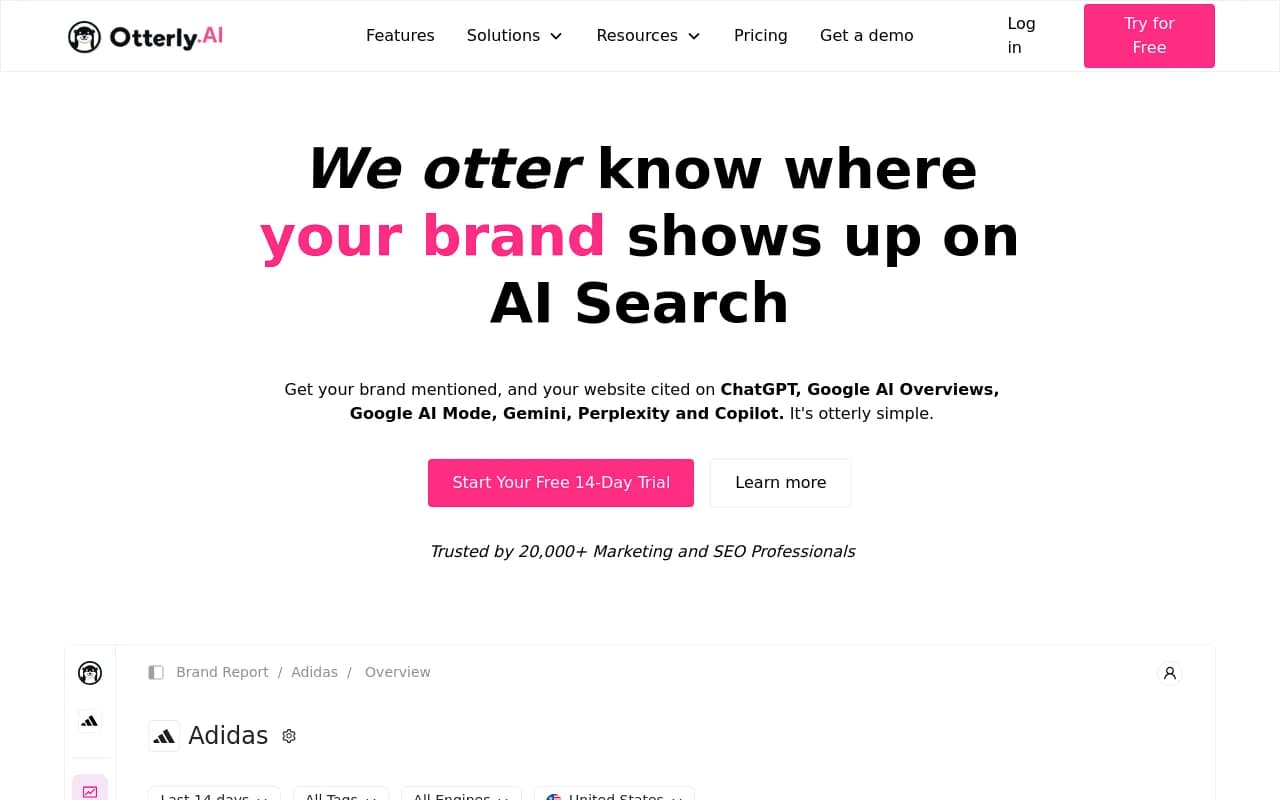
Otterly.AI -- affordable monitoring
Otterly.AI is a solid entry point if you just want to start tracking AI visibility without a big commitment. It covers the major models and gives you brand mention data. The limitation is that it stops at monitoring -- no content generation, no crawler logs, no traffic attribution.
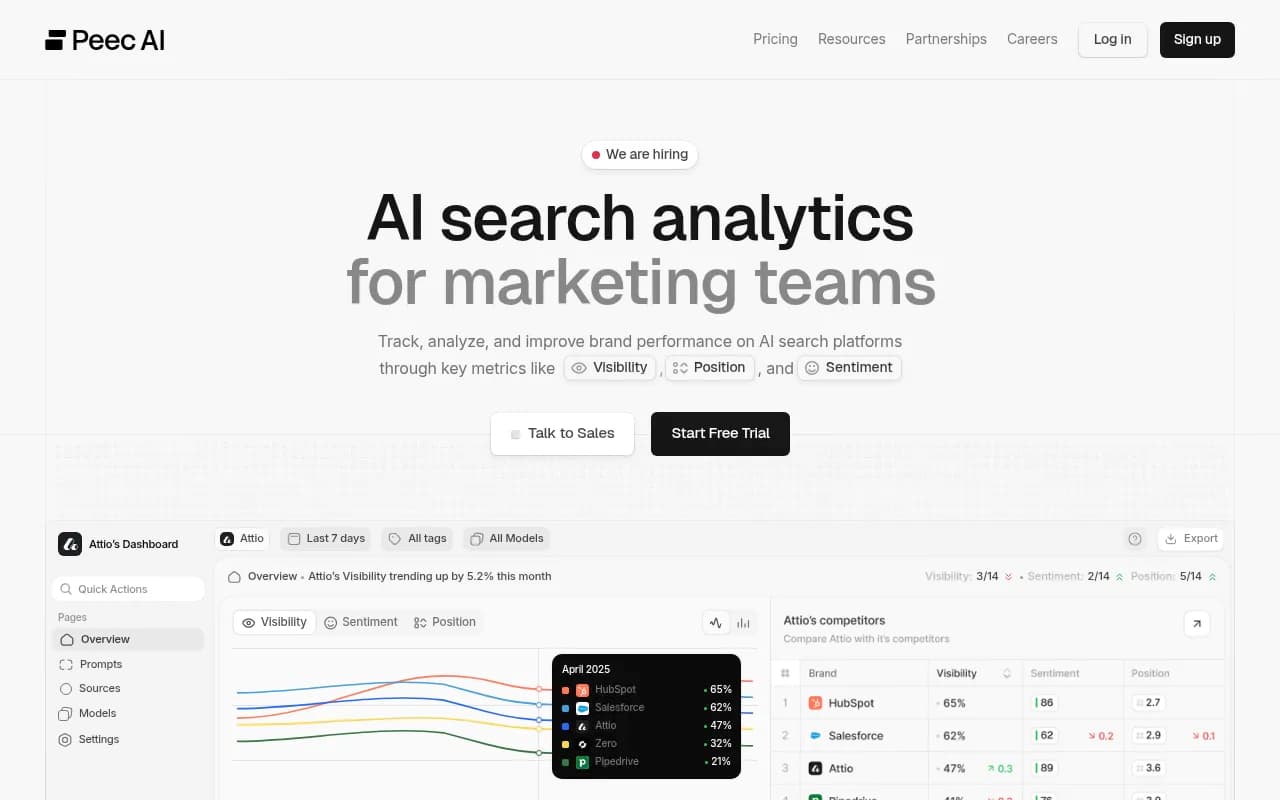
Peec AI -- multi-language tracking
Peec AI is worth considering if you operate in multiple markets. Its multi-language support is strong, and it tracks visibility across the main AI models. Like Otterly, it's primarily a monitoring tool rather than an optimization platform.
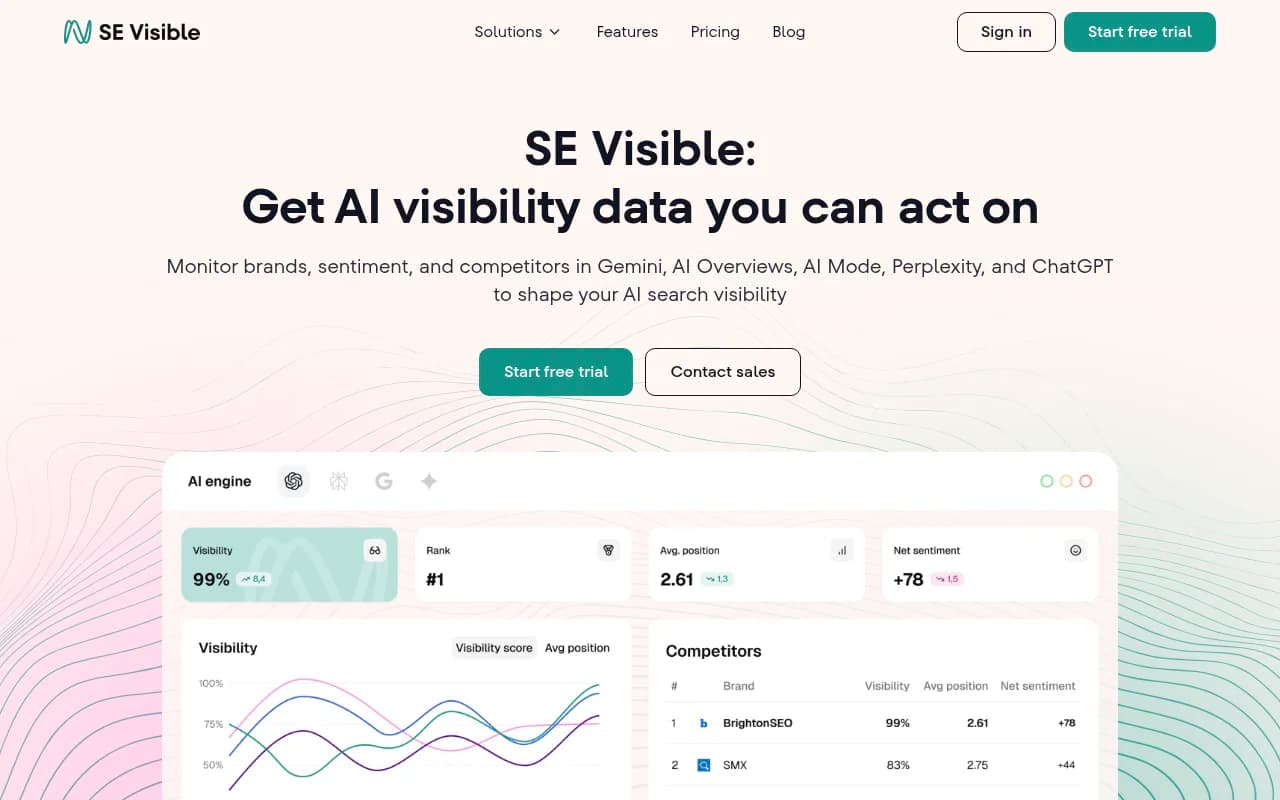
SE Visible -- visibility + traditional SEO
SE Visible (from SE Ranking) is interesting because it bridges the gap between traditional SEO and AI visibility monitoring. If you're already using SE Ranking for rank tracking, the AI visibility layer integrates cleanly. It's not as deep as dedicated GEO platforms, but it's a reasonable option for teams that want both in one place.
Profound -- enterprise analytics
Profound has strong analytics for enterprise teams that need detailed AI search data. The reporting is thorough and the data quality is good. The tradeoff is price -- it's positioned at the enterprise end -- and it doesn't have content generation capabilities to act on what the data shows.
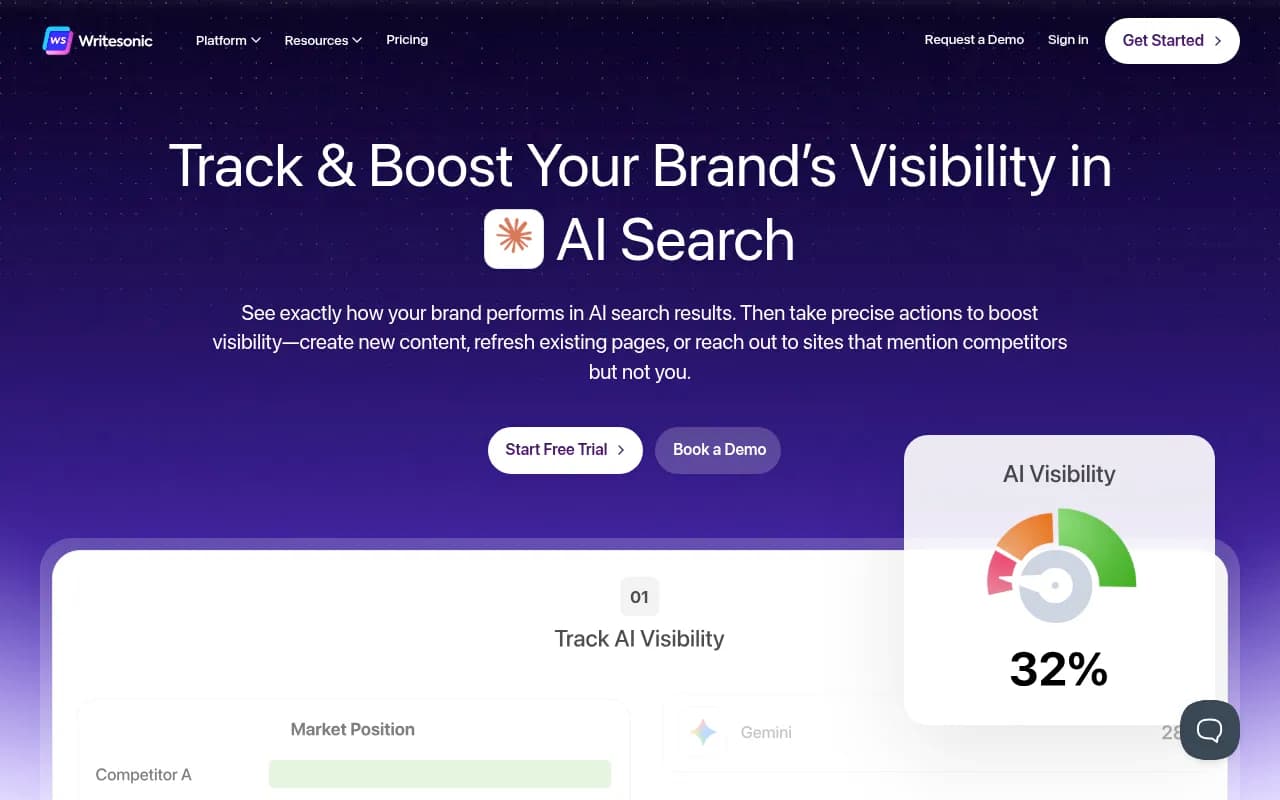
Writesonic -- AI visibility + content
Writesonic has expanded beyond AI writing into visibility tracking. It's a reasonable mid-market option that combines content generation with some AI search monitoring. The tracking isn't as deep as dedicated GEO platforms, but the writing features are solid.
Comparison: traditional AI SEO vs. AI visibility tools
| Tool | Primary use | AI models tracked | Content generation | Crawler logs | Price starts at |
|---|---|---|---|---|---|
| Surfer SEO | Content optimization | None | Yes | No | $99/mo |
| Clearscope | Content grading | None | No | No | $189/mo |
| Frase | Content briefs | None | Yes | No | $45/mo |
| Semrush | All-in-one SEO | Limited (fixed prompts) | Yes | No | $139/mo |
| Ahrefs | Keyword/backlink research | Limited (fixed prompts) | No | No | $129/mo |
| MarketMuse | Content strategy | None | No | No | $149/mo |
| Promptwatch | AI visibility + optimization | 10 models | Yes | Yes | $99/mo |
| Otterly.AI | AI visibility monitoring | Multiple | No | No | ~$49/mo |
| Peec AI | AI visibility monitoring | Multiple | No | No | ~$105/mo |
| Profound | Enterprise AI analytics | Multiple | No | No | $99/mo |
| SE Visible | AI visibility + SEO | Multiple | No | No | $189/mo |
How to pick the right tool for your situation
The honest answer is that most teams need tools from both categories. You still need to rank in Google, so traditional SEO tools aren't going away. But AI search is now a real traffic source for many industries, and ignoring it means ceding ground to competitors who aren't ignoring it.
Here's a simple way to think about it:
If you're a content team focused on Google rankings, start with Surfer SEO or Clearscope for optimization, and Semrush or Ahrefs for research. These are proven, and the AI features genuinely save time.
If you're an SEO manager or marketing leader who needs to understand AI search visibility, you need a dedicated GEO platform. Start by asking whether the tool just shows you data or actually helps you do something with it. Most tools stop at the dashboard.
If you're an agency managing multiple clients, look for platforms with multi-site support, white-label reporting, and the ability to track visibility across different industries and regions.
Tools worth knowing about for specific use cases
A few more tools that didn't fit neatly into the main categories but are worth knowing about:
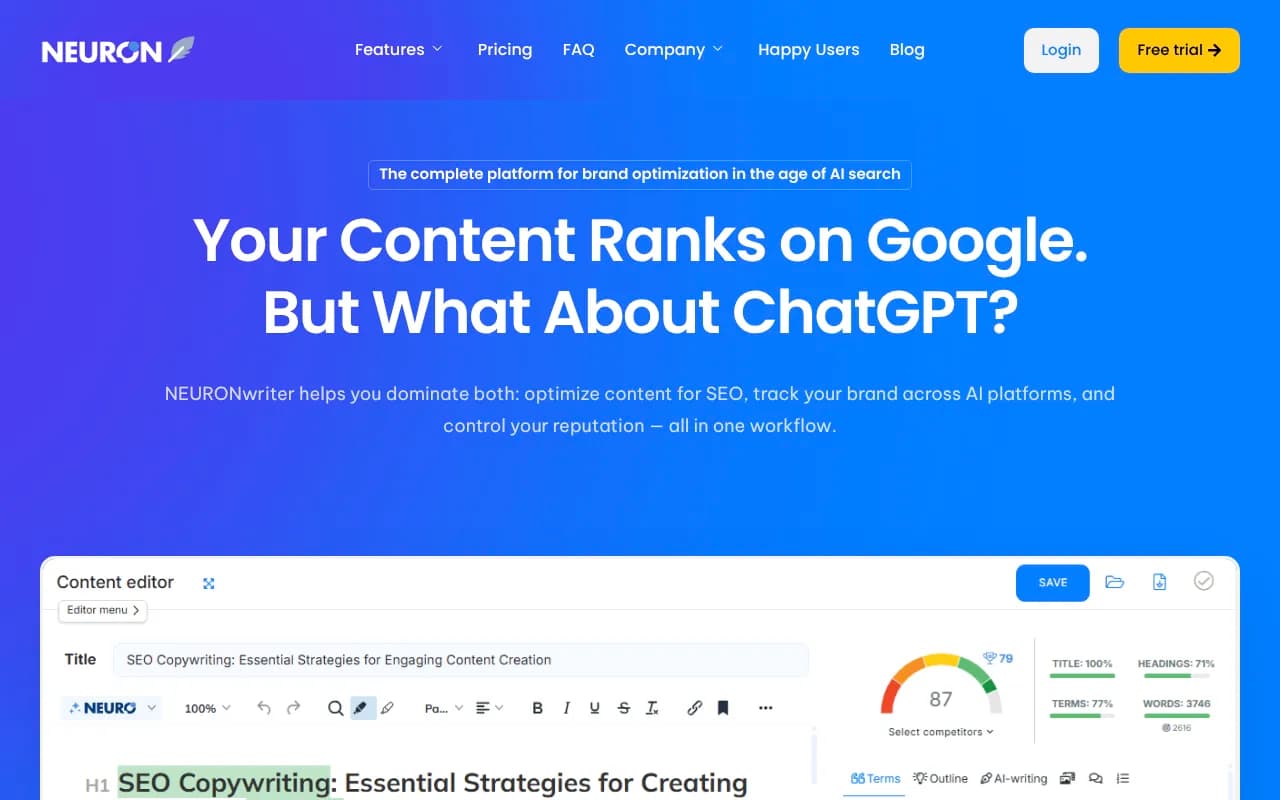
NeuronWriter -- strong semantic SEO optimization, good for teams that want to go deep on NLP-based content scoring.
Scalenut -- a solid all-in-one content platform that combines keyword research, content briefs, and AI writing. Good value for the price.
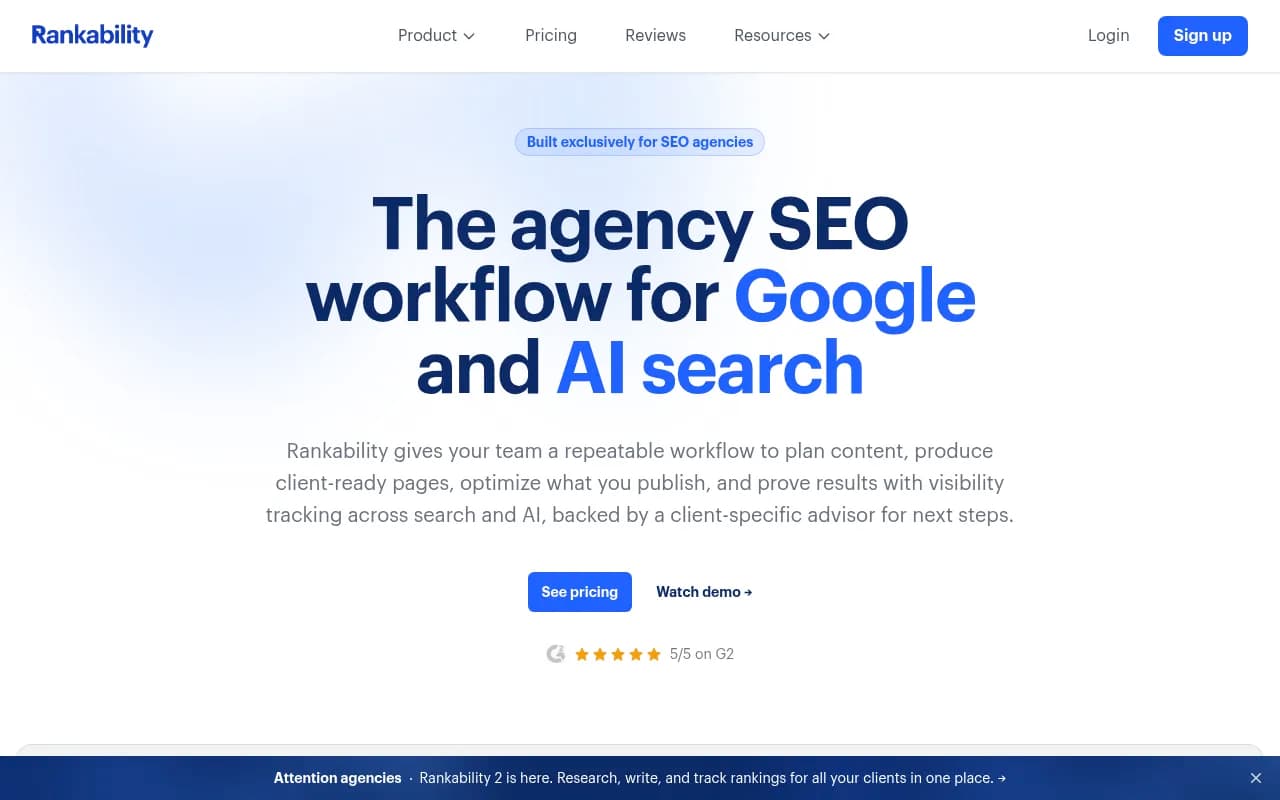
Rankability -- focused on content optimization with a clean interface. A reasonable Clearscope alternative.
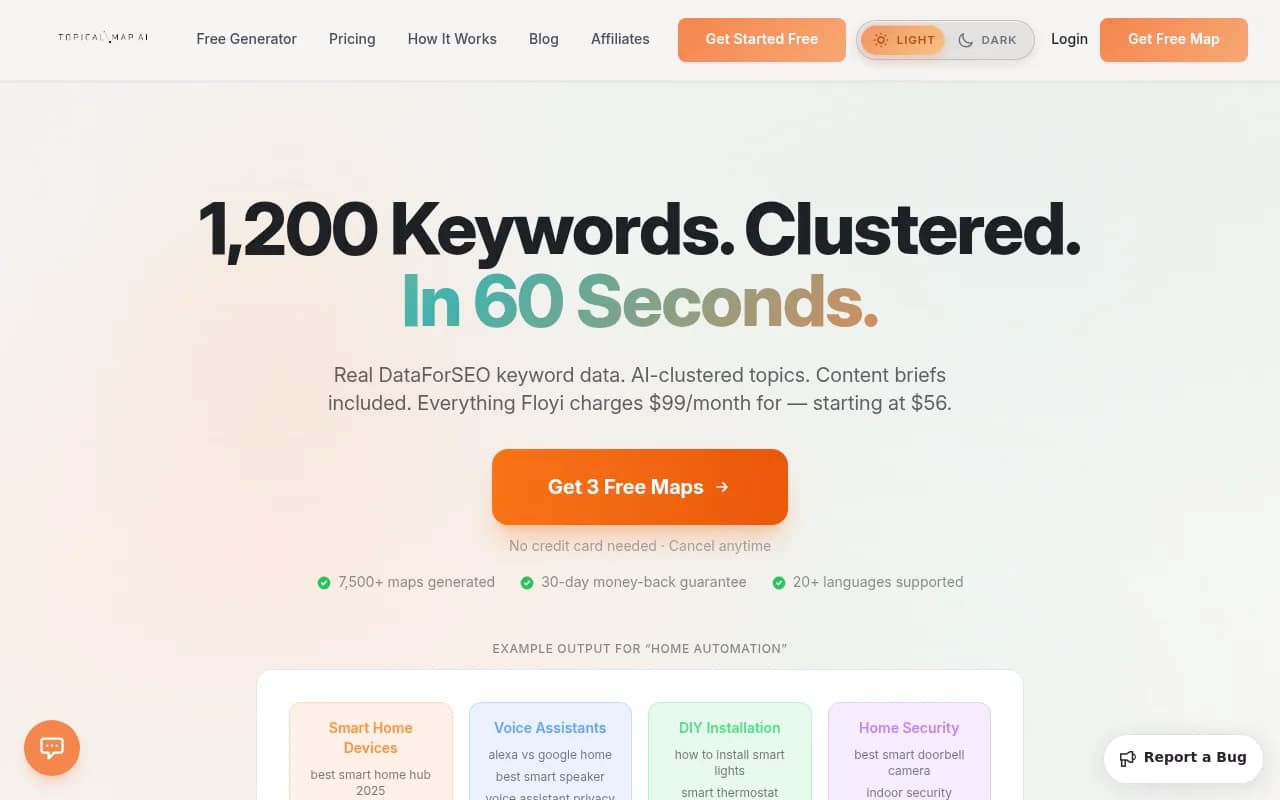
Topical Map AI -- useful for building out topical authority. Helps you figure out which clusters of content to build, not just individual articles.
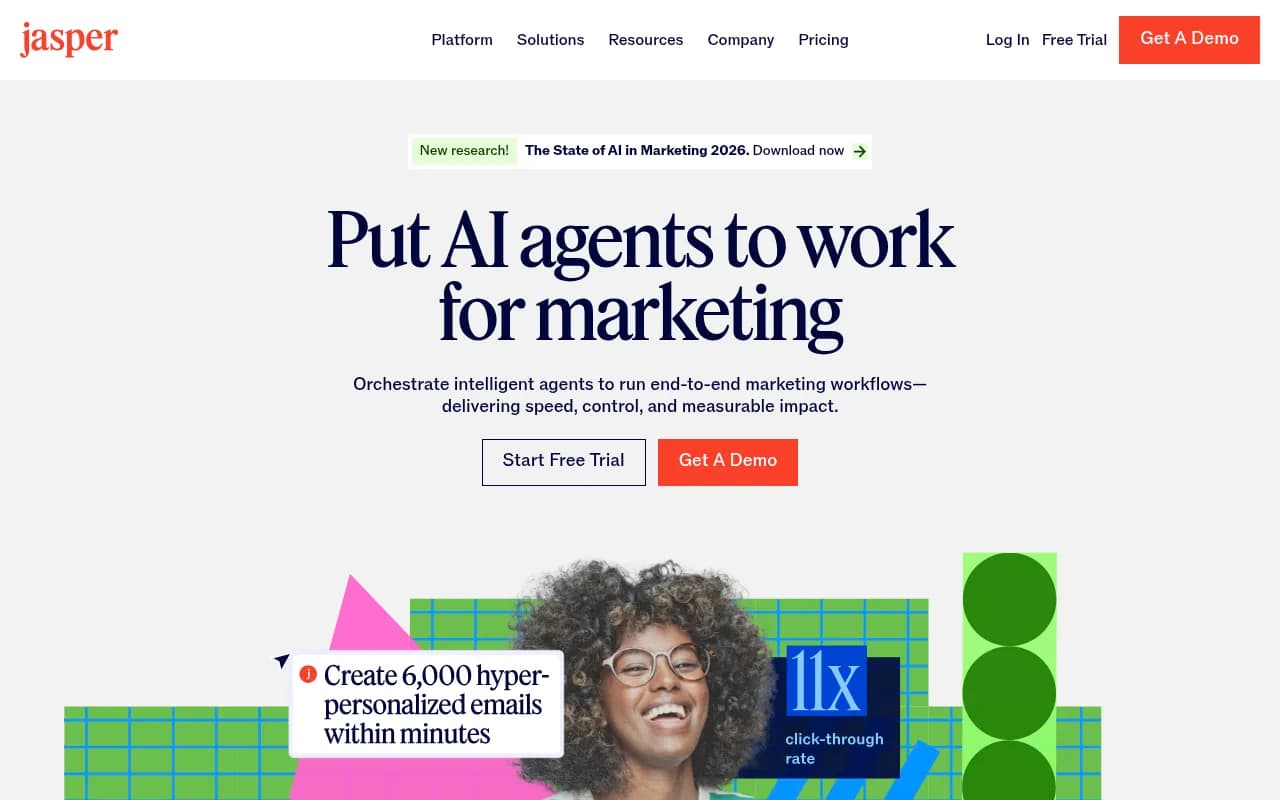
Jasper -- still the most capable AI writing tool for long-form content at scale. Not an SEO tool per se, but many content teams use it alongside Surfer or Clearscope.
The thing most people get wrong
The biggest mistake teams make is treating AI visibility as a separate project from their content strategy. It's not. The content you publish to rank in Google and the content that gets cited by ChatGPT are increasingly the same content -- clear, specific, well-structured answers to real questions.
The teams winning in AI search aren't doing something exotic. They're publishing content that actually answers what people ask, at a level of depth and specificity that AI models can cite with confidence. The tools that help you identify those gaps and fill them are the ones worth investing in.
What's changed is that you now need to track both surfaces -- Google rankings and AI citations -- and optimize for both. That's a bigger job than it was two years ago, but the tools have caught up enough that it's manageable if you pick the right stack.