Key takeaways
- "AI SEO tool" now covers two distinct categories: tools that use AI to speed up traditional SEO (writing, keyword research, on-page optimization) and tools that track your visibility inside AI search engines like ChatGPT and Perplexity.
- Both categories matter in 2026, but most content teams are still underinvested in the second one.
- The best tools for content teams combine content brief generation, NLP optimization, and competitive gap analysis -- not just a writing assistant.
- For AI search visibility specifically, you need a platform that goes beyond monitoring and actually helps you create content that gets cited.
- No single tool does everything well. The strongest setups pair a content optimization tool (Surfer SEO, Clearscope, or Frase) with an AI visibility platform.
The phrase "AI SEO tool" has gotten a bit muddled. In 2024 it mostly meant "a tool that uses AI to write blog posts faster." In 2026, it means something bigger -- and honestly, more interesting.
There are now two distinct problems content teams need to solve. First: creating content that ranks in Google. Second: being visible when someone asks ChatGPT, Perplexity, or Claude a question in your category. These are related but not the same problem, and they need different tools.
This guide covers both. The 10 tools below are the ones content teams are actually getting value from right now -- not a padded list of everything with "AI" in the marketing copy.

How to think about AI SEO tools in 2026
Before diving into the list, it helps to understand the two categories:
Traditional AI SEO tools use machine learning and NLP to make existing SEO workflows faster. They help you find keywords, generate content briefs, optimize on-page copy, and audit your site. These tools have been around for a few years and are now quite mature.
AI visibility tools (sometimes called GEO or AEO tools) track whether AI search engines mention your brand, cite your content, or recommend your products. This category is newer and moving fast. Some tools only monitor. The better ones help you act on what they find.
Most content teams need at least one tool from each category.
The 10 best AI SEO tools for content teams
1. Surfer SEO
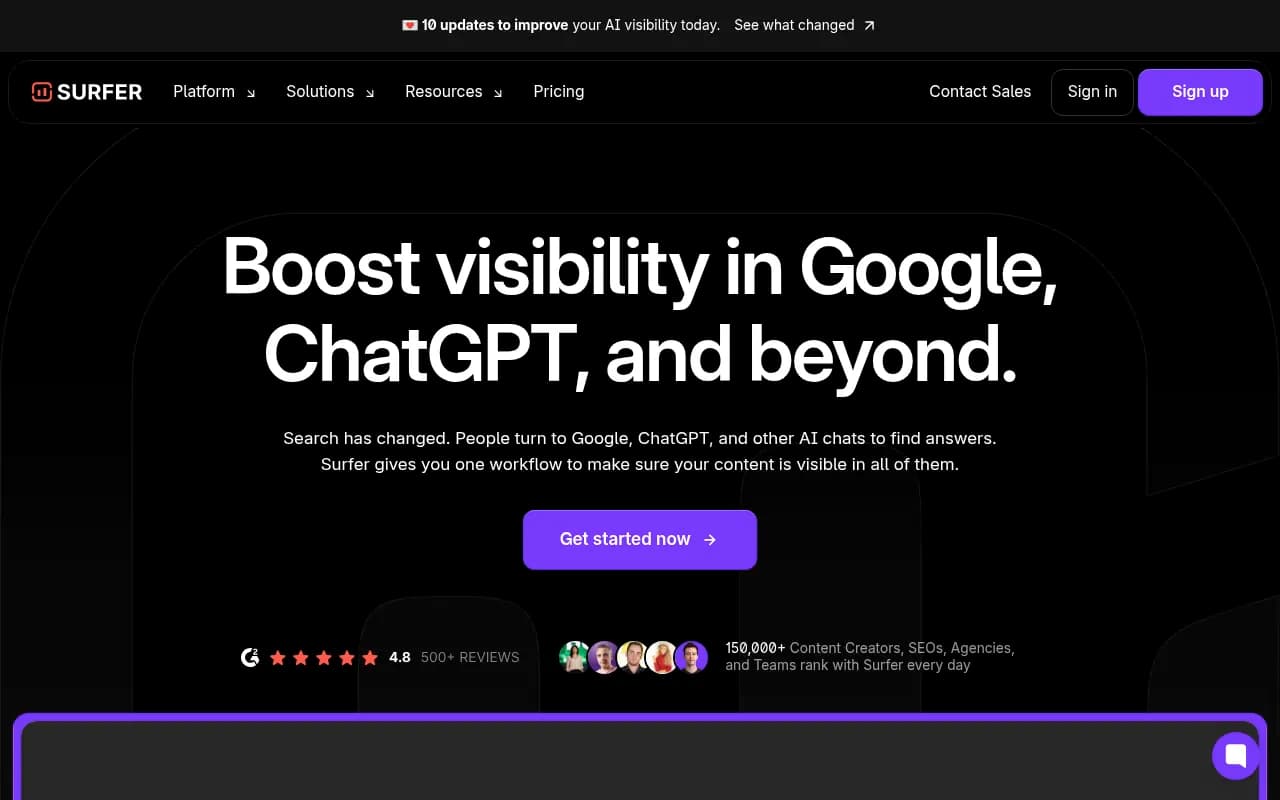
Surfer is the go-to for on-page content optimization. You paste in a target keyword, and it gives you a content score based on how your draft compares to the top-ranking pages -- word count, semantic terms, heading structure, and more. The NLP analysis is genuinely useful for writers who want to know what topics to cover, not just how many times to use a keyword.
The AI writing features have improved a lot. You can generate a full article outline from a keyword, then write section by section with AI assistance while Surfer scores the content in real time. It's not going to replace a skilled writer, but it removes a lot of the guesswork from optimization.
Where Surfer falls short: it's still primarily a Google SEO tool. It doesn't track AI search visibility or help you understand why ChatGPT isn't citing your content.
2. Clearscope
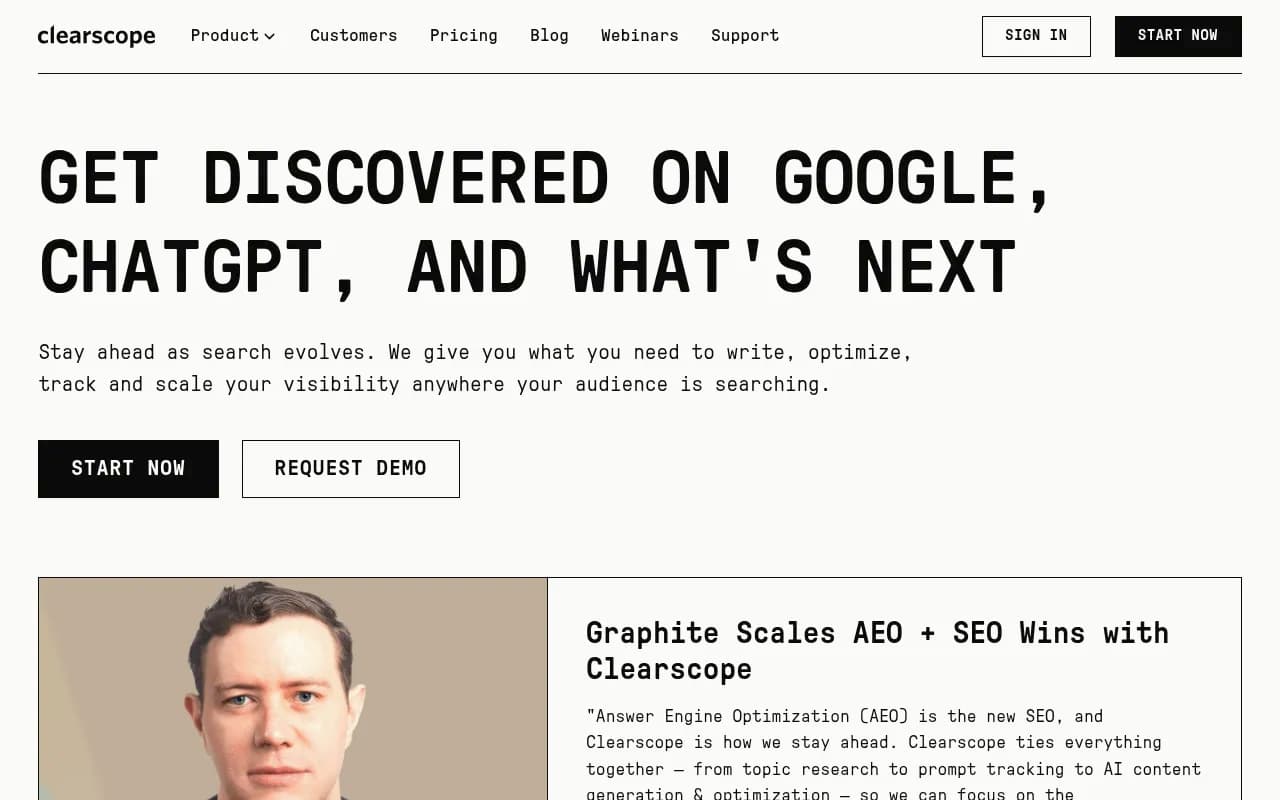
Clearscope takes a cleaner, more focused approach than Surfer. The content reports are built around semantic relevance -- it shows you which related terms and concepts the top-ranking pages cover, and grades your content on how well it addresses them. The interface is simpler, which some teams prefer.
It integrates directly with Google Docs and WordPress, so writers can optimize without switching tools. The reporting is also strong -- you can track how content grades change over time as you update pages.
Clearscope is more expensive than Surfer at the entry level, and it doesn't have AI writing built in. It's a pure optimization tool, which is either a feature or a limitation depending on your workflow.
3. Frase
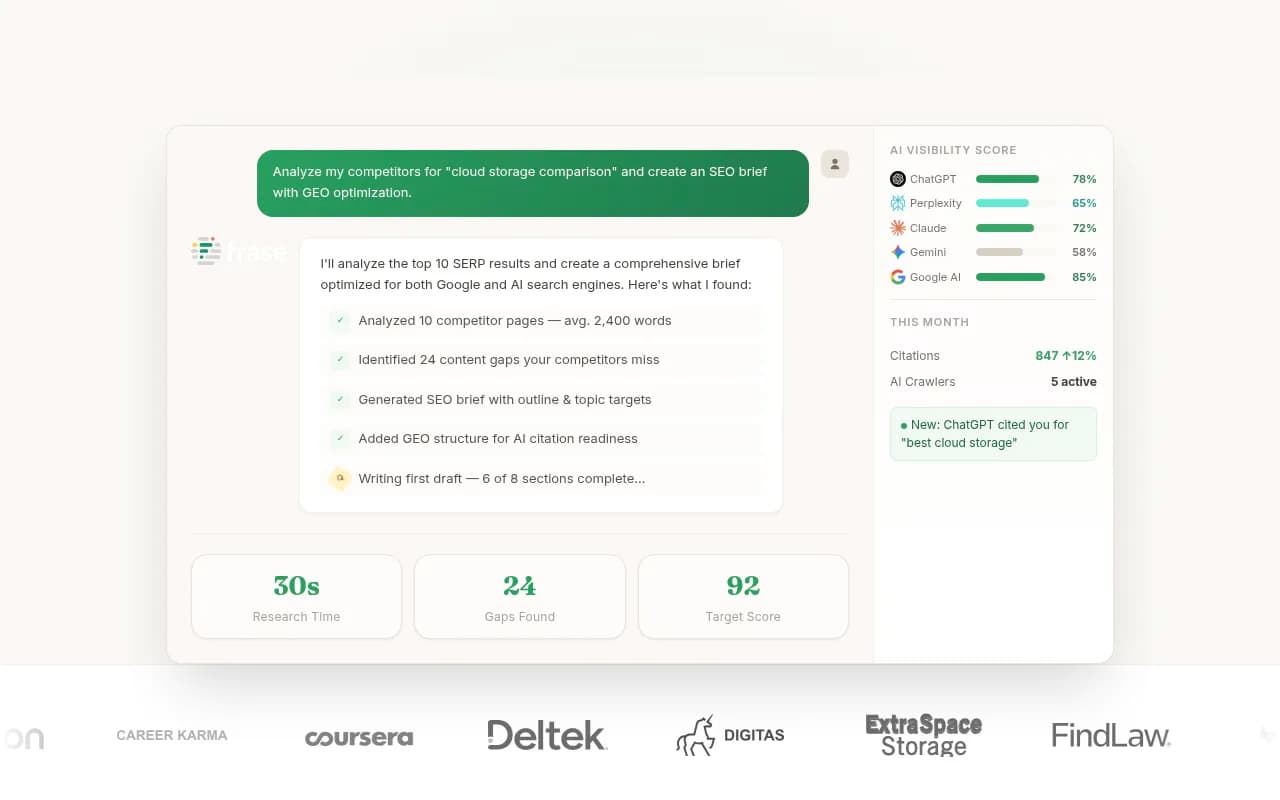
Frase sits between a content research tool and an optimization platform. You enter a keyword, and it pulls together a brief that summarizes what the top-ranking pages cover, which questions they answer, and what topics are missing from your draft. The AI writing assistant then helps you fill those gaps.
What makes Frase useful for content teams specifically is the research layer. Instead of just telling you to add certain terms, it shows you the actual content competitors are covering -- which makes it easier to brief writers or plan editorial calendars.
The optimization scoring isn't quite as granular as Surfer or Clearscope, but for teams that want research and writing in one place, Frase is a strong option.
4. Semrush
Semrush is the all-in-one platform most SEO teams already know. The keyword research, backlink analysis, and site audit features are best-in-class. For content teams, the most useful features are the Keyword Magic Tool (which surfaces question-based queries and long-tail variations) and the Content Marketing Toolkit, which includes topic research and a writing assistant.
The SEO Writing Assistant integrates with Google Docs and grades content against the top 10 results for your target keyword. It's not as deep as Clearscope or Surfer for pure optimization, but if your team is already in Semrush for keyword research and rank tracking, it's a reasonable all-in-one choice.
Semrush has added some AI search monitoring features, but they use fixed prompt sets rather than custom tracking -- which limits how useful they are for brands with specific competitive contexts.
5. Jasper AI
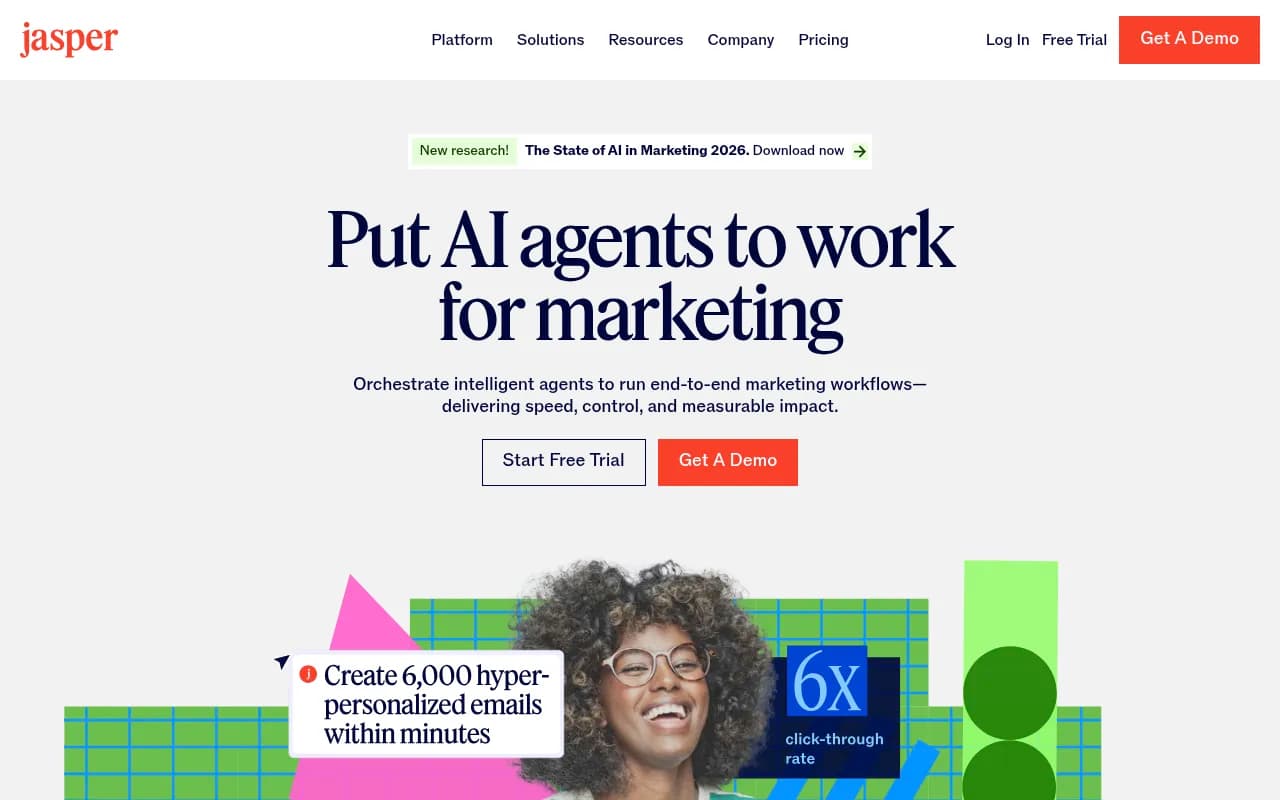
Jasper is the most mature AI writing platform for marketing teams. It's built around brand voice -- you train it on your existing content, style guidelines, and tone, and it generates copy that actually sounds like your brand rather than generic AI output.
For content teams producing high volumes of blog posts, landing pages, and social content, Jasper's workflow features are genuinely useful. The campaigns feature lets you generate multiple content formats from a single brief. The integrations with Surfer SEO and Google Docs are solid.
The main limitation is that Jasper is a writing tool, not an SEO tool. It doesn't tell you what to write about, how to optimize for search intent, or whether your content is getting cited by AI engines. You need to pair it with something else for that.
6. MarketMuse
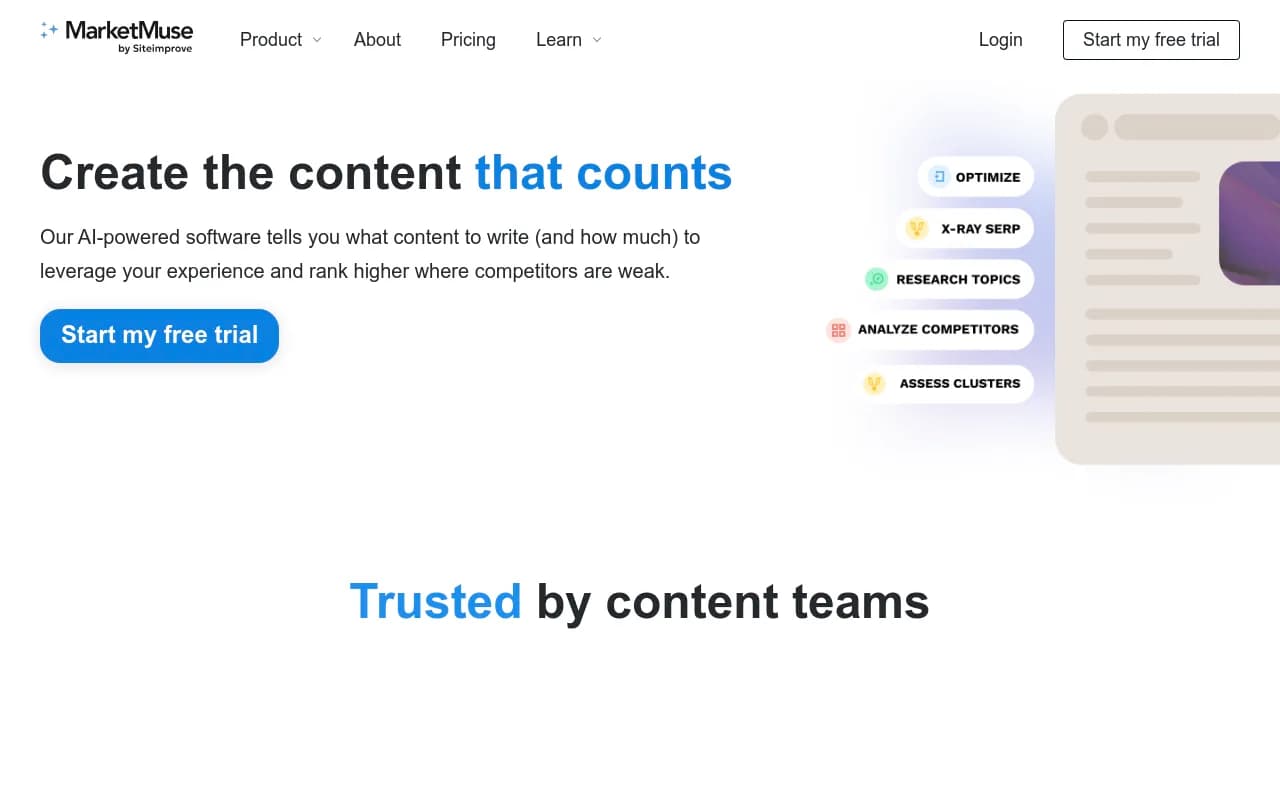
MarketMuse takes a content strategy angle that the other tools on this list don't. Instead of just optimizing individual pages, it analyzes your entire site's topical coverage and tells you where you have authority gaps -- topics your competitors cover that you don't, or areas where your content is thin.
The content briefs are detailed and research-heavy. They show you the questions your content needs to answer, the topics it should cover, and the competitive difficulty of ranking for each. For content teams planning editorial calendars or building out topic clusters, MarketMuse is one of the most useful tools available.
It's priced at the higher end, which makes it better suited to teams with a dedicated SEO function than solo bloggers or small agencies.
7. GrowthBar
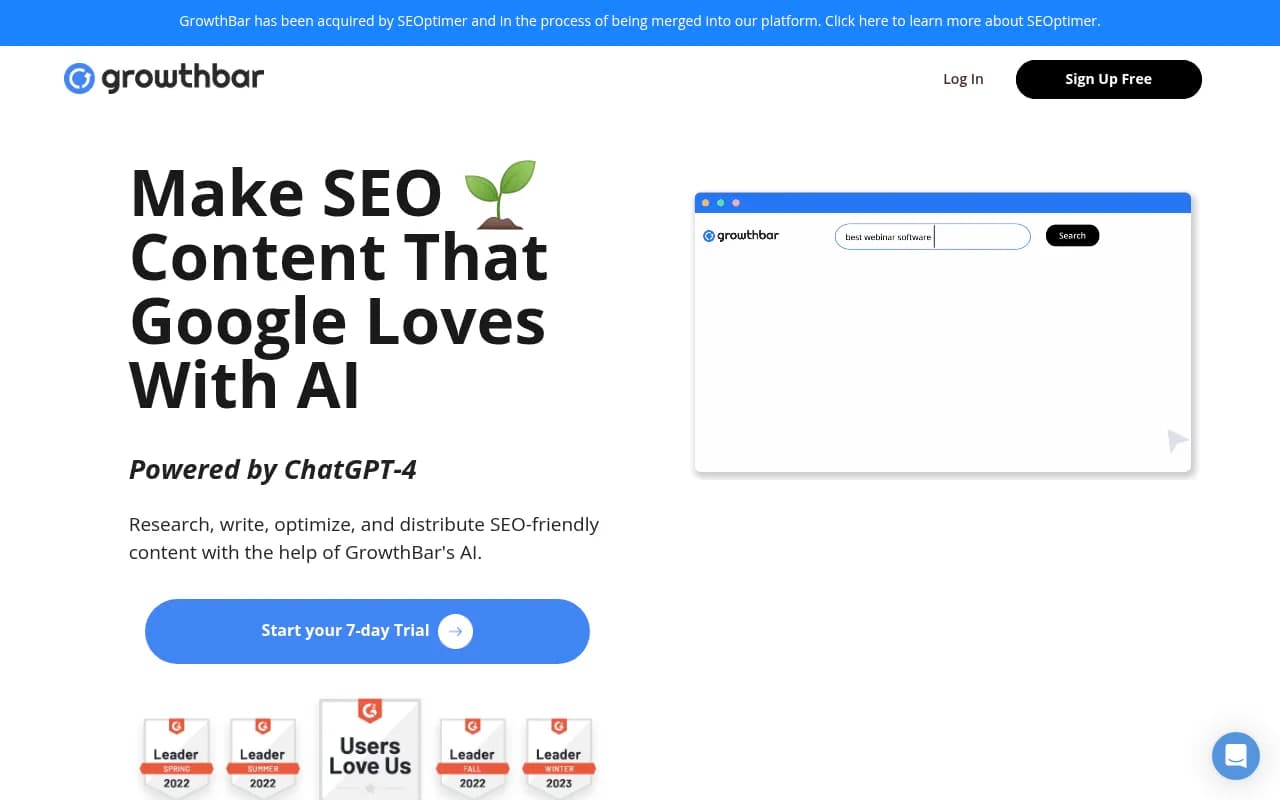
GrowthBar is a solid mid-market option that combines keyword research with AI content generation. The interface is simpler than Semrush or Ahrefs, which makes it accessible for content teams that don't have a dedicated SEO specialist.
The AI writing features generate blog outlines and full drafts from a keyword, and the content grading gives you basic optimization guidance. It's not as deep as Surfer for on-page optimization or as comprehensive as Semrush for keyword research, but it covers both reasonably well at a lower price point.
Good for: small content teams that want one tool to handle research and writing without a steep learning curve.
8. SE Ranking
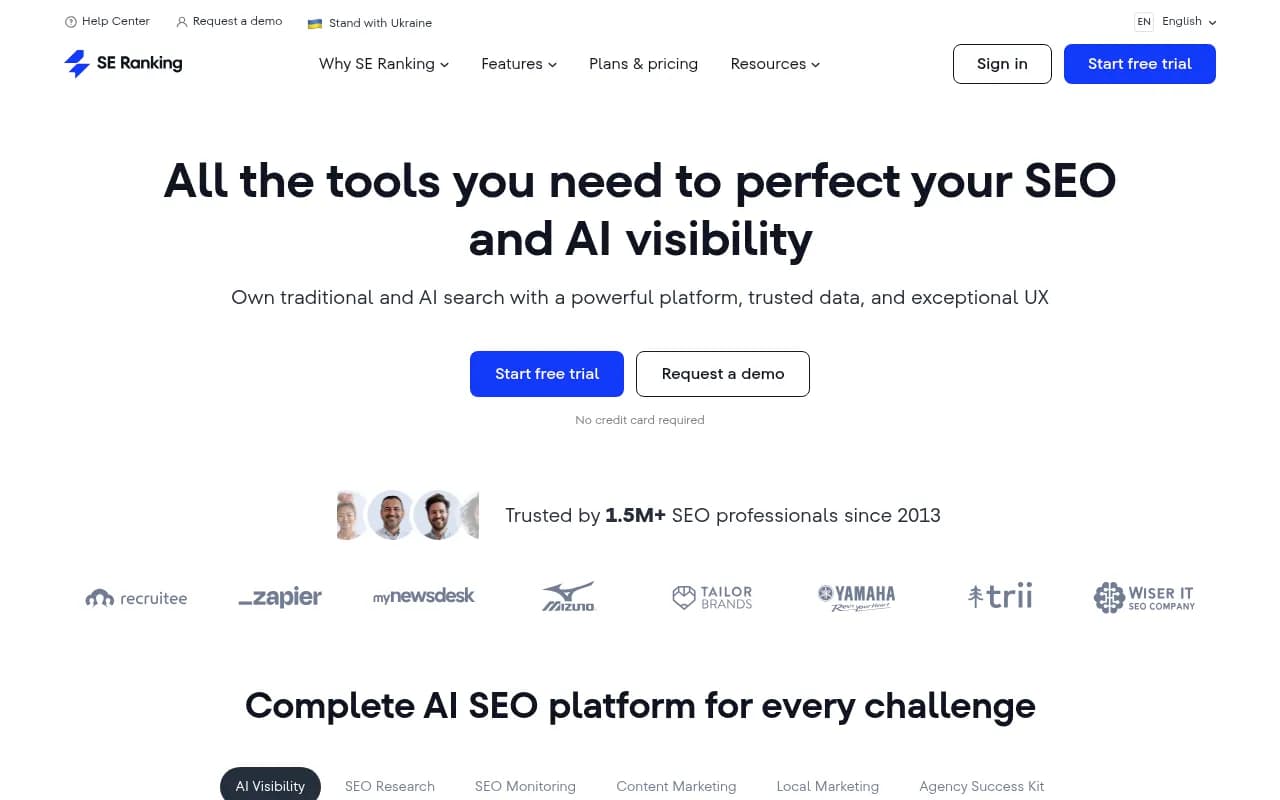
SE Ranking has expanded significantly from its roots as a rank tracker. The platform now includes keyword research, site auditing, backlink analysis, and an AI content editor. The content editor is competitive with Surfer and Clearscope for NLP-based optimization, and the overall platform is priced more accessibly than most alternatives.
The AI writing assistant generates outlines and drafts, and the content score updates in real time as you write. For agencies managing multiple clients, SE Ranking's white-label reporting and multi-site management features are a genuine advantage.
9. NeuronWriter
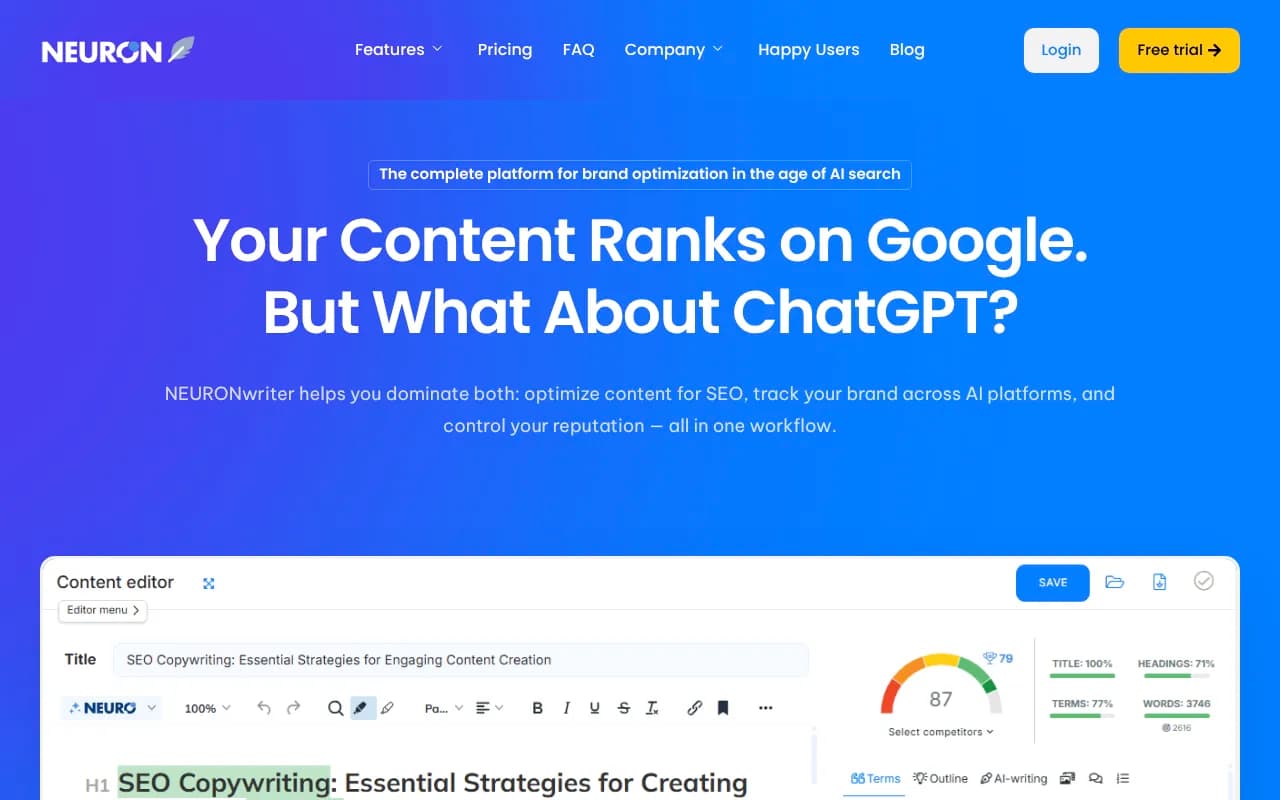
NeuronWriter is a content optimization tool that uses semantic NLP analysis to help you write content that covers a topic thoroughly. The content editor scores your draft against competitor pages and suggests related terms, questions, and entities to include.
It's particularly strong for teams focused on semantic SEO and topical authority. The interface is clean, the pricing is reasonable, and the Chrome extension makes it easy to use alongside other tools. It doesn't have the brand recognition of Surfer or Clearscope, but the core optimization features are genuinely competitive.
10. Promptwatch (for AI search visibility)
The first nine tools on this list are all focused on traditional search -- getting your content to rank in Google. But in 2026, that's only part of the picture. A growing share of discovery happens through AI engines, and most content teams have no visibility into whether they're showing up there.
Promptwatch is the tool that closes that gap. It tracks how your brand appears across 10 AI models -- ChatGPT, Perplexity, Claude, Gemini, Google AI Overviews, Grok, DeepSeek, and others -- and shows you exactly which prompts your competitors are visible for that you're not.
The part that makes it different from other AI visibility tools: it doesn't stop at monitoring. The Answer Gap Analysis shows you the specific content your site is missing. The built-in AI writing agent then generates articles engineered to get cited, grounded in 880M+ citations analyzed across real AI responses. And crawler logs show you exactly how AI engines are reading your site -- which pages they visit, which they skip, and what errors they encounter.
For content teams that want to be visible in AI search, not just Google, Promptwatch is the most complete option available.

Comparison table
| Tool | Primary use | AI writing | Content briefs | AI search visibility | Best for |
|---|---|---|---|---|---|
| Surfer SEO | On-page optimization | Yes | Yes | No | Writers optimizing for Google |
| Clearscope | Semantic optimization | No | Yes | No | Teams wanting clean, focused grading |
| Frase | Research + optimization | Yes | Yes | No | Research-heavy content workflows |
| Semrush | All-in-one SEO | Basic | Basic | Limited | Teams already using Semrush |
| Jasper AI | AI writing | Yes | No | No | High-volume content production |
| MarketMuse | Content strategy | No | Yes (deep) | No | Planning topical authority |
| GrowthBar | Research + writing | Yes | Basic | No | Small teams, lower budget |
| SE Ranking | Full SEO platform | Yes | Yes | No | Agencies, multi-site management |
| NeuronWriter | Semantic optimization | Yes | Yes | No | Topical SEO, semantic coverage |
| Promptwatch | AI search visibility | Yes (GEO-focused) | Yes (gap analysis) | Yes (10 models) | Brands tracking AI citation |
How to build a content team stack in 2026
The honest answer is that no single tool covers everything. Here's how to think about combining them:
For Google SEO: Pick one content optimization tool based on your team's workflow. If writers want real-time feedback while drafting, Surfer or NeuronWriter work well. If editors prefer reviewing briefs before writing starts, Clearscope or Frase are better fits. MarketMuse is worth the premium if you're building out a content strategy from scratch.
For AI search visibility: This is where most teams are underinvested. If you're not tracking how you appear in ChatGPT and Perplexity responses, you're flying blind on a channel that's growing fast. Promptwatch is the most complete option -- it monitors, identifies gaps, and helps you create content that actually gets cited.
For writing at scale: Jasper handles brand voice well for teams producing a lot of content. For smaller teams, the AI writing features in Surfer, Frase, or SE Ranking are usually sufficient without adding another tool.
The key thing to avoid is stacking too many tools that overlap. Surfer + Jasper + Semrush + Clearscope is overkill. Pick one optimization tool, one research/strategy tool, and add AI visibility tracking if you're serious about the channel.
What's changed in 2026
A few things worth noting about where the market has moved:
The line between "SEO tool" and "AI writing tool" has mostly collapsed. Almost every content optimization platform now has AI writing built in, and most AI writing tools have added SEO scoring. The differentiation is now about depth -- how good is the NLP analysis, how accurate is the competitive data, how useful are the briefs.
The bigger shift is the emergence of AI search as a real channel. Ahrefs CMO Tim Soulo noted in February 2026 that "AI SEO tool" now means two different things, and the second category -- tracking brand visibility in AI engines -- is where the real shift is happening. That's accurate. Tools that only track Google rankings are missing a growing piece of the picture.
The content teams that will be ahead in 12 months are the ones building workflows that cover both: optimizing for Google with tools like Surfer or Clearscope, and tracking and improving AI search visibility with something like Promptwatch. The two aren't in conflict -- in many cases, the same content improvements help with both.