Key Takeaways
- Pricing difference is massive: Authoritas starts at £90/mo (about $115) for 2,000 credits with a free tier available. Bluefish requires custom quotes starting around $4,000+/month -- roughly 35x more expensive for entry-level access.
- Target audience split: Authoritas targets mid-market eCommerce brands, publishers, and agencies. Bluefish is built exclusively for Fortune 500 enterprises with dedicated account teams and custom implementations.
- Monitoring breadth: Both track the major AI engines (ChatGPT, Perplexity, Claude, Gemini, Google AI Overviews, DeepSeek), but Bluefish adds agentic commerce tracking and deeper custom audience segmentation.
- Actionability gap: Authoritas bundles traditional SEO tools (rank tracking, technical audits) with AI monitoring. Bluefish focuses purely on AI channel optimization with automated workflows and custom measurement frameworks -- no legacy SEO features.
- Self-serve vs white-glove: Authoritas is a self-serve platform you can start using today. Bluefish requires sales calls, custom onboarding, and enterprise contracts -- expect 4-6 week implementation timelines.
- Best for most teams: Unless you're a Fortune 500 brand with a six-figure marketing budget, Authoritas delivers 90% of what you need at a fraction of the cost. Bluefish's premium is only justified if you need custom data segmentation and dedicated strategic support.
Overview
Authoritas AI Tracker

Authoritas positions itself as a hybrid platform -- AI search monitoring plus traditional SEO tools in one package. The company targets eCommerce brands, publishers, and agencies who need to track brand visibility across both conventional search engines and AI models. Their credit-based pricing model lets you control costs by choosing which AI engines to query and how often. The platform monitors ChatGPT, Perplexity, Claude, Gemini, DeepSeek, Google AI Overviews, and Bing AI. Beyond AI tracking, you get rank tracking, technical SEO audits, backlink analysis, and content optimization tools -- basically a full SEO suite with AI monitoring bolted on.
The free tier (50 credits) lets you test the platform before committing. Paid plans start at £90/month for 2,000 credits, scaling up to £1,125/month for 42,000 credits at the enterprise level. Each AI query costs credits depending on the model -- Google AI Overviews and GPT-4o mini are cheaper, while full ChatGPT searches with citations cost more. This usage-based model means you can stretch your budget by focusing on high-value queries instead of monitoring everything.
Bluefish AI
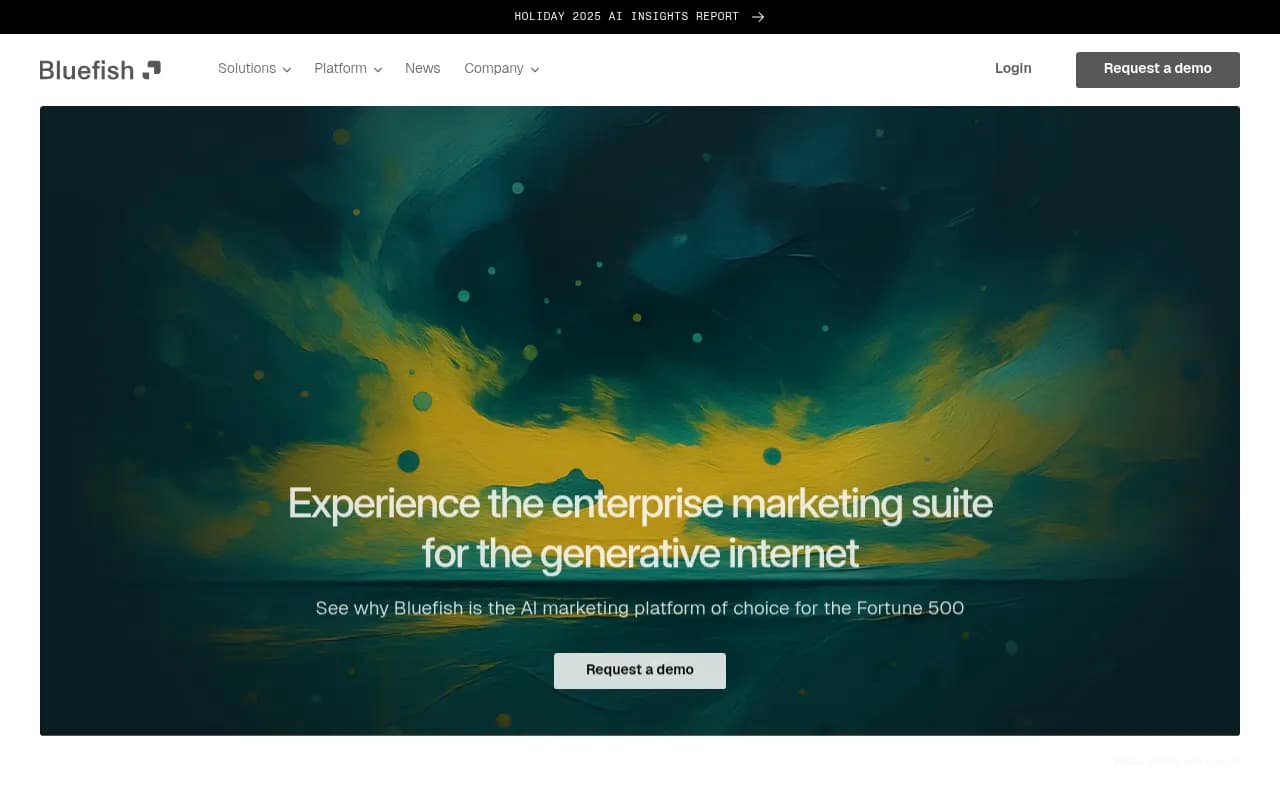
Bluefish is the enterprise play in this space. They explicitly market themselves as "the AI marketing platform of choice for the Fortune 500" and their pricing reflects that positioning. No public pricing, no free trial, no self-serve signup -- you request a demo, go through discovery calls, and get a custom quote that reportedly starts around $4,000/month and scales from there.
What you get for that premium: deeper control over AI performance measurement, custom audience segmentation, automated optimization workflows, and what Bluefish calls "understanding how AI thinks" -- basically influence and impact metrics beyond simple visibility scores. The platform covers AI monitoring, GEO optimization, measurement frameworks, and agentic commerce tracking (monitoring how AI agents recommend products for purchase). Bluefish passes enterprise infosec reviews, offers custom data segmentation, and assigns dedicated account teams. Their recent product launches include Collections (measuring ROI of digital campaigns in AI channels) and research showing Super Bowl ads influence AI recommendations.
The trade-off: you're paying for strategic consulting and custom implementation, not just software access. If you don't have a dedicated AI marketing team and a substantial budget, Bluefish's depth becomes overkill.
Side-by-Side Comparison
| Feature | Authoritas AI Tracker | Bluefish AI |
|---|---|---|
| Starting price | £90/mo (~$115) | ~$4,000+/mo (custom quote) |
| Free tier | Yes (50 credits) | No |
| AI engines monitored | ChatGPT, Perplexity, Claude, Gemini, DeepSeek, Google AI Overviews, Bing AI | ChatGPT, Perplexity, Claude, Gemini, Google AI Overviews, Bing AI, plus agentic commerce |
| Traditional SEO tools | Yes (rank tracking, technical audits, backlinks) | No |
| Custom audience segmentation | Basic persona tracking | Advanced custom audiences |
| Automated optimization workflows | Limited | Yes |
| Agentic commerce tracking | No | Yes |
| Self-serve signup | Yes | No (sales-led only) |
| Implementation timeline | Immediate | 4-6 weeks |
| Target customer | Mid-market brands, agencies, publishers | Fortune 500 enterprises |
| Account management | Self-serve + support tickets | Dedicated account team |
| Custom measurement frameworks | Standard metrics | Fully customizable |
| Infosec compliance | Standard | Enterprise-grade (passes Fortune 500 reviews) |
Pricing: The 35x difference
This is where the comparison gets stark.
Authoritas pricing (AI Search Platform):
- Free: 50 credits
- P1: £90/mo for 2,000 credits
- P2: £225/mo for 6,000 credits
- P3: £495/mo for 15,000 credits
- Enterprise: £1,125/mo for 42,000 credits
Credits work like this: each AI query costs credits based on the model. Google AI Overviews and GPT-4o mini are cheaper (1-2 credits per query). Full ChatGPT searches with citation tracking cost more (5-10 credits). You control spending by choosing which models to query and how often. A typical mid-market brand monitoring 500 prompts monthly across 3-4 AI engines would fit comfortably in the P2 or P3 tier.
Authoritas also offers separate SEO platform pricing (Essential £99/mo, Advanced £399/mo, Expert $799/mo) if you want the full SEO suite. But the AI tracker works standalone.
Bluefish pricing:
- No public pricing
- Estimated starting point: $4,000+/month
- Custom quotes based on company size, query volume, and features needed
- Annual contracts standard
- Includes dedicated account management and strategic consulting
The math: Authoritas P3 (£495/mo) gives you 15,000 credits -- enough for substantial monitoring across multiple brands and competitors. Bluefish's entry point is roughly 8x that cost. For enterprise clients spending $50k+/year on the platform, Bluefish's custom segmentation and strategic support might justify the premium. For everyone else, it's hard to see where the extra money goes.
Verdict: Unless you're a Fortune 500 brand with a dedicated AI marketing budget, Authoritas delivers better value. The credit system gives you control over costs, and the free tier lets you test before committing. Bluefish's pricing only makes sense if you need white-glove service and custom data frameworks that justify the 35x premium.
Monitoring capabilities
Both platforms cover the major AI engines, but with different depth and flexibility.
Authoritas monitors:
- Google AI Overviews
- ChatGPT (GPT-4o and GPT-4o mini)
- Perplexity (Sonar models)
- Claude (3.5 Haiku and variants)
- Gemini (1.5 Flash)
- Bing AI (Copilot)
- DeepSeek
You choose which models to query for each prompt set. The credit system means you can prioritize -- maybe you monitor Google AI Overviews daily (cheap) but only check Claude weekly (more expensive). Citation tracking is available on models that support it. Sentiment analysis shows whether mentions are positive, neutral, or negative. Share of voice metrics compare your brand against competitors across all tracked engines.
The platform lets you set up custom prompt sets organized by customer journey stage, product category, or persona. You can track branded queries ("best [your brand] features") and category queries ("best project management tools") separately. Geographic and language targeting is available -- monitor how AI engines respond in different markets.
Bluefish covers similar AI engines but adds:
- Agentic commerce tracking: monitoring how AI agents recommend products for purchase, not just informational queries
- Custom audience segmentation: define specific customer personas and track AI responses tailored to those audiences
- Deeper influence metrics: beyond visibility, Bluefish measures how AI "thinks" about your brand -- the underlying factors driving recommendations
Bluefish's Collections feature (launched Feb 2026) lets you measure ROI of specific marketing campaigns in AI channels. Their research on Super Bowl ads influencing AI recommendations shows they're tracking real-world events and their impact on AI outputs. This level of custom analysis isn't available in Authoritas.
The trade-off: Bluefish's depth requires more setup. You work with their team to define measurement frameworks, audience segments, and optimization priorities. Authoritas is more plug-and-play -- you can start monitoring in 10 minutes.
Verdict: For standard AI visibility tracking, both platforms deliver. Bluefish pulls ahead if you need agentic commerce monitoring or custom audience segmentation. But most brands don't need that level of granularity yet -- the AI commerce market is still emerging. Authoritas covers 95% of current monitoring needs at a fraction of the cost.
Optimization and actionability
This is where the platforms diverge most sharply.
Authoritas focuses on monitoring and reporting. You get:
- Citation tracking: which sources AI engines cite when mentioning your brand
- Sentiment analysis: positive/neutral/negative mentions
- Share of voice: your brand vs competitors
- Prompt performance: which queries you rank for, which you don't
- Geographic and persona breakdowns
The platform identifies gaps -- prompts where competitors appear but you don't. But it doesn't generate content or automate fixes. You take the insights back to your content team and SEO tools to optimize. The bundled SEO platform (separate pricing) gives you rank tracking, technical audits, and backlink analysis to support traditional optimization work.
Bluefish positions itself as an optimization platform, not just a monitoring tool. Their pitch: "go beyond superficial metrics to gain in-depth control over AI performance." What that means in practice:
- Automated optimization workflows: the platform suggests and implements changes to improve AI visibility
- Custom measurement frameworks: define which metrics matter for your business, not generic dashboards
- Influence metrics: understand why AI engines recommend (or don't recommend) your brand
- Strategic consulting: dedicated account teams help you interpret data and prioritize actions
Bluefish's Collections feature measures ROI of specific campaigns in AI channels -- connecting visibility changes to actual marketing initiatives. Their research capabilities (like the Super Bowl ad study) show they're analyzing broader trends and feeding insights back to clients.
The catch: Bluefish's optimization tools require enterprise-level implementation. You're not getting a self-serve dashboard with automated fixes. You're getting strategic guidance and custom workflows built by their team. That's valuable if you have the budget and internal resources to act on it. It's overkill if you're a 10-person marketing team just trying to understand where you stand in AI search.
Verdict: Authoritas gives you the data to make optimization decisions. Bluefish gives you the data plus strategic guidance and custom workflows. For most teams, Authoritas's monitoring is enough -- you already have content and SEO teams who can act on the insights. Bluefish's premium makes sense if you need dedicated AI marketing strategy support and have the budget for it.
If you're looking for a platform that bridges the gap between monitoring and action -- showing you content gaps and helping you create optimized content to fill them -- Promptwatch takes a different approach with built-in AI content generation grounded in citation data. Worth exploring if you want more than dashboards but don't need Bluefish's enterprise price tag.

Traditional SEO integration
This is a clear differentiator.
Authoritas bundles AI monitoring with a full SEO platform:
- Rank tracking across Google, Bing, and other search engines
- Technical SEO audits (crawl errors, site speed, mobile issues)
- Backlink analysis and link building tools
- Content optimization recommendations
- Competitor analysis for traditional search
You can buy the AI tracker standalone or combine it with the SEO platform. For agencies and brands managing both traditional and AI search, this integration is convenient -- one login, one reporting dashboard, one vendor relationship. The SEO tools are solid mid-market offerings, not cutting-edge but comprehensive enough for most needs.
Bluefish doesn't touch traditional SEO. No rank tracking, no technical audits, no backlink tools. It's purely focused on AI channels -- search engines powered by LLMs, agentic commerce, and generative recommendations. If you need traditional SEO tools, you'll use Semrush, Ahrefs, or another platform alongside Bluefish.
The Bluefish argument: AI search and traditional search require different strategies. Bundling them creates confusion and dilutes focus. By specializing in AI channels, they can go deeper on what matters for generative search visibility.
The Authoritas argument: most brands still get 80%+ of their traffic from traditional search. You need both. Splitting tools means duplicate reporting, separate workflows, and higher total costs.
Verdict: If you're managing both traditional and AI search (which most brands are), Authoritas's integration is valuable. You get one platform, one reporting dashboard, one vendor relationship. Bluefish's AI-only focus makes sense for enterprise teams with dedicated AI marketing roles and separate SEO teams. For everyone else, the bundled approach is more practical.
Enterprise features and support
This is where Bluefish justifies its premium pricing.
Authoritas offers:
- Self-serve platform with support tickets
- Standard security and data privacy
- API access for custom integrations
- White-label reporting for agencies
- Email and chat support
It's a solid mid-market platform. You can get started immediately, support responds within 24 hours, and the platform handles most common use cases. But you're not getting dedicated account management or custom implementations.
Bluefish delivers:
- Dedicated account teams assigned to each client
- Custom onboarding and implementation (4-6 weeks)
- Enterprise-grade security that passes Fortune 500 infosec reviews
- Custom data segmentation and measurement frameworks
- Strategic consulting on AI marketing strategy
- Priority support with faster response times
Bluefish's pitch is that they're not just selling software -- they're providing strategic partnership. Your account team helps you define what success looks like in AI channels, builds custom dashboards around those metrics, and guides optimization priorities. For a Fortune 500 brand launching a new AI marketing initiative, that hand-holding has real value.
The trade-off: you can't just sign up and start using Bluefish. You go through discovery calls, custom scoping, contract negotiations, and multi-week implementations. If you need to start monitoring AI visibility next week, Bluefish won't work. Authoritas will.
Verdict: Bluefish's enterprise features are real and valuable -- if you need them. Most mid-market brands don't. The self-serve model and standard support in Authoritas are sufficient for teams that know what they're doing. Bluefish makes sense if you're a large enterprise with complex requirements, multiple stakeholders, and a need for strategic guidance beyond just software access.
User experience and learning curve
Authoritas has a steeper learning curve because it does more. The platform combines AI monitoring, traditional SEO tools, and various reporting modules. New users need time to understand the credit system, set up prompt tracking, and navigate between AI and SEO features. The interface is functional but not particularly elegant -- it feels like a tool built by SEO practitioners for SEO practitioners.
The upside: once you learn it, you have access to everything. The downside: the first week is overwhelming if you're new to AI search monitoring.
Bluefish has a smoother onboarding because you get guided implementation. Your account team walks you through setup, explains the metrics, and builds initial dashboards. The interface is more polished and focused -- it's purely AI monitoring without the SEO clutter. The learning curve is gentler because you have experts helping you.
The catch: you're dependent on that account team. If you want to add new prompt sets or change tracking parameters, you might need to request changes rather than doing it yourself. The platform is less flexible for power users who want to tinker.
Verdict: Authoritas rewards technical users who want control and flexibility. Bluefish is better for teams that prefer guided experiences and strategic support. Neither is particularly intuitive for complete beginners, but Bluefish's white-glove onboarding makes the initial learning easier.
Pros and cons
Authoritas AI Tracker pros:
- Affordable entry point (£90/mo) with free tier available
- Credit-based pricing gives you cost control
- Bundles AI monitoring with traditional SEO tools
- Self-serve platform -- start using it immediately
- Good for agencies managing multiple clients
- Covers all major AI engines
- Geographic and language targeting included
Authoritas AI Tracker cons:
- Credit system requires planning to avoid overages
- Interface feels dated and cluttered
- Limited optimization guidance -- mostly monitoring
- No agentic commerce tracking
- Support is standard tier, not white-glove
- Less depth on custom audience segmentation
Bluefish AI pros:
- Deepest enterprise features in the market
- Dedicated account teams and strategic consulting
- Custom measurement frameworks tailored to your business
- Agentic commerce tracking for product recommendations
- Advanced audience segmentation
- Passes Fortune 500 infosec reviews
- Polished interface focused purely on AI channels
- Research capabilities (Super Bowl ad study, etc.)
Bluefish AI cons:
- Pricing starts around $4,000+/month -- 35x more than Authoritas
- No free trial or self-serve option
- 4-6 week implementation timeline
- Overkill for mid-market brands
- No traditional SEO tools (need separate platform)
- Less flexibility for power users who want to self-manage
- Custom quotes make budgeting difficult
Who should choose which tool
Choose Authoritas if you:
- Are a mid-market eCommerce brand, publisher, or agency
- Need both AI monitoring and traditional SEO tools
- Want to control costs with usage-based pricing
- Prefer self-serve platforms you can start using immediately
- Have a marketing team that can act on insights without strategic consulting
- Need to monitor multiple clients or brands on a budget
- Want a free tier to test before committing
Choose Bluefish if you:
- Are a Fortune 500 enterprise with a six-figure marketing budget
- Need agentic commerce tracking for product recommendations
- Require custom measurement frameworks and audience segmentation
- Want dedicated account management and strategic consulting
- Have complex infosec requirements that need enterprise-grade compliance
- Are launching a major AI marketing initiative and need expert guidance
- Can afford 4-6 week implementation timelines
Choose neither if you:
- Need content gap analysis and AI content generation, not just monitoring -- Promptwatch focuses on the action loop of finding gaps, creating optimized content, and tracking results
- Are a small business or startup with limited budget -- look at more affordable options like Otterly.AI or Peec.ai
- Only care about Google AI Overviews -- Google Search Console's AI Overviews report is free
Final verdict
For 95% of brands, Authoritas delivers better value. The £90/mo entry point, free tier, bundled SEO tools, and self-serve model make it accessible and practical. You get comprehensive AI monitoring across all major engines, geographic targeting, and enough features to understand where you stand and what to optimize.
Bluefish's 35x price premium only makes sense if you're a Fortune 500 enterprise with dedicated AI marketing teams, complex requirements, and a need for strategic consulting. The platform's depth is real -- custom measurement frameworks, agentic commerce tracking, dedicated account teams -- but most brands don't need that level of sophistication yet. The AI search market is still emerging. Spending $50k+/year on monitoring before you've figured out your AI content strategy is backwards.
The smart move: start with Authoritas (or a similar mid-market platform) to understand the landscape. Once you're generating meaningful traffic from AI search and have a proven optimization process, then consider whether Bluefish's enterprise features justify the upgrade. But jumping straight to Bluefish without that foundation is paying for capabilities you can't fully utilize.
One-liner summary: Authoritas gives you 90% of what you need at 3% of Bluefish's cost -- unless you're a Fortune 500 brand with enterprise requirements, the choice is obvious.