Key takeaways
- Peec AI is a solid entry-level monitoring tool but lacks content optimization, crawler logs, and prompt research -- you can see where you're invisible but not fix it.
- Nightwatch brings strong traditional rank tracking into the AI era with citation intelligence and prompt research, making it a good fit for teams that still care about Google alongside AI search.
- Promptwatch is the only platform of the three built around the full optimization loop: find gaps, generate content, track results -- and it covers 10 AI models with crawler logs, Reddit/YouTube insights, and ChatGPT Shopping tracking.
- If your goal is just awareness, any of the three works. If your goal is actually improving AI visibility, Promptwatch is the clear step up.
AI search has changed what "ranking" even means. Your brand can be invisible to ChatGPT, Perplexity, and Google AI Overviews while still sitting on page one of Google. Those are now two separate problems, and most marketing teams are only solving one of them.
The tools in this comparison -- Peec AI, Nightwatch, and Promptwatch -- all address the AI visibility side of that equation. But they do it in very different ways, at very different depths. This guide breaks down what each one actually does, where each one falls short, and which is worth your money depending on what you're trying to accomplish.
What these tools are trying to solve
Before comparing features, it's worth being clear about the underlying problem.
When someone asks ChatGPT "what's the best project management software for remote teams?" or Perplexity "which CRM is easiest to set up?", AI models generate answers by drawing on training data and, increasingly, live web citations. Your brand either shows up in those answers or it doesn't. Unlike Google, there's no rank position 7 -- you're either cited or you're not.
Monitoring tools in this space track those AI-generated responses across a set of prompts relevant to your brand and industry. The better ones go further: they tell you why you're not showing up and help you do something about it.
That's the key distinction between the tools in this comparison.
Peec AI: what it does well (and where it stops)
Peec AI positions itself as an accessible AI visibility monitoring tool. The setup is straightforward -- you define your brand, add competitor names, and the platform starts tracking how often each appears in AI-generated responses across platforms like ChatGPT, Perplexity, and Google AI Overviews.
A few things genuinely stand out. Peec AI offers unlimited seats on its plans, which matters for larger teams where per-user pricing becomes a budget headache. It also suggests prompts to track, which helps if you're not sure where to start. The interface is clean and the learning curve is low.

But the limitations are real. Peec AI is fundamentally a monitoring dashboard. It shows you visibility data -- mention rates, share of voice, competitor comparisons -- but it doesn't tell you much about why you're missing from certain responses or what content would fix it. There's no prompt research with volume estimates, no content gap analysis, no AI writing tools, and no crawler logs to show you how AI bots are actually interacting with your site.
The platform also focuses on a narrower set of AI models compared to some competitors, and it doesn't track Reddit or YouTube -- two sources that heavily influence what AI models cite in their responses.
For a small team that just wants a basic read on AI brand visibility, Peec AI is fine. For anyone who wants to act on that data, it's a starting point, not a solution.
Nightwatch: the rank tracker that grew into AI monitoring
Nightwatch has been around longer than most tools in this space, originally built as a traditional search rank tracker. Over the past year, it's added meaningful AI tracking capabilities: citation intelligence, prompt research, and an AI tracking dashboard that monitors brand mentions across major LLM platforms.
What makes Nightwatch interesting in this comparison is the combination. If you're a team that still runs traditional SEO alongside AI visibility work -- which is most teams right now -- Nightwatch lets you do both from one platform. You get keyword rank tracking, site audits, and Looker Studio integration alongside the AI monitoring layer. That's genuinely useful if you don't want to manage two separate subscriptions.
The citation intelligence feature is worth calling out specifically. Nightwatch tracks which sources AI models are actually citing in their responses, which gives you a clearer picture of the content landscape you're competing in. The prompt research tool helps you identify which AI-relevant queries are worth targeting.
Where Nightwatch falls short is on the optimization side. Like Peec AI, it's primarily a tracking and research tool. It doesn't generate content for you, doesn't have AI crawler logs showing how bots interact with your pages, and doesn't offer traffic attribution to connect AI visibility to actual revenue. The AI monitoring features also feel like an addition to a rank tracker rather than a purpose-built GEO platform.
If you're an SEO team that wants to add AI monitoring without switching tools entirely, Nightwatch is a reasonable choice. If AI visibility is your primary concern, you'll likely outgrow it.
Promptwatch: monitoring plus the optimization loop
Promptwatch takes a different approach. It's not a rank tracker that added AI features, and it's not a monitoring dashboard that shows you data and leaves you to figure out the rest. It's built around what the team calls the "action loop": find gaps, create content, track results.

That distinction matters more than it might sound. Most teams that invest in AI visibility monitoring hit the same wall: the dashboard shows them they're invisible for 60% of relevant prompts, and then... what? Knowing you're invisible doesn't make you visible.
Promptwatch's Answer Gap Analysis shows you exactly which prompts your competitors are appearing for that you're not -- and more specifically, what content your site is missing that AI models would need to cite you. From there, the built-in AI writing agent generates articles, listicles, and comparisons grounded in real citation data (over 880 million citations analyzed). This isn't generic content -- it's engineered around the topics and angles that AI models actually pull from.
The tracking layer then closes the loop: page-level visibility tracking shows which specific pages are being cited, by which models, and how often. Traffic attribution (via a code snippet, Google Search Console integration, or server log analysis) connects that visibility to actual revenue.
A few capabilities that set it apart from both Peec AI and Nightwatch:
- AI Crawler Logs: Real-time logs of ChatGPT, Claude, Perplexity, and other AI crawlers hitting your site -- which pages they read, errors they encounter, how often they return. Neither Peec AI nor Nightwatch offers this.
- Reddit and YouTube tracking: Surfaces discussions and videos that directly influence AI recommendations. Most tools ignore these entirely.
- ChatGPT Shopping tracking: Monitors when your brand appears in ChatGPT's product recommendations and shopping carousels -- relevant for e-commerce brands.
- Prompt intelligence: Volume estimates and difficulty scores for each prompt, plus query fan-outs showing how one prompt branches into sub-queries.
- Competitor heatmaps: Side-by-side AI visibility comparison across LLMs, showing who's winning for each prompt and why.
Promptwatch monitors 10 AI models: ChatGPT, Perplexity, Google AI Overviews, Google AI Mode, Claude, Gemini, Meta/Llama, DeepSeek, Grok, Mistral, and Copilot. That's broader coverage than either competitor.
Feature comparison
| Feature | Peec AI | Nightwatch | Promptwatch |
|---|---|---|---|
| AI model monitoring | ChatGPT, Perplexity, a few others | ChatGPT, Perplexity, Google AIO, others | 10 models (ChatGPT, Claude, Gemini, Perplexity, Grok, DeepSeek, Copilot, Meta AI, Mistral, Google AIO) |
| Competitor tracking | Yes | Yes | Yes, with heatmaps |
| Prompt research / volume data | Basic suggestions | Yes (prompt research tool) | Yes, with difficulty scores and query fan-outs |
| Content gap analysis | No | No | Yes (Answer Gap Analysis) |
| AI content generation | No | No | Yes (built-in AI writing agent) |
| AI crawler logs | No | No | Yes |
| Reddit / YouTube tracking | No | No | Yes |
| ChatGPT Shopping tracking | No | No | Yes |
| Traffic attribution | No | No | Yes (snippet, GSC, server logs) |
| Traditional rank tracking | No | Yes | No |
| Looker Studio integration | No | Yes | Yes |
| Unlimited seats | Yes | No | Agency/Enterprise plans |
| Free trial | Yes | Yes | Yes |
| Starting price | ~$99/mo | ~$39/mo | $99/mo |
Pricing breakdown
Nightwatch is the most affordable entry point at around $39/month for basic plans, which makes sense given its roots as a rank tracker. Peec AI and Promptwatch both start around $99/month for their entry tiers.
Promptwatch's pricing tiers:
- Essential: $99/month (1 site, 50 prompts, 5 articles/month)
- Professional: $249/month (2 sites, 150 prompts, 15 articles, crawler logs, city/state tracking)
- Business: $579/month (5 sites, 350 prompts, 30 articles)
- Agency/Enterprise: custom pricing
The price difference between Promptwatch and the others is real, but so is the capability gap. If you're paying $99/month for monitoring data you can't act on, you might be better off paying $249/month for a platform that helps you actually move the needle.
Which tool fits which situation
These three tools aren't really competing for the same buyer. Here's how to think about it:
Choose Peec AI if you're just getting started with AI visibility monitoring, you want a simple dashboard with low setup friction, and your team doesn't yet have a clear plan for acting on the data. It's a reasonable first step.
Choose Nightwatch if you're an SEO team that still runs traditional rank tracking and wants to add AI monitoring without switching platforms. The combination of keyword tracking and AI citation intelligence in one tool is genuinely convenient, and the pricing is accessible.
Choose Promptwatch if AI visibility is a strategic priority and you need more than a dashboard. The content gap analysis, AI writing tools, crawler logs, and traffic attribution make it the only platform of the three that can take you from "we're invisible" to "we're being cited" -- and then prove it with revenue data.
A note on the broader market
These three aren't the only options. The AI visibility space has grown fast, and there are now dozens of tools with varying approaches. A few worth knowing about:

Otterly.AI is another monitoring-focused tool, similar in scope to Peec AI but with a slightly different interface and prompt set.
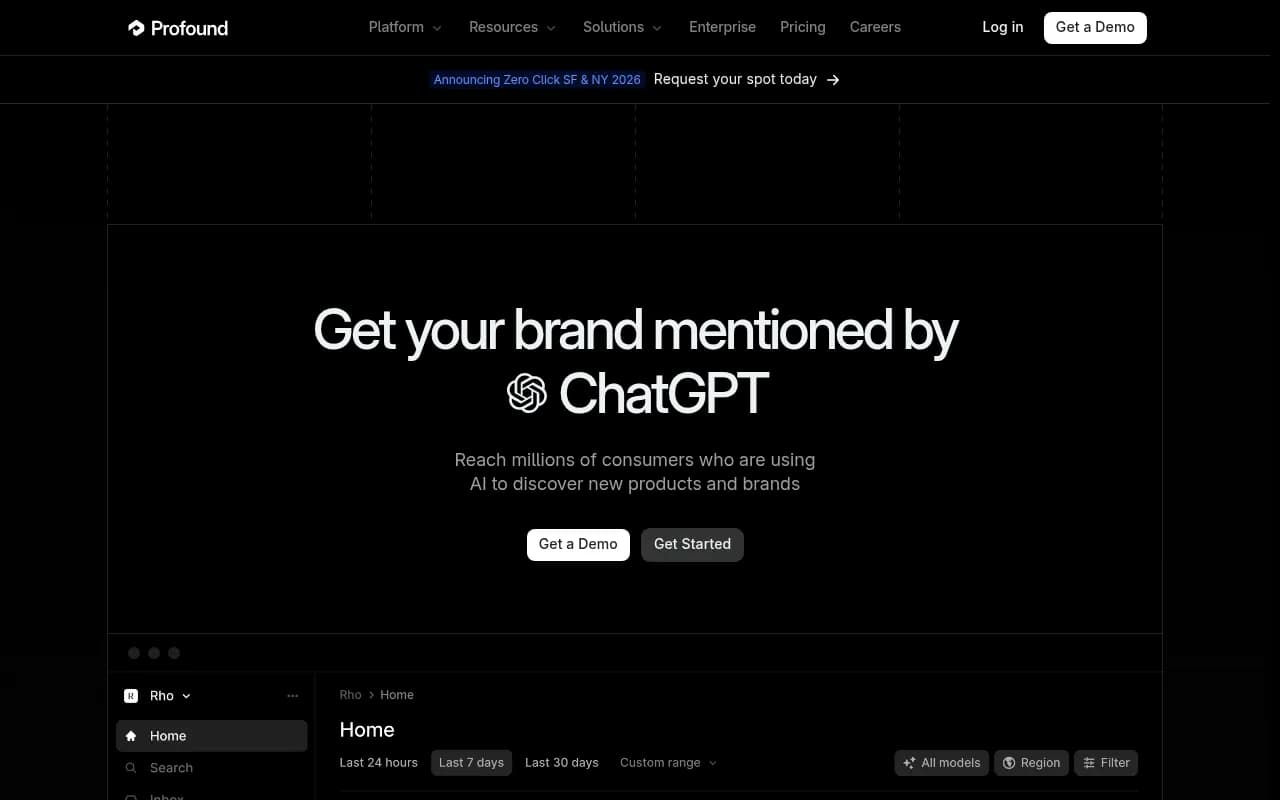
Profound AI targets enterprise teams with deep analytics and strong reporting, though it comes at a higher price point.
Scrunch AI focuses on monitoring how AI assistants like ChatGPT and Claude represent your brand, with good sentiment tracking.

SE Ranking has added AI visibility features to its traditional SEO platform, similar to Nightwatch's approach but with a different feature mix.
The common thread across most of these tools -- including Peec AI and Nightwatch -- is that they're strong on monitoring and weak on optimization. That's the gap Promptwatch is specifically built to fill.
The bottom line
If you're trying to understand where your brand stands in AI search, any of these three tools will give you a starting picture. Peec AI is the simplest. Nightwatch is the most versatile if you still care about traditional SEO. Promptwatch is the most complete if AI visibility is where you're putting real resources.
The harder question isn't which tool to pick -- it's what you're going to do with the data once you have it. A monitoring dashboard that shows you're invisible for 40 relevant prompts is only useful if you have a way to fix it. That's the question worth asking before you commit to any platform.