Key takeaways
- SE Visible is a solid AI Mode and brand visibility tracker, but it's primarily a monitoring tool -- it shows you data without helping you act on it
- The best alternatives in 2026 combine tracking with content gap analysis, competitor benchmarking, and in some cases AI-generated content to fix what's missing
- Platforms differ significantly in which AI models they cover, whether they track sentiment, and how deep their prompt intelligence goes
- If you want to move beyond dashboards and actually improve your AI search presence, look for tools with content generation, crawler logs, and traffic attribution
- Promptwatch is the only platform in this comparison rated a "Leader" across all evaluation categories, and the only one that closes the full loop from gap detection to content creation to results tracking
Why people look for SE Visible alternatives
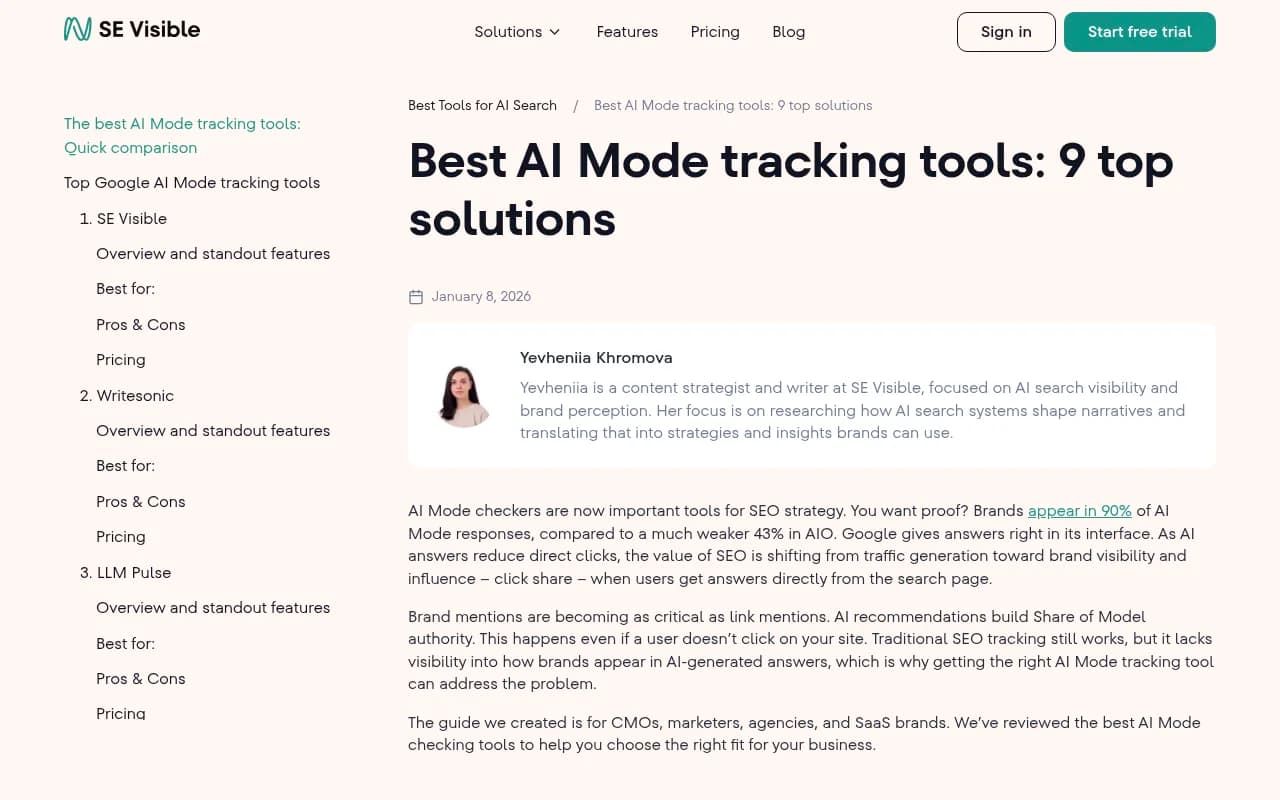
SE Visible, built by the SE Ranking team, does a few things well. It monitors brand mentions in Google AI Mode, tracks share of voice across AI search engines, and gives marketing teams a reasonably clean dashboard for understanding where they appear in AI-generated answers. Starting at $189/month, it's positioned toward agencies and SEO teams who want dedicated AI visibility coverage.
But the feedback from teams who've used it for a while tends to follow a pattern: the data is there, and then what? You can see that a competitor is getting cited more than you. You can see which prompts you're missing. What you can't do, inside SE Visible, is fix any of it. There's no content gap analysis that tells you what to write. No AI writing agent to help you create content engineered for citations. No crawler logs showing you which pages AI bots are actually reading.
That gap -- between knowing and doing -- is what drives most people to look for alternatives.
The market has also moved fast. In 2026, there are now 20+ platforms competing in this space, and they vary enormously in depth. Some are glorified brand mention trackers. Others have built full optimization workflows. Picking the right one depends on what you actually need.
What to look for in an SE Visible alternative
Before jumping into the tools, it's worth being clear about what actually matters:
- Which AI models are covered. ChatGPT, Perplexity, Google AI Overviews, Claude, Gemini, Grok, DeepSeek -- coverage varies a lot. Some tools focus only on Google AI Mode. Others cover 10+ models.
- Sentiment tracking. Not just whether you're mentioned, but how. Are AI models recommending you positively, neutrally, or negatively? This matters for brand health.
- Prompt intelligence. Can you see which prompts your competitors rank for? Volume estimates? Difficulty scores? Or are you just watching a share-of-voice number move up and down?
- Content gap analysis. Does the tool tell you what content you're missing? This is the difference between a tracker and an optimization platform.
- Content generation. Can the tool actually help you create content that gets cited? A small number of platforms have built this in.
- Traffic attribution. Can you connect AI visibility to actual website traffic and revenue?
- Crawler logs. Do you know which pages AI bots are reading, how often, and whether they're hitting errors?
SE Visible covers the first two reasonably well. Most of the alternatives below go further in at least one of these areas.
The best SE Visible alternatives in 2026
Promptwatch -- best overall for AI search optimization
Promptwatch is the most complete platform in this space right now. Where SE Visible (and most competitors) stop at monitoring, Promptwatch is built around a full action loop: find the gaps, create content to fill them, track the results.

The Answer Gap Analysis shows you exactly which prompts your competitors appear for that you don't -- not just as a list, but with the specific content angles and topics that AI models are looking for. The built-in AI writing agent then generates articles, listicles, and comparisons grounded in 880M+ citations analyzed, so the content it produces is engineered to get cited rather than just written to fill a page.
On the tracking side, Promptwatch monitors 10 AI models (ChatGPT, Perplexity, Google AI Overviews, Google AI Mode, Claude, Gemini, Meta/Llama, DeepSeek, Grok, Mistral, Copilot) and provides page-level citation tracking -- you can see exactly which pages are being cited, how often, and by which models. The AI Crawler Logs feature shows real-time data on which AI bots are hitting your site, which pages they're reading, and any errors they're encountering. Most competitors don't have this at all.
Other things worth noting: Reddit and YouTube tracking (surfaces discussions that influence AI recommendations), ChatGPT Shopping monitoring, prompt volume estimates and difficulty scores, and query fan-outs that show how a single prompt branches into sub-queries.
Pricing starts at $99/month for the Essential plan (1 site, 50 prompts, 5 articles), $249/month for Professional (2 sites, 150 prompts, 15 articles, crawler logs), and $579/month for Business (5 sites, 350 prompts, 30 articles). Free trial available.
Used by 6,700+ brands including Booking.com and Center Parcs.
Profound -- best for enterprise content operations
Profound is one of the more established names in this space and has a strong feature set for large brands. It combines AI visibility tracking with what it calls a "read/write AI model" -- meaning it can both monitor your presence and help you take action on what it finds. The enterprise pricing reflects this: it's not cheap, but for large marketing teams running complex content operations, it's worth considering.
Where Profound falls short compared to Promptwatch: no Reddit or YouTube tracking, no ChatGPT Shopping monitoring, and the content generation capabilities are less tightly integrated with citation data. It's a strong tool, but it's more expensive and slightly less complete.
Otterly.AI -- best budget option for agencies
Otterly is the most affordable serious option in this space, starting at $29/month. For agencies running GEO audits for clients or teams that just need prompt-based monitoring without the full enterprise stack, it does the job.
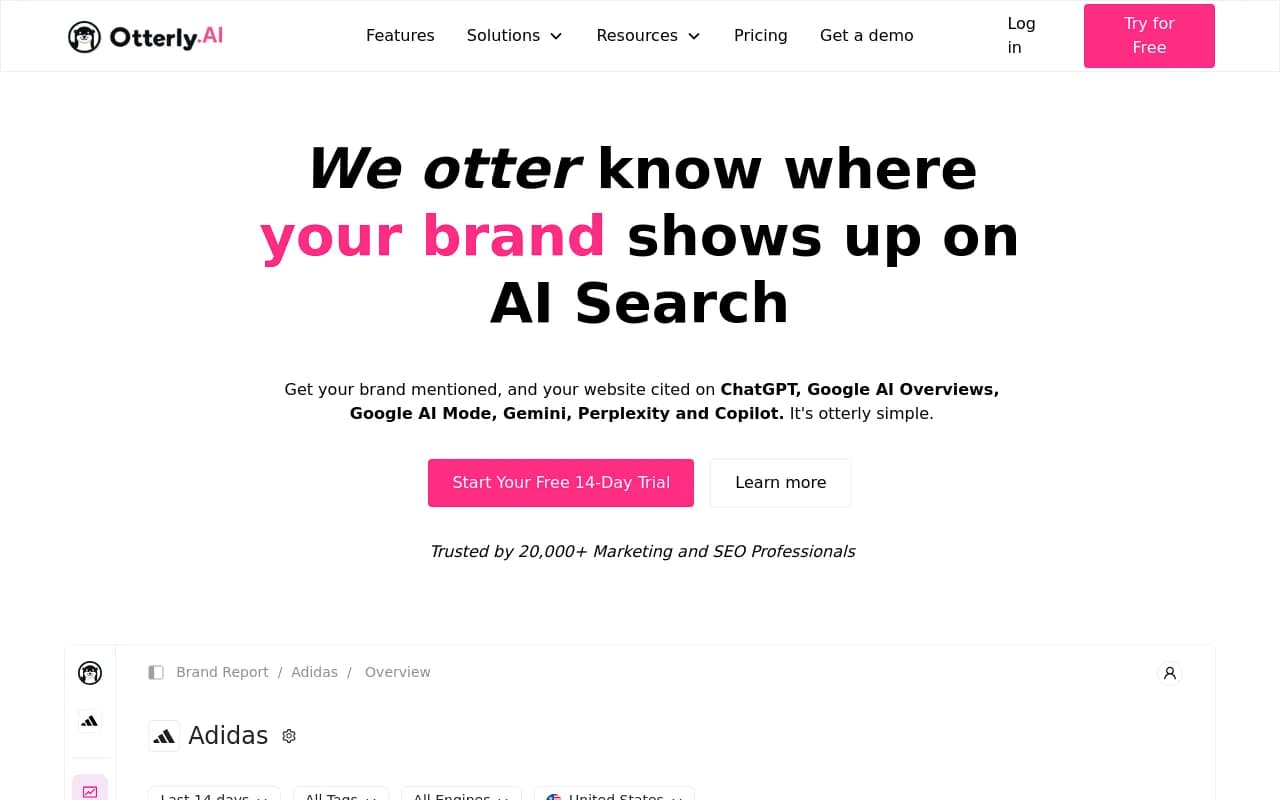
The automated prompt testing is genuinely useful, and the GEO audit workflows are well-designed. The limitation is that Otterly is monitoring-only -- there's no content generation, no crawler logs, no traffic attribution. You get the data; you're on your own for what to do with it. For teams that already have content workflows and just need the visibility data piped in, that's fine. For teams that want an end-to-end solution, it's not enough.
Peec AI -- best for multi-language B2B and SaaS
Peec AI has carved out a niche in multi-language AI visibility tracking, which makes it particularly useful for European SaaS companies and B2B brands operating across multiple markets. The dashboard is clean, competitor benchmarking is solid, and the pricing (starting around €89/month) is reasonable.
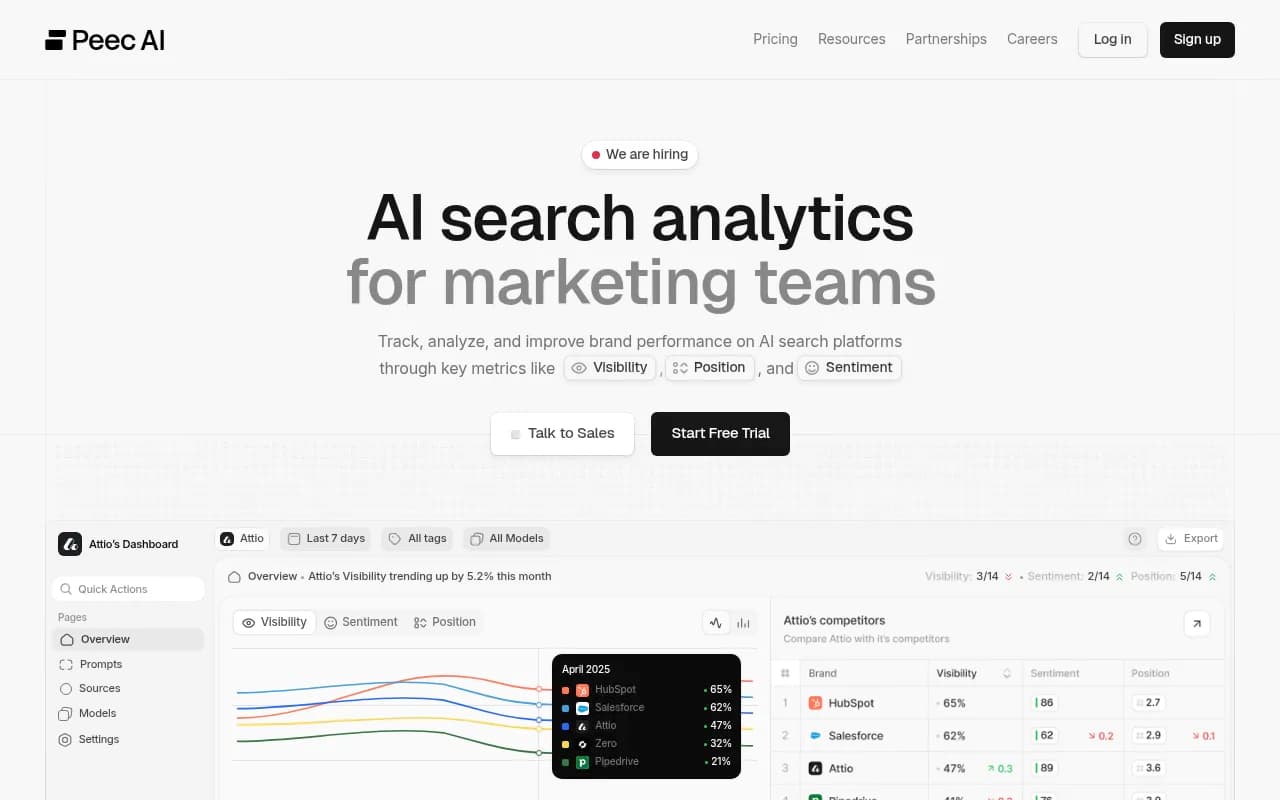
The gap is similar to Otterly: Peec is a monitoring tool. It tells you where you stand. It doesn't help you improve. If you're a B2B SaaS company that needs visibility data in multiple languages and you have a separate content team to act on it, Peec is a good fit.
Scrunch -- best for mid-market brands wanting depth
Scrunch sits in an interesting middle ground -- more depth than Otterly or Peec, less expensive than Profound. It monitors ChatGPT, Claude, and other major models, tracks brand mentions and competitor share of voice, and provides reasonably detailed citation analysis.
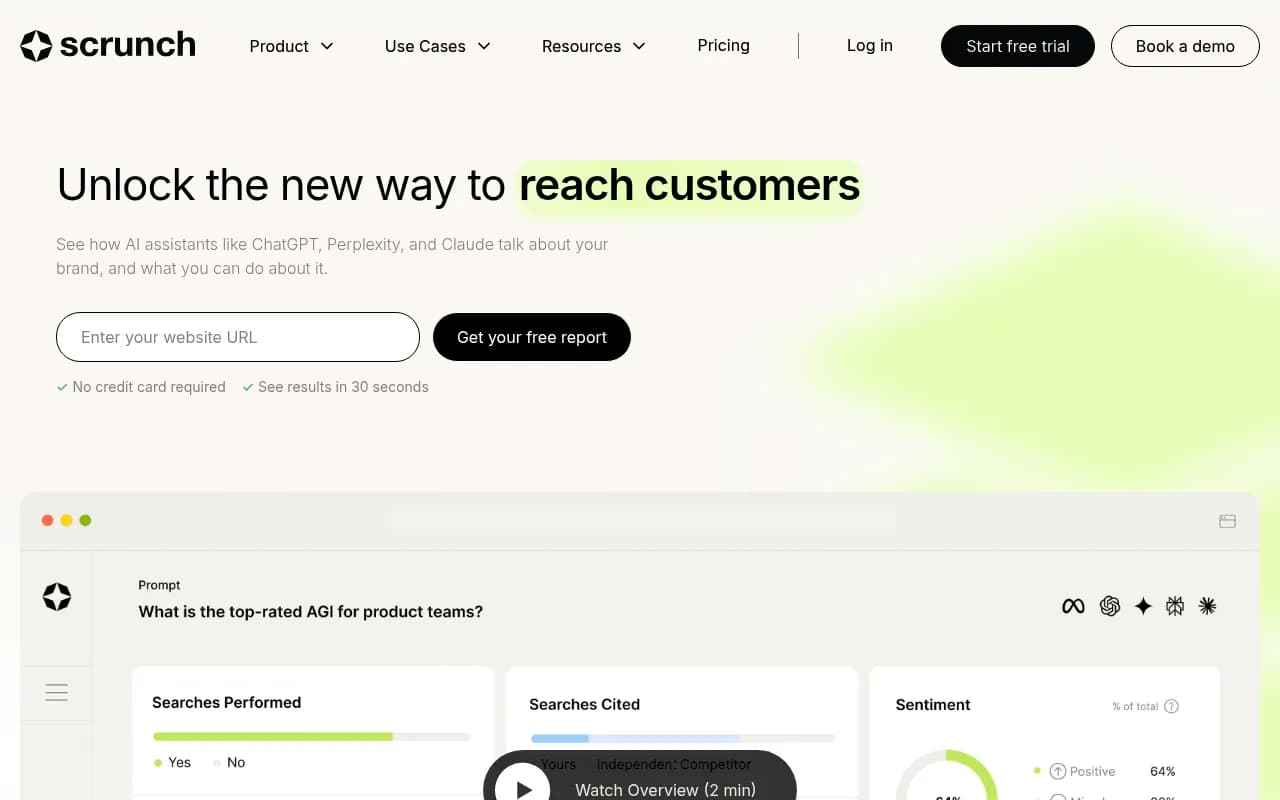
The main limitation: no content generation, no crawler logs, and no Reddit/YouTube tracking. It's a solid monitoring platform for mid-market brands that want more than a basic dashboard but aren't ready for enterprise pricing.
Nightwatch -- best for combining AI and traditional SEO tracking
If you're already using Nightwatch for traditional rank tracking and want to add AI visibility without switching platforms, the AI add-on is worth considering. It handles both traditional keyword rankings and AI search monitoring in one place, with geo-level data that's useful for local SEO.
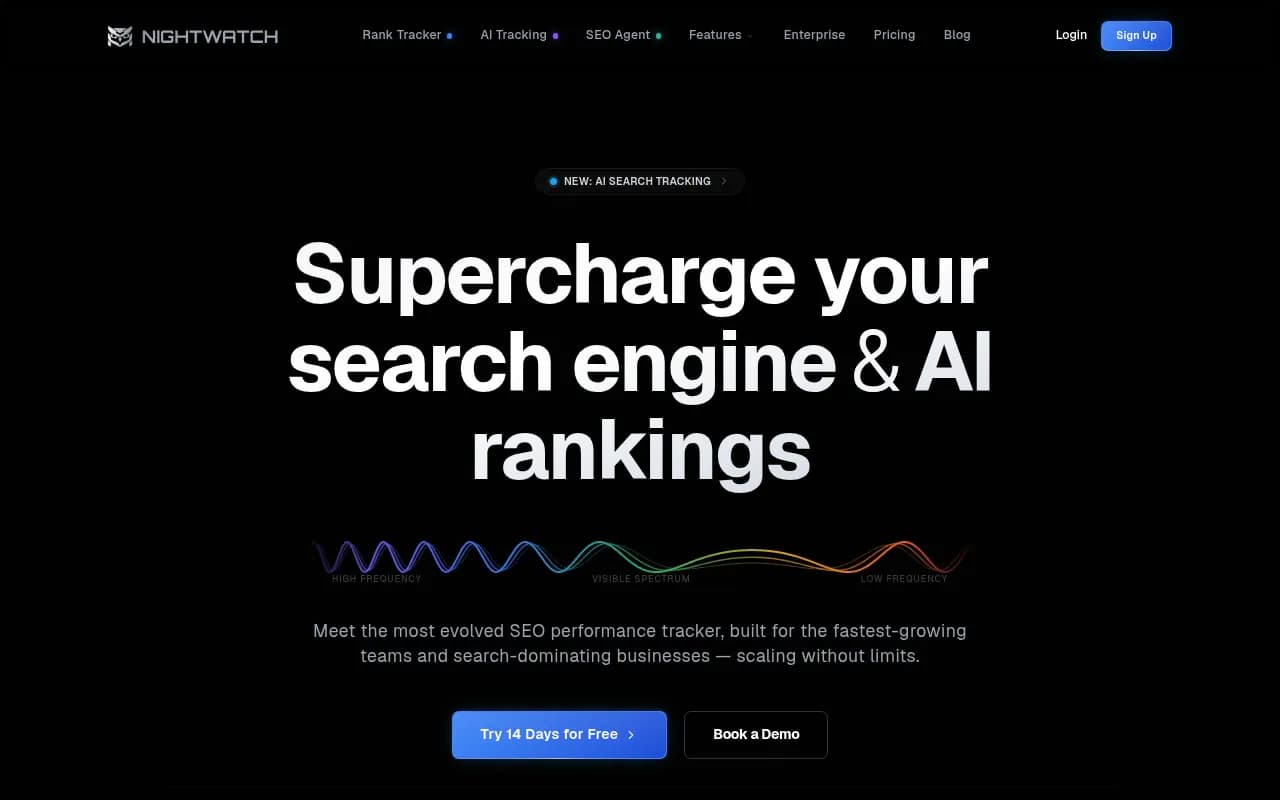
The starting price is low ($39/month for the base plan, with the AI add-on priced separately), but the AI visibility features are less deep than dedicated platforms. Think of it as a practical option for agencies that want to consolidate tools rather than the best pure-play AI visibility solution.
Writesonic -- best for content-forward teams
Writesonic has evolved from an AI writing tool into something closer to a GEO platform. It combines AI visibility tracking with guided content optimization workflows, which makes it more actionable than pure monitoring tools.
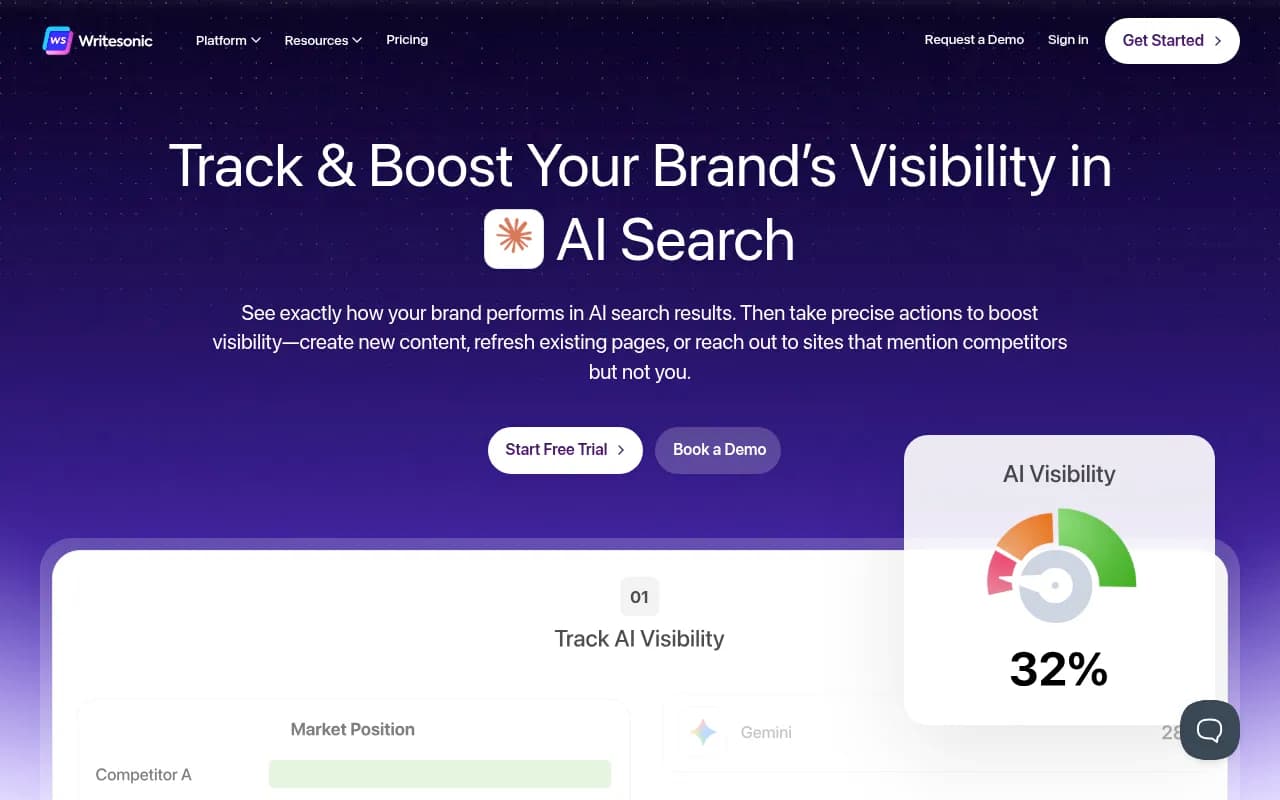
Starting at $199/month for the AI visibility features, it's positioned toward enterprises and marketing teams that want to increase their visibility through content. The tracking depth isn't quite at Promptwatch's level (fewer AI models covered, no crawler logs), but the content workflow integration is strong.
Semrush -- best if you're already in the Semrush ecosystem
Semrush added AI visibility tracking to its platform, and if you're already paying for Semrush, it's worth using. The integration with existing keyword data and competitive intelligence is genuinely useful.
The limitation is that Semrush uses fixed prompts for its AI tracking -- you can't customize the prompt set to match your specific market or use case. For teams that need flexible, customizable prompt monitoring, this is a real constraint. It's a good addition to an existing Semrush subscription, not a reason to choose Semrush over a dedicated AI visibility platform.
Ahrefs Brand Radar -- best for Ahrefs users who want basic AI monitoring
Similar story to Semrush. Ahrefs Brand Radar gives you AI search monitoring as part of the broader Ahrefs platform. Fixed prompts, no AI traffic attribution, but solid brand monitoring if you're already in the Ahrefs ecosystem.
LLM Pulse -- best for sentiment-focused brand monitoring
LLM Pulse takes a different angle from most tools in this list. Its core focus is brand recommendations and sentiment across LLMs -- not just whether you're mentioned, but how AI models are talking about you. Starting at €49/month, it's one of the more affordable options for teams where sentiment tracking is the primary concern.
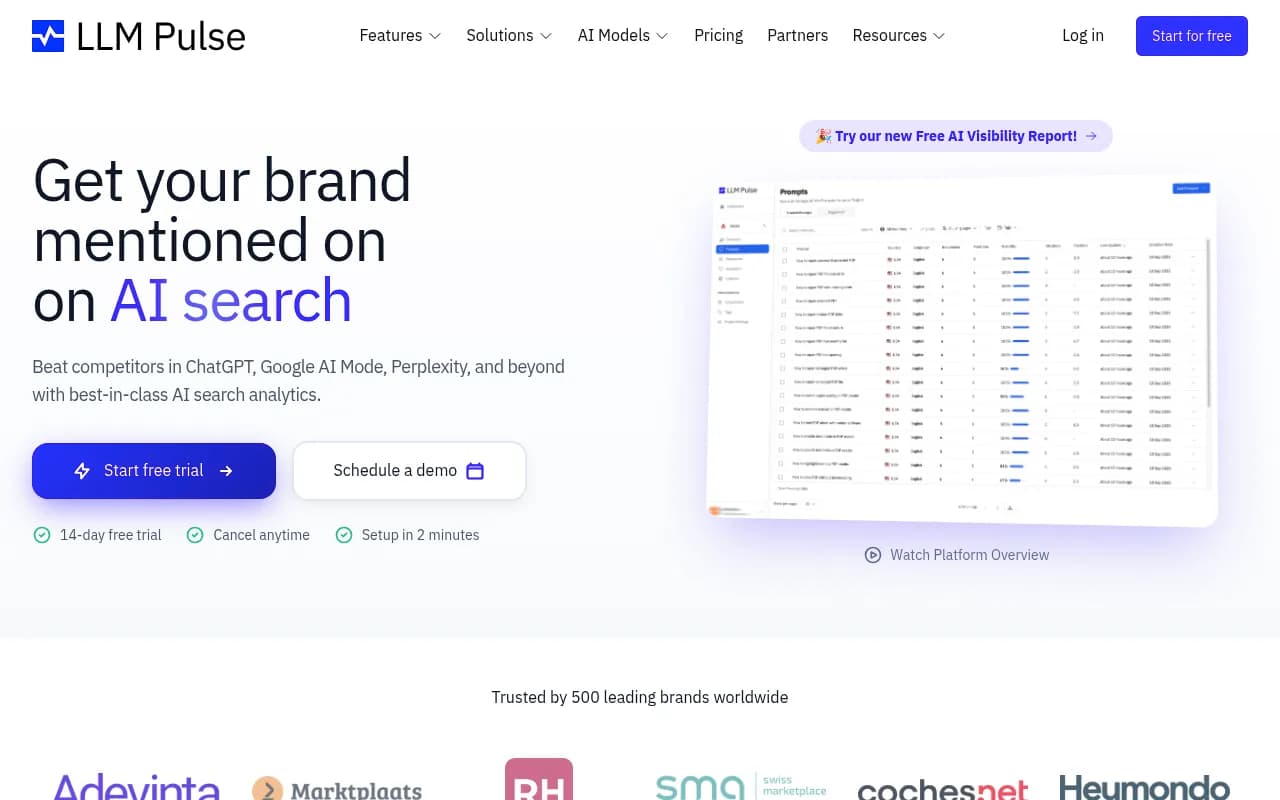
It's not a full GEO platform -- there's no content generation, no crawler logs, no gap analysis. But for PR teams, CMOs, and brand managers who want to understand the tone of AI recommendations about their brand, it fills a specific need well.
Feature comparison table
| Platform | AI models covered | Sentiment tracking | Content gap analysis | Content generation | Crawler logs | Reddit/YouTube | Starting price |
|---|---|---|---|---|---|---|---|
| Promptwatch | 10 | Yes | Yes | Yes | Yes | Yes | $99/mo |
| SE Visible | Google AI Mode + others | Basic | No | No | No | No | $189/mo |
| Profound | Multiple | Yes | Partial | Partial | No | No | $99/mo |
| Otterly.AI | Multiple | No | No | No | No | No | $29/mo |
| Peec AI | Multiple | Basic | No | No | No | No | €89/mo |
| Scrunch | Multiple | Basic | No | No | No | No | Custom |
| Nightwatch | Multiple | No | No | No | No | No | $39/mo + add-on |
| Writesonic | Multiple | Basic | Partial | Yes | No | No | $199/mo |
| Semrush | Multiple (fixed prompts) | No | No | No | No | No | Included in plan |
| Ahrefs Brand Radar | Multiple (fixed prompts) | No | No | No | No | No | Included in plan |
| LLM Pulse | Multiple | Yes | No | No | No | No | €49/mo |
How to choose
The honest answer is that it depends on what you're trying to do.
If you just need to monitor brand mentions across AI search engines and report on share of voice, Otterly.AI or LLM Pulse will do that cheaply. Peec AI is a good call if you're operating in multiple languages.
If you're already in the Semrush or Ahrefs ecosystem and want basic AI visibility without adding another tool, the built-in features are fine for a starting point.
If you want to actually improve your AI search visibility -- not just watch it -- you need a platform that goes beyond monitoring. That means content gap analysis, some form of content generation or optimization guidance, and ideally crawler logs so you understand how AI bots are interacting with your site. Profound and Writesonic both move in this direction. Promptwatch is the most complete option for teams that want the full loop.
The other thing worth considering is what you'll do with the data. A lot of teams buy monitoring tools, look at the dashboards for a few weeks, and then struggle to translate the numbers into action. The tools that solve this problem are the ones that show you not just where you're invisible, but what specific content would fix it.
Bottom line
SE Visible is a reasonable starting point for AI Mode tracking, but the market has moved well past what it offers. In 2026, the most valuable platforms are the ones that close the gap between insight and action -- showing you what's missing and helping you fix it, rather than just reporting the problem.
For teams serious about AI search visibility, the combination of gap analysis, content generation grounded in real citation data, and traffic attribution is what separates a useful tool from an expensive dashboard. That's the standard worth holding any platform to.