Key takeaways
- AI visibility tracking has become a real marketing priority for B2B SaaS teams in 2026 -- if ChatGPT or Perplexity doesn't mention your product, you're invisible to a growing slice of your buyers.
- Most platforms only monitor. A smaller number actually help you fix the gaps with content generation and optimization tools.
- Promptwatch is the only platform in this comparison rated as a "Leader" across all categories, covering monitoring, content generation, crawler logs, and traffic attribution.
- Profound is the strongest enterprise-grade alternative, but comes at a higher price point.
- Peec AI stands out for multi-language support (115+ languages), making it a good fit for international SaaS companies.
- The right choice depends on your team size, budget, and whether you need to just track visibility or actually improve it.
If you're running marketing for a B2B SaaS company in 2026, you've probably noticed something uncomfortable: a growing number of your potential customers are asking ChatGPT, Perplexity, or Claude which tools to use before they ever visit your website. If your product isn't showing up in those answers, you're losing deals you don't even know about.
That's what AI visibility tracking is for. And the market for these tools has exploded. There are now dozens of platforms claiming to help you monitor and improve how AI models talk about your brand. Most of them are dashboards. Some of them are genuinely useful. A few can actually help you do something about the gaps.
This guide cuts through the noise. I've looked at the major platforms, compared their features, and laid out which ones make sense for different B2B SaaS teams.
Why AI visibility matters specifically for B2B SaaS
B2B software buyers have changed their research habits faster than most marketing teams have adapted. When someone asks "what's the best CRM for a 50-person sales team" or "which project management tool integrates with Salesforce," they're increasingly getting an AI-generated answer -- not a list of blue links.
The problem is that AI models don't pull from a live index the way Google does. They cite sources they've been trained on or that they retrieve in real time. If your content doesn't exist in the right form, at the right depth, covering the right questions, you simply don't get mentioned.
Traditional SEO metrics -- rankings, domain authority, backlink counts -- don't tell you whether you're appearing in these AI-generated answers. You need a different kind of tool.
What to look for in an AI visibility platform
Before comparing specific products, it's worth being clear about what these platforms actually do (and what most of them don't).
The core function is prompt monitoring: you give the tool a list of queries relevant to your category, and it runs those queries across AI models (ChatGPT, Perplexity, Claude, Gemini, etc.) to check whether your brand appears in the responses. That's table stakes.
Beyond that, the useful features are:
- Competitor benchmarking -- seeing who's getting cited when you're not
- Content gap analysis -- understanding which topics you're missing
- Citation source analysis -- knowing which pages, Reddit threads, or third-party sites AI models are actually pulling from
- Content generation -- creating new content specifically designed to get cited
- Traffic attribution -- connecting AI visibility to actual website visits and revenue
- Crawler logs -- seeing when AI bots visit your site and which pages they read
Most platforms stop at the first two. The ones that go further are where the real value is for SaaS teams that want to actually grow their AI presence, not just measure it.
The platforms compared
Promptwatch
Promptwatch is the most complete platform in this space right now. It monitors 10 AI models including ChatGPT, Perplexity, Claude, Gemini, Google AI Overviews, Google AI Mode, Grok, DeepSeek, Meta AI, and Copilot -- which matters because your buyers aren't all using the same tool.
What separates Promptwatch from most competitors is that it's built around an action loop, not just a reporting dashboard. The Answer Gap Analysis shows you exactly which prompts competitors are getting cited for that you're not. Then the built-in AI writing agent generates content -- articles, listicles, comparisons -- grounded in citation data from over 880 million sources analyzed. After you publish, page-level tracking shows whether your new content is actually getting cited and by which models.
For B2B SaaS teams specifically, a few features stand out. The AI Crawler Logs show in real time when ChatGPT, Perplexity, and other AI bots are crawling your site, which pages they're reading, and whether they're hitting errors. Most teams have no idea their product pages are returning 404s to AI crawlers until they check this. Prompt Intelligence gives volume estimates and difficulty scores for each query, so you can prioritize high-value, winnable prompts instead of guessing. And the ChatGPT Shopping tracking is useful if your product appears in any kind of recommendation or comparison context.
Pricing starts at $99/month for the Essential plan (1 site, 50 prompts, 5 articles). The Professional plan at $249/month adds crawler logs, city/state tracking, and 150 prompts. Business is $579/month for 5 sites and 350 prompts. There's a free trial.

Profound
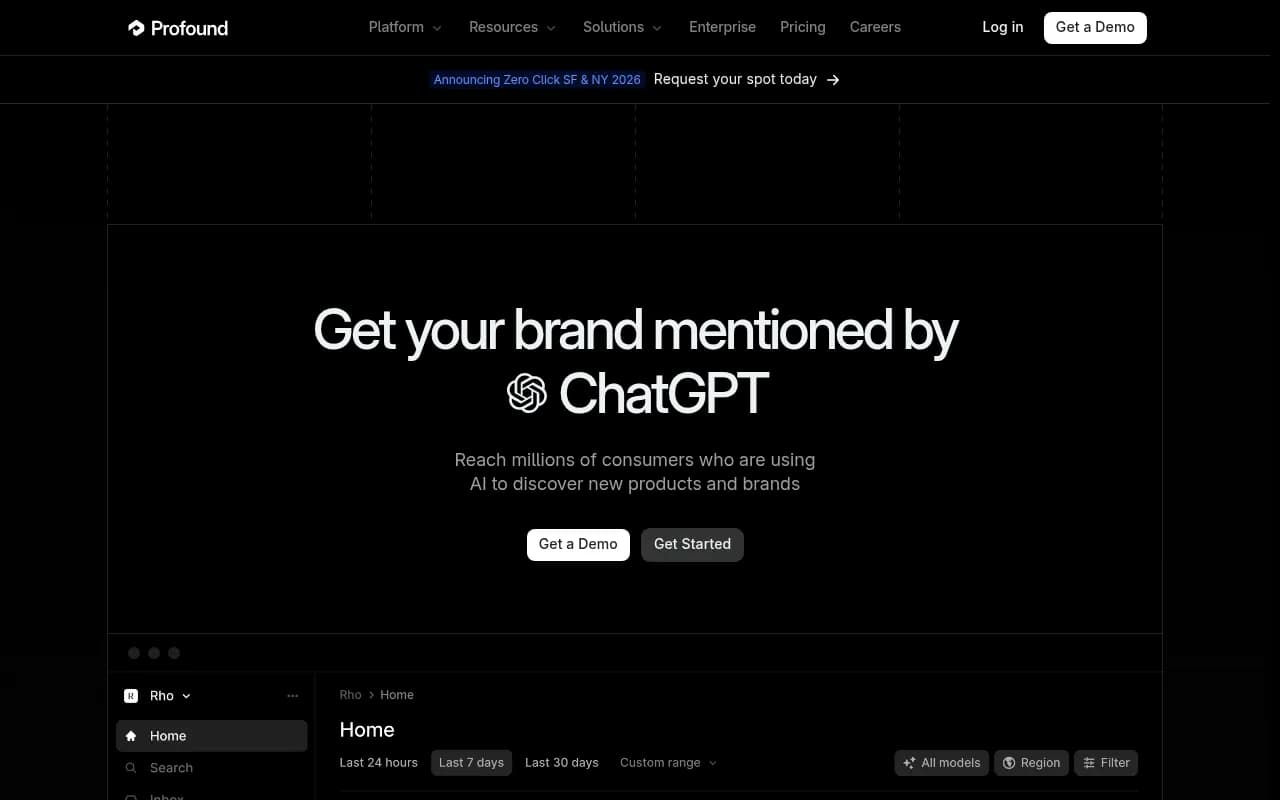
Profound is the platform most often mentioned alongside Promptwatch in enterprise conversations. It has strong analytics, a clean interface, and an Agency mode that's well-designed for teams managing multiple clients.
The platform covers the major AI models and gives you solid competitive benchmarking. Where it falls short compared to Promptwatch is on the action side -- Profound is primarily a monitoring and analytics platform. It doesn't have the same content generation capabilities or crawler log features. It also doesn't track Reddit or YouTube, which are significant sources that influence AI model responses.
That said, if your primary need is clean, enterprise-grade reporting and you have a separate content team handling optimization, Profound is a legitimate choice. It's positioned at a higher price point than Promptwatch, which makes more sense for larger organizations.
Peec AI
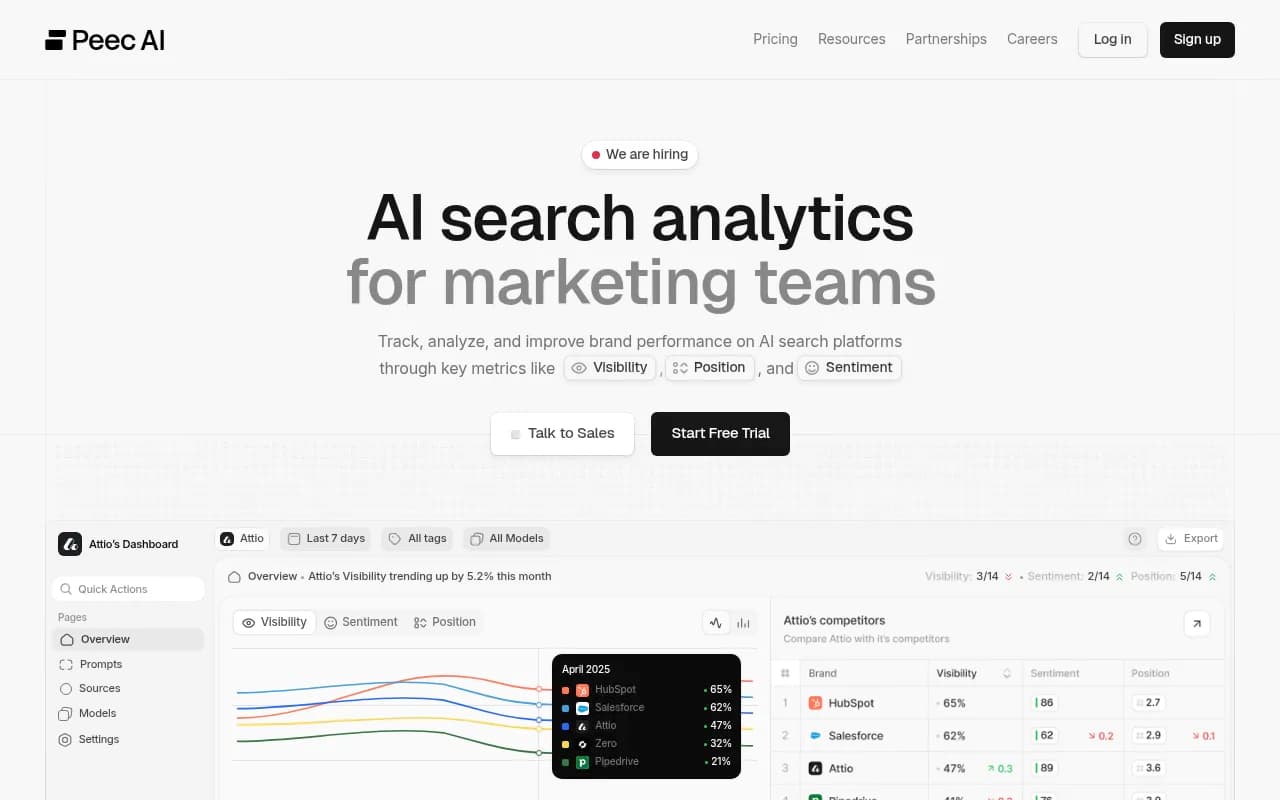
Peec AI got a lot of attention in early 2025 for one specific reason: it supports 115+ languages for AI visibility monitoring. For B2B SaaS companies with international markets -- particularly in Europe, Latin America, or Asia -- that's a meaningful differentiator. Most platforms are English-first with limited or no multi-language support.
Beyond the language coverage, Peec AI is a solid monitoring tool. It tracks the major LLMs and gives you brand mention data with sentiment context. The interface is clean and the setup is relatively fast.
The limitation is similar to most monitoring-only platforms: it shows you where you stand but doesn't help you change it. There's no content generation, no crawler logs, and the prompt intelligence features are more basic than Promptwatch's. For teams that need multi-language tracking and have a separate content workflow, it's worth a look.
Otterly.AI
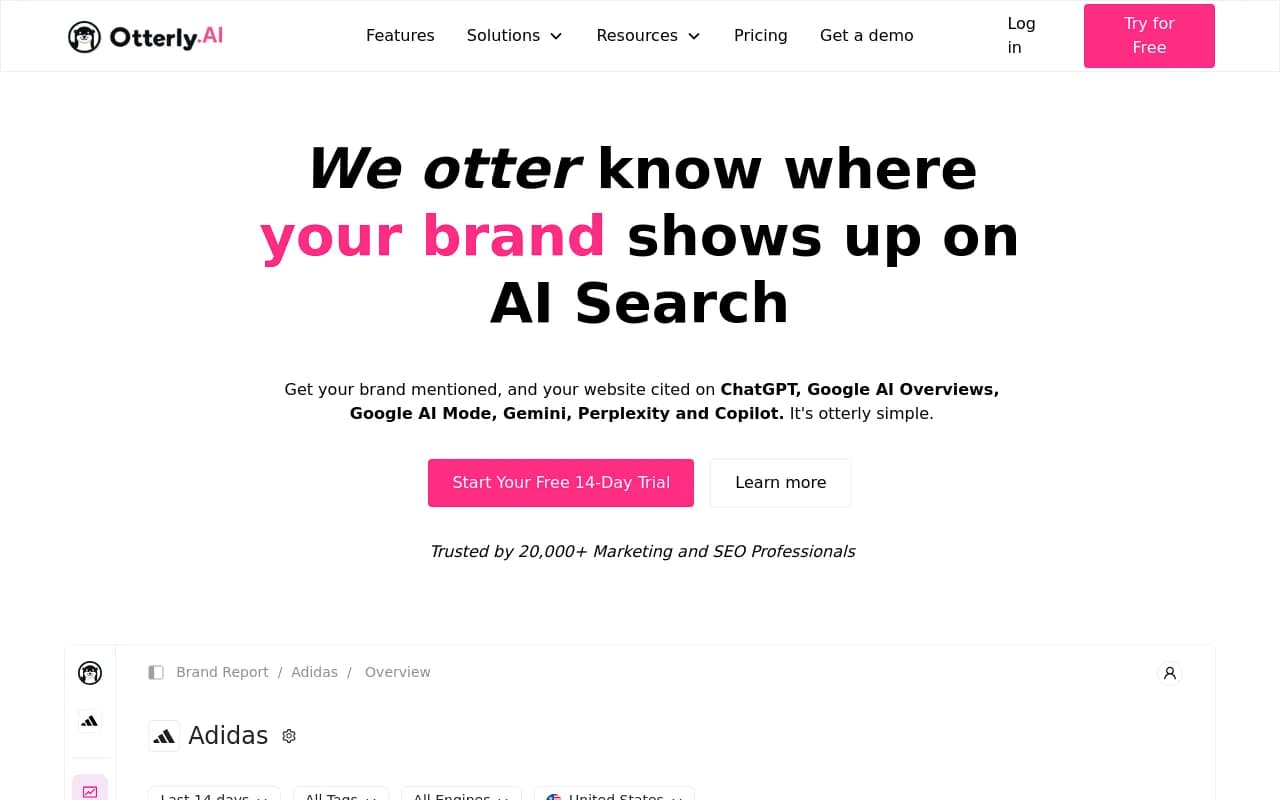
Otterly.AI is the budget-friendly option in this space. At $29/month for the entry tier, it's accessible to early-stage SaaS companies that want to start tracking AI visibility without a significant investment.
It covers the main AI platforms and includes a GEO Audit feature that checks how AI-ready your website content is -- a useful starting point if you're new to this. The trade-off is depth: Otterly.AI doesn't have the advanced prompt intelligence, crawler logs, or content generation that more mature platforms offer.
If you're a small team just getting started with AI visibility tracking and you want to understand the basics before investing in a more comprehensive tool, Otterly.AI is a reasonable starting point.
SE Ranking / SE Visible
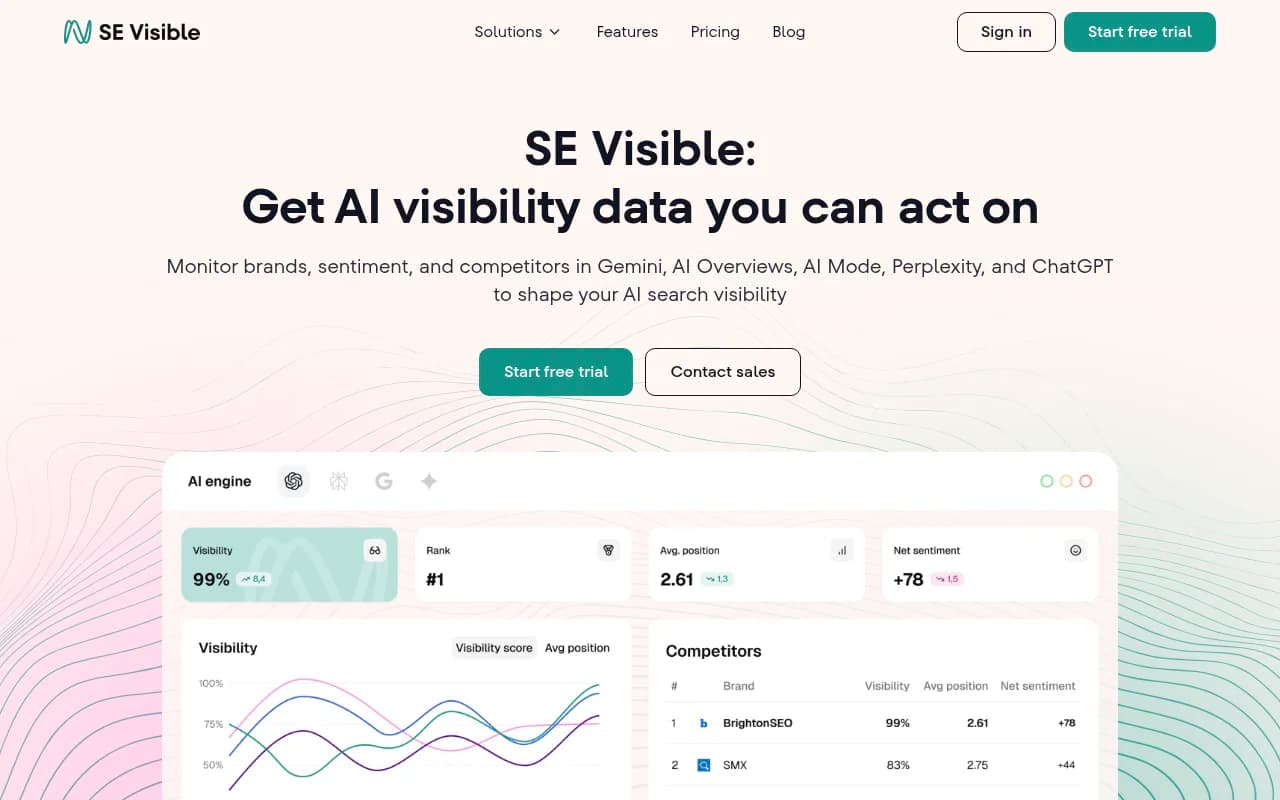
SE Ranking has added AI visibility tracking through its SE Visible product. For teams already using SE Ranking for traditional SEO, this is a convenient way to add AI monitoring without switching platforms or paying for an entirely separate tool.
The AI visibility features cover the main models and give you brand mention tracking with competitive context. It's not as deep as dedicated platforms -- the content gap analysis and optimization features are more limited -- but the integration with SE Ranking's existing keyword and ranking data is genuinely useful for teams that want a unified view of both traditional and AI search.
Scrunch AI
Scrunch AI focuses on monitoring how AI assistants like ChatGPT and Claude talk about your brand. It's a monitoring-first platform with a clean interface and good coverage of the major models.
The platform is particularly useful for brand reputation monitoring -- tracking sentiment, context, and how your brand is positioned relative to competitors in AI responses. For B2B SaaS teams where brand perception matters (competitive categories, enterprise sales cycles), that context can be valuable.
Athena HQ
Athena HQ covers 8+ AI search engines and gives you brand visibility tracking with competitive benchmarking. It's a monitoring-focused platform that does the core job well.
The gap, similar to several others here, is on the optimization side. Athena HQ shows you data but doesn't have built-in tools to help you act on it. For teams that want to understand their AI visibility baseline and have separate resources for content strategy, it's a functional choice.
Ahrefs Brand Radar
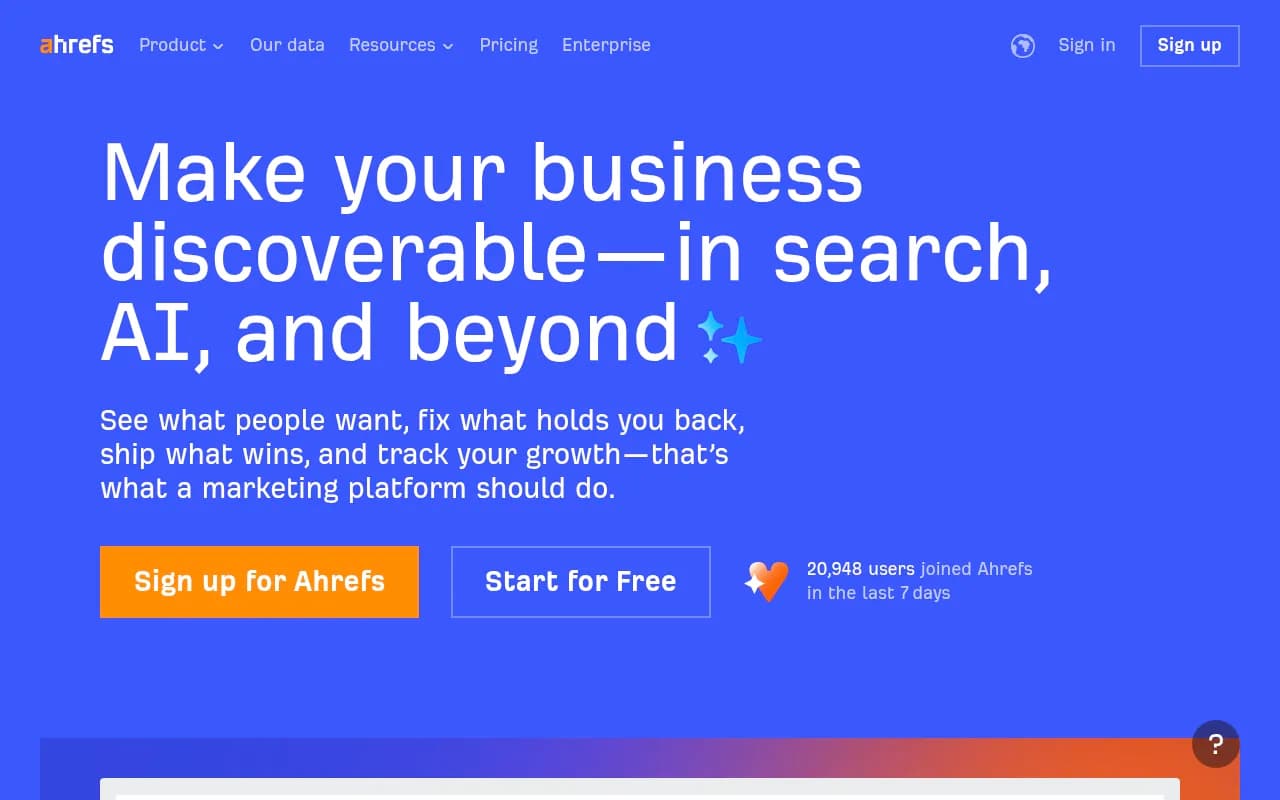
Ahrefs added Brand Radar as part of its broader SEO platform. If you're already an Ahrefs subscriber, it's worth exploring -- you get AI brand monitoring without paying for a separate tool.
The limitations are real though: Brand Radar uses fixed prompts rather than custom ones, and there's no AI traffic attribution. For teams that need to track specific queries relevant to their product category, the fixed prompt approach is a significant constraint.
Semrush
Semrush has added AI visibility features to its platform. Like Ahrefs, the main appeal is consolidation -- if you're already paying for Semrush, you can add AI monitoring without a new vendor.
The AI toolkit uses fixed prompts, which limits how specifically you can track your category's relevant queries. It's a reasonable starting point for Semrush users but not a replacement for a dedicated AI visibility platform if this is a serious priority.
Feature comparison table
| Platform | AI models tracked | Content generation | Crawler logs | Multi-language | Traffic attribution | Starting price |
|---|---|---|---|---|---|---|
| Promptwatch | 10 | Yes (built-in AI writer) | Yes | Yes | Yes (GSC, snippet, logs) | $99/mo |
| Profound | 6+ | No | No | Limited | No | Higher (enterprise) |
| Peec AI | Major LLMs | No | No | Yes (115+ languages) | No | Mid-range |
| Otterly.AI | Major LLMs | No | No | Limited | No | $29/mo |
| SE Visible | Major LLMs | No | No | Limited | No | Bundled with SE Ranking |
| Scrunch AI | Major LLMs | No | No | Limited | No | Mid-range |
| Athena HQ | 8+ | No | No | Limited | No | Mid-range |
| Ahrefs Brand Radar | Limited | No | No | Limited | No | Bundled with Ahrefs |
| Semrush | Limited (fixed prompts) | No | No | Limited | No | Bundled with Semrush |
How to choose the right platform for your SaaS team
The decision comes down to a few honest questions.
Are you just starting out or do you have a real AI visibility program? If you're just starting, Otterly.AI or SE Visible (if you're already an SE Ranking customer) are low-cost ways to understand your baseline. If you're serious about growing your AI presence, you need a platform that can help you act on the data -- not just report it.
Do you need multi-language support? If you're selling into non-English markets, Peec AI's 115+ language coverage is hard to beat. Promptwatch also supports multi-language and multi-region monitoring with customizable personas.
Is your team going to create content, or do you need the platform to help? Most platforms assume you have a content team ready to act on their recommendations. Promptwatch's built-in AI writing agent is the most developed content generation feature in this space -- it generates articles grounded in citation data, not generic SEO filler.
Do you need to connect AI visibility to revenue? Traffic attribution is where most platforms fall short. Promptwatch's integration with Google Search Console, plus its code snippet and server log analysis options, lets you trace AI-driven visits back to actual conversions. If you need to justify the investment to a CMO or CFO, that matters.
Are you an agency managing multiple clients? Profound has a well-designed Agency mode. Promptwatch also has agency and enterprise pricing with multi-site support.
The monitoring-only trap
One thing worth naming directly: most of the platforms in this space are monitoring tools. They show you a dashboard. They tell you your visibility score went up or down. They show you which competitors are getting cited.
That's useful information. But it doesn't change anything by itself.
The teams getting real results from AI visibility work are the ones who've figured out the content side -- which topics to cover, how to structure content so AI models cite it, which third-party sources to target for mentions. A platform that helps you do that work, rather than just measuring it, is worth significantly more than one that doesn't.
That's the core reason Promptwatch tends to come out ahead in head-to-head comparisons: it's built around the full cycle of find gaps, create content, track results. Most competitors handle only the first step.
A note on the tools that didn't make this list
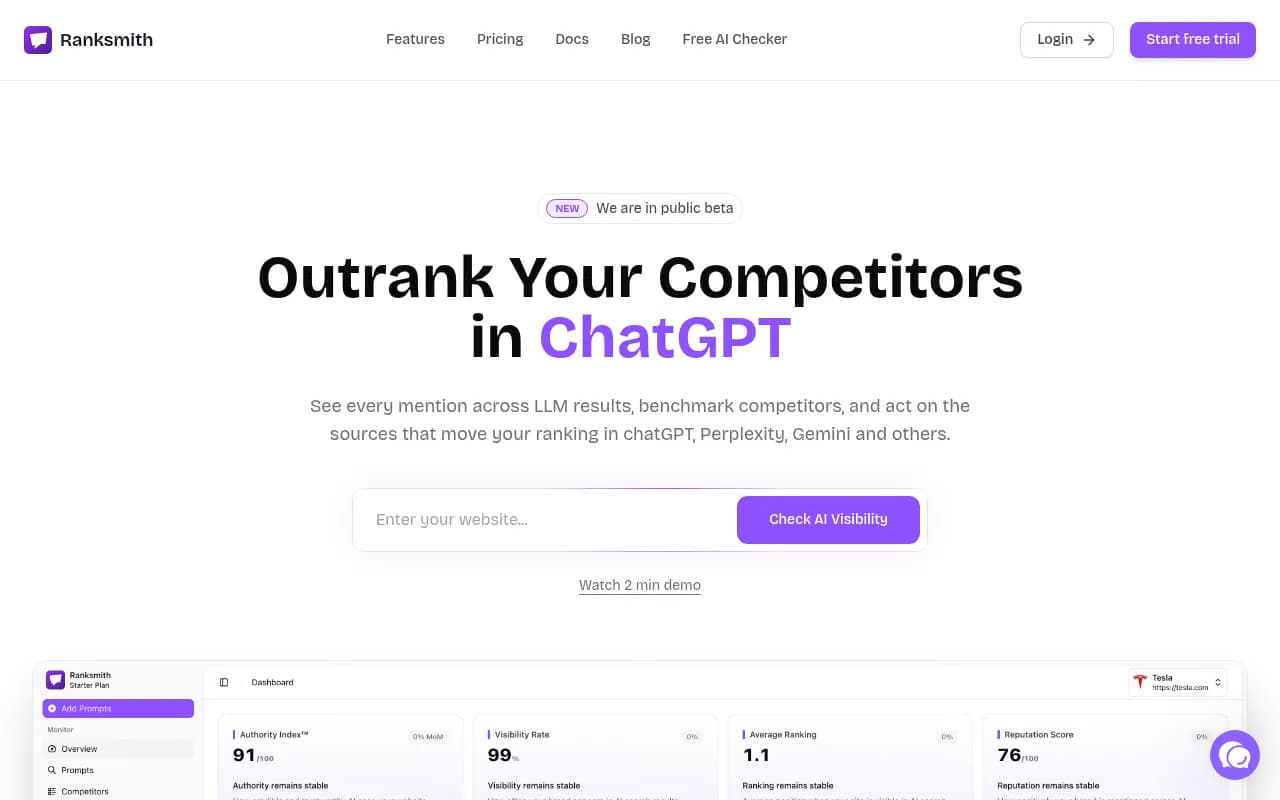
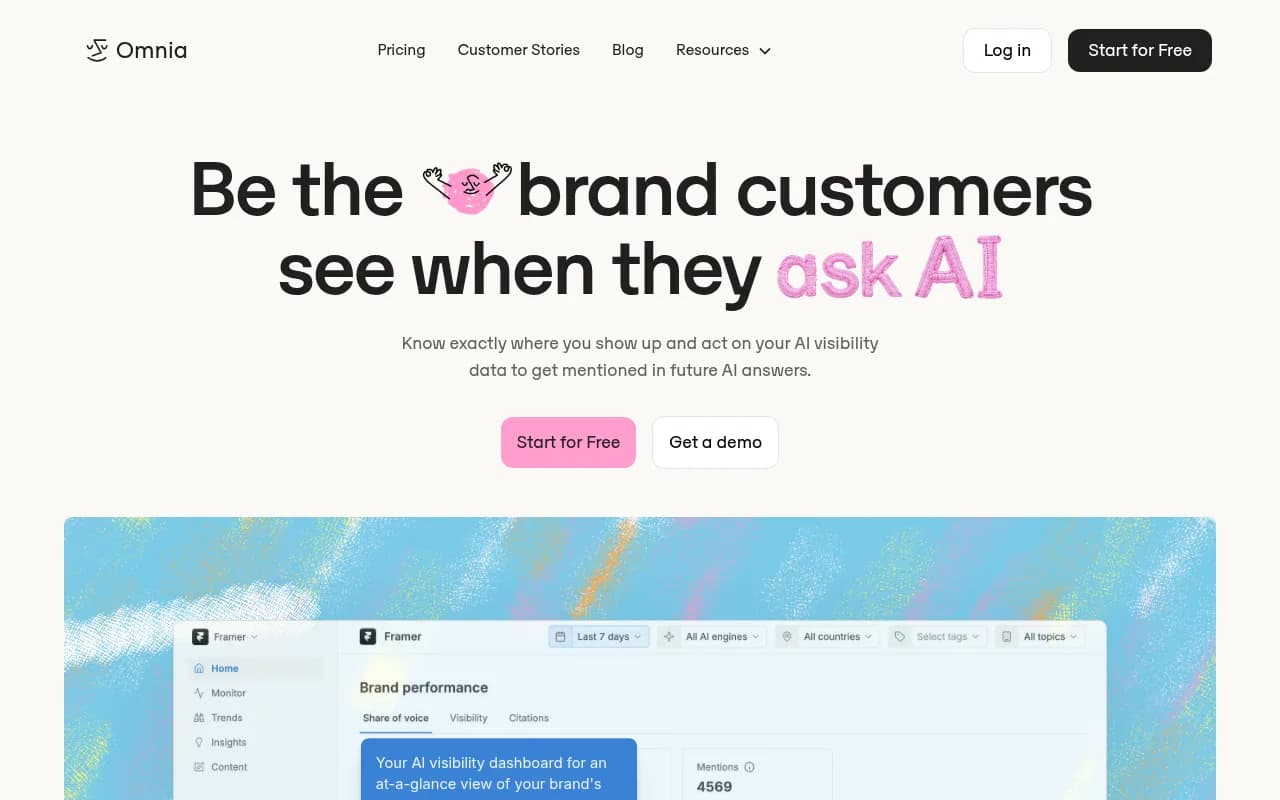
There are a lot of newer entrants in this space -- Ranksmith, Omnia, Gauge, Relixir, and others -- that are worth watching. Some have interesting specific features (Ranksmith's citation source attribution is genuinely useful; Relixir has an interesting all-in-one GEO angle). The market is moving fast and the feature sets are changing quickly.
For most B2B SaaS teams, the decision in 2026 is really between a few established platforms rather than chasing the newest entrant. Pick something with real data behind it, a clear action path, and pricing that makes sense for your stage.
Bottom line
AI visibility is no longer optional for B2B SaaS marketing. The question is which platform gives you the best combination of monitoring depth, actionable insights, and content tools for your specific situation.
If you want the most complete platform and are serious about growing your AI presence, Promptwatch is the strongest choice. If you need enterprise-grade analytics and have a separate content team, Profound is worth evaluating. If multi-language is your primary constraint, Peec AI is the standout. And if you're just starting out with a limited budget, Otterly.AI gets you in the game without a major commitment.
The worst outcome is spending months looking at dashboards without changing anything. Pick a platform that helps you act, not just observe.