Key takeaways
- AthenaHQ is a solid monitoring platform with strong AI coverage and a 4.9 G2 rating, but it's primarily a tracking tool -- it shows you where you're invisible, not how to fix it.
- Relixir positions itself as an all-in-one GEO platform with automated content generation, but it's a newer player with less proven scale.
- Promptwatch is the only platform in this comparison rated as a "Leader" across all GEO categories in 2026, combining monitoring, content gap analysis, AI content generation, crawler logs, and traffic attribution in one loop.
- If you just want a dashboard to watch your brand mentions, AthenaHQ works. If you want to actually improve your AI visibility and connect it to revenue, you need a platform that goes further.
- Pricing ranges from roughly $99/mo (Promptwatch Essential) to enterprise contracts, so budget and team size matter when choosing.
The GEO platform market has split into two camps. On one side: monitoring tools that show you a score, a chart, and a list of prompts where competitors beat you. On the other: platforms that actually help you do something about it.
This comparison puts three of the most-discussed platforms in 2026 head to head -- AthenaHQ, Relixir, and Promptwatch -- to figure out which camp each one belongs to, and which is worth your money.
Why this comparison matters right now
AI search isn't a niche anymore. According to McKinsey, 50% of consumers now use AI-powered search, and that number is still climbing. At the same time, Gartner predicts traditional organic search traffic will drop by 50% or more in the next two years. AthenaHQ's own State of AI Search 2026 report found that the average brand appears in just 17.2% of relevant AI responses -- but early movers are hitting 56.7%.
That gap is the opportunity. The question is which tool actually helps you close it.
AthenaHQ: strong monitoring, limited action
AthenaHQ has built a real reputation in the AEO space. It covers 8+ AI search engines, has a 4.9 rating on G2, and counts SoFi, ZoomInfo, and Wix among its customers. The platform is genuinely good at what it does: tracking brand visibility across AI responses, surfacing which prompts competitors appear in, and giving teams a clear picture of where they stand.

The core workflow is: set up your brand, define your prompts, watch the dashboard. You'll see visibility scores, competitor comparisons, and trend data over time. For teams that are just getting started with GEO and need to build a business case internally, that's useful.
Where AthenaHQ runs into trouble is the "now what?" moment. Users on review platforms have noted that translating AthenaHQ insights into concrete next steps is harder than it should be. The platform tells you that a competitor is appearing in 40% of responses for a given prompt and you're appearing in 8%. It doesn't tell you what content to create, how to structure it, or whether it's even worth targeting that prompt given the volume and difficulty.
There's no built-in content generation. No crawler logs to show you how AI engines are actually reading your site. No traffic attribution to connect visibility scores to actual revenue. For a team that already has strong content operations and just needs visibility data to feed into their existing workflow, AthenaHQ can work. For everyone else, you'll hit a ceiling fast.
What AthenaHQ does well
- Broad AI platform coverage (ChatGPT, Perplexity, Gemini, and more)
- Clean, well-designed dashboard with competitor heatmaps
- Strong brand reputation and G2 reviews
- Good enterprise sales motion for larger teams
Where it falls short
- No content generation or optimization tools
- No AI crawler logs
- No traffic attribution or revenue connection
- Insights don't translate easily into action items
Relixir: the automation-first challenger
Relixir markets itself as an end-to-end GEO platform that not only tracks AI visibility but automates content creation to improve it. That's a more ambitious pitch than AthenaHQ's, and it puts Relixir in the same category as Promptwatch rather than the monitoring-only camp.
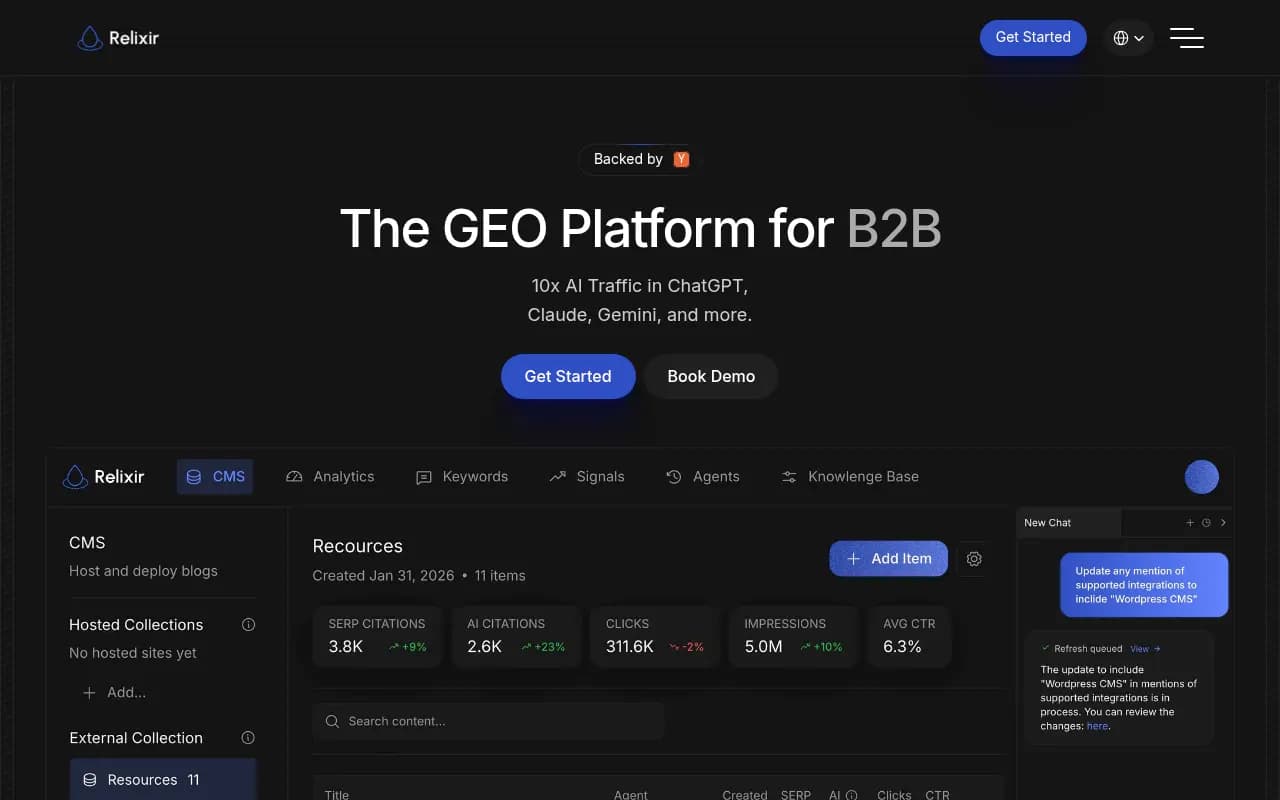
The platform's angle is automation -- it's designed to reduce the manual work of GEO by generating content, identifying gaps, and pushing out optimizations with less human intervention. For teams that are stretched thin and want a more hands-off approach, that's an appealing idea.
The honest caveat: Relixir is a newer entrant. The platform has less publicly available data on citation volume, fewer documented enterprise customers, and a shorter track record than either AthenaHQ or Promptwatch. That doesn't mean it's bad -- it means you're taking more of a bet on a platform that hasn't been stress-tested at scale yet.
If you're a smaller team that wants automation and doesn't need deep enterprise features, Relixir is worth evaluating. If you're a larger brand or agency that needs proven infrastructure, the scale question matters.
What Relixir does well
- Automated content generation tied to GEO gaps
- All-in-one positioning (track + optimize)
- Simpler onboarding for smaller teams
Where it falls short
- Newer platform with less proven scale
- Fewer documented enterprise customers
- Less data transparency on citation volume and prompt metrics
- Limited information on crawler log capabilities or traffic attribution
Promptwatch: the full action loop
Promptwatch is the platform that's hardest to put in a box, because it's genuinely trying to do more than either AthenaHQ or Relixir. The core idea is an action loop: find the gaps, create content that fills them, track whether it worked, repeat.

The "find the gaps" part is Answer Gap Analysis -- it shows you exactly which prompts your competitors appear in that you don't, and what content your site is missing to compete. That's more specific than a generic visibility score.
The "create content" part is a built-in AI writing agent that generates articles, listicles, and comparisons grounded in real citation data. Promptwatch has processed over 880 million citations, which means the content recommendations aren't generic SEO filler -- they're based on what AI models actually cite. The Essential plan includes 5 articles per month; Professional gets 15; Business gets 30.
The "track results" part is where Promptwatch separates itself most clearly from the competition. Page-level tracking shows which specific pages are being cited, by which AI models, and how often. Traffic attribution (via a code snippet, Google Search Console integration, or server log analysis) connects those visibility scores to actual sessions and revenue. Most competitors stop at the visibility score. Promptwatch shows you whether that score is actually driving business.
On top of that: AI crawler logs show you in real time which AI crawlers are hitting your site, which pages they're reading, and what errors they're encountering. Prompt Intelligence gives you volume estimates and difficulty scores so you can prioritize the prompts worth going after. Reddit and YouTube tracking surfaces discussions that directly influence AI recommendations -- a channel most tools ignore entirely.
Promptwatch covers 10 AI models: ChatGPT, Perplexity, Google AI Overviews, Google AI Mode, Claude, Gemini, Meta/Llama, DeepSeek, Grok, Mistral, and Copilot. It's used by 6,700+ brands and agencies including Booking.com, Center Parcs, and Wortell.
What Promptwatch does well
- Full action loop: gap analysis, content generation, result tracking
- AI crawler logs (most competitors lack this entirely)
- Traffic attribution connecting visibility to revenue
- Prompt volume and difficulty scoring
- Reddit and YouTube citation tracking
- ChatGPT Shopping monitoring
- 10 AI models covered
- Transparent pricing starting at $99/mo
Where it falls short
- More features means a steeper learning curve for small teams
- The full value requires using multiple features together, not just the dashboard
Feature comparison
| Feature | AthenaHQ | Relixir | Promptwatch |
|---|---|---|---|
| AI model coverage | 8+ | Not specified | 10 |
| Visibility monitoring | Yes | Yes | Yes |
| Competitor heatmaps | Yes | Limited | Yes |
| Answer gap analysis | No | Partial | Yes |
| Built-in content generation | No | Yes | Yes |
| Content grounded in citation data | No | Unclear | Yes (880M+ citations) |
| AI crawler logs | No | No | Yes |
| Prompt volume & difficulty scores | No | No | Yes |
| Traffic attribution | No | No | Yes |
| Reddit & YouTube tracking | No | No | Yes |
| ChatGPT Shopping tracking | No | No | Yes |
| Free trial | Yes | Yes | Yes |
| Starting price | Not public | Not public | $99/mo |
| G2 rating | 4.9 | Not established | Not listed |
| Enterprise customers | SoFi, ZoomInfo, Wix | Not documented | Booking.com, Center Parcs |
Pricing breakdown
AthenaHQ doesn't publish pricing publicly -- you need to contact sales, which typically signals enterprise-level contracts. That's fine if you're a large brand with a dedicated GEO budget, but it creates friction for smaller teams trying to evaluate quickly.
Relixir similarly doesn't publish a public pricing page, which makes direct comparison harder.
Promptwatch is the most transparent on pricing:
- Essential: $99/mo (1 site, 50 prompts, 5 articles/month)
- Professional: $249/mo (2 sites, 150 prompts, 15 articles, crawler logs, city/state tracking)
- Business: $579/mo (5 sites, 350 prompts, 30 articles)
- Agency/Enterprise: custom pricing
Annual billing discounts are available, and there's a free trial to start without committing.
Who should use which platform
The honest answer is that these platforms serve different needs, and the right choice depends on where your team is and what you're trying to accomplish.
Use AthenaHQ if you're at a larger enterprise, you already have a strong content team, and you primarily need visibility data to inform decisions made elsewhere. The platform's G2 reputation and customer list suggest it works well in that context. Just go in knowing you'll need to build your own action layer on top of it.
Use Relixir if you're a smaller team that wants automation and is comfortable being an early adopter. The all-in-one pitch is appealing, and the automation angle could save time for lean teams. The trade-off is less proven infrastructure and fewer data points to validate the platform's recommendations.
Use Promptwatch if you want the full loop -- monitoring, gap analysis, content generation, and traffic attribution -- and you want it grounded in real citation data at scale. It's the right choice for marketing teams and agencies that need to show ROI from GEO, not just visibility scores.
The monitoring-only trap
There's a broader point worth making here. The GEO platform market in 2026 is full of tools that show you a dashboard and call it optimization. Visibility scores are easy to generate. Telling you that you're appearing in 12% of responses for "best project management software" takes a few API calls. The hard part is telling you what to do about it, generating the content that might fix it, and then proving that it worked.
Most platforms stop at the dashboard. That's not a criticism of monitoring -- you need to know where you stand before you can improve. But monitoring alone isn't a GEO strategy. It's the first step of one.
The platforms that will matter most over the next 12-18 months are the ones that close the loop between "here's where you're invisible" and "here's the traffic and revenue you gained by fixing it." Right now, that's a short list.
Other platforms worth knowing
If you're evaluating beyond these three, a few others are worth a look depending on your specific needs:
Profound is a strong enterprise option with deep AI visibility features, though users have noted challenges translating insights into concrete next steps -- similar to AthenaHQ.

Otterly.AI is a lightweight, affordable monitoring tool. Good for teams that just want basic tracking without committing to a full platform.
Scrunch AI covers monitoring and some optimization features, positioned more toward mid-market teams.
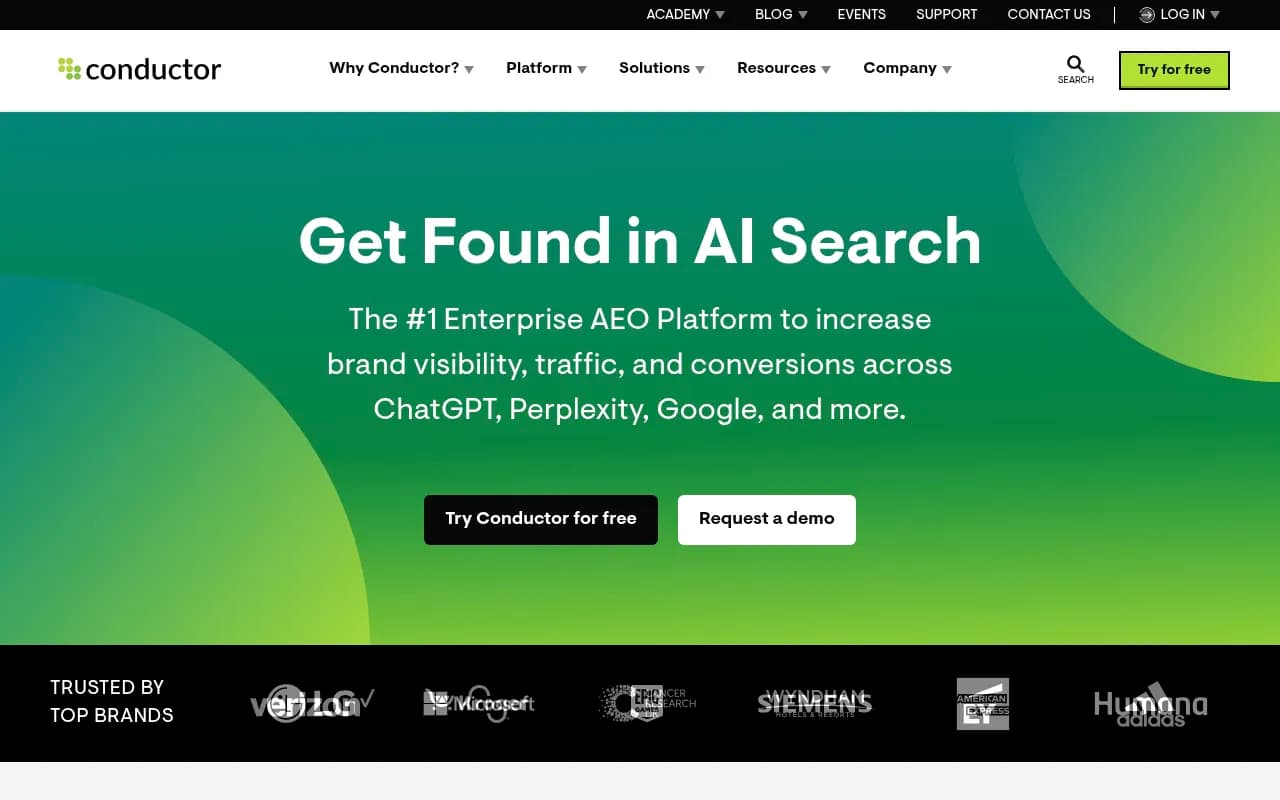
Conductor is an enterprise AEO platform that combines traditional SEO with AI search visibility tracking -- worth considering if you need both in one place.
Bottom line
AthenaHQ is a good monitoring tool. Relixir is an interesting automation bet. Promptwatch is the platform that actually closes the loop.
If your goal is to understand your AI visibility, any of these will give you a starting point. If your goal is to improve it and connect that improvement to revenue, the choice narrows quickly. The brands appearing in 56% of AI responses aren't getting there by watching a dashboard -- they're finding gaps, creating content, and tracking what works.