Summary
- Most "real-time" AI monitoring tools aren't actually real-time -- they run fixed prompts on a schedule and cache results, meaning you're seeing stale data that may be hours or days old
- True validation requires testing the tool's methodology: check if it queries live AI models, uses dynamic prompts, tracks timestamps, and shows raw API responses
- Red flags include: identical results across multiple checks, missing timestamps, vague "last updated" labels, and no way to re-run queries on demand
- The stakes are high: inaccurate citation data leads to wasted optimization efforts, missed opportunities, and false confidence in your AI visibility strategy
- Tools like Promptwatch differentiate by showing live crawler logs, real-time API responses, and on-demand query execution -- not just cached dashboards

Why "real-time" AI citation tracking is mostly fake
The AI visibility space exploded in 2024, and with it came dozens of tools promising to track your brand's citations in ChatGPT, Claude, Perplexity, and other AI models. The pitch is always the same: "See how AI models cite your brand in real-time."
Except most of these tools aren't real-time at all.
What they're actually doing: running a fixed set of prompts once per day (or week), caching the responses, and displaying them in a dashboard with a timestamp that says "last updated." When you log in and see your citation data, you're not seeing live results from ChatGPT right now -- you're seeing what ChatGPT said yesterday when the tool's scheduled job ran.
This matters because AI models update constantly. ChatGPT's training data gets refreshed, Perplexity's web index changes hourly, and Claude's retrieval behavior shifts based on recent crawls. If your monitoring tool only checks once a day, you're flying blind the other 23 hours.
Worse, many tools use the same generic prompts for every customer. "What are the best project management tools?" gets run for 500 different SaaS companies, and everyone sees the same results. There's no customization, no dynamic prompt generation, no way to test how AI models respond to the specific queries your actual customers are asking.
The citation data validation checklist
Before you trust any AI visibility tool, run through this checklist. These are the questions that separate real-time monitoring from glorified screen-scraping.
1. Can you trigger a live query right now?
The most basic test: open the tool and try to run a new query against a live AI model. Not a refresh of cached data -- an actual API call to ChatGPT, Claude, or Perplexity that happens in real-time while you wait.
If the tool doesn't let you do this, it's not real-time. It's a dashboard of stale data.
Tools that pass this test will have a "Run query" or "Check now" button that fires off a live API request and returns fresh results within seconds. You should see a loading state, then a new response with a current timestamp.
Tools that fail will only show you pre-fetched results with vague "last updated" labels. No way to force a refresh, no way to test a custom prompt, no way to verify the data is current.
2. Does it show raw API responses?
Real-time tools show you the actual response from the AI model -- the full text, citations, sources, and metadata. This transparency lets you verify the tool isn't manipulating or summarizing the data.
Look for:
- The complete AI-generated response (not just extracted citations)
- Source URLs and metadata (publication date, domain authority, etc.)
- API response headers (model version, token count, latency)
- Error messages if the query fails
If the tool only shows you a cleaned-up summary or a citation count without the underlying response, you can't validate anything. You're trusting their interpretation of the data, not seeing the data itself.
3. Are timestamps granular and consistent?
Every query result should have a precise timestamp down to the second: "2026-03-03 14:23:47 UTC." Not "updated today" or "last checked 2 hours ago" -- an exact timestamp.
Why this matters: if you run the same query twice in a row and both results show the same timestamp from hours ago, the tool is serving cached data. Real-time tools will show different timestamps for each query because they're hitting the live API each time.
Also check for consistency across the dashboard. If your "ChatGPT visibility" section says "updated 3 hours ago" but your "Perplexity visibility" section says "updated 2 days ago," the tool is running different models on different schedules. That's not real-time monitoring -- it's batch processing.
4. Can you customize prompts and personas?
AI models respond differently based on how you ask. "What are the best CRM tools?" returns different citations than "I need a CRM for a 10-person sales team with Salesforce integration." Geographic location, language, and user persona all influence results.
Real-time tools let you customize:
- The exact prompt text
- Geographic region (US, UK, Germany, etc.)
- Language
- User persona (B2B buyer, consumer, researcher, etc.)
- Model parameters (temperature, max tokens, etc.)
If the tool forces you to use their pre-written prompts with no customization, you're not seeing how AI models respond to your actual use case. You're seeing generic results that may not reflect what your customers experience.
5. Does it track prompt volume and difficulty?
Knowing that ChatGPT cited your brand once is useless without context. How many people are actually asking that prompt? Is it a high-volume query with thousands of monthly searches, or a one-off question nobody cares about?
Real-time tools that understand AI search behavior will show:
- Estimated monthly prompt volume (how often users ask this query)
- Difficulty score (how competitive the prompt is)
- Query fan-outs (related prompts and sub-queries)
- Trending prompts (what's gaining volume this week)
This data comes from analyzing millions of real user queries across AI platforms. Tools that lack this context are just showing you random citations with no way to prioritize which ones matter.
6. Can you see historical trends?
Real-time doesn't mean "only shows current data." It means the tool is continuously querying live models and storing the results over time so you can track changes.
You should be able to:
- View citation counts over the past 30/60/90 days
- See when your brand first appeared in responses
- Track changes in citation position (moved from 3rd to 1st mention)
- Compare your visibility vs competitors over time
If the tool only shows you a snapshot of today's data with no historical context, you can't measure progress or identify trends. You're just looking at a single data point with no way to know if things are getting better or worse.
7. Does it show crawler activity?
AI models don't magically know about your content -- they have to crawl your website first. Real-time tools that understand this will show you:
- Which AI crawlers (ChatGPT-User, Claude-Web, PerplexityBot, etc.) are hitting your site
- Which pages they're reading
- How often they return
- Errors they encounter (404s, blocked by robots.txt, etc.)
This is critical for validation because if an AI model hasn't crawled your site in weeks, any citation data the tool shows is outdated. The model is working from stale information.
Tools that pass this test will have a dedicated "Crawler Logs" section showing real-time activity. Tools that fail won't mention crawlers at all -- they're just querying the AI models and hoping for the best.
Promptwatch is one of the few platforms that surfaces this data, showing exactly when AI crawlers visit your site and what they read.
Red flags that scream "not real-time"
Here are the warning signs that a tool is faking real-time data:
Identical results across multiple checks: You run the same query three times in a row and get the exact same response with the exact same citations in the exact same order. Real AI models have some variability -- if the results are identical, the tool is serving cached data.
No way to force a refresh: The tool won't let you manually trigger a new query. You're stuck with whatever data it decided to fetch on its schedule.
Vague update frequencies: "Data refreshed daily" or "updated regularly" instead of precise timestamps. This is a tell that the tool runs batch jobs, not real-time queries.
Missing model versions: The tool doesn't tell you which version of ChatGPT or Claude it's querying. This matters because GPT-4o and GPT-4 Turbo return different results, and if the tool doesn't specify, you don't know what you're looking at.
No API response metadata: Real-time tools show token counts, latency, model parameters, and error codes. If the tool just shows you a citation count with no underlying data, it's hiding something.
Suspiciously fast results: You click "Check now" and the tool instantly returns results with no loading state. Real API calls to ChatGPT take 2-5 seconds. If the tool responds instantly, it's serving cached data.
No competitor comparison: Real-time tools let you compare your citations vs competitors for the same prompt at the same time. If the tool only shows your data in isolation, it's not querying live models -- it's just showing you pre-fetched results.
How to test your tool right now
Here's a simple test you can run in the next 5 minutes:
- Pick a prompt your tool is supposedly tracking (e.g. "best CRM for small businesses")
- Open ChatGPT in a separate tab and manually run that exact prompt
- Compare the results: does your tool show the same citations, in the same order, with the same source URLs?
- Wait 10 minutes and repeat step 2 in ChatGPT
- Check if your tool's results updated to match the new response
If your tool's results don't match what you see in ChatGPT, or if they don't update when ChatGPT's response changes, the tool isn't real-time. It's showing you stale or manipulated data.
Bonus test: try a brand-new prompt your tool has never seen before. Can you add it to your tracking and get live results immediately? Or does the tool say "we'll add this to our next batch run" and make you wait 24 hours?
Why this matters for your AI visibility strategy
Inaccurate citation data doesn't just waste your time -- it actively misleads your optimization efforts.
Imagine you're optimizing content to rank in ChatGPT. Your tool says you're cited 3rd for "best project management software," so you focus on improving that ranking. But the data is 2 days old, and in reality, you've already moved to 1st position because ChatGPT re-crawled your site yesterday. You're optimizing for a problem that doesn't exist.
Or worse: your tool says you're not cited at all, so you create new content targeting that prompt. But you actually are cited -- the tool just hasn't refreshed its data. Now you've published duplicate content that confuses AI models and dilutes your visibility.
Real-time data lets you:
- React immediately when your citations drop (maybe a competitor published better content)
- Test content changes and see results within hours, not days
- Identify trending prompts before competitors do
- Validate that your optimization efforts are actually working
Without real-time data, you're flying blind. You're making decisions based on outdated information and hoping for the best.
What real-time AI monitoring actually looks like
Here's what a legitimate real-time AI visibility platform does:
Live API queries: Every time you check a prompt, the tool fires off a real API request to ChatGPT, Claude, Perplexity, etc. You see a loading state, then fresh results with a current timestamp.
On-demand execution: You can add new prompts and get results immediately, not in the next batch run. The tool doesn't force you to wait.
Raw response data: You see the full AI-generated response, not just a summary. Citations, sources, metadata, error messages -- everything.
Crawler visibility: You see which AI models are crawling your site, when, and what pages they're reading. This validates that the citation data is based on current information.
Dynamic prompts: You can customize the exact prompt text, geographic region, language, and persona. The tool doesn't lock you into generic queries.
Historical tracking: You can view trends over time and compare your visibility vs competitors. The tool stores results continuously, not just snapshots.
Prompt intelligence: You see volume estimates, difficulty scores, and related queries. The tool helps you prioritize which prompts to optimize for.
Traffic attribution: You can connect AI citations to actual website traffic. The tool shows which citations are driving clicks and conversions, not just vanity metrics.
Promptwatch is built around this model. It doesn't just show you where you're cited -- it shows you the gaps (prompts competitors rank for but you don't), helps you create content to fill those gaps, and tracks the results in real-time.
The tools that actually deliver real-time data
Most AI visibility tools fail the validation tests above. Here are the ones that pass:
| Tool | Live queries | Raw responses | Crawler logs | Custom prompts | Prompt volume data |
|---|---|---|---|---|---|
| Promptwatch | Yes | Yes | Yes | Yes | Yes |
| Profound | Yes | Partial | No | Yes | Yes |
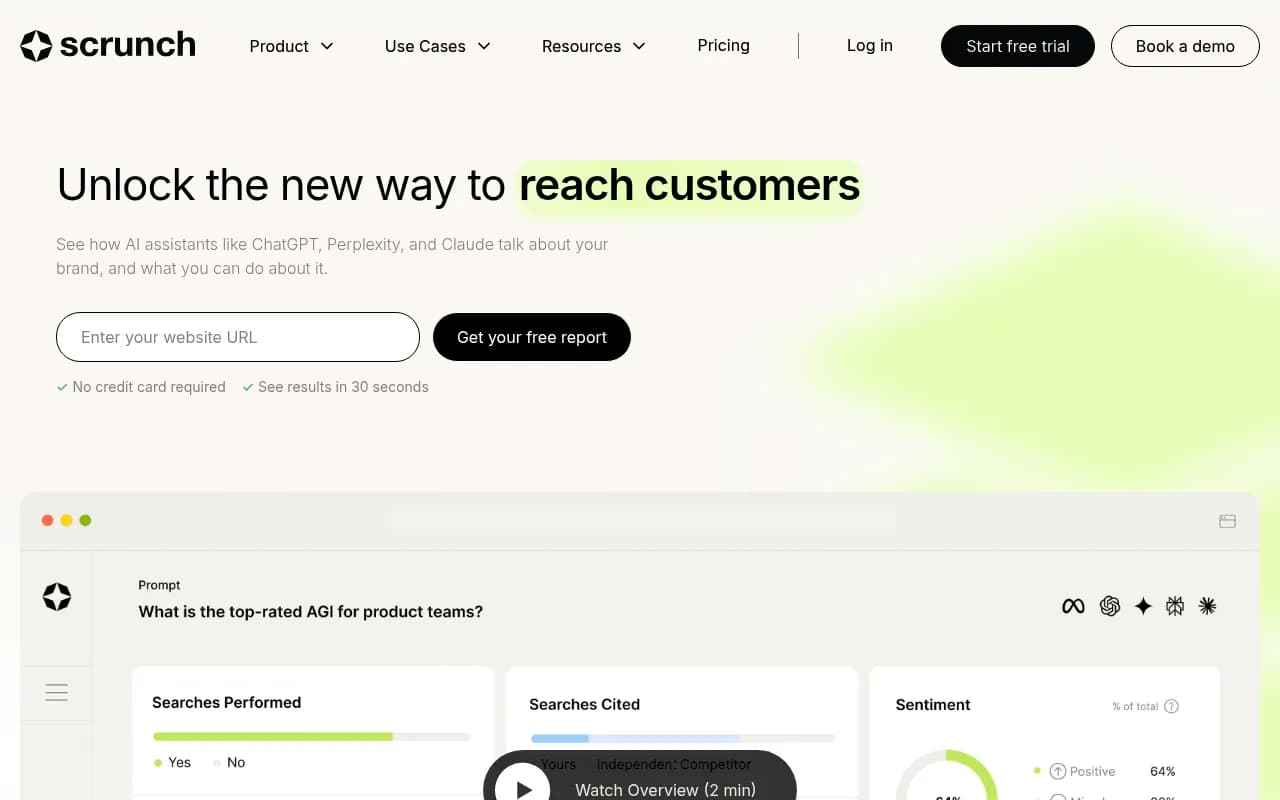
| Scrunch | Yes | Yes | No | Yes | Partial |
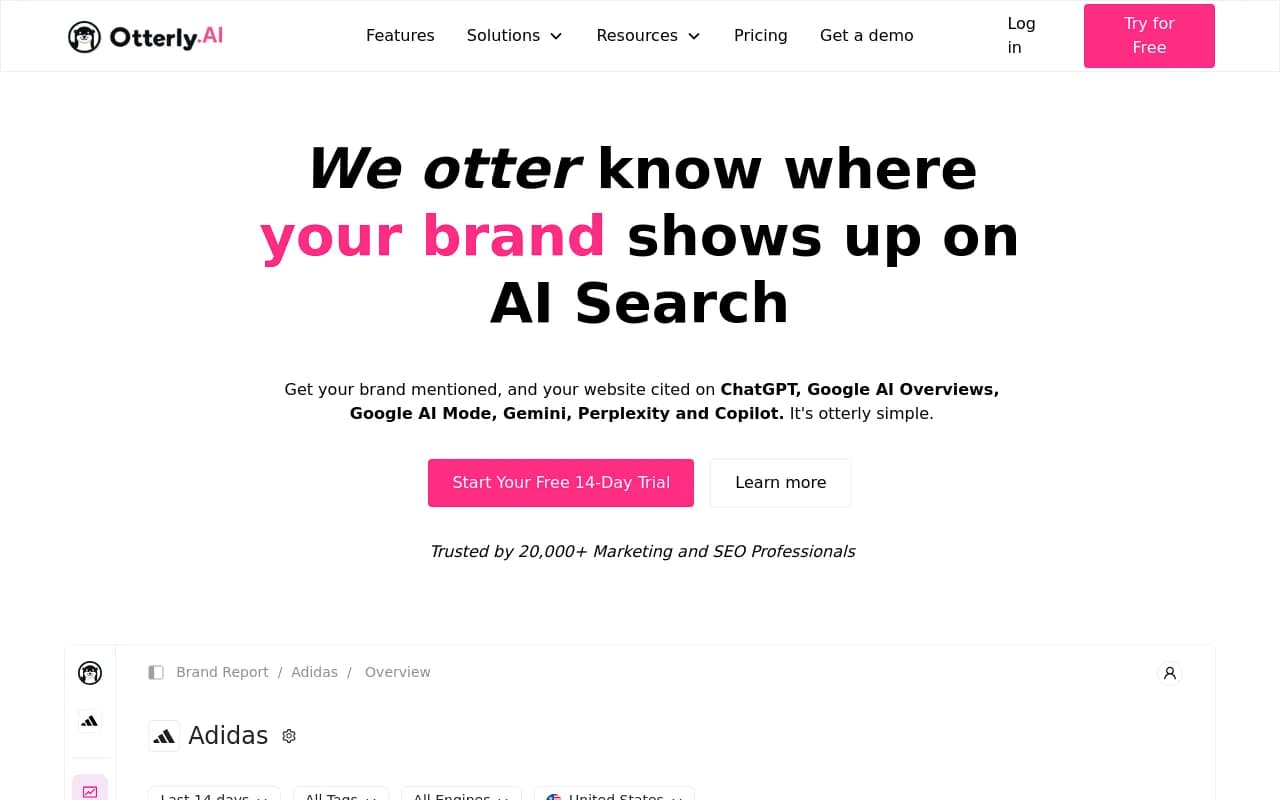
| Otterly.AI | No | No | No | No | No |
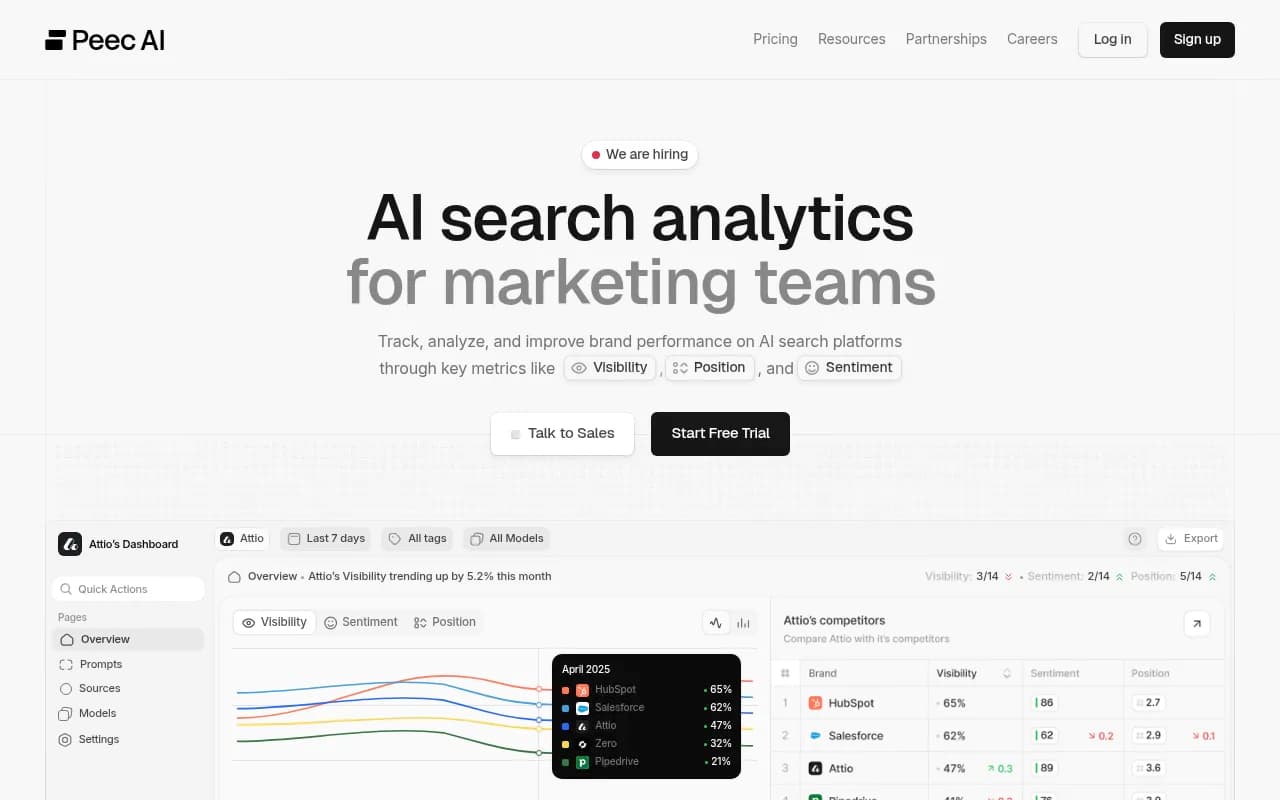
| Peec.ai | No | Partial | No | No | No |
| AthenaHQ | Partial | No | No | Partial | No |
The pattern is clear: most tools are monitoring-only dashboards that run batch jobs and cache results. They're not querying live AI models in real-time, and they don't give you the transparency to validate their data.
Promptwatch stands out because it's built around the action loop: find gaps in your AI visibility, generate content to fill them, and track results in real-time. The platform shows you exactly which prompts competitors rank for but you don't, then helps you create content that gets cited. You can see crawler logs, run custom queries, and track changes over time -- all with live data, not cached snapshots.
How to demand better from your AI visibility tool
If you're paying for an AI monitoring platform, you deserve real-time data. Here's what to ask your vendor:
- "Can I trigger a live query right now and see the raw API response?"
- "How often do you refresh data for each prompt I'm tracking?"
- "Can I see which AI crawlers are visiting my site and when?"
- "Can I customize prompts, regions, and personas for my queries?"
- "Do you show prompt volume estimates and difficulty scores?"
- "Can I compare my visibility vs competitors for the same prompt at the same time?"
- "How do you validate that your data is current and accurate?"
If they can't answer these questions clearly, or if they deflect with vague promises about "advanced algorithms" and "proprietary data sources," you're not getting real-time monitoring. You're getting a dashboard of stale data.
Switch to a platform that gives you live queries, raw responses, and full transparency. Your AI visibility strategy depends on it.
The future of AI citation validation
As AI search matures, citation data will become as critical as traditional SEO metrics. Brands that can't validate their AI visibility in real-time will fall behind competitors who can.
The next generation of AI monitoring tools will go beyond just tracking citations. They'll:
- Predict which prompts will trend before they spike in volume
- Automatically generate content to target high-value prompts
- A/B test different content approaches and measure citation lift
- Connect AI visibility directly to revenue with attribution models
- Surface Reddit threads and YouTube videos that influence AI recommendations
But all of this depends on having accurate, real-time data as the foundation. If your tool is showing you stale results from yesterday's batch run, none of the advanced features matter. You're building on quicksand.
Start by validating your current tool using the checklist above. If it fails, switch to a platform that gives you live data and full transparency. Your AI visibility strategy -- and your ability to compete in AI search -- depends on it.