Key takeaways
- Traditional SEO tools alone aren't enough in 2026 — agencies need platforms that track visibility in ChatGPT, Perplexity, Claude, and Google AI Overviews, not just Google rankings
- The best agency tools combine AI visibility monitoring with content optimization and multi-client management in a single workflow
- Only 12% of URLs cited by AI assistants actually rank in Google's top 10, so your clients can have great rankings and still be invisible in AI search
- Tools like Semrush and Ahrefs cover traditional SEO well but have limited depth for AI search; dedicated GEO platforms fill that gap
- For agencies that want to go beyond monitoring and actually fix visibility gaps, Promptwatch is the only platform in this space rated as a "Leader" across all categories in a 2026 comparison of 12 GEO platforms
Running an agency in 2026 is genuinely harder than it was two years ago. Not because SEO got more complex (though it did), but because the game changed underneath your feet. Over 700 million people use ChatGPT weekly. A growing share of product research starts with an AI assistant, not a Google search. And when someone asks Claude "what's the best project management tool for remote teams," your client either shows up in that answer or they don't exist.
The uncomfortable truth: a client ranking #1 on Google might never appear in an AI-generated response. These are different systems with different citation logic. Managing both, across 10, 20, or 50 clients, requires tools built for that reality.
Here are the 9 best AI SEO tools for agencies in 2026 -- covering everything from traditional SEO automation to GEO tracking and AI content generation.
What makes an AI SEO tool "agency-ready"?
Before getting into the list, it's worth being specific about what separates a good personal SEO tool from one that actually works at agency scale.
Multi-client management is the obvious one -- you need workspaces, separate dashboards, and ideally white-label reporting. But there's more to it:
- Can you track AI visibility (ChatGPT, Perplexity, Claude) alongside traditional rankings?
- Does it surface content gaps, or just show you data?
- Can you generate or optimize content directly inside the platform?
- Is there traffic attribution, so you can connect AI visibility to actual revenue for clients?
Most tools check one or two of these boxes. A few check all of them. That distinction matters when you're justifying retainer fees.
The 9 best AI SEO tools for agencies in 2026
1. Promptwatch -- best for AI search visibility and GEO optimization
Promptwatch is the most complete platform for agencies that need to manage AI search visibility across multiple clients. It monitors how clients appear across 10 AI models -- ChatGPT, Perplexity, Claude, Gemini, Google AI Overviews, Grok, DeepSeek, Copilot, Meta AI, and Mistral -- and then actually helps you do something about it.
The core workflow is what separates it from monitoring-only tools. Answer Gap Analysis shows exactly which prompts competitors are visible for but your client isn't. The built-in AI writing agent then generates articles, listicles, and comparisons grounded in real citation data (880M+ citations analyzed). Once content goes live, page-level tracking shows which pages are being cited, by which models, and how often. Traffic attribution connects that visibility to actual sessions and revenue.
For agencies specifically, the multi-site management, customizable personas, and Looker Studio integration make it practical to run this workflow across a full client portfolio. The Professional plan ($249/mo) covers 2 sites with 150 prompts and 15 articles per month; the Business plan ($579/mo) scales to 5 sites and 350 prompts. Agency and enterprise pricing is available for larger portfolios.

2. Semrush -- best for comprehensive multi-client management
Semrush is the closest thing to a universal agency platform for traditional SEO. Keyword research, backlink analysis, site audits, position tracking, competitive intelligence -- it's all there, and the multi-client workspace setup is genuinely well-designed. The Agency Growth Kit adds white-label reporting and CRM features that make client communication easier.
The AI search tracking is more limited. Semrush uses fixed prompt sets rather than letting you define your own, and there's no AI traffic attribution. For agencies where traditional SEO is still the primary deliverable, that's fine. For agencies trying to show clients their ChatGPT or Perplexity visibility, you'll need to pair it with a dedicated GEO tool.
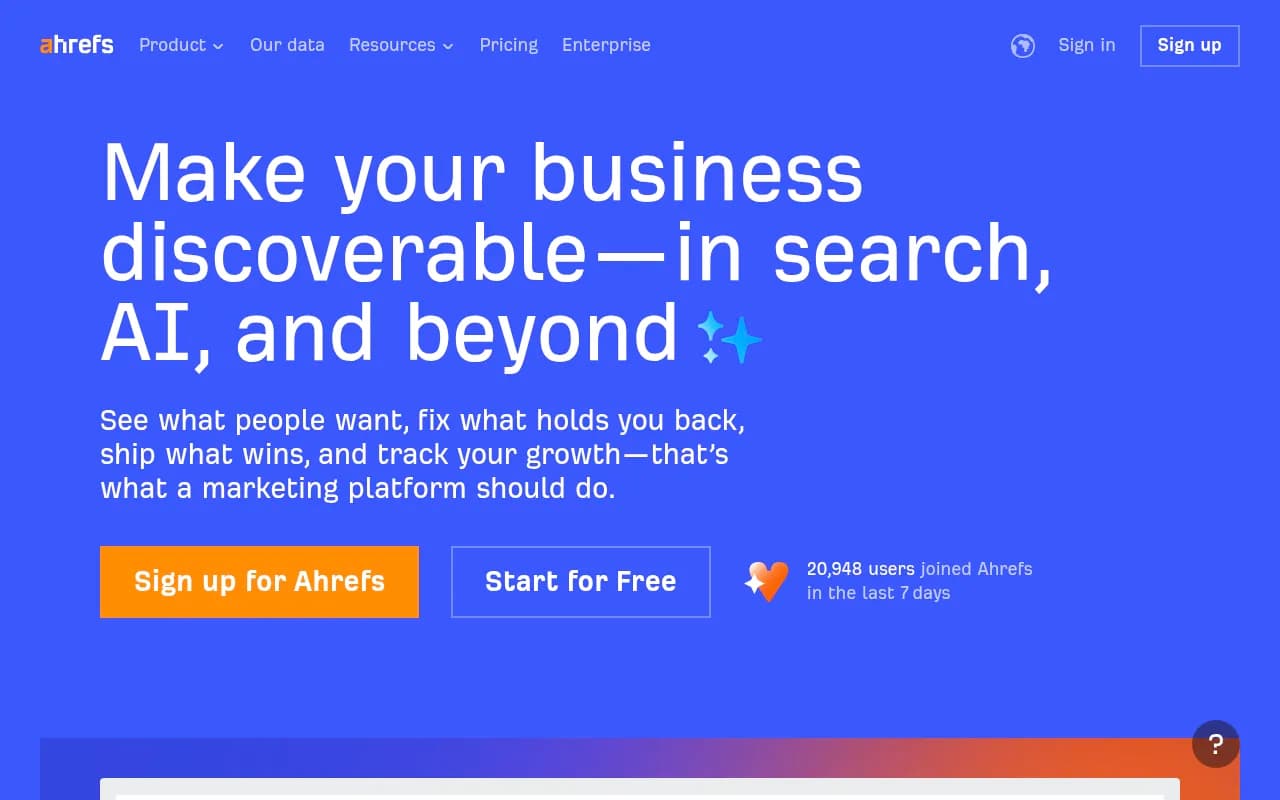
3. Ahrefs Brand Radar -- best for technical SEO with AI search tracking
Ahrefs remains one of the strongest tools for backlink analysis and technical SEO, and the Brand Radar feature adds AI search monitoring on top of that foundation. You can track brand mentions across several AI models and see how that correlates with traditional search performance.
The limitation is similar to Semrush: fixed prompts, no AI traffic attribution, and no content generation. It's a monitoring layer rather than an optimization system. That said, if your agency is already deep in the Ahrefs ecosystem, Brand Radar is a reasonable starting point for AI visibility before you need something more sophisticated.
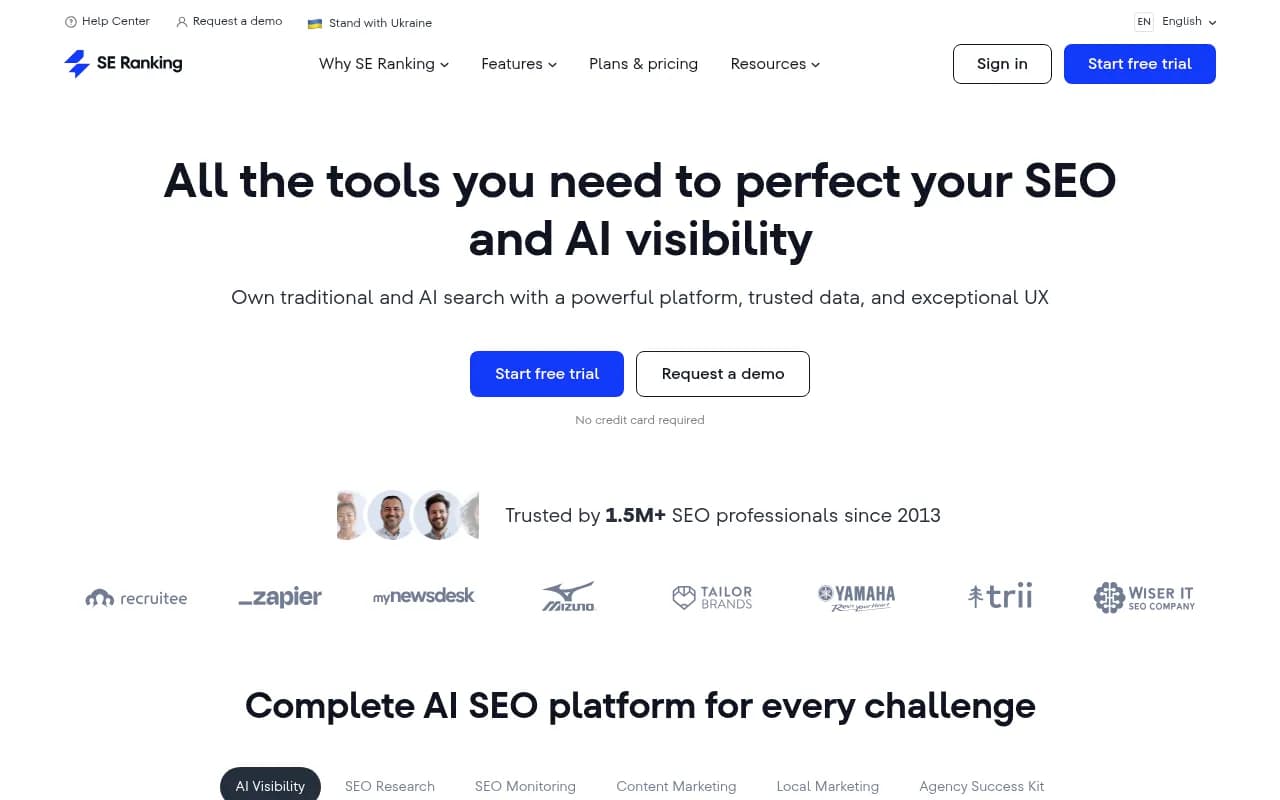
4. SE Ranking -- best for white-label agency solutions
SE Ranking has built a strong reputation among agencies specifically because of its white-label capabilities. You can rebrand the entire platform under your agency's name, which matters when you're presenting reports to clients who don't need to know what software you're using behind the scenes.
The platform covers keyword tracking, site audits, backlink monitoring, and competitive research. The AI features are growing -- there's content generation and some AI search visibility tracking -- though it's not as deep as dedicated GEO platforms. The pricing is more accessible than Semrush for smaller agencies, which is a real advantage when you're managing clients with tighter budgets.
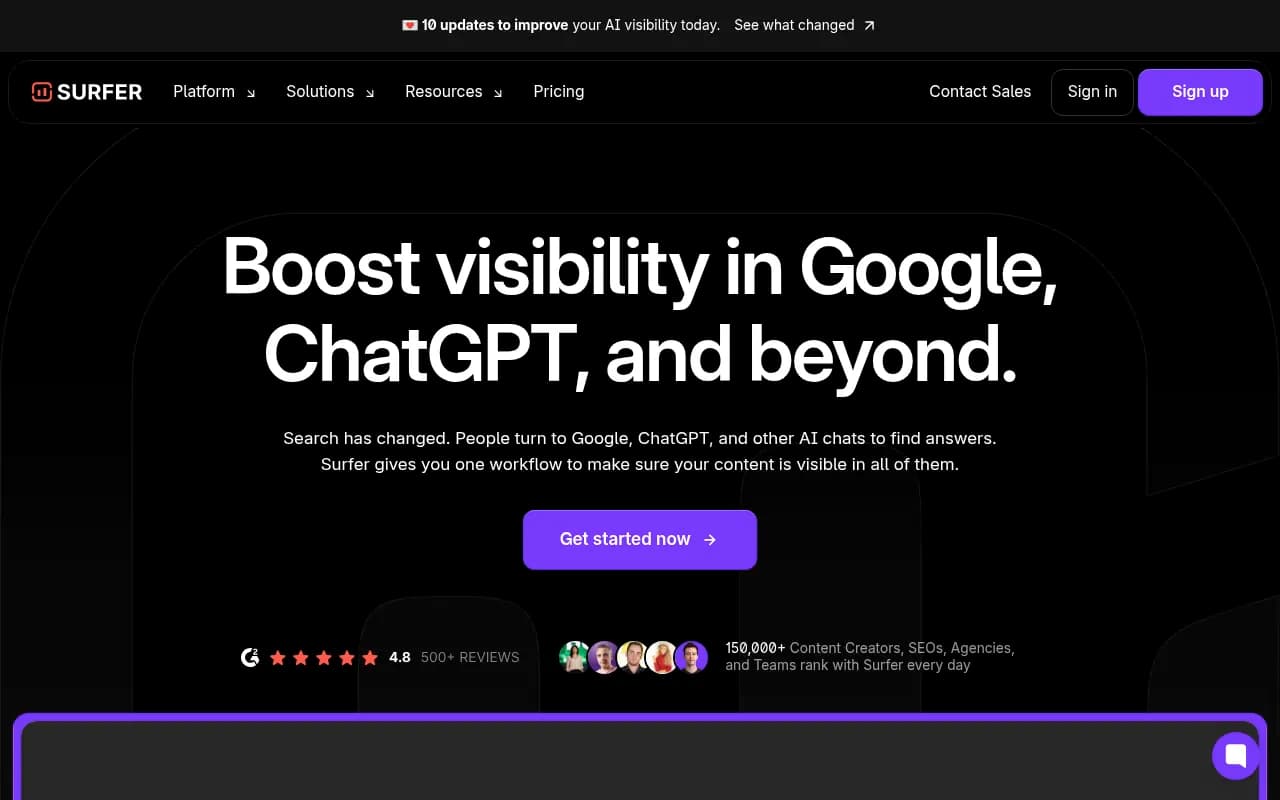
5. Surfer SEO -- best for content optimization at scale
Surfer SEO's strength is content optimization. The Content Editor gives writers real-time feedback on keyword density, structure, and NLP terms, and the scoring system is genuinely useful for maintaining quality across a team. For agencies producing a high volume of content across multiple clients, the workflow is efficient.
The AI writing features have improved significantly. Surfer can generate full drafts that are already optimized for the target keyword, which cuts down the time between brief and publishable draft. It's not a GEO platform -- it doesn't track AI search visibility -- but as a content production tool for agencies, it's one of the better options.
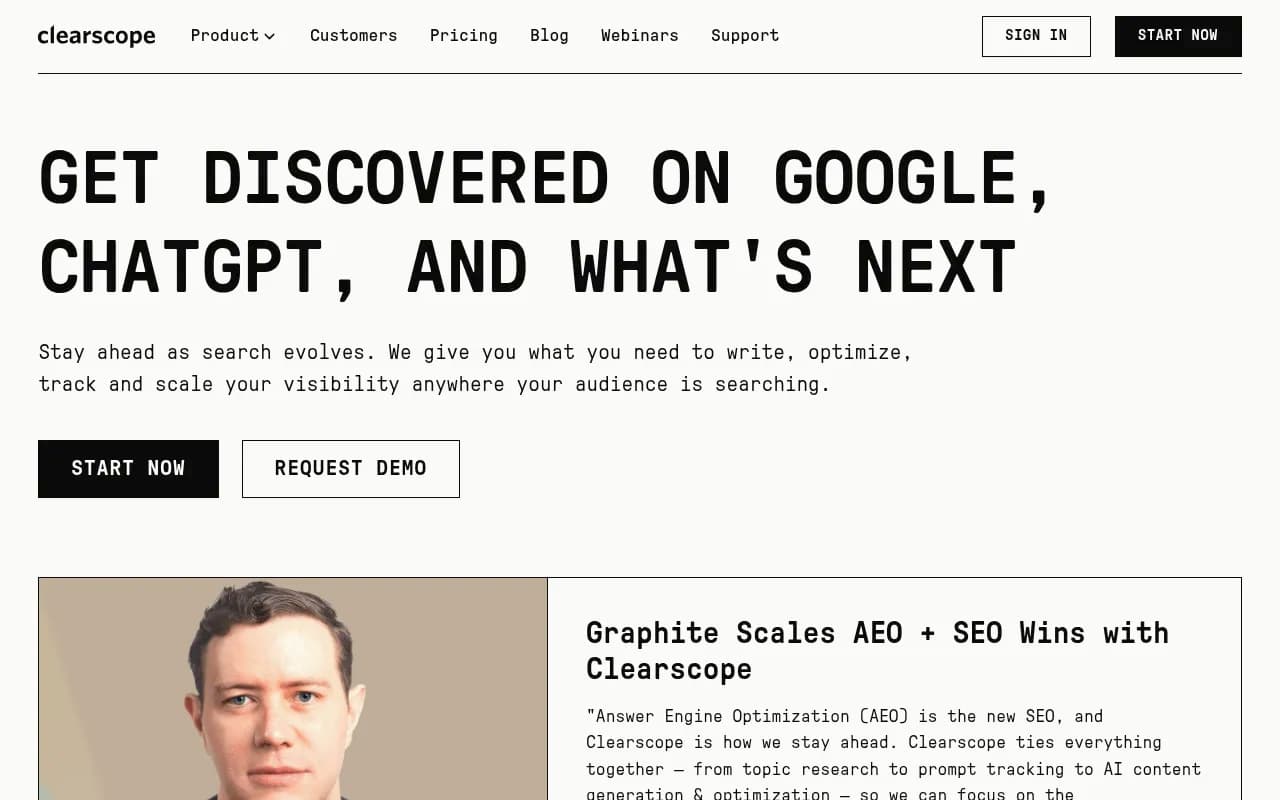
6. Clearscope -- best for content quality and team consistency
Clearscope takes a slightly different approach than Surfer. Rather than trying to do everything, it focuses on content briefs and optimization reports that are genuinely easy for writers to follow. The grading system is clear, the keyword recommendations are well-sourced, and the reports are clean enough to share directly with clients or freelancers.
For agencies managing distributed writing teams or working with multiple freelancers per client, Clearscope's simplicity is a feature. Writers don't need to understand SEO deeply to use it effectively. The downside is that it doesn't cover AI search visibility at all -- it's purely a content quality tool.
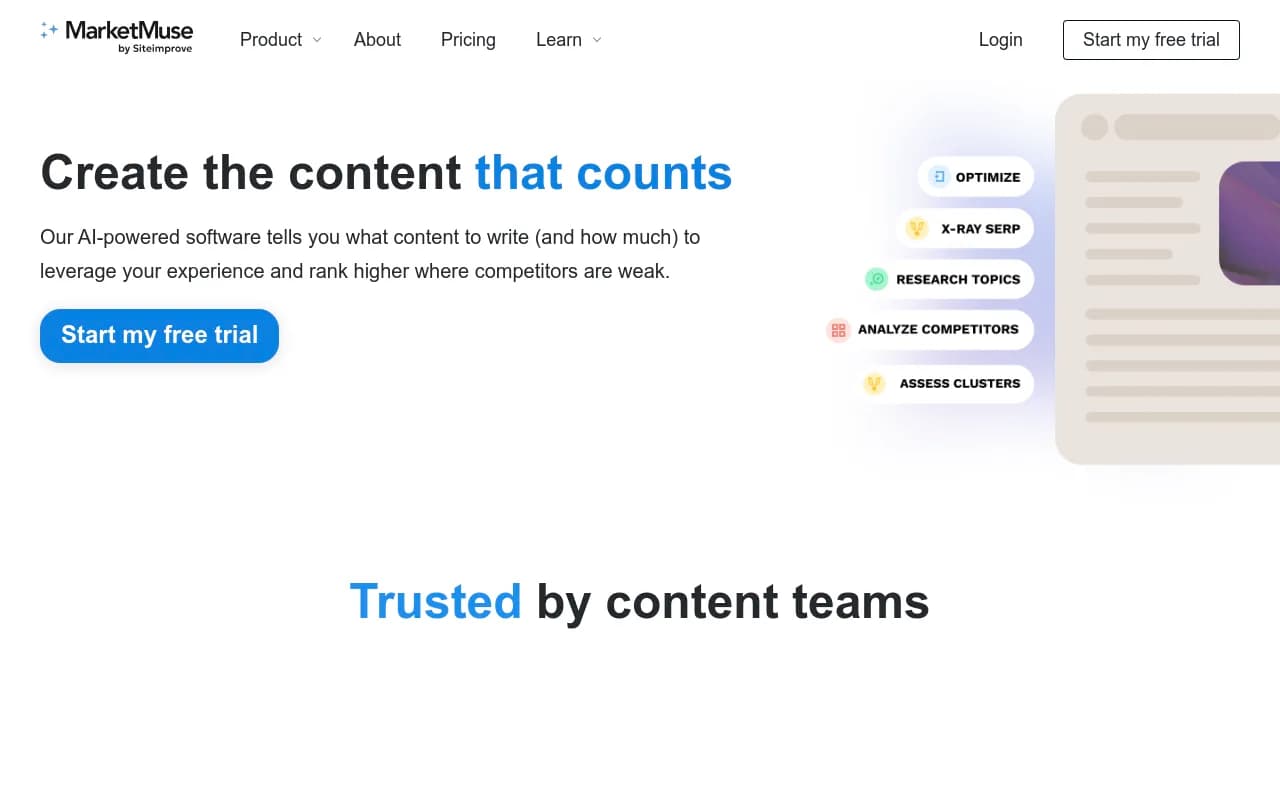
7. MarketMuse -- best for content strategy and topical authority
MarketMuse is built around the idea of topical authority -- understanding which topics a site owns, which it's competing for, and where the gaps are. For agencies managing content strategy for larger clients, the Topic Model and Content Inventory features give you a structured way to prioritize what to write next.
The AI research and brief generation is solid. It's not the fastest tool for high-volume content production, but for strategic content planning across a client portfolio, it's one of the more thoughtful options. Pricing is on the higher end, which makes it better suited to mid-market and enterprise clients than small business accounts.
8. Jasper -- best for high-volume AI content generation
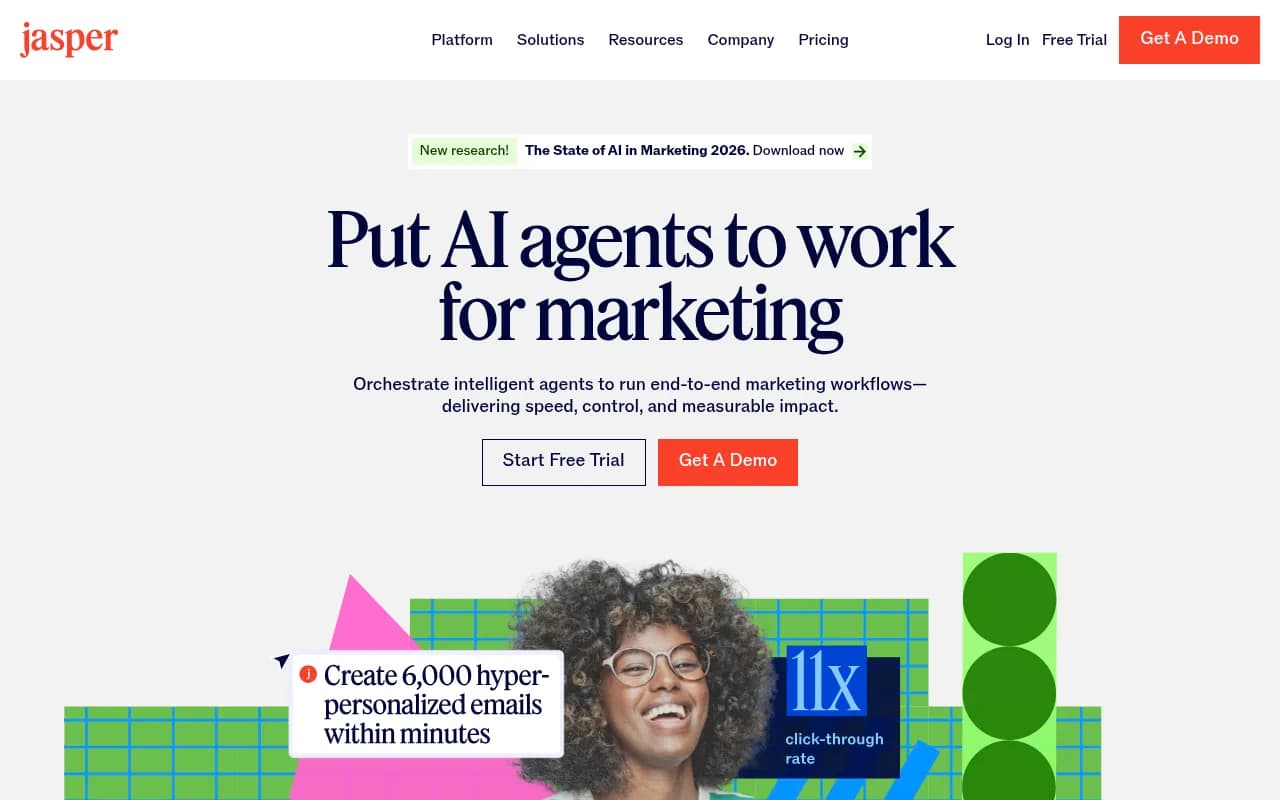
Jasper is the most mature AI writing platform for marketing teams. The brand voice features are genuinely useful for agencies -- you can set up separate brand voices for each client, which keeps content consistent even when multiple team members are writing. The templates cover most agency use cases: blog posts, social copy, ad copy, email sequences.
It's not an SEO tool in the traditional sense. There's no keyword tracking, no site audit, no backlink analysis. But as a content production layer that sits on top of your SEO strategy, it's fast and the output quality is high enough to require minimal editing. Pair it with Clearscope or Surfer for optimization, and you have a solid content workflow.
9. Frase -- best for research-heavy content workflows
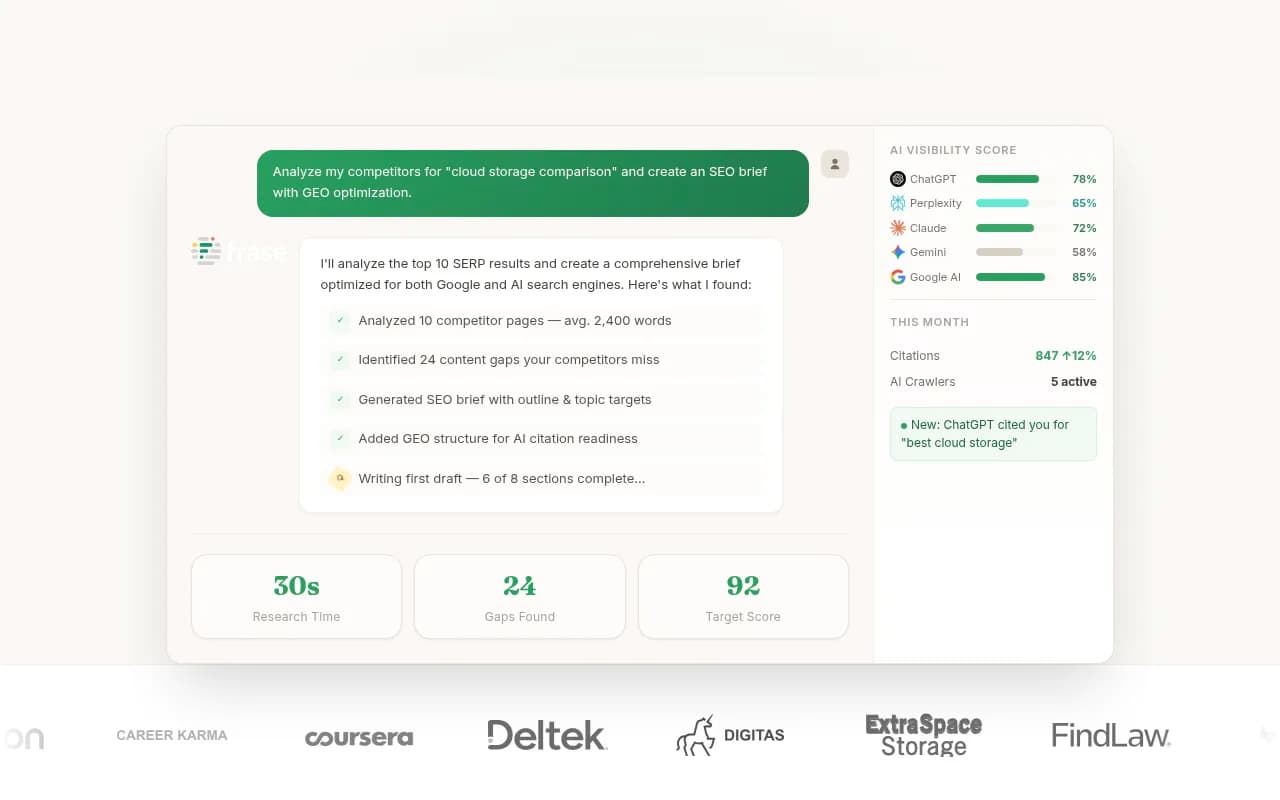
Frase combines content research, brief generation, and AI writing in a single workflow. The research phase is particularly strong -- it pulls in SERP data, competitor content, and related questions to give writers a comprehensive starting point. For agencies where content quality and depth matter more than raw volume, Frase's approach produces better-researched output than pure AI writing tools.
The SEO optimization features are decent, though not as sophisticated as Surfer or Clearscope. The pricing is accessible, which makes it a good option for agencies with smaller content budgets or clients in less competitive niches.
Comparison table
| Tool | Best for | AI search visibility | Content generation | White-label | Starting price |
|---|---|---|---|---|---|
| Promptwatch | GEO + AI visibility optimization | Yes (10 models) | Yes (built-in) | Yes | $99/mo |
| Semrush | Multi-client traditional SEO | Limited (fixed prompts) | Yes (ContentShake) | Yes | $139/mo |
| Ahrefs Brand Radar | Technical SEO + brand tracking | Limited (fixed prompts) | No | No | $129/mo |
| SE Ranking | White-label agency reporting | Basic | Yes | Yes | $65/mo |
| Surfer SEO | Content optimization at scale | No | Yes | No | $89/mo |
| Clearscope | Content quality and consistency | No | No | No | $199/mo |
| MarketMuse | Content strategy and topical authority | No | Yes | No | $149/mo |
| Jasper | High-volume AI content production | No | Yes | No | $49/mo |
| Frase | Research-heavy content workflows | No | Yes | No | $45/mo |
How to build an agency SEO stack in 2026
No single tool covers everything. The agencies doing this well in 2026 are typically running a two-layer stack: one platform for traditional SEO (rankings, backlinks, audits) and one for AI search visibility and GEO.
For the traditional layer, Semrush or SE Ranking cover most agency needs. Semrush if you have the budget and want the most comprehensive data; SE Ranking if white-label reporting is a priority and you're managing cost-conscious clients.
For the AI visibility layer, this is where the choice matters more than most agencies realize. Monitoring-only tools will show you that your client isn't appearing in ChatGPT responses. That's useful data, but it doesn't help you fix the problem. Platforms like Promptwatch close that loop -- they identify the specific content gaps, generate the content to fill them, and track whether it works. That's a much more defensible service to sell to clients.
The content production layer depends on your workflow. Surfer SEO or Clearscope for optimization, Jasper or Frase for generation -- or a platform that combines both.
What to prioritize if you're just getting started
If your clients are asking about AI search visibility (and they will be, if they aren't already), start with a platform that can answer the question "why isn't my brand showing up in ChatGPT?" That means tracking specific prompts, not just brand mentions, and understanding which competitors are getting cited instead.
From there, the content gap analysis tells you what to build. The tracking tells you whether it worked. That's the cycle that justifies ongoing retainer fees in a way that a monthly ranking report no longer does.
The shift agencies can't ignore
Traditional SEO isn't going away. Google still drives enormous traffic, and rankings still matter. But the share of research and discovery happening inside AI assistants is growing fast, and the clients who figure this out early will have a significant advantage over those who don't.
For agencies, that's both a challenge and an opportunity. The challenge is that you now need to monitor and optimize for multiple AI systems, not just Google. The opportunity is that most of your competitors are still selling traditional SEO, which means being the agency that understands AI search visibility is a genuine differentiator.
The tools in this list cover the full range -- from agencies that are just adding AI visibility to an existing SEO service, to those building GEO as a core offering. Pick the stack that matches where your clients are today, and build toward where they'll need to be in 12 months.