Key takeaways
- Profound is a legitimate enterprise AI visibility platform with strong funding and solid core features, but its pricing and complexity create friction for most teams
- The five most common reasons teams leave: price, lack of content optimization, limited prompt intelligence, no Reddit/YouTube tracking, and weak traffic attribution
- Several alternatives exist at different price points and capability levels -- the right choice depends on whether you need monitoring only or a full optimization loop
- Teams that want to go beyond tracking and actually fix their AI visibility gaps tend to gravitate toward platforms with built-in content generation and gap analysis
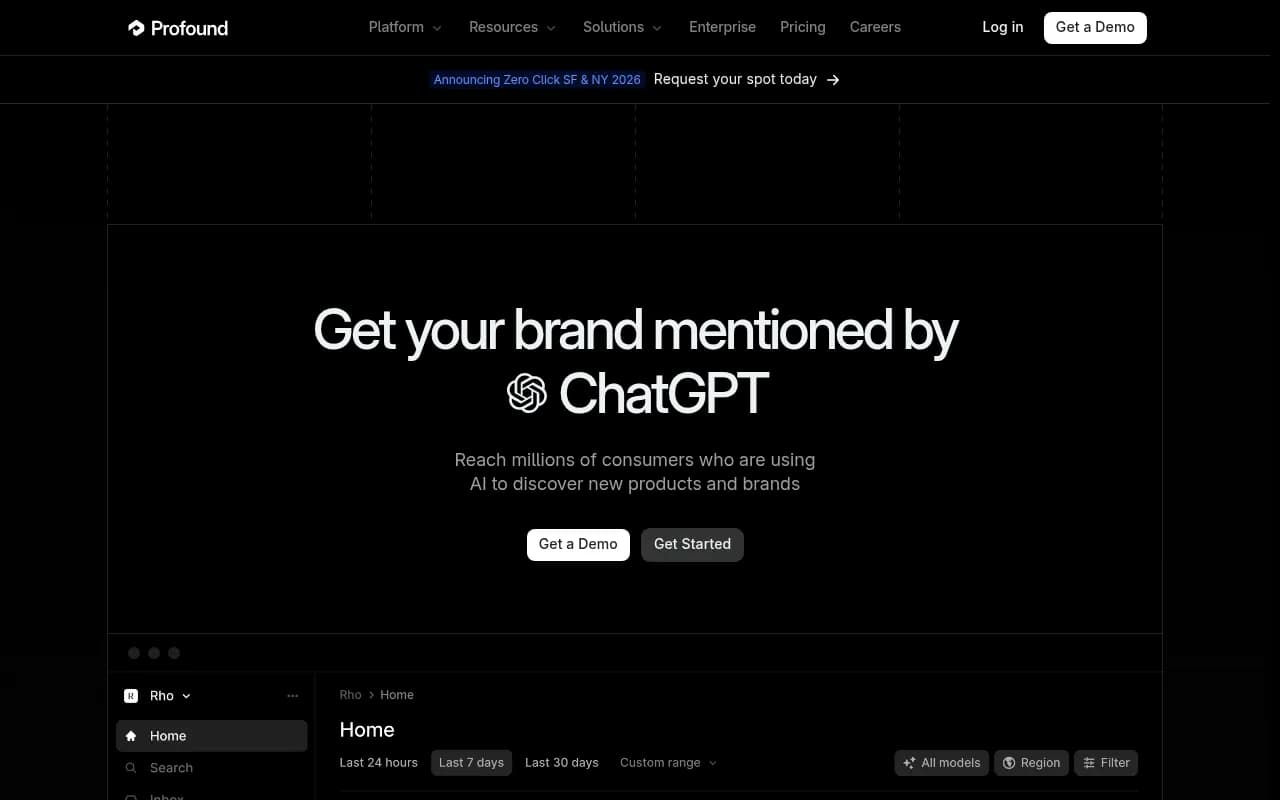
Profound raised $35 million in a Series B led by Sequoia Capital. That's not a small bet. And honestly, the platform earned that attention -- it was one of the first tools to take AI visibility seriously as a category, and it built some genuinely useful infrastructure around it.
But "pioneered the category" and "right for your team" are two different things. A lot of marketing and SEO teams have tried Profound, found real value in parts of it, and then quietly started looking for something else. This guide is about why that happens -- and what to do about it.
What Profound actually gets right
Before getting into the friction points, it's worth being honest about where Profound delivers.
Share-of-voice analytics
Profound's share-of-voice tracking is one of the more mature implementations in the GEO space. You can see how often your brand appears in AI responses relative to competitors, broken down by topic cluster. For enterprise teams running quarterly brand reviews, this kind of aggregate view is genuinely useful.
Agent analytics and AI crawler logs
Profound was early to surface AI crawler data -- the ability to see when ChatGPT, Perplexity, or Claude is actually crawling your site. This is more technically valuable than most people realize. If AI models can't read your pages properly, no amount of content optimization will help. Knowing which pages get crawled (and which don't) is foundational.
Conversation exploration
The ability to pull actual AI-generated responses and analyze what's being said about your brand -- not just whether you're mentioned -- is something Profound does reasonably well. Sentiment, framing, and context all matter in AI search, and this feature gives enterprise teams something to bring to brand safety conversations.
Enterprise positioning
If you're at a Fortune 500 company with a dedicated analytics team, Profound's depth makes sense. It's built for organizations that can absorb a steep learning curve and have the headcount to act on complex dashboards.
The 5 things that make teams look for alternatives
Here's where the friction actually lives. These aren't edge cases -- they come up repeatedly in conversations about Profound alternatives.
1. The price point doesn't match the team size
Profound is priced for enterprise. That's a deliberate choice, not an oversight. But most marketing teams -- even at mid-market companies -- aren't enterprise buyers. When a tool costs more than your entire content budget, the ROI math gets hard to justify, especially when you're still in the "figuring out AI visibility" phase.
The market has moved. There are now capable platforms at $99-$249/month that cover the core use cases. Paying 5-10x that for features you'll use 20% of is a tough sell to any finance team.
2. Monitoring without optimization
This is the big one. Profound shows you where you're invisible. It does not help you fix it.
You can see that a competitor ranks for "best project management software for remote teams" and you don't. But Profound won't tell you what content to create, won't help you write it, and won't show you which specific gaps are highest priority based on prompt volume and difficulty. You get the diagnosis without the treatment plan.
For teams that want to actually move the needle on AI visibility -- not just report on it -- this is a fundamental limitation. The platforms that are pulling ahead in 2026 are the ones that close the loop: find gaps, generate content, track results.
Promptwatch is the clearest example of this approach -- its Answer Gap Analysis shows exactly which prompts competitors appear for that you don't, and the built-in AI writing agent generates content engineered to get cited by ChatGPT, Claude, and Perplexity. It's the difference between a dashboard and an optimization platform.

3. Prompt intelligence is shallow
Not all prompts are equal. A prompt that gets asked 50,000 times a month by in-market buyers is worth 100x more than one that gets asked 200 times by students doing research. Profound's prompt tracking doesn't give you the volume estimates, difficulty scores, or query fan-out data you need to prioritize intelligently.
This matters more than it sounds. Without prompt-level intelligence, you're optimizing blind -- you don't know which gaps to fill first, which competitors to worry about, or where a small content investment could produce outsized visibility gains.
4. No Reddit or YouTube tracking
This one surprises people until they think about it. AI models don't just cite brand websites. They cite Reddit threads, YouTube videos, forum discussions, and third-party review content heavily. In some categories, Reddit is the dominant source for AI recommendations.
If you're not tracking which Reddit discussions and YouTube content are influencing what ChatGPT and Perplexity say about your category, you're missing a major lever. Profound doesn't surface this. Most competitors don't either -- but the gap is real and it's growing.
5. Traffic attribution is incomplete
Knowing your AI visibility score went up is nice. Knowing that improvement drove 340 additional sessions and contributed to 12 pipeline opportunities is what gets budget approved.
Profound's traffic attribution is limited. Connecting AI visibility changes to actual revenue -- through a code snippet, GSC integration, or server log analysis -- is something most teams have to cobble together manually. That's a significant gap for any team that needs to justify their GEO investment to leadership.
How the alternatives stack up
The GEO platform market has matured fast. Here's a practical comparison of where the main options sit:
| Platform | Content generation | Prompt volume data | Reddit/YouTube tracking | Traffic attribution | Starting price |
|---|---|---|---|---|---|
| Profound | No | Limited | No | Limited | Enterprise |
| Promptwatch | Yes | Yes | Yes | Yes | $99/mo |
| Otterly.AI | No | No | No | No | ~$49/mo |
| Peec AI | No | No | No | No | €89/mo |
| SE Visible | No | No | No | No | Add-on |
| Scrunch AI | No | No | No | No | Monthly |
| Gauge | No | Limited | No | No | Custom |
| Writesonic | Yes | No | No | No | Varies |
| AthenaHQ | No | No | No | No | Custom |
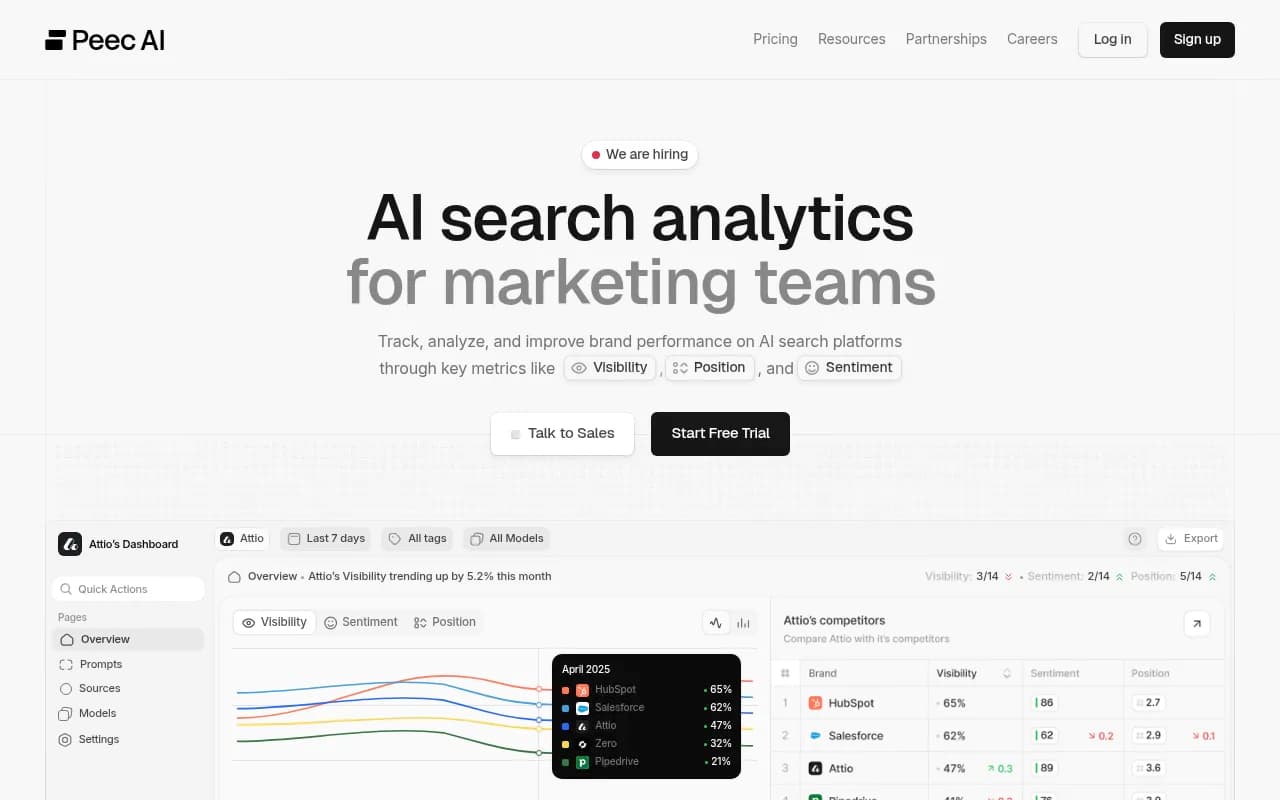
A few notes on this table. Otterly.AI and Peec AI are genuinely useful for teams that just want basic monitoring at a low price point -- no shame in that if your needs are simple.

Scrunch AI has interesting technical infrastructure (their "shadow site" approach to AI crawling is worth understanding), but it's still primarily a monitoring tool.
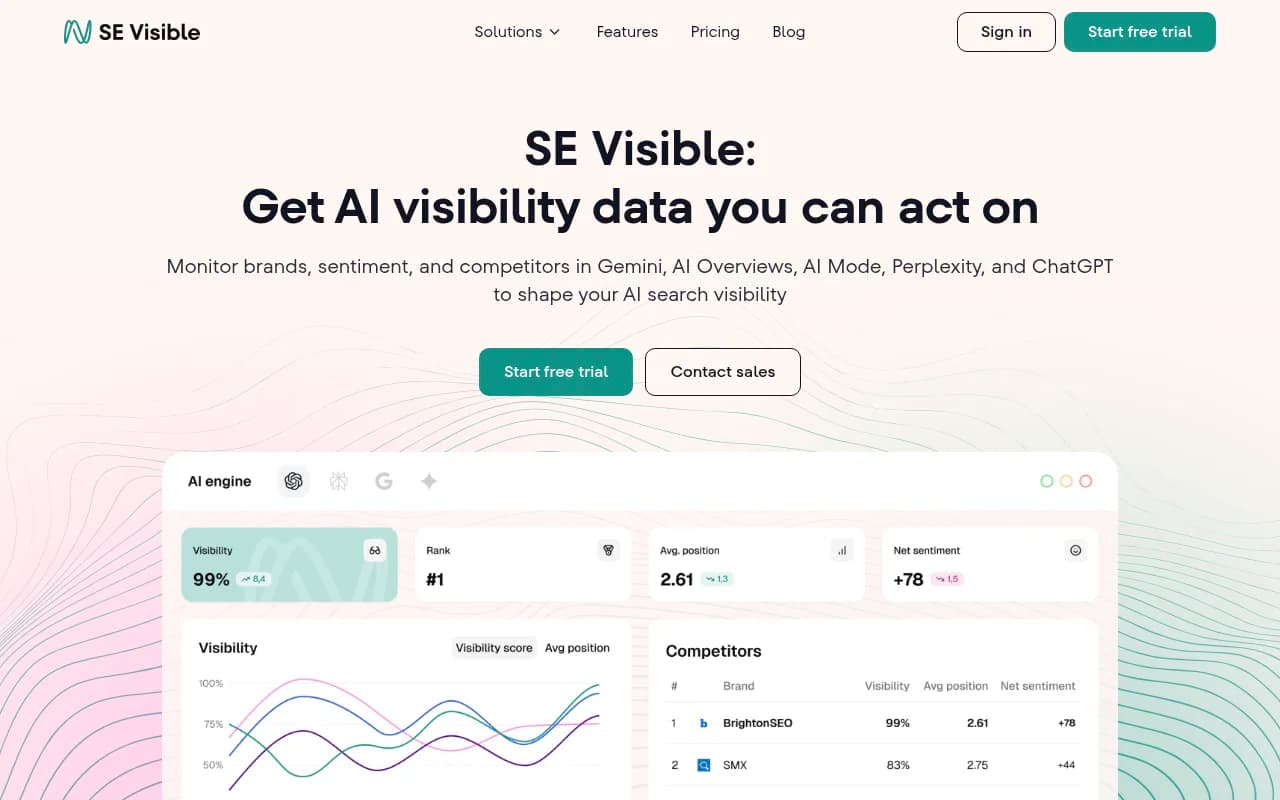
SE Visible integrates GEO data with traditional SEO metrics, which is useful for agencies that need to show clients a unified picture.
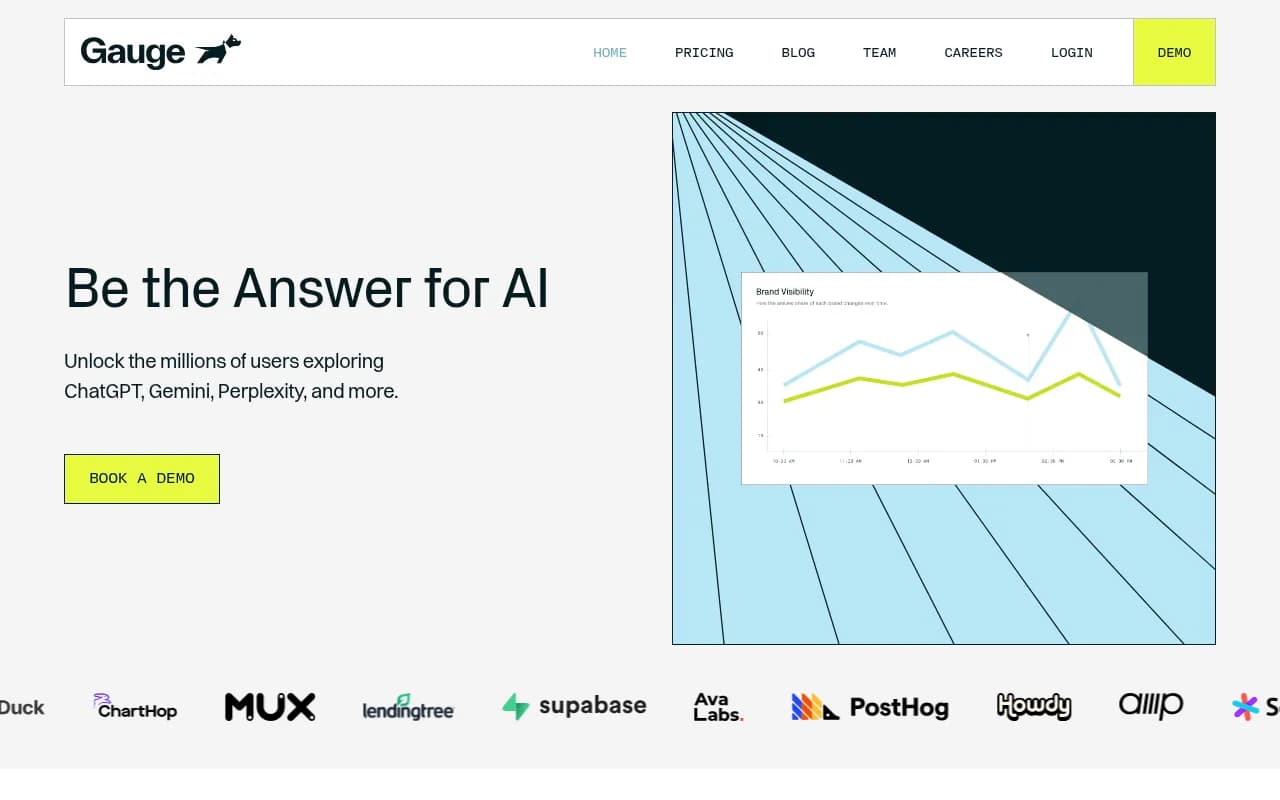
Gauge focuses on competitive insights and has a clean interface, but like most alternatives, it stops at the monitoring layer.
The monitoring-only problem
Most of these tools -- including Profound -- share the same fundamental limitation: they show you data and leave you to figure out what to do with it. That was fine in 2024 when the category was new and teams were just trying to understand AI visibility. In 2026, "we're monitoring it" isn't enough. Leadership wants to see the number go up.
The platforms that are actually moving metrics for their users are the ones that complete the loop. Find the gap, create the content, track the result. Promptwatch built its entire product around this cycle, and it shows in the outcomes teams report.
Who should still use Profound
To be fair: Profound is the right choice for some teams.
If you're at a large enterprise with a dedicated analytics function, complex multi-brand tracking needs, and a team that can absorb a sophisticated platform, Profound's depth is real. The agent analytics and conversation exploration features are genuinely mature. The Sequoia backing means the product will keep developing.
If you're running brand safety reviews at scale, or you need to show the C-suite a comprehensive AI visibility command center with enterprise-grade access controls, Profound fits that use case.
What it doesn't fit: mid-market teams, agencies managing multiple clients on a budget, SEO teams that need to show optimization results (not just monitoring data), and anyone who needs to connect AI visibility to revenue.
What to actually do if you're evaluating alternatives
A few practical suggestions:
Start by being honest about what you actually need. If you need monitoring only, you don't need Profound -- and you probably don't need a $249/month platform either. Otterly.AI or Peec AI will cover the basics.
If you need to optimize (which most teams do), look for platforms that have content gap analysis and generation built in, not bolted on. The gap between "here's your data" and "here's what to write" is where most teams get stuck.
Check whether the platform tracks prompt volume. Without it, you're prioritizing randomly. A prompt that gets asked 100,000 times a month should get different treatment than one that gets asked 500 times.
Ask about traffic attribution before you sign. If a vendor can't explain how you'll connect AI visibility improvements to actual sessions and conversions, you'll be stuck justifying the investment on vibes.
And if Reddit is a major influence channel in your category (it is in most B2B and consumer software categories), make sure your platform surfaces it. The AI models are reading those threads. You should be too.
The bottom line
Profound built something real. The category needed a serious enterprise player, and they stepped up. But the market has moved faster than most people expected, and the teams winning at AI visibility in 2026 aren't just monitoring -- they're optimizing.
If you're evaluating Profound or looking for something different, the question to ask isn't "which tool has the most features?" It's "which tool will actually help me improve my AI visibility score, and can I prove it drove revenue?" That narrows the field considerably.