Key takeaways
- Semrush is a mature, full-stack SEO platform that added AI visibility features relatively recently -- it's best for teams that already live in Semrush and want basic AI tracking without a new tool.
- Peec AI was built from day one for AI search analytics, which shows in the depth of its prompt tracking, citation analysis, and sentiment data.
- For pure AI visibility work, Peec AI wins on feature depth. For teams that need traditional SEO alongside AI monitoring, Semrush's all-in-one value is hard to ignore.
- Neither tool closes the loop from monitoring to content creation -- if that matters to you, there are platforms built specifically for that workflow.
- Pricing is meaningfully different: Peec AI starts at $89/mo vs Semrush's $139.95/mo entry tier, though Semrush covers far more ground for that price.
The question used to be simple: which rank tracker should I use? Now there's a second question that matters just as much -- which tool tells me what ChatGPT says about my brand?
These are genuinely different problems. Traditional rank tracking measures where your pages appear in a list of blue links. AI visibility tracking measures whether an AI model mentions you, recommends you, or cites your content when someone asks a relevant question. The mechanics are different, the data is different, and the tools built for each job reflect that.
Semrush has been the dominant SEO platform for years. Peec AI is one of the newer dedicated AI visibility tools. Comparing them isn't quite apples-to-apples -- it's more like comparing a Swiss Army knife to a scalpel. Both are useful. The question is what you're trying to cut.
What each tool actually does
Semrush: the SEO platform that added AI tracking
Semrush has been around since 2008. Its core strengths are keyword research, backlink analysis, technical site audits, rank tracking, and competitive intelligence. It's the tool most SEO teams already have open in another tab.
The AI visibility features came later. Semrush now offers an AI Visibility Toolkit and an AI Search Visibility Checker that track brand mentions across ChatGPT, Perplexity, Claude, and Gemini. You can monitor how often your brand appears in AI-generated responses, see competitor share of voice, and track Google AI Overviews.
The honest framing: this is a solid addition to an already-powerful platform. But it was added to an existing product rather than designed from scratch for AI search. That matters.
Peec AI: built specifically for AI search analytics
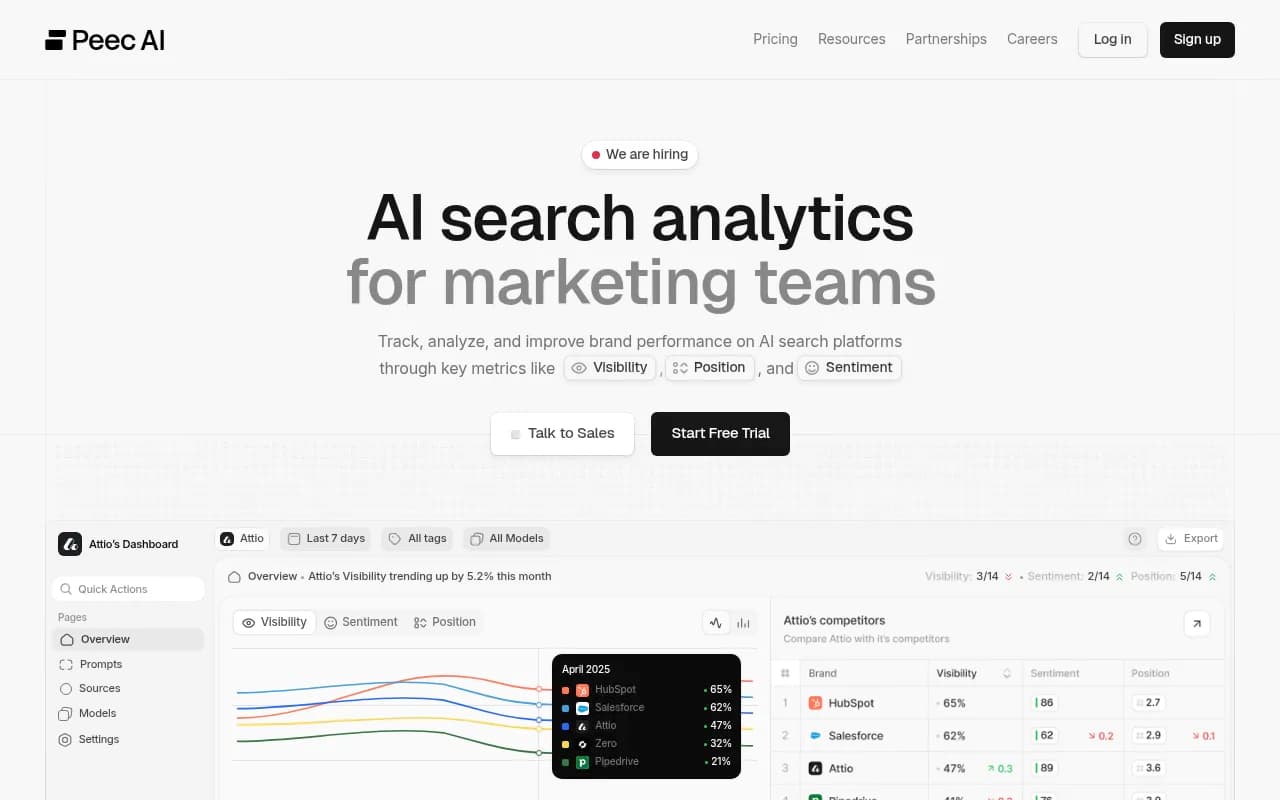
Peec AI does one thing. It tracks how brands perform in AI-generated answers -- visibility scores, position within responses, sentiment, citation sources, and competitive benchmarking. There's no keyword research module, no backlink checker, no technical audit. Just AI search analytics.
That focus means the AI-specific features go deeper. Peec tracks daily prompt monitoring across multiple AI models, surfaces which specific URLs are being cited in AI responses, and shows how visibility changes over time with enough granularity to spot real trends rather than noise.
Feature-by-feature comparison
Here's how the two platforms stack up specifically on AI visibility capabilities:
| Feature | Peec AI | Semrush |
|---|---|---|
| Multi-platform AI tracking (ChatGPT, Perplexity, Claude, Gemini) | Yes | Yes |
| Google AI Overviews tracking | Yes | Yes |
| Brand mention tracking | Yes | Yes |
| Citation and source tracking | Yes | Limited |
| AI visibility score/metrics | Yes | Yes |
| Sentiment analysis | Yes | No |
| Competitive benchmarking / share of voice | Yes | Yes |
| Actionable optimization recommendations | Yes | Limited |
| Daily data refresh | Yes | Varies |
| CSV exports | Yes | Yes |
| Multi-country support | Yes (unlimited) | Yes |
| Multi-language support | Yes | Limited |
| Unlimited seats | Yes | No (per plan) |
| API access | Yes (higher tiers) | Yes (higher tiers) |
| Keyword research | No | Yes |
| Technical site audit | No | Yes |
| Backlink analysis | No | Yes |
| AI content writer/generator | No | Yes (ContentShake) |
| Free plan available | Trial only | Free tier available |
| Starting price | $89/mo | $139.95/mo |
The pattern is clear: Peec AI wins on AI-specific depth (sentiment analysis, citation tracking, unlimited countries and seats). Semrush wins on breadth -- it does everything else SEO-related that Peec doesn't touch.
Where Peec AI pulls ahead
Sentiment analysis
This is a real differentiator. Knowing that your brand appeared in an AI response is one thing. Knowing whether the AI described you positively, neutrally, or negatively is another. Peec tracks sentiment across responses, which matters a lot if you're managing brand reputation or trying to understand why your visibility score isn't translating into clicks.
Semrush doesn't offer this.
Citation and source tracking
Peec shows you which specific URLs are being cited in AI responses -- not just whether your domain appears, but which pages, how often, and in what context. This is genuinely useful for content strategy. If a competitor's blog post keeps getting cited in responses about your category, you know exactly what you're up against.
Semrush's citation tracking is more surface-level. You get domain-level visibility data but less granularity on which specific pages are driving AI citations.
Unlimited countries and seats
Peec AI includes unlimited countries and unlimited user seats from the entry tier. For distributed teams or agencies managing multiple markets, this is a meaningful practical advantage. Semrush charges per seat and has more restrictive multi-country setups at lower price points.
Purpose-built data model
Because Peec was designed around AI search from day one, the underlying data model reflects how AI responses actually work. Prompts are tracked at the question level, not the keyword level. That's a subtle but important distinction -- "what's the best project management tool for remote teams?" is a prompt, not a keyword, and the analytics built around it look different.
Where Semrush pulls ahead
Everything outside AI visibility
This is the obvious one. If your team needs keyword research, backlink analysis, technical audits, rank tracking, content optimization, and competitive intelligence all in one place, Semrush delivers. Peec AI doesn't compete here at all -- it's not trying to.
For most SEO teams, replacing Semrush entirely isn't realistic. The question becomes whether you add Peec AI on top of Semrush, or whether Semrush's AI features are good enough to avoid that extra cost.
Content creation tools
Semrush has ContentShake AI, a writing assistant integrated with its SEO data. If you want to write content optimized for traditional search alongside your AI visibility work, that integration is convenient.
Free tier and trial accessibility
Semrush has a free plan (limited but real). Peec AI offers a free trial but no permanent free tier. For teams evaluating options on a tight budget, this matters.
Established ecosystem
Semrush has years of integrations, templates, agency reporting features, and a large user community. If you're already embedded in that ecosystem, the switching cost of moving to a separate AI visibility tool is real.
The pricing reality
Peec AI's Starter plan is $89/mo. Pro is $199/mo. Enterprise is custom.
Semrush starts at $139.95/mo for the Pro plan, $249.95/mo for Guru, and $499.95/mo for Business. The AI Visibility Toolkit features are available across plans, though some capabilities require higher tiers.
On pure AI visibility cost, Peec AI is cheaper. But that comparison ignores everything else Semrush includes. If your team is already paying for Semrush and the AI features are adequate, adding Peec AI is an additional $89-199/mo on top. That's a real budget consideration.
Five real-world scenarios
Scenario 1: You're an SEO team that already uses Semrush
Stick with Semrush for now, but test its AI visibility features honestly. If you find yourself frustrated by the lack of sentiment data or citation depth, that's when Peec AI makes sense as an add-on. Don't pay for both until you've hit a real limitation.
Scenario 2: You're a brand manager focused on AI reputation
Peec AI is the better fit. The sentiment analysis and citation tracking are exactly what you need to understand how AI models are describing your brand, not just whether they mention it.
Scenario 3: You're an agency managing multiple clients across markets
Peec AI's unlimited seats and unlimited countries are genuinely attractive here. Semrush's per-seat pricing adds up fast at agencies.
Scenario 4: You're a small business with limited budget
Semrush's free tier gives you at least something. Peec AI requires a paid commitment. If budget is tight, start with Semrush's free AI visibility checker and upgrade when you need more.
Scenario 5: You need to track AI visibility across 10+ languages
Peec AI has stronger multi-language support. Semrush's AI features are more limited outside major languages.
What neither tool does particularly well
Both Peec AI and Semrush are primarily monitoring tools for AI visibility. They show you what's happening -- where you appear, how often, what the sentiment is. What they don't do particularly well is close the loop: here's the gap, here's the content you should create to fix it, here's how your visibility changed after you published it.
That full cycle -- find gaps, generate content, track results -- is what separates monitoring platforms from optimization platforms. If that workflow matters to you, it's worth looking at tools built specifically around it.
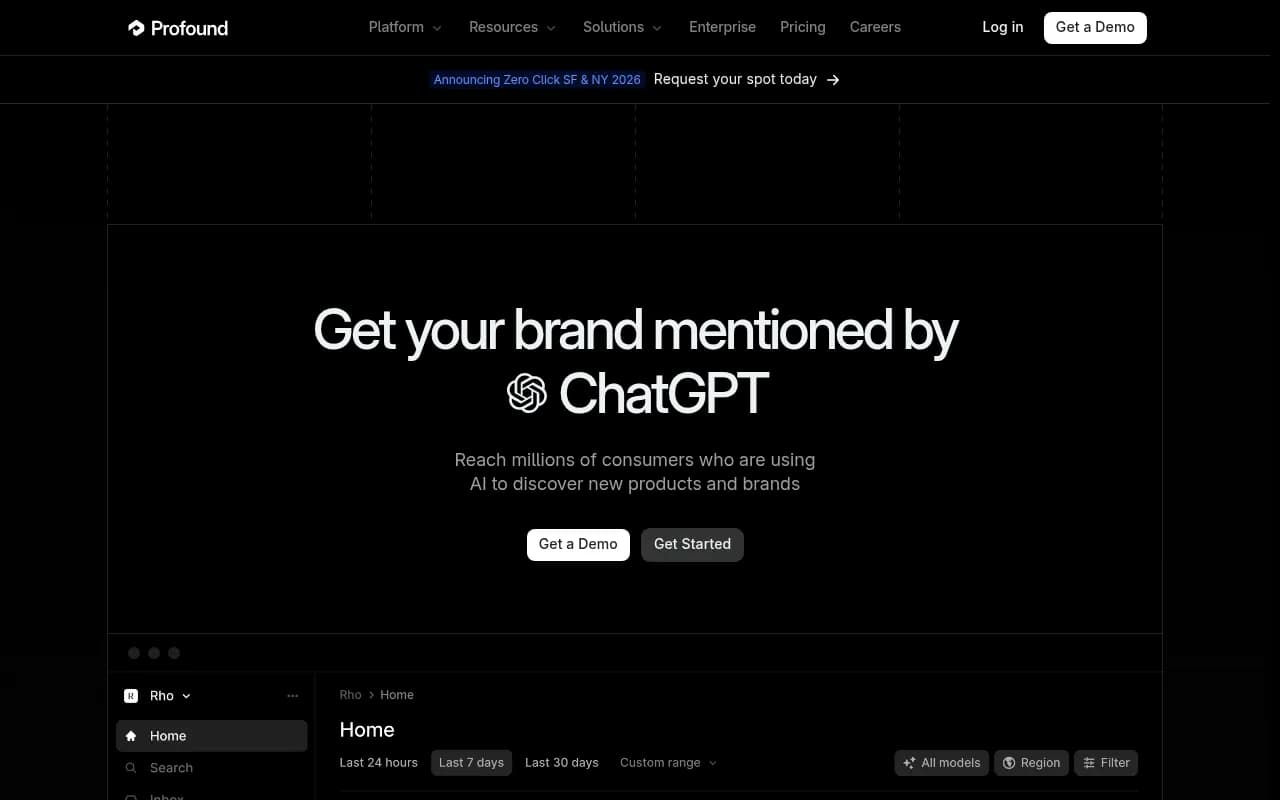
Promptwatch is one example of a platform that tries to close that loop, combining AI visibility tracking with content gap analysis and an AI writing agent that generates content based on real citation data.

Other tools worth knowing about in this space:
How they compare to the broader landscape
The AI visibility tracking market has grown fast. A 2026 comparison of GEO platforms found significant variation in how tools approach the monitoring-vs-optimization question.
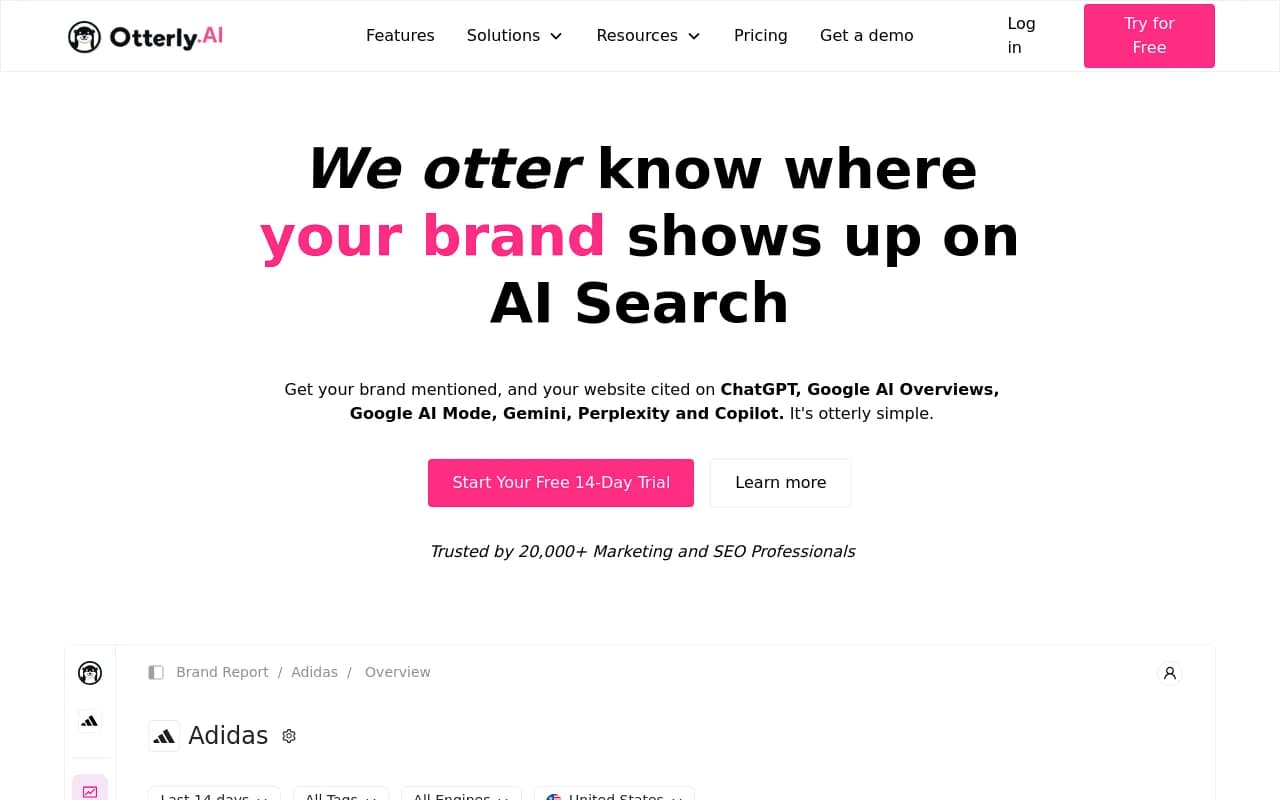
Peec AI sits firmly in the "dedicated AI monitoring" category alongside tools like Otterly.AI and Airefs. Semrush is in the "traditional SEO platform with AI features added" category alongside Ahrefs Brand Radar and SE Ranking.
Neither category is wrong. They reflect different product philosophies and different customer needs.
The honest verdict
Peec AI is the better tool if AI visibility is your primary concern. The sentiment analysis, citation tracking, and purpose-built data model give you more useful signal than Semrush's AI features. The pricing is lower for pure AI visibility work, and the unlimited seats/countries are genuinely useful.
Semrush is the better choice if you need a full SEO platform and want AI visibility as part of it. The AI features aren't as deep, but they're good enough for teams that aren't running dedicated AI visibility programs. And the value of having everything in one place is real.
The scenario where Semrush clearly wins: you're already paying for it and the AI features meet your needs. The scenario where Peec AI clearly wins: you're building a serious AI visibility practice and need the depth.
Most teams will end up using both -- Semrush for traditional SEO work, Peec AI (or something like it) for dedicated AI search tracking. That's not a failure of either tool. It's just the reality of a search landscape that now has two meaningfully different channels to manage.