Key takeaways
- AI referral traffic averages just over 1% of total website visits across ten major industries, per Conductor's benchmark of 13,770 domains. Information Technology leads at 2.80%; financial services trails at 0.61%.
- The volume story is changing fast. B2B tech firms in Opollo's 2026 dataset saw AI referrals grow 975% year-over-year, reaching 6.4% of sessions by January 2026.
- AI-referred visitors convert far better than organic search visitors: 14.2% vs 2.8% in B2B tech (Opollo), and 42% better in retail (Adobe, March 2026).
- Meanwhile, 68% of Google searches now end without a click, so the traffic you're losing on the traditional side makes the AI channel's per-visit value matter more.
- ChatGPT still sends the majority of AI referral traffic (87.4% per Conductor), but its share of overall AI usage is shrinking as Gemini and Claude grow. Single-platform strategies reach a shrinking slice of the audience.
The short answer: small volume, outsized value
If you want the one-line version of every serious 2026 study on AI referral traffic, it's this: AI search sends very little traffic, and that traffic is worth a lot.
Conductor's AEO/GEO Benchmarks Report (November 2025, covering 13,770 domains across 10 industries) put AI referral traffic at 1.08% of all website visits. That number gets quoted a lot, and it's accurate, but it also hides enormous variation underneath. Information Technology sits at 2.80%. Financial services sits at 0.61%. Those are different strategic realities, and treating them with one blended average leads to bad budget decisions.
The value side is where it gets interesting. The Opollo 2026 AI Search Benchmark Report analyzed GA4 and CRM data from 312 B2B technology firms across North America, Australia, and the UK. AI-referred visitors converted at 14.2% against Google organic's 2.8%. That's roughly 5x. RankScience ran a separate analysis of 12 million website visits and landed on the same numbers independently, which is rare enough in this space to be worth noting.
So when your CFO asks whether AI search is worth investing in, the honest answer in 2026 is: not for raw traffic volume yet, but yes for pipeline and revenue per visit.
The backdrop: Google is becoming a walled garden
You can't evaluate AI referral traffic without understanding what's happening to traditional search, because the two trends are the same story told from different angles.
SparkToro's analysis of Similarweb's clickstream panel found that 68.01% of Google searches ended without a click in the first four months of 2026. In 2024, US zero-click searches stood at 60.45%. Ten years ago, it was around 45%.

The main driver is AI Overviews. A 21.9-million-search study found that 25.11% of Google searches triggered an AI Overview in Q1 2026, and roughly 83% of searches with an AI Overview end with no click at all. Ahrefs has measured that AI Overviews reduce organic CTR by nearly 60% when present.
Google's own AI Mode is still small, at 0.34% of searches from January to April 2026, but Google said at I/O 2026 that it has passed 1 billion monthly users with queries more than doubling every quarter. That's the feature most likely to push zero-click rates even higher over the next few years.
There's a counterintuitive silver lining here. Seer Interactive tracked 3,119 informational queries across 42 companies from June 2024 to September 2025 and found that pages cited within AI Overviews earned 35% more organic clicks and 91% more paid clicks. Being cited doesn't just get you AI referral traffic. It protects and boosts your traditional clicks too.
AI referral traffic benchmarks by industry
Here's the industry breakdown from Conductor's benchmark set, which is the most granular publicly available data right now.
| Industry / subindustry | AI referral share of traffic | Notes |
|---|---|---|
| Information Technology | 2.80% | Highest of the ten industries studied; content depth and technical clarity drive citations |
| Industrials (transportation queries) | 1.62% | Above the blended average |
| Industrials (capital goods) | 1.50% | Also above average |
| Real Estate | 1.01% | Strong for a high-consideration vertical with complex informational demand |
| Cross-industry average | 1.08% | The number most often quoted |
| Financial services | 0.61% | Bank queries skew navigational, leaving less room for answer engines to intercept |
A few things jump out. IT's lead makes sense when you think about who uses ChatGPT and Perplexity: technical buyers researching tools, comparing software, asking implementation questions. Financial services' low number is partly a query-mix issue. "Chase login" doesn't leave much room for an answer engine to add value.
But don't confuse low referral share with low AI influence. Conductor's financials benchmark found that 25.8% of financial queries triggered an AI Overview. Google-native AI exposure can far exceed open-web AI referral volume, and most of that influence is invisible in your analytics because it never produces a click.
Similarweb's referral data adds a different cut: AI referral rates are highest in Travel & Hospitality (about 23%) and Automotive (about 20%), and lowest in Professional Services (under 4%). If you're in travel, AI search is already a real channel. If you're a law firm or consultancy, it's a rounding error today, though that says nothing about where it'll be in two years.
Where AI traffic actually concentrates
The HUMAN Security 2026 State of AI Traffic report found that more than 95% of AI-driven traffic in 2025 was concentrated in three industries: retail and e-commerce, streaming and media, and travel and hospitality.
That concentration makes sense. These are the verticals where information changes fastest and where AI products promise users the most value from real-time freshness. It's also why AI scraper traffic grew 597% from January to December 2025, peaking at 12x the January baseline in October. Media alone accounted for 40.90% of AI scraper traffic, with retail at 36.70%.
On the operator side, OpenAI generated roughly 69% of all observed AI bot traffic in 2025, Meta about 16%, and Anthropic about 11%. If you're deciding which crawler user-agents to allow through your robots.txt, that's your priority order for most sites.
Conversion benchmarks: why the small volume still matters
This is the section to bring to your next budget meeting.
| Study | Finding | Comparison |
|---|---|---|
| Opollo 2026 (312 B2B tech firms) | 14.2% conversion from AI referrals | vs 2.8% for Google organic, ~5x |
| Opollo 2026 | AI referrals = 0.5% of sessions but 12.1% of signups | 23x conversion differential |
| Adobe Analytics (March 2026, US retail) | AI-referred shoppers convert 42% better | vs non-AI traffic |
| Digital Bloom | 1.66% sign-up conversion from AI traffic | vs 0.15% for organic search |
| Semrush | AI search visitors are 4.4x as valuable | vs average traditional organic visitor |
The mechanism behind these numbers is pre-qualification. Someone who asks ChatGPT "best CRM for a 20-person real estate agency" and then clicks through to your site has already done most of the consideration work inside the AI conversation. They arrive knowing what you do, roughly what you cost, and whether you fit their use case. That's a completely different visitor from someone who clicked a blue link on page two of Google.
The engagement data backs this up. Adobe found AI-referred shoppers spend 48% more time on product pages, view 13% more pages per visit, and show a 12% higher engagement rate. SE Ranking's study found AI visitors spend 68% more time on site than traditional search visitors.
One caveat worth stating plainly: the 4-5x conversion advantage is a cross-industry average with a wide range underneath it, from 1.3x in low-consideration e-commerce to 23x in B2B SaaS. If someone quotes you a single multiplier without a source and a vertical, be skeptical.
Which platforms send the traffic
Two datasets tell a slightly different story here, and both are true.
Conductor's referral data shows ChatGPT accounting for 87.4% of all AI referral traffic. Perplexity comes second at roughly 15% globally (closer to 20% in the US), Gemini at around 6%, and Claude.ai under 1% but growing 12.8x year-over-year per Previsible's December 2025 data.
Similarweb's usage panel shows the other side: ChatGPT's share of worldwide generative AI web traffic slid from about 76% in June 2025 to roughly 53% by May 2026, while Gemini climbed from under 9% to around 27-28%, and Claude went from a rounding error to the fastest-growing platform in the category.
How do you reconcile this? ChatGPT users click links more often (and ChatGPT's user base is enormous), so it still dominates actual referral volume. But attention is fragmenting fast. A visibility strategy built around a single assistant now reaches a shrinking fraction of the AI-using audience. If you're only tracking ChatGPT, you're optimizing for a channel that's losing 20+ percentage points of share per year.
The attribution gap: what your analytics isn't telling you
Here's the part of this story that makes the raw benchmarks understate reality. A meaningful share of AI influence never shows up as AI referral traffic at all.
Someone researches in ChatGPT for twenty minutes, forms a shortlist, then Googles your brand name or types your URL directly. Your analytics logs that as organic or direct. The AI's role in creating that visit has vanished. This is why traffic share alone is a bad metric for AI visibility, and why the relationship between referral volume, conversion quality, and hidden influence matters more than any single number.
There's also a citation problem on the content side. AirOps' 2026 State of AI Search report analyzed 5.1 million AI responses across 50 brands and seven verticals and found that 85% of brand mentions in AI responses come from third-party pages. Only 10% of citations pointed to brand-owned domains. If your entire AI strategy is publishing more content on your own blog, you're addressing a small fraction of the citation pool. The priority is earned coverage on sources AI engines already trust: G2, industry publications, Reddit, analyst roundups.
How to benchmark your own numbers against these
Industry averages are useful for context, but you shouldn't make decisions on them. Here's how to get your own data.
1. Segment AI referrals in your analytics
In GA4, create a segment for sessions where the source matches chatgpt.com, perplexity.ai, gemini.google.com, claude.ai, copilot.microsoft.com, and grok.com. Compare conversion rate, revenue per session, and engagement depth against your organic search segment. Most teams find the AI segment converts 3-5x better within ten minutes of building this.
Google Search Console won't show you AI referrals directly, but it will show you which queries trigger AI Overviews where you're cited, which is the leading indicator for the referral traffic that follows.
2. Track citations, not just clicks
Since most AI influence happens without a click, you need a tool that monitors whether your brand appears in AI answers across platforms. A platform like Promptwatch can track your visibility in ChatGPT, Claude, Gemini, Perplexity, and Google AI Overviews, show which prompts you're cited for, and, importantly, tie crawler activity and citations to actual traffic and conversions so you can see the full path rather than just a mention count.

If you want to compare options first, Conductor, Semrush, and Similarweb all have AI visibility features at different price points and depths.
3. Fix your attribution for the AI-influenced path
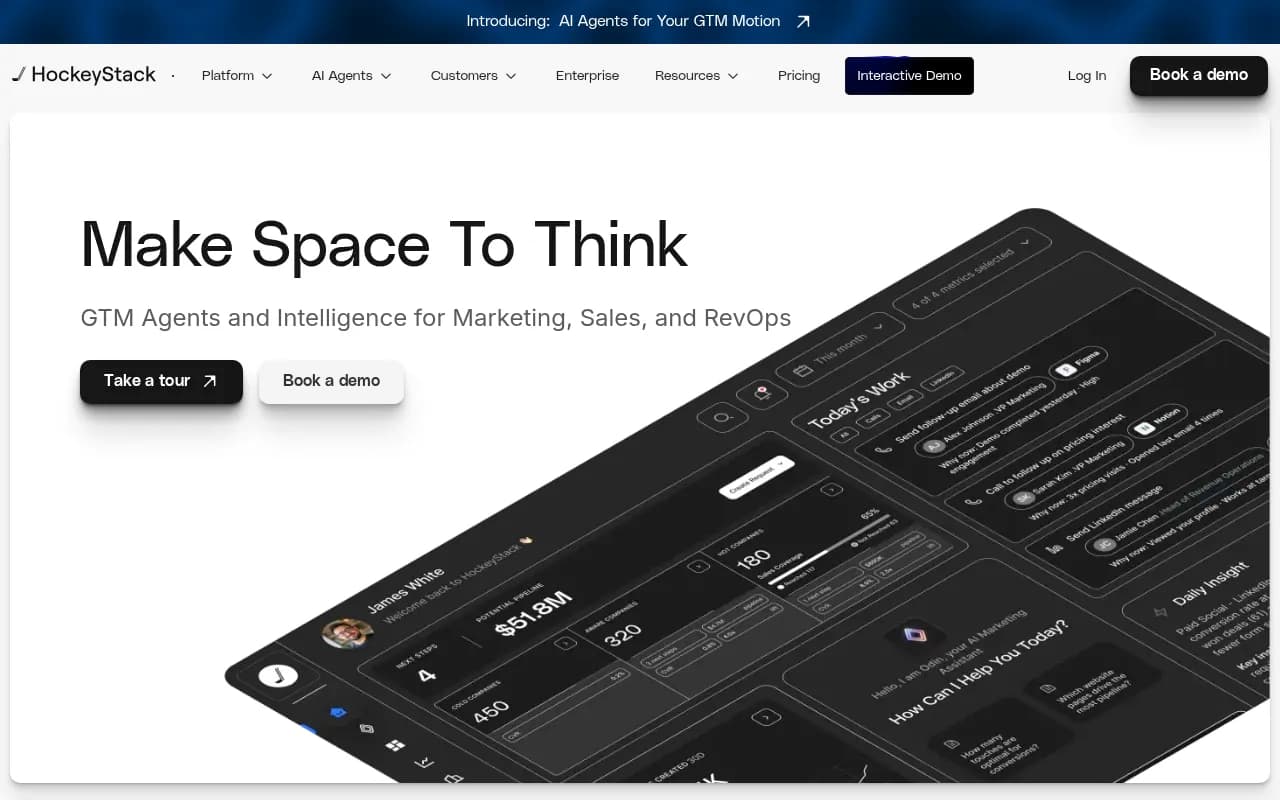
For the visits that arrive via Google or direct after an AI conversation, you need attribution that can model or survey the upstream journey. HockeyStack is built for exactly this kind of multi-touch visibility.
A cheap supplement: add a "How did you hear about us?" free-text field to your signup or checkout flow. You'll be surprised how often ChatGPT shows up in the answers, in volumes your referral data never captured.
What the growth curve suggests
Wix's AI Search Lab reported that AI search visits grew 42.8% year-over-year, from 15.6 billion to 27.4 billion in Q1 2026, while Google search visits rose only modestly. Conductor's benchmark had AI referrals at 1.08% of traffic in late 2025; Opollo's B2B tech cohort was at 6.4% by January 2026 with 975% annual growth.
I'll be honest about my read of this: the volume numbers are moving too fast to trust any 2026 benchmark as a planning baseline for 2027. What you can trust is the pattern. AI referral share is small but compounding quickly, per-visit value is consistently 3-5x organic, and the traditional click channel is shrinking at the same time. The combination of those three trends is what makes AI visibility a now problem rather than a next-year problem, even for industries where the current referral share is under 1%.
If you're in IT, travel, or e-commerce, the case is already closed: measure this channel properly and invest in it. If you're in financial services or professional services, the referral numbers look unimpressive today, but the 25.8% AI Overview presence on financial queries tells you the influence layer is much bigger than the click data suggests. Track citations and brand mentions now, because that's where the traffic will come from when the click volume arrives.
And if you'd rather have a team handle the measurement and optimization work end to end, 1001 SEO Media (which publishes this site) runs AI search and GEO programs that cover exactly this: visibility tracking, citation building, and tying AI-driven traffic to revenue.
Frequently asked questions
Does AI referral traffic beat organic search?
On a per-visit basis, often yes. The Digital Bloom reports AI traffic converting sign-ups at 1.66% versus 0.15% for organic search, and Opollo's B2B tech data shows 14.2% versus 2.8%. In absolute volume, organic search still dwarfs AI referrals for almost every site.
Is the 4-5x conversion advantage universal?
No. It's a cross-industry average ranging from about 1.3x in low-consideration e-commerce to 23x in B2B SaaS. Adobe's April 2026 retail data puts the e-commerce advantage at 42% better conversion, not 4-5x. Directionally consistent, but the magnitude varies a lot by product type.
Which AI platform sends the most referral traffic?
ChatGPT, by a wide margin. Conductor puts it at 87.4% of all AI referral traffic. But its share of overall AI usage fell from about 76% to 53% between June 2025 and May 2026 as Gemini and Claude grew, so multi-platform monitoring matters more every quarter.
Are AI Overviews killing my organic traffic?
For uncited pages, effectively yes: AI Overviews reduce CTR by nearly 60% when present, and 83% of searches with an AI Overview end without a click. For cited pages, the opposite: Seer Interactive found cited pages earned 35% more organic clicks. The goal is to be in the answer, not adjacent to it.
How much AI traffic should I expect in my industry?
If you're in IT, expect 2-3% of traffic and growing. Industrials and real estate, around 1-1.6%. Financial services, under 1% in referrals but with heavy AI Overview presence. Travel and automotive see the highest AI referral rates per Similarweb, around 20-23%. Benchmark against your vertical, not the blended 1.08% average.