Key takeaways
- GetMint is a solid AI visibility monitoring tool, particularly strong for brand impact measurement and AI Overviews tracking
- Promptwatch goes beyond monitoring with built-in content gap analysis, an AI writing agent, crawler logs, and traffic attribution -- making it a full optimization platform
- Both tools track multiple AI models, but Promptwatch covers 10 (including Grok, DeepSeek, and Mistral) with deeper prompt-level intelligence
- If you want to know where you're invisible in AI search, either tool works. If you want to actually fix it, Promptwatch is the more complete choice
- Pricing is comparable at entry level; Promptwatch's higher tiers unlock more actionable features per dollar
The AI search visibility category has exploded in 2026. Every week there's a new tool claiming to track your brand across ChatGPT, Perplexity, and Google AI Overviews. Most of them do roughly the same thing: run prompts, count mentions, show you a dashboard.
GetMint and Promptwatch are two of the more serious players in this space. Both are worth looking at. But they're built around different philosophies -- and that difference matters a lot depending on what you actually need.
This guide breaks down both platforms honestly: what they do well, where they fall short, and which one makes more sense for your situation.
What GetMint does
GetMint positions itself as a platform for measuring the "complete impact of AI on your brand." The framing is strategic -- it's not just about tracking mentions, but understanding how AI search is affecting your business overall.
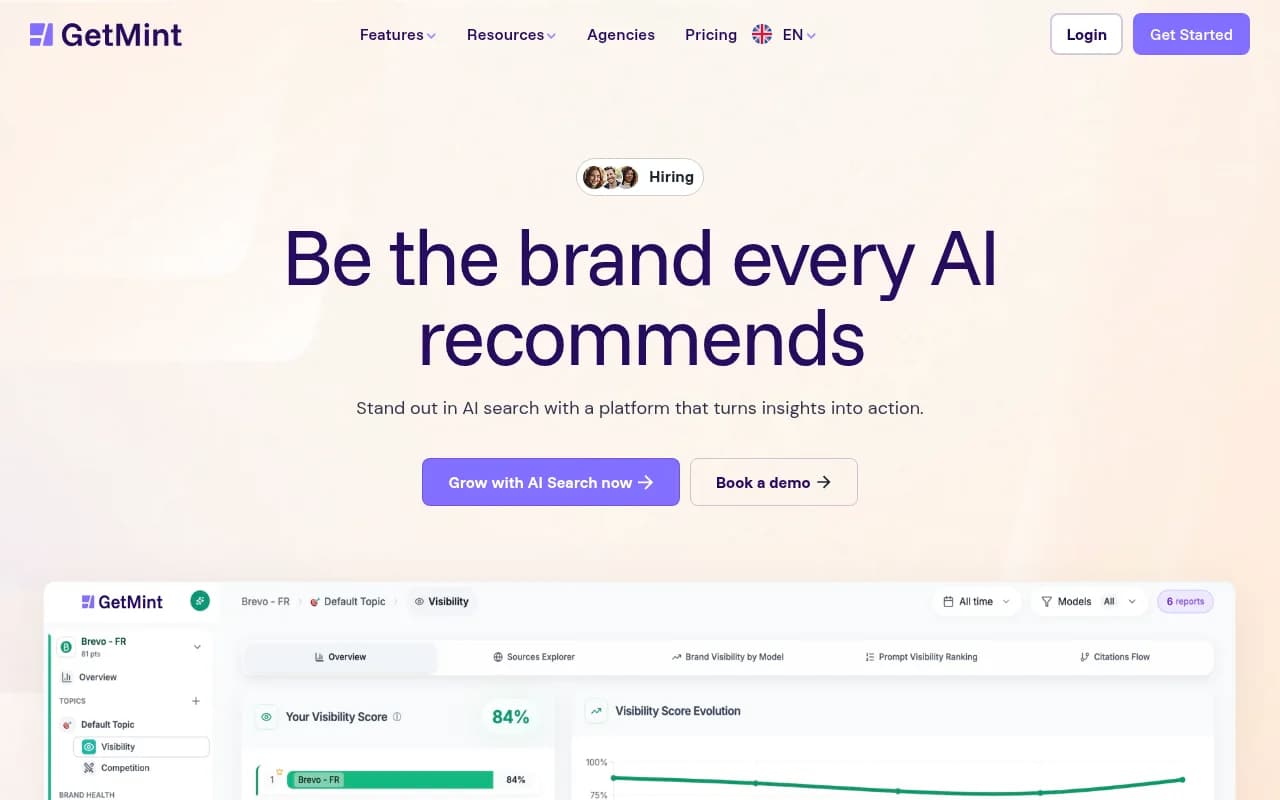
GetMint's core strengths are in AI Overviews monitoring and brand impact measurement. It tracks how your brand appears across AI-generated responses, gives you visibility scores, and lets you compare against competitors. The platform has a clean interface and does a good job of surfacing where you're winning and losing in AI search.
Where GetMint is particularly useful:
- Tracking brand mentions across AI-generated answers
- Monitoring AI Overviews specifically (Google's AI search results)
- Getting a strategic view of how AI is affecting your overall brand presence
- Reporting on visibility trends over time
The honest limitation: GetMint is primarily a monitoring and measurement tool. It tells you what's happening. What to do about it is largely left to you.
What Promptwatch does
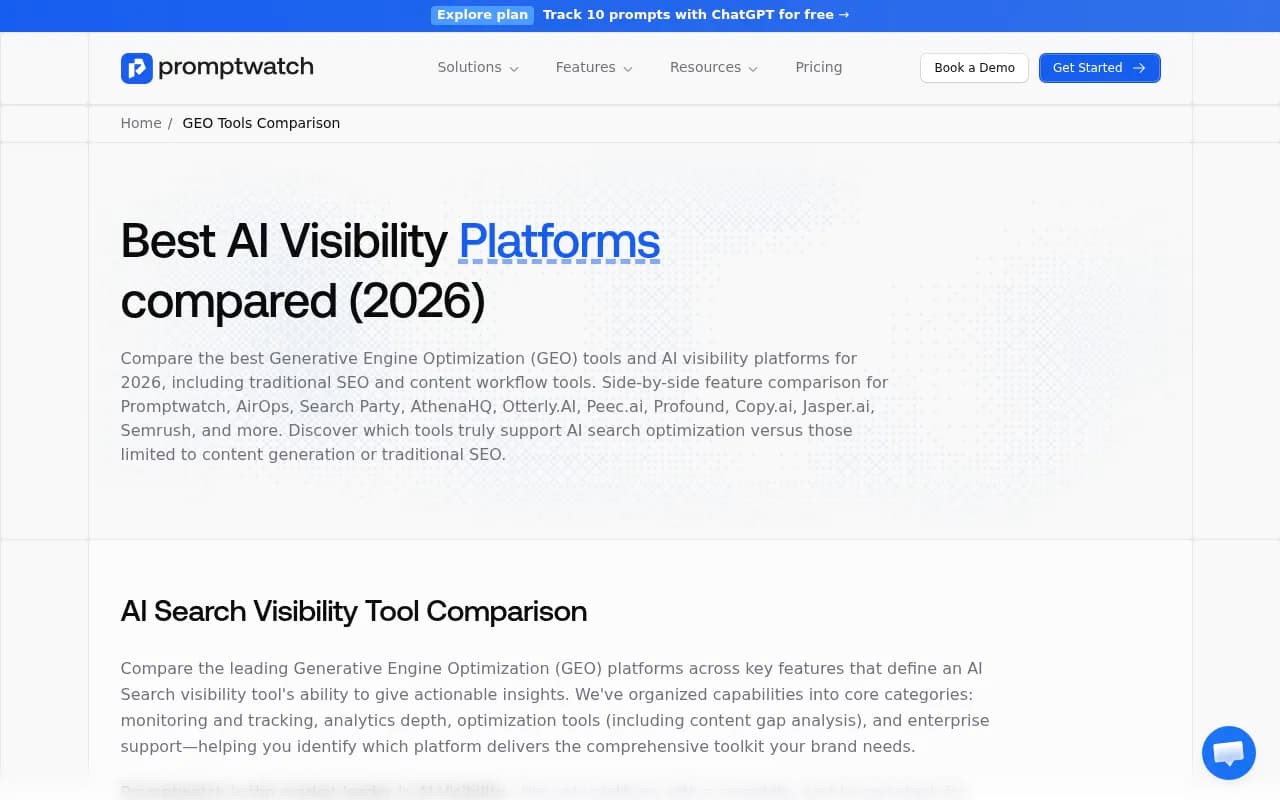
Promptwatch takes a different approach. It's built around what the team calls an "action loop" -- find the gaps, create content that fills them, track the results. The monitoring is there, but it's the starting point, not the destination.

The platform covers 10 AI models: ChatGPT, Perplexity, Claude, Gemini, Google AI Overviews, Google AI Mode, Grok, DeepSeek, Mistral, and Copilot. That's a wider net than most competitors.
What makes Promptwatch different from a pure monitoring tool is the optimization layer:
- Answer Gap Analysis shows you exactly which prompts your competitors rank for that you don't -- and what content your site is missing to close those gaps
- A built-in AI writing agent generates articles, listicles, and comparisons grounded in citation data from 880M+ analyzed citations
- AI Crawler Logs show you in real time which pages ChatGPT, Claude, and Perplexity are actually reading on your site, and which ones they're ignoring
- Traffic attribution connects AI visibility to actual revenue through a code snippet, Google Search Console integration, or server log analysis
The monitoring features are strong too -- visibility scores, share of voice, sentiment analysis, competitor heatmaps, page-level citation tracking, Reddit and YouTube insights, and ChatGPT Shopping tracking. But the reason brands choose Promptwatch over simpler tools is usually the content generation and gap analysis.
Feature comparison
Here's a side-by-side look at how the two platforms stack up across the features that matter most:
| Feature | GetMint | Promptwatch |
|---|---|---|
| AI models tracked | Multiple (AI Overviews focus) | 10 (ChatGPT, Perplexity, Claude, Gemini, Grok, DeepSeek, Mistral, Copilot, Google AI Overviews, Google AI Mode) |
| Brand mention tracking | Yes | Yes |
| Competitor analysis | Yes | Yes (with heatmaps) |
| Visibility scores | Yes | Yes |
| Prompt volume & difficulty | No | Yes |
| Answer gap analysis | No | Yes |
| AI content generation | No | Yes (built-in writing agent) |
| AI crawler logs | No | Yes |
| Reddit & YouTube tracking | No | Yes |
| ChatGPT Shopping tracking | No | Yes |
| Traffic attribution | No | Yes (snippet, GSC, server logs) |
| Page-level citation tracking | Limited | Yes |
| Multi-language / multi-region | Limited | Yes |
| Looker Studio / API | No | Yes |
| Free trial | Yes | Yes |
The monitoring column is fairly even. The optimization column is where the gap opens up.
Pricing
Both tools offer entry-level plans that make them accessible to smaller teams, with higher tiers for agencies and enterprises.
| Plan | GetMint | Promptwatch |
|---|---|---|
| Entry | Contact for pricing | $99/mo (1 site, 50 prompts, 5 articles) |
| Mid-tier | Contact for pricing | $249/mo (2 sites, 150 prompts, 15 articles, crawler logs) |
| Business | Contact for pricing | $579/mo (5 sites, 350 prompts, 30 articles) |
| Agency/Enterprise | Custom | Custom |
| Free trial | Yes | Yes |
GetMint doesn't publish pricing publicly, which makes direct comparison harder. Promptwatch's pricing is transparent and tiered by the number of sites, prompts, and articles -- which makes it easier to match to your actual usage.
One thing worth noting: Promptwatch's article generation is included in the plan price. If you're using a separate AI writing tool to act on your visibility data, that's an additional cost that Promptwatch folds in.
Who should use GetMint
GetMint makes sense if:
- You primarily care about AI Overviews and want focused monitoring there
- Your team already has a content production process and just needs visibility data to feed it
- You want a clean, strategic view of AI's impact on your brand without a lot of complexity
- You're early in your AI visibility journey and want to start with monitoring before investing in optimization
It's a reasonable starting point, especially if your main question is "how visible are we in AI search?" rather than "how do we become more visible?"
Who should use Promptwatch
Promptwatch makes more sense if:
- You want to act on your visibility data, not just look at it
- Your team needs content that's specifically engineered to get cited by AI models
- You want to understand which pages AI crawlers are actually visiting on your site
- You're tracking multiple brands or sites (agencies especially)
- You need to connect AI visibility to revenue, not just impressions
- You want prompt-level intelligence -- volume estimates, difficulty scores, query fan-outs -- to prioritize where to focus
The platform is used by 6,700+ brands and agencies including Booking.com and Center Parcs, and its data has been cited in the Wall Street Journal. That's not a vanity metric -- it reflects that the underlying data (1.1 billion citations, clicks, and prompts processed) is substantial enough to be taken seriously.
The core difference, plainly stated
GetMint shows you the problem. Promptwatch shows you the problem and gives you the tools to fix it.
That's not a knock on GetMint -- monitoring is genuinely useful, and some teams don't need the full optimization stack. But if you're investing in AI visibility because you want to actually improve your rankings in AI search, not just measure them, the two platforms aren't really competing for the same job.
Most AI visibility tools stop at step one: here's your score, here's where competitors beat you. Promptwatch is built around what comes next -- generating the content that fills the gaps, tracking AI crawlers to fix indexing issues, and attributing the traffic that results.
Other tools worth knowing
If you're evaluating GetMint and Promptwatch, you might also want to look at a few others in this space:
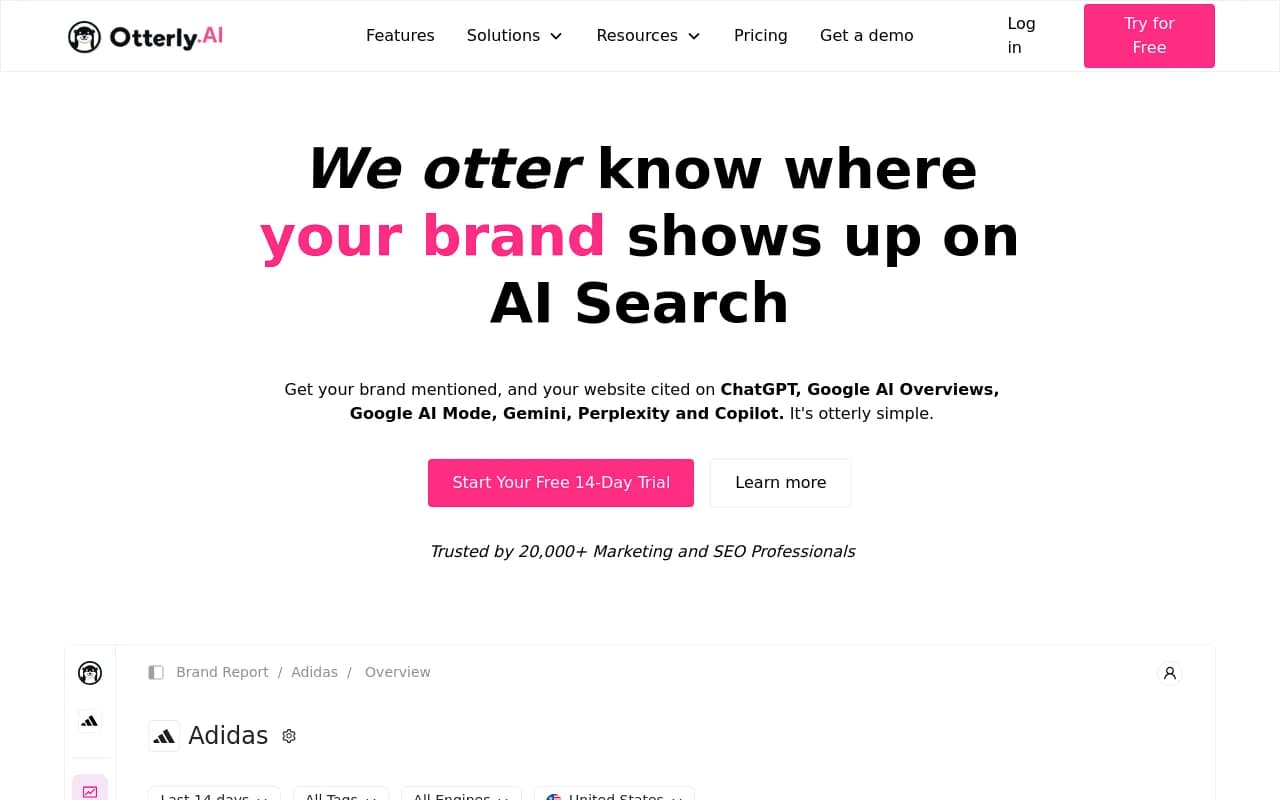
Otterly.AI is a lighter-weight monitoring option -- affordable and easy to set up, but without content generation or crawler logs.
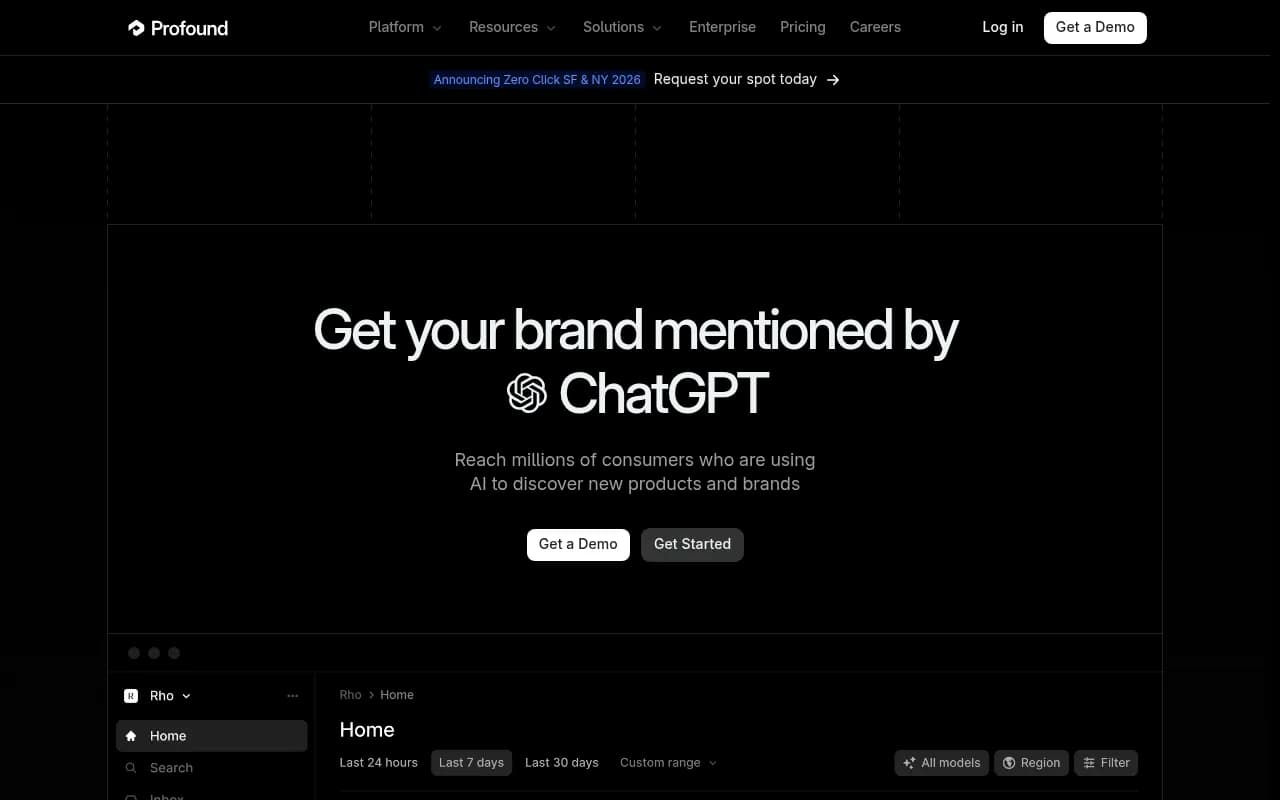
Profound is a strong enterprise option with solid analytics depth, though it comes at a higher price point and doesn't include content generation.
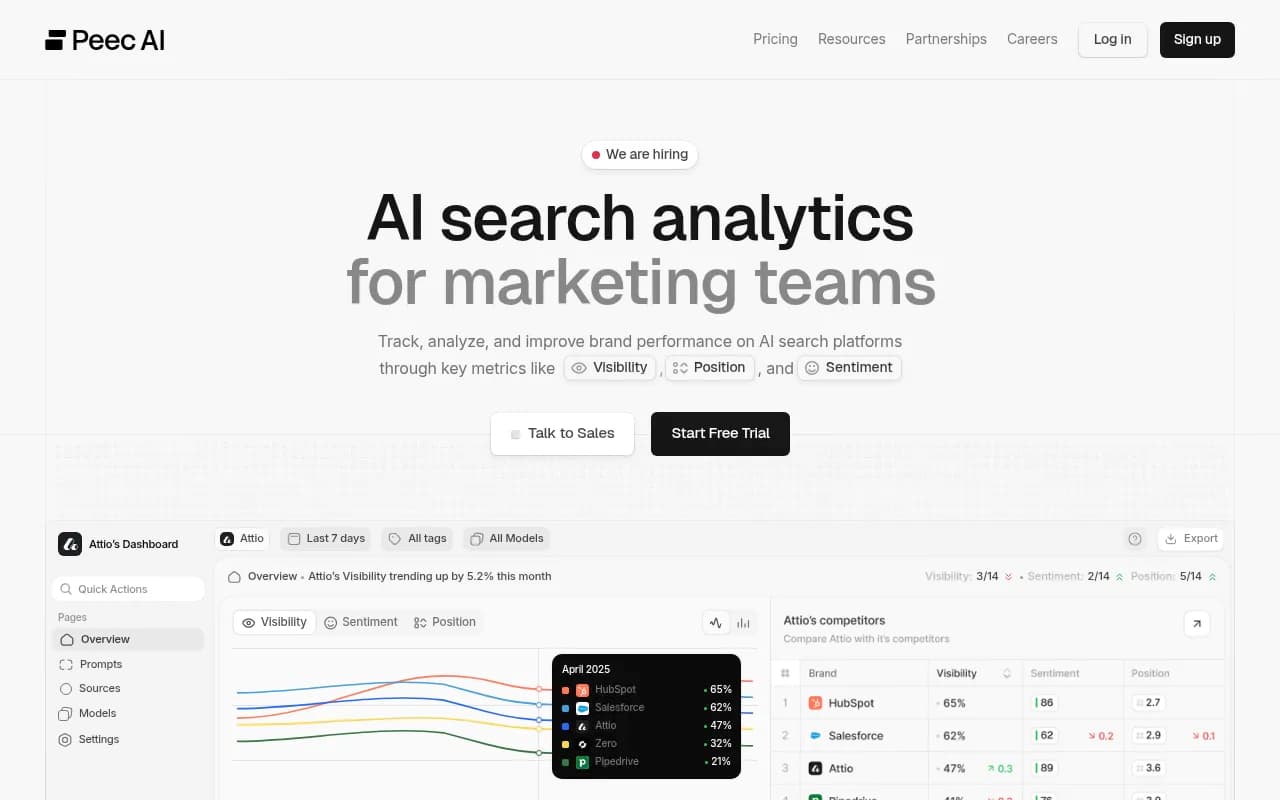
Peec AI covers the monitoring basics well but stops there -- no gap analysis, no content tools.
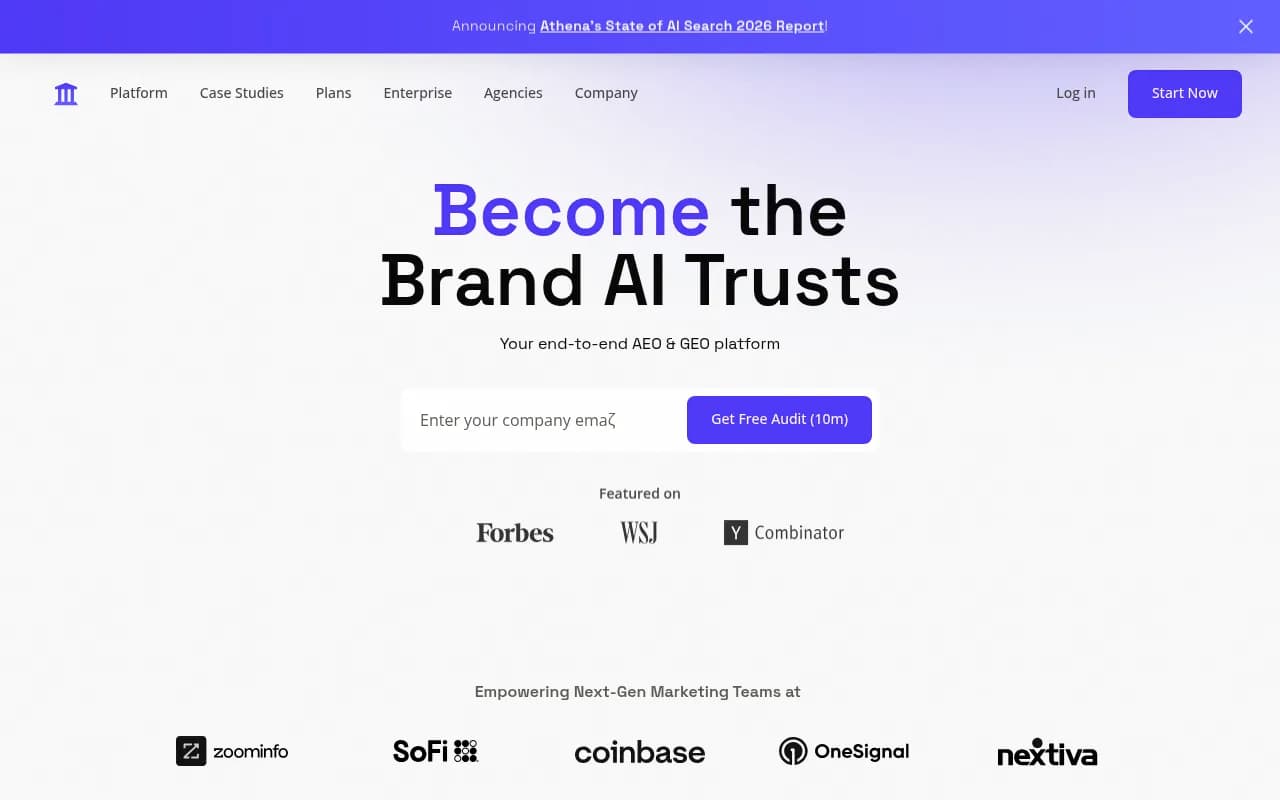
AthenaHQ has a monitoring-first approach similar to GetMint, with good competitor tracking but limited optimization capabilities.
Bottom line
If you're choosing between GetMint and Promptwatch in 2026, the decision comes down to what you need from the platform.
GetMint is a capable monitoring tool with a strategic lens on brand impact. If visibility measurement is your primary goal, it's worth evaluating.
Promptwatch is the better choice if you want a platform that doesn't just tell you where you're losing in AI search -- but actually helps you win. The combination of gap analysis, AI content generation, crawler logs, and traffic attribution makes it the more complete platform for teams that need to move from insight to action.
Both have free trials. The fastest way to decide is to run your own brand through each one and see which gives you more to work with.