Key takeaways
- Traditional SEO rank trackers don't measure AI search visibility -- you need a dedicated tool that queries LLMs and tracks citations, mentions, and sentiment.
- Most tools in this space are monitoring-only dashboards. A smaller number also help you act on what you find by identifying content gaps and generating optimized content.
- Promptwatch, Profound, and Scrunch are the most feature-complete platforms, but they serve different use cases and price points.
- If you're an agency managing multiple clients, look specifically for multi-brand support, white-label reporting, and partnership programs.
- The right tool depends on whether you need monitoring alone, or a full optimization loop: find gaps, create content, track results.
Why your SEO dashboard is measuring the wrong game
Your rank tracker says you're doing fine. Page one for several keywords, steady organic traffic, nothing alarming. But when a prospect opens ChatGPT and types "What's the best [your category] tool?" -- does your brand come up?
Most marketing teams genuinely don't know. That's the problem.
AI search doesn't work like Google. There are no blue links, no page-two results, no ranking positions to track. Instead, ChatGPT, Perplexity, Claude, and Gemini synthesize information and write answers directly. Your brand either gets mentioned in that answer or it doesn't. And if it doesn't, you're invisible to a growing slice of your potential customers.
This is why a new category of tools has emerged: AI visibility trackers. They run queries against LLMs, capture the responses, and tell you whether your brand appears, how often, what sentiment surrounds it, and which competitors are winning the mentions you're missing.
The category is crowded now. There are dozens of platforms, and they vary wildly in what they actually do. Some are genuinely useful. Some are monitoring dashboards dressed up with impressive-sounding metrics. A few go further and help you fix what's broken.
This guide cuts through the noise.
What to look for in an AI visibility tracker
Before comparing specific tools, it's worth being clear about what actually matters.
Platform coverage is the obvious starting point. Does the tool query ChatGPT, Perplexity, Claude, Gemini, Grok, and Google AI Overviews? Or just one or two? The more models covered, the fuller the picture.
Prompt intelligence separates good tools from great ones. Knowing your brand appeared in 40% of responses is useful. Knowing which specific prompts drive those appearances -- and which prompts competitors are winning that you're not -- is actionable.
Content gap analysis is where most tools fall short. They show you the problem but not the path forward. The better platforms identify exactly what content you're missing and why AI models aren't citing you for certain topics.
Traffic attribution closes the loop. AI visibility is only valuable if it connects to real business outcomes. Can the tool show you which AI-driven visits converted?
Agency features matter if you manage multiple brands. Look for multi-brand dashboards, client workspaces, white-label reporting, and partnership programs.
The tools, compared
Promptwatch
Promptwatch is the most complete platform in this category. It monitors 10 AI models -- ChatGPT, Perplexity, Claude, Gemini, Grok, DeepSeek, Copilot, Meta AI, Mistral, and Google AI Overviews -- and goes well beyond tracking.
The core value is what Promptwatch calls the action loop. First, Answer Gap Analysis shows you exactly which prompts competitors rank for that you don't. You see the specific topics and questions AI models want to answer but can't find on your site. Second, a built-in AI writing agent generates articles, listicles, and comparisons grounded in real citation data -- content engineered to get cited, not generic SEO filler. Third, page-level tracking shows which pages are being cited, by which models, and how often. Traffic attribution (via code snippet, GSC integration, or server log analysis) connects visibility to revenue.
A few features stand out as genuinely unusual. AI Crawler Logs show in real time which AI crawlers are hitting your site, which pages they read, and what errors they encounter -- most competitors don't offer this at all. Reddit and YouTube tracking surfaces discussions that directly influence AI recommendations. ChatGPT Shopping tracking monitors when your brand appears in product recommendation carousels.
Pricing runs from $99/month (Essential: 1 site, 50 prompts) to $579/month (Business: 5 sites, 350 prompts, 30 articles/month). Agency and enterprise plans are available on custom pricing.

Profound
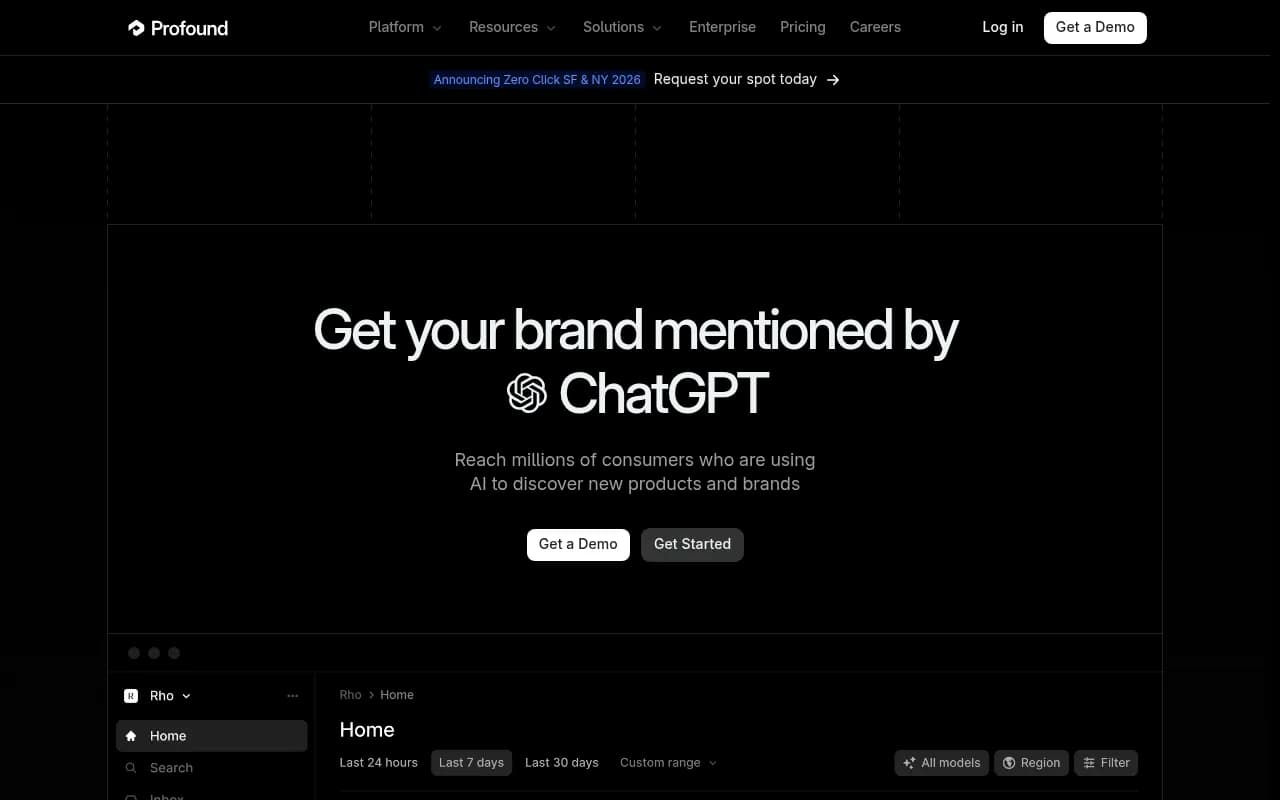
Profound is the other serious enterprise contender. It covers the major AI models and has strong agency features -- client workspaces, pitch environments where you can demo visibility data to prospects, and a partnership program. The research hub and "Profound Index" give it credibility as a data-driven platform.
Where Profound falls short relative to Promptwatch: it doesn't have Reddit or YouTube tracking, no ChatGPT Shopping monitoring, and content optimization capabilities are more limited. It's a strong monitoring platform, particularly for agencies that need to manage and present data across many clients. Pricing is on the higher end and requires a demo to get specifics.
Scrunch AI
Scrunch focuses on prompt tracking and search trend analysis. It's a cleaner, more focused product than some of the enterprise platforms -- good for teams that want clear visibility data without a steep learning curve. The comparison with Profound is a common one in this space: Scrunch tends to be more accessible, Profound more feature-rich for agencies.
Scrunch lacks content generation capabilities and the deeper attribution features you get with Promptwatch, but it's a solid choice for brands that want straightforward monitoring without a lot of complexity.
Otterly.AI
Otterly is one of the more affordable options in the category. It covers the main LLMs and gives you brand mention tracking and basic sentiment analysis. The trade-off is that it's monitoring-only -- there's no content gap analysis, no AI writing tools, no crawler logs, no traffic attribution. If you need to understand the problem but have your own content team to fix it, Otterly works. If you need an end-to-end solution, it's not enough.

Peec AI
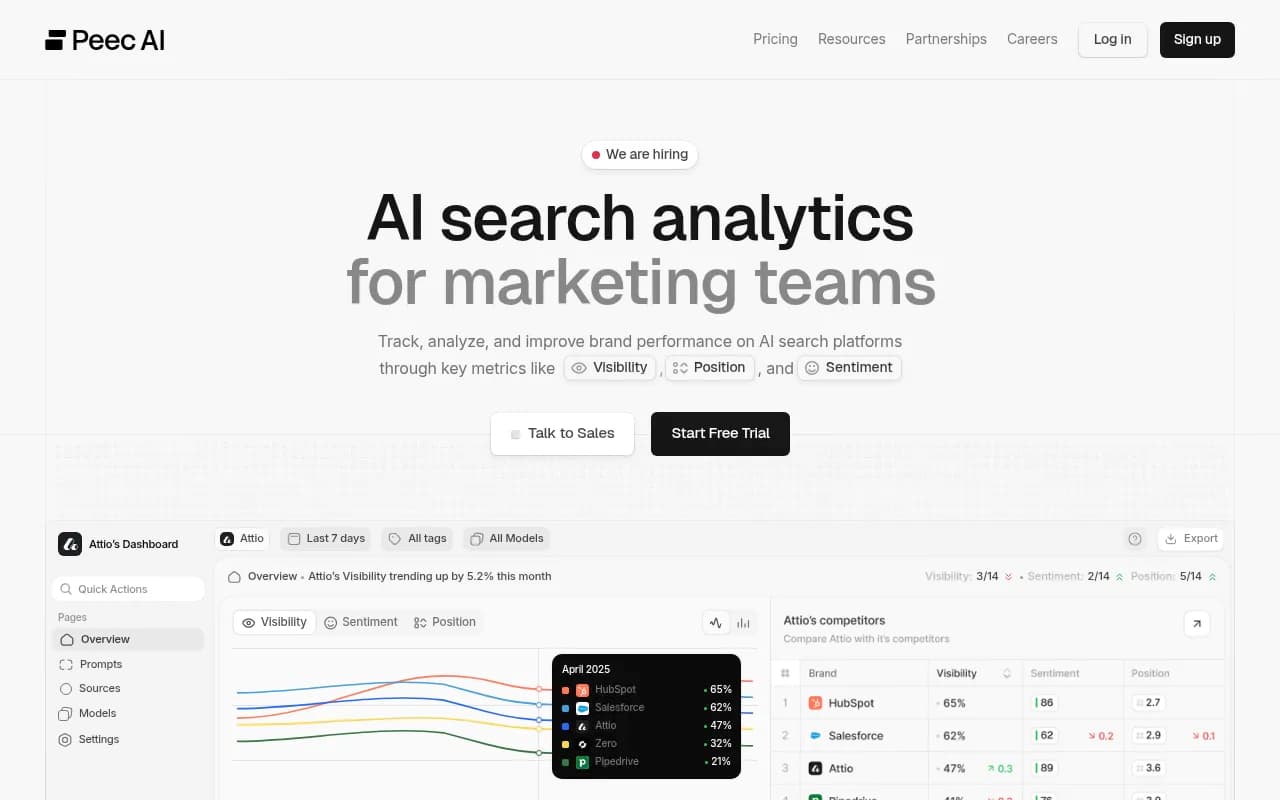
Peec AI is worth mentioning for its multi-language support, which is genuinely useful for brands operating across European markets. It tracks brand visibility across the main AI models and provides competitor comparisons. Like Otterly, it's primarily a monitoring tool -- the optimization side is thin.
Ahrefs Brand Radar
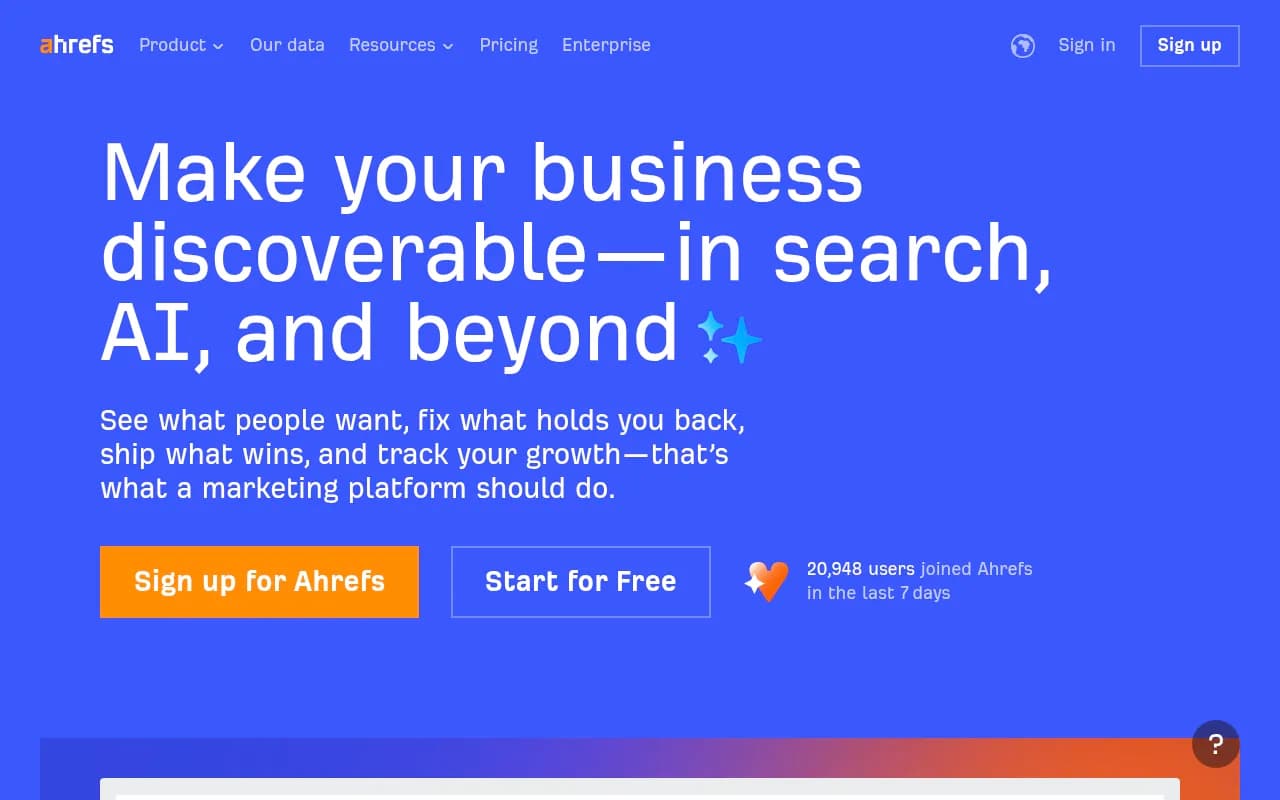
Ahrefs added Brand Radar to its existing SEO platform, which is convenient if you're already an Ahrefs user. The appeal is obvious: one platform for traditional SEO and AI visibility. The limitations are real though -- Brand Radar uses fixed prompts (you can't customize the queries it runs), there's no AI traffic attribution, and the depth of LLM coverage doesn't match dedicated platforms. It's a reasonable starting point for existing Ahrefs customers, not a replacement for a dedicated AI visibility tool.
Semrush
Similar story to Ahrefs. Semrush has added AI visibility features, and if you're already paying for the platform, they're worth exploring. But the prompts are fixed, coverage is narrower than dedicated tools, and there's no content gap analysis or AI-specific writing assistance. Useful as a supplement, not as a primary AI visibility strategy.
Athena HQ
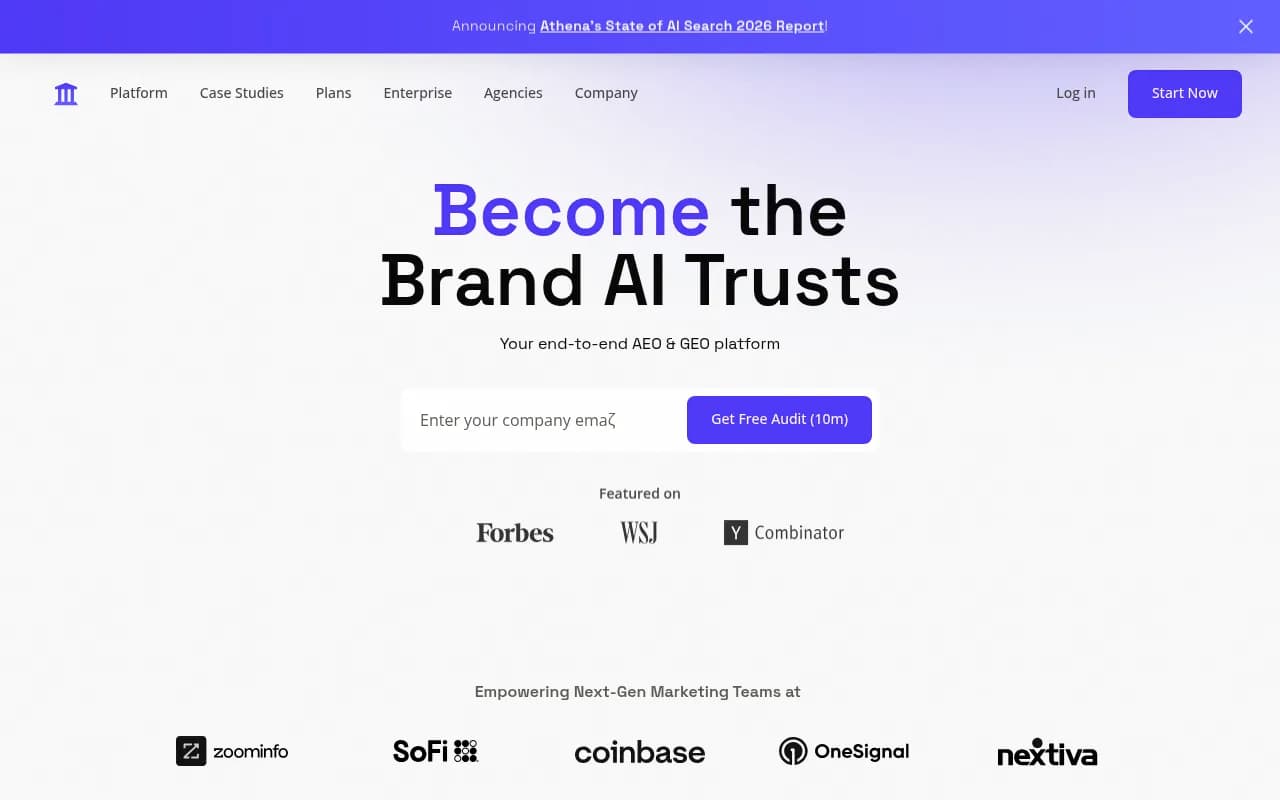
AthenaHQ covers 8+ AI search engines and provides brand visibility tracking with competitor comparisons. It's monitoring-focused -- the optimization and content generation capabilities that would turn data into action aren't really there. Good for teams that want clean dashboards and clear reporting, less good for teams that need to know what to do next.
Search Party
Search Party is agency-oriented and has a clean interface for managing client visibility data. The gaps are in prompt metrics -- you don't get the volume estimates and difficulty scores that help you prioritize which prompts to target -- and there's no content gap analysis. Useful for agencies that want to present AI visibility data to clients, less useful for actually improving it.
Search Party
Brandlight.ai
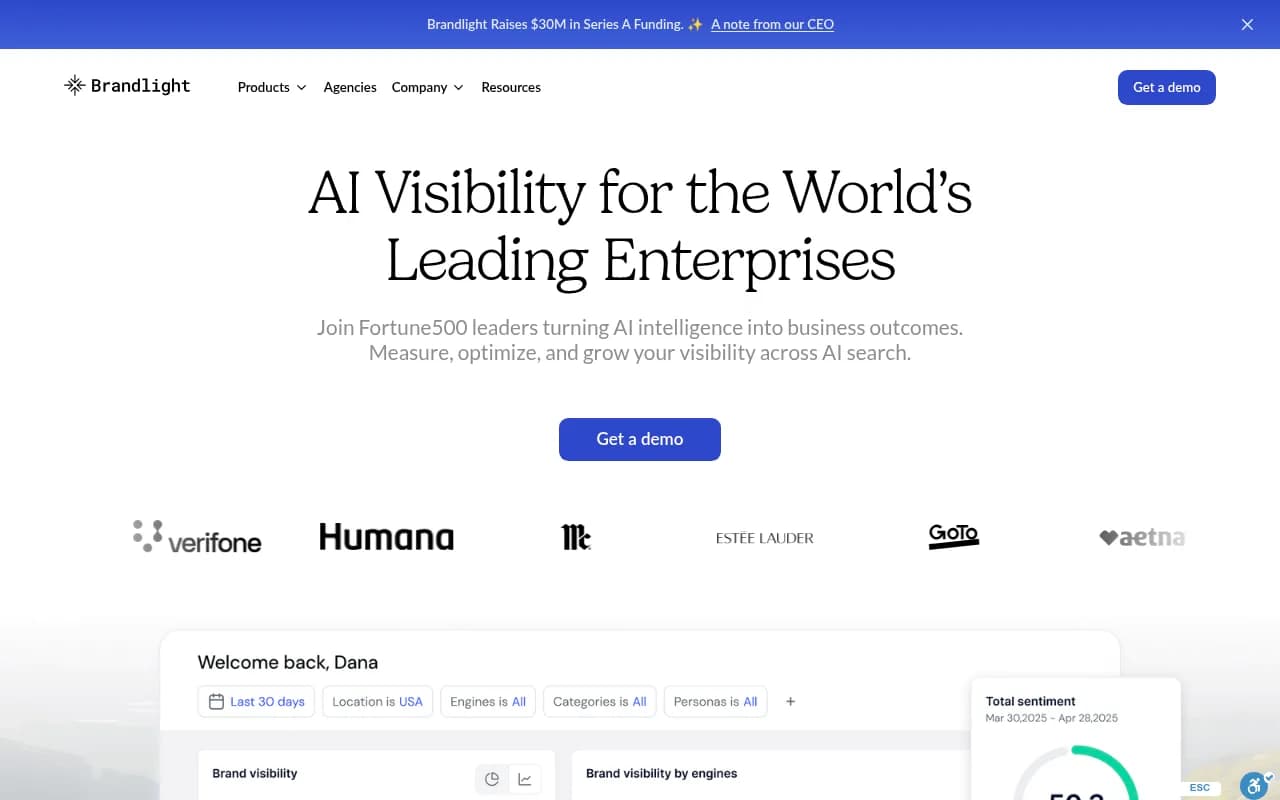
Brandlight sits in the niche/limited-feature tier. It covers AI visibility monitoring and has some sentiment analysis, but it's missing several capabilities that matter for serious optimization work: no crawler logs, no content generation, no Reddit/YouTube tracking. Worth considering as a lightweight monitoring option for smaller brands.
Feature comparison table
| Tool | AI models covered | Content gap analysis | AI content generation | Crawler logs | Reddit/YouTube tracking | Traffic attribution | Starting price |
|---|---|---|---|---|---|---|---|
| Promptwatch | 10 | Yes | Yes | Yes | Yes | Yes | $99/mo |
| Profound | 6+ | Limited | No | No | No | Limited | Custom |
| Scrunch AI | 5+ | No | No | No | No | No | Custom |
| Otterly.AI | 4+ | No | No | No | No | No | ~$49/mo |
| Peec AI | 4+ | No | No | No | No | No | Custom |
| Ahrefs Brand Radar | 3-4 | No | No | No | No | No | Included in Ahrefs |
| Semrush | 3-4 | No | No | No | No | No | Included in Semrush |
| AthenaHQ | 8+ | No | No | No | No | No | Custom |
| Search Party | 4+ | No | No | No | No | No | Custom |
| Brandlight.ai | 4+ | No | No | No | No | No | Custom |
How to choose the right tool for your situation
The honest answer is that it depends on what you're trying to do.
If you just need to know where you stand, almost any monitoring tool will give you that. Otterly.AI or Peec AI will show you whether your brand appears in AI responses and how often. That's useful baseline data.
If you're an agency managing multiple clients, Profound has the strongest agency-specific features -- client workspaces, pitch environments, a partnership program. Promptwatch also supports multi-brand management and has agency/enterprise pricing, with the added benefit of content generation tools you can use to actually improve client visibility.
If you need to act on what you find, the monitoring-only tools leave you stuck. You'll see that competitors are getting cited for prompts you're missing, but you won't know what content to create or how to create it. Promptwatch's Answer Gap Analysis and built-in writing agent are specifically designed for this -- it shows you the gap, then helps you close it.
If you're already deep in Ahrefs or Semrush, their built-in AI visibility features are worth exploring as a starting point. Just don't mistake them for a complete solution. Fixed prompts and no traffic attribution are real limitations.
If you're a smaller brand with a tight budget, Otterly.AI is the most accessible entry point. You won't get optimization tools, but you'll get visibility data at a price that doesn't require a budget conversation.
The monitoring-only trap
One thing worth saying directly: a lot of teams buy an AI visibility tracker, look at the dashboard for a few weeks, and then... nothing changes. They know their brand appears in 23% of relevant AI responses. They know a competitor appears in 61%. But the tool doesn't tell them what to do about it, so they don't do anything.
This is the monitoring-only trap. Data without direction doesn't move the needle.
The platforms that are actually changing brand visibility are the ones that close the loop -- they show you what's missing, help you create content that fills the gap, and then track whether that content starts getting cited. That's a fundamentally different product from a dashboard that shows you a score.
When evaluating any tool in this category, ask: "If I find a gap, what does this platform help me do about it?" If the answer is "nothing, you'd need to figure that out yourself," factor that into your decision.
A note on the broader landscape
The AI visibility tracking category is moving fast. New tools are launching constantly, and existing platforms are adding features at a pace that makes any comparison table partially outdated within months. A few things to watch:
Google AI Overviews coverage is still inconsistent across platforms. Some tools track it well, others barely at all. If Google AI Overviews is a priority for your business (and for most brands, it should be), verify coverage before committing.
Prompt volume data is still immature. Most platforms give you some version of "how often is this prompt asked," but the methodologies vary and the numbers aren't always reliable. Treat volume estimates as directional, not precise.
Traffic attribution from AI search is genuinely hard. AI models don't always send referral traffic in ways that standard analytics can capture. Platforms that offer server log analysis or custom code snippets tend to be more accurate than those relying purely on UTM parameters or referrer data.
The tools that will matter in 12 months are the ones building around optimization, not just monitoring. The monitoring problem is largely solved. The harder and more valuable problem -- helping brands actually improve their AI visibility -- is where the real differentiation will happen.
Bottom line
If you're serious about AI search visibility in 2026, you need a dedicated tool. Traditional SEO platforms aren't built for this, and the gap between what they measure and what actually drives AI citations is only growing.
For most brands and agencies, the decision comes down to whether you need monitoring or optimization. Monitoring tells you where you are. Optimization tells you how to get somewhere better. The tools that do both -- and there aren't many -- are worth the premium.