Key takeaways
- Most AI visibility tools are monitoring dashboards — they show you where you're invisible but don't help you do anything about it. For small teams, that's a real problem.
- Otterly.AI is the most affordable entry point, but it's light on optimization features. Peec AI adds smart suggestions and multi-language support.
- Promptwatch is the only platform in this roundup that covers the full loop: finding gaps, generating content to close them, and tracking whether it worked.
- Budget matters, but so does bandwidth. A tool that gives you data without a path to action just adds to your to-do list.
- Free trials exist across most of these platforms — test before you commit.
If you run marketing for a small team, you've probably already felt the shift. Organic traffic from Google is still important, but something else is happening: people are asking ChatGPT, Perplexity, and Gemini questions that used to go straight to a search engine. And those AI models are recommending brands, citing sources, and shaping purchase decisions — without your rank tracker knowing a thing about it.
The problem is that most AI visibility tools were built for enterprise teams with dedicated analysts. They're expensive, complex, and assume you have hours each week to interpret dashboards. Small marketing teams don't have that luxury.
This guide cuts through the noise. We looked at 7 platforms specifically through the lens of a small marketing team: tight budgets, limited time, and a real need to not just see the problem but actually fix it.
What small teams actually need from an AI visibility tool
Before getting into the tools, it's worth being clear about what "good" looks like when you're a team of two or five people without a dedicated SEO analyst.
You need a tool that's quick to set up, doesn't require a PhD to interpret, and ideally tells you what to do next — not just what's happening. Monitoring is table stakes. The question is whether the tool helps you act on what it finds.
Here's the framework we used to evaluate each platform:
- How many AI models does it cover?
- Does it go beyond monitoring into content optimization?
- Is the pricing accessible for small teams?
- How much manual work does it require to get value?
- Does it track results over time, not just a snapshot?
The 7 platforms reviewed
Otterly.AI
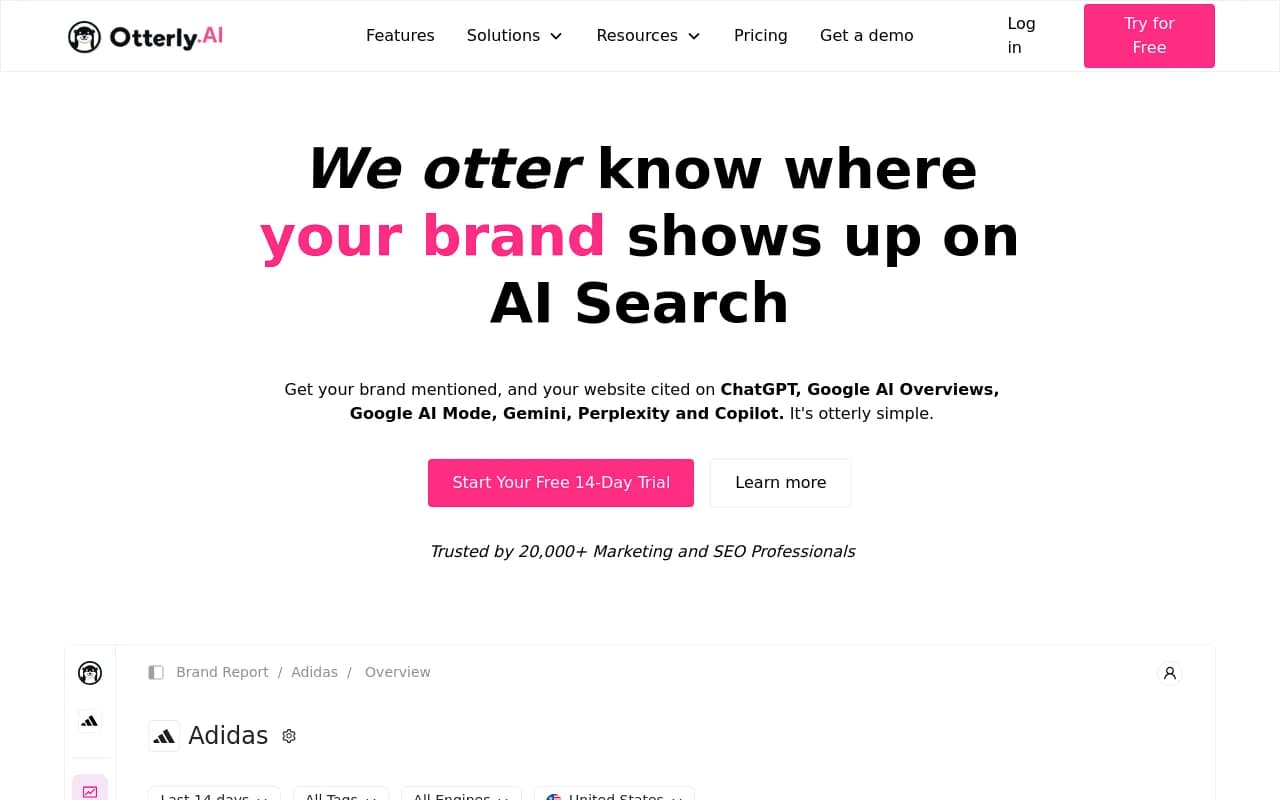
Otterly.AI is probably the most-cited "affordable entry point" in this space, and that reputation is mostly earned. It tracks brand mentions and citations across ChatGPT, Perplexity, and Google AI Overviews, with a clean interface that doesn't overwhelm you on day one.
The pricing is genuinely accessible for small teams, which is why it keeps showing up in recommendations for teams just getting started with AI search monitoring. Setup is fast — you can be tracking prompts within an hour.
Where it falls short: Otterly.AI is primarily a monitoring tool. It shows you where you appear (or don't), but the path from "I'm not being cited" to "here's what to do about it" isn't built in. For a small team that already has a content workflow, that might be fine. For a team that needs the tool to drive the work, it's a gap.
Peec AI
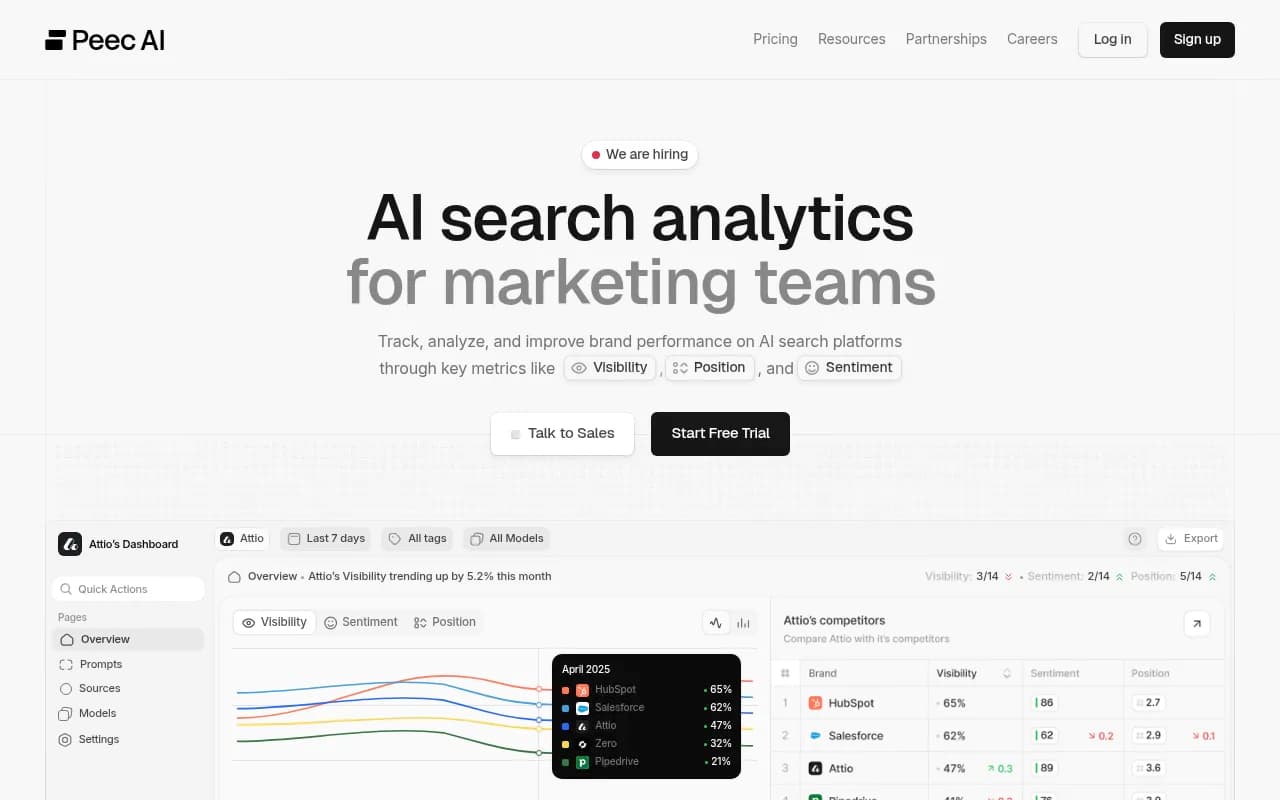
Peec AI positions itself around smart suggestions — it doesn't just track your visibility but gives you recommendations based on what it finds. It also has strong multi-language support, which matters if your audience isn't exclusively English-speaking.
Coverage includes the major AI models, and the interface is reasonably intuitive. The "smart suggestions" angle is genuinely useful for small teams because it reduces the interpretive work required. Instead of staring at a dashboard trying to figure out what to prioritize, Peec AI nudges you toward specific actions.
It's not the deepest platform in terms of raw data, but for a small team that wants guidance rather than just metrics, it punches above its weight.
Promptwatch
Promptwatch is the platform that most directly addresses the gap between "I can see I'm invisible" and "I know what to do about it." It monitors 10 AI models (ChatGPT, Perplexity, Claude, Gemini, Grok, DeepSeek, Copilot, Meta AI, Mistral, and Google AI Overviews), which is the broadest coverage in this roundup.
What makes it different for small teams specifically is the action loop it's built around. The Answer Gap Analysis shows you which prompts your competitors are appearing for that you're not — and crucially, it tells you what content is missing from your site. Then the built-in AI writing agent generates articles and comparisons grounded in real citation data, so you're not just producing content and hoping for the best. Page-level tracking then shows whether that content is getting cited, and by which models.
For a small team, that workflow matters. You're not hiring an analyst to interpret the data — the platform is doing that interpretation and pointing you toward the next step. Pricing starts at $99/month for one site and 50 prompts, which is accessible, and a free trial is available.

ZipTie
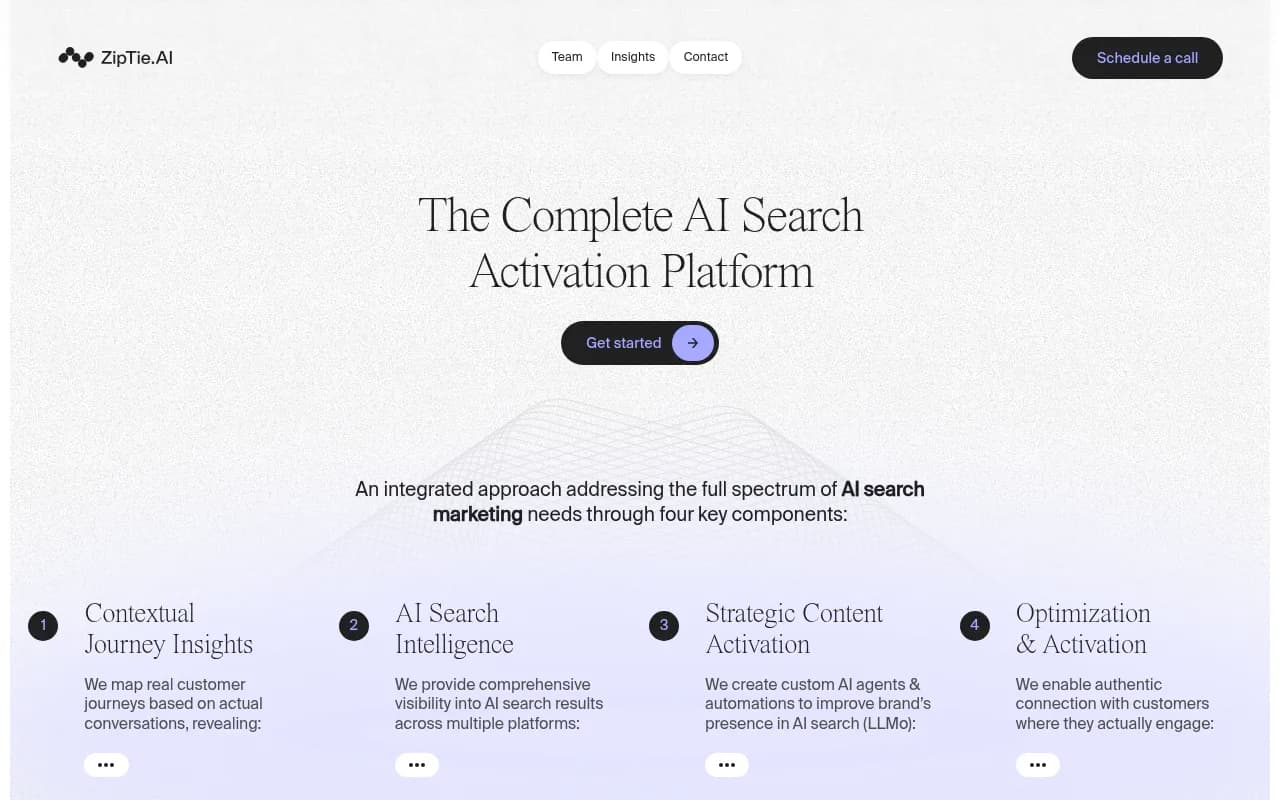
ZipTie focuses on deep analysis and reporting, with particular strength in Google AI Overviews tracking alongside ChatGPT and Perplexity. It has a content optimization module built in, which puts it ahead of pure monitoring tools.
The platform is well-regarded for the quality of its query intelligence — it helps you understand which prompts are worth targeting rather than just tracking the ones you've already set up. For a small team that wants to be strategic about which AI search opportunities to pursue, that's genuinely useful.
The interface is more data-dense than Otterly.AI, which is a tradeoff. More powerful, but requires more time to get value from.
SE Ranking (AI Visibility module)
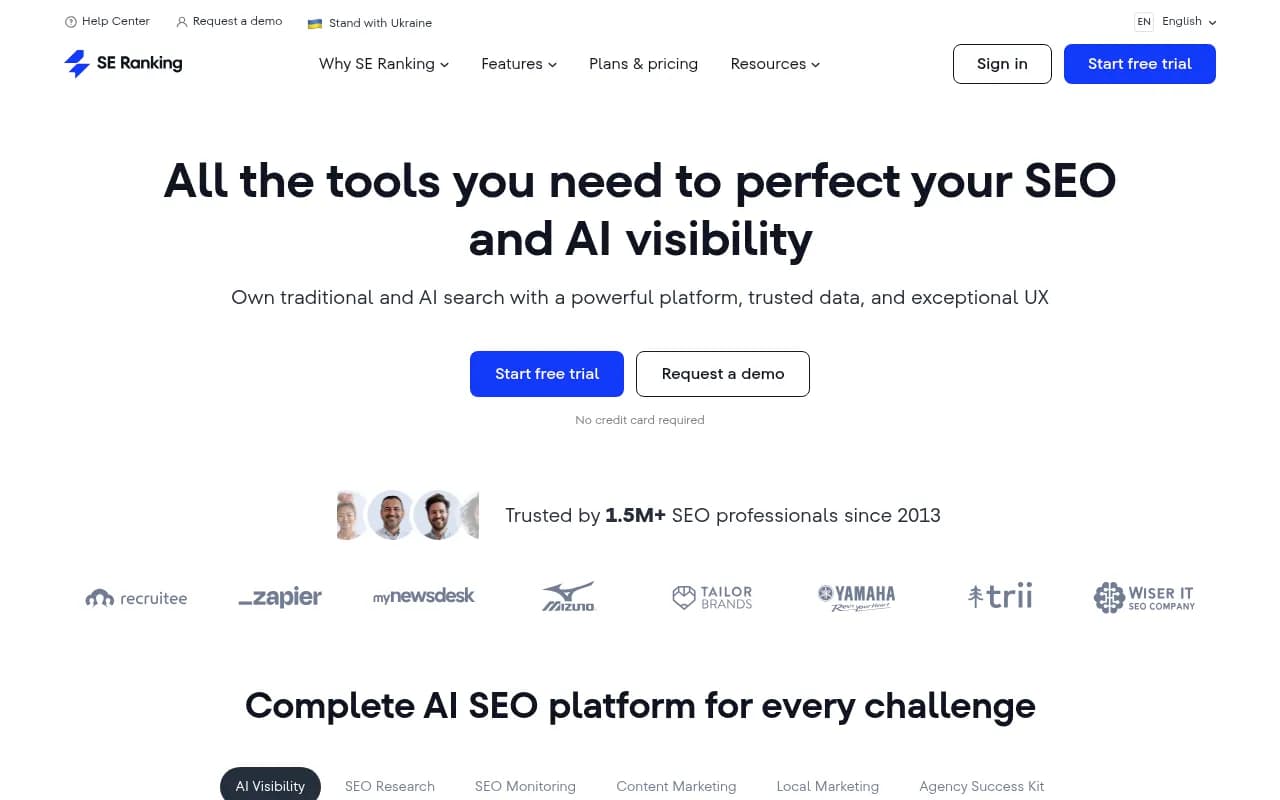
SE Ranking is primarily an SEO platform, but its AI visibility module has become a legitimate option for teams that want to consolidate their SEO and AI search tracking in one place. If you're already paying for SE Ranking, the AI visibility features are worth exploring before adding another subscription.
Coverage is solid, and the strategic view it offers — showing AI visibility alongside traditional ranking data — gives you a more complete picture of your search presence. The limitation is that it's not purpose-built for AI search, so some of the deeper features (like content gap analysis or crawler logs) aren't there.
Writesonic (AI Search Visibility)
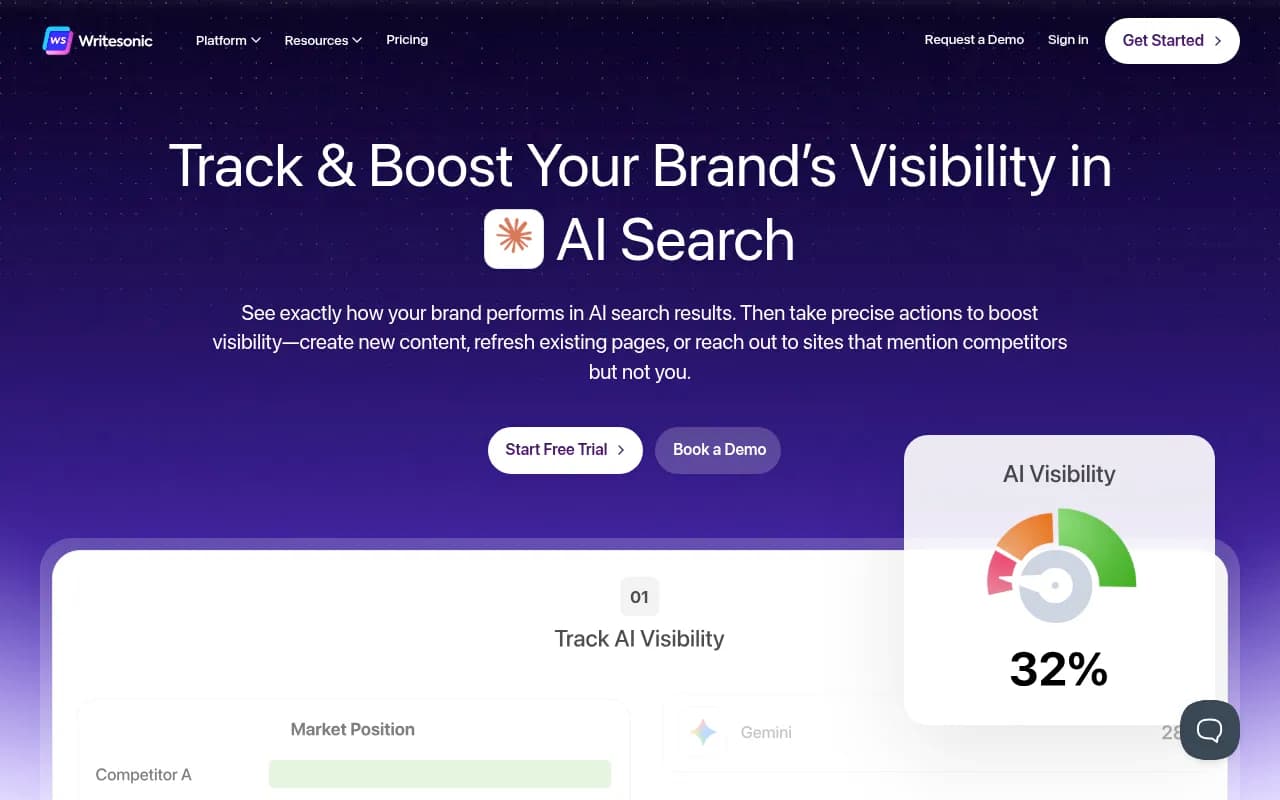
Writesonic is better known as an AI writing tool, but it's built out AI search visibility tracking that integrates with its content generation capabilities. For a small team that needs both content creation and visibility monitoring, the combination is appealing — you're not paying for two separate tools.
The tracking side is less mature than purpose-built platforms, but the integration between "I'm not appearing for this prompt" and "here's a draft article that might help" is a real workflow advantage. Worth considering if content production is your primary bottleneck.
Ahrefs Brand Radar
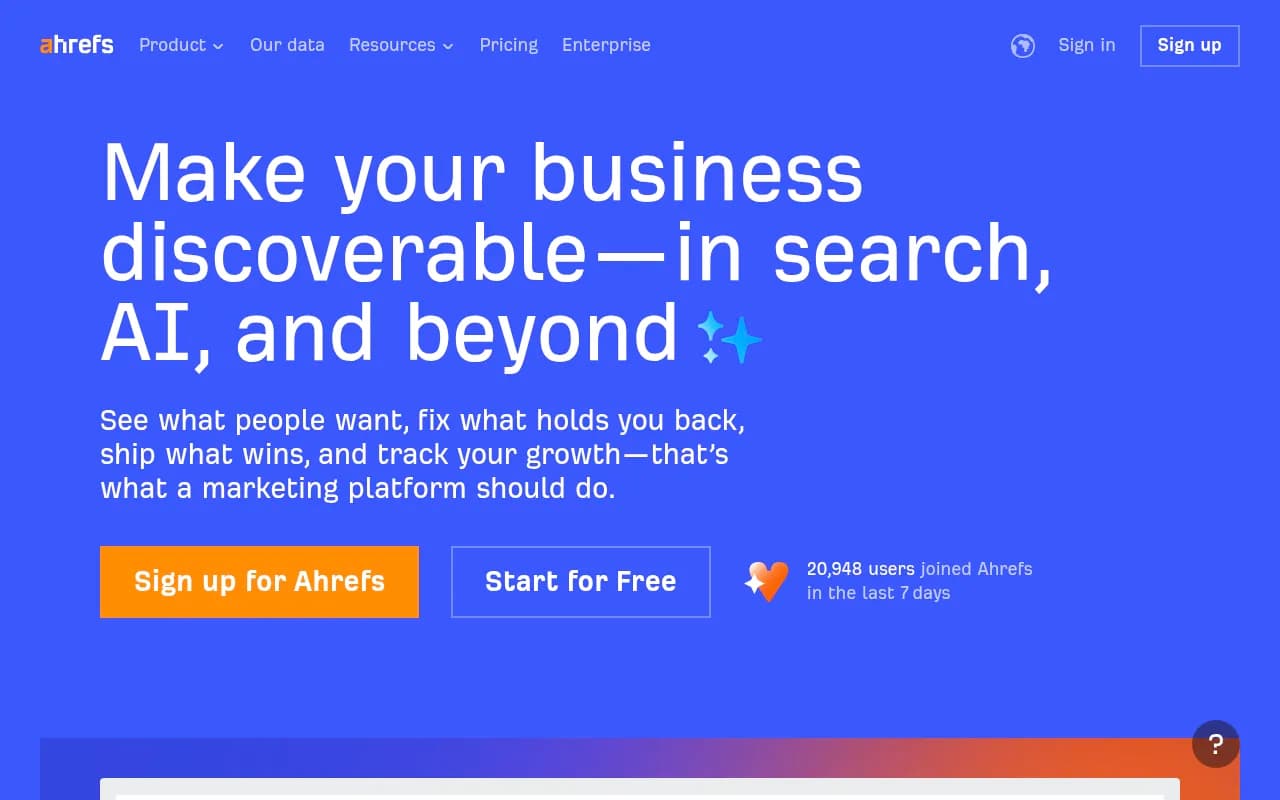
Ahrefs Brand Radar is the AI visibility offering from one of the most established names in SEO. If your team already uses Ahrefs for keyword research and backlink analysis, Brand Radar gives you AI search monitoring without adding another vendor.
The honest limitation: Brand Radar uses fixed prompts, which means you're tracking a preset list of queries rather than the specific questions your actual customers are asking. There's also no AI traffic attribution, so you can't connect what you're seeing in the dashboard to actual website traffic. For a small team that wants to understand the full picture, that's a meaningful gap.
How they compare
| Platform | AI models covered | Content optimization | Starting price | Best for |
|---|---|---|---|---|
| Promptwatch | 10 | Yes (built-in AI writer + gap analysis) | $99/mo | Teams that want monitoring + action |
| Otterly.AI | 3-4 | No | Low (entry-level) | Budget-conscious monitoring |
| Peec AI | 4-5 | Suggestions only | Mid-range | Multi-language teams |
| ZipTie | 3 | Yes (optimization module) | Mid-range | Deep analysis and reporting |
| SE Ranking | 4-5 | No (SEO-focused) | Varies (add-on) | Existing SE Ranking users |
| Writesonic | 3-4 | Yes (content creation) | Mid-range | Content-first teams |
| Ahrefs Brand Radar | 4-5 | No | Varies (add-on) | Existing Ahrefs users |
The monitoring-only problem
One thing worth saying plainly: most of these tools, including some well-regarded ones, are monitoring dashboards. They show you data. They don't help you act on it.
That's fine if you have an analyst who can translate dashboard data into a content brief, hand it to a writer, publish the article, and then track whether it moved the needle. Most small marketing teams don't have that pipeline.
The tools that are worth the most to small teams are the ones that compress that workflow. Seeing "you're not appearing for X prompt" is only useful if the next step is clear. The best platforms in this space are starting to close that loop — showing you the gap, helping you create the content, and then confirming whether it worked.
What to look for beyond the feature list
Prompt flexibility
Some tools let you define the exact prompts you want to track. Others use fixed prompt sets. For small teams, custom prompts matter — your customers ask specific questions, and you want to know if you're appearing in the answers to those questions, not a generic industry query.
Multi-model coverage
ChatGPT gets the headlines, but Perplexity is growing fast, and Google AI Overviews appear in nearly half of all searches according to Search Engine Journal. A tool that only tracks one or two models is giving you a partial picture. Aim for platforms that cover at least 4-5 models, and ideally more.
Traffic attribution
Knowing you're being cited in AI responses is good. Knowing that those citations are driving actual traffic to your site is better. A few platforms now offer traffic attribution through code snippets, Google Search Console integration, or server log analysis. For a small team trying to justify the spend, that connection to revenue matters.
Crawler logs
This is a more advanced feature, but it's worth knowing about. AI crawler logs show you which AI engines are actually visiting your site, which pages they're reading, and whether they're hitting errors. If an AI model can't crawl your site properly, it can't cite you — and most teams have no idea this is happening. Platforms like Promptwatch surface this data; most monitoring-only tools don't.
Which tool should a small team actually use?
It depends on where you are in the process.
If you're just getting started and want to understand the basics without a big commitment, Otterly.AI is a reasonable first step. It's affordable and gets you oriented quickly.
If you need multi-language support or want some built-in guidance on what to do with the data, Peec AI is worth a look.
If you're already using Ahrefs or SE Ranking and want to add AI visibility without another subscription, their native modules are the path of least resistance — just go in with realistic expectations about what they can and can't do.
If you want a platform that actually helps you close the loop — find the gaps, create content to fill them, and track whether it worked — Promptwatch is the most complete option in this space. The $99/month entry point is accessible for small teams, and the free trial means you can test it before committing.
The honest answer is that no tool solves this problem passively. AI search visibility requires ongoing work: tracking new prompts, creating content, updating what's already on your site. The question is whether your tool is helping you do that work efficiently or just adding another dashboard to check.
A note on the Reddit consensus
It's worth acknowledging that some voices in the SEO community are still skeptical about the accuracy of AI visibility data. A thread on r/DigitalMarketing from late 2025 noted that no tool yet gives perfectly accurate data on when or how AI models mention your brand. That's a fair point — the space is still maturing, and the underlying AI models don't expose their citation logic cleanly.
That said, directional data is still useful. Knowing that you're appearing in roughly 20% of relevant prompts versus a competitor's 60% tells you something actionable, even if the exact numbers aren't auditable to the decimal point. The tools that are most honest about this uncertainty tend to be the ones worth trusting.
Final thought
The shift to AI search isn't slowing down. For small marketing teams, the risk isn't that you'll invest in the wrong tool — it's that you'll wait too long to invest in any tool, and your competitors will build AI visibility while you're still watching your Google rankings.
Start somewhere. Test a few platforms. And prioritize tools that help you act, not just observe.