Key takeaways
- AI search now drives a significant share of brand discovery, and local businesses are often the least prepared for it -- most AI visibility tools are built with national brands in mind.
- Multi-location businesses need platforms that can track visibility by city, state, or region, not just at the domain level.
- The biggest gap isn't monitoring -- it's knowing what content to create and actually creating it. Most tools stop at dashboards.
- Promptwatch is one of the few platforms with built-in state/city-level tracking, content gap analysis, and an AI writing agent -- making it a strong fit for local and multi-location use cases.
- For reputation-heavy local businesses (franchises, healthcare, hospitality), pairing an AI visibility platform with a reputation management tool like Birdeye gives you full coverage.
Why local businesses have an AI visibility problem
If you run a single-location restaurant, a regional law firm, or a franchise with 50 locations, you probably know that Google rankings matter. What you might not realize is that AI search is quietly eating into the traffic that used to flow from those rankings.
When someone asks ChatGPT "what's the best HVAC company in Denver" or asks Perplexity "which hotel in Austin has the best reviews for business travelers," those answers don't come from a search results page. They come from whatever content, citations, and signals the AI model has absorbed. If your brand isn't in that mix, you simply don't exist in that answer.
Research from early 2026 suggests organic click-through rates drop by roughly 70% when an AI Overview is present. That's not a rounding error -- that's a structural shift in how people find local businesses. And unlike national brands with dedicated SEO teams and PR budgets, most local and multi-location businesses have no idea whether they're being cited in AI responses at all.
That's the core problem this guide addresses.
What makes local AI visibility different
Most AI visibility platforms were designed for enterprise brands tracking their name across broad industry queries. "Best project management software." "Top CRM for sales teams." That kind of thing.
Local visibility is messier. You're not just tracking one brand -- you might be tracking 50 franchise locations, each in a different city, each competing against different local rivals. The prompts that matter are hyper-specific: "best pizza near downtown Chicago," "top-rated dentist in Scottsdale," "affordable moving company in Seattle."
A few things make this genuinely harder than national brand tracking:
Geographic granularity. You need to know if you're visible in Austin but invisible in Houston. City-level and state-level tracking is table stakes for multi-location businesses, but many platforms only offer national-level data.
Prompt diversity. Local queries fan out in unpredictable ways. Someone asking about "Italian restaurants in Nashville" might also trigger sub-queries about parking, reservations, or dietary options. You need a platform that surfaces these variations, not just the obvious head terms.
Competitor landscape. Your competitors aren't the same in every city. A regional chain competes with different local players in each market. Visibility comparisons need to be location-specific.
Content at scale. If you have 30 locations, you potentially need 30 sets of locally-optimized content. Platforms that only show you what's missing -- without helping you create it -- create a massive operational burden.
The platforms worth considering
Promptwatch
Promptwatch is the platform I'd point most multi-location businesses toward first, and the reason is specific: it's one of the few tools that includes state and city-level tracking at the Professional tier ($249/mo) and above. Most competitors either don't offer geographic granularity at all, or lock it behind enterprise pricing.
Beyond the geo-tracking, what separates Promptwatch from monitoring-only tools is the full action loop. It shows you which prompts your competitors are visible for that you're not (Answer Gap Analysis), then helps you create content designed to close those gaps with a built-in AI writing agent trained on 880M+ real citations. For a multi-location business trying to build local content at scale, that combination is genuinely useful.
It also tracks AI crawler activity -- which pages ChatGPT, Claude, and Perplexity are actually reading on your site, and which ones they're ignoring. For local businesses with location pages, this is valuable: you can see if your Denver location page is getting crawled while your Boulder page isn't.

Pricing runs from $99/mo (Essential, 1 site, 50 prompts) to $579/mo (Business, 5 sites, 350 prompts, 30 articles/month). Agency and enterprise plans are available for teams managing many locations. There's a free trial.
Birdeye
Birdeye takes a different angle. It's primarily a reputation management and customer experience platform, but it's built specifically for multi-location businesses and has been expanding its AI visibility capabilities.
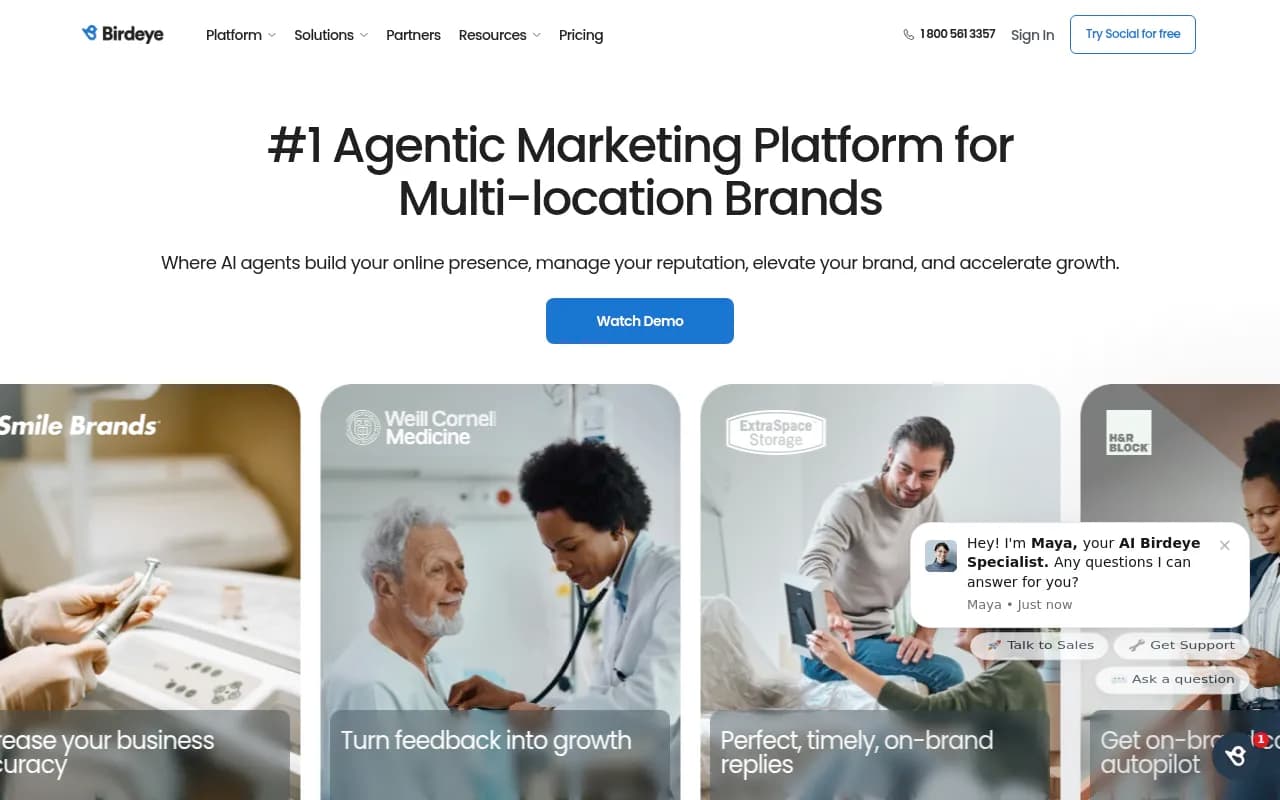
Where Birdeye shines is in the intersection of reviews, local listings, and AI search. AI models like ChatGPT and Perplexity pull heavily from review signals when answering local queries. A business with 4.8 stars across 500 Google reviews is far more likely to get cited than one with 3.9 stars and 40 reviews. Birdeye helps you manage that reputation infrastructure at scale -- across dozens or hundreds of locations -- which directly feeds into AI visibility.
If your business is in a category where reviews dominate AI answers (restaurants, healthcare, hospitality, home services), Birdeye is worth serious consideration alongside a dedicated GEO platform.
Peec AI
Peec AI is a multi-language, multi-region AI visibility platform that's particularly strong for businesses operating across different countries or language markets.
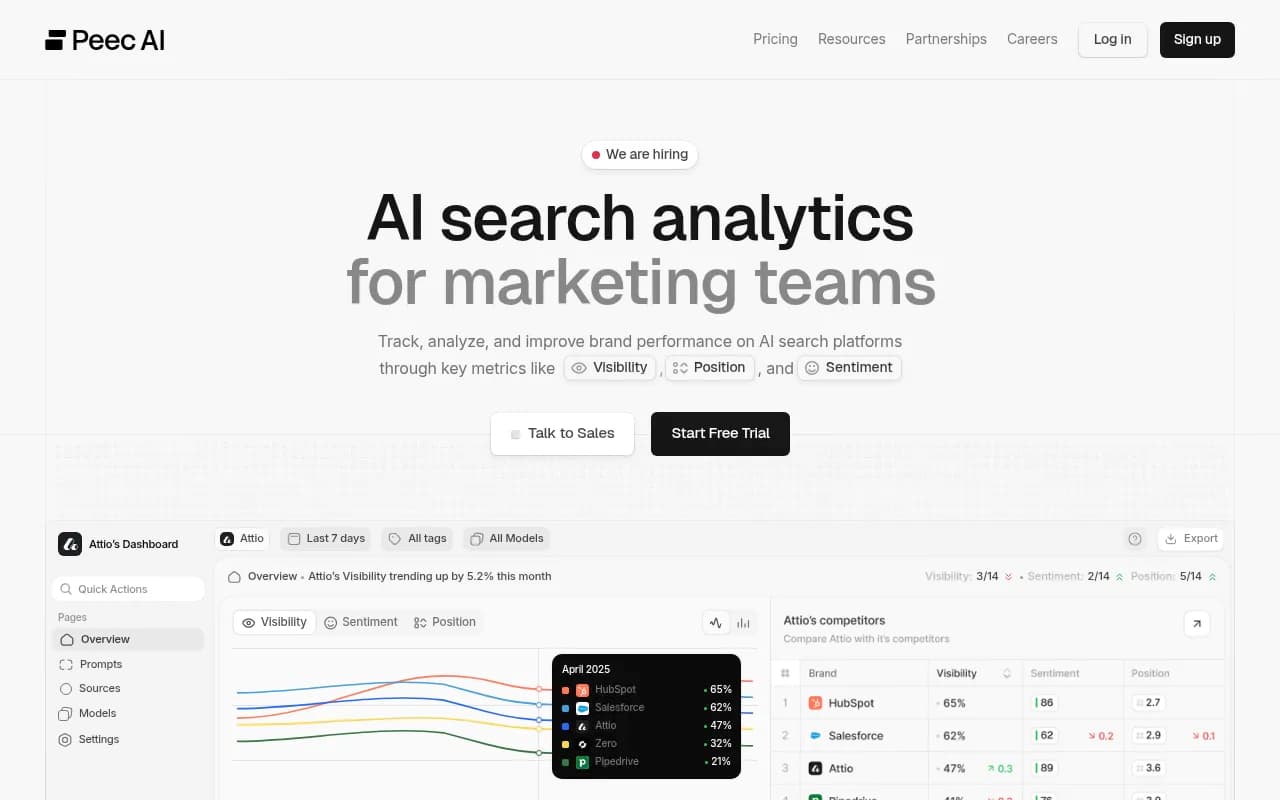
For a US-based multi-location business, Peec AI is probably more than you need. But if you're a franchise or retail chain with locations in multiple countries -- or if you serve non-English-speaking communities and need to track visibility in Spanish, French, or other languages -- Peec AI's international coverage is hard to match.
Otterly.AI
Otterly.AI is one of the more affordable entry points into AI visibility monitoring. It tracks brand mentions across major AI models and gives you a basic competitive picture.
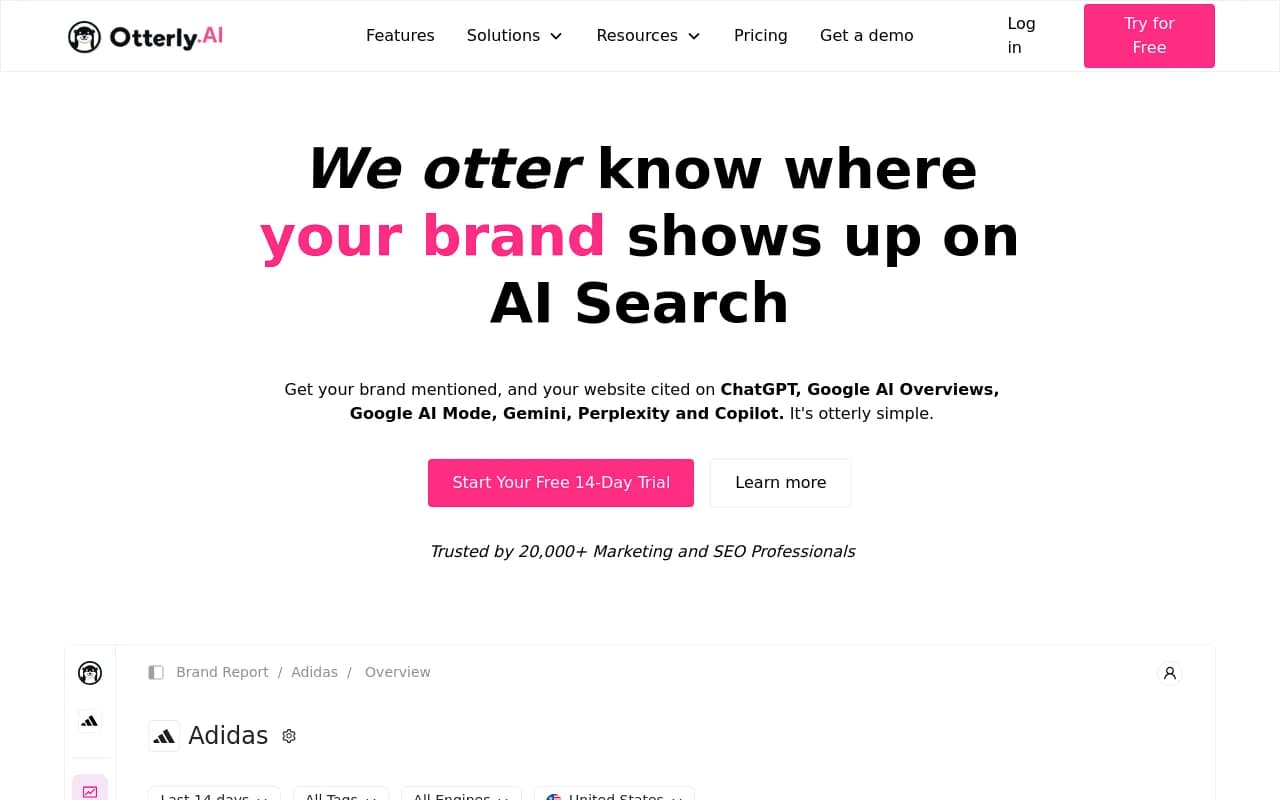
The limitation for local businesses is that Otterly.AI is primarily a monitoring tool. It shows you where you stand but doesn't help you improve. There's no content generation, no gap analysis, and limited geographic granularity. For a small single-location business that just wants to know if they're showing up in ChatGPT at all, it's a reasonable starting point. For anything more complex, you'll hit its ceiling quickly.
SE Ranking / SE Visible
SE Ranking has been building out its AI visibility capabilities through its SE Visible product, which tracks brand mentions and sentiment across AI search engines.
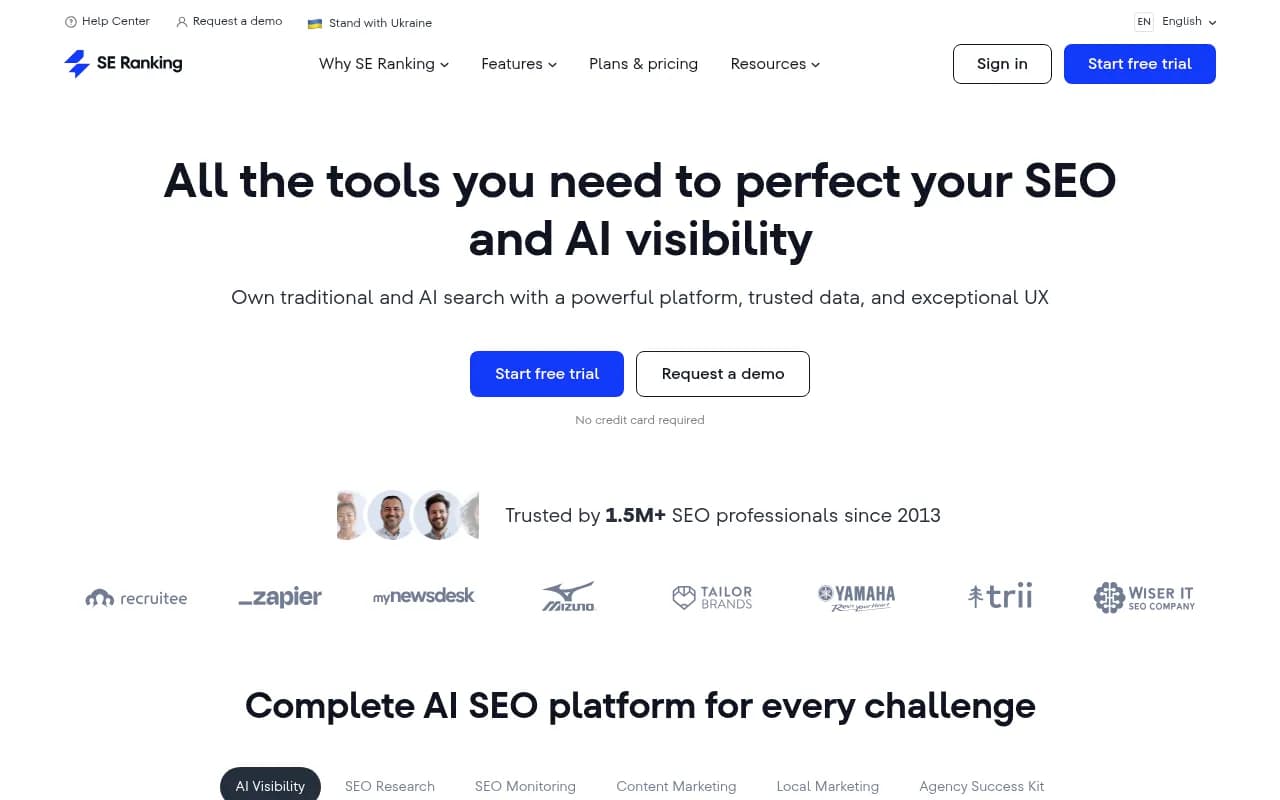
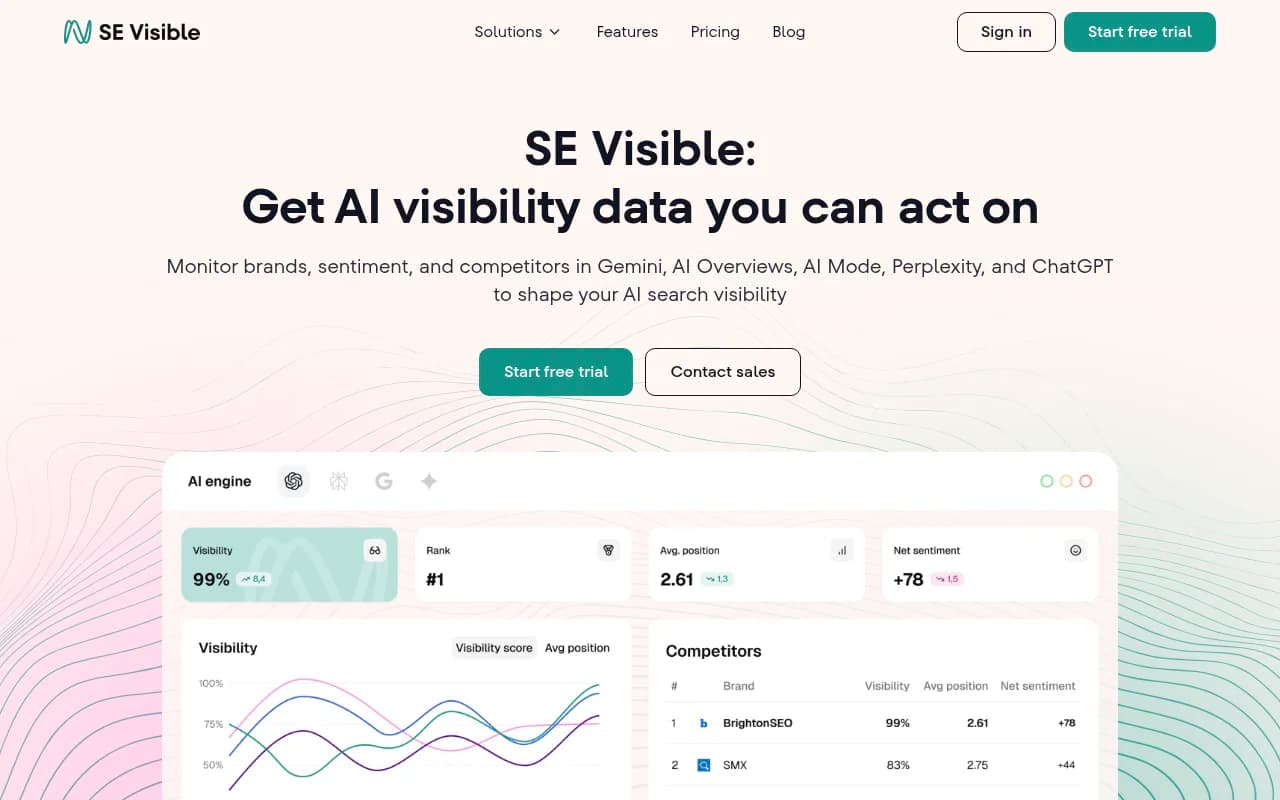
SE Ranking's strength is that it sits alongside a full traditional SEO suite. If you're already using SE Ranking for keyword tracking and site audits, adding AI visibility monitoring in the same platform reduces tool sprawl. For local businesses that are still heavily invested in traditional SEO alongside their AI visibility work, this integration is genuinely convenient.
Writesonic
Writesonic has evolved from a pure AI writing tool into a platform that combines content creation with AI search visibility tracking.
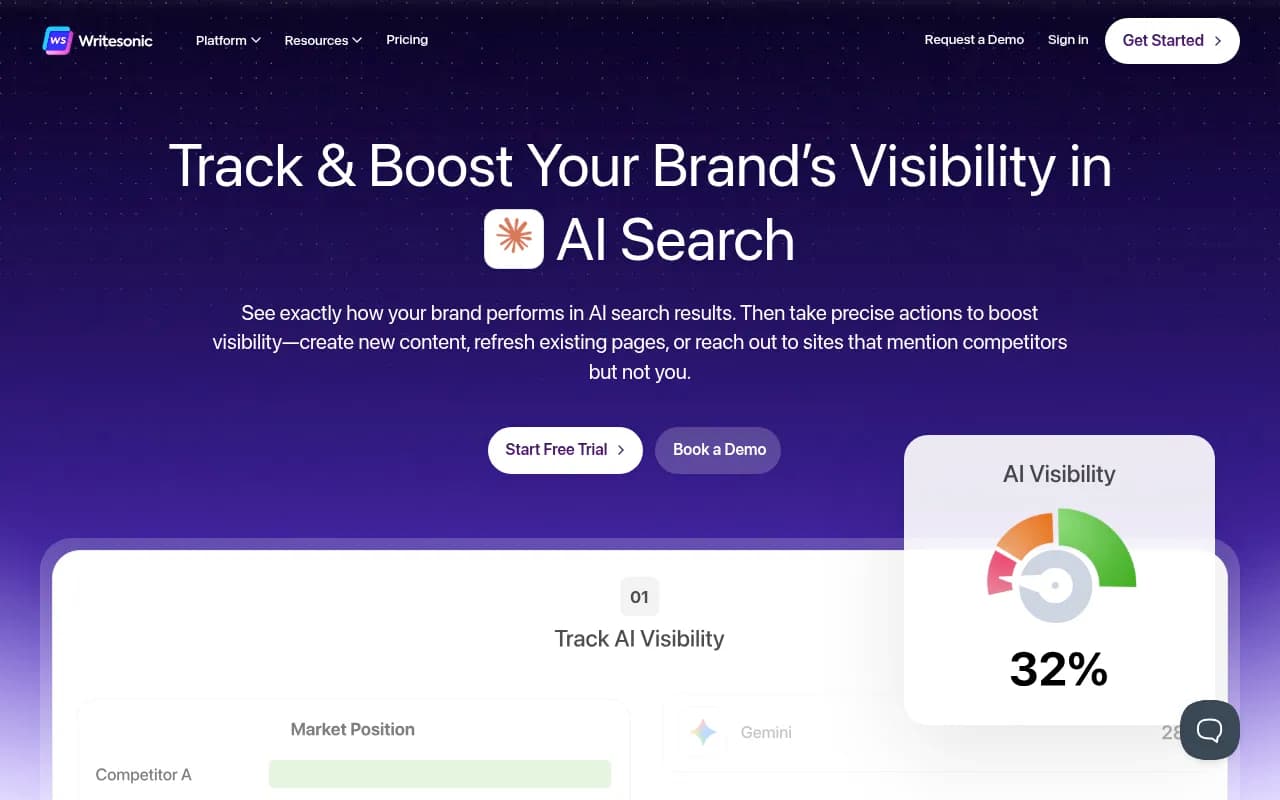
For local businesses that need to produce a lot of location-specific content -- think blog posts, FAQ pages, and service area pages -- Writesonic's content generation capabilities are strong. It's not as specialized in GEO tracking as Promptwatch or Profound, but if content production is your primary bottleneck, it's worth a look.
Profound AI
Profound is an enterprise-grade AI visibility platform with strong analytics and competitive intelligence features.
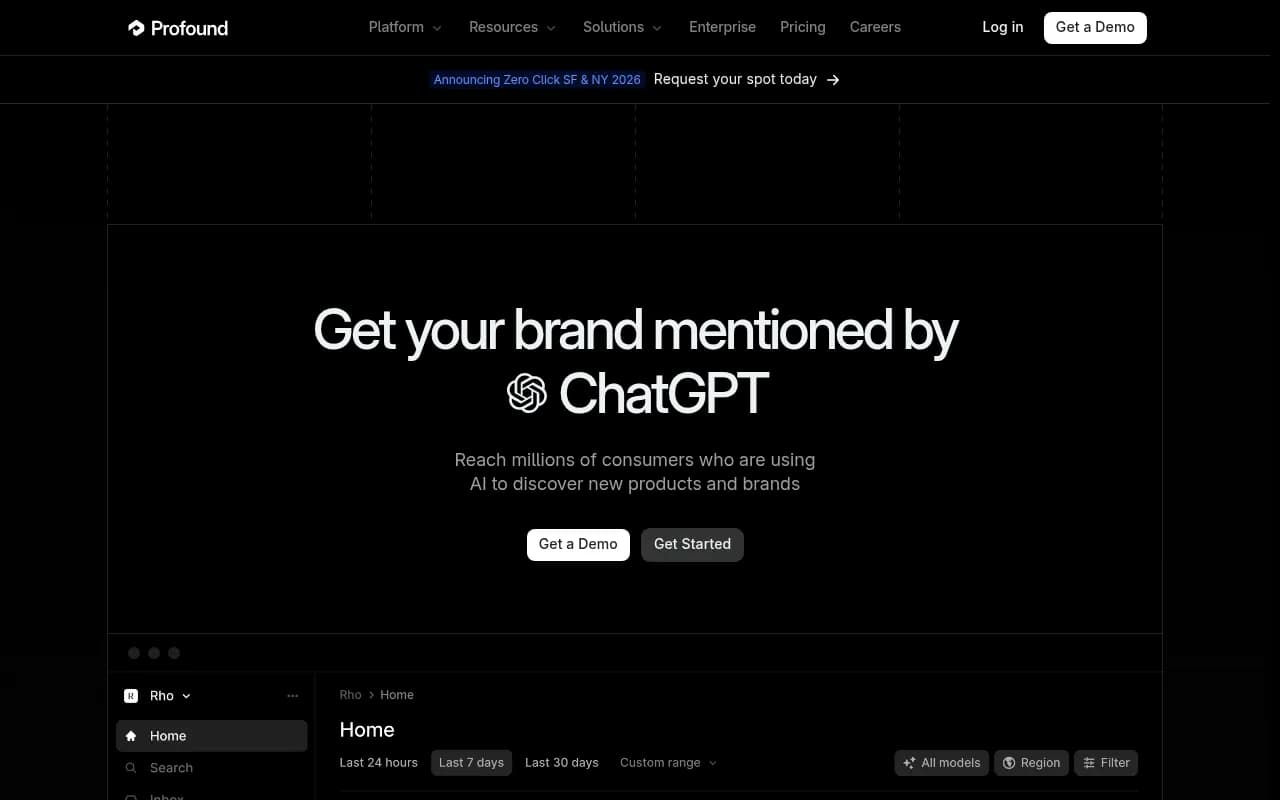
It's genuinely powerful, but it's priced and designed for large enterprises. A regional chain with 10 locations probably doesn't need (or want to pay for) what Profound offers. Where it makes sense is for larger franchise systems or national brands with significant local presence -- think a 200-location healthcare network or a major hotel chain.
Feature comparison: local and multi-location use cases
| Platform | City/state tracking | Multi-location support | Content generation | Competitor gap analysis | AI crawler logs | Price range |
|---|---|---|---|---|---|---|
| Promptwatch | Yes (Pro+) | Yes | Yes (built-in) | Yes | Yes (Pro+) | $99-$579/mo |
| Birdeye | Yes | Yes (core feature) | Limited | No | No | Custom |
| Peec AI | Country/language | Limited | No | Basic | No | Custom |
| Otterly.AI | No | No | No | Basic | No | ~$99/mo |
| SE Visible | Limited | No | No | Basic | No | Bundled with SE Ranking |
| Profound AI | Yes | Yes | No | Yes | No | Enterprise |
| Writesonic | No | No | Yes | Limited | No | $99-$249/mo |
How to actually use these tools for local visibility
Buying a platform is the easy part. Here's how to get real value from it for a local or multi-location business.
Start with prompt research, not brand monitoring
Most businesses jump straight to "is my brand being mentioned?" That's the wrong starting point. Before you can improve your visibility, you need to know what prompts your potential customers are actually using -- and which ones are driving traffic to competitors.
Tools like Promptwatch show you prompt volumes and difficulty scores, plus the "query fan-out" -- how one prompt branches into related sub-queries. For a local business, this might reveal that "best family dentist in [city]" fans out into sub-queries about insurance acceptance, appointment availability, and pediatric services. Each of those sub-queries is a content opportunity.
Build location pages that AI models can actually use
Most location pages are thin: an address, a phone number, maybe a few sentences. AI models have nothing to work with. A location page that actually gets cited typically includes:
- Specific services offered at that location (not just a generic list)
- Staff bios with credentials and specializations
- Local context (neighborhood, nearby landmarks, parking)
- FAQs specific to that location's customer base
- Reviews and testimonials embedded or linked
This is where content generation tools become genuinely useful. If you have 40 locations, you can't write 40 substantive location pages manually. Platforms with built-in AI writing agents can generate drafts grounded in your actual service data and local context.
Track by location, not just by domain
If you're using a platform that only shows you domain-level visibility, you're flying blind on which locations are performing and which aren't. City-level tracking lets you identify specific underperforming markets and prioritize content investment accordingly.
For example, you might discover that your Chicago location is well-cited in AI responses but your Milwaukee location barely appears. That's actionable: you know where to focus content creation and local PR efforts.
Monitor AI crawler activity on your location pages
AI crawlers don't behave like Google's crawler. They may read your homepage frequently but ignore your location pages entirely. Platforms with crawler log analysis (Promptwatch includes this at the Professional tier) show you exactly which pages AI engines are reading, how often, and what errors they encounter.
If your Denver location page returns a slow load time or a crawl error, AI models may simply never read it -- which means they can never cite it. Fixing these technical issues is often the fastest win available.
Don't ignore review signals
AI models answering local queries pull heavily from review platforms. A business with strong, recent, detailed reviews is more likely to be cited than one with sparse or outdated reviews. This isn't something most AI visibility platforms track directly -- it's where a tool like Birdeye earns its place in the stack.
The practical implication: your AI visibility strategy for local businesses needs to include review generation and management, not just content creation.
Recommended stacks by business type
Single-location small business (restaurant, salon, clinic) Start with Promptwatch's Essential plan ($99/mo). Focus on identifying the 10-15 prompts most relevant to your business and location, then use the content generation tools to build out FAQ pages and blog content that answers those prompts. Add Birdeye if reviews are central to your category.
Regional chain (5-50 locations) Promptwatch Professional ($249/mo) gives you city-level tracking and crawler logs. Pair it with Birdeye for reputation management across locations. Budget for content production -- either using Promptwatch's built-in writing agent or a dedicated content tool.
Large franchise system (50+ locations) At this scale, you need enterprise-level tooling. Promptwatch's Business or Agency plan, combined with Birdeye and potentially Profound AI for deeper competitive intelligence. You'll also want to think about workflow automation -- connecting your AI visibility data to content production pipelines at scale.
International multi-location brand Add Peec AI to the mix for multi-language and multi-country tracking. Promptwatch covers 10 AI models and supports custom personas and languages, but Peec AI's international depth is worth evaluating if you're operating in non-English markets.
The honest reality
Most local businesses are starting from zero on AI visibility. They don't know if they're being cited, they don't know what prompts matter, and they don't have a process for improving their standing in AI-generated answers.
The good news is that the bar is low. Most local competitors are equally invisible. The businesses that start building AI-optimized content now -- location pages, FAQs, locally-relevant articles -- will have a meaningful head start by the time AI search becomes the default way people find local services.
The tools exist. The question is whether you're going to use them before your competitors do.

The shift from traditional SEO rankings to AI citability is well underway -- local businesses that adapt early will hold a durable advantage.