Summary
- Promptwatch -- Best overall alternative with content generation, crawler logs, and traffic attribution. Starts at $99/mo vs Relixir's $1,600/mo. The only platform that closes the optimization loop from gap analysis to content creation to results tracking.
- AthenaHQ -- Enterprise-focused monitoring with strong analytics but no content creation tools. Starts at $295/mo. Good for teams that already have content workflows.
- Otterly.AI -- Budget-friendly monitoring-only tool starting at $29/mo. Tracks mentions and citations but leaves you to figure out what to do next.
- Peec AI -- Multi-language tracking with smart suggestions. Starts at €89/mo. Solid for international brands but lacks optimization features.
- Profound -- Mid-tier monitoring platform with competitive analysis. Starts at $99/mo but missing content generation and crawler insights.
Relixir positions itself as an all-in-one GEO platform with an AI-native CMS, analytics, and managed services. The $1,600/mo starting price includes 400 prompts and content generation, but you're paying for a bundled package whether you need all the pieces or not. Most teams looking at Relixir alternatives want either more control over their content workflow, lower pricing for monitoring-only needs, or deeper optimization capabilities.
Promptwatch

Promptwatch is the strongest alternative to Relixir because it's the only platform that actually helps you fix visibility gaps instead of just showing you data. Relixir bundles monitoring with a proprietary CMS -- you're locked into their content workflow. Promptwatch takes a different approach: it shows you exactly what's missing from your site (Answer Gap Analysis), generates content grounded in 880M+ real citations, then tracks the results with page-level attribution.
The action loop is what sets it apart. You see which prompts competitors rank for but you don't. The built-in AI writing agent creates articles engineered to get cited by ChatGPT, Claude, and Perplexity -- not generic SEO filler. Then you track visibility improvements and connect them to actual traffic via GSC integration or server logs. Most competitors (including Relixir's monitoring features) stop at step one.
Additional capabilities Relixir doesn't offer: AI Crawler Logs showing exactly which pages ChatGPT and Claude are reading on your site, real-time logs of crawl errors, Reddit and YouTube insights that influence AI recommendations, and ChatGPT Shopping tracking for product mentions. Relixir's analytics are solid but they don't surface the crawl-level data you need to diagnose indexing issues.
Pricing is dramatically lower. Promptwatch Essential is $99/mo (1 site, 50 prompts, 5 AI-generated articles). Professional $249/mo adds crawler logs and 150 prompts. Business $579/mo gets you 5 sites and 350 prompts. Compare that to Relixir's $1,600/mo entry point. If you're a mid-sized team that wants optimization tools without paying for managed services, Promptwatch delivers more capability at a fraction of the cost.
The trade-off: Relixir includes a dedicated strategist on their Managed plan ($3,350/mo). Promptwatch is self-service -- you run the platform yourself. If you need hand-holding, Relixir's managed approach might justify the premium. If you want control and don't need someone else running your GEO strategy, Promptwatch is the better deal.
Best for: Marketing teams and agencies that want to optimize AI visibility themselves without paying for bundled managed services. Especially strong for teams that need crawler-level diagnostics and content gap analysis.
AthenaHQ

AthenaHQ is a monitoring-focused platform used by enterprise brands like ZoomInfo, Coinbase, and SoFi. It tracks visibility, position, and sentiment across ChatGPT, Claude, Perplexity, and Gemini with detailed analytics and competitor heatmaps. The interface is polished and the data is reliable, but it's fundamentally a tracking dashboard -- you see where you rank, but the platform doesn't help you improve.
Relixir's advantage over AthenaHQ is the integrated CMS and content generation. Relixir shows you gaps and generates content to fill them. AthenaHQ shows you gaps and leaves you to figure out what to do. If you already have a content team and workflow in place, AthenaHQ's analytics are strong. If you're looking for optimization tools, it's not the right fit.
Pricing starts at $295/mo with no free trial, which is higher than Promptwatch but lower than Relixir. The platform is clearly built for enterprise buyers -- case studies emphasize 10x citation rate growth and $126K in equivalent media value, but those results came from teams doing the optimization work themselves. AthenaHQ provided the data; the customer did the heavy lifting.
What it does well: Competitive benchmarking, multi-model tracking, and executive-level reporting. The State of AI Search 2026 report they published shows they understand the market. The platform is stable and the team is responsive. What it doesn't do: content gap analysis, AI content generation, crawler logs, or traffic attribution. You're paying for visibility tracking and that's it.
Best for: Enterprise marketing teams with existing content workflows who need reliable monitoring and competitive intelligence but don't need optimization tools built into the platform.
Otterly.AI

Otterly.AI is the budget option in this comparison. $29/mo gets you 15 prompts on the Lite plan, $189/mo for 100 prompts on Standard. It tracks brand mentions and website citations across ChatGPT, Perplexity, Google AI Overviews, Gemini, and Copilot. The interface is clean, setup is fast, and the 14-day free trial (no credit card required) makes it easy to test.
The limitation is obvious: Otterly.AI is monitoring-only. You see where your brand appears, which pages get cited, and how you compare to competitors. Then you're on your own. No content gap analysis, no AI writing tools, no crawler logs, no optimization suggestions. It's a dashboard that shows you data and nothing else.
Compared to Relixir's $1,600/mo all-in-one approach, Otterly.AI is the opposite end of the spectrum. Relixir bundles monitoring, content generation, and managed services. Otterly.AI gives you basic tracking at a price point accessible to small businesses and solopreneurs. If you just want to know when ChatGPT mentions your brand and you don't need advanced features, Otterly.AI works.
The GEO Audit tool is a nice addition -- it analyzes 25+ on-page factors and suggests improvements. But it's a static audit, not a dynamic optimization engine. You get a report with recommendations, then you implement them yourself. Relixir's CMS auto-refreshes content; Otterly.AI tells you what's wrong and leaves you to fix it.
Best for: Small businesses, solopreneurs, and early-stage startups that need basic AI visibility tracking without paying for features they won't use. Not suitable for teams that need optimization tools or content generation.
Peec AI
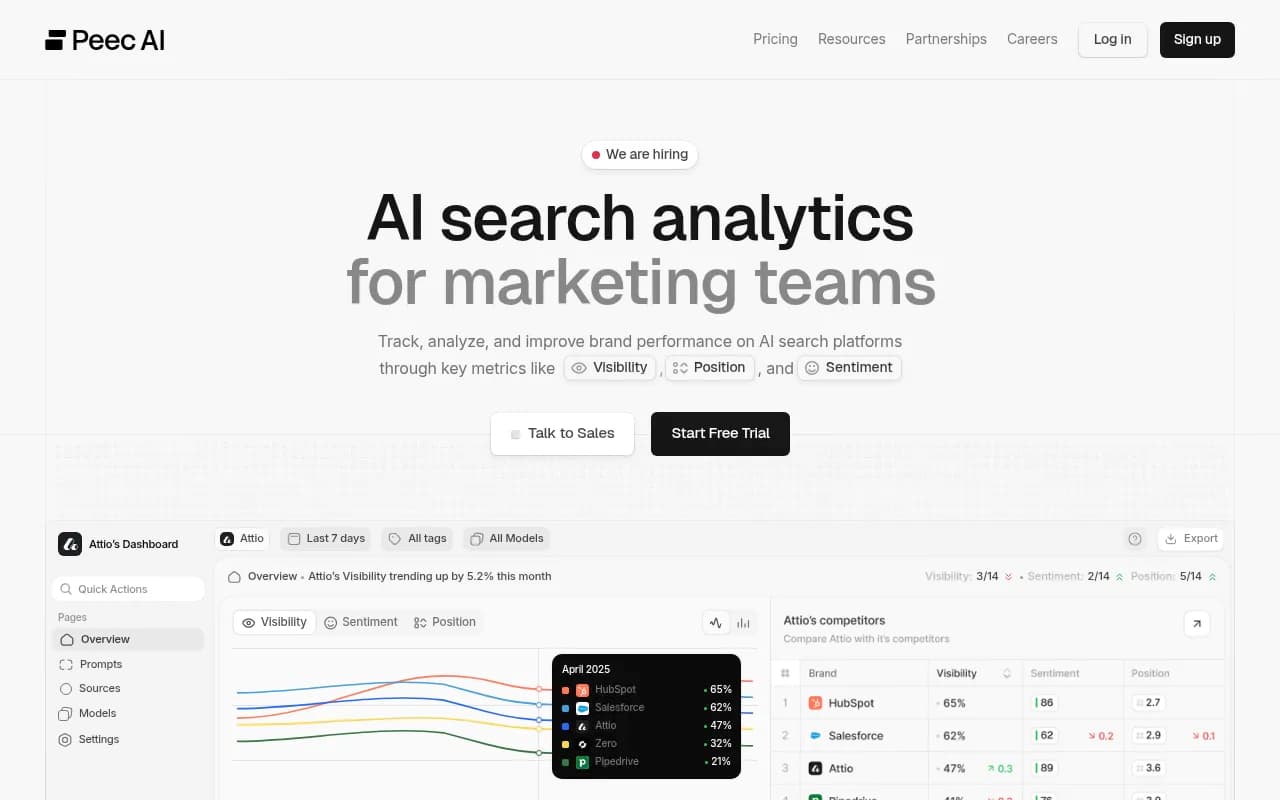
Peec AI is a multi-language AI search analytics platform used by 1,500+ marketing teams. It tracks visibility, position, and sentiment across ChatGPT, Perplexity, Claude, and Gemini with support for multiple countries and languages. The smart suggestions feature is useful -- it surfaces prompts you should be tracking based on your industry and competitors.
Pricing starts at €89/mo (Starter: 25 prompts, 3 countries) and €199/mo (Professional: 75 prompts, 10 countries, all models). That's cheaper than Relixir but more expensive than Otterly.AI. The value proposition is international tracking -- if you're a European brand or a global company managing multi-market SEO, Peec AI's language support is a differentiator.
What it doesn't have: content generation, crawler logs, traffic attribution, or optimization tools. Like AthenaHQ and Otterly.AI, Peec AI is fundamentally a monitoring platform. You see how your brand performs across different markets and languages, but the platform doesn't help you improve those metrics. Relixir's CMS and content agents are a clear advantage if you need optimization, not just tracking.
The interface is modern and the data visualization is strong. Competitor benchmarking shows you how you stack up against rivals in each market. The tag system for organizing prompts is helpful for large teams managing hundreds of queries. But again, it's all tracking -- no action.
Best for: International brands and agencies managing multi-market AI visibility who need language support and don't require optimization tools. Especially useful for European companies.
Profound
Profound is a mid-tier GEO platform with monitoring and competitive analysis features. Pricing starts at $99/mo (Starter: 1 brand, 50 prompts) and scales to $579/mo (Business: 5 brands, 350 prompts). Enterprise pricing is custom. The platform tracks brand mentions across AI search engines and provides visibility scoring.
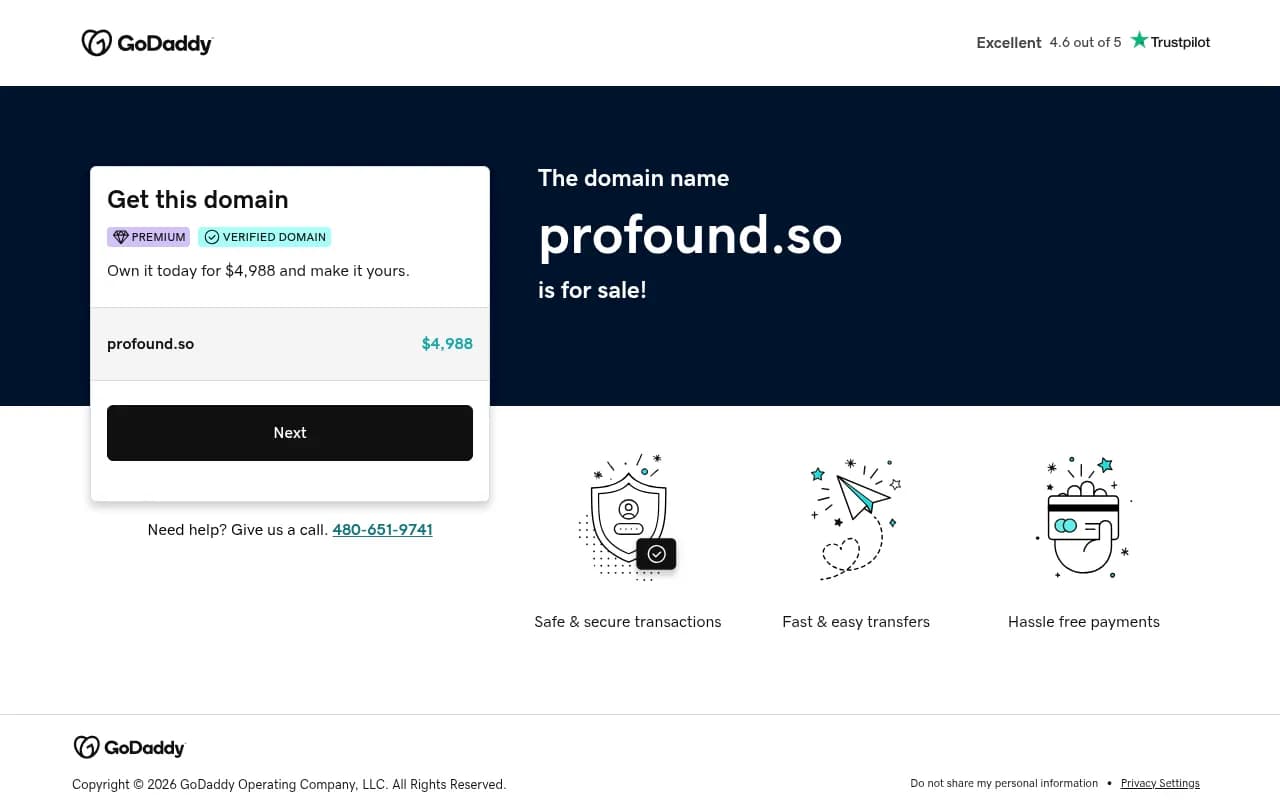
The problem: Profound's website is currently for sale (domain listed at $4,988 on GoDaddy), which raises questions about the company's stability. Even if the platform is still operational, that's a red flag for anyone considering a long-term commitment. Relixir, Promptwatch, and AthenaHQ are all actively developing their platforms and publishing case studies. Profound's status is unclear.
Assuming the platform is still functional, it sits in the same category as AthenaHQ and Peec AI -- monitoring-focused with no content generation or optimization tools. The pricing is competitive with Promptwatch at the lower tiers, but without the content gap analysis and AI writing features that make Promptwatch useful for optimization.
Best for: Hard to recommend given the uncertain status. If you're evaluating Profound, verify the company is still operating before committing.
Scrunch AI
Scrunch AI is another monitoring-focused GEO platform tracking brand mentions across ChatGPT, Perplexity, and Claude. Pricing starts at $300/mo (Starter: 50 prompts), with Business at $500/mo and Enterprise custom. That's more expensive than Promptwatch's Professional plan ($249/mo) but cheaper than Relixir's entry point.
Like the other monitoring-only tools in this comparison, Scrunch AI shows you where your brand appears but doesn't help you improve visibility. No content generation, no crawler logs, no traffic attribution. The competitive analysis features are solid -- you can benchmark against rivals and see which prompts they're winning. But once you have that data, you're on your own to act on it.
Relixir's advantage is the integrated workflow: monitoring plus content creation plus managed services. Scrunch AI gives you the first piece and charges a premium for it. Promptwatch gives you all three pieces (monitoring, content creation, optimization tools) at a lower price point. Scrunch AI is stuck in the middle -- more expensive than budget options like Otterly.AI, less capable than Promptwatch, and lacking the managed services that justify Relixir's pricing.
Best for: Teams that need more than basic monitoring but don't want to pay for Relixir's bundled approach. Limited differentiation vs other monitoring-only platforms.
BrightEdge
BrightEdge is an enterprise SEO platform that recently added AI search visibility tracking to its feature set. It's a fundamentally different product than Relixir -- BrightEdge is a traditional SEO platform (keyword research, content optimization, rank tracking) that now monitors AI engines as an add-on. Relixir is purpose-built for GEO.
Pricing is enterprise-only, typically $10K-$100K+ annually depending on features and site size. That's 6-60x more expensive than Relixir's $1,600/mo starting point. You're paying for a comprehensive SEO platform with AI visibility as one component, not a dedicated GEO tool. If you're already a BrightEdge customer, the AI tracking features are useful. If you're shopping for a GEO platform, BrightEdge is overkill.
The platform's strengths are traditional SEO: 4B+ keyword data points, AI-powered content optimization (Copilot/Autopilot), and multi-market tracking for large enterprises. The AI search monitoring is newer and less mature than dedicated GEO platforms. BrightEdge is built for Fortune 500 marketing teams managing complex, multi-site SEO strategies. Relixir is built for B2B teams focused specifically on AI search visibility.
Best for: Enterprise brands already using BrightEdge for traditional SEO who want to add AI search monitoring to their existing workflow. Not a direct Relixir alternative unless you need a full enterprise SEO platform.
Which Relixir alternative should you choose?
If you want optimization tools, not just monitoring: Promptwatch is the clear choice. It's the only platform that closes the loop from gap analysis to content creation to results tracking. Lower pricing ($99-$579/mo vs Relixir's $1,600/mo), more optimization features, and no lock-in to a proprietary CMS.
If you need enterprise monitoring with strong analytics: AthenaHQ delivers reliable tracking and competitive intelligence for $295/mo. You'll need your own content workflow, but the data is solid.
If you're on a tight budget and just need basic tracking: Otterly.AI at $29-$189/mo gives you visibility monitoring without advanced features. Good for small businesses that don't need optimization tools.
If you're managing multi-market, multi-language visibility: Peec AI starting at €89/mo provides international tracking with language support. Monitoring-only, but strong for global brands.
Relixir's bundled approach (monitoring + CMS + managed services) works if you want someone else to run your GEO strategy and you're willing to pay $1,600-$3,350/mo for it. Most teams looking at alternatives want either more control (Promptwatch), lower cost (Otterly.AI), or enterprise-grade monitoring without the CMS lock-in (AthenaHQ). The right choice depends on whether you need optimization tools or just tracking, and whether you want to manage the strategy yourself or pay for managed services.