Key takeaways
- Most brands are invisible in AI search and don't know it -- tracking across 10 models reveals exactly where you stand vs. competitors
- Start with a focused prompt set (10-20 buyer-intent questions), then expand as you learn which models matter most for your audience
- The core metrics to track are mention frequency, sentiment, and factual accuracy -- not just whether you appear
- Manual tracking works for small teams but doesn't scale; purpose-built GEO platforms automate the heavy lifting and surface actionable gaps
- Tracking alone isn't enough -- the brands winning in AI search are the ones using visibility data to create content that actually gets cited
If you've been watching your organic traffic slowly decline and can't figure out why, here's a likely culprit: your customers are getting answers from ChatGPT, Perplexity, and Gemini before they ever reach your website. Gartner estimates a 50% decline in traditional organic search traffic by 2028. That's not a distant threat -- it's already happening.
The problem is that most marketing teams are still measuring what they've always measured: Google rankings, backlinks, social mentions. Meanwhile, an entirely new conversation is happening inside AI chat interfaces, and most brands have zero visibility into it.
This guide walks you through setting up brand visibility tracking across the 10 major AI models. Whether you're starting from scratch with a spreadsheet or ready to invest in a proper platform, here's exactly how to do it.
Step 1: Define your tracking scope
Before you query a single AI model, you need to know what you're measuring and why. Jumping straight into ChatGPT and typing your brand name will tell you almost nothing useful.
Choose your AI models
The 10 models worth tracking in 2026 are:
- ChatGPT (OpenAI) -- still the highest consumer volume
- Perplexity -- fast-growing, especially among research-oriented users
- Google AI Overviews -- embedded in Google Search, massive reach
- Google AI Mode -- Google's deeper conversational search experience
- Claude (Anthropic) -- popular with professionals and developers
- Gemini -- Google's standalone AI, strong in enterprise
- Copilot (Microsoft) -- deeply integrated into Office 365 and Bing
- Grok (xAI) -- growing share among X/Twitter users
- DeepSeek -- significant usage in Asia-Pacific markets
- Meta AI -- embedded in WhatsApp, Instagram, and Facebook
Not all of these will matter equally for your business. A B2B SaaS company should prioritize ChatGPT, Perplexity, and Copilot. A consumer brand selling through social channels might weight Meta AI and Gemini higher. Start by picking 3-4 models that match where your audience actually spends time, then expand.
Build your prompt set
This is the most important step and the one most teams get wrong. You need prompts that reflect how real buyers actually ask questions -- not branded queries like "tell me about [your company]."
Think in categories:
- Category-level prompts: "What's the best project management software for remote teams?"
- Problem-aware prompts: "How do I reduce customer churn for a SaaS product?"
- Comparison prompts: "What are the alternatives to [competitor name]?"
- Feature-specific prompts: "Which CRM has the best email automation?"
- Local/regional prompts (if relevant): "Best accounting software for UK small businesses"
Aim for 10-20 prompts to start. Each one should be something a real prospect would type. If you're not sure what those are, look at your sales call recordings, support tickets, and Google Search Console queries for inspiration.
Set your benchmarks
Identify 3-5 direct competitors you want to track alongside your brand. You're not just measuring whether you appear -- you're measuring whether you appear more or less than the alternatives. That competitive context is what makes the data actionable.
Step 2: Run your baseline queries
Now you actually query the models. The goal here is to establish a baseline -- a snapshot of where you stand today before you do anything to improve it.
Manual method
For each prompt, open each AI model and run the query. Record:
- Was your brand mentioned? (Yes/No)
- Where in the response? (First mention, secondary mention, not mentioned)
- What was the sentiment? (Positive, neutral, negative)
- Were competitors mentioned? Which ones?
- Did the AI cite any sources? Which domains?
A simple spreadsheet works fine for this. Columns for each AI model, rows for each prompt, cells capturing the data points above. It's tedious but it gives you a real feel for the data before you automate anything.
Expect this initial baseline to take 2-4 hours depending on your prompt set size. After that, weekly maintenance runs take 30-60 minutes.
What to watch for
A few things that will immediately stand out in your baseline:
- Prompts where competitors appear consistently but you don't -- these are your highest-priority gaps
- Prompts where you appear but with incorrect information -- factual accuracy issues that need fixing
- Prompts where no brands are mentioned at all -- often means the AI treats it as an informational query, not a commercial one
- Variation between models -- you might be strong in ChatGPT but invisible in Perplexity
That last point matters more than most people realize. Different AI models draw on different training data and retrieval sources. A brand that's well-cited on Reddit might perform better in models that weight community content. A brand with strong Wikipedia presence might do better in models that rely on structured knowledge bases.
Step 3: Build your scoring framework
Raw "mentioned/not mentioned" data is a starting point, but it doesn't give you a number you can track over time or report to leadership. You need a scoring framework.
A practical AI Visibility Score formula:
(Mention Frequency × 40%) + (Positive Sentiment × 35%) + (Factual Accuracy × 25%)
- Mention frequency: What percentage of your tracked prompts result in a brand mention, across all models?
- Positive sentiment: Of the mentions you receive, what percentage carry positive framing?
- Factual accuracy: Of the mentions you receive, what percentage contain accurate information about your product, pricing, or positioning?
Score each component from 0-100, then apply the weights. A brand with 60% mention frequency, 80% positive sentiment, and 90% factual accuracy would score: (60×0.4) + (80×0.35) + (90×0.25) = 24 + 28 + 22.5 = 74.5.
Run this calculation monthly. The trend matters more than the absolute number.
Step 4: Identify your content gaps
Here's where tracking becomes genuinely useful. Once you know which prompts your competitors appear in and you don't, you have a clear content roadmap.
For each gap prompt, ask: why would an AI model cite a competitor here and not me?
The answer is almost always one of three things:
- The competitor has published content that directly answers the question, and you haven't
- The competitor is cited by third-party sources (review sites, industry publications, Reddit threads) that AI models trust
- The competitor's existing content is structured in a way that's easier for AI to extract and cite
This is the insight that separates tracking from optimization. Knowing you're invisible is frustrating. Knowing why you're invisible gives you something to fix.
Tools like Promptwatch automate this gap analysis -- showing you exactly which prompts competitors rank for and you don't, then helping you generate content designed to close those gaps.

Step 5: Choose your tracking approach
Manual tracking works at small scale. Once you're monitoring 20+ prompts across 10 models, you're looking at 200+ data points per tracking cycle. That's a full-time job if you're doing it manually. At that point, a purpose-built platform makes sense.
Here's how the main approaches compare:
| Approach | Cost | Scale | Automation | Content gap analysis | Best for |
|---|---|---|---|---|---|
| Manual spreadsheet | Free | Low (10-20 prompts) | None | Manual | Getting started, small brands |
| ChatGPT + Perplexity API | ~$20-50/mo | Medium | Partial | None | Technical teams with dev resources |
| Monitoring-only tools | $50-200/mo | Medium-High | Full | Limited | Teams that just need dashboards |
| Full GEO platforms | $99-579/mo | High | Full | Yes | Teams that want to act on the data |
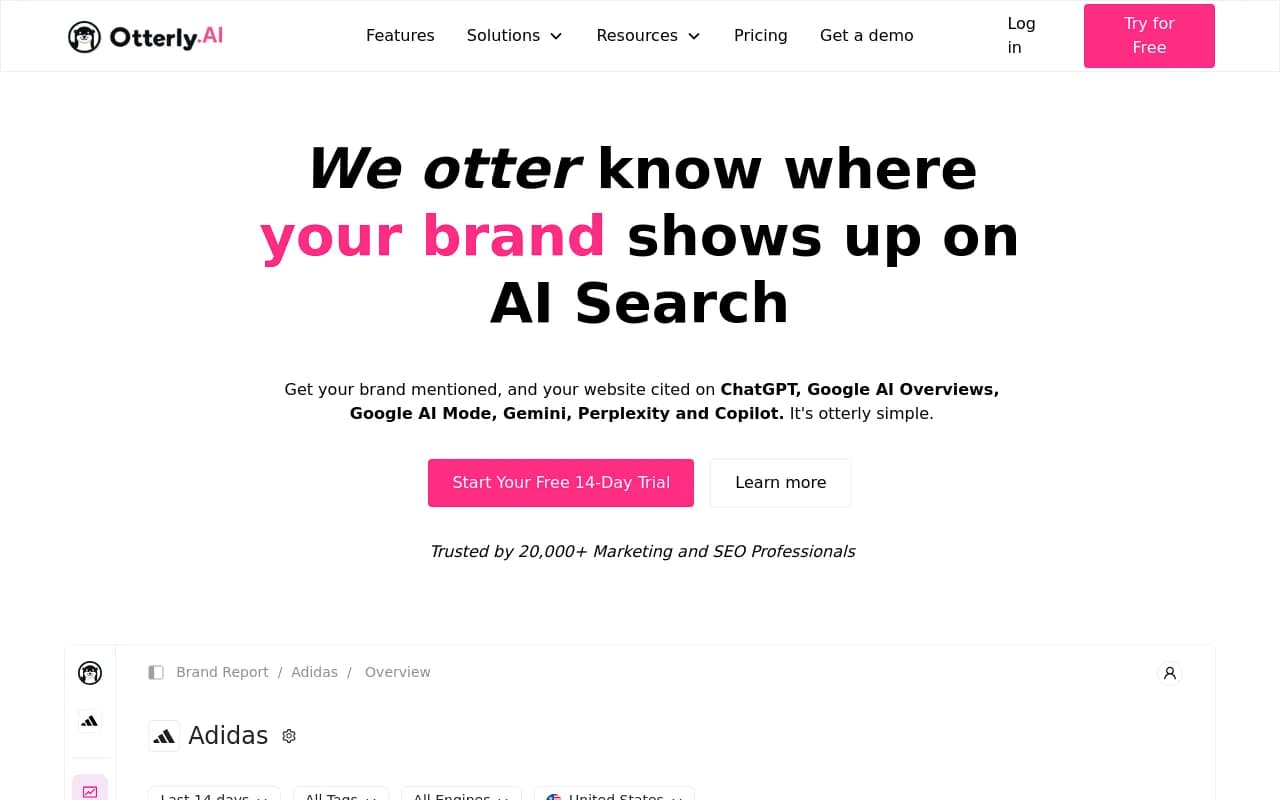
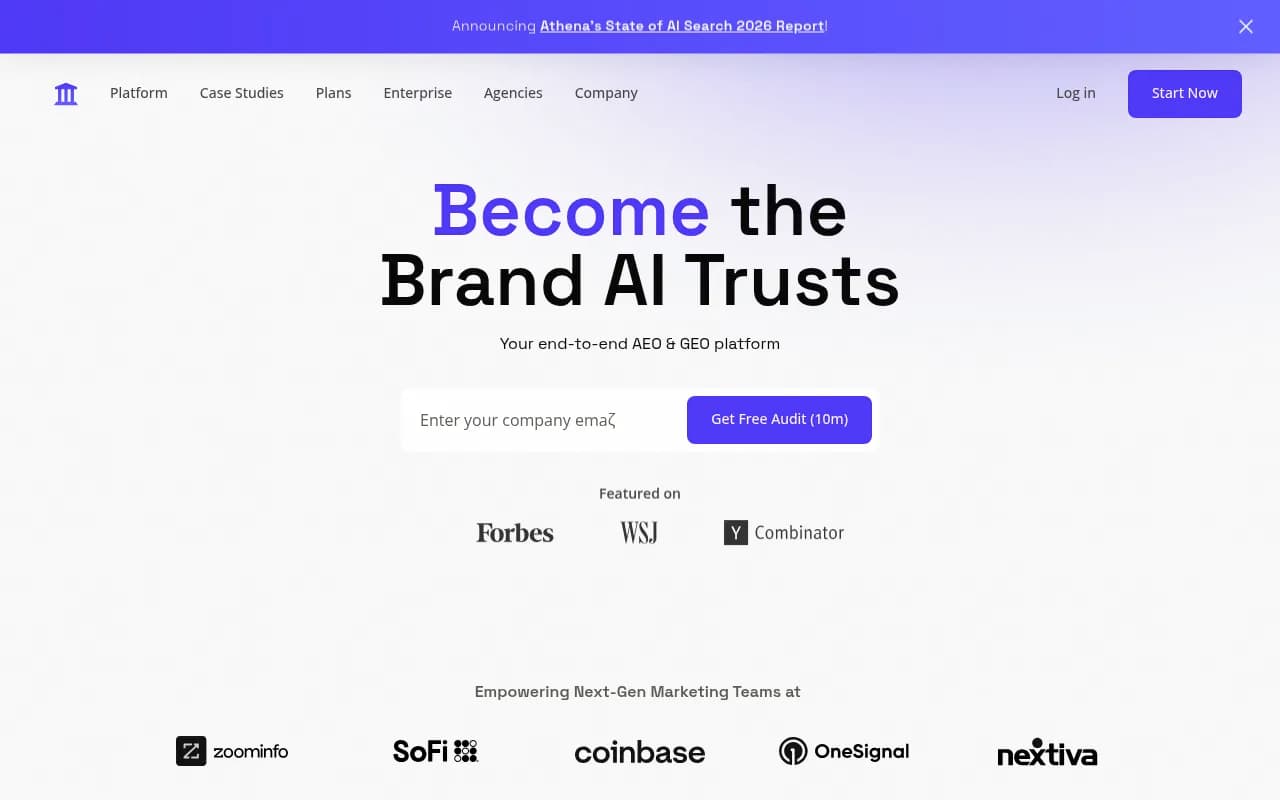
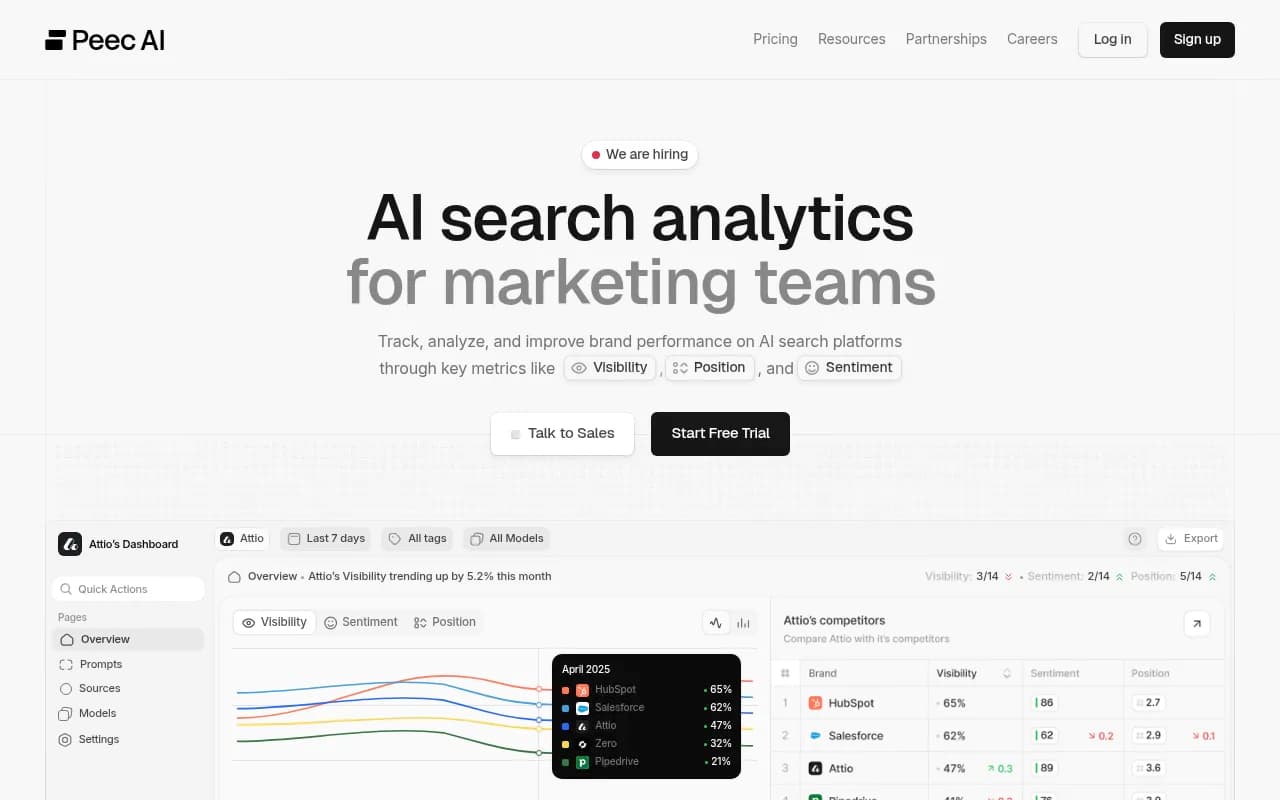
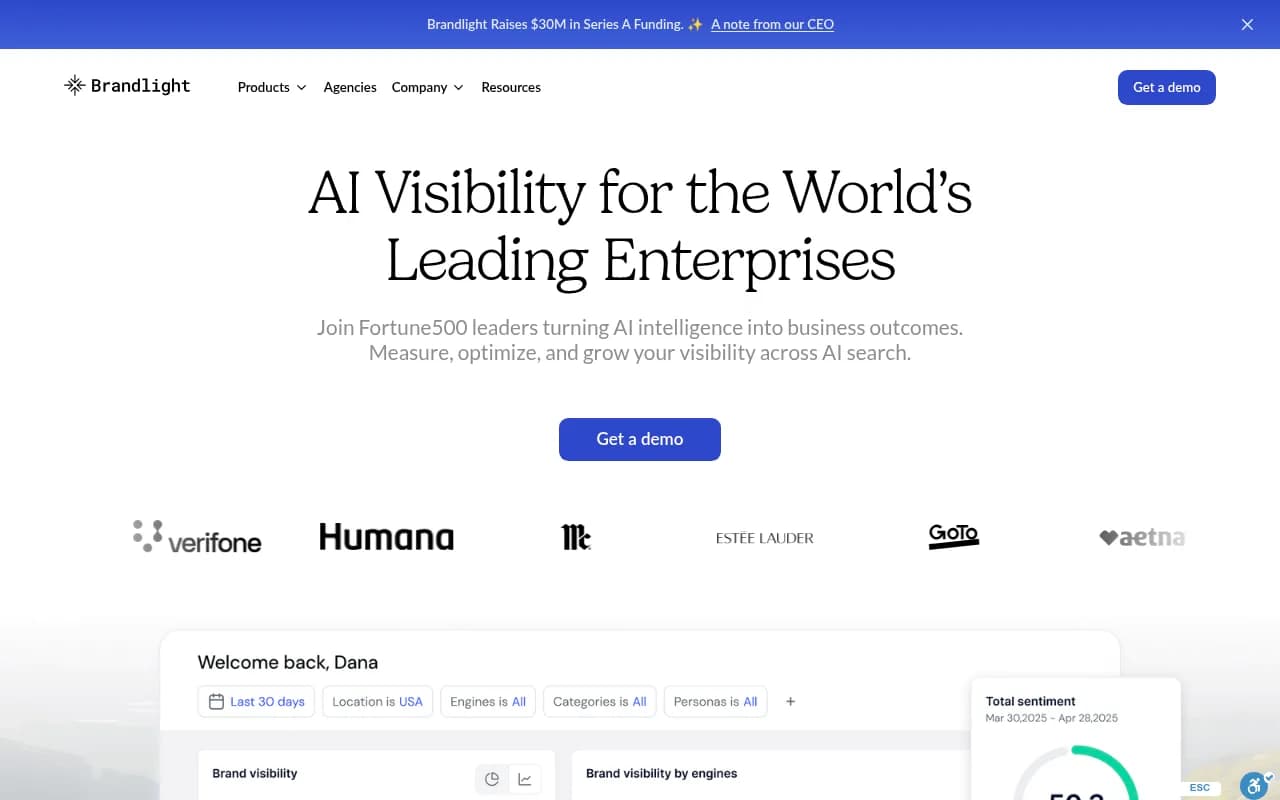
The monitoring-only tools (Otterly.AI, Peec.ai, Athena HQ) will show you your visibility scores and track changes over time. That's genuinely useful. But they stop there -- they don't tell you what content to create or help you create it.
Full GEO platforms go further. Promptwatch, for example, combines visibility tracking with Answer Gap Analysis (showing exactly which prompts you're missing), an AI writing agent that generates content grounded in citation data, and page-level tracking that shows which of your pages are actually being cited by which models. That closed loop -- track, identify gaps, create content, track again -- is what actually moves your visibility score.
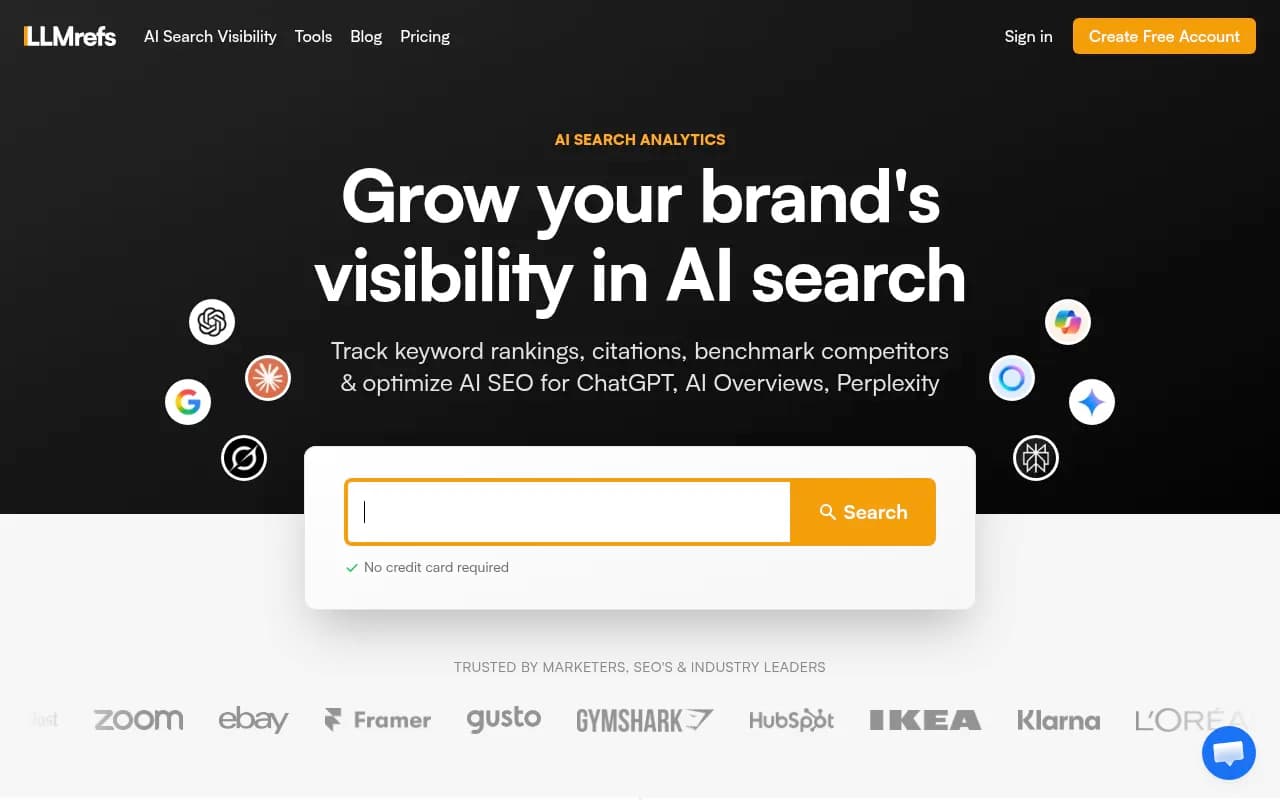
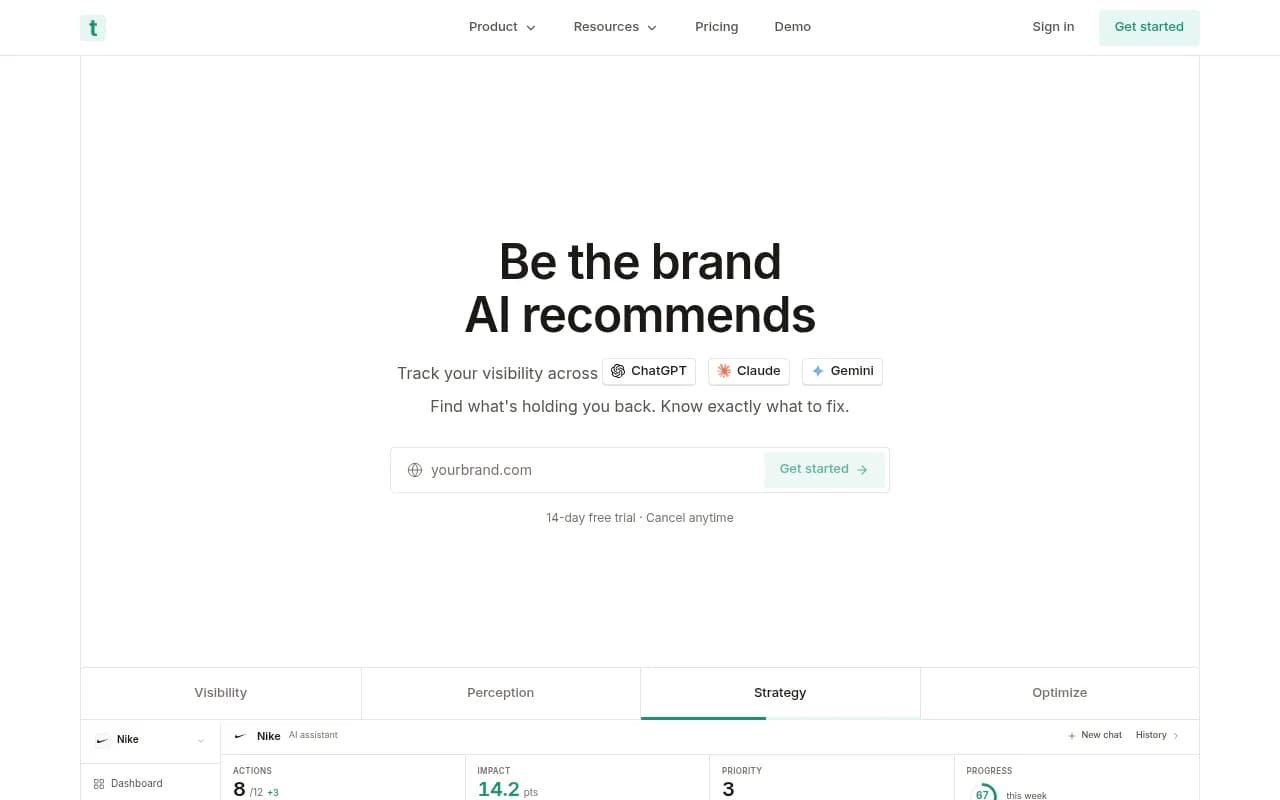
Other solid options depending on your needs:
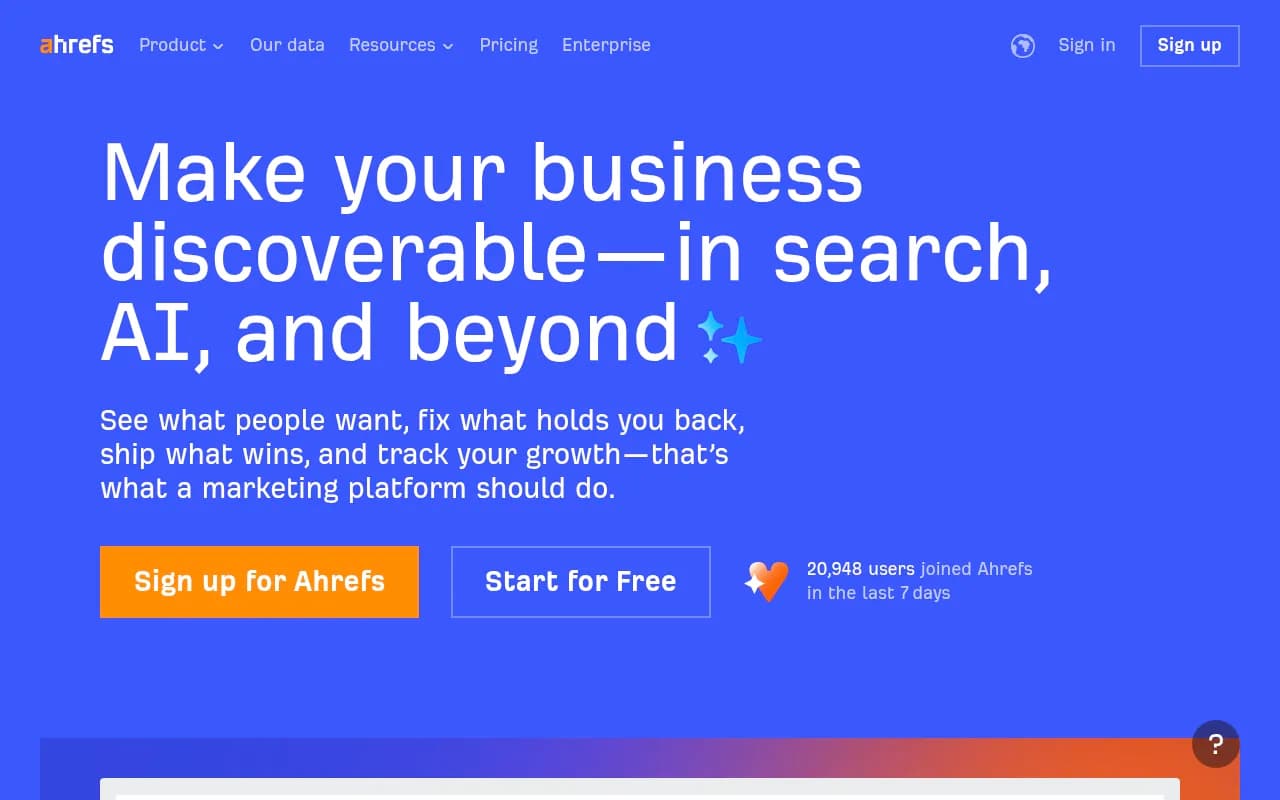
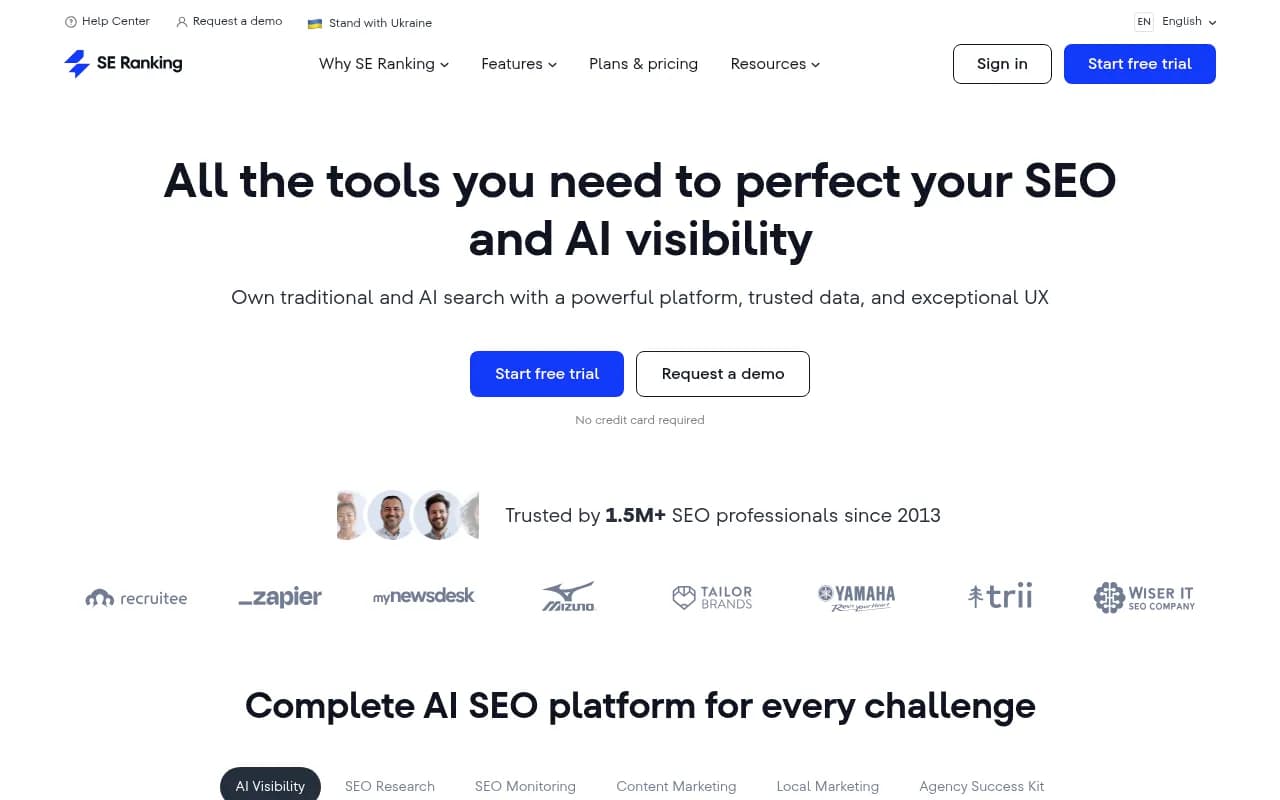
For teams already using traditional SEO tools, some established platforms have added AI visibility features worth knowing about:
Step 6: Set up your monitoring cadence
Visibility in AI search isn't static. Models update their training data, new sources get cited, competitors publish new content. You need a regular cadence to catch changes before they become problems.
A practical schedule:
- Weekly: Run your core prompt set across your 3-4 priority models. Flag any significant drops or new competitor appearances.
- Monthly: Run the full prompt set across all 10 models. Calculate your AI Visibility Score. Review factual accuracy of your mentions.
- Quarterly: Audit your prompt set. Add new prompts based on emerging customer questions. Remove prompts that are no longer relevant. Review which content pieces are driving citations.
One thing worth setting up early: alerts for factual accuracy issues. If an AI model starts describing your product incorrectly -- wrong pricing, outdated features, misattributed claims -- you want to know immediately. Incorrect AI-generated information about your brand can spread quickly because users trust it.
Step 7: Track AI crawler activity on your site
This is a step most guides skip, but it's important. Understanding how AI crawlers interact with your website tells you whether your content is even being considered for citation.
AI crawlers (GPTBot for ChatGPT, ClaudeBot for Anthropic, PerplexityBot, etc.) visit your pages to index content for their models. If they're hitting error pages, encountering slow load times, or being blocked by your robots.txt, your content won't get cited no matter how good it is.
Check your server logs for these crawler user agents. Look for:
- Which pages they're visiting (and which they're ignoring)
- HTTP errors they're encountering
- Crawl frequency -- are they coming back regularly or only once?
Some GEO platforms include crawler log analysis as a feature. Promptwatch's crawler logs, for instance, show real-time activity from all major AI crawlers, which pages they read, and any errors they hit. This is the kind of technical visibility that most monitoring-only tools completely lack.
Step 8: Connect visibility to revenue
Visibility scores are useful internally, but at some point you need to connect AI search presence to actual business outcomes. This is the hardest part of AI search measurement, and the tooling is still maturing.
Three approaches, roughly in order of complexity:
UTM tracking from AI referrals
Some AI platforms (Perplexity in particular) do pass referral traffic. Set up UTM parameters and monitor your analytics for traffic from AI sources. This won't capture everything -- many AI interactions don't result in a click -- but it captures the ones that do.
Google Search Console integration
After a user gets an AI-generated answer, they sometimes follow up with a branded Google search. A spike in branded search volume after you improve your AI visibility is a reasonable proxy for AI-driven awareness, even if it's not a direct attribution.
Server log analysis
The most complete picture. Your server logs show every visit, including those from AI crawlers and from users who clicked through from AI responses. Platforms that offer server log integration can connect the dots between crawler activity, content citations, and actual traffic.
What good looks like
After 90 days of consistent tracking and content creation, a brand that's actively working on AI visibility should see:
- Mention frequency up 20-40% across tracked prompts
- Factual accuracy close to 100% (you've corrected the errors)
- At least 2-3 new pages being regularly cited by AI models
- Measurable increase in branded search volume as AI-driven awareness converts to direct intent
The brands that are winning in AI search right now aren't doing anything magical. They're publishing clear, specific, well-structured content that directly answers the questions their buyers ask. They're getting cited by credible third-party sources. And they're tracking the results closely enough to know what's working.
The ones that are losing are the ones still waiting to see how AI search "plays out." That ship has sailed. The time to start tracking is now, even if you start with a spreadsheet and 10 prompts.
Choosing the right tool for your situation
| Tool | Best for | Standout feature | Starts at |
|---|---|---|---|
| Promptwatch | Teams that want to track AND optimize | Answer Gap Analysis + AI content generation | $99/mo |
| Profound | Enterprise brands | Deep LLM analytics | Custom |
| Otterly.AI | Budget-conscious monitoring | Simple, clean dashboard | ~$49/mo |
| Peec.ai | Multi-language tracking | International coverage | ~$49/mo |
| Scrunch AI | Mid-market brands | Competitive benchmarking | ~$149/mo |
| LLMrefs | Agencies | Multi-client management | ~$79/mo |
| SE Ranking | Teams already using SE Ranking | Integrated with existing SEO workflow | Add-on |
| Ahrefs Brand Radar | Ahrefs users | Familiar interface | Add-on |
| Manual spreadsheet | Getting started | Free | $0 |
The honest answer is that the right tool depends on what you plan to do with the data. If you just want a dashboard showing your visibility score, a monitoring-only tool works fine. If you want to actually improve your visibility -- find the gaps, create the content, track the results -- you need a platform built around that workflow.
Most teams start with manual tracking to understand the data, then move to a platform once they've validated that AI search is a meaningful channel for their business. That's a reasonable approach. Just don't wait too long -- your competitors probably aren't waiting.