Key takeaways
- AI models select brands based on citation frequency, content authority, and how well a brand's content directly answers user prompts -- not just domain authority or backlinks.
- Different AI platforms (ChatGPT, Claude, Perplexity, Gemini) pull from different sources and return different brand recommendations for the same query.
- Brand visibility trackers reveal that most companies are invisible in AI search -- even brands with strong traditional SEO rankings.
- Closing the gap requires tracking where you're missing, understanding why competitors appear instead of you, and publishing content that AI models can actually cite.
- Tools like Promptwatch go beyond monitoring to show you the specific content gaps driving your invisibility -- and help you fix them.
When someone opens ChatGPT and types "What's the best project management software for remote teams?", something happens in milliseconds that most marketing teams have no visibility into. The model retrieves information, weighs sources, and decides which brands to mention -- and which to ignore. Your brand either makes that list or it doesn't.
This is happening thousands of times a day across ChatGPT, Claude, Perplexity, Gemini, Grok, Copilot, and a dozen other AI platforms. And for most brands, the answer to "are we being mentioned?" is: we have no idea.
Brand visibility trackers are starting to change that. Here's what the data is revealing about how AI models actually make these decisions -- and what it means for your marketing strategy in 2026.
How AI models actually choose which brands to mention
The short answer is: it's complicated. But brand visibility trackers analyzing millions of AI responses are starting to surface some clear patterns.
Content that directly answers the prompt wins
AI models are fundamentally answer machines. When a user asks a question, the model looks for content that most directly addresses that specific question. Broad brand awareness doesn't translate here the way it does in traditional search. A brand with a detailed, well-structured article answering "What's the best CRM for a 10-person sales team?" will consistently outperform a larger brand whose website only talks about enterprise solutions.
Previsible analyzed 10,000 AI responses on ChatGPT, tracking which sources the model cited when answering brand-related queries. The findings pointed to a clear pattern: specificity wins. Brands whose content matched the exact intent of the query -- not just the keywords -- appeared far more frequently.
Citation frequency across the web matters
AI models don't just read your website. They're trained on and retrieve from a much broader ecosystem: news articles, Reddit threads, YouTube videos, review sites, industry publications, and third-party comparisons. If your brand is frequently cited across those sources, you're more likely to appear in AI recommendations.
This is why some newer brands punch above their weight in AI search. A startup that's been reviewed on Product Hunt, discussed on Reddit, and covered in a few niche publications can outperform an established competitor whose web presence is mostly self-published content.
Recency plays a role -- but it's model-dependent
Perplexity, which retrieves live web data, is much more sensitive to recency than Claude or ChatGPT, which rely more heavily on training data. A brand that published a strong piece of content two years ago might still appear in Claude's recommendations while being completely absent from Perplexity's responses to the same query.
This is one reason tracking across multiple AI platforms matters so much. A brand might be well-represented in one model and invisible in another -- not because of anything they did wrong, but because of how each model retrieves and weights information.
Sentiment and framing in third-party sources
It's not just whether your brand gets mentioned in external sources -- it's how. AI models pick up on sentiment. If the dominant narrative around your brand in forums and review sites is negative, that framing can influence how (or whether) you appear in AI recommendations. Brand visibility trackers that surface Reddit and review site data alongside AI mention data give you a much clearer picture of why you're appearing the way you are.
What the data from visibility trackers is revealing
The 2026 Similarweb GenAI Brand Visibility Index tracked brand-level AI visibility from April 2025 through January 2026, and the variance between brands in the same category was striking. Brands that actively published content targeting AI-style queries saw their visibility scores climb steadily. Brands that made no changes saw scores drift or decline as competitors filled the space.
A Geostar analysis found that brands implementing structured GEO strategies boosted their AI citation rates by over 150%. That's not a marginal improvement -- it's the difference between appearing in AI recommendations and being completely absent.
The pattern that emerges from tracker data across the industry:
- Most brands are invisible in AI search for the majority of relevant prompts
- The brands that do appear are often not the market leaders -- they're the brands that have published content AI models can actually use
- Visibility is highly prompt-specific: a brand might appear for "best CRM for startups" but not for "best CRM for sales teams," even though both are directly relevant
The platforms you need to monitor (and why they differ)
Not all AI platforms work the same way, and brand visibility trackers are revealing just how different the results can be across models.
| AI platform | Retrieval method | Update frequency | Key audience |
|---|---|---|---|
| ChatGPT (GPT-4o) | Training data + browsing | Mixed | General consumer + business |
| Perplexity | Live web retrieval | Real-time | Research-oriented users |
| Google AI Overviews | Google index | Near real-time | Search users |
| Claude | Training data | Slower | Enterprise, developer |
| Gemini | Google index + training | Mixed | Google ecosystem users |
| Copilot | Bing index | Near real-time | Enterprise, Microsoft users |
| Grok | X/Twitter + training | Mixed | Social-savvy users |
| DeepSeek | Training data | Slower | Technical users |
The practical implication: you can't assume that appearing in ChatGPT means you're visible everywhere. A brand that's well-cited in tech publications might dominate Perplexity results while barely appearing in Gemini. Monitoring only one platform gives you a dangerously incomplete picture.
The five metrics that actually matter for AI brand visibility
Brand visibility trackers have converged on a set of metrics that meaningfully capture how a brand is performing in AI search. Here's what to track:
1. Mention rate
How often does your brand appear when AI models answer prompts relevant to your category? This is the baseline metric -- your share of voice in AI-generated responses. A mention rate of 30% means your brand appears in roughly 3 out of 10 relevant AI responses.
2. Prompt coverage
Which specific prompts trigger your brand to appear? This is where most brands discover uncomfortable gaps. You might appear for broad category queries but be completely absent for high-intent, purchase-oriented prompts. Prompt coverage analysis shows you exactly where you're winning and where you're not.
3. Sentiment in AI responses
When AI models do mention your brand, what do they say? Are you described as a market leader, a budget option, a niche tool? The framing matters for conversion. Visibility trackers that capture the full text of AI responses let you see exactly how you're being positioned.
4. Competitor share
Who's appearing instead of you? Understanding which competitors are capturing the prompts you're missing is essential for prioritizing your content strategy. If one competitor consistently appears for a cluster of prompts you're absent from, that's a clear signal about where to focus.
5. Citation sources
Which pages, domains, and content types are being cited when your brand appears? This tells you what's working and what AI models consider authoritative in your space. It also reveals where you should be publishing content or building presence.
Why traditional SEO rankings don't predict AI visibility
This is the finding that surprises most marketing teams: your Google rankings are a poor predictor of your AI search visibility.
Traditional SEO rewards domain authority, backlink profiles, and keyword optimization. AI models reward something different -- the ability to directly answer specific questions with clear, well-structured content. A brand with a DA of 80 and thousands of backlinks can be completely invisible in AI search if its content doesn't match the way users prompt AI models.
E-commerce sites reported a 22% drop in search traffic in 2025 due to AI-generated answers replacing traditional search clicks. Many of those sites had strong SEO rankings. The problem wasn't their SEO -- it was that their content wasn't structured in a way that AI models could extract and cite.
The brands winning in AI search in 2026 tend to share a few characteristics:
- They publish content that directly answers specific questions, not just content optimized around keywords
- They're cited across multiple types of sources (their own site, third-party publications, forums, review sites)
- They update content regularly, particularly for platforms that weight recency
- They've mapped out the specific prompts their target customers use and built content around those prompts
Tools for tracking and improving your AI brand visibility
The market for AI visibility tracking has expanded significantly. Here's a look at the main categories of tools available:
End-to-end GEO platforms
These tools go beyond monitoring to help you identify gaps and create content that improves your visibility.
Promptwatch sits at the top of this category. It monitors your brand across 10 AI models (ChatGPT, Claude, Perplexity, Gemini, Grok, DeepSeek, Copilot, Meta AI, Mistral, and Google AI Overviews), but the differentiator is what happens after monitoring. The Answer Gap Analysis shows exactly which prompts competitors are visible for but you're not -- and the built-in AI writing agent generates content designed to close those gaps. It also includes AI crawler logs, showing which pages AI bots are actually reading on your site, and prompt volume/difficulty scoring to help you prioritize.

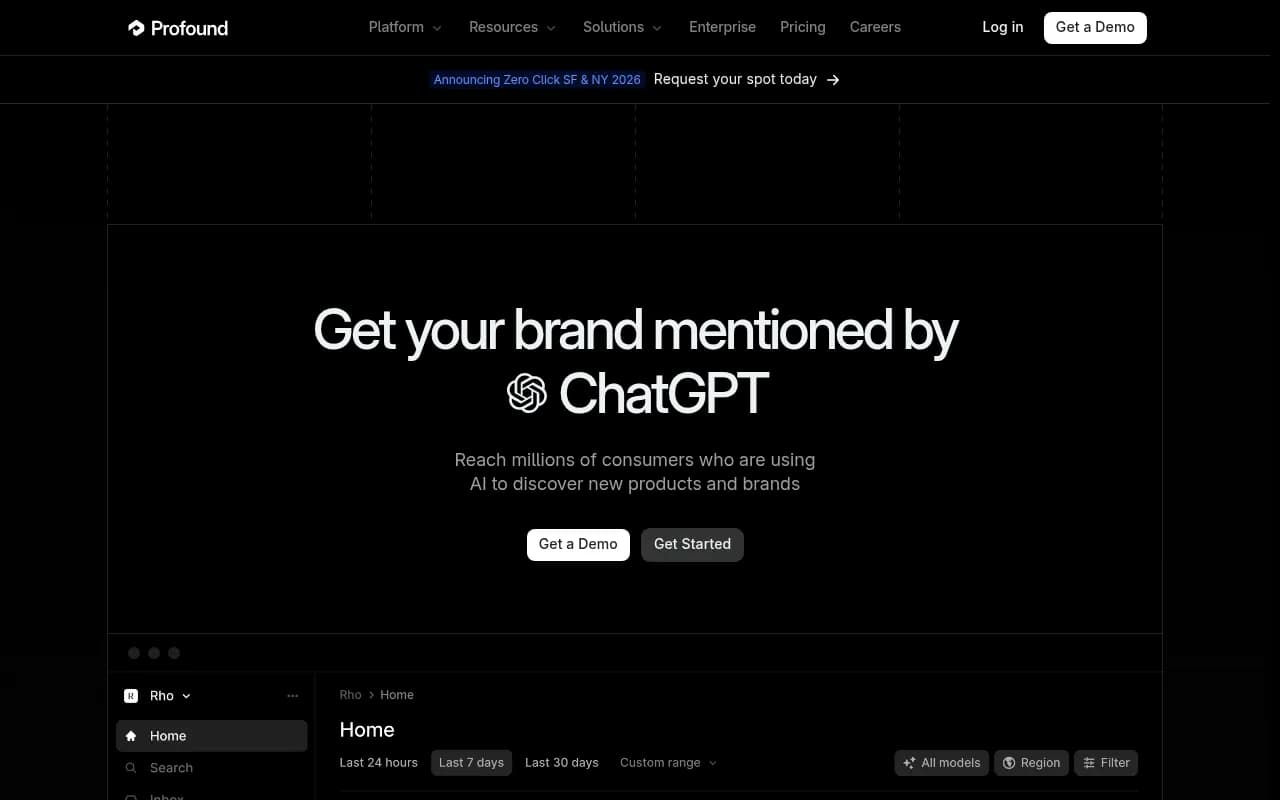
Profound AI is another strong option at the enterprise end, with solid monitoring capabilities and good reporting for larger teams.
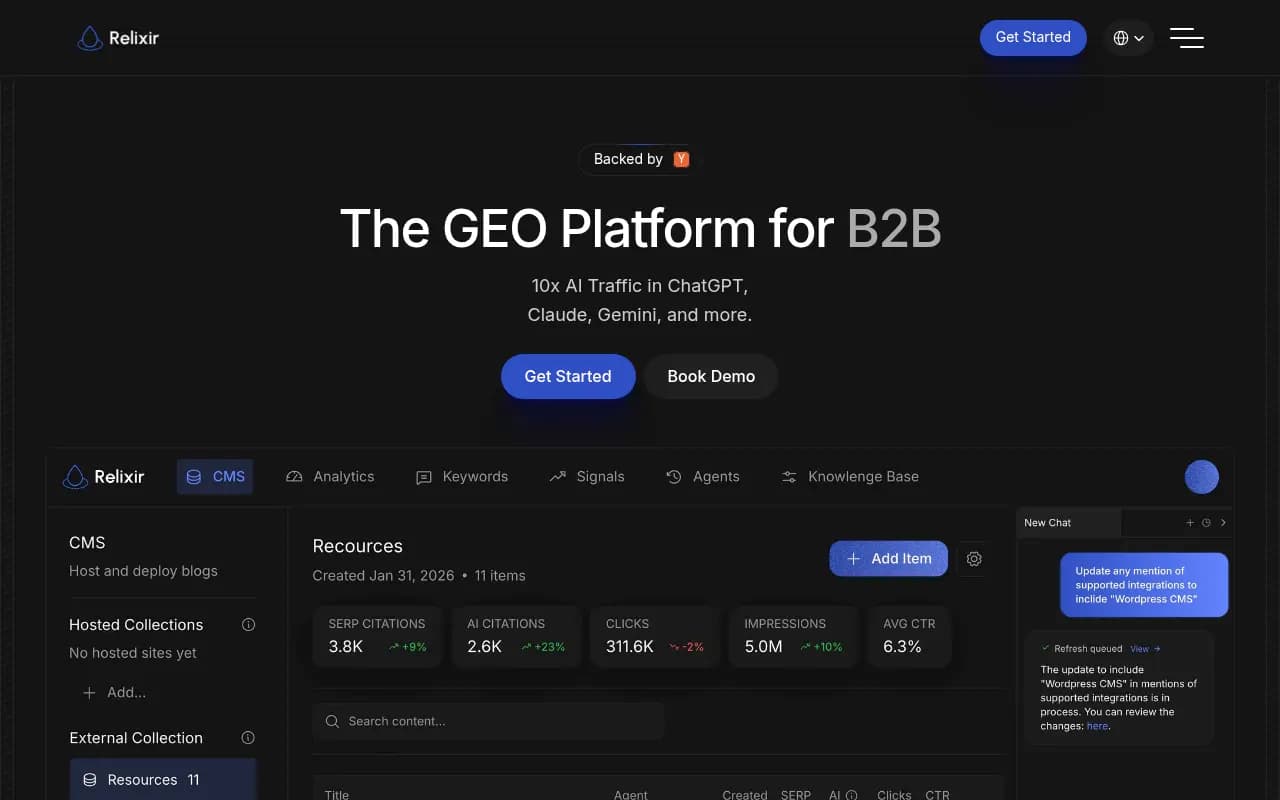
Relixir combines GEO monitoring with AI content generation, making it a good fit for teams that want an integrated workflow.
Monitoring-focused tools
These tools give you visibility data without the content optimization layer. Useful for teams that have their own content production process and just need the tracking data.
Otterly.AI is one of the more affordable options for teams getting started with AI visibility monitoring.

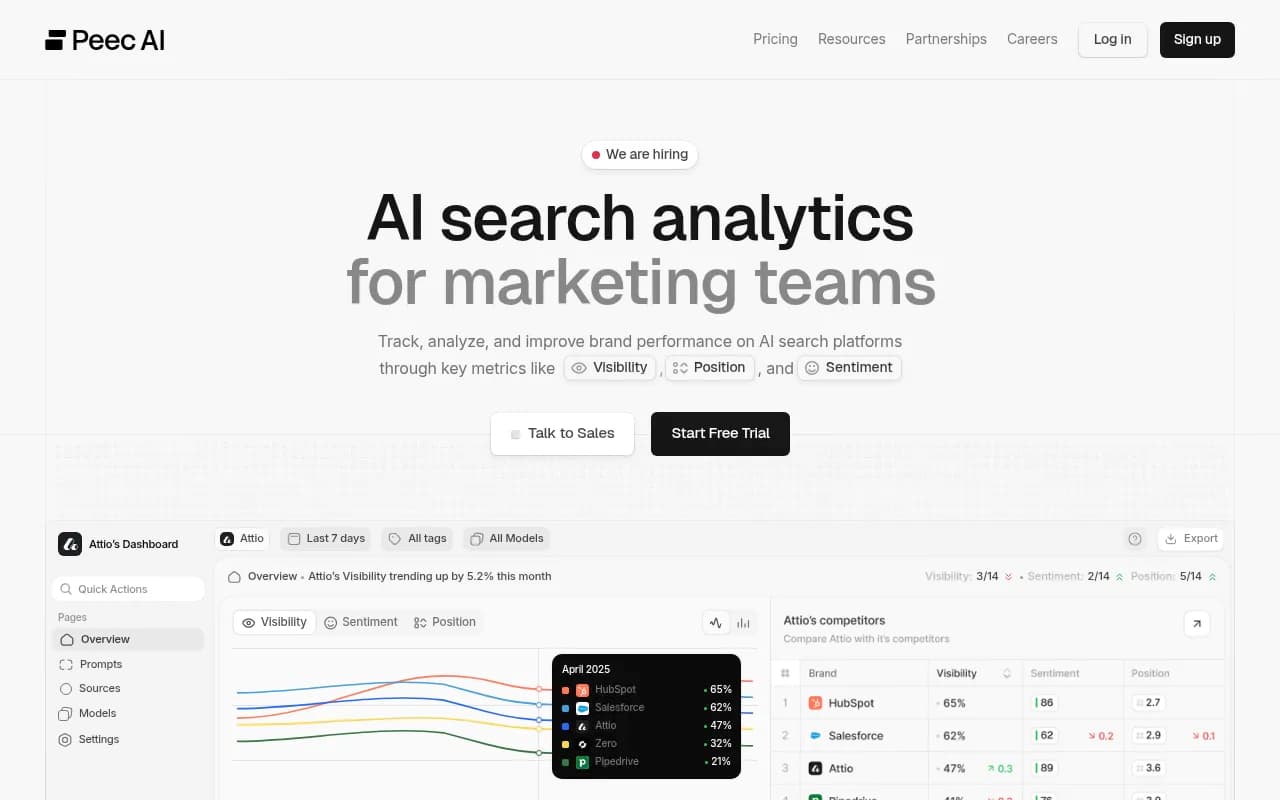
Peec AI covers multiple languages and regions, which matters for brands operating across markets.
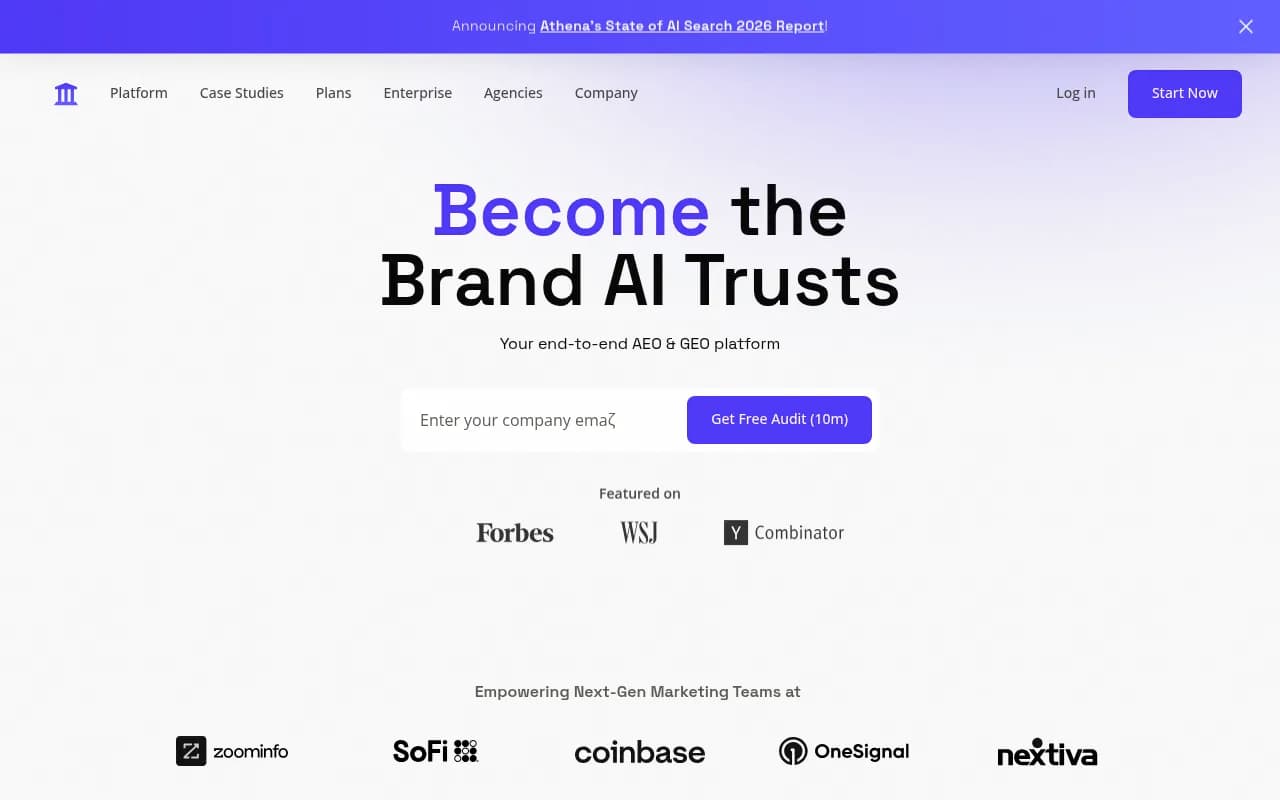
Athena HQ tracks across 8+ AI search engines with solid competitive comparison features.
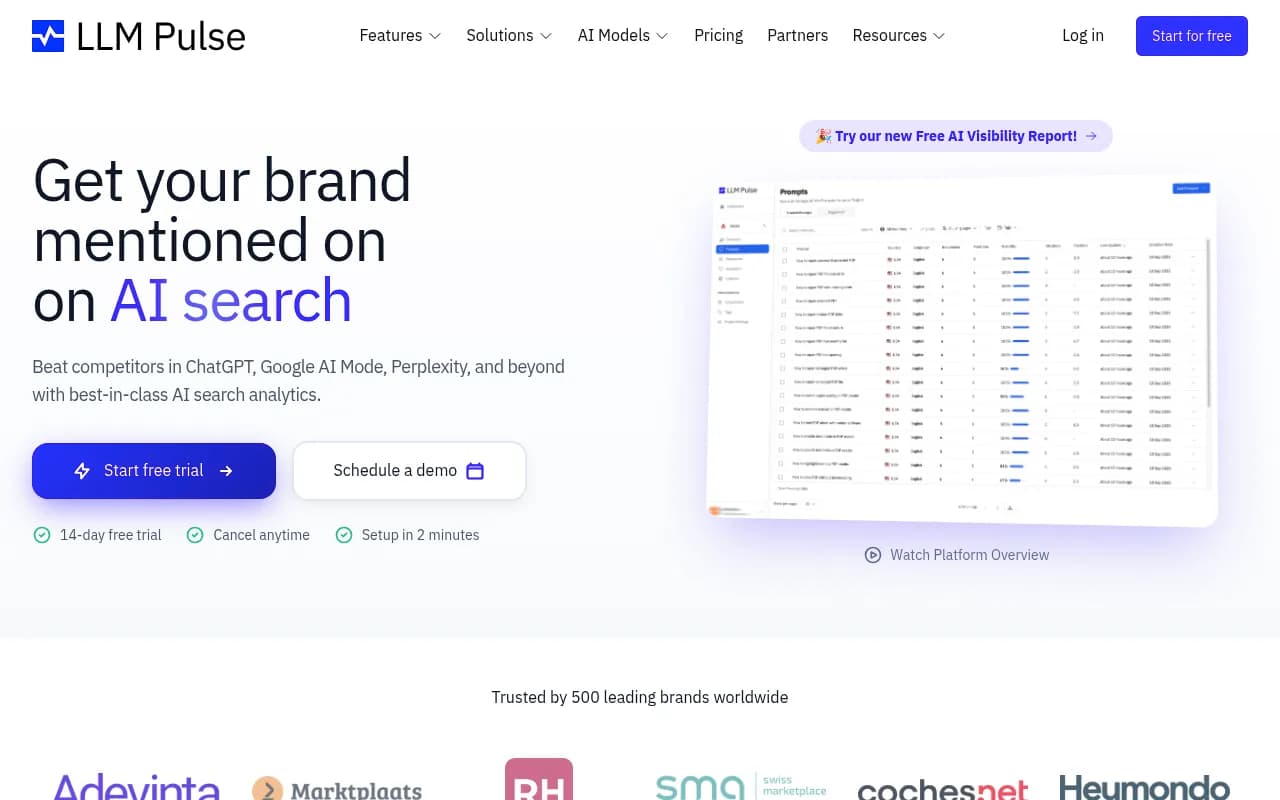
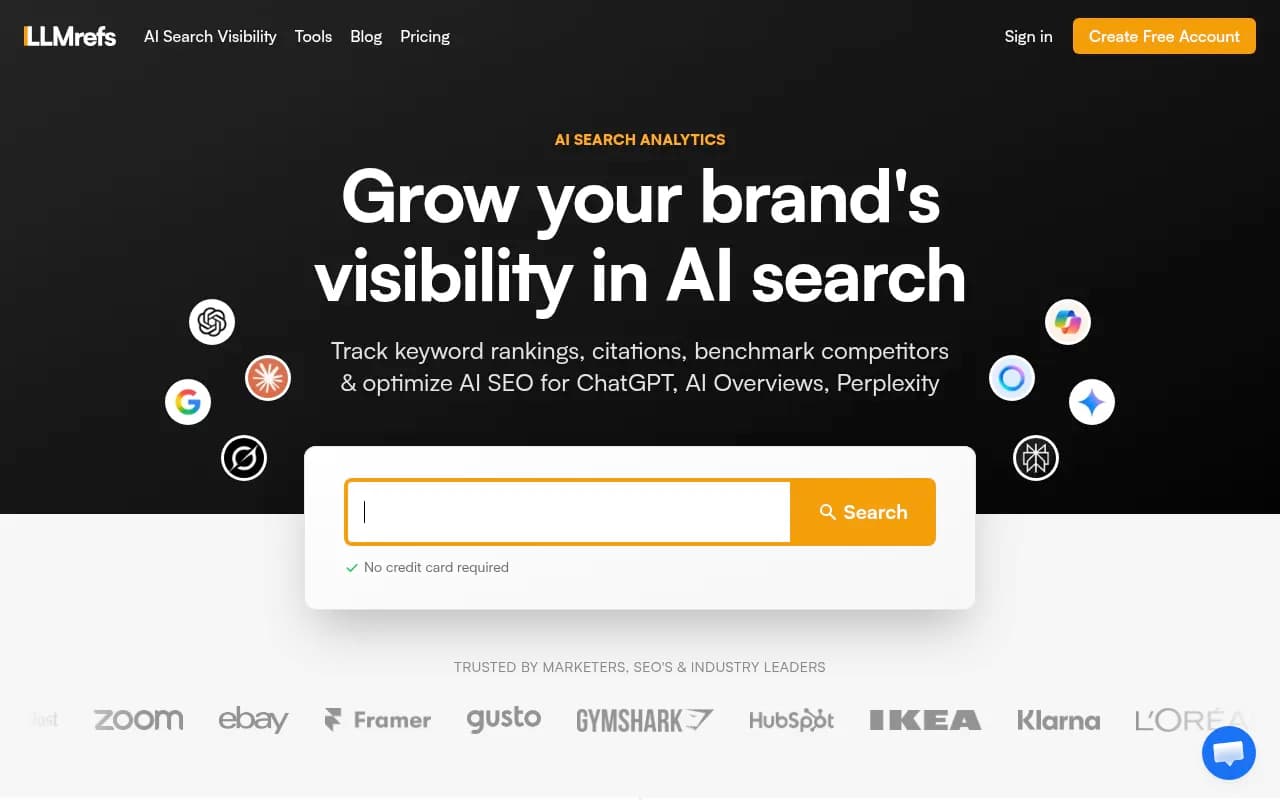
LLM Pulse and LLMrefs are lighter-weight options for smaller teams or those just starting to monitor AI visibility.
Specialist tools
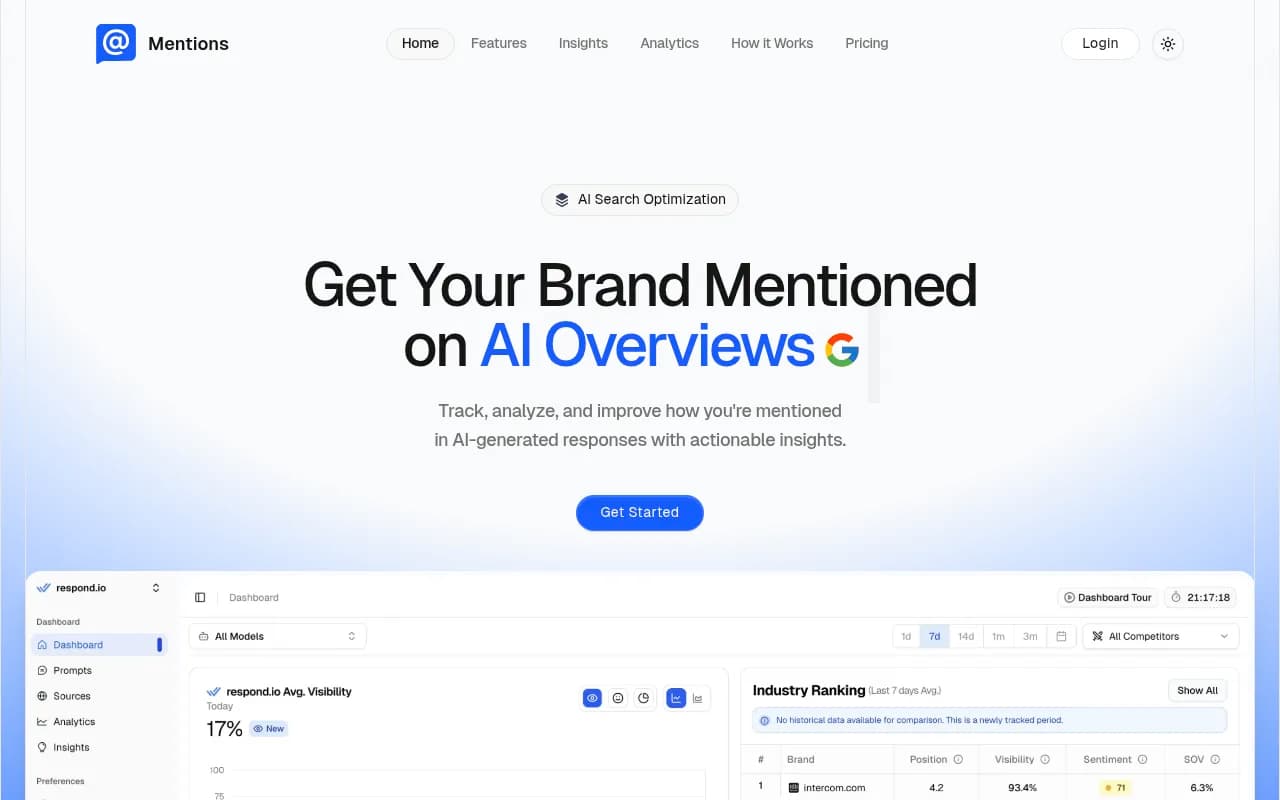
Mentions.so focuses specifically on brand mention tracking in AI search -- a narrower scope but useful if that's your primary need.
Scrunch AI monitors how AI assistants describe and recommend your brand, with a focus on the narrative framing of mentions.
Comparison: key features across tools
| Tool | Monitors multiple LLMs | Content gap analysis | AI content generation | Crawler logs | Prompt volume data |
|---|---|---|---|---|---|
| Promptwatch | Yes (10 models) | Yes | Yes | Yes | Yes |
| Profound AI | Yes | Limited | No | No | Limited |
| Relixir | Yes | Yes | Yes | No | No |
| Otterly.AI | Yes | No | No | No | No |
| Peec AI | Yes | No | No | No | No |
| Athena HQ | Yes | No | No | No | No |
| LLM Pulse | Yes | No | No | No | No |
| Scrunch AI | Yes | No | No | No | No |
A practical approach to improving your AI visibility
Tracking is only useful if it leads to action. Here's how brands are turning visibility data into actual improvements:
Start with a prompt audit
Map out the 50-100 prompts most relevant to your business. Think about how your customers actually ask questions -- not keyword-style queries, but natural language questions like "What's the best tool for tracking brand mentions in AI search?" Run those prompts across multiple AI platforms and document where you appear and where you don't.
Identify the content gaps
For every prompt where a competitor appears but you don't, ask: do we have content that answers this question? If not, that's your content roadmap. If you do have content, the question becomes whether it's structured in a way AI models can extract and cite.
Publish content AI models can use
The content that gets cited in AI responses tends to be:
- Specific and direct (answers the question in the first paragraph, not buried 1,000 words in)
- Well-structured with clear headings that match how users phrase questions
- Factual and citable (includes data, examples, and concrete recommendations)
- Published on domains that AI models consider authoritative in your space
Build presence beyond your own site
Your website alone isn't enough. AI models pull from the broader web. Getting your brand cited in relevant publications, discussed in forums like Reddit, reviewed on trusted review sites, and covered in YouTube content all contribute to your AI visibility. Tracker data showing which external sources AI models cite in your category tells you exactly where to focus this effort.
Track the results
As you publish new content, monitor whether it starts appearing in AI responses. Page-level tracking in tools like Promptwatch shows you which specific pages are being cited, by which models, and how often. This closes the loop -- you can see directly whether a piece of content is working.
The bigger picture
The shift happening in search right now is real. E-commerce sites, SaaS companies, and service businesses are all seeing AI-generated answers intercept traffic that used to flow through traditional search. The brands that figure out AI visibility now are building an advantage that will compound over time.
The good news: the mechanics of AI visibility are becoming clearer. Brand visibility trackers are revealing that this isn't random -- there's a logic to which brands get mentioned, and that logic can be worked with. The brands winning in AI search aren't necessarily the biggest or the oldest. They're the ones that have published content AI models can actually use to answer the questions their customers are asking.
That's a more level playing field than traditional SEO ever offered.