Key takeaways
- Brand visibility in 2026 means tracking both traditional search rankings AND citations in AI models like ChatGPT, Perplexity, and Gemini -- agencies that only monitor one are missing half the picture.
- Multi-client management is the biggest pain point: the best tools offer white-label reporting, workspace separation, and bulk prompt management so you're not rebuilding dashboards for every client.
- Monitoring alone isn't enough. The tools that deliver real ROI for agencies are the ones that show you why a client is invisible in AI search and help you fix it -- not just flag the problem.
- AI crawler logs, prompt volume data, and content gap analysis are the features that separate serious platforms from basic trackers.
- Pricing scales fast: budget for $99-$579/month per platform depending on client count, with agency/enterprise tiers available on most serious tools.
Running brand visibility for a single client is manageable. Running it for 10, 20, or 50 clients simultaneously -- across traditional search, AI search engines, social listening, and competitor benchmarking -- is a different problem entirely.
The tools that worked fine in 2023 are showing their age. Google rankings still matter, but a growing share of your clients' customers are now getting answers directly from ChatGPT, Perplexity, Claude, and Google's AI Overviews. If your client isn't being cited in those answers, they're invisible to a chunk of their audience -- and most traditional tracking tools won't even tell you that's happening.
This guide covers what to look for in brand visibility trackers built for agency use, which tools are worth your time in 2026, and how to think about building a stack that scales.
What "brand visibility" actually means in 2026
A few years ago, brand visibility tracking meant: are we ranking on page one? Are we getting backlinks? How's our share of voice in social?
That's still relevant. But the search landscape has fractured. A meaningful portion of informational queries now get answered by AI models that synthesize content from across the web -- without sending the user to any website at all. Your client could rank #1 on Google and still be completely absent from the AI-generated answer that 40% of searchers see first.
So brand visibility now has two distinct layers:
Traditional visibility: keyword rankings, backlink profiles, branded search volume, social mentions, review sentiment.
AI visibility: how often your brand is cited in responses from ChatGPT, Claude, Gemini, Perplexity, Grok, and others. Which prompts trigger your brand? Which competitors are getting cited instead? What content gaps are causing AI models to ignore you?
Agencies that only track one of these are giving clients an incomplete picture. The best stacks in 2026 cover both.
What agencies specifically need from a tracking tool
Individual marketers and in-house teams can get away with a lot. Agencies can't. Here's what actually matters when you're managing multiple clients:
Multi-workspace or multi-site management. You need clean separation between clients. Shared dashboards are a nightmare. Look for tools that let you create isolated workspaces per client, each with their own prompts, competitors, and reporting.
White-label reporting. Clients don't need to know what tools you're using. PDF exports with your agency branding, or shareable dashboards with custom domains, are table stakes for client-facing work.
Bulk prompt and competitor management. Setting up 50 prompts per client manually doesn't scale. Tools that let you import prompt lists, clone setups across clients, or use templates save hours per week.
Actionable data, not just charts. Monitoring dashboards are easy to build. What's hard -- and what clients actually pay for -- is knowing what to do next. Tools that surface content gaps, suggest fixes, or generate optimized content are worth more than ones that just show you a visibility score.
API access and integrations. If you're building custom reports in Looker Studio or pulling data into a client portal, you need an API or at least clean CSV exports.
The tools worth knowing in 2026
For AI search visibility (the new priority)
This is the category that's moved fastest. A year ago, most of these tools didn't exist. Now there are dozens, with wildly different capabilities.
Promptwatch is the one I'd start with for agencies that want to go beyond monitoring. It tracks brand citations across 10 AI models -- ChatGPT, Claude, Perplexity, Gemini, Grok, DeepSeek, Copilot, Meta AI, Mistral, and Google AI Overviews -- but the part that makes it genuinely useful for agencies is the action loop. It shows you which prompts competitors rank for that your client doesn't, generates content designed to close those gaps, and then tracks whether that content actually starts getting cited. Most tools stop at step one. Promptwatch runs the whole cycle.

For agencies, the Business plan ($579/mo) covers 5 sites with 350 prompts and 30 AI-generated articles per month. Agency and enterprise tiers with custom pricing are available for larger client rosters. The AI crawler logs feature -- which shows you exactly which pages AI bots are crawling and how often -- is something most competitors don't offer at all.
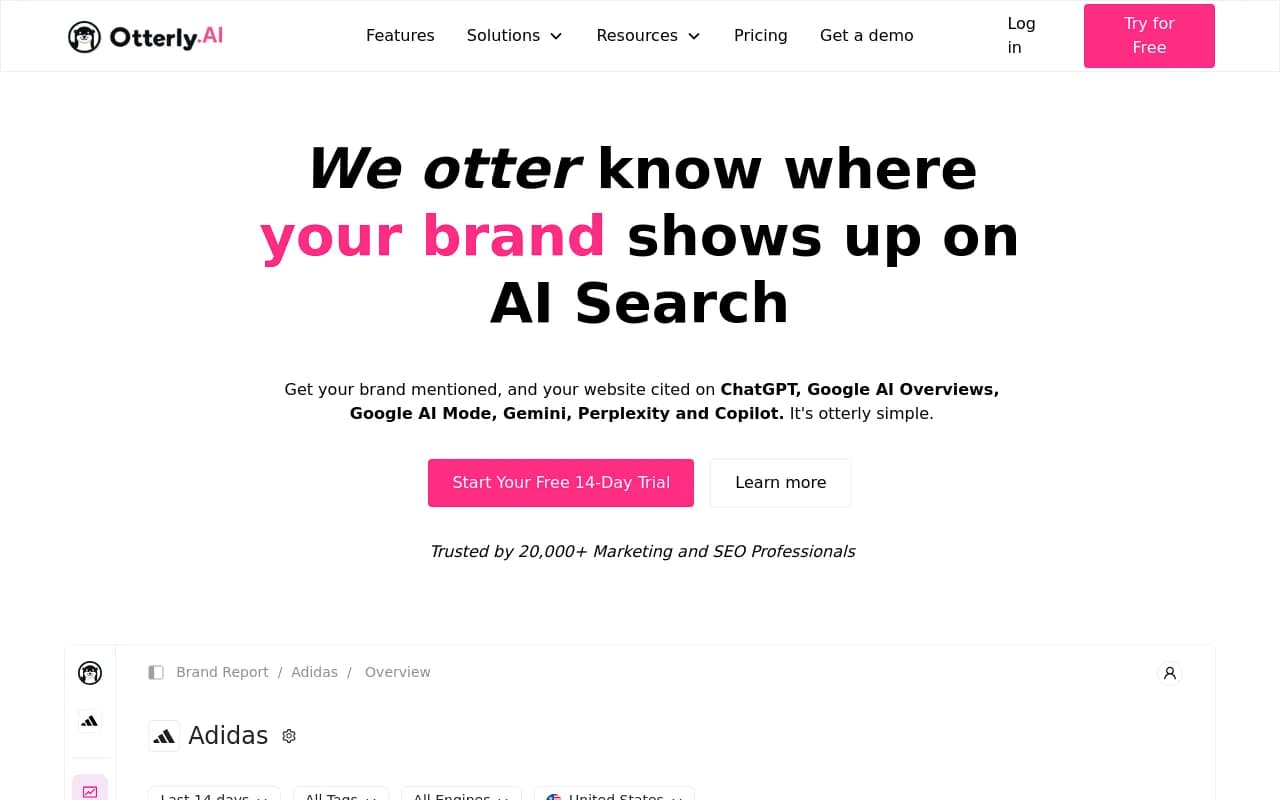
Otterly.AI is a lighter, more affordable option for agencies that primarily need monitoring. It tracks brand mentions across AI responses and gives you a clean dashboard. It doesn't do content generation or gap analysis, but if a client just wants to know "are we showing up in ChatGPT?", it gets the job done without a large budget.
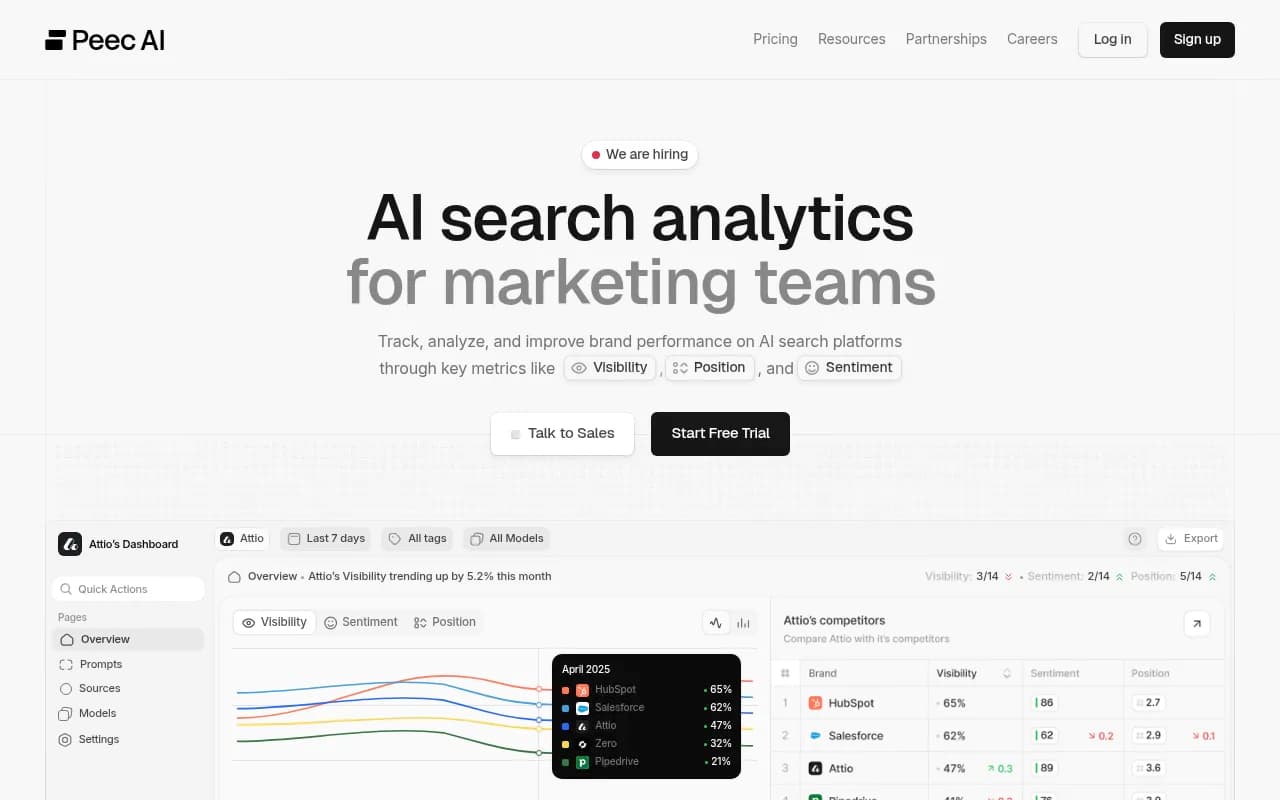
Peec AI is worth considering if you have clients in multiple countries or languages. Its multi-language support is solid, and it covers the major AI models. Like Otterly, it's monitoring-focused rather than optimization-focused.
Profound sits at the enterprise end of the market. Strong feature set, good competitor benchmarking, but the price point is higher and it lacks some of the content optimization capabilities that make Promptwatch useful for agencies that also handle content production.
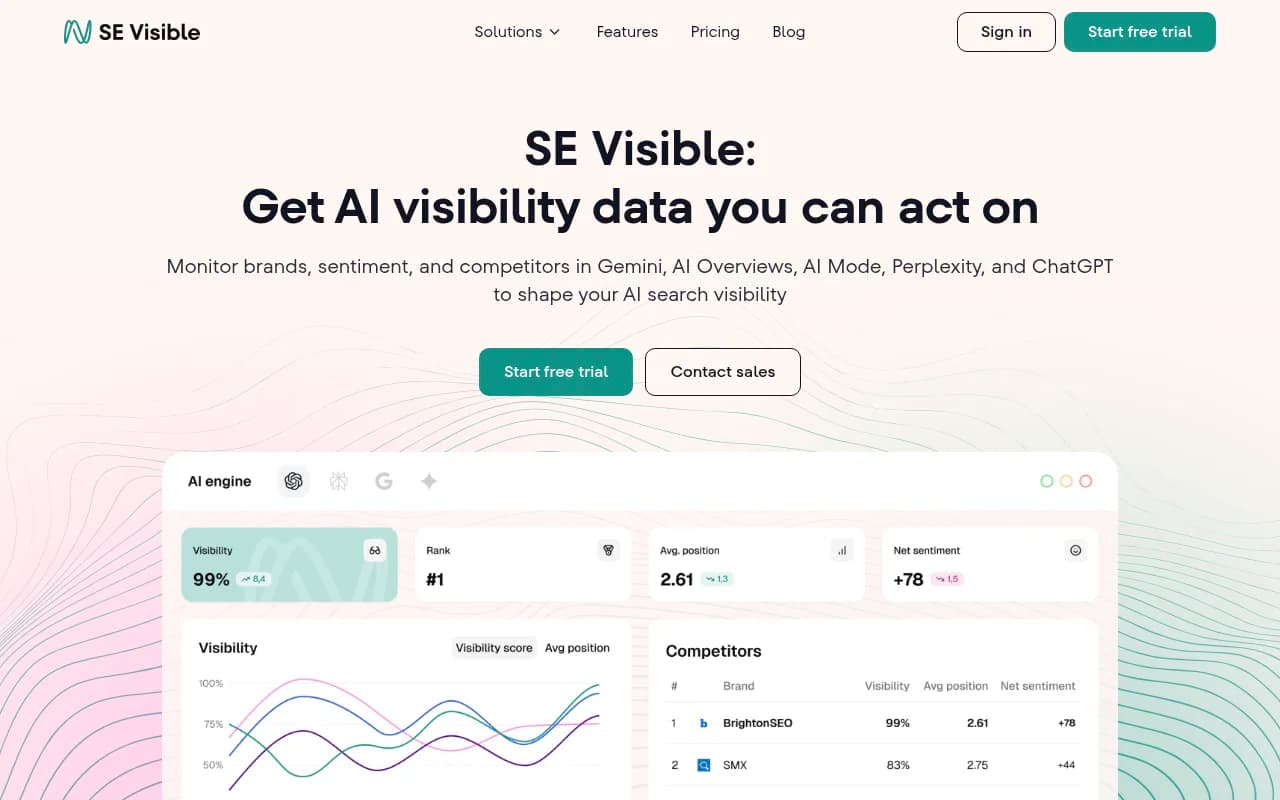
SE Visible (from SE Ranking) is a good option if you're already in the SE Ranking ecosystem. It tracks AI visibility alongside traditional SEO metrics, which reduces tool sprawl for agencies that use SE Ranking as their primary SEO platform.
Cairrot is specifically built for agencies managing multiple clients on a budget. It covers 5+ LLMs and has multi-client workspace management. Worth looking at if you're running a smaller agency and the per-seat costs of enterprise tools don't make sense yet.
Here's a quick comparison of the main AI visibility options:
| Tool | AI models tracked | Content generation | Multi-client support | Crawler logs | Starting price |
|---|---|---|---|---|---|
| Promptwatch | 10 | Yes (built-in AI writer) | Yes | Yes | $99/mo |
| Otterly.AI | 5+ | No | Limited | No | Lower tier |
| Peec AI | 6+ | No | Yes | No | Mid-range |
| Profound | 6+ | No | Yes | No | Higher |
| SE Visible | 5+ | No | Via SE Ranking | No | Bundled |
| Cairrot | 5+ | No | Yes (agency-focused) | No | Budget |
The pattern is clear: most tools track. Promptwatch tracks and helps you fix what's broken.
For traditional SEO and branded search
AI visibility is new, but traditional SEO tracking is still essential. Clients still care about keyword rankings, backlink growth, and organic traffic.
Semrush remains the most complete traditional SEO platform for agencies. Its agency toolkit includes white-label reporting, multi-client project management, and a wide range of features from keyword tracking to site audits. Its AI visibility features (via the AI Toolkit) exist but use fixed prompts -- you can't customize them the way you can in dedicated GEO tools.
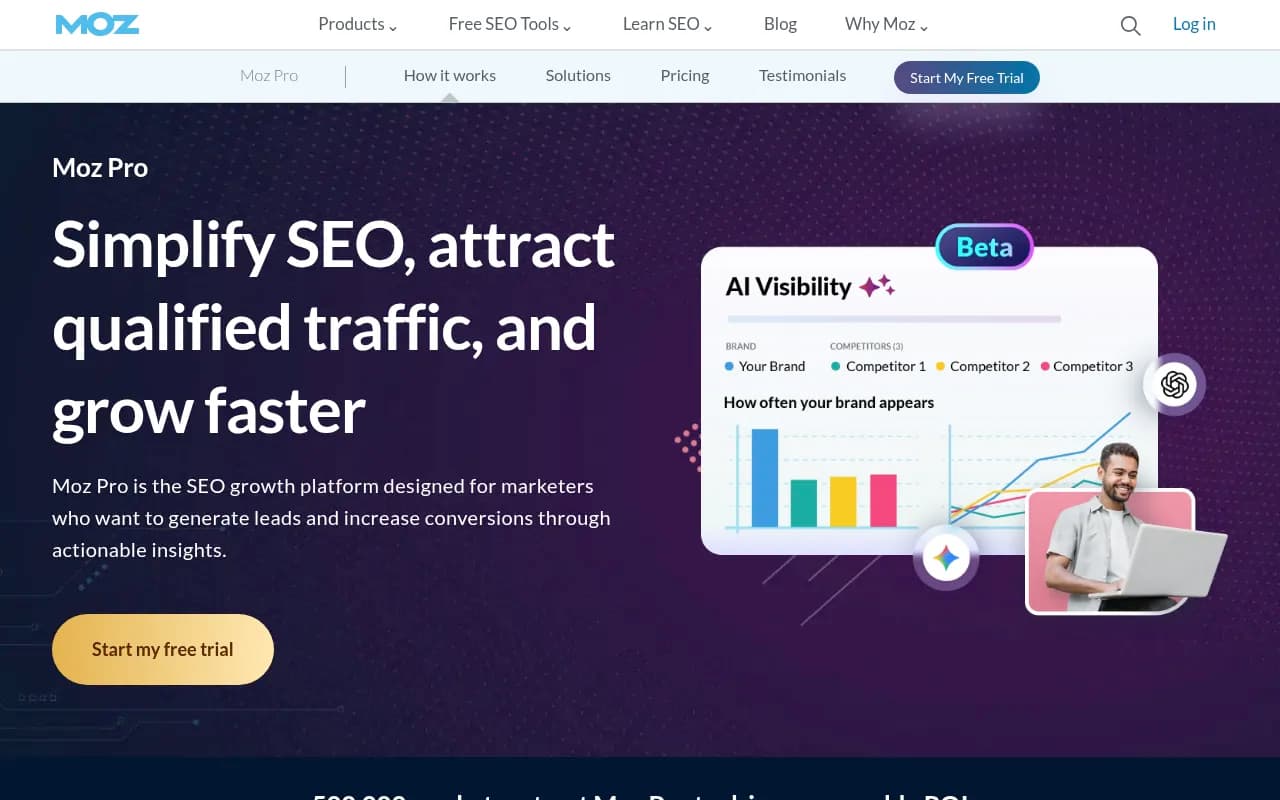
Moz Pro is a solid alternative, particularly for agencies that prefer a cleaner interface and don't need Semrush's full breadth. Good for keyword tracking and link analysis.
Advanced Web Ranking is underrated for agencies. It's built specifically for rank tracking at scale, handles large prompt volumes efficiently, and has good white-label reporting. If rank tracking is your core need, it's worth a look.
Ahrefs Brand Radar is Ahrefs' entry into AI visibility monitoring. It tracks brand mentions in AI-generated answers and integrates with the broader Ahrefs platform. Useful if you're already an Ahrefs shop, though it uses fixed prompts and lacks AI traffic attribution.
For social listening and brand mentions
Some clients care deeply about what people are saying about them on social media, forums, and review sites. This is a different tracking problem from search visibility.
Brand24 covers 25M+ sources in real-time and has solid sentiment analysis. It's one of the more affordable options in this category and works well for agencies that need to monitor brand mentions across social, news, and forums.
Sprout Social is the enterprise choice here -- better analytics, stronger team collaboration features, and more robust reporting. The price reflects that.
BuzzSumo is more content-research focused but useful for tracking which content about your clients is getting traction and who's sharing it.
For content optimization (supporting AI visibility)
Once you've identified gaps -- either through AI visibility tools or traditional SEO -- you need to create content that fills them. A few tools are worth keeping in the stack:
Surfer SEO handles on-page optimization well and has added AI writing features. Good for agencies producing SEO content at volume.
MarketMuse does content strategy at a deeper level -- it tells you what topics to cover, how comprehensively, and what's missing from your existing content. More expensive but genuinely useful for content-heavy agencies.
How to build an agency stack that actually scales
The mistake most agencies make is buying too many tools that overlap. Here's a practical way to think about it:
Tier 1 (essential): One AI visibility platform that covers monitoring AND optimization. Promptwatch is the obvious choice here if you want to offer clients a complete picture and actionable deliverables. If budget is tight, Cairrot or Otterly.AI cover the monitoring side.
Tier 2 (essential): One traditional SEO platform. Semrush or Ahrefs for most agencies. SE Ranking if you want AI visibility bundled in at a lower price point.
Tier 3 (situational): Social listening if your clients are consumer-facing brands where social sentiment matters. Brand24 for most agencies, Sprout Social if you're managing social posting as well.
Tier 4 (content production): Only if you're producing content as a service. Surfer SEO or MarketMuse depending on whether you need optimization or strategy.
The agencies I've seen do this well typically run 2-3 tools total, not 8. The goal is coverage without redundancy.
A note on reporting
Whatever tools you use, client reporting is where agencies live or die. A few things that matter:
Clients don't want raw data dumps. They want to understand: are we more visible than last month? Are we beating competitors? What are we doing about the gaps?
The best agency setups I've seen translate AI visibility scores into business language -- "your brand appeared in 34% of relevant AI search responses last month, up from 21% the month before, and here's the content we published to drive that improvement." That's a story. A dashboard full of numbers isn't.
Tools that support this narrative include Promptwatch (which connects visibility scores to specific content actions and can attribute traffic back to AI citations), Semrush (which has strong white-label PDF reporting), and Advanced Web Ranking (which has flexible report templates).
What to watch in the second half of 2026
A few things are shifting fast:
ChatGPT Shopping is becoming a real channel for e-commerce clients. Promptwatch already tracks when brands appear in ChatGPT's product recommendations -- this is going to matter more as AI shopping behavior grows.
Google AI Mode is expanding. As Google's AI-first search experience rolls out more broadly, the line between traditional SEO and AI visibility tracking is blurring. Tools that cover both in one place will have an advantage.
Prompt volume data is getting more reliable. Early AI visibility tools could tell you whether you appeared in a response but not how many people were asking that question. Platforms like Promptwatch now offer prompt volume estimates and difficulty scores, which makes prioritization much more practical.
The agencies that get ahead in this environment are the ones treating AI visibility as a core deliverable -- not a nice-to-have add-on to their SEO reports. The tools are mature enough now that there's no excuse for not tracking it.