Key takeaways
- The GEO platform market in 2026 splits cleanly into two camps: monitoring-only dashboards and platforms that close the loop with content creation and optimization.
- Omnia is a solid monitoring tool for scaleups that want clean dashboards and AI search tracking without a steep learning curve.
- Relixir positions itself as an all-in-one GEO platform with content generation, but its citation dataset and optimization depth are thinner than Promptwatch's.
- Promptwatch is the only platform rated "Leader" across all categories in a 2026 comparison of 12 GEO tools -- it covers monitoring, content gap analysis, AI-powered content generation, crawler logs, and traffic attribution in one place.
- If your goal is to actually improve AI visibility (not just measure it), the platform you choose needs to do more than track.
Why this comparison matters in 2026
Generative Engine Optimization is no longer a niche concern. ChatGPT, Perplexity, Claude, Gemini, and Google's AI Mode are now real traffic sources for a lot of brands -- and most marketing teams are scrambling to figure out whether they're showing up in those answers or not.
The problem is that the GEO tool market has exploded with options that look similar on the surface but behave very differently in practice. Some tools are genuinely useful for tracking visibility. Others claim to be "all-in-one" but stop short of actually helping you fix anything. And a few are doing the whole thing end-to-end.
Omnia, Relixir, and Promptwatch are three platforms that come up repeatedly in 2026 comparisons. They're worth putting side by side because they represent three distinct philosophies about what a GEO platform should do.
What each platform actually does
Omnia
Omnia markets itself as the best AI search monitoring tool for scaleups. The pitch is clean: track your brand across AI engines, see how competitors are performing, and get alerts when your visibility changes.

The platform covers the major AI models -- ChatGPT, Perplexity, Claude, Gemini -- and gives you a reasonably clear picture of share of voice and brand mention frequency. For teams that are just getting started with GEO and want something that doesn't require a long onboarding process, Omnia is genuinely easy to use.
Where it runs into limits: it's primarily a monitoring dashboard. You can see that you're not being cited for a particular prompt, but the platform doesn't tell you what to do about it. There's no content gap analysis, no built-in writing tools, no crawler log data. You get the diagnosis without the treatment.
That's fine if you have a strong internal content team and a clear GEO playbook already. If you're still figuring out what content to create to improve AI visibility, Omnia will leave you with a lot of data and not much direction.
Relixir
Relixir positions itself as an all-in-one GEO platform -- monitoring plus content generation. The idea is that you track your visibility gaps and then use the platform's AI writing tools to fill them.
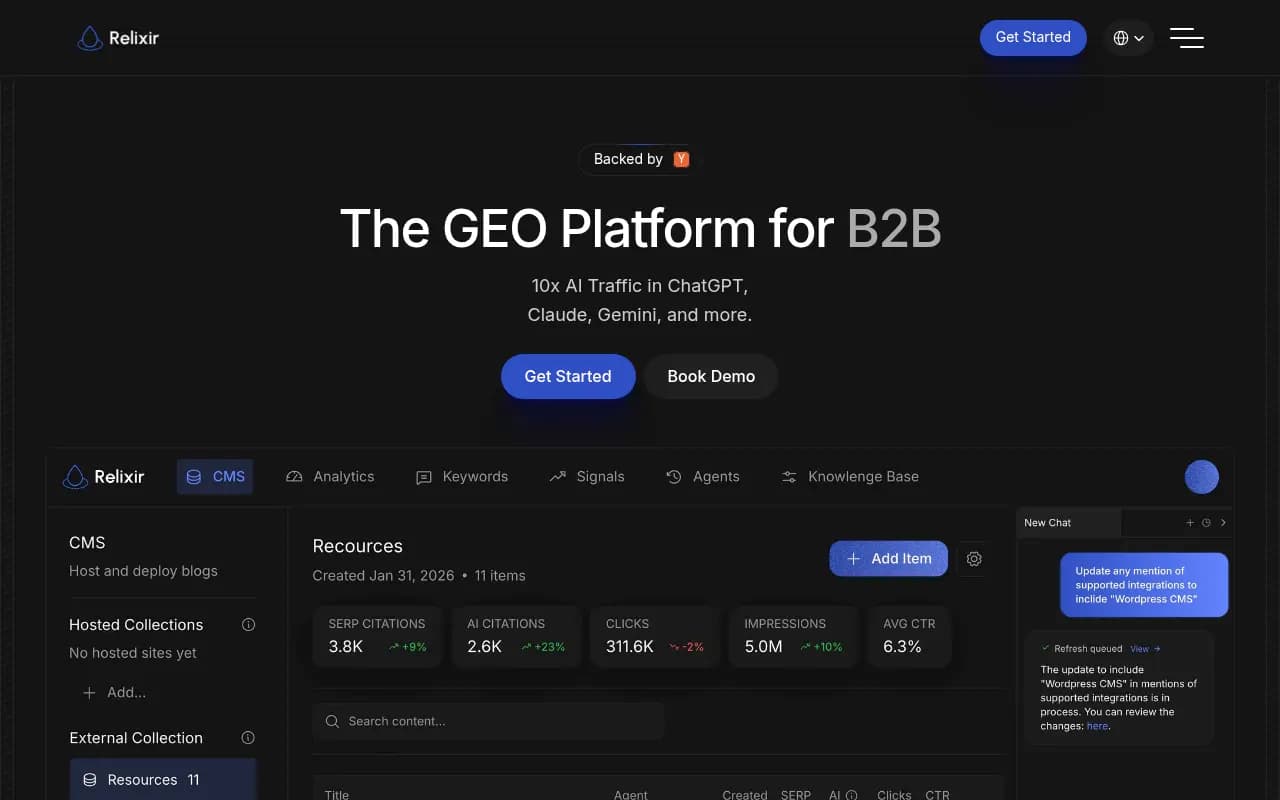
On paper, this is the right approach. In practice, the depth varies. Relixir does offer content generation, which puts it ahead of pure monitoring tools. But the citation dataset it draws on is smaller than Promptwatch's, and the content gap analysis is less granular. You get suggestions, but they're not always grounded in the kind of prompt-volume data that tells you which gaps are actually worth filling.
The platform is worth considering for smaller teams that want a single tool and don't need enterprise-level depth. It's a step up from monitoring-only, but it's not quite the full loop.
Promptwatch
Promptwatch is the most complete platform in this comparison. It monitors visibility across 10 AI models (ChatGPT, Claude, Perplexity, Gemini, Grok, DeepSeek, Copilot, Meta AI, Mistral, and Google AI Overviews), but that's just the starting point.

The part that separates it from the others is the action loop. Answer Gap Analysis shows you exactly which prompts competitors are visible for but you're not -- with prompt volume estimates and difficulty scores so you can prioritize. The built-in AI writing agent then generates content (articles, listicles, comparisons) grounded in 880M+ citations analyzed, not generic SEO templates. Then page-level tracking shows whether that new content is getting cited, by which models, and how often.
On top of that: AI crawler logs that show which pages ChatGPT, Claude, and Perplexity are actually reading on your site, Reddit and YouTube citation tracking, ChatGPT Shopping monitoring, and traffic attribution via GSC integration or server log analysis.
It's used by 6,700+ brands and agencies including Booking.com and Center Parcs. Pricing starts at $99/month for the Essential plan (1 site, 50 prompts, 5 articles), $249/month for Professional (2 sites, 150 prompts, 15 articles, crawler logs), and $579/month for Business (5 sites, 350 prompts, 30 articles).
Feature comparison
| Feature | Omnia | Relixir | Promptwatch |
|---|---|---|---|
| AI model coverage | ChatGPT, Perplexity, Claude, Gemini | ChatGPT, Perplexity, Claude, Gemini | 10 models incl. Grok, DeepSeek, Copilot, Mistral |
| Brand mention tracking | Yes | Yes | Yes |
| Share of voice / visibility score | Yes | Yes | Yes |
| Competitor analysis | Basic | Yes | Yes (with heatmaps) |
| Prompt volume & difficulty scoring | No | Limited | Yes |
| Answer gap analysis | No | Partial | Yes (full) |
| AI content generation | No | Yes | Yes (citation-grounded) |
| AI crawler logs | No | No | Yes |
| Reddit & YouTube citation tracking | No | No | Yes |
| ChatGPT Shopping tracking | No | No | Yes |
| Page-level citation tracking | No | Limited | Yes |
| Traffic attribution | No | No | Yes (GSC, server logs, snippet) |
| Multi-language / multi-region | Limited | Limited | Yes |
| Free trial | Yes | Yes | Yes |
| Starting price | ~$99/mo | ~$99/mo | $99/mo |
The monitoring vs. optimization split
The real question when choosing a GEO platform isn't "which one has the prettiest dashboard." It's whether the platform helps you do something with what you learn.
A Reddit thread from early 2026 on AI visibility tools put it well: "The real split I see in AI visibility tools is monitoring vs execution." That's exactly right. Most tools in this space are monitoring dashboards. They show you a number going up or down. They don't help you move it.
Omnia sits firmly in the monitoring camp. It's good at what it does, but it stops there.
Relixir tries to bridge the gap with content generation, and it deserves credit for that. But the content it generates isn't deeply grounded in citation data, and the gap analysis doesn't give you the prompt-level prioritization you need to make smart decisions about where to invest.
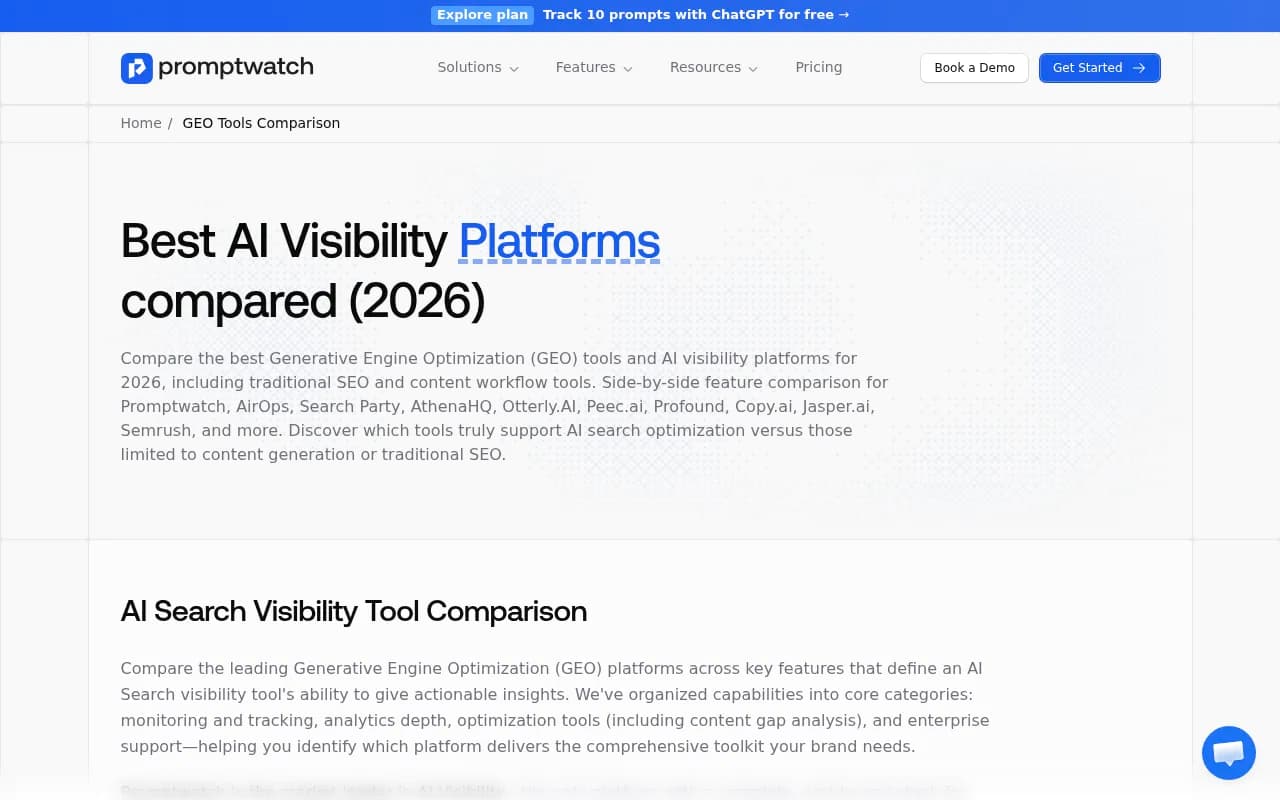
Promptwatch closes the loop. Find the gaps, create content engineered to get cited, track the results, connect visibility to revenue. That's a meaningfully different product category from what Omnia offers, and it's more complete than what Relixir delivers today.
Who should use which platform
Use Omnia if...
You're a scaleup that's just starting to think about AI search visibility. You want a clean, simple dashboard to track brand mentions and share of voice across the main AI models. You have an internal content team that can act on the data independently, and you don't need the platform to tell you what to write.
Use Relixir if...
You want monitoring plus some content generation in a single tool, and you're working with a smaller budget or a smaller team. You don't need deep prompt intelligence or crawler log data, and you're comfortable with content suggestions that are directionally useful rather than precisely grounded in citation data.
Use Promptwatch if...
You need to actually move the needle on AI visibility, not just measure it. You want to know which specific prompts to target, what content to create, whether that content is being cited, and whether that citation activity is driving real traffic. You're running a marketing team, an SEO team, or an agency that needs to show results -- not just reports.
A note on the broader landscape
Omnia and Relixir aren't the only players worth knowing about. The GEO tool market has a lot of options at different price points and capability levels.
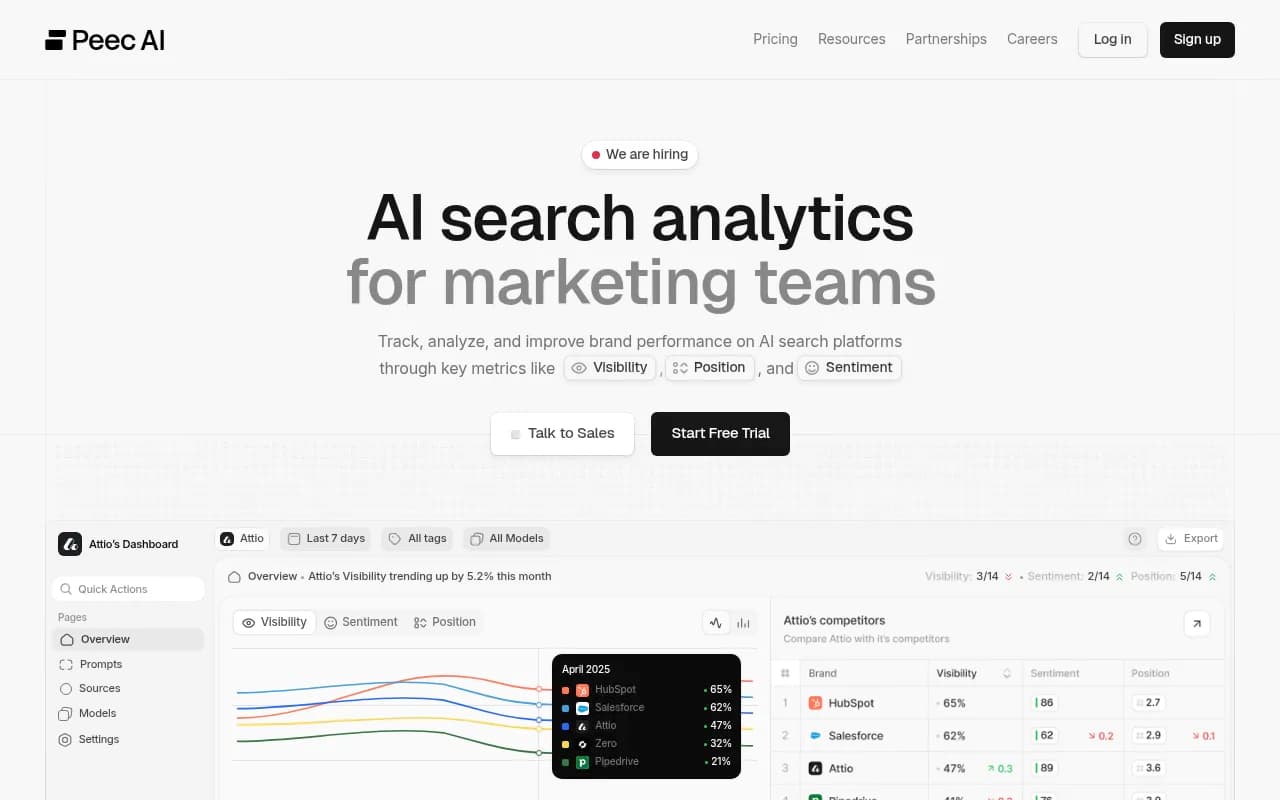
For pure monitoring at a lower price point, tools like Otterly.AI and Peec AI are worth a look.

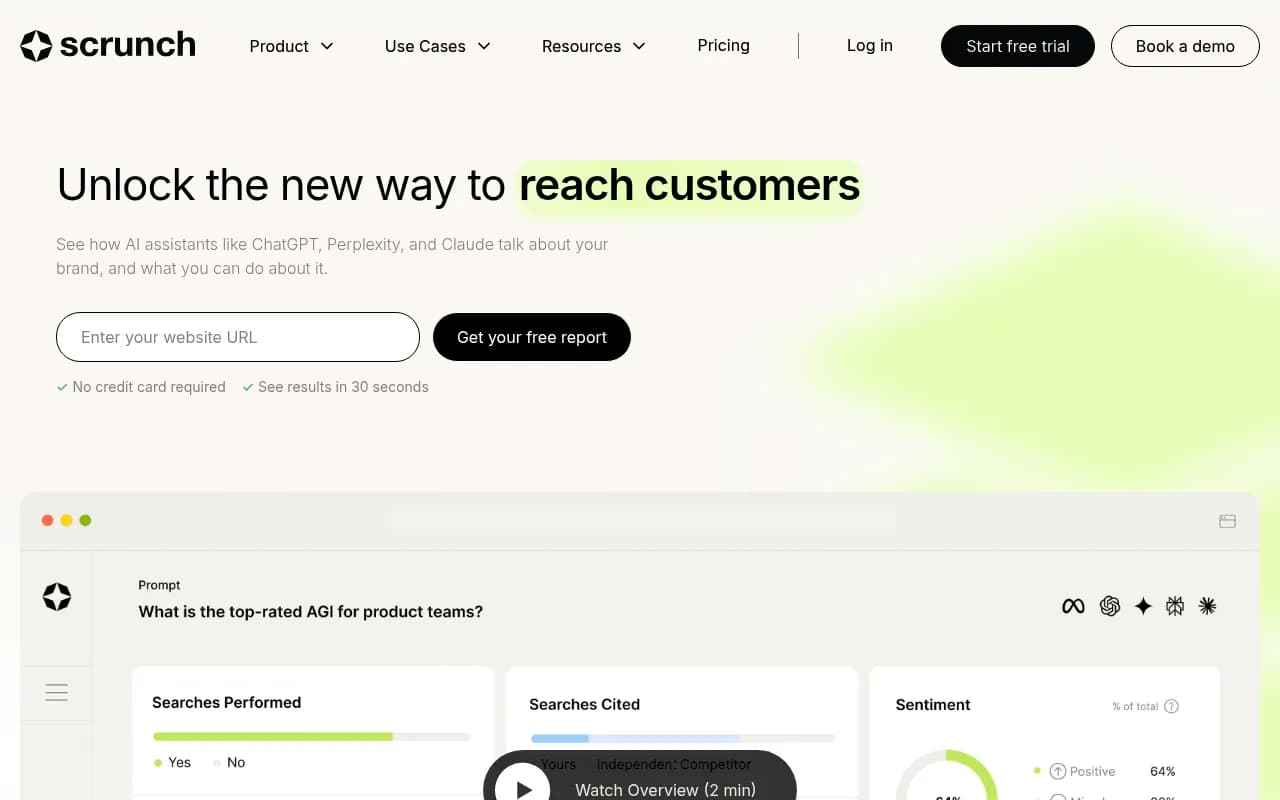
For enterprise-grade monitoring with strong data infrastructure, Profound and Scrunch are solid options -- though both are more expensive and neither offers the content generation depth that Promptwatch does.
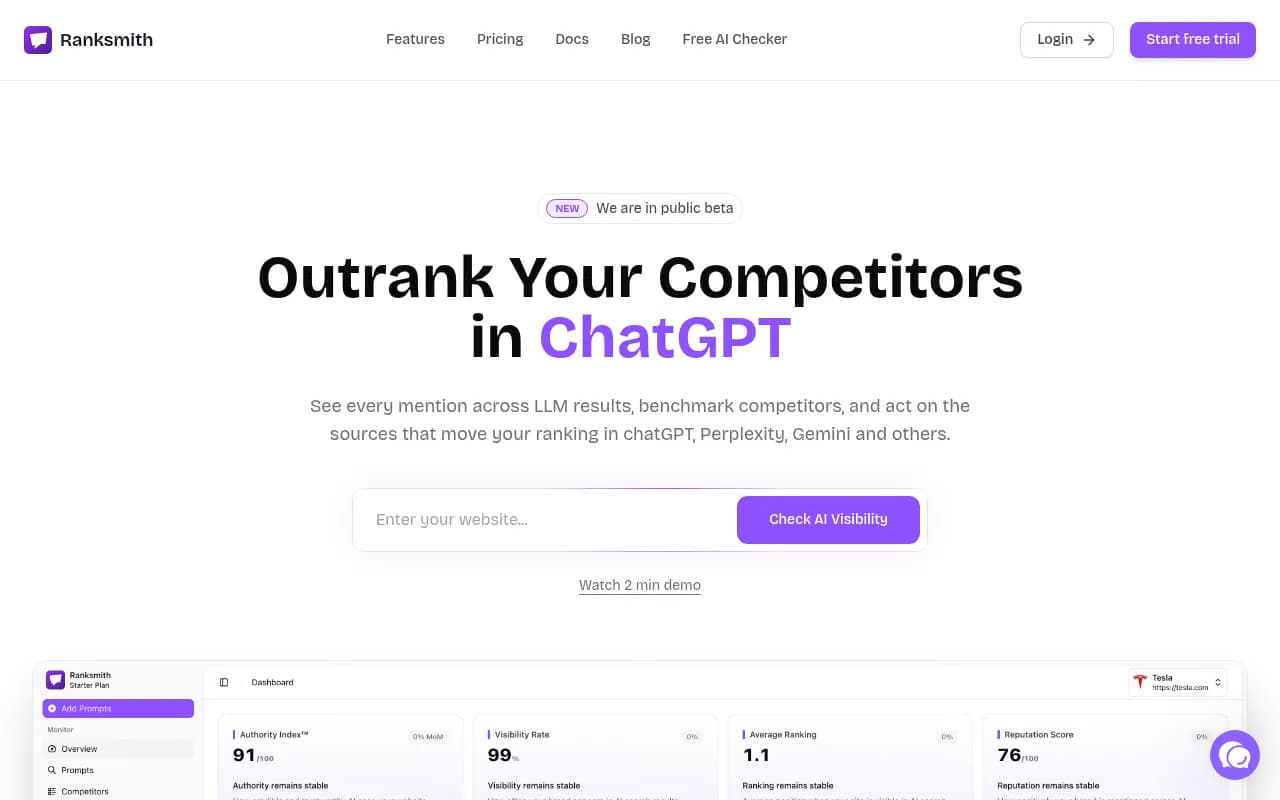
For teams that want something in between -- more than basic monitoring but not the full Promptwatch stack -- Airefs and Ranksmith offer useful middle-ground options.

The bottom line
In 2026, "we're tracking our AI visibility" is table stakes. The brands that are actually winning in AI search are the ones that have figured out how to act on that data -- creating content that gets cited, fixing the gaps competitors are exploiting, and connecting AI visibility to actual revenue.
Omnia is a good monitoring tool. Relixir is a reasonable step toward execution. Promptwatch is the platform built around the full cycle: find gaps, create content, track results, close the loop.
If you're choosing between these three, the right answer depends on where you are in your GEO maturity. But if you're serious about improving your position in AI search rather than just reporting on it, the platform you pick needs to do more than watch.