Key takeaways
- All three platforms track brand visibility in AI search engines, but they differ significantly in what they do with that data.
- Omnia focuses on AI search monitoring with clear guidance on where to act, covering ChatGPT, Perplexity, Google AI Overviews, and Google AI Mode.
- Goodie AI targets enterprise teams that want deep visibility into how AI systems describe their brand, with a starting price around $495/month.
- Promptwatch is the only platform of the three rated as a "Leader" across all GEO categories in 2026, combining monitoring, content gap analysis, AI content generation, and traffic attribution in one loop.
- If your team needs to move from "we see the problem" to "we fixed it" quickly, the platform with the built-in action layer wins.
The GEO tool market has gotten crowded fast. Two years ago there were maybe a dozen platforms worth considering. Now there are well over 200. Most of them do roughly the same thing: they run your brand name through a set of AI models, count how often you appear, and hand you a dashboard.
That's useful. But it's not enough if you're under pressure to actually improve your AI search presence, not just report on it.
This comparison focuses on three platforms that come up repeatedly in 2026 discussions: Omnia, Goodie AI, and Promptwatch. They're not identical products. They make different bets about what teams actually need. Let's get into it.
What we're actually comparing
Before the breakdown, it's worth being clear about what matters for a team that needs results fast. There are really four questions worth asking about any GEO platform:
- Which AI models does it monitor, and how deeply?
- Does it show you why you're losing visibility, not just that you are?
- Can you act on the data inside the platform, or do you have to go elsewhere?
- Does it connect visibility to traffic and revenue?
A monitoring-only tool can answer question one. The other three are where platforms diverge sharply.
Omnia
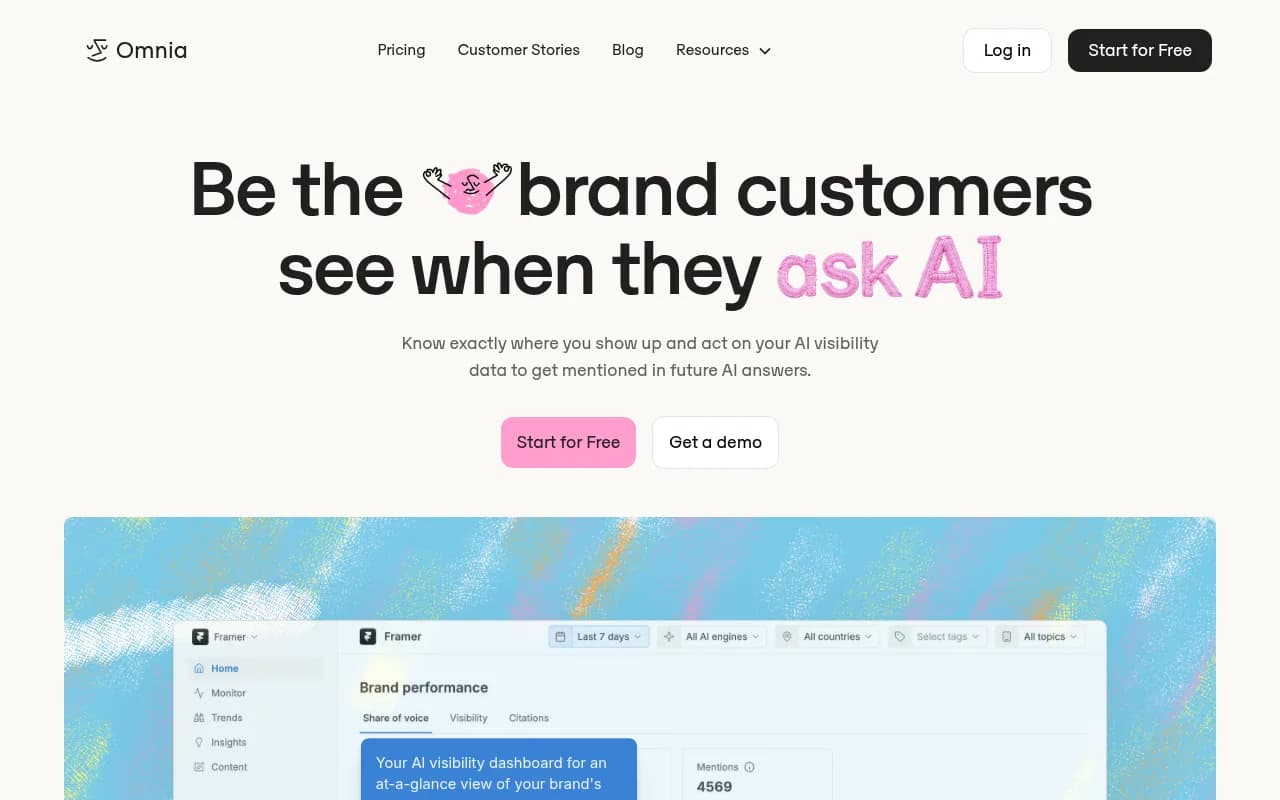
Omnia positions itself as a GEO platform that gives teams "control and clear guidance on where to act." The pitch is that most teams don't just need data -- they need to know what to do next.
What it monitors
Omnia covers four major AI search platforms: ChatGPT, Perplexity, Google AI Overviews, and Google AI Mode. That's a reasonable slice of where most brand discovery is happening right now. It won't cover Claude, Gemini, Grok, or DeepSeek, which matters if your audience skews toward users of those models.
Where it's strong
The platform has a reputation for clear, actionable output. One user quote from their site captures the positioning well: "Before Omnia, we didn't know how AI engines saw us. Now we have control, clear guidance on where to act, and can see results in days." That "days" claim is interesting -- it suggests the platform is designed for speed of iteration, not just long-term tracking.
Omnia also emphasizes URL-level citation intelligence and geo-by-country tracking, which are genuinely useful for teams running multi-market campaigns. Knowing that you rank well in the US but poorly in Germany for a specific prompt is actionable. Knowing your overall visibility score went up 3 points is less so.
Where it falls short
The four-model coverage is a real constraint. If you're serious about AI search visibility in 2026, you probably want to know what Claude says about your brand, what Gemini recommends, and whether you're appearing in Grok's responses. Omnia doesn't cover those.
There's also the question of content generation. Omnia can tell you where you're losing -- but generating the content to fix those gaps appears to require going elsewhere.
Pricing
Omnia offers a free tier to get started. Paid plans scale based on prompt volume and features, though exact pricing isn't publicly listed beyond the free entry point.
Goodie AI
Goodie AI describes itself as an "answer engine optimisation platform designed for teams that want deep visibility into how AI systems describe their brand." The enterprise positioning is clear from the price point alone.
What it monitors
Goodie AI covers the major AI answer engines and goes deep on how AI systems characterize your brand -- not just whether you appear, but what language models say about you when you do. That's a meaningful distinction. Sentiment and framing matter as much as citation frequency when you're trying to manage brand perception in AI search.
Where it's strong
For enterprise teams that care about brand narrative -- not just traffic -- Goodie AI's depth of analysis is a genuine differentiator. If you're a large brand and you want to understand exactly how ChatGPT describes your product versus a competitor's, Goodie AI is built for that use case.
The platform also appears to offer competitive intelligence at a level that smaller tools don't match, letting you see not just where you appear but why competitors are being prioritized in specific response contexts.
Where it falls short
The $495/month starting price (with no free trial, based on available data) is a significant barrier for most marketing teams and agencies. You're paying enterprise rates before you've validated whether the platform fits your workflow.
More importantly, Goodie AI is primarily a monitoring and analysis tool. Like most enterprise-tier GEO platforms, it shows you what's happening with considerable depth -- but the action layer, the part where you actually create content to fix the gaps, lives outside the platform.
Pricing
Starting around $495/month, with no publicly listed free trial. Custom enterprise pricing available.
Promptwatch

Promptwatch takes a different structural approach. Where Omnia and Goodie AI are primarily monitoring platforms with varying depths of analysis, Promptwatch is built around a closed loop: find gaps, create content, track results.
What it monitors
Ten AI models: ChatGPT, Perplexity, Google AI Overviews, Google AI Mode, Claude, Gemini, Meta/Llama, DeepSeek, Grok, Mistral, and Copilot. That's the broadest coverage of the three platforms by a significant margin. If a model is influencing how your customers discover products, Promptwatch is tracking it.
The action loop
This is where Promptwatch separates from the other two. Most GEO platforms stop at step one -- they show you where you're invisible. Promptwatch is designed around three steps:
First, Answer Gap Analysis identifies the specific prompts where competitors appear but you don't. Not a vague "you're losing visibility" signal -- the actual prompts, with the actual content gaps your site is missing.
Second, a built-in AI writing agent generates articles, listicles, and comparisons grounded in citation data from over 880 million citations analyzed. This isn't generic content -- it's engineered to get cited by specific AI models based on what those models are already citing.
Third, page-level tracking shows which pages are being cited, how often, and by which models. Traffic attribution (via code snippet, Google Search Console integration, or server log analysis) connects visibility improvements to actual revenue.
That loop -- find gaps, generate content, track results -- is what makes Promptwatch an optimization platform rather than a tracker.
Additional capabilities worth noting
A few features stand out as genuinely uncommon in the GEO space:
AI Crawler Logs show in real time which AI crawlers (ChatGPT, Claude, Perplexity, etc.) are hitting your website, which pages they're reading, and what errors they're encountering. Most competitors don't offer this at all. For teams trying to understand why their content isn't getting cited, this is often where the answer lives.
Reddit and YouTube tracking surfaces discussions that directly influence AI recommendations -- a channel most GEO platforms ignore entirely, even though Reddit threads are heavily cited in AI responses.
ChatGPT Shopping tracking monitors when your brand appears in ChatGPT's product recommendations and shopping carousels, which is increasingly relevant for e-commerce brands.
Prompt Intelligence provides volume estimates and difficulty scores for each prompt, plus query fan-outs that show how one prompt branches into sub-queries. This lets teams prioritize high-value, winnable prompts instead of guessing.
Pricing
- Essential: $99/month (1 site, 50 prompts, 5 articles)
- Professional: $249/month (2 sites, 150 prompts, 15 articles, crawler logs, state/city tracking)
- Business: $579/month (5 sites, 350 prompts, 30 articles)
- Agency/Enterprise: custom pricing
Free trial available. Annual billing discounts apply.
Head-to-head comparison
| Feature | Omnia | Goodie AI | Promptwatch |
|---|---|---|---|
| AI models covered | 4 (ChatGPT, Perplexity, GAO, AI Mode) | Major answer engines | 10+ models |
| Answer Gap Analysis | Partial | Yes | Yes (with specific prompt data) |
| Built-in content generation | No | No | Yes (AI writing agent) |
| AI Crawler Logs | No | No | Yes |
| Reddit/YouTube tracking | No | No | Yes |
| ChatGPT Shopping tracking | No | No | Yes |
| Traffic attribution | Limited | Limited | Yes (GSC, snippet, server logs) |
| Prompt volume & difficulty | No | No | Yes |
| Multi-language/region | Yes | Yes | Yes |
| Free trial | Yes (free tier) | No | Yes |
| Starting price | Free / custom | ~$495/mo | $99/mo |
| Best for | Teams wanting clear action guidance | Enterprise brand narrative | Teams that need to monitor AND fix |
Which platform fits which team
The honest answer is that these three tools are solving slightly different problems, and the right choice depends on what your team is actually stuck on.
If you're a mid-size brand or agency that has already validated the monitoring use case and now needs to move fast on content creation and optimization, Promptwatch is the most complete option. The action loop -- gap analysis to content generation to traffic attribution -- means you're not stitching together three different tools to get from insight to result. The 6,700+ brands using it (including Booking.com and Center Parcs) suggest the platform works at scale, not just for small teams experimenting.
If you're an enterprise brand with a specific focus on brand narrative and how AI systems characterize you -- and budget isn't a constraint -- Goodie AI's depth of analysis is worth evaluating. Just go in knowing you'll need a separate content workflow.
If you're earlier in the process, want to start with a narrower set of AI models, and want clear directional guidance without a large upfront commitment, Omnia's free tier is a reasonable starting point. The four-model coverage is a real limitation, but it covers the platforms where most AI search volume currently lives.
For teams that need results fast in 2026 -- and that's most teams, given how quickly AI search is eating into traditional organic traffic -- the monitoring-only approach has a real cost. Every week you spend looking at a dashboard without a clear path to fixing the gaps is a week competitors are building citation authority you'll have to work harder to overcome.
A note on the broader GEO landscape
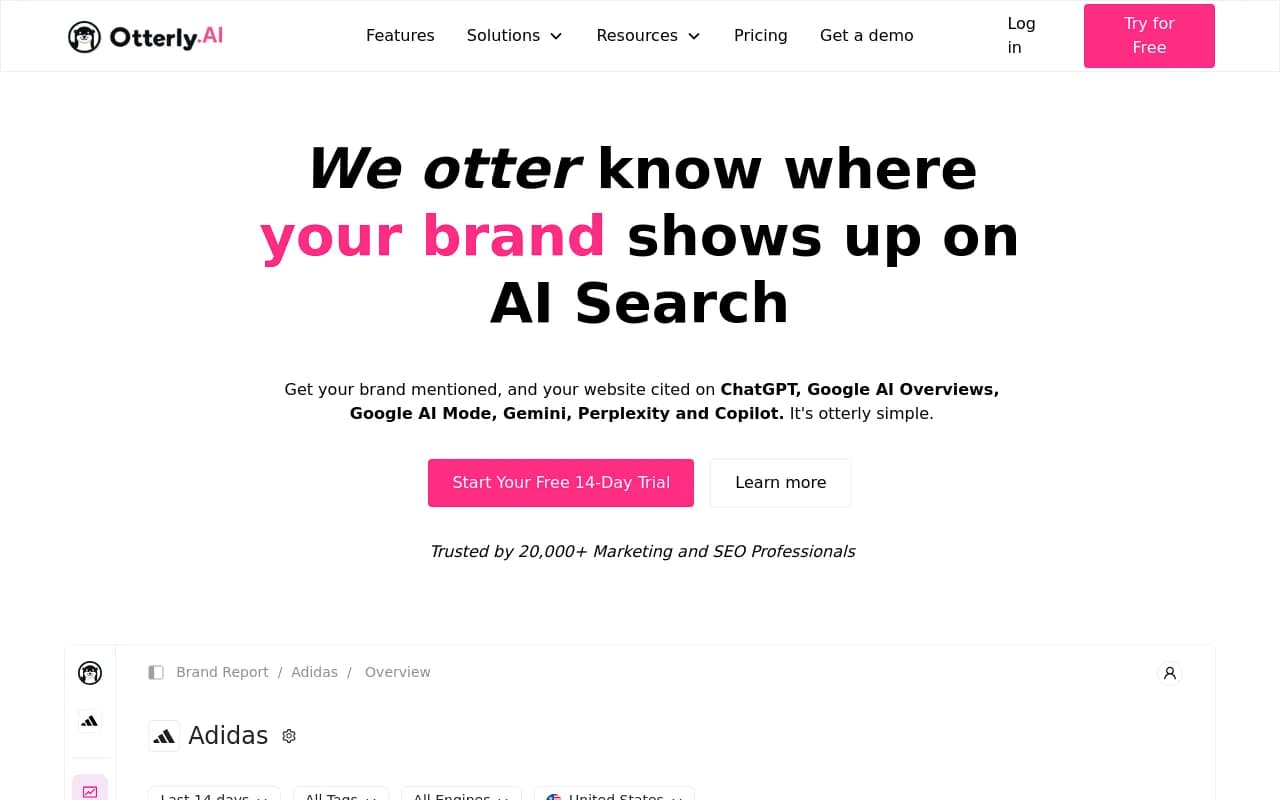
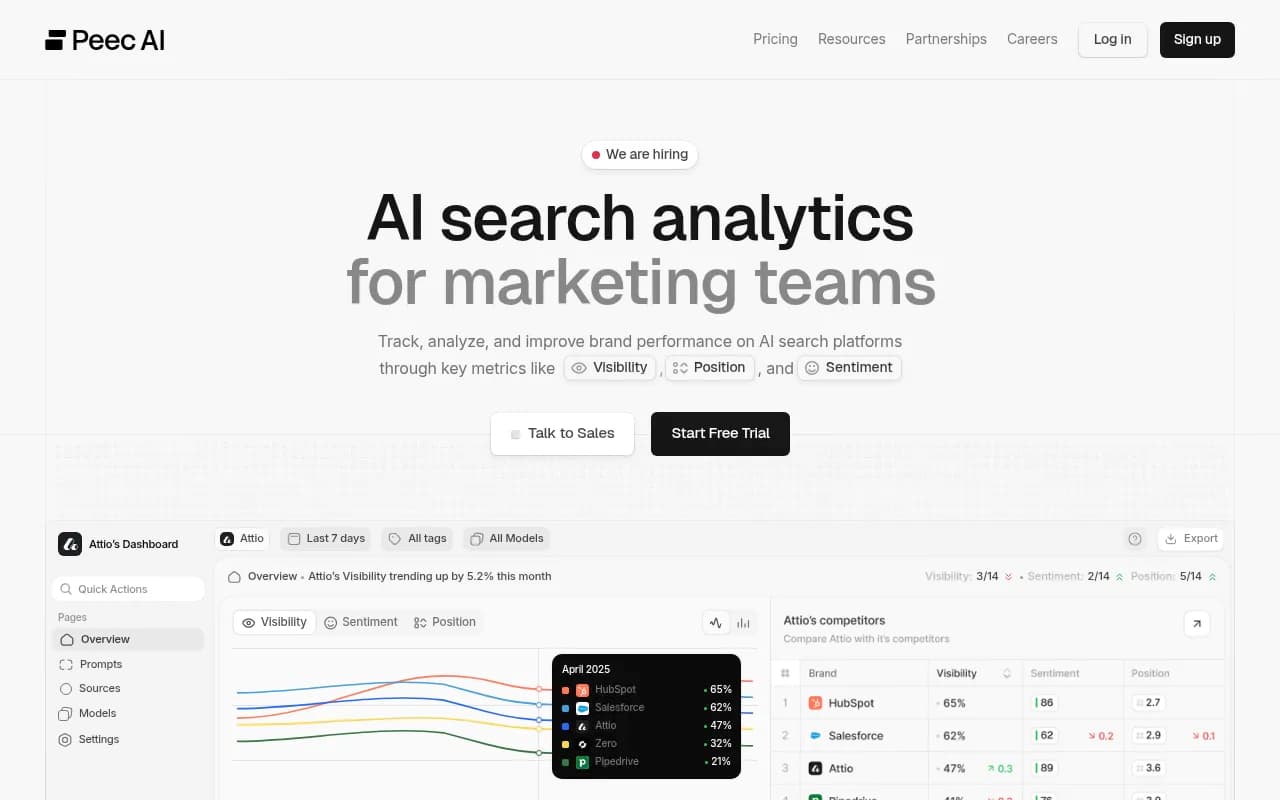
These three platforms exist in a market with 200+ tools, and the comparison above doesn't mean the other options aren't worth considering. Platforms like Otterly.AI and Peec AI offer affordable entry points for teams that genuinely just need basic monitoring. Profound and Scrunch have strong enterprise feature sets at higher price points. Ahrefs Brand Radar and Semrush have AI search features built into tools many teams already pay for.
The meaningful distinction in 2026 isn't between "good" and "bad" GEO tools -- it's between platforms that show you the problem and platforms that help you fix it. That gap is where the real competitive advantage lives, and it's the question worth asking before signing any contract.
A platform like Promptwatch that closes that loop -- with crawler logs, citation analysis, content generation, and traffic attribution all in one place -- is a different category of tool than a monitoring dashboard, regardless of how the marketing is framed.
If you're evaluating any of these platforms, the 15-minute test is simple: ask the vendor to show you what happens after you find a gap. If the answer is "you export the data and take it to your content team," you're buying a monitoring tool. If the answer is "here's the content the platform generates, here's how it's grounded in citation data, and here's how you track whether it worked," you're buying an optimization platform.
That distinction matters more than any feature checklist.