Key takeaways
- AccuRanker is the fastest and most accurate option, best suited for agencies and enterprises that need on-demand refreshes and API access — but you'll pay for it.
- Wincher is the most budget-friendly pick for small teams tracking a focused set of keywords without needing deep analytics.
- Mangools wraps rank tracking inside a broader SEO suite (KWFinder, LinkMiner, SiteProfiler) at a price that's hard to argue with for solo marketers and small businesses.
- Advanced Web Ranking handles custom white-label reporting better than almost anything else in this price range, making it a strong choice for agencies with demanding clients.
- None of these four tools track AI search visibility (ChatGPT, Perplexity, Google AI Overviews) — that's a separate problem requiring a separate tool.
Rank tracking used to be simple. You'd check where your keywords landed on Google, watch the numbers move, and optimize accordingly. In 2026, that picture is messier. AI Overviews push organic results below the fold. More than 60% of searches end without a click. Being #1 organically sometimes means sitting 1,200 pixels down the page.
So rank tracking still matters — but the context around it has changed. With that in mind, here's a direct comparison of four tools that come up constantly in 2026: AccuRanker, Wincher, Mangools, and Advanced Web Ranking.
What to look for in a rank tracker in 2026
Before getting into the tools, it's worth being clear about what actually separates a useful rank tracker from a mediocre one.
Update frequency is the baseline. Daily updates are table stakes. Weekly tracking tells you where you were, not where you are. Any serious tool should update at least once per day by default.
Accuracy matters more than most vendors admit. Tracked rank should match what a real user sees from the same location. Variance above 2-3 positions on a consistent keyword is a sign of a bad crawl setup.
On-demand refresh is what separates the fast tools from the slow ones. When you push a major content update, you need fresh data now, not tomorrow.
Cost at scale is where most tools hide their real pricing. A tool that looks cheap at 100 keywords can become unusable at 5,000. Always calculate per-keyword cost at the plan level you'll actually need.
Local and mobile tracking is increasingly non-negotiable. If you're doing local SEO or your audience is primarily mobile, you need to track both separately.
Reporting and white-labeling matters if you're an agency. Clients don't want to log into your tool — they want a branded PDF or dashboard that looks like it came from you.
AccuRanker
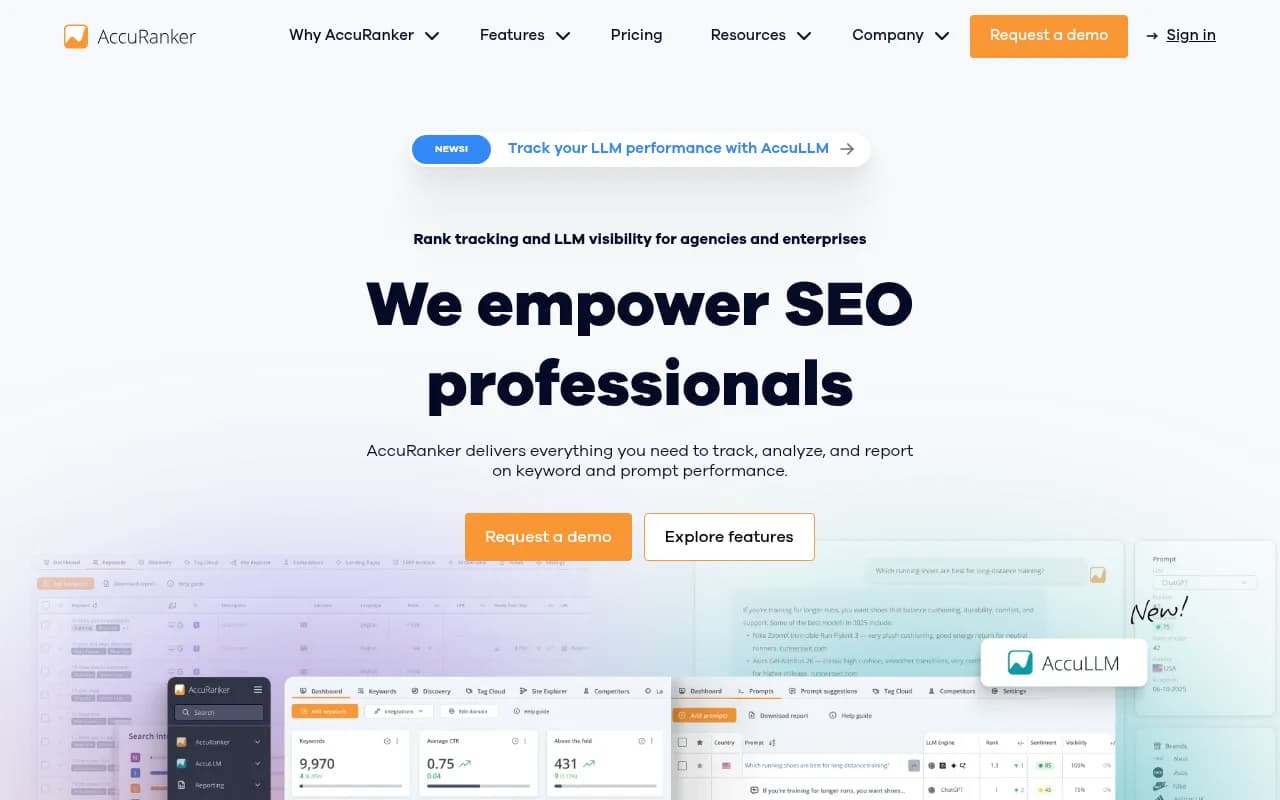
AccuRanker is the rank tracker that SEO agencies reach for when accuracy and speed are the priority. It claims to be the world's fastest rank tracker, and in practice that claim holds up. The on-demand refresh feature — where you can pull fresh data for any keyword instantly — is genuinely useful when you're in the middle of a site migration or testing a content update.
One independent test scored AccuRanker at 94/100 for accuracy, which is among the highest of any tool tested in 2026. It tracks Google, Bing, and YouTube rankings across desktop and mobile, with granular local tracking down to city level.
The SERP feature tracking is solid too. You can see when your keywords trigger featured snippets, People Also Ask boxes, video carousels, or AI Overviews, which gives you a more complete picture of what's happening on the results page.
Where AccuRanker falls short: the price. It's one of the more expensive dedicated rank trackers, and it doesn't include broader SEO tools like site audits or keyword research. You're paying specifically for rank tracking excellence. If you need an all-in-one suite, you'll need to combine it with something else.
Best for: Agencies and enterprises that run large keyword sets, need on-demand refreshes, and want API access for custom workflows.
Pricing: Starts around $129/month for 1,000 keywords. Scales up from there — 5,000 keywords runs roughly $449/month.
Wincher
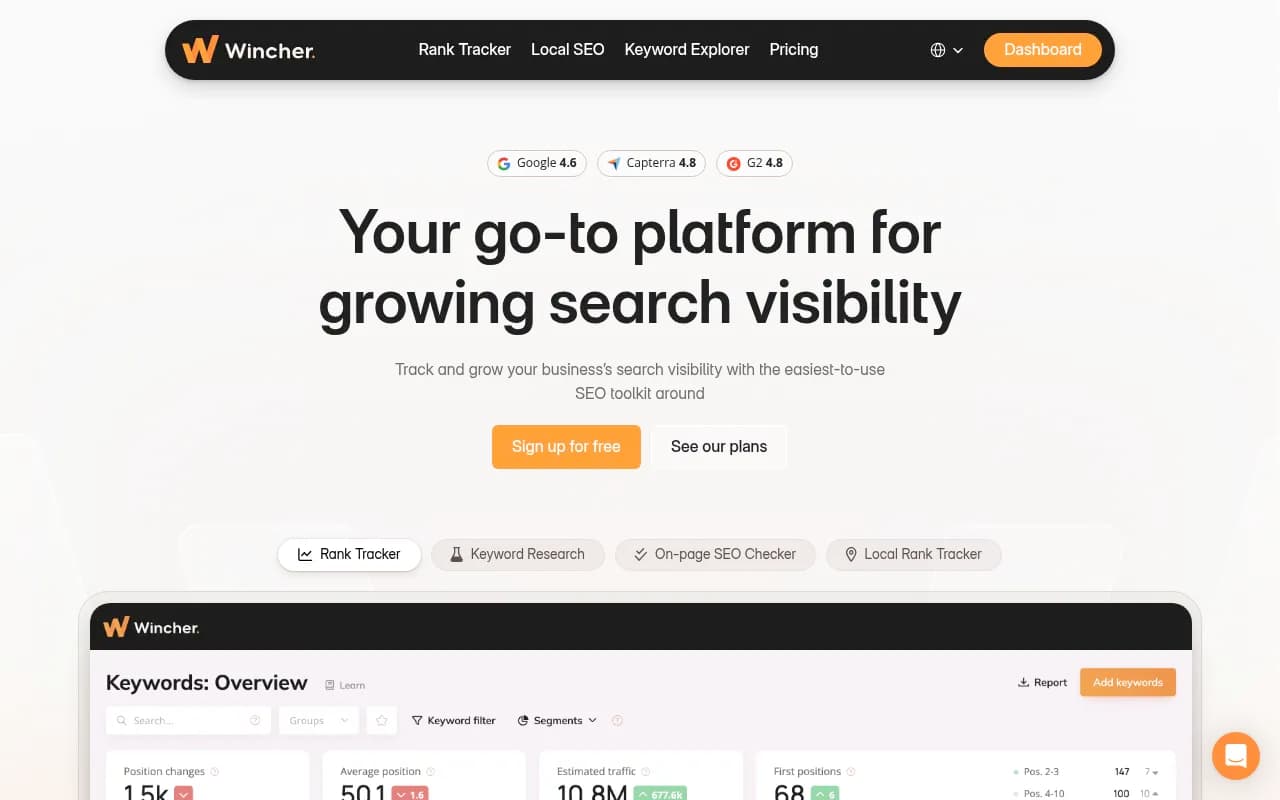
Wincher is the budget-friendly option that keeps showing up in agency roundups, not because it's the most powerful tool, but because it does the core job well at a price that doesn't hurt.
The interface is clean and genuinely easy to use. You can set up keyword tracking in minutes, monitor rankings across multiple search engines, and get automated email alerts when positions change. The competitor tracking is basic but functional — you can see how your rankings compare to a handful of competitors on the same keywords.
For small teams or solo SEOs managing a handful of client sites, Wincher makes sense. It's not going to overwhelm you with features you don't need, and the reporting is clear enough to share with clients directly.
The limitations are real though. Wincher doesn't have the depth of AccuRanker on accuracy or refresh speed. The API is available but limited compared to what enterprise tools offer. And if you're managing 20+ client accounts with complex reporting needs, you'll hit the ceiling fairly quickly.
Best for: Small agencies, freelancers, and in-house teams watching their budget who need reliable daily tracking without the complexity.
Pricing: Starts at around $39/month for 500 keywords. Very competitive at the entry level.
Mangools
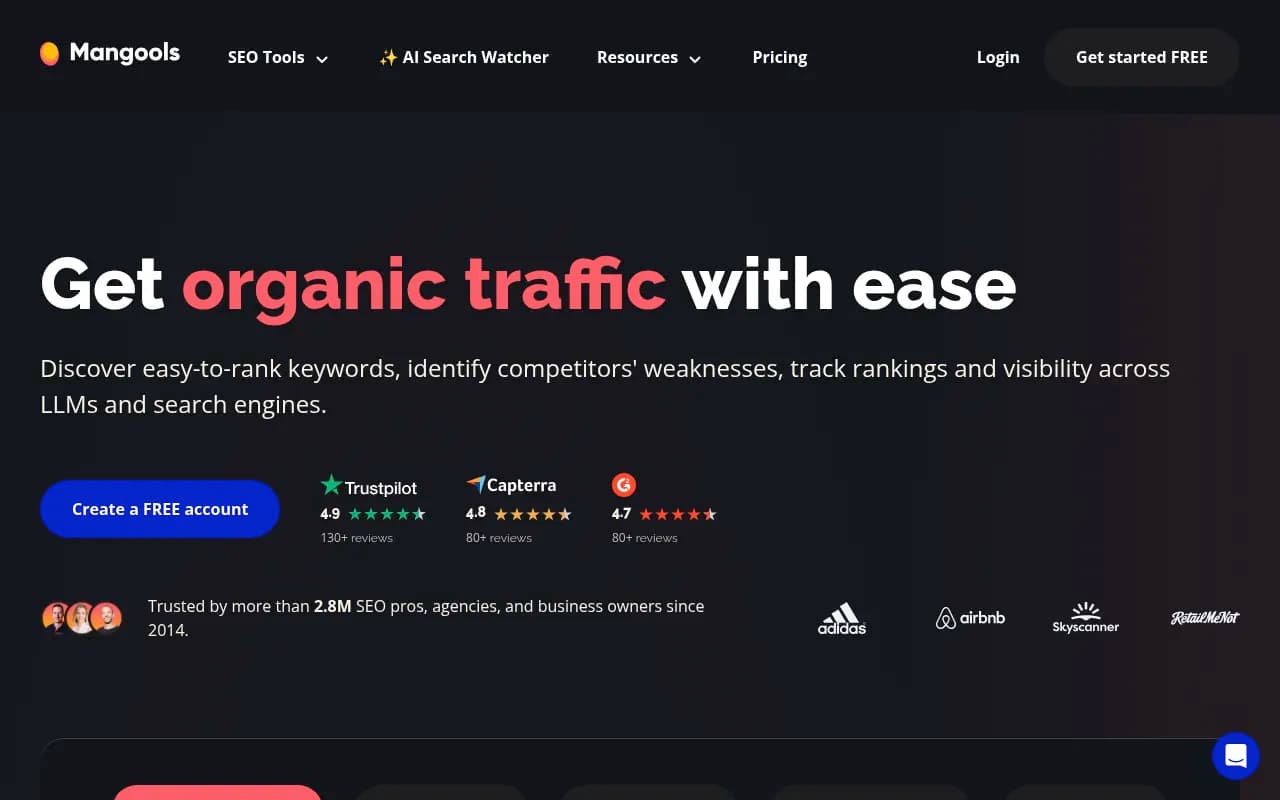
Mangools is an interesting case because it's not really just a rank tracker — it's a full SEO suite that happens to include rank tracking (via its SERPWatcher tool) as one of five products. The others are KWFinder (keyword research), SERPChecker (SERP analysis), LinkMiner (backlink analysis), and SiteProfiler (domain overview).
If you're an independent marketer or small business owner who wants one affordable subscription that covers most of your SEO needs, Mangools is hard to beat. The interface is genuinely one of the most readable in the industry. The keyword position reports are clear, the data is presented visually, and you don't need to be a technical SEO to make sense of what you're looking at.
SERPWatcher specifically tracks daily rankings, shows position history, and calculates a "Dominance Index" — a single score that combines your rankings and search volumes to give you a quick sense of overall keyword performance. It's a nice touch that makes progress easier to communicate to clients or stakeholders who don't want to dig into raw data.
The trade-off is depth. Mangools is built for clarity over complexity, which is a deliberate design choice. If you need granular local tracking, advanced API access, or enterprise-scale keyword volumes, you'll outgrow it. But for the audience it's designed for, it's genuinely good.
Best for: Solo marketers, small businesses, and anyone who wants an affordable all-in-one SEO toolkit with clean, readable reporting.
Pricing: Starts at $29/month (annual billing) for the basic plan. The mid-tier plan at $44/month covers most use cases.
Advanced Web Ranking
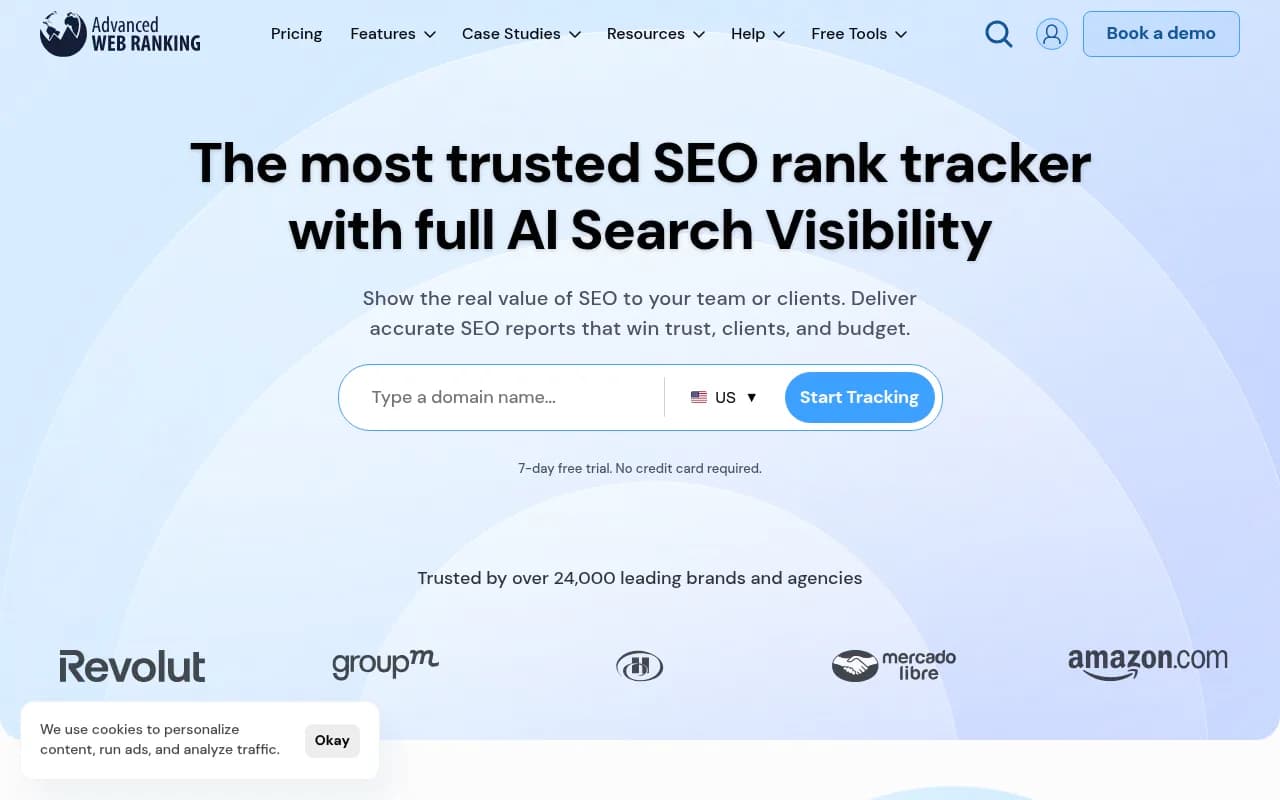
Advanced Web Ranking has been around for over 20 years, and it shows — in a good way. The tool has a maturity to it that newer platforms lack. It tracks rankings across Google, Bing, Yahoo, Baidu, and YouTube, with solid local and mobile tracking, and it handles custom reporting better than almost anything else in this price range.
The white-label reporting is the standout feature. You can build fully branded reports with your agency's colors, logo, and domain. Reports can be scheduled, automated, and delivered directly to clients. The level of customization is genuinely impressive — you can pull in data from multiple sources, build custom dashboards, and create report templates that match exactly what each client cares about.
Advanced Web Ranking also has one of the better SERP feature tracking setups, letting you monitor featured snippets, local packs, knowledge panels, and more. The competitor tracking is solid, and the historical data goes back further than most tools.
The interface feels a bit dated compared to newer tools, and the learning curve is steeper. It's not the tool you'd recommend to someone who wants to get started in 20 minutes. But for agencies that have specific reporting requirements and clients who expect polished deliverables, it's hard to beat.
Best for: Agencies with demanding reporting requirements, clients who need white-labeled dashboards, and teams tracking large keyword sets across multiple regions.
Pricing: Starts at $49/month for the Starter plan. The Agency plan at $169/month is where most agencies land.
Side-by-side comparison
| Feature | AccuRanker | Wincher | Mangools | Advanced Web Ranking |
|---|---|---|---|---|
| Starting price | ~$129/mo | ~$39/mo | ~$29/mo | ~$49/mo |
| Daily tracking | Yes | Yes | Yes | Yes |
| On-demand refresh | Yes | No | No | No |
| Local tracking | Yes (city level) | Yes | Basic | Yes |
| Mobile tracking | Yes | Yes | Yes | Yes |
| White-label reports | Yes | Limited | No | Yes (strong) |
| API access | Yes (full) | Limited | No | Yes |
| Keyword research | No | No | Yes (KWFinder) | No |
| Site audit | No | No | No | No |
| Best for | Agencies, enterprise | Small teams, budget | Solo/SMB all-in-one | Agencies, reporting |
| Accuracy score (2026) | 94/100 | Good | Good | Good |
Which tool should you actually use?
Here's the honest breakdown:
If you're running an SEO agency with multiple clients and you need data you can trust, AccuRanker is worth the price. The on-demand refresh alone saves hours during critical periods like site migrations or algorithm updates. The API lets you build custom dashboards and integrate ranking data into your own reporting workflows.
If you're a small agency or freelancer and the AccuRanker price makes you wince, Wincher does the core job well. You won't get on-demand refreshes or deep API access, but you'll get reliable daily tracking and clean reporting at a fraction of the cost.
If you're a solo marketer or small business owner who wants one subscription that covers keyword research, rank tracking, backlink analysis, and competitor research, Mangools is the obvious choice. Nothing else in this price range gives you that breadth.
If your agency's competitive advantage is in the quality of client reporting, Advanced Web Ranking is the tool to look at. The white-label customization is genuinely best-in-class for the price point, and the historical data depth is a real advantage.
A note on AI search visibility
One thing worth flagging: none of these four tools track how your brand appears in AI search engines like ChatGPT, Perplexity, or Google AI Overviews. That's a different problem.
Traditional rank tracking tells you where you appear in the blue links. AI visibility tracking tells you whether AI models are citing your content, recommending your brand, or ignoring you entirely in their responses. In 2026, with AI Overviews eating into organic click-through rates, that second question is increasingly important.
If you're starting to think about AI search visibility alongside traditional rank tracking, Promptwatch is built specifically for that — it tracks how your brand appears across ChatGPT, Claude, Perplexity, Gemini, and others, and helps you identify content gaps that are causing AI models to cite competitors instead of you.

The two problems (traditional rank tracking and AI visibility) aren't the same, and right now they require different tools. But if you're only solving one, make sure you know which one you're solving.
Bottom line
AccuRanker wins on accuracy and speed. Wincher wins on price. Mangools wins on breadth for the money. Advanced Web Ranking wins on reporting customization.
None of them is the wrong choice — they're just built for different situations. Pick the one that matches your actual workflow, not the one with the most impressive feature list.