Summary
- AI writing tools like Jasper, Copy.ai, and Rytr help you create content faster, but they don't show you if ChatGPT, Claude, or Perplexity are actually citing your work
- AI visibility platforms (also called GEO or AEO tools) track brand mentions across AI search engines and help you optimize content to get cited more often
- Promptwatch is the only platform that combines visibility tracking with content gap analysis and an AI writing agent -- it shows you what's missing, then helps you create content that ranks
- Most competitors (Otterly.AI, Peec.ai, AthenaHQ) are monitoring-only dashboards that leave you stuck after showing the data
- The best approach: use your existing AI writer for drafts, then layer on a visibility platform to track performance and close content gaps
The problem with AI writing tools in 2026
Jasper, Copy.ai, and Rytr have made it ridiculously easy to produce content. You can draft blog posts, social captions, product descriptions, and email campaigns in minutes instead of hours. For content teams under pressure to publish more, these tools are lifesavers.
But here's the issue: none of these tools tell you if your content is actually working in the AI search ecosystem. You can publish 50 articles optimized for Google, but if ChatGPT never cites your brand when users ask relevant questions, you're invisible to a massive (and growing) audience.
Traditional SEO metrics -- rankings, backlinks, organic traffic -- don't capture AI search performance. You need a different set of tools to understand:
- Which AI models (ChatGPT, Claude, Perplexity, Gemini) mention your brand
- What prompts trigger those mentions
- How often competitors get cited instead of you
- Which content gaps are costing you visibility
- Whether your AI-generated content is actually getting indexed and cited
That's where AI visibility platforms come in.
What are AI visibility platforms?
AI visibility platforms (also called GEO platforms -- Generative Engine Optimization -- or AEO platforms -- AI Engine Optimization) track how your brand appears in AI-generated responses. They monitor AI search engines like ChatGPT, Claude, Perplexity, Google AI Overviews, and others to show you:
- Brand mentions: When and how often AI models cite your website, products, or content
- Prompt tracking: Which user queries trigger mentions of your brand vs competitors
- Citation analysis: What specific pages, articles, or sources AI models reference
- Sentiment scoring: Whether AI models describe your brand positively, negatively, or neutrally
- Competitor benchmarking: How your AI visibility compares to competitors in your space
Some platforms stop there -- they're monitoring-only dashboards. Others go further and help you optimize content to improve visibility, close gaps, and track the impact on traffic and revenue.
Why content teams using AI writers need visibility platforms
If you're using Jasper, Copy.ai, or Rytr to scale content production, you're probably already thinking about volume and efficiency. But volume without visibility is wasted effort.
Here's a concrete example: let's say you use Jasper to write 20 articles about "project management tools." You optimize them for Google, publish them, and see decent organic traffic. But when someone asks ChatGPT "What's the best project management tool for remote teams?" -- your brand doesn't get mentioned. Instead, ChatGPT cites Asana, Monday.com, and ClickUp.
Why? Because AI models don't just scrape your site and regurgitate content. They synthesize information from multiple sources, prioritize authoritative citations, and respond to the specific angle of the prompt. If your content doesn't match the way people actually prompt AI engines, you're invisible.
AI visibility platforms help you:
- Identify content gaps: See which prompts competitors rank for but you don't
- Optimize existing content: Adjust articles to match the topics, angles, and questions AI models want answers to
- Track performance: Monitor visibility scores over time and connect them to traffic and revenue
- Prove ROI: Show stakeholders that your AI-generated content is actually getting cited and driving results
The action loop: find gaps, create content, track results
The best AI visibility platforms don't just show you data -- they help you act on it. Here's the cycle that separates leaders from monitoring-only tools:
1. Find the gaps
Answer Gap Analysis shows exactly which prompts competitors are visible for but you're not. You see the specific content your website is missing -- the topics, angles, and questions AI models want answers to but can't find on your site.
Example: Your competitor gets cited for "best CRM for small businesses" but you don't. The gap analysis shows you're missing a comparison article that covers pricing, ease of use, and integrations -- the exact angles users care about.
2. Create content that ranks in AI
Once you know the gaps, you need to fill them. Some platforms (like Promptwatch) include built-in AI writing agents that generate articles, listicles, and comparisons grounded in real citation data, prompt volumes, persona targeting, and competitor analysis.

This isn't generic SEO filler -- it's content engineered to get cited by ChatGPT, Claude, Perplexity, and other AI models. The writing agent knows what AI engines are looking for because it's trained on 880M+ citations analyzed across the platform.
If you're already using Jasper, Copy.ai, or Rytr, you can use them for drafts and then refine based on gap analysis insights. The key is knowing what to write, not just how to write it.
3. Track the results
See your visibility scores improve as AI models start citing your new content. Page-level tracking shows exactly which pages are being cited, how often, and by which models. Close the loop with traffic attribution (code snippet, GSC integration, or server log analysis) to connect visibility to actual revenue.
This cycle -- find gaps, generate content, track results -- is what makes a platform an optimization tool, not just another tracker.
Best AI visibility platforms for content teams in 2026
Here's a breakdown of the top platforms, organized by what they're best at.
| Platform | Best for | Key strength | Pricing |
|---|---|---|---|
| Promptwatch | Teams that want action, not just data | Only platform with gap analysis + content generation + tracking | $99-$579/mo |
| Sight AI | SEO/GEO hybrid with 13 specialized agents | Content generation + visibility tracking in one workflow | Custom pricing |
| Otterly.AI | Budget-conscious teams that only need monitoring | Affordable tracking across multiple LLMs | Low-cost |
| Profound | Enterprise teams with complex workflows | Premium feature set, high price point | Enterprise |
| AthenaHQ | Teams focused on monitoring and reporting | Clean dashboards, limited optimization features | Mid-tier |
Promptwatch: the only platform that closes the loop
Promptwatch is the market-leading AI visibility platform used by 6,700+ brands and agencies -- including Booking.com, Center Parcs, Wortell, and Elaboratum. It's the only platform rated as a "Leader" across all categories in a 2026 comparison of 12 GEO platforms.
What makes it different: most competitors are monitoring-only dashboards that show you data but leave you stuck. Promptwatch is built around taking action.
The action loop:
- Answer Gap Analysis shows exactly which prompts competitors are visible for but you're not. You see the specific content your website is missing -- the topics, angles, and questions AI models want answers to but can't find on your site.
- AI writing agent generates articles, listicles, and comparisons grounded in real citation data (880M+ citations analyzed), prompt volumes, persona targeting, and competitor analysis. This isn't generic SEO filler -- it's content engineered to get cited by ChatGPT, Claude, Perplexity, and other AI models.
- Page-level tracking shows your visibility scores improve as AI models start citing your new content. Track exactly which pages are being cited, how often, and by which models. Close the loop with traffic attribution to connect visibility to actual revenue.
Additional capabilities:
- AI Crawler Logs: Real-time logs of AI crawlers (ChatGPT, Claude, Perplexity) hitting your website -- which pages they read, errors they encounter, how often they return. Fix indexing issues before they cost you visibility.
- Prompt Intelligence: Volume estimates and difficulty scores for each prompt, plus query fan-outs that show how one prompt branches into sub-queries. Prioritize high-value, winnable prompts.
- Citation & Source Analysis: See exactly which pages, Reddit threads, YouTube videos, and domains AI models cite in their responses.
- Reddit & YouTube Insights: Surface discussions that directly influence AI recommendations -- a channel most competitors ignore.
- ChatGPT Shopping Tracking: Monitor when your brand appears in ChatGPT's product recommendations and shopping carousels.
- Competitor Heatmaps: Compare your AI visibility vs competitors across LLMs. See who's winning for each prompt and why.
Pricing: Essential $99/mo (1 site, 50 prompts, 5 articles), Professional $249/mo (2 sites, 150 prompts, 15 articles, crawler logs), Business $579/mo (5 sites, 350 prompts, 30 articles). Free trial available.
Monitors: ChatGPT, Perplexity, Google AI Overviews, Google AI Mode, Claude, Gemini, Meta/Llama, DeepSeek, Grok, Mistral, Copilot.
Sight AI: SEO/GEO hybrid with content generation
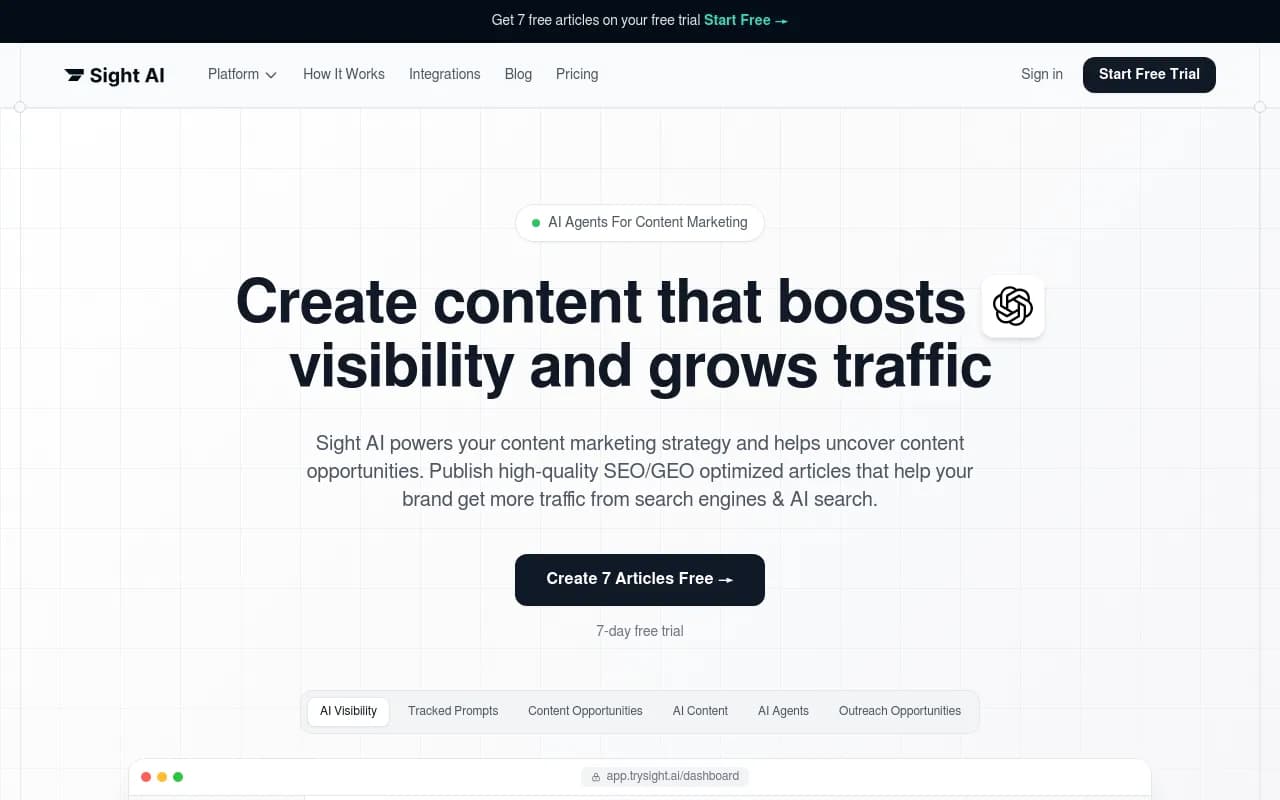
Sight AI combines content generation with AI visibility tracking. It uses 13 specialized AI agents, each trained for specific formats like listicles, how-to guides, and comparison articles. The Autopilot Mode handles everything from research to publishing, while IndexNow integration ensures your content gets discovered faster by search engines.
Key features:
- AI visibility tracking across 6+ AI platforms with sentiment analysis
- 13+ specialized AI agents for different content types
- GEO optimization built into the content workflow
- IndexNow integration for faster indexing
Best for: Teams that want to consolidate content generation and visibility tracking in one platform.
Otterly.AI: affordable monitoring for budget-conscious teams
Otterly.AI is a monitoring-focused platform that tracks brand mentions across multiple LLMs. It's one of the more affordable options, but it lacks content optimization and generation capabilities.

Key features:
- Brand mention tracking across ChatGPT, Claude, Perplexity, and others
- Sentiment scoring and competitor benchmarking
- Clean dashboards and reporting
Limitations: No crawler logs, no visitor analytics, no content generation. You see the data but you're on your own to fix it.
Best for: Teams that only need monitoring and already have a content creation workflow in place.
Profound: enterprise-grade visibility with premium pricing
Profound is an enterprise AI visibility solution with a strong feature set and higher price point. It's built for large teams with complex workflows and multiple stakeholders.
Key features:
- Comprehensive visibility tracking across major AI models
- Advanced competitor analysis and benchmarking
- Custom reporting and integrations
Limitations: No Reddit tracking, no ChatGPT Shopping, higher price point than competitors.
Best for: Enterprise teams with budget and a need for advanced reporting.
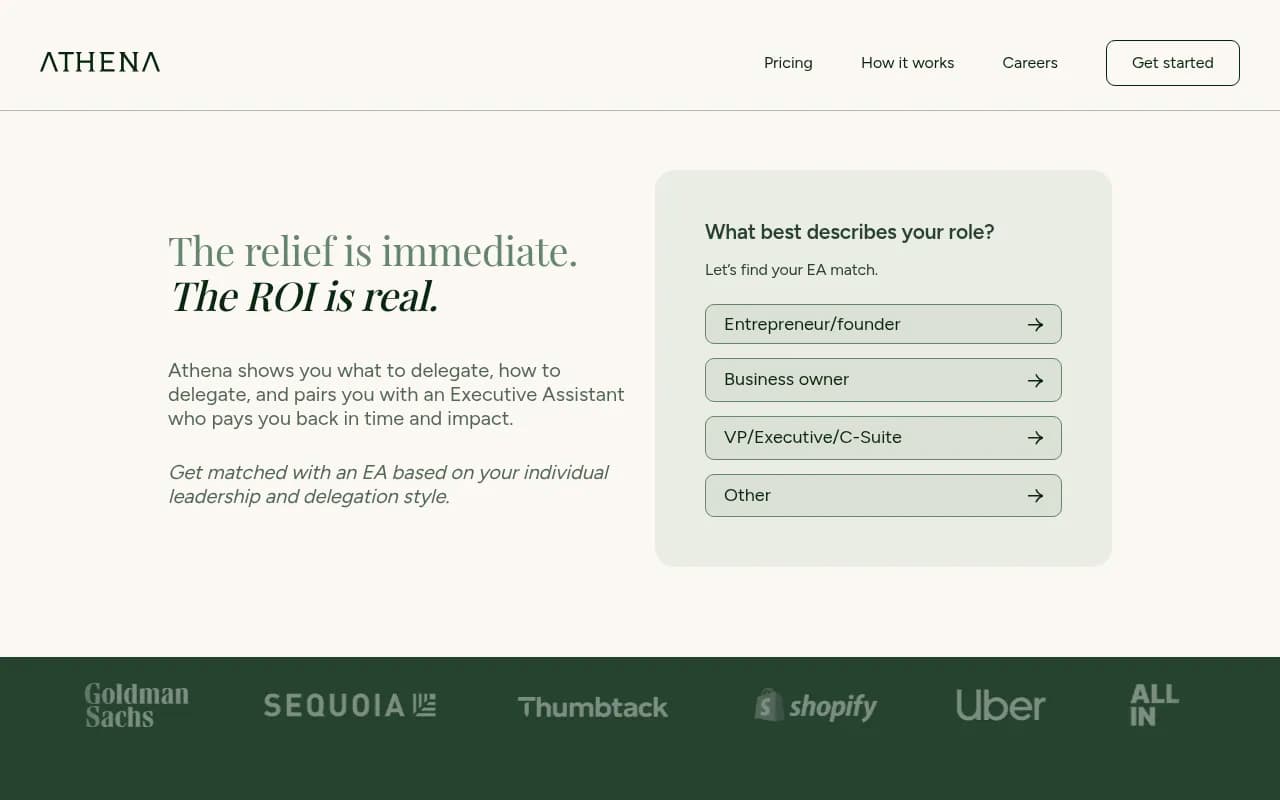
AthenaHQ: monitoring-focused with clean dashboards
AthenaHQ is a monitoring-focused platform with clean dashboards and solid reporting. It tracks brand mentions across 8+ AI search engines but lacks content optimization and generation capabilities.
Key features:
- Brand visibility tracking across 8+ AI search engines
- Sentiment analysis and competitor comparisons
- Clean, user-friendly dashboards
Limitations: No content gap analysis, no AI writing agent, no crawler logs.
Best for: Teams that want a simple, monitoring-only solution.
How to choose the right platform for your workflow
Here's a decision framework based on your current setup and goals.
If you're using Jasper, Copy.ai, or Rytr for content creation
Keep using your AI writer for drafts. These tools are great at generating content quickly, and you've already invested time learning them.
Layer on a visibility platform to track performance and identify gaps. The platform should:
- Show you which prompts competitors rank for but you don't
- Track how often AI models cite your content
- Help you optimize existing articles to improve visibility
- Connect visibility to traffic and revenue
If you want the platform to also generate content, choose one with a built-in AI writing agent (like Promptwatch or Sight AI). If you're happy with your current writer, choose a monitoring-focused platform (like Otterly.AI or AthenaHQ).
If you want to consolidate tools
If you're tired of juggling multiple platforms, choose a visibility platform that includes content generation. Promptwatch is the only platform that combines gap analysis, content generation, and tracking in one workflow. Sight AI is another option with 13 specialized AI agents.
This approach reduces tool sprawl and keeps your entire workflow in one place.
If you're on a tight budget
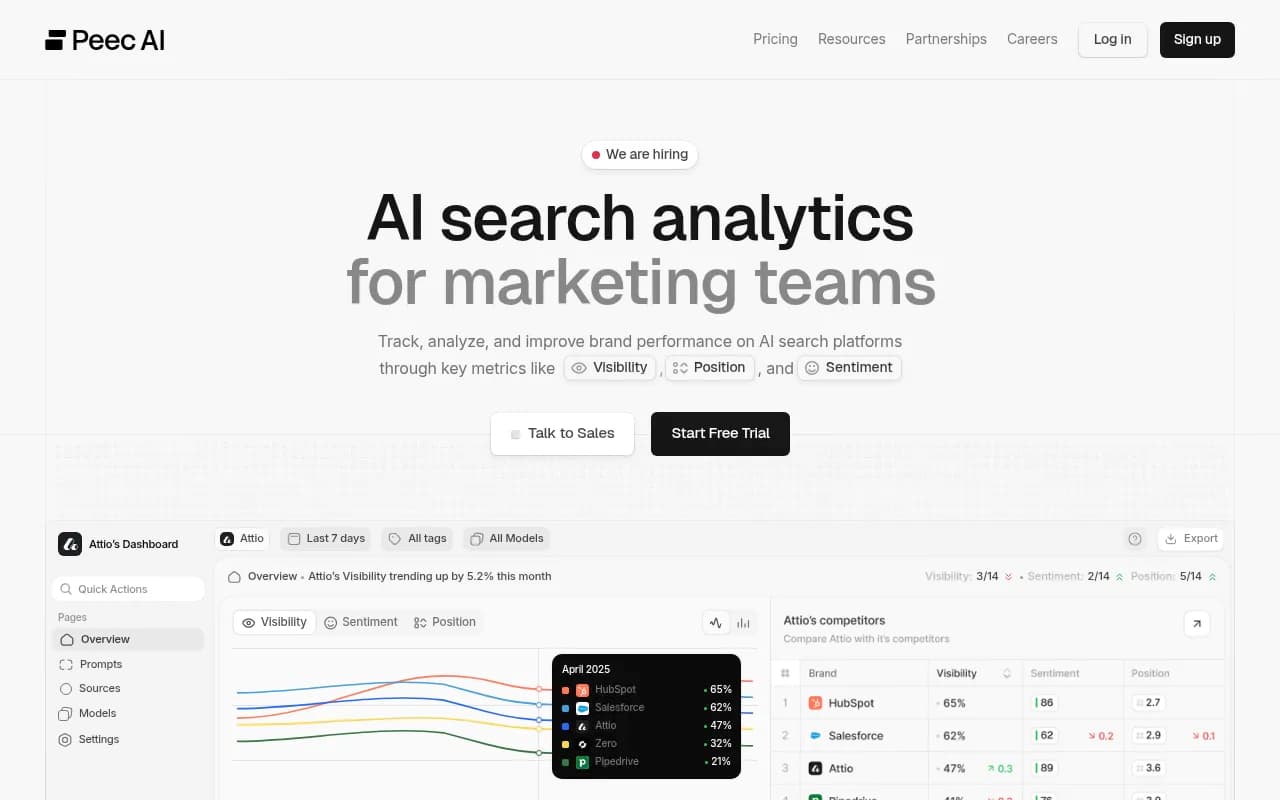
Start with a monitoring-only platform like Otterly.AI or Peec.ai. These tools are more affordable and give you visibility into AI search performance without the premium features.
Once you prove ROI and secure more budget, upgrade to a platform with content optimization and generation capabilities.
If you're enterprise or agency
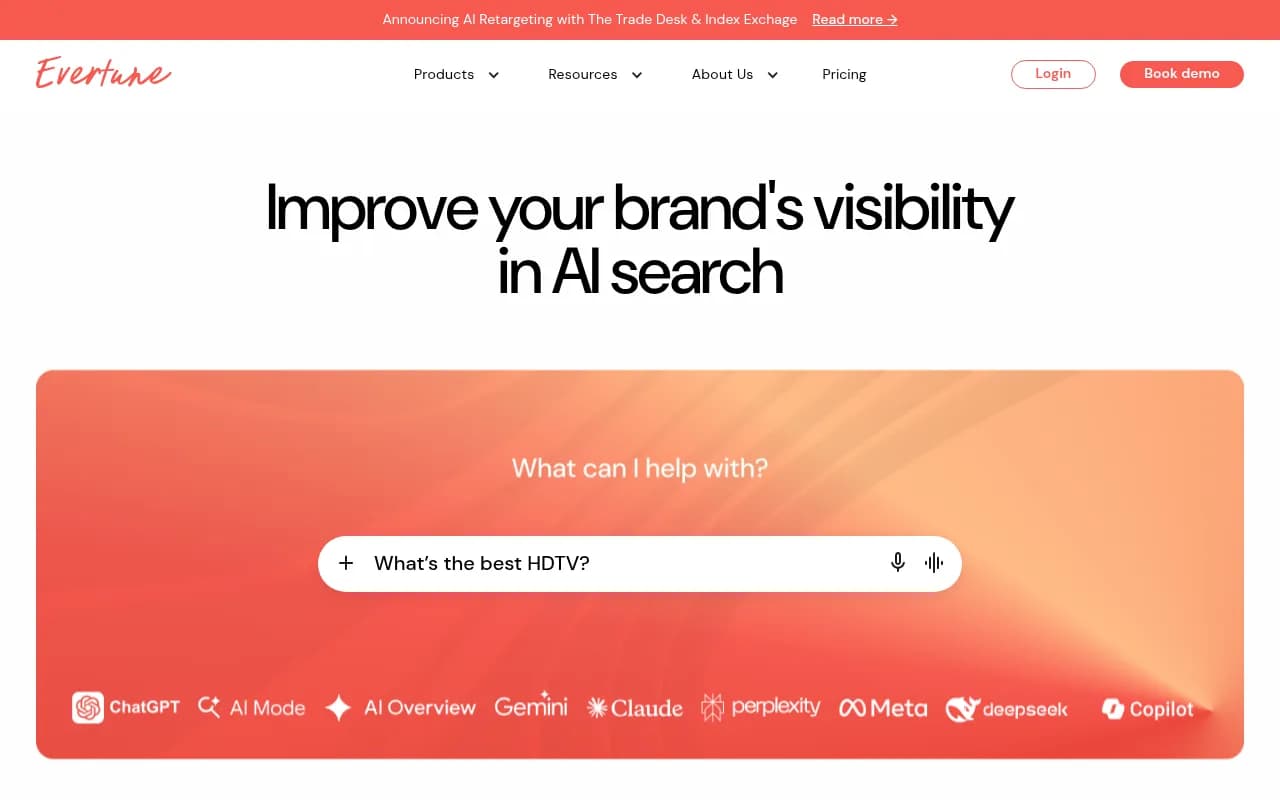
Choose a platform with advanced reporting, multi-site support, and API access. Promptwatch's Business plan ($579/mo) supports 5 sites and 350 prompts with full API access. Profound and Evertune are also strong enterprise options.
Common mistakes content teams make with AI visibility
Here are a few pitfalls to avoid:
Mistake 1: treating AI visibility like traditional SEO
AI search engines don't work like Google. They synthesize information from multiple sources, prioritize authoritative citations, and respond to the specific angle of the prompt. Optimizing for keywords alone won't get you cited.
Instead, focus on:
- Answering the specific questions users ask AI engines
- Providing clear, authoritative information that AI models can cite
- Covering topics from multiple angles (how-to, comparison, pros/cons, etc.)
Mistake 2: ignoring content gaps
If you're only tracking brand mentions without identifying gaps, you're missing the bigger picture. The real value is seeing which prompts competitors rank for but you don't -- then creating content to close those gaps.
Platforms with Answer Gap Analysis (like Promptwatch) make this easy. Monitoring-only tools leave you guessing.
Mistake 3: not connecting visibility to revenue
Visibility scores are interesting, but stakeholders care about revenue. Make sure your platform can track traffic attribution -- either through a code snippet, Google Search Console integration, or server log analysis.
This lets you connect AI visibility to actual traffic and conversions, which makes it easier to justify budget and headcount.
Mistake 4: choosing a platform based on price alone
The cheapest platform isn't always the best value. If a monitoring-only tool costs $50/mo but leaves you stuck after showing the data, you'll end up paying more in wasted time and lost opportunities.
Instead, choose based on what you need to accomplish:
- If you need monitoring only, choose a budget-friendly option
- If you need to close content gaps and optimize, choose a platform with gap analysis and content generation
- If you need to prove ROI, choose a platform with traffic attribution and reporting
The future of AI visibility and content creation
AI search is still evolving, but a few trends are clear:
AI models are getting better at citing sources. Early versions of ChatGPT rarely cited sources. Now, ChatGPT, Claude, and Perplexity routinely link to the pages they reference. This makes visibility tracking more important -- and more actionable.
Reddit and YouTube are becoming citation sources. AI models increasingly cite Reddit threads and YouTube videos in their responses. Platforms that track these channels (like Promptwatch) give you a fuller picture of what influences AI recommendations.
ChatGPT Shopping is a new battleground. ChatGPT now recommends products directly in its responses. If you're in e-commerce, tracking ChatGPT Shopping mentions is critical. Most platforms don't support this yet.
Multi-language and multi-region tracking is table stakes. AI search is global. If you operate in multiple countries or languages, choose a platform that supports customizable personas and regional tracking.
Final thoughts
If you're using Jasper, Copy.ai, or Rytr to create content, you're already ahead of teams that haven't adopted AI writing tools. But creating content is only half the battle. The other half is making sure AI search engines actually cite it.
AI visibility platforms help you close that loop. The best ones don't just show you data -- they help you act on it by identifying gaps, generating optimized content, and tracking the impact on traffic and revenue.
Promptwatch is the only platform that combines all three steps in one workflow. It's the difference between knowing you're invisible and actually fixing it.
If you're serious about AI search visibility, start with a free trial and see how your brand performs across ChatGPT, Claude, Perplexity, and other AI models. Then use the gap analysis to create content that actually gets cited.