Key takeaways
- Sitecore acquired Scrunch on June 3, 2026 to add AI search visibility, answer engine optimization, and AI content optimization to its digital experience platform.
- What has visibly shipped since: the Agent Experience Platform (AXP), agent traffic tracking, AI-oriented site maps, token-light "AI Delivery" pages, and a deep marketing integration into Sitecore's sales motion.
- What hasn't: no published post-acquisition roadmap, no announced changes to standalone pricing, and no clear answer on when Scrunch's insights connect to actual content execution inside Sitecore's CMS stack.
- If you're a current Scrunch customer, nothing is broken, but your renewal math depends on questions Sitecore hasn't answered publicly yet.
- If you're evaluating AI visibility tools in 2026, treat Scrunch as a strong monitoring play with an enterprise DXP attached, and compare it against platforms that close the loop from insight to published content.
The deal, in plain terms
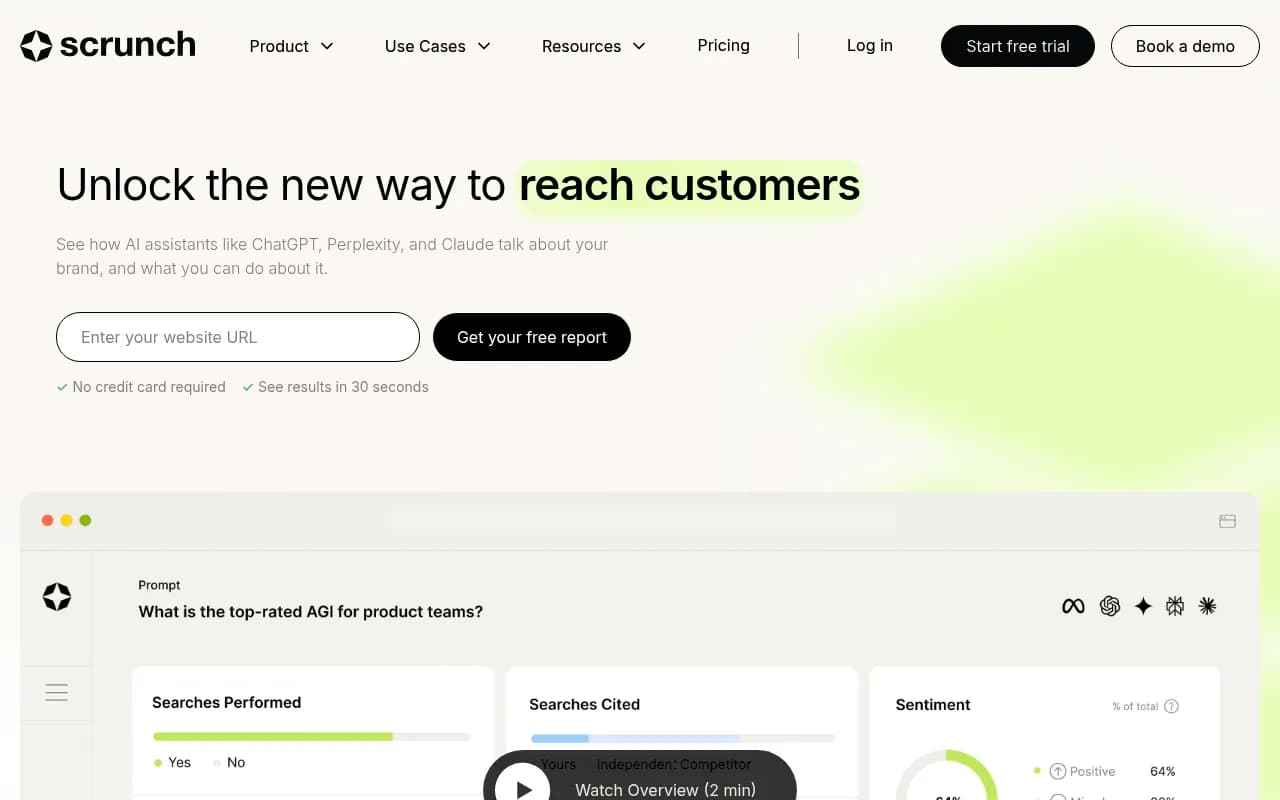
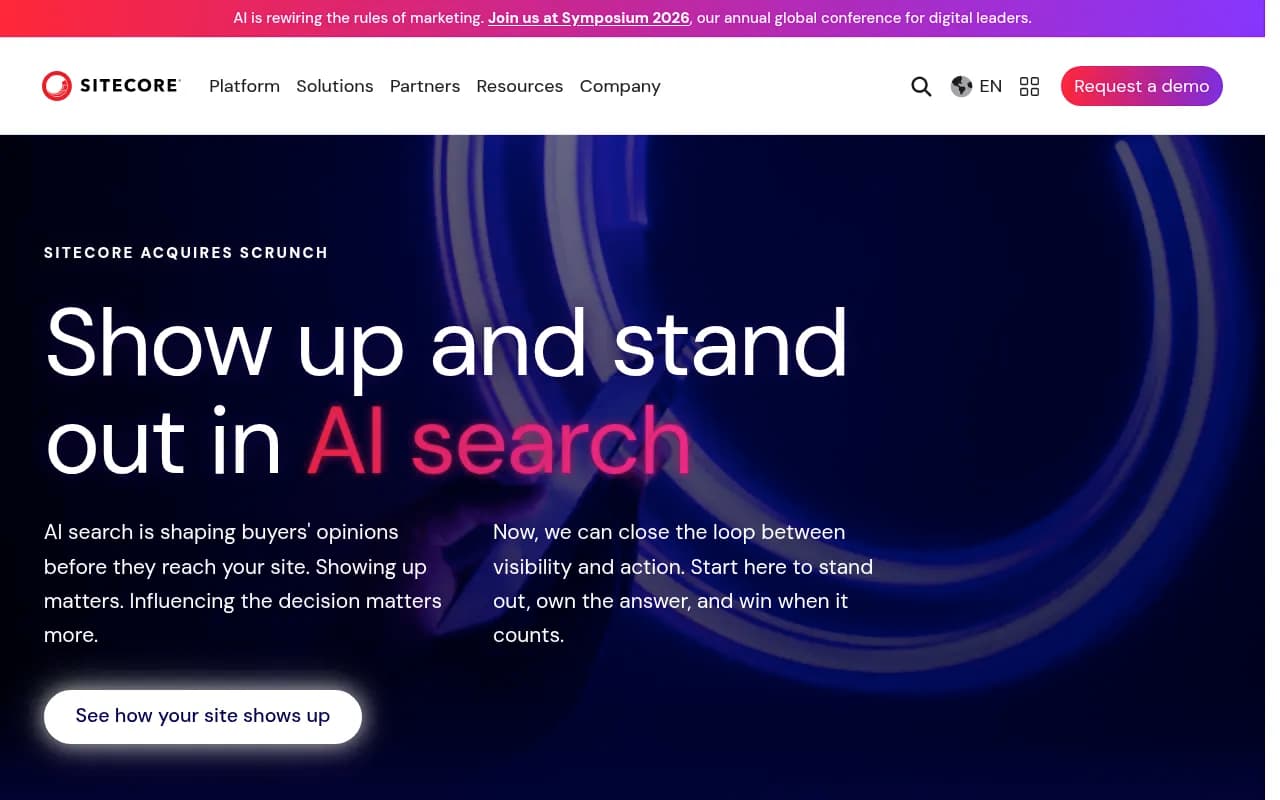
On June 3, 2026, Sitecore announced it had acquired Scrunch, an AI customer experience platform that shows brands where they appear, disappear, or get misrepresented in AI-generated answers. The framing from Sitecore CEO Eric Stine was blunt: "the internet must be written for machines to understand if we want humans to experience it."
That's a quote worth sitting with, because it tells you what Sitecore actually bought. They didn't buy a rank tracker. They bought a way to see how AI systems represent a brand, plus the ability to act on those insights through Sitecore's content stack. Scrunch CEO Chris Andrew stayed on, now titled "CEO, Scrunch, a Sitecore company," which suggests the product isn't being dissolved into the mothership immediately.

The timing makes sense. AI systems now shape brand perception before a buyer ever reaches a website. Which products appear in answers, which competitors get mentioned, which sources get cited. By the time someone lands on your site, they've often already formed an opinion. Sitecore, which sells content infrastructure to enterprises, needed an answer to that shift, and building AI visibility monitoring from scratch would have taken years they didn't have.
What has actually shipped since June
Three months is a short window, but it's long enough to separate real product work from press release vapor. Here's what Scrunch and Sitecore have visibly put into the world since the deal closed.
The Agent Experience Platform (AXP)
The biggest concrete release is AXP, which Scrunch describes as detecting AI agents at the edge and serving them optimized content without disrupting the human experience of a site. In practice this means three things:
- Agent traffic tracking: see bot traffic broken down by AI model, page views, and bot type.
- Site maps for machines: understand how AI agents view your site and where the gaps are.
- AI Delivery: ship token-light versions of pages for AI consumption, supposedly with no code required.
This is a genuinely interesting direction. Most AI visibility tools watch what AI says about you from the outside. AXP works from the inside, shaping what AI agents encounter when they crawl you. It's the kind of thing that's much easier to build when you're attached to a company that owns content delivery infrastructure.
The emphasis on agent traffic also tracks with what's actually happening on the web. Promptwatch's data on Meta's web indexer showed Meta-WebIndexer going from roughly 2% to nearly 38% of all tracked AI crawler requests between mid-July and August 9, 2026. When one company's crawler can quadruple its footprint in a month, knowing who's hitting your site and what they're reading stops being a nice-to-have.
The Sitecore sales machine
Less glamorous but very real: Scrunch is now being sold through Sitecore's enterprise channel. The Sitecore AI search landing page, joint webinars featuring Scott Liewehr and Chris Andrew, and an Akamai case study claiming 5x brand presence in AI search results all point to distribution Scrunch could never have bought on its own as a startup.
For Scrunch's existing customers, that's mostly good news. Enterprise buyers who'd never heard of the tool now see it in Sitecore's catalog, which means more engineering resources and, probably, faster development on the monitoring side.
Positioning as "insight to action"
The press release leans hard on the phrase "from insight to action," combining Scrunch's insights and recommendation capabilities with Sitecore's content platform so brands can "automatically act on those insights." That's the promise. Whether it's shipped is a different question, which brings us to the stalled list.
What's stalled or unanswered
Here's where the optimism has to cool down a bit.
No public post-acquisition roadmap
As of early September 2026, there's no published roadmap document that says what Scrunch will look like in six or twelve months. What exists is marketing language about a "connected platform" and a webinar or two. For a product category that's moving this fast, three months of roadmap silence is noticeable. Competitors are shipping weekly. Buyers comparing platforms in Q4 2026 have to make decisions on vibes and press releases.
The execution gap is still a promise
The core pitch of the acquisition is closing the loop between visibility data and content fixes. But the shipped pieces so far are monitoring (where do I appear?) and delivery (how do agents read my site?). The middle piece, generating and publishing optimized content based on visibility gaps, is where the "automatically act on those insights" claim lives, and it's the piece that depends most on deep Sitecore DXP integration. That integration work is hard, it's slow, and there's no public evidence yet of a customer going from "Scrunch says I'm invisible for these prompts" to "Sitecore published the fix."
This matters because the monitoring-only trap is well known in this market. Knowing you're invisible is cheap. Fixing it is where the money is. Platforms like Promptwatch have pushed hard into this space with automated content agents that plan, write, and publish GEO-optimized content directly to a CMS, precisely because dashboards alone don't move revenue. Scrunch's answer to that problem currently rests on the assumption that you're also a Sitecore shop.

Pricing and packaging silence
No announced changes to Scrunch's standalone pricing, and no announced Sitecore bundle pricing either. That cuts both ways. Existing customers keep paying what they paid, which is fine for now. But enterprise acquisitions almost always end in repackaging, and if you're signing a Scrunch contract in late 2026, you're doing it without knowing what the product will cost or include a year from now. Ask your rep directly. Get renewal terms in writing.
The startup-velocity question
Scrunch built its reputation as a fast-moving independent tool. Acquired products rarely keep that pace in year one. Integration work, security reviews, and alignment with a much larger company's release cycles all slow things down. The AXP release suggests the team is still shipping, which is a genuinely good sign. But if you chose Scrunch specifically because it out-iterated the enterprise players, watch the next two quarters closely.
Should current Scrunch customers worry?
Not yet, but stay alert. Here's the honest read:
| Signal | Status | What it means for you | | --- | --- | | Product still shipping (AXP, agent analytics) | Positive | The team isn't in post-acquisition limbo | | Founder-CEO still leading | Positive | Product continuity in the short term | | Sold through Sitecore enterprise channel | Mixed | More resources, but focus shifts to enterprise deals | | No public roadmap | Negative | You can't plan your own roadmap around theirs | | Execution loop depends on Sitecore DXP | Mixed | Great if you're a Sitecore customer, awkward if you're not | | Pricing unannounced | Unknown | Lock in terms before repackaging happens |
The single biggest question is the last row in the integration column: if you use Scrunch but run WordPress, Adobe, or anything else as your CMS, the "insight to action" story isn't really for you. You'll get monitoring and AXP-style delivery, but the content execution story is being built for Sitecore's stack first. That's not a criticism, it's just what the acquisition logic implies.
If you're evaluating AI visibility tools in 2026
Whether or not the Scrunch acquisition affects you directly, it's a useful forcing function. The market is consolidating, and the dividing line between tools is getting clearer: trackers that tell you where you stand, and platforms that help you do something about it.
A few alternatives worth knowing:
| Tool | Strength | Watch out for | | --- | --- | | Scrunch | Strong monitoring, AXP delivery layer, enterprise backing via Sitecore | Execution loop tied to Sitecore stack; roadmap opaque post-acquisition | | Profound | Enterprise-grade monitoring, strong analyst coverage | Higher price point, monitoring-first | | Otterly.AI | Affordable prompt tracking for smaller teams | Basic tracker, no crawler logs or content execution | | Promptwatch | End-to-end: crawler logs, citation analytics, AI traffic attribution, automated content publishing | Newer brand than the enterprise incumbents |

If you want to survey the whole field rather than shortlist from one article, the GEO software directory at bestgeosoftware.com keeps a running catalog of what's available, and it's a better use of an afternoon than reading acquisition press releases.
One more thing worth doing before you commit to any platform: ground your expectations in actual AI search behavior data. Promptwatch's research on which content types ChatGPT cites, for instance, found product pages leading at roughly a third of all citations in July 2026, with listicles the fastest-growing format. If a vendor's pitch doesn't align with how citations actually distribute, that tells you something.
The bottom line
Three months in, the Scrunch acquisition looks like a real product strategy rather than an acqui-hire. AXP is a legitimate differentiator, the team is shipping, and Sitecore's distribution gives the product reach it never had. What's missing is the part everyone actually bought into: a published roadmap, clear pricing, and proof that visibility insights turn into published content without a lot of manual glue. Until those land, treat Scrunch as a strong monitoring and delivery layer with an IOU attached, and structure your contract accordingly.