Key takeaways
- Sitecore acquired Scrunch in June 2026, reportedly for around $225 million. The independent startup that most online reviews still describe no longer exists.
- The self-serve Core plan survives at $250/month with four engines (ChatGPT, Perplexity, Google AI Overviews, Copilot). The features Scrunch now leads with, including the Agent Experience Platform, are Enterprise-only.
- Scrunch is still one of the better pure monitoring products in GEO. Its main weakness is unchanged: it diagnoses visibility problems and leaves most of the fixing to you.
- Post-acquisition signals are mixed. Pricing has held and the founders stayed on, but independent trackers describe the shipping cadence as cooling while the roadmap folds into Sitecore.
- It remains worth it for mid-market and enterprise teams with people to act on the diagnosis. For solo marketers and small teams, cheaper tools now do more.
Most Scrunch reviews online were written about a company that no longer exists. In June 2026 Sitecore bought the startup, and in July the product relaunched around an enterprise infrastructure pitch. This guide looks at what actually changed, what $250 a month buys you today, and whether the tool still makes sense for your team.
What the Sitecore acquisition actually changed
Scrunch had a classic startup run. Founded in San Francisco in fall 2023 by Chris Andrew and Robert MacCloy, both ex-Hearsay Systems, it raised a $4 million seed led by Mayfield in March 2025 and a $15 million Series A led by Decibel in July 2025. Nineteen million dollars, total.
Then, on June 3, 2026, Sitecore announced it had acquired the company. Terms were never disclosed. Bloomberg put the price at roughly $225 million, a figure Sitecore has never confirmed.
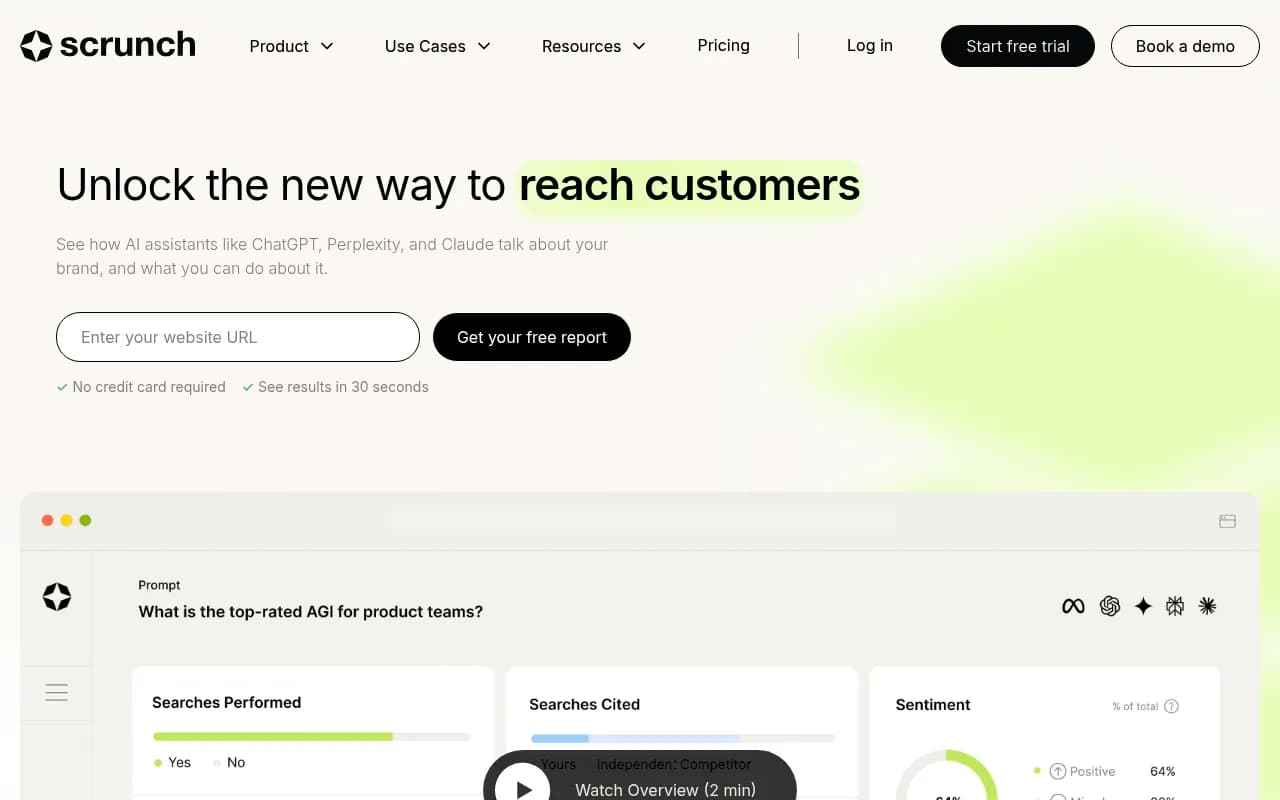
Ownership matters here more than in most software purchases, because it decides who the roadmap serves. A startup lives or dies on self-serve customers paying month to month. A division of an enterprise digital-experience vendor lives on large platform contracts. Sitecore's CMO, Michelle Boockoff-Bajdek, has said existing Scrunch customers keep standalone access, with Scrunch features integrated into the Sitecore platform over time. So far that promise has held: the product still sells under its own name, at its own price. But "over time" is the phrase to watch.
Scrunch is not an isolated case, either. Adobe completed its roughly $1.9 billion acquisition of Semrush in April 2026, pulling the best-known SEO suite into an enterprise marketing stack. Profound, meanwhile, raised a $96 million Series C in February 2026 at a $1 billion valuation and stayed independent. The GEO category is sorting itself into two camps: features inside enterprise suites, and standalone platforms. Scrunch now sits firmly in the first.
The pivot in practice: an "agent experience" platform now
On July 8, 2026, Scrunch relaunched its product line around the Agent Experience Platform, or AXP. The reorganization has three pieces:
- Signals, a response-intelligence layer that detects meaningful changes in how AI agents represent your brand and explains what to do about them.
- Explorer, a self-serve, BI-style analytics layer with natural-language querying and shareable dashboards.
- Site Diagnostics and Optimizer, which score pages for AI retrievability and citability and prioritize fixes by predicted impact. Site Diagnostics became an "always-on" product on August 19, 2026, and it does not require the CDN integration that the AXP content-delivery side does.
Around the relaunch, Scrunch shipped a Keyword Volume Estimator into beta on all plans (July 28, 2026) and an MCP server (May 2026) that lets you query and act on your data from Claude, ChatGPT, and Copilot.
The positioning shift tells you who the product talks to now. A year ago the pitch was visibility: where do you show up in AI answers. Today it is agent experience: is your site machine-readable, and can we serve AI-friendly content directly to agents. That is an infrastructure pitch for CIOs and platform teams, and it is a coherent one. The case studies are loud. Akamai reported a 364% increase in brand presence on non-branded prompts and 218% more citations on AXP-enabled pages. RunPod reported a 400% increase in paying customers, roughly 40 new customers a day arriving from ChatGPT. These are vendor-supplied numbers, so read them as direction rather than proof, but the mechanism behind them is plausible.
The catch, for most people reading this: AXP, agent traffic analytics, and the advanced content tooling are Enterprise features. If you read a glowing review of Scrunch written against the Enterprise tier, you are reading about a different product than the one $250 a month buys.
What Scrunch costs in 2026
The live pricing page shows two plans:
| Core, $250/month | Enterprise, custom | |
|---|---|---|
| Engines tracked | 4: ChatGPT, Perplexity, Google AI Overviews, Copilot | 9: adds Claude, Gemini, Meta AI, Google AI Mode, Grok |
| Prompts | 125 unique | Custom |
| Site audits | 5 per month | Full |
| Page optimization | 1 per month, plus basic content generation | Advanced content generation |
| Agent Experience Platform | Not included | Included |
| API, MCP, CLI | Not included | Included |
| Looker Studio | Not included | Included |
| SSO | Google SSO only | SAML/OIDC |
| Support | Email, 7-day free trial | Email, Slack, dedicated account team |
Three things worth knowing before you sign anything.
First, the tier structure has churned. Older reviews describe Explorer, Growth, and Enterprise plans at $100, $500, and custom; a Profound comparison from late 2025 describes Starter and Growth tiers at $300 and $500. What sells today is Core and Enterprise. Plans have been reorganized more than once in eighteen months, which matters if you are weighing an annual contract.
Second, the prompt math is tighter than it looks. Prompts are consumed per engine, and one third-party review noted that 150 prompts effectively becomes 50 when you track three engines. On Core, 125 prompts spread across four engines will not stretch far in a serious monitoring program.
Third, SOC 2 compliance is included, which clears procurement hurdles that cheaper tools in this category stay quiet about. In regulated industries, that alone can decide the purchase.
What Scrunch still does well
Monitoring and insights remain the strong half of the product. GetMint's 2026 review scored Scrunch's monitoring at 4.6/5 and its insights at 4.5/5, and called it "the best technical GEO platform on the market." G2 sits around 4.6/5 across more than 70 reviews, and Scrunch was named a High Performer in G2's first AEO Grid for Winter 2026. One G2 user who had tested "no less than 10" visibility tools called Scrunch the best of the group.
The prompt and persona system is genuinely good. You can segment visibility by persona, competitor, and country, which is how an actual marketing team thinks. The GA4 bot-traffic dashboard is the feature users rave about most, because it turns raw crawler activity into a slide a client understands in five seconds.
Support gets consistent praise too: human replies, often inside 30 minutes, and a shipping cadence users described as near-weekly before the acquisition. The customer list includes Akamai, Lenovo, ADP, Publicis, Seer Interactive, Penn State, and Crunchbase, and the pricing page claims 500+ brands and agencies. If you already run on Sitecore, the integration story is strong, which is rather the point of the deal.
Where Scrunch falls short
The most common complaint across independent reviews is blunt: Scrunch tells you what is wrong and does little to fix it. Core includes one page optimization a month and basic content generation. The AXP and the deeper content automation are Enterprise. Even GetMint's glowing verdict came with a second half: Scrunch is "not a content optimization platform." A diagnosis is worth exactly what the team acting on it can ship, and if you do not have that team, you have bought an expensive worklist.
The second critique concerns data. Scrunch tracks a modeled set of prompts on a refresh schedule rather than capturing real user conversations, so trends can lag what buyers actually see. Competitor reviews push this line hardest, so discount their volume a bit, but the concern is real. The next section explains why it matters more in 2026 than it did a year ago.
Reporting friction shows up on G2 as well. The dashboards are polished but hard to export, and several users admit to screenshotting charts for client decks. Looker Studio access exists, gated above Core.
Then there is attribution. Scrunch's own research, published August 13, 2026, found that direct AI referrals accounted for just 1.1% of post-conversation visits in its news-industry dataset. Credit to them for publishing an inconvenient number. It also confirms what buyers should hear from every vendor in this category: nobody has solved AI revenue attribution yet, Scrunch included. If proving pipeline from AI mentions is your main buying criterion, no tool here will hand it to you.
Why the refresh-schedule critique matters more in 2026
The platforms now change citation behavior overnight, and a monitoring tool that models a fixed prompt set on a schedule can misread a platform shift as a brand problem. The clearest public evidence comes from Promptwatch's citation research, which tracks real AI interfaces continuously:
- Around the GPT-5.3 rollout on March 4, 2026, average citations per ChatGPT response dropped roughly 27%, from about 6.4 sources to between 4.7 and 4.9, with no recovery a full month later. The drop hit every ChatGPT model at once. Any brand checking citations weekly would have seen a collapse that had nothing to do with its own content. (Promptwatch Data)
- Reddit held roughly 3.8% of ChatGPT Search citations through early August, then fell to about 0.5% on August 14, 2026, an 86% relative drop in a matter of days. Google's AI Overviews and AI Mode declined gradually over the same window instead. (Promptwatch Data)
- The citation pie is fragmented. In June 2026 the most-cited domain in ChatGPT Search, Reddit, held 3.71% of citations, with Wikipedia second at 0.56%. There is no winner-takes-all fight here. There are thousands of small shares to win, which is exactly why brand-level monitoring is worth paying for at all. (Promptwatch Data)
- Engines behave very differently. ChatGPT averages about 5 sources per response, Google AI Overviews about 10, Perplexity almost exactly 10 with unusual stability, and Microsoft Copilot has swung from under 2 to nearly 17. A visibility score on Copilot is a different animal from one on Perplexity, and any vendor selling you a blended score should be able to tell you which engines moved and why. (Promptwatch Data)
The practical takeaway: when your dashboard shows a drop, ask what changed on the platform before you rewrite your content strategy. Continuous monitoring of real interfaces catches these shifts within days. A modeled refresh can leave you chasing ghosts for weeks. Every monitoring tool has some exposure to this. At $250 a month for trend lines, it is the flaw that matters most.
Should you trust the roadmap?
The case for yes: the founders stayed (Chris Andrew is still CEO of Scrunch, a Sitecore company), pricing has not moved since the deal, the product relaunched under its own name in July, G2 review volume keeps growing, and Sitecore has publicly committed to standalone access.
The case for no: one independent product-velocity tracker, AdamGTM, describes Scrunch's shipping cadence as having "cooled into the acquisition," with the standalone roadmap folding into Sitecore. The July relaunch reorganized the product around an enterprise infrastructure pitch. And the pattern with acquired martech tools is consistent: the self-serve tier becomes a lead generator for enterprise bundles, then a legacy appendix. Not a certainty. A well-trodden path.
My honest read: if you are an enterprise buyer, the acquisition is a feature, not a bug. You get SOC 2 clearance, procurement-friendly security, a DXP integration story, and a vendor that will not vanish. If you are a $250-a-month self-serve customer, you are now the smallest account type of a subsidiary of an enterprise software company. That does not mean abandonment is coming. It means the burden of proof has shifted, and you should weigh the alternatives before committing to a long contract.
Who should buy Scrunch in 2026, and who should not
Whether Scrunch is worth $250 a month comes down to one question: do you have someone to act on what it finds?
Buy it if you are a mid-market or enterprise brand with content or engineering capacity to ship fixes. The diagnosis is sharp and the worklist is well organized. Buy it if you are an agency running visibility for several clients; the persona segmentation, competitor benchmarking, and client-ready reporting earn their keep. Buy it if you are in a regulated industry where SOC 2 decides procurement, or if you already run on Sitecore, in which case the fit is obvious.
Skip it if you are one or two people tracking a handful of prompts. You can replicate much of the monitoring by running your own questions through ChatGPT and Perplexity and logging who gets named, and $250 a month is hard to justify against that. Skip it if you expected an all-in-one that finds the gap and fills it, because at this price the filling is still on you. And skip it if what you need is revenue attribution, because nobody has that yet.
Alternatives worth a look
If the price or the new ownership gives you pause, the options below are grouped by the job you are trying to get done. For the wider market, the GEO software directory at bestgeosoftware.com maintains the broadest list we know of.
| Tool | Best for | Entry price | The honest note |
|---|---|---|---|
| Scrunch | Enterprise and agency monitoring | $250/mo (Core) | Sharp diagnosis; the execution layer is Enterprise-only |
| Profound | Enterprise research depth | $99/mo Starter | Independent and well-funded; Starter is single-engine, working plans start at $399/mo |
| Promptwatch | Monitoring plus automated fixes | $95/mo Essential | Younger company; strongest when you want the tool to also do the work |
| Otterly.AI | Budget mention tracking | Below Scrunch's Core | No crawler logs, no visitor analytics, no content work |
| Peec AI | Simple multi-engine monitoring | Below Scrunch's Core | Monitoring without an optimization layer |
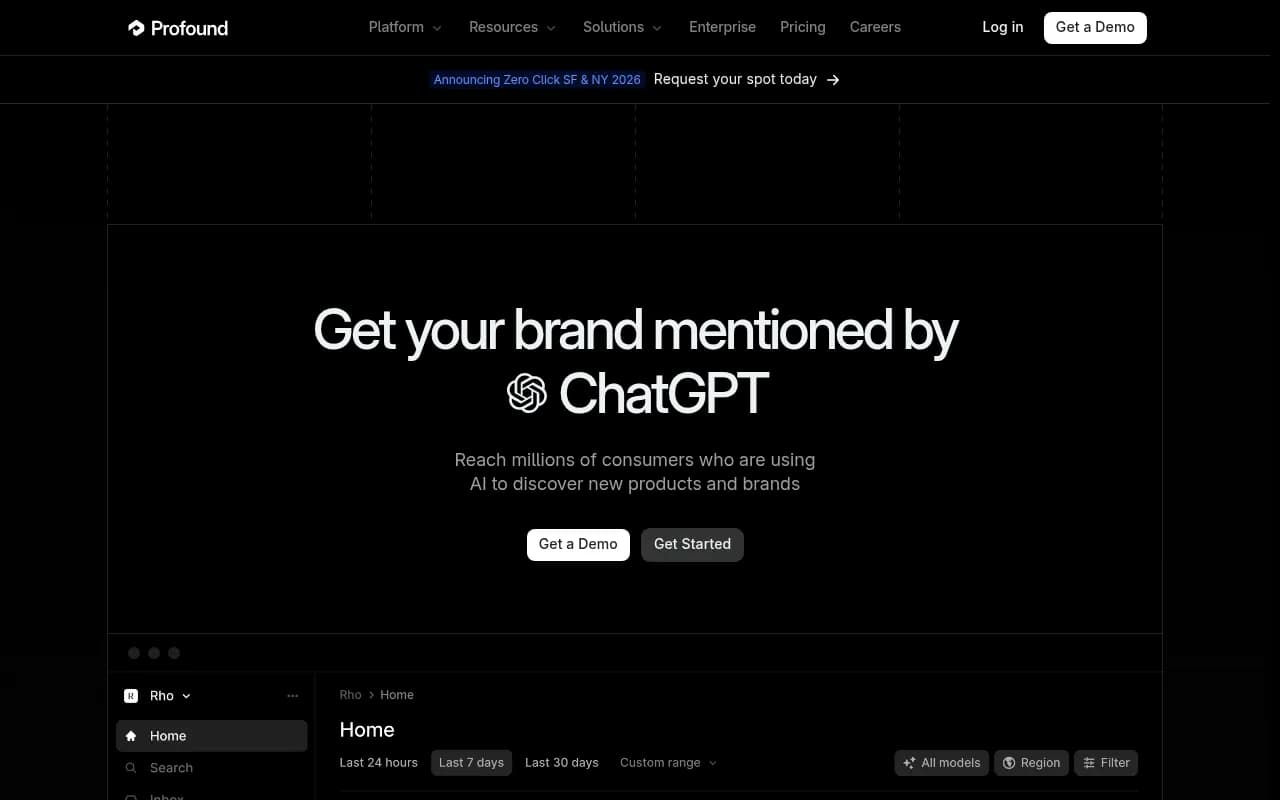
Profound is the other enterprise name and Scrunch's most direct rival, and it made the opposite choice: it stayed independent and raised $96 million at a $1 billion valuation in February 2026. Its research depth, built on real user conversations, and its prompt-volume data are the strongest in the category. The pricing draws the most complaints. The $99 Starter tracks a single engine with 50 prompts, so most working setups start at the $399 Growth plan, which adds two more engines, 100 prompts, and monthly content credits.
Promptwatch takes the opposite bet from Scrunch on the fix-it problem. Where Scrunch hands you a worklist, Promptwatch's agents help close it: content gap analysis, automated content generation, and publishing straight to your CMS (Webflow, Framer, or WordPress), plus Unified Actions, a prioritized GEO to-do list. It also shows you why you are visible or not, with crawler logs that reveal when AI systems hit your pages and what errors they find, and it breaks out citations from Reddit and YouTube, channels Scrunch does not separate out. Its Professional tier, at $245 a month, costs $5 less than Scrunch's Core while tracking every major model and including automated content generation. The platform is used by more than 1,840 brands and agencies, rates 4.7/5 on G2, and publishes the citation research cited earlier in this guide. Fair caveats: the company is younger, launched in April 2025, and its persona-level consumer research is thinner than Profound's.

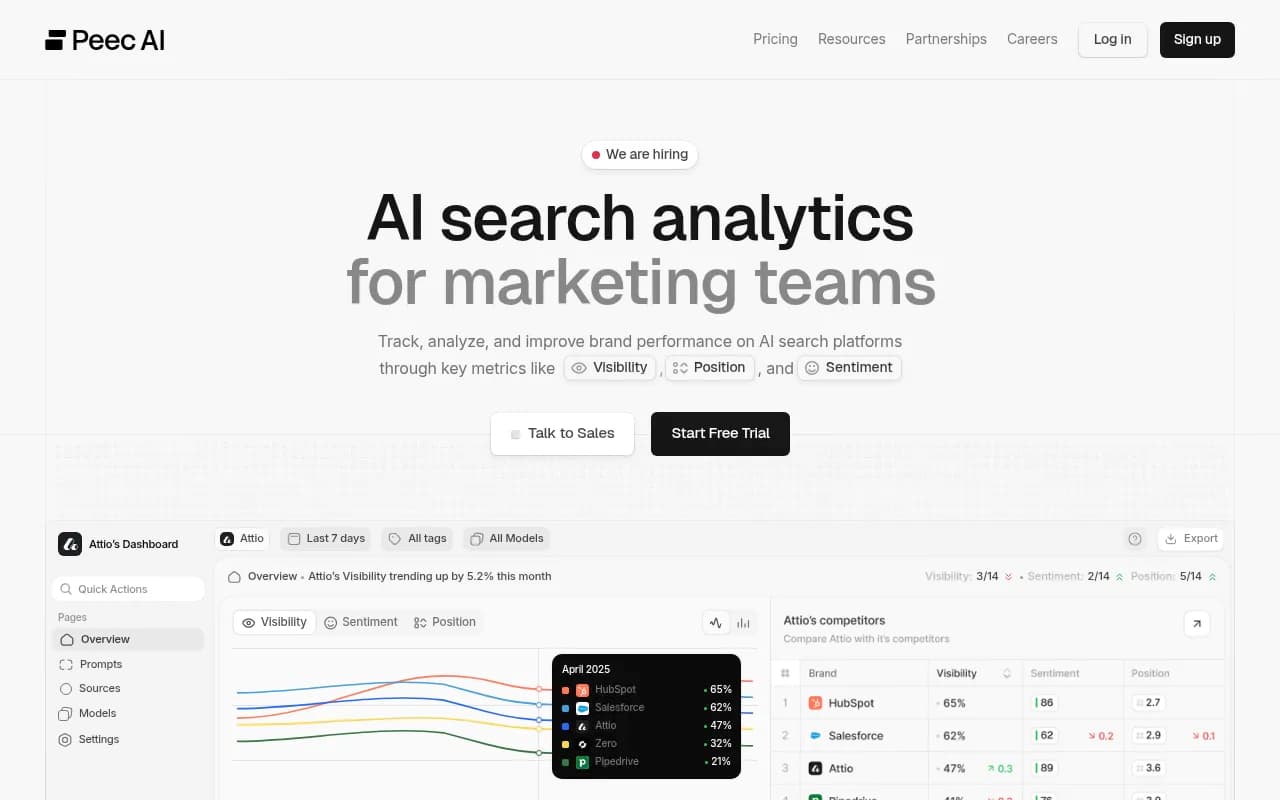
Otterly.AI and Peec AI cover the budget end. Both answer the basic "are we mentioned" question across the major engines for less than Scrunch charges. Neither offers crawler logs, visitor analytics, or content generation, so treat them as thermometers rather than treatment plans.

The bottom line
Scrunch in 2026 is a good monitoring product attached to a complicated corporate story. The pivot made it better for the buyers Sitecore actually cares about, and riskier for the small teams that made it popular in the first place. If you have people who can ship fixes, the diagnosis is worth $250 a month, and the Enterprise tier is a serious piece of infrastructure. If you do not, spend the money where the work happens: on a tool that ships the fixes, or on the content itself.
Frequently asked questions
Who owns Scrunch AI?
Sitecore, the enterprise digital-experience vendor, since June 3, 2026. Bloomberg reported a price near $225 million, which Sitecore has never confirmed. Founders Chris Andrew and Robert MacCloy still lead the team.
How much does Scrunch AI cost?
The self-serve Core plan is $250 a month with 125 prompts and four engines. Enterprise is custom-priced and adds five more engines, the Agent Experience Platform, API access, and SSO.
Is Scrunch AI worth it for small teams?
Rarely. A one- or two-person team can track a handful of prompts manually or with a cheaper tracker. Scrunch's value concentrates at mid-market and above, where someone can act on what it finds.
What is the best Scrunch AI alternative?
It depends on the job. Profound for research depth on real user conversations, Promptwatch for monitoring plus automated content fixes, Otterly.AI or Peec AI for basic budget tracking.