Key takeaways
- Tool-only GEO costs roughly $1,200 to $7,000 per year and works if you already have hands to act on the data. Most teams underestimate this last part.
- A serious in-house GEO capability costs $180,000 to $300,000+ annually once you include salary, benefits, tooling, and the 2-4 months of ramp-up before anyone produces results.
- GEO agency retainers run about $5,000 to $20,000 per month ($60,000 to $240,000 per year), with most B2B SaaS engagements landing in the middle of that range.
- The question isn't budget, it's capacity. A tool suits teams with people to act on findings; an agency suits teams that need the work done for them.
- Most scaling companies land on a hybrid: one internal owner plus a platform for monitoring plus either an agency or automation for production.
First, what GEO work actually involves
Before comparing costs, you need to know what you're paying for. Generative Engine Optimization is several jobs wearing one job title, and the reason the in-house-versus-agency debate exists at all is that these jobs rarely sit inside one person.
There are four of them:
- Technical work. Schema markup, crawlability, structured data, and a site architecture that AI crawlers like ChatGPTBot, ClaudeBot, and PerplexityBot can actually parse.
- Content strategy. Finding the exact prompts your buyers type into ChatGPT and Perplexity, then answering them in self-contained, citable language.
- Monitoring. Tracking whether your citation share is moving, in which models, and against which competitors.
- Iteration. Rewriting and restructuring pages based on what the monitoring shows, forever, because the models change monthly.
Here's the structural problem: a technical SEO can handle schema and crawlability but rarely owns content strategy. A content marketer writes well but rarely audits structured data or reads a crawl log. So the real question before you spend anything is: which of these four jobs do we already have covered, and what will it cost to close the rest?
Option 1: Tool-only
This is the leanest path. You subscribe to an AI visibility platform, someone on your existing team (usually an SEO or content marketer) interprets the data and makes changes, and no new hires or retainers enter the picture.
What it costs
A capable platform runs between $95 and $800 per month depending on scope. Promptwatch, for example, charges $95/mo for its Essential tier (one site, 50 tracked prompts, all major LLMs), $245/mo for Professional, and $579/mo for Business, with agency plans from $199 to $799/mo that include unlimited projects. Cheaper trackers exist below that, and enterprise suites run above it.

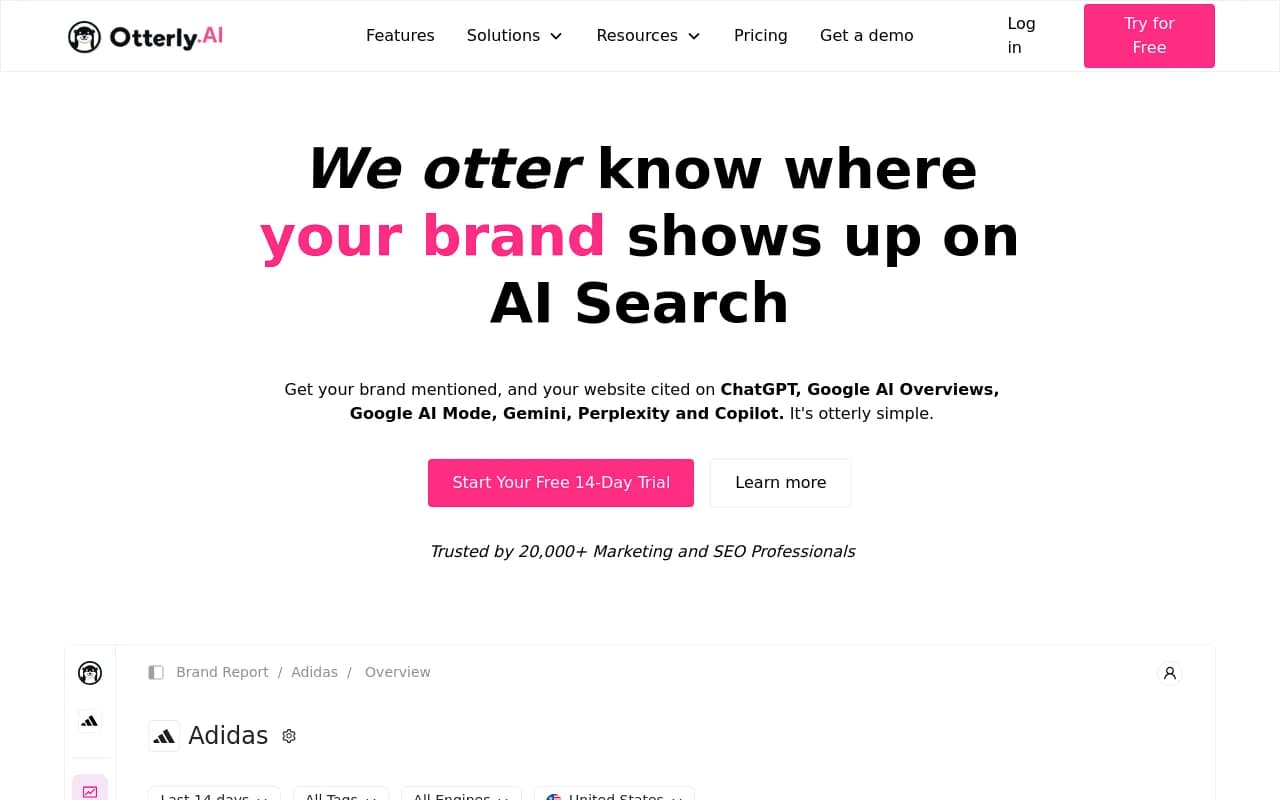
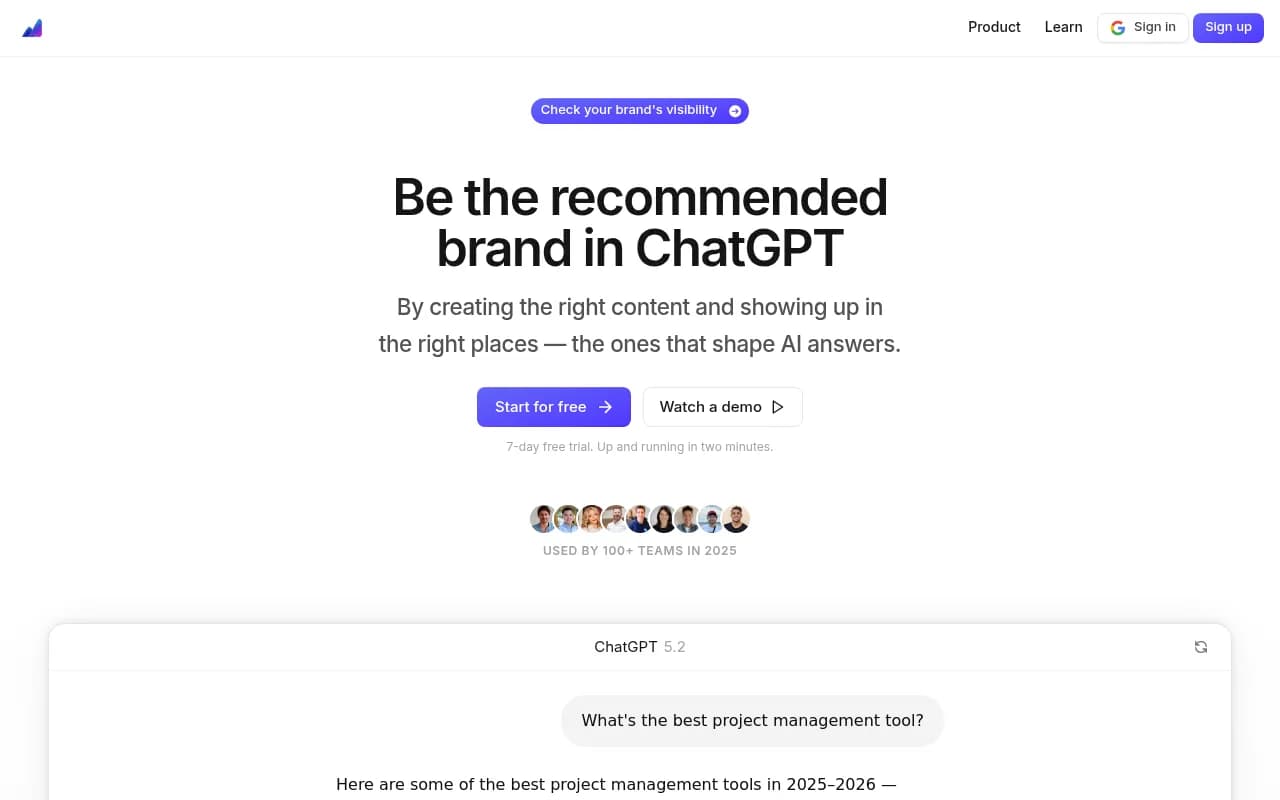
For budget tracking without the optimization layer, Otterly.AI and Airefs sit in the $29 to $100/mo range:
At the enterprise end, Profound and platforms like it run into four figures monthly:
So the realistic tool-only range is roughly $1,200 to $7,000 per year. Even the top tier costs less than a single week of a mid-level marketing salary.
Where tool-only breaks down
The subscription is cheap. The labor isn't. A tool tells you which prompts you're invisible for, which pages get cited, and where AI crawlers hit errors on your site, but someone still has to write the content, fix the schema, and restructure the pages. If your team is already stretched thin, you'll end up paying for visibility data nobody has time to act on. I've seen this happen more than once: a company buys a GEO platform in Q1, the dashboard looks great, and by Q4 the tracked prompts have barely moved because no one owned the follow-through.
There's a middle path here, though, and it's newer. Platforms like Promptwatch don't stop at monitoring — their Content Agents can plan, write, and publish GEO-optimized content straight to your CMS, and a Unified Actions feed prioritizes what to fix first. That blurs the line between tool-only and having an agency's production capacity, which is worth knowing when you're pricing the options below.
Tool-only makes sense when: you have an existing SEO or content person with genuine bandwidth, your site is technically sound, and you can iterate on a monthly cadence without external pressure.
Option 2: In-house team
This is where sticker shock lives. The honest numbers are higher than most budgets assume, because base salary is maybe 70% of what a hire actually costs.
The fully loaded math
Current 2026 salary data puts a marketing manager or director at $90,000 to $130,000 in total compensation, a technical SEO specialist at $70,000 to $95,000, and a content strategist or writer at $60,000 to $90,000. Then add 30-40% for benefits, taxes, and overhead, 20-30% of first-year salary for recruitment, and $2,000+ per person annually for training, because GEO playbooks change every few months.
MarkerHire's 2025 analysis put a four-person marketing team (manager, content, analyst, ads) at $450,000 to $550,000 annually, and that's before the $50,000+ per year a mid-size team spends on tools and software.
Here's what a realistic in-house GEO build looks like:
| Role | Fully loaded annual cost | What they cover |
|---|---|---|
| GEO lead / strategist | $120,000 – $170,000 | Prompt research, strategy, cross-team coordination |
| Technical SEO | $95,000 – $130,000 | Schema, crawlability, AI crawler access, log analysis |
| Content producer | $80,000 – $125,000 | Writing citable, self-contained answers at volume |
| GEO platform + tooling | $1,200 – $10,000 | Monitoring, citation tracking, content briefs |
| Total (lean, 3-person) | $300,000 – $435,000 | Full GEO capability owned internally |
A single generalist who can coordinate all four GEO jobs runs $120,000 to $170,000, but one person genuinely cannot hold technical SEO, content strategy, and ongoing monitoring at once, no matter what the job posting promised. You'll end up buying contractors or tools to fill the gaps anyway.
The cost nobody prices in: ramp-up
An in-house team typically needs two to four months just to hire, train, and stand up tooling before real work begins. Average time-to-hire for a marketing position is around 50 days per role, so a three-person build is six-plus months of paying full salaries for partial output. Meanwhile an agency starts within weeks. If a three-month delay costs you $60,000 in potential pipeline (a conservative estimate for most B2B teams), that belongs in the comparison too.
What you get for all of it is the thing agencies can't sell: institutional knowledge that stays. The prompt research, the internal linking logic, the understanding of why certain pages earn citations — that compounds inside your company instead of walking out when a contract ends.
Option 3: GEO agency
GEO agency pricing generally runs from about $5,000/month at the low end to $20,000/month and up for premium or enterprise engagements, with most B2B SaaS retainers landing somewhere in the middle. That's $60,000 to $240,000+ per year.
The spread is wide because scope varies enormously — content-only programs sit at the lower end, while full technical-plus-content-plus-digital-PR systems run higher. Some agencies, like iPullRank, don't publish pricing at all and quote per engagement.
What a good retainer includes
A serious agency engagement should cover:
- Prompt and citation research, meaning which questions your buyers ask AI and where you're currently invisible
- Technical fixes: schema, structured data, AI crawler access, crawl error resolution
- Content production: citable pages written to the formats AI actually quotes
- Digital PR and offsite work, because AI models lean heavily on Reddit, review sites, and third-party coverage when forming recommendations
- Reporting tied to pipeline and revenue, not just visibility scores
That last point matters more than the price. A $6,000/month retainer that earns brand recommendations is cheaper than a $4,000/month retainer that produces a rising visibility score and flat pipeline. Price the outcome, not the invoice.
Agencies like 1001 SEO Media run this kind of engagement — combining technical SEO, content production, digital PR, and generative engine optimization so brands get cited in ChatGPT, Perplexity, and Google AI Overviews — and the agency model in general works because the team has already run the same playbook across multiple clients. When the GEO playbook changes every few months, and it does, those reps matter.
The catch
It's a recurring cost that stops delivering the moment you stop paying, and unless the relationship is structured to transfer knowledge, the institutional learning leaves with the account team. Agencies also absorb their tool costs into the retainer, which is partly why they can justify it — they spread $2,000 to $5,000 in monthly platform licensing across every client on the roster.
Side-by-side: what each path actually costs
| Tool-only | In-house team | GEO agency | |
|---|---|---|---|
| Annual cost (2026) | $1,200 – $7,000 | $120,000 (single generalist) to $435,000+ (3-person team) | $60,000 – $240,000+ |
| Time to first results | Weeks, if capacity exists | 2-4 months to hire and ramp | Weeks |
| Who does the work | Your existing team | Your new hires | The agency |
| Skills coverage | Only what you already have | Depends on finding rare generalists or several hires | Full stack from day one |
| Knowledge retention | Stays with your team | Stays fully | Leaves unless transferred |
| Flexibility | Cancel anytime | Fixed cost regardless of workload | Scale up or down with the engagement |
| Biggest risk | Data with no one to act on it | Underestimating ramp-up and hidden costs | Dependency, and paying for output you can't verify |
The hidden costs nobody budgets
Whichever path you pick, these line items tend to surprise people:
- Recruitment: 20-30% of first-year salary per hire, if you go in-house.
- Training: the GEO playbook you build in January is partially obsolete by summer. Budget for courses, conferences, or paid learning continuously, not once.
- Management time: an in-house hire needs a manager who understands GEO well enough to evaluate their work. If that person doesn't exist yet, add another gap to the list.
- The opportunity cost of slowness: every month your competitors build citation share in the models your buyers use, your cost of catching up grows. This is the least visible and most expensive line in the whole budget.
One honest counterpoint on the cheap end, though: checking your own brand name in ChatGPT once a month costs nothing, and it tells you something real. Most teams should start there before spending anything, because it calibrates how urgent the problem actually is.
The hybrid model most teams land on
In practice, the majority of scaling companies don't pick one path. They assemble something like this:
- One internal owner ($85,000 – $130,000): a marketing manager or SEO lead who holds strategy and institutional knowledge.
- A monitoring platform ($1,200 – $3,000/yr): visibility tracking, citation analytics, and content briefs to direct the work.
- External execution ($60,000 – $120,000/yr): an agency or an agentic content platform that produces the volume of pages the strategy demands.
That structure lands around $190,000 to $250,000 annually — more than tool-only, less than a full team, and it keeps the knowledge internal while borrowing specialist capacity. For companies with marketing budgets over $1M, the calculus shifts toward in-house, because at that scale the agency premium starts exceeding the cost of permanent staff.
A sensible sequencing most teams follow: start with a tool and a free visibility audit to size the problem, bring in an agency for six to twelve months to build the foundation, then hire internally to maintain and iterate what the agency built. The agency builds it; the hire maintains it.
How to decide in ten minutes
Answer these honestly and the answer usually falls out:
- Do we have someone with real bandwidth to act on visibility data? No, and we can't hire soon → agency. Yes → tool-only or hybrid.
- Is GEO a permanent function or a project? Permanent and core to revenue → in-house. Exploratory or new → tool first, agency second.
- How fast do we need movement? If pipeline pressure exists this quarter, in-house is off the table for now, purely because of the 2-4 month ramp.
- Can we verify quality? If you can't evaluate GEO work yourself, an agency's reporting discipline becomes critical — ask for pipeline attribution, not visibility scores.
And regardless of which path you pick, run a free visibility check first. Platforms like Promptwatch offer a free AI brand visibility report, and there's no reason to price any of these options before you know how visible you currently are. A $240,000 retainer aimed at a problem you don't have is the most expensive option on this list by far.