Key takeaways
- AI search traffic grew 527% year over year, and website traffic from AI platforms may surpass traditional search by 2028
- Around 93% of AI search sessions end without a website click -- being cited in the answer IS the visibility now
- Citation rates vary up to 615x between platforms like Grok and Claude, meaning single-platform tracking gives you a dangerously incomplete picture
- Domain authority remains the strongest predictor of AI citations, but content structure, freshness, and third-party mentions matter too
- Brands with both mentions AND citations in AI answers are 40% more likely to appear in follow-up queries
- The GEO market is projected to grow from $848M to $33.7B by 2034 -- this is not a niche concern anymore
Something shifted in the last 18 months that most marketing teams still haven't fully processed. It's not just that AI search is growing. It's that the rules of what "being visible" even means have changed underneath everyone's feet.
Traditional search gave you a ranking. You could see it. You could track it. You could build a content strategy around it. AI search doesn't work like that. There's no position 1. There's cited or not cited. There's mentioned or ignored. And the data from over a billion citations processed across platforms paints a pretty clear picture of where things stand -- and where they're going.
Let's get into it.
The scale of what's actually happening
Start with the raw numbers, because they're striking.
ChatGPT now has 700 million weekly active users and sits as the fourth most visited website globally, pulling over 5 billion monthly visits according to Semrush traffic data. Google AI Mode has 100 million users across the US and India alone, and has expanded to 200+ countries. AI Overviews now appear in 25.11% of Google searches, up from 13.14% in March 2025 -- that's nearly doubled in under a year.
AI referral traffic across all industries is growing roughly 1% month over month. ChatGPT alone drives 87.4% of all AI referral traffic, according to Conductor's 2026 benchmarks. And the Previsible AI Traffic Report tracked 19 GA4 properties and found LLM-driven sessions jumped from ~17,000 to ~107,000 comparing January-May 2024 to the same period in 2025. That's a 527% increase.
The trajectory projections are even more dramatic:
| Year | AI/LLM search traffic share | Traditional search share |
|---|---|---|
| 2026 | 17% | 83% |
| 2027 | 48% | 52% |
| 2028 | 75% | 25% |
Source: Semrush AI Search Study via Exploding Topics
Gartner predicted traditional search engine volume would drop 25% by 2026. We're living in that prediction now.
The zero-click problem is worse than you think
Here's the number that should make every content marketer sit up: roughly 93% of AI search sessions end without a website click.
That's not a rounding error. That's the default behavior.
Organic click-through rates for queries featuring Google AI Overviews have fallen 61% since mid-2024 -- from 1.76% to 0.61%, according to Search Engine Land. Pew Research Center found that when users encounter AI Overviews, only 8% click on traditional search results, compared to 15% when no AI summary appears. Bain & Company found about 80% of consumers rely on zero-click results for at least 40% of their searches.
What this means practically: if an AI model answers a user's question about your category and doesn't mention your brand, that user may never find you. Not because your site ranks poorly. Because you weren't cited in the answer at all.
The old SEO game was about getting to page one. The new game is about being in the answer.
What the citation data actually shows
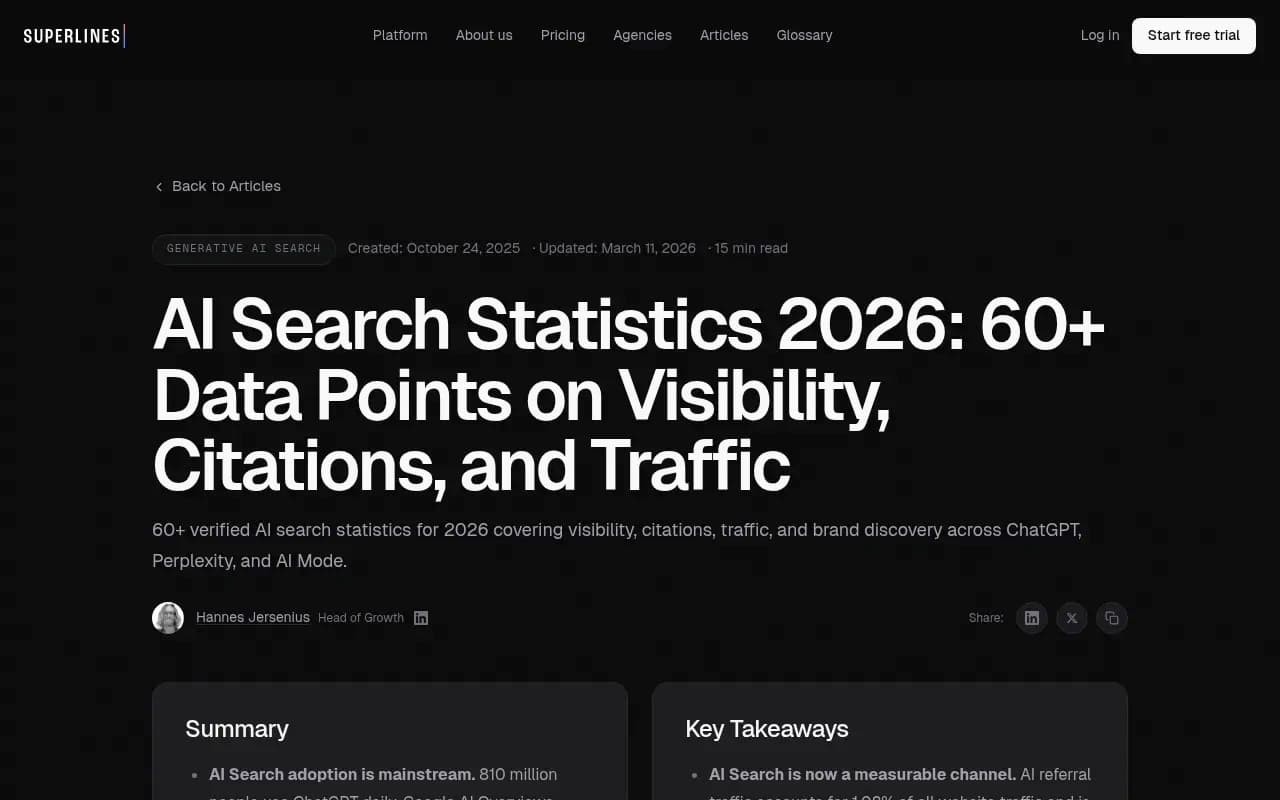
With over 1.1 billion citations, clicks, and prompts processed by platforms tracking AI search behavior, some clear patterns have emerged.
Domain authority is still king -- but it's not everything
SE Ranking's study of 2.3 million pages found that high-traffic sites earn 3x more AI citations than low-traffic ones. Domain traffic was the strongest single predictor of AI citations, with a SHAP value of 0.63. So yes, the brands that already had strong SEO foundations are starting AI search with an advantage.
But domain authority alone doesn't explain citation patterns. Content structure matters enormously. Pages that include statistics, citations, and quotations achieve 30-40% higher visibility in AI responses. Pages updated within the last two months earn 28% more citations than older content. Freshness and specificity are real signals.
The platform gap is enormous
This is the finding that surprises most people: the same brand can see citation volumes differ by 615x between Grok and Claude. Not 6x. Not 60x. Six hundred and fifteen times.
That number comes from Superlines' March 2026 data, and it means that a brand doing well on one AI platform might be essentially invisible on another. The US shows a 2.49% brand visibility rate with a 10.31% citation rate -- but non-US markets look very different. AI search is not as global as most brands assume.
This is why single-platform tracking is a trap. If you're only watching how ChatGPT responds to queries about your brand, you're missing most of the picture.
Mentions plus citations compound
According to the Airops 2026 State of AI Search report, brands with both mentions AND citations in AI answers are 40% more likely to appear in follow-up queries. This makes intuitive sense -- AI models are building a picture of your brand's authority across multiple signals, and appearing in both the text of an answer and as a cited source reinforces that picture.
It also means that third-party mentions (Reddit threads, YouTube discussions, industry publications) aren't just nice-to-have. They're part of the citation ecosystem that AI models draw from.
The six factors that actually drive AI visibility
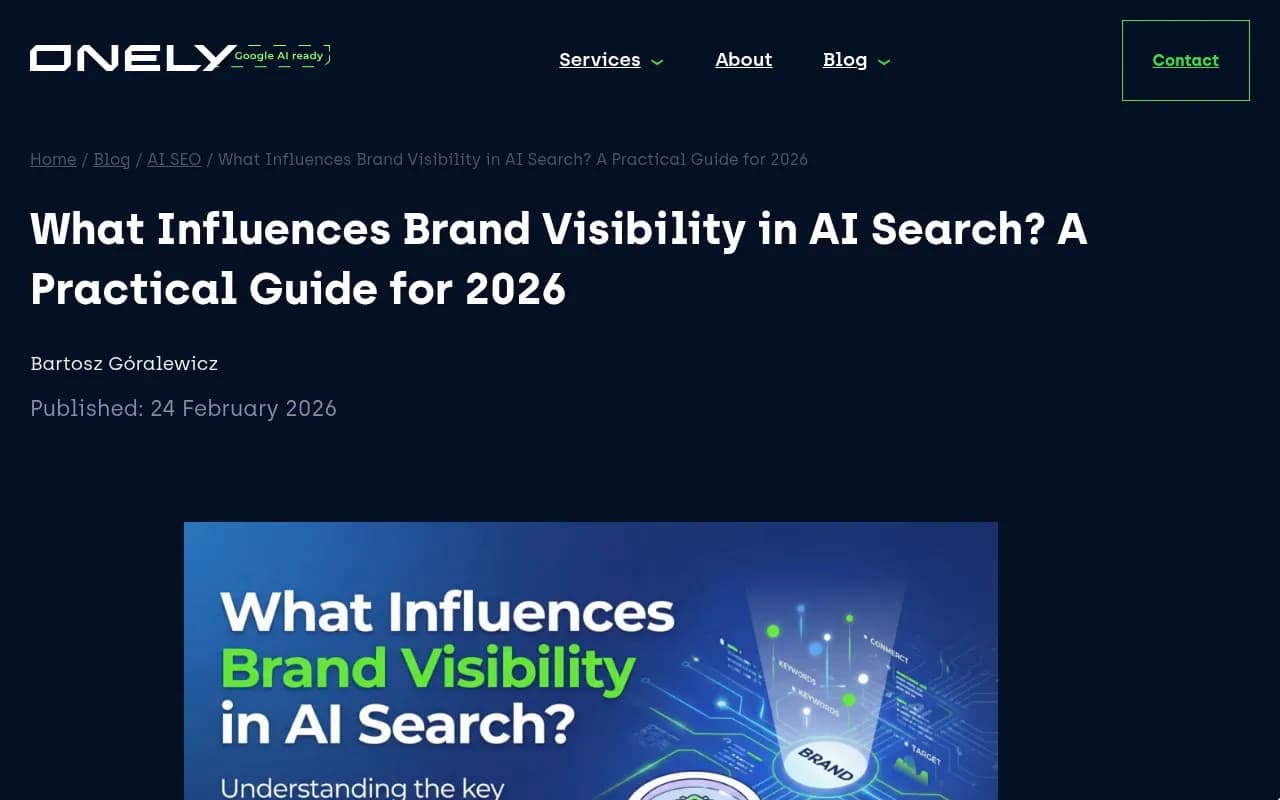
Based on the research available, brand visibility in AI search comes down to six interconnected factors.
Content structure and retrievability. AI models need to be able to extract clear, specific answers from your content. Pages that answer questions directly, use structured formats, and include verifiable data get cited more. Generic brand content doesn't.
Platform-specific optimization. What works on Perplexity doesn't necessarily work on Claude. Each model has different retrieval patterns, different source preferences, and different response styles. Treating all AI platforms as identical is a mistake.
Entity signal strength. How clearly does the web "know" who you are? Your brand needs to appear consistently across authoritative sources -- Wikipedia, industry databases, major publications -- so AI models can confidently identify and cite you.
Technical infrastructure. AI crawlers behave differently from Googlebot. Pages that load slowly, have crawl errors, or block AI user agents simply won't get indexed. This is a surprisingly common issue that most brands haven't audited.
Third-party citation presence. Where does your brand appear outside your own site? Reddit discussions, YouTube videos, industry blogs, and news coverage all feed into what AI models "know" about you. A brand that only exists on its own website is invisible to AI.
Measurement infrastructure. You can't optimize what you can't see. Brands that have set up proper AI visibility tracking -- monitoring which prompts trigger their brand, which pages get cited, and how visibility changes over time -- are the ones making progress.
The GEO market is growing fast
The market for Generative Engine Optimization tools and services was valued at $848 million in 2025 and is projected to reach $33.7 billion by 2034 at a 50.5% CAGR. That's not a niche market growing slowly -- that's a category exploding.
54% of US marketers plan to implement GEO within 3-6 months, according to Superlines' data. The brands moving now are building an advantage that will be hard to close later, for the same reason early SEO adopters in 2010 built domain authority that still compounds today.
The difference is that AI search moves faster. Citation patterns can shift in weeks as models update. A competitor who publishes a well-structured, heavily cited piece of content can appear in AI answers almost immediately.
What brands are actually doing about it
There are roughly two categories of brands right now: those who have started treating AI visibility as a measurable channel, and those who are still waiting to see if this is real.
The ones taking action are doing a few things consistently.
They're auditing which prompts their target customers are asking AI models, and checking whether their brand appears in the answers. This prompt-level analysis reveals gaps that traditional keyword research completely misses.
They're publishing content specifically designed to be cited -- not generic brand content, but specific, data-rich, well-structured pieces that answer the exact questions AI models are fielding. A listicle comparing your product to competitors, written with real data and clear structure, is more likely to get cited than a polished brand page.
They're tracking third-party sources. Reddit threads and YouTube videos that discuss your category directly influence what AI models recommend. Brands that engage in those communities -- or create content that earns discussion there -- show up more.
And they're measuring. Not just "are we mentioned," but which pages are being cited, by which models, for which prompts, and whether that visibility is translating to actual traffic.
Promptwatch is built specifically around this loop -- finding the prompts where competitors appear but you don't, generating content to close those gaps, and tracking whether visibility improves. It's one of the few platforms that goes beyond monitoring to actually help you act on what you find.

For brands that want to start with monitoring before committing to a full platform, there are lighter options worth knowing about.
For enterprise teams that need deep competitive analysis alongside visibility tracking:
The platform comparison picture
Different tools cover different ground. Here's how the major AI visibility platforms stack up on the dimensions that matter most:
| Platform | AI models tracked | Content generation | Crawler logs | Reddit/YouTube tracking | Prompt volume data |
|---|---|---|---|---|---|
| Promptwatch | 10+ | Yes (built-in) | Yes | Yes | Yes |
| Profound AI | 8+ | No | No | No | Limited |
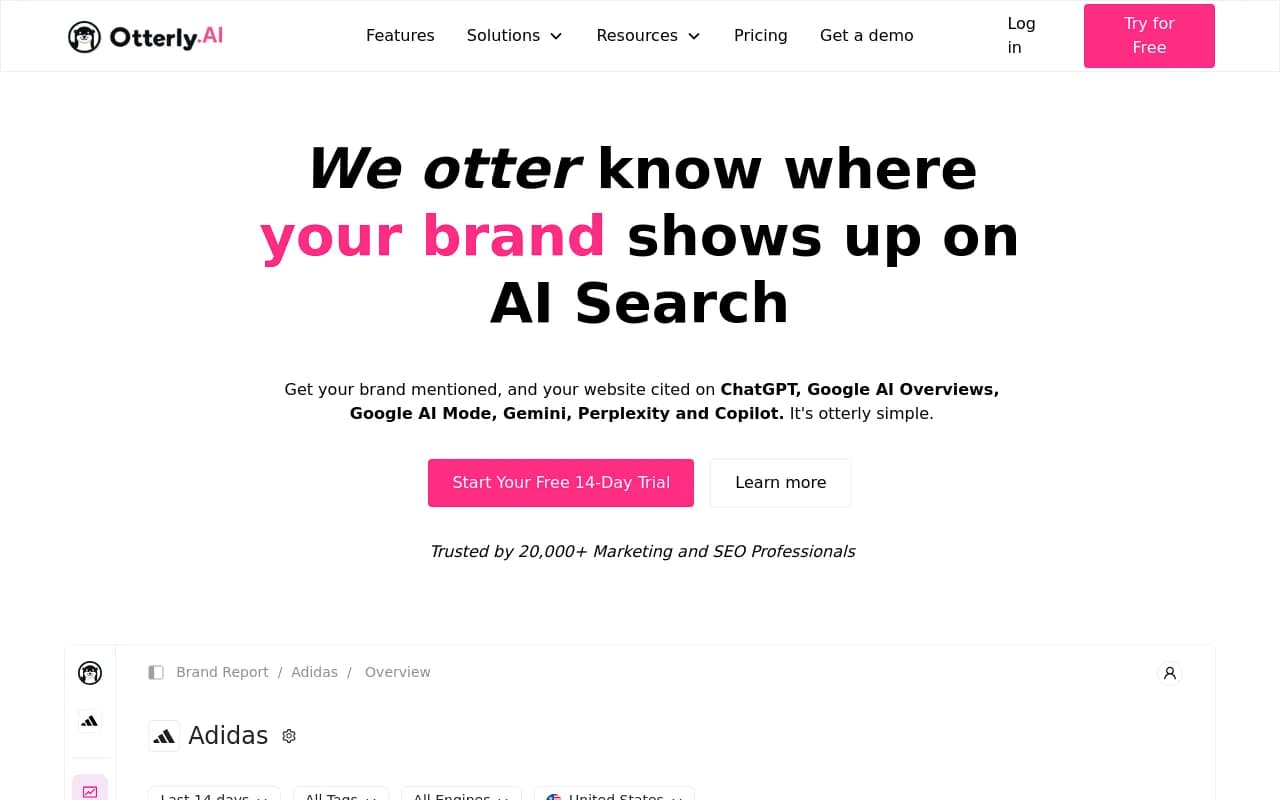
| Otterly.AI | 5 | No | No | No | No |
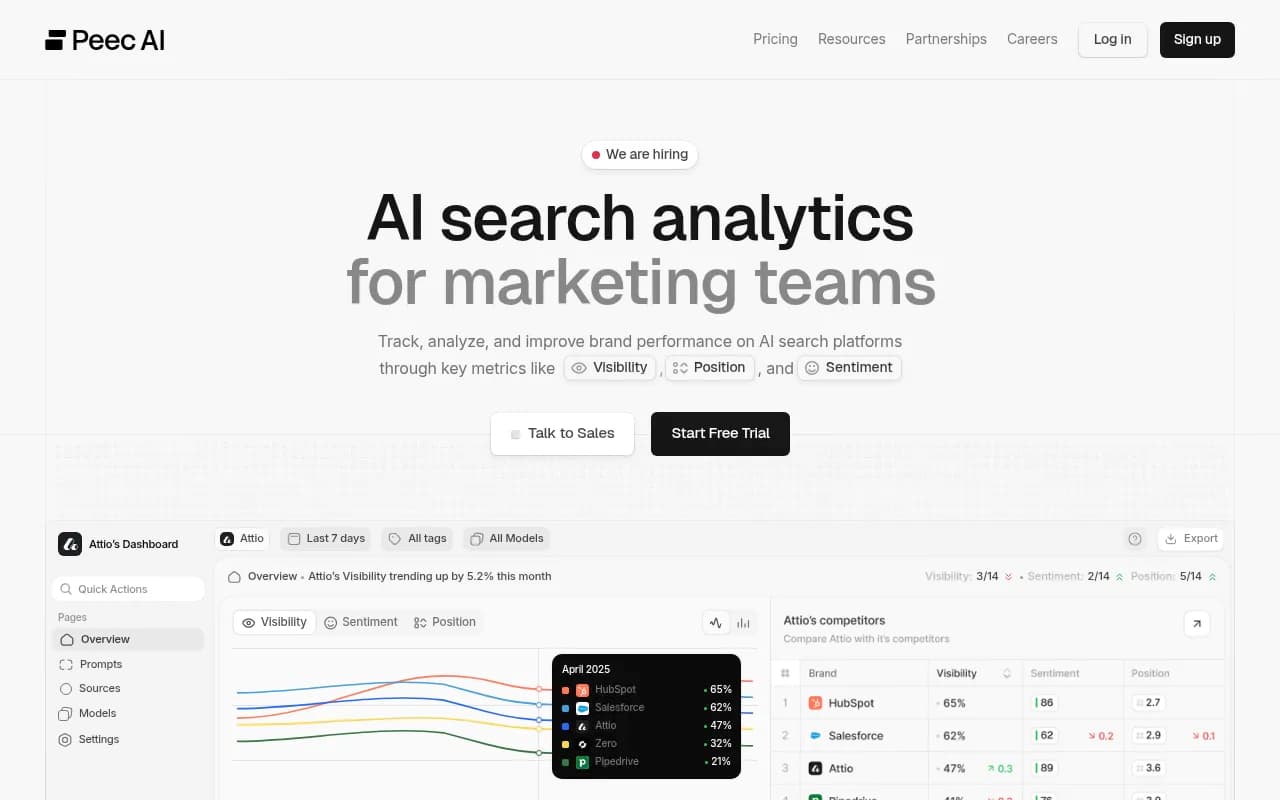
| Peec AI | 6 | No | No | No | No |
| AthenaHQ | 8+ | No | No | No | No |
| Scrunch AI | 6+ | No | No | No | No |
| SE Ranking | 5 | No | No | No | No |
The pattern is consistent: most tools show you data. Fewer help you do something with it.
What the data tells us about 2026 and beyond
A few things are clear from the numbers.
AI search is not a future concern -- it's a present one. 527% traffic growth year over year, 25% of Google searches now showing AI Overviews, 700 million weekly ChatGPT users. The channel is here.
Zero-click behavior means visibility in the answer IS the metric. Traditional traffic-based measurement misses most of what's happening. A brand that gets cited in 10,000 AI responses per month but sees no direct click traffic from it is still reaching 10,000 people.
Platform diversity is a real challenge. The 615x citation variance between platforms means brands need multi-platform visibility data, not just ChatGPT monitoring.
Content quality and structure matter more than content volume. Pages with statistics, citations, and clear structure earn 30-40% more AI citations. Publishing more generic content won't help. Publishing better-structured, more specific content will.
The brands that figure this out in 2026 will have a compounding advantage. The ones that wait are building a gap that gets harder to close every month.
Where to start
If you're new to AI visibility tracking, the practical starting point is simple: pick 10-15 prompts that your target customers are likely asking AI models, and check whether your brand appears in the answers. Do this across at least three platforms (ChatGPT, Perplexity, and Google AI Overviews cover most of the traffic). Note which competitors appear when you don't.
That gap analysis tells you exactly what content to create. The prompts where you're absent are the ones worth targeting first.
From there, the measurement infrastructure matters. You need to know whether the content you publish is actually getting cited, and by which models. Without that feedback loop, you're optimizing blind.
The data from a billion-plus citations points in one direction: AI search is a real, measurable, growing channel, and brand visibility in it is determined by factors that most brands haven't started optimizing for yet. That's either a problem or an opportunity, depending on when you start.