Key takeaways
- Traditional SEO rankings no longer capture the full picture -- B2B buyers are increasingly starting research in ChatGPT, Perplexity, and Google AI Overviews, where different rules apply
- AI visibility tools track how often and how favorably your brand appears in LLM-generated answers, which is distinct from ranking on a SERP
- The most useful tools go beyond monitoring: they identify content gaps, show competitor citation patterns, and help you create content that AI models actually want to cite
- For B2B specifically, look for tools with prompt-level analytics, competitor benchmarking, and the ability to track across multiple AI models simultaneously
- Promptwatch is the only platform in 2026 rated as a leader across all GEO categories -- it's one of the few tools that closes the full loop from gap analysis to content creation to traffic attribution
Something shifted in B2B buying behavior over the past two years, and a lot of marketing teams are still catching up. When a procurement manager or IT director starts evaluating vendors today, there's a decent chance their first stop isn't Google. It's ChatGPT, Perplexity, or Gemini. They type something like "best enterprise data integration platforms for mid-market companies" and take the AI's answer at face value.
If your brand isn't in that answer, you don't exist in that moment. No click, no impression, no chance to compete.
This is why AI search visibility has become a real priority for B2B marketing teams in 2026. And it's why a whole category of tools has emerged to help you track, understand, and improve how you appear across AI-generated responses.
The problem is that the category is crowded and confusing. Some tools are glorified dashboards. Others are genuinely useful. Below is a breakdown of the 8 best options for B2B teams, what each one actually does well, and where each falls short.
Why B2B brands need AI visibility tracking specifically
B2B is different from B2C in ways that matter here. The buying cycle is longer, the prompts are more specific ("compare Salesforce vs HubSpot for a 200-person SaaS company"), and the stakes per conversion are higher. A single missed citation in an AI response could mean losing a deal worth six figures.
B2B buyers also tend to use AI tools more heavily for research than consumer shoppers do. They're asking nuanced, comparison-heavy questions -- exactly the kind that AI models answer with citations and recommendations. That means your content needs to be structured, authoritative, and directly responsive to the questions your buyers are actually asking.
Traditional SEO tools won't tell you any of this. Google Search Console shows you clicks from Google. It doesn't tell you whether ChatGPT is recommending your competitor every time someone asks about your category.
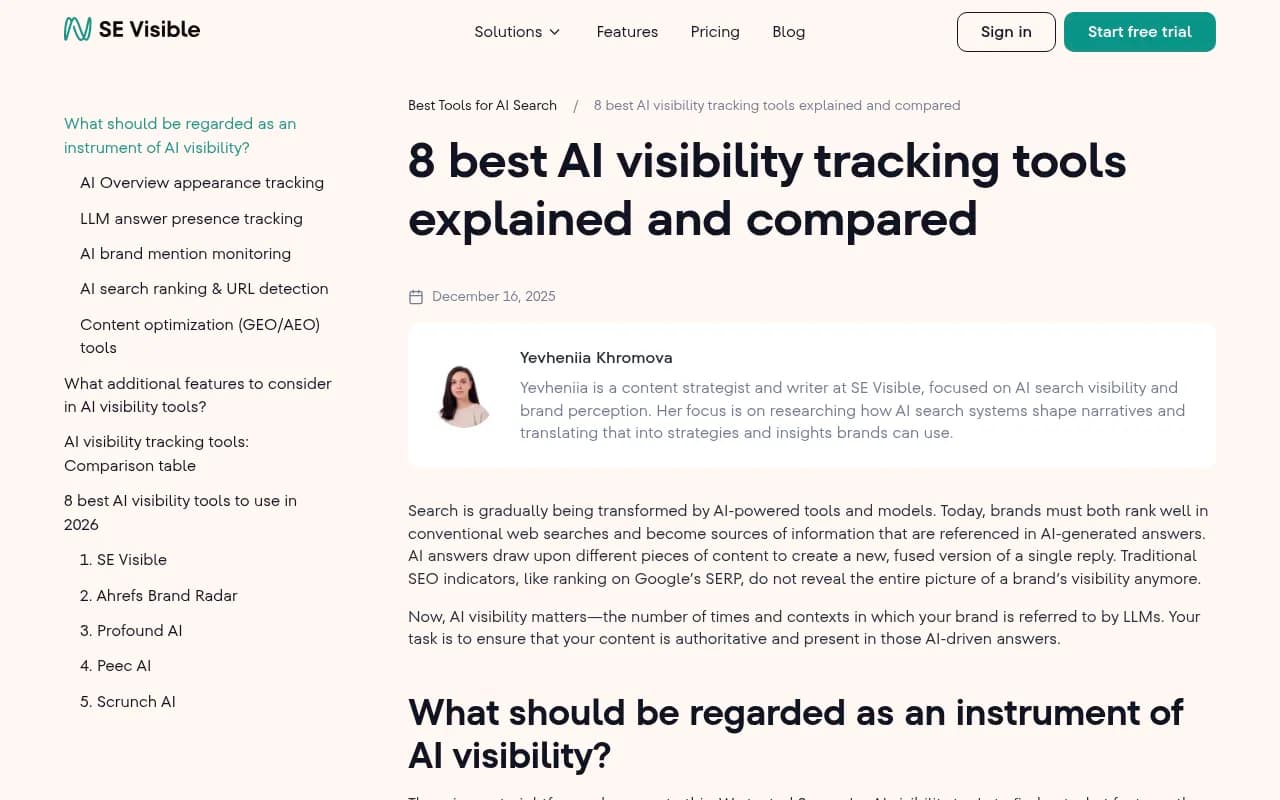
The 8 best AI visibility tools for B2B in 2026
1. Promptwatch -- best for the full optimization loop
Most AI visibility tools stop at monitoring. Promptwatch doesn't. It's built around a three-step cycle: find the prompts where competitors are visible but you're not, generate content specifically engineered to get cited by AI models, and then track whether that content actually moves the needle.
For B2B teams, the Answer Gap Analysis feature is particularly useful. It shows you the exact prompts your competitors are getting cited for that you're missing -- not vague topic suggestions, but specific questions with prompt volume data and difficulty scores. You can see "competitors X and Y are being cited for 'best CRM for manufacturing companies' and you're not" and act on it immediately.
The built-in AI writing agent generates articles and comparisons grounded in citation data from 880M+ analyzed citations. That's not a generic content tool -- it's content built to match what AI models are already pulling from when they answer questions in your category.
It also covers 10 AI models (ChatGPT, Perplexity, Claude, Gemini, Grok, DeepSeek, Copilot, Meta AI, Google AI Overviews, and Google AI Mode), has AI crawler logs that show which pages AI bots are actually reading on your site, and supports multi-language and multi-region tracking. For agencies managing multiple B2B clients, the custom pricing tiers make it workable at scale.
Pricing starts at $99/month for the Essential plan (1 site, 50 prompts, 5 articles). The Professional plan at $249/month adds crawler logs, city/state tracking, and 150 prompts.

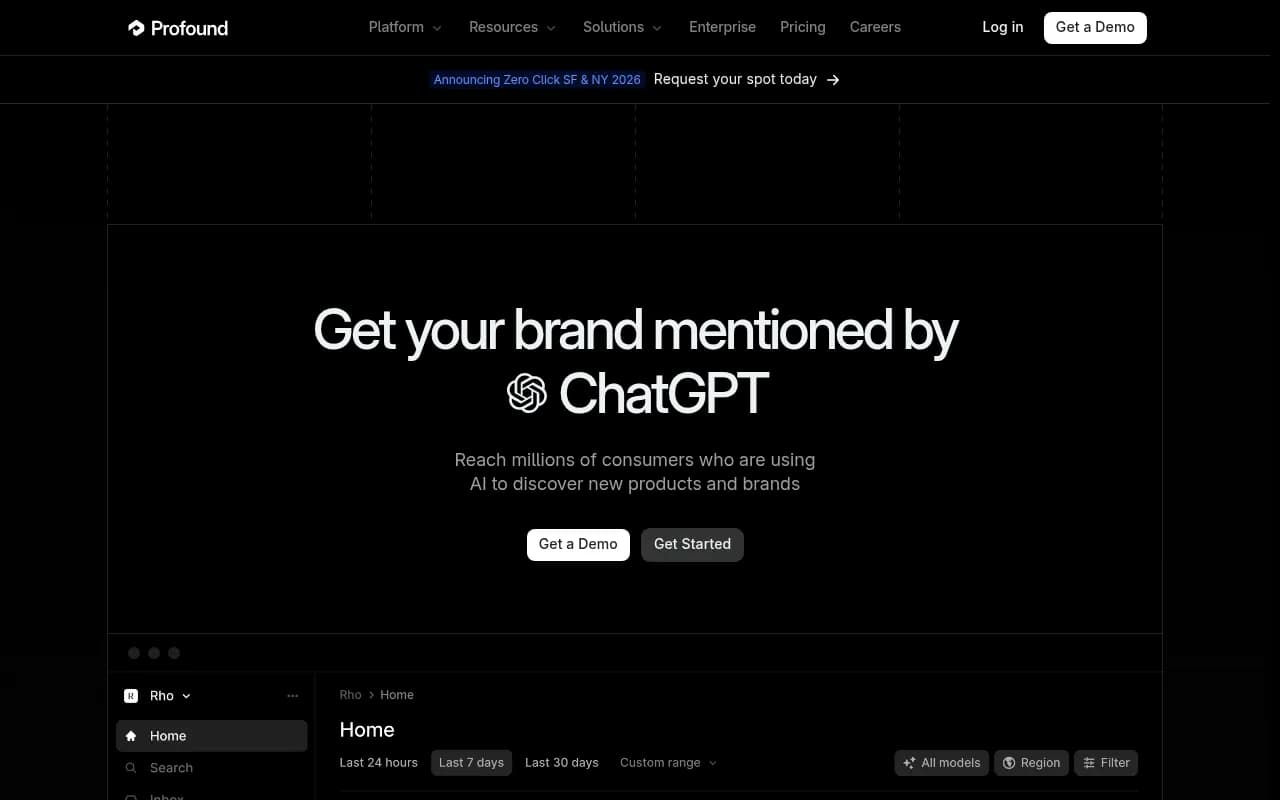
2. Profound -- best for enterprise analytics teams
Profound is a solid choice if your team has dedicated analysts who want to dig into raw data. It's built more like a research platform than a marketing tool -- you get near real-time monitoring, API access, and detailed segmentation across AI models.
The trade-off is that Profound is monitoring-first. It's excellent at showing you what's happening but doesn't have the content generation or optimization workflows that teams who want to act quickly will need. If you have analysts who can take the data and run with it, it's genuinely powerful. If you need the tool to tell you what to do next, it'll leave you a bit stranded.
3. SE Visible -- best for teams already using SE Ranking
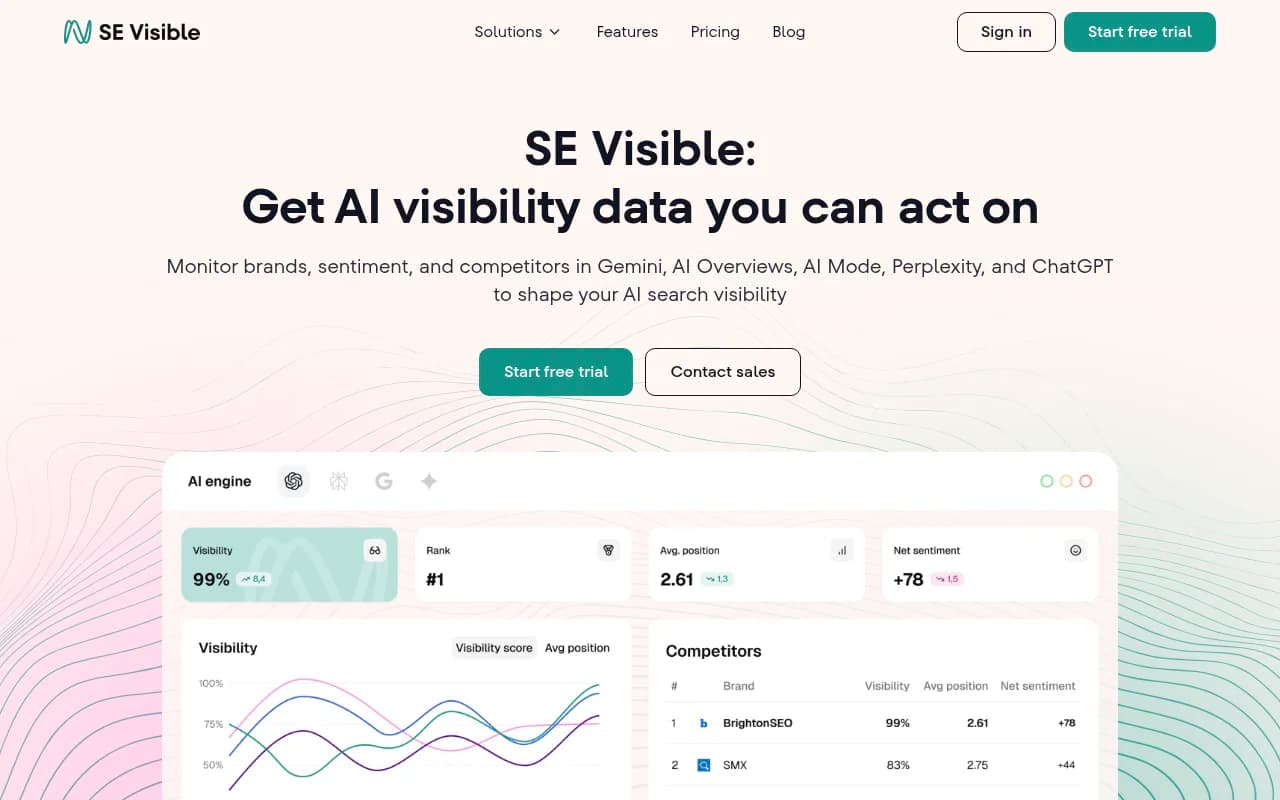
SE Visible is SE Ranking's AI visibility layer, and it integrates cleanly with the broader SE Ranking platform. For B2B teams that already use SE Ranking for traditional SEO, adding AI visibility tracking here is a natural extension rather than a separate workflow.
It covers AI brand mention monitoring, sentiment tracking, and URL-level citation detection. The interface is clean and the reporting is solid for stakeholder presentations. It's not the deepest tool in the category, but it's well-rounded and the pricing is reasonable relative to standalone AI visibility tools.
4. Athena HQ -- best for brand monitoring across multiple LLMs
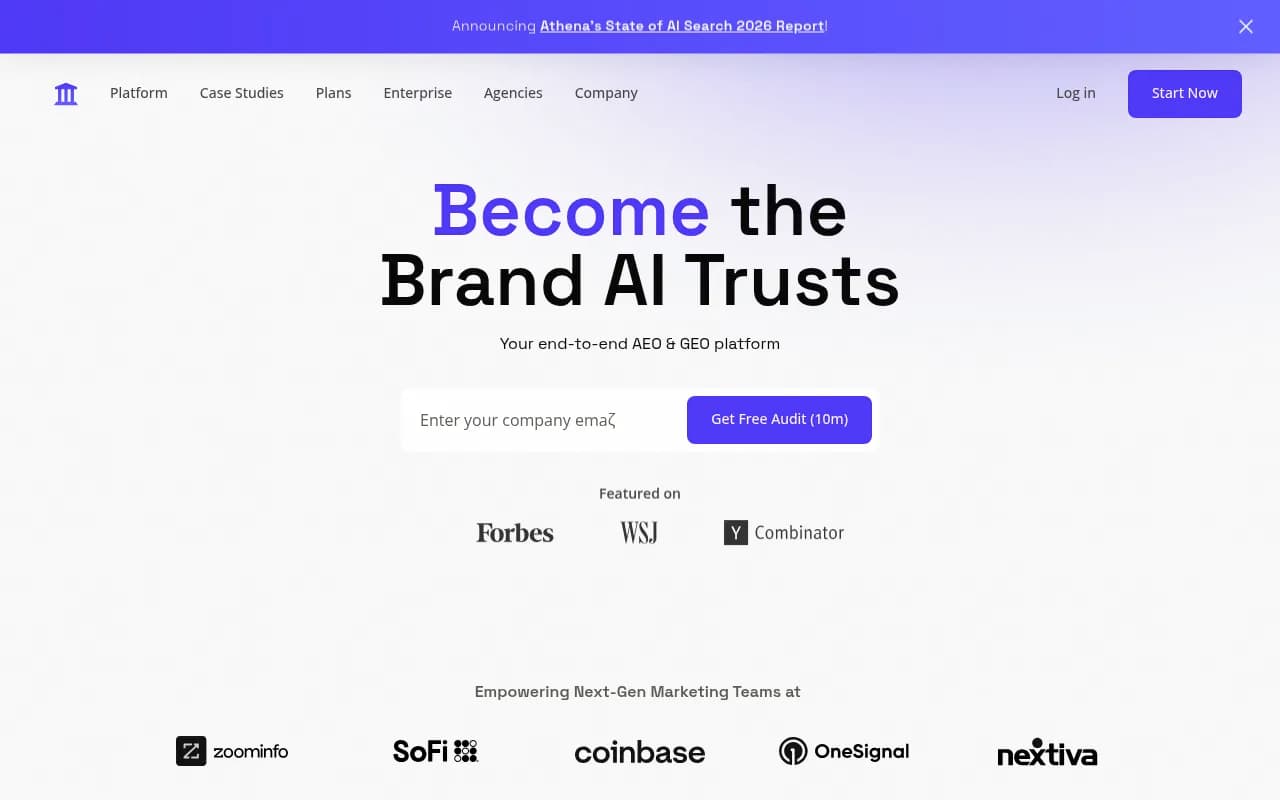
Athena HQ focuses on tracking brand visibility across 8+ AI search engines with a clean, accessible interface. It's a good fit for B2B marketing teams that want to understand their share of voice across AI models without a steep learning curve.
Where it falls short is on the action side. Like several tools in this category, Athena HQ is primarily a monitoring dashboard. It'll show you where you're visible and where you're not, but the path from insight to improved visibility requires you to take that data elsewhere.
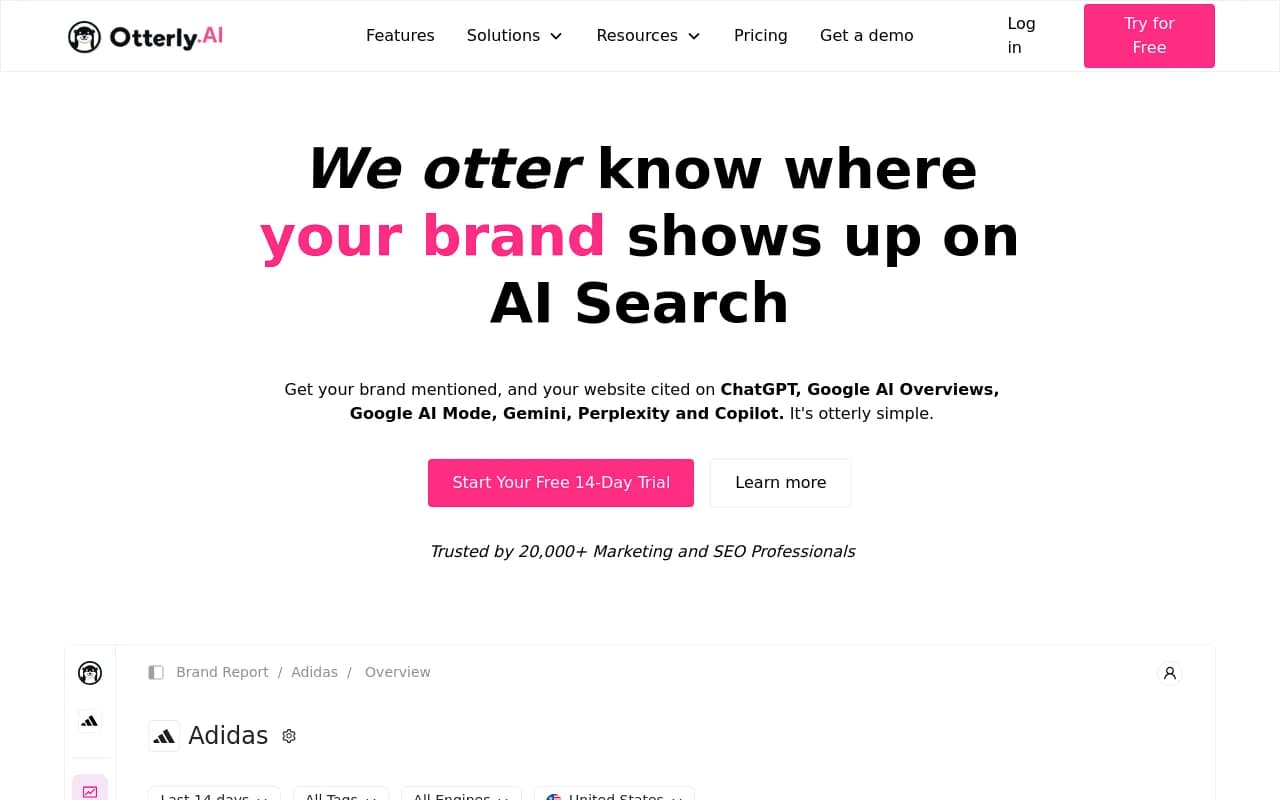
5. Otterly.AI -- best for small B2B teams on a budget
Otterly.AI is one of the more affordable options in the category, and it covers the basics well: AI mention tracking, citation alerts, and basic competitor benchmarking. For a small B2B marketing team that just wants to start tracking AI visibility without a major investment, it's a reasonable starting point.
The ceiling is relatively low, though. There's no crawler log access, no content generation, and the prompt analytics are fairly surface-level. It works as an entry point but most growing B2B teams will outgrow it within a year.
6. Writesonic -- best for content-first teams
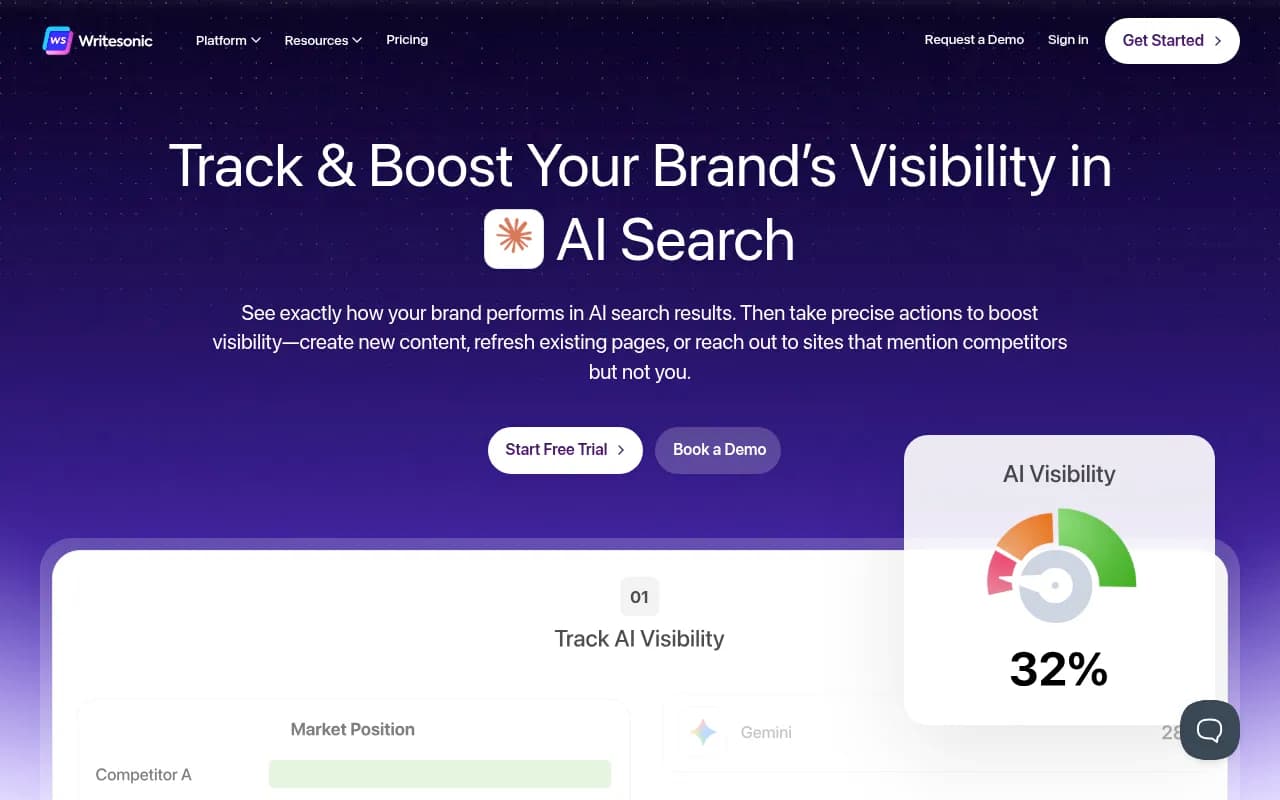
Writesonic has evolved from a general AI writing tool into something more specifically focused on AI search visibility. Its AEO (Answer Engine Optimization) features let you identify gaps in your content relative to what AI models are citing, then generate optimized content directly within the platform.
For B2B content teams that are already producing a lot of written content and want to make it more AI-search-friendly, Writesonic is a practical choice. It's less suited for teams that need deep competitive analytics or technical monitoring features like crawler logs.
7. Peec AI -- best for multi-language B2B brands
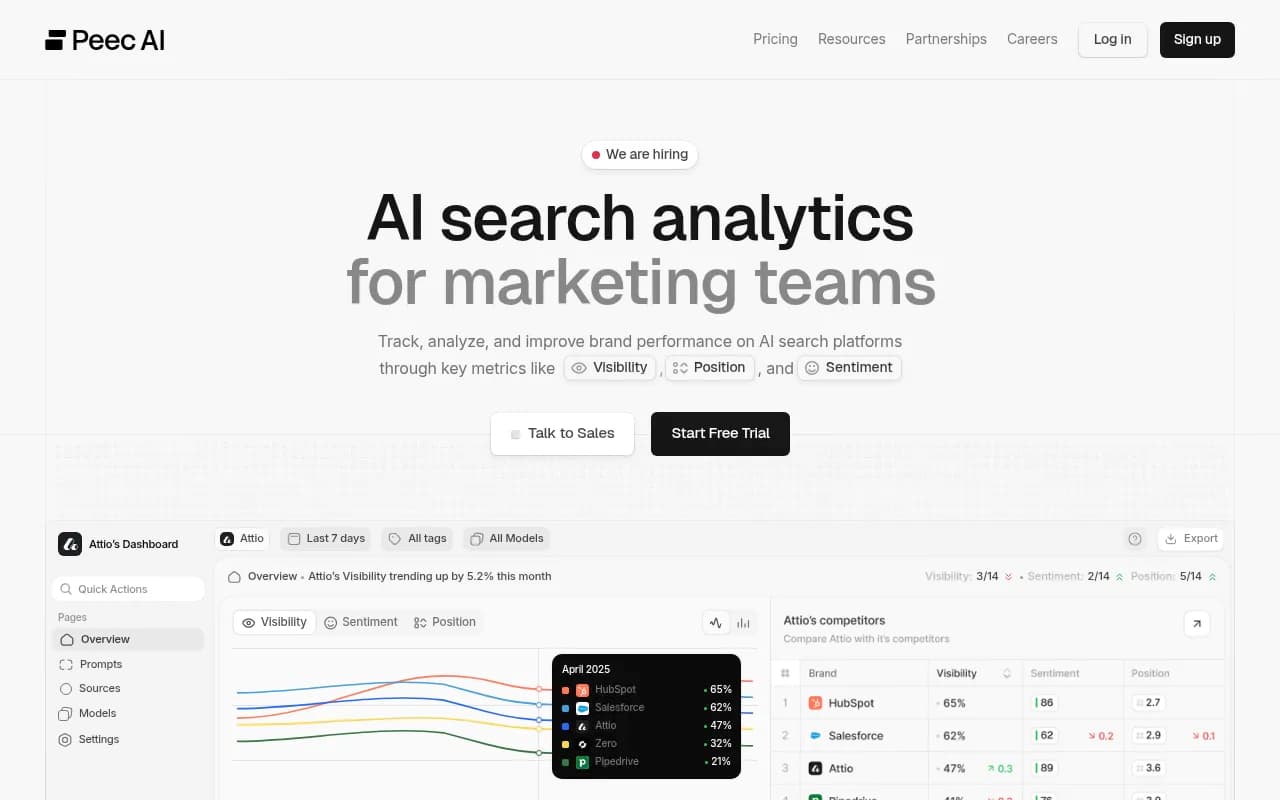
Peec AI is worth considering specifically for B2B companies operating across multiple markets and languages. Its multi-language AI visibility tracking is more mature than most competitors, and it handles regional prompt variations reasonably well.
The platform covers the core monitoring use cases -- brand mentions, citation tracking, competitor benchmarking -- and the interface is approachable. Like Otterly.AI, it's more of a monitoring tool than an optimization platform, but for international B2B teams the language coverage alone can justify the investment.
8. Scrunch AI -- best for agencies managing B2B clients
Scrunch AI is built with agency workflows in mind. It supports multi-client management, white-label reporting, and covers the major AI models for brand mention and citation tracking. For agencies that manage AI visibility for B2B clients, the reporting features are genuinely useful for demonstrating value.
The platform is monitoring-focused, so agencies will still need a separate content strategy and creation process. But as a reporting and tracking layer for client work, it's well-designed.
How these tools compare
Here's a side-by-side view of the key capabilities that matter most for B2B teams:
| Tool | AI models covered | Content generation | Crawler logs | Competitor benchmarking | Best for |
|---|---|---|---|---|---|
| Promptwatch | 10 | Yes (AI writing agent) | Yes | Yes (with heatmaps) | Full optimization loop |
| Profound AI | 6+ | No | No | Yes | Enterprise analytics |
| SE Visible | 5+ | No | No | Yes | SE Ranking users |
| Athena HQ | 8+ | No | No | Yes | Multi-LLM monitoring |
| Otterly.AI | 5+ | No | No | Basic | Budget monitoring |
| Writesonic | 4+ | Yes | No | Limited | Content-first teams |
| Peec AI | 5+ | No | No | Yes | Multi-language brands |
| Scrunch AI | 5+ | No | No | Yes | Agency reporting |
The pattern is pretty clear: most tools are monitoring dashboards. They show you data. Promptwatch and Writesonic are the exceptions that also help you do something with it -- and Promptwatch goes further with crawler logs, traffic attribution, and prompt-level intelligence.
What to actually look for when evaluating these tools
Prompt-level analytics, not just brand mentions
Brand mention tracking tells you whether your name appeared somewhere. Prompt-level analytics tell you which specific questions are driving (or not driving) visibility, how competitive each prompt is, and what volume of queries it represents. For B2B, where the prompts are specific and the competition is often narrow, this distinction matters a lot.
Competitor citation data
Knowing that you're not visible is less useful than knowing that your competitor is visible instead of you, and for which specific prompts. The best tools show you both sides of that picture.
Traffic attribution
This is where a lot of tools fall down. Tracking AI visibility is only half the story -- you also need to know whether that visibility is driving actual traffic and conversions. Look for tools that connect AI citations to site visits, whether through a code snippet, Google Search Console integration, or server log analysis.
Coverage of the right AI models
Not all AI models matter equally for your audience. B2B buyers tend to use ChatGPT and Perplexity heavily for research. Google AI Overviews matters if you have significant organic search traffic. Make sure the tool you choose covers the models your buyers actually use, not just the ones that are easiest to monitor.
Content gap analysis
The most actionable feature in this category is showing you exactly which prompts your competitors are winning that you're losing. Tools that surface these gaps -- with specifics, not just vague topic suggestions -- save weeks of manual research.
A note on traditional SEO tools
You might be wondering whether Semrush or Ahrefs already covers this. The short answer is: partially, but not deeply enough for B2B teams that are serious about AI visibility.
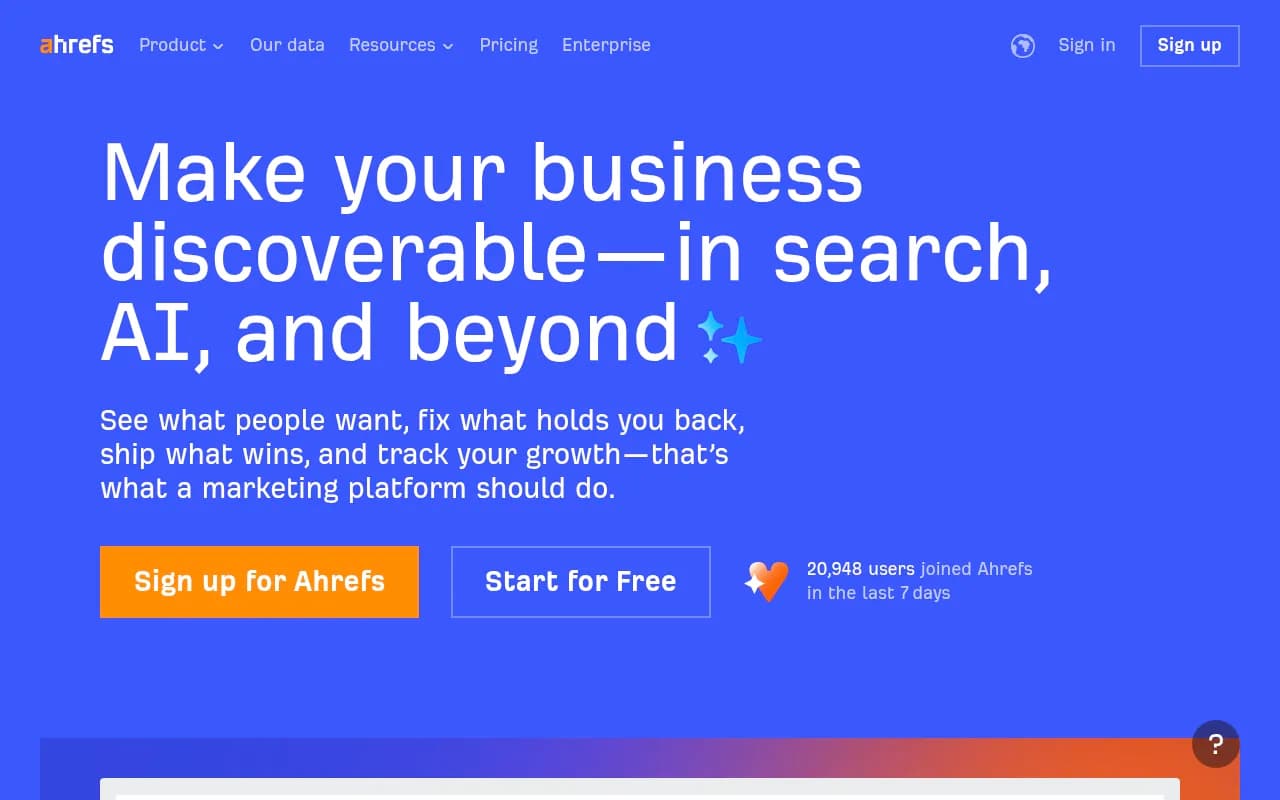
Semrush has added AI visibility features, and they're useful for teams already embedded in the Semrush ecosystem. But the prompt tracking uses fixed prompt sets rather than letting you define the specific queries your buyers use, and there's no AI traffic attribution. Ahrefs Brand Radar has similar limitations -- fixed prompts, no traffic attribution, and the AI search features feel bolted on rather than core to the product.
For B2B teams where AI visibility is a genuine strategic priority, a dedicated tool will outperform the AI features in a traditional SEO platform.
Getting started: a practical approach
If you're new to AI visibility tracking, here's a reasonable sequence:
-
Start by identifying the 20-30 prompts that matter most to your B2B buyers. Think about the questions they ask at the beginning of a buying process -- comparison queries, "best X for Y" queries, and category-definition questions.
-
Run those prompts manually in ChatGPT, Perplexity, and Google AI Overviews. Note who's being cited and whether your brand appears. This gives you a baseline before you invest in tooling.
-
Choose a tool based on your team's capacity. If you have analysts who can interpret raw data, Profound is worth evaluating. If you need the tool to guide your content strategy, Promptwatch's gap analysis and content generation features will save significant time.
-
Set up competitor tracking from day one. The most valuable insights usually come from seeing where competitors are winning, not just where you're losing.
-
Connect visibility to revenue. Make sure whatever tool you choose has some mechanism for attributing AI-driven traffic to business outcomes. Otherwise you're optimizing for a metric that no one in finance will care about.
The B2B companies that are winning in AI search right now aren't doing anything exotic. They're producing clear, specific, well-structured content that directly answers the questions their buyers ask. The tools above help you figure out which questions to answer and whether your answers are working.