Key takeaways
- Traditional SEO tools don't track how AI models like ChatGPT, Perplexity, or Claude describe your brand -- you need a dedicated AI visibility tracker for that.
- The best tools go beyond monitoring: they show you which prompts competitors rank for that you don't, then help you create content to close those gaps.
- Promptwatch is the only platform in 2026 rated as a "Leader" across all categories in head-to-head comparisons -- it covers 10 AI models, includes crawler logs, and has a built-in AI writing agent.
- Most competitors (Otterly.AI, Peec.ai, AthenaHQ) are monitoring-only dashboards -- useful for awareness, but they leave you to figure out the fix yourself.
- Your choice should depend on whether you need basic tracking, competitive intelligence, or a full optimization loop.
Why brand visibility in AI search is now a separate problem
A year or two ago, ranking on Google's first page was the game. Now it's more complicated. A growing share of users ask ChatGPT for product recommendations, use Perplexity to research vendors, and read Google AI Overviews without scrolling to the actual results. If your brand isn't being cited in those answers, you're invisible to a chunk of your audience -- and you probably don't even know it.
That's the uncomfortable part. Traditional SEO tools like Semrush and Ahrefs are excellent at what they do, but they weren't built to answer questions like: "Does Claude recommend us when someone asks for the best project management tool?" or "Which of our pages does ChatGPT actually cite?" Those are fundamentally different questions, and they require a different category of tool.
AI visibility trackers work by running queries against LLMs (ChatGPT, Perplexity, Gemini, Claude, and others) and recording whether your brand appears, how it's described, and which sources get cited. Some stop there. The better ones tell you what to do next.
This guide covers the tools worth your time in 2026, ranked by how much they actually help you improve -- not just observe.
What to look for in an AI visibility tracker
Before getting into specific tools, it helps to know what separates a useful platform from a dashboard that just generates anxiety.
The core features that matter:
- LLM coverage: Does it monitor ChatGPT, Perplexity, Claude, Gemini, Google AI Overviews, and the others? More coverage means fewer blind spots.
- Prompt tracking: Can you define specific queries to track, or are you stuck with whatever the tool decides to monitor?
- Competitor benchmarking: Can you see how your visibility compares to specific competitors for the same prompts?
- Content gap analysis: Does it show you which prompts your competitors rank for that you don't?
- Content generation: Can it help you create content engineered to get cited -- not just tell you what's missing?
- Crawler logs: Does it show you which AI crawlers are visiting your site, which pages they read, and how often?
- Traffic attribution: Can you connect AI visibility to actual website traffic and revenue?
The last three are where most tools fall short. Monitoring is table stakes. Optimization is the hard part.
The tools, ranked
1. Promptwatch -- best overall
Promptwatch is the most complete AI visibility platform available right now. It monitors 10 AI models (ChatGPT, Perplexity, Claude, Gemini, Google AI Overviews, Google AI Mode, Grok, DeepSeek, Copilot, and Meta AI), which is more than any competitor covers.
What separates it from the rest is the action loop. Most tools show you data and stop. Promptwatch shows you which prompts competitors appear for that you don't (Answer Gap Analysis), then uses a built-in AI writing agent to generate articles, listicles, and comparisons grounded in real citation data -- 880M+ citations analyzed. Then it tracks whether your new content starts getting cited. That full cycle -- find gaps, create content, track results -- is what makes it an optimization platform rather than a monitoring dashboard.
A few specific capabilities worth calling out: real-time AI crawler logs (so you can see which pages ChatGPT or Perplexity are actually reading), prompt volume and difficulty scoring, Reddit and YouTube citation tracking (most competitors ignore these entirely), ChatGPT Shopping tracking, and traffic attribution via GSC integration or server log analysis.
Used by 6,700+ brands including Booking.com and Center Parcs. Pricing starts at $99/month for the Essential plan (1 site, 50 prompts, 5 articles), with Professional at $249/month and Business at $579/month. Free trial available.

2. Profound -- best for enterprise teams
Profound is a strong enterprise-grade option with solid LLM monitoring and competitive intelligence features. It covers the major AI models and gives marketing teams a clear view of brand visibility trends over time. The interface is polished and the data is reliable.
Where it falls short: no content generation, no Reddit tracking, and pricing sits at the higher end of the market. It's a good fit for large brands that want a dedicated monitoring layer and have separate content teams to act on the insights.
3. Otterly.AI -- best budget monitoring tool
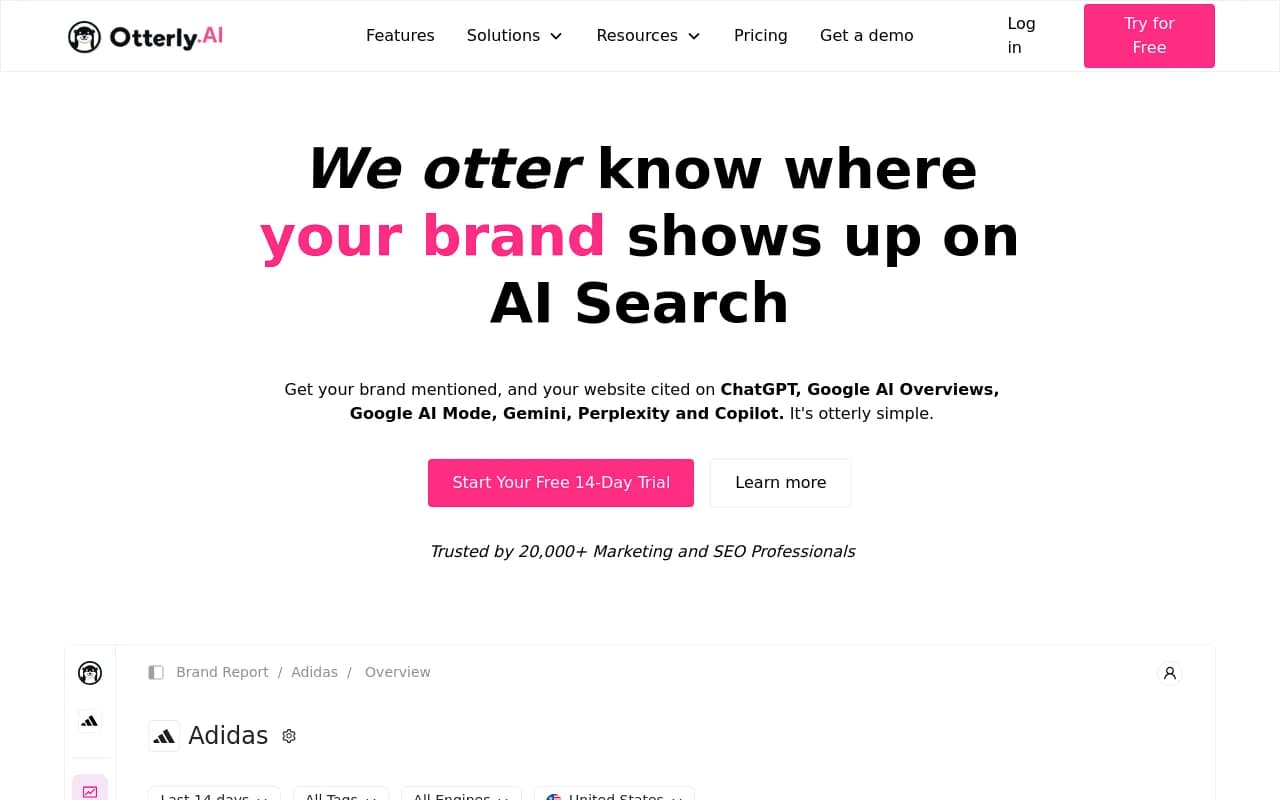
Otterly.AI is one of the more affordable options for teams that just want to start tracking AI visibility without a big commitment. Setup is quick, the interface is clean, and it covers the main LLMs.
The trade-off is depth. There's no crawler log data, no content gap analysis, no AI writing features, and no traffic attribution. It's a monitoring tool, full stop. Fine for early-stage awareness, but you'll outgrow it once you want to actually do something with the data.
4. Peec AI -- best for multi-language tracking
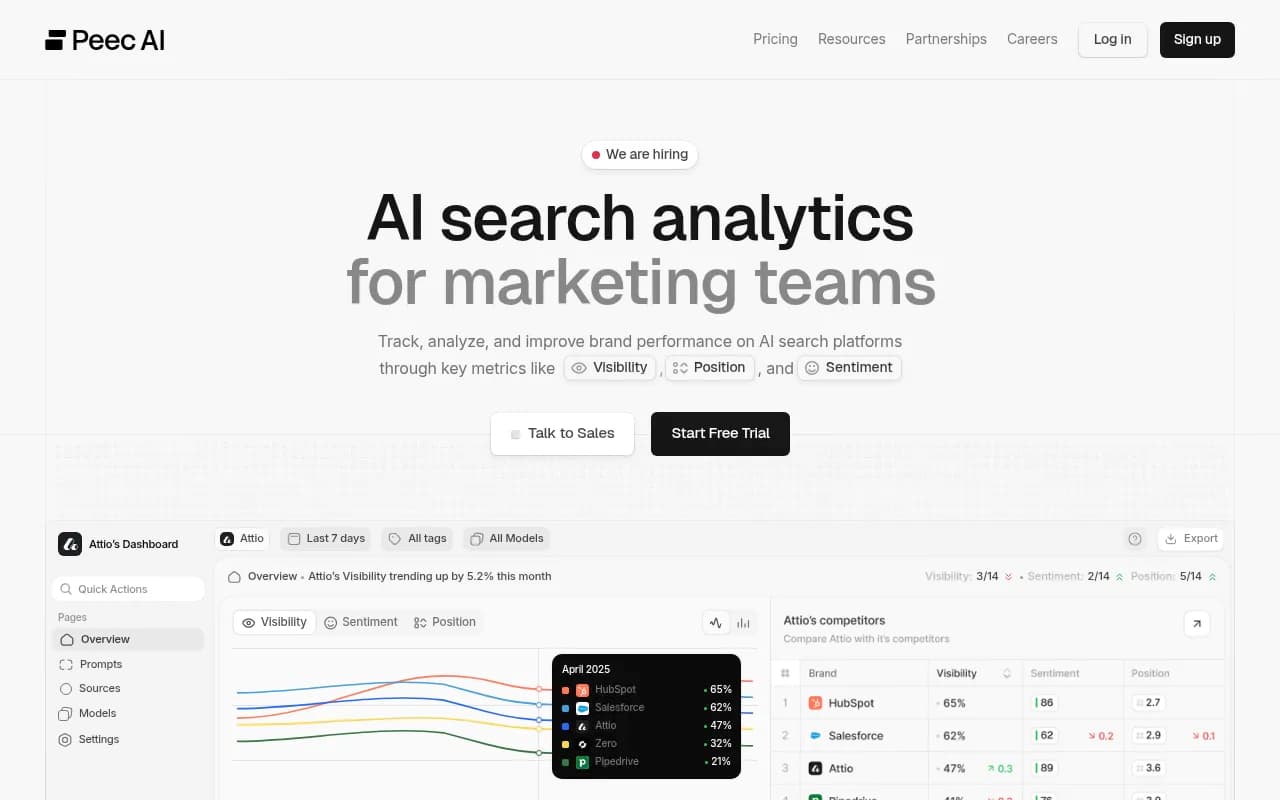
Peec.ai has built a genuinely useful multi-language AI visibility platform. If your brand operates across multiple countries and languages, it handles that complexity better than most. Prompt tracking, brand mention monitoring, and competitor benchmarking are all solid.
Like Otterly, it's primarily a monitoring tool -- no content generation or crawler logs. But for international teams that need visibility across languages, it's one of the better-suited options in the market.
5. AthenaHQ -- solid monitoring, limited optimization
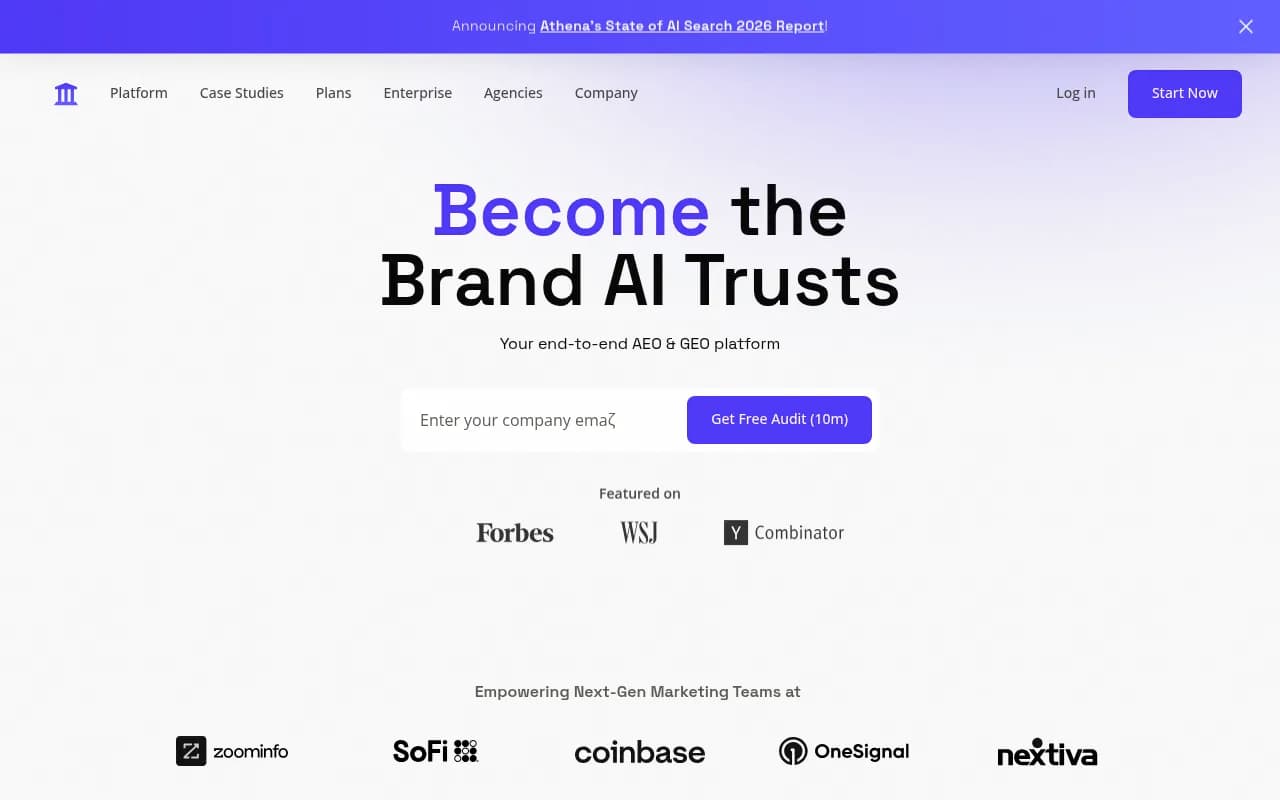
AthenaHQ covers 8+ AI search engines and gives you a clear brand visibility score with competitor comparisons. The UI is well-designed and the data is easy to interpret.
The gap is on the action side. AthenaHQ is monitoring-focused -- it shows you where you stand but doesn't help you improve your position. No content generation, no crawler logs, no gap analysis that surfaces specific missing content. For teams that already have a content strategy and just need visibility data to inform it, it works. For teams that want the platform to help them fix things, it doesn't go far enough.
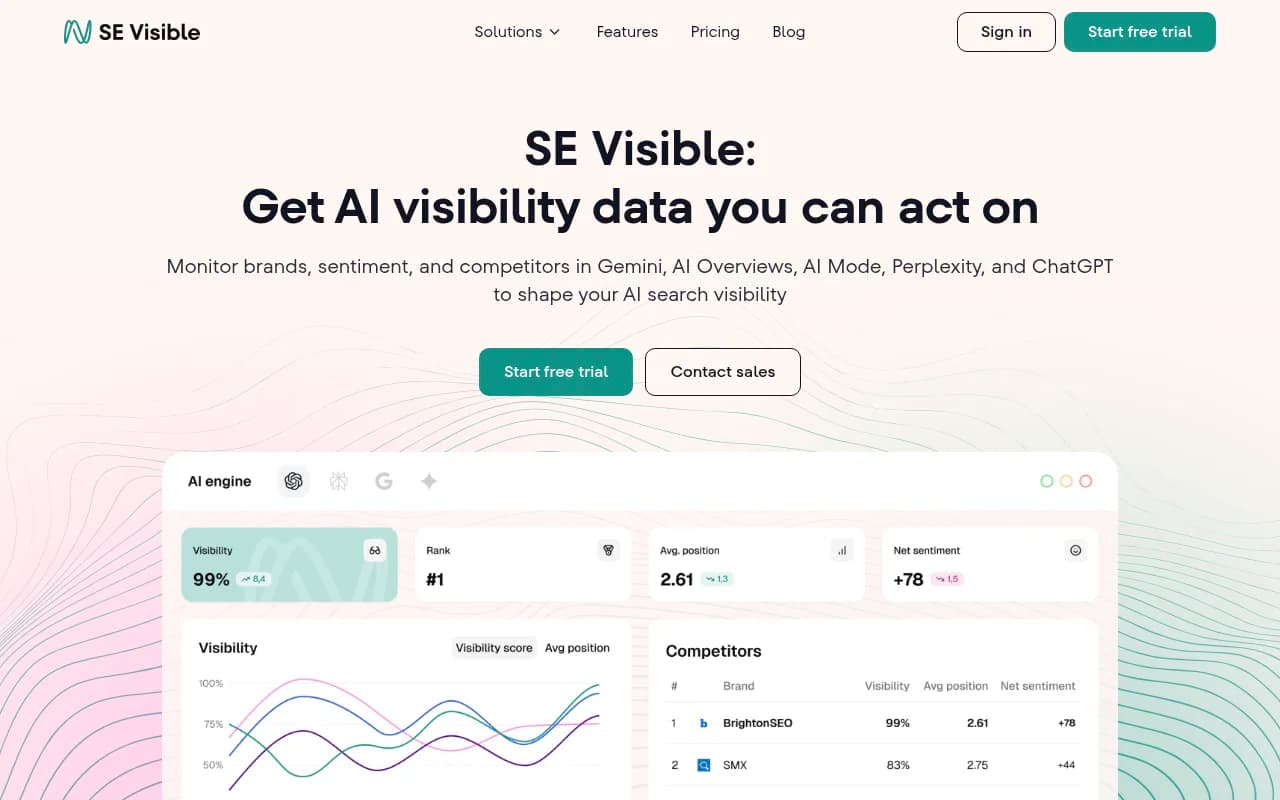
6. SE Visible -- best for teams already using SE Ranking
SE Visible is SE Ranking's dedicated AI visibility product. If your team already uses SE Ranking for traditional SEO, the integration is a natural fit -- you get AI visibility data alongside your existing keyword rankings and site audit data in one place.
Standalone, it's a competent monitoring tool with brand mention tracking, sentiment analysis, and LLM coverage across the main models. It doesn't have the depth of Promptwatch or Profound, but the SEO-plus-AI-visibility combo makes it worth considering for teams that want to consolidate tools.
7. Scrunch AI -- good for agencies managing multiple brands
Scrunch AI is built with agency workflows in mind. Multi-brand management, white-label reporting, and client-facing dashboards are all handled reasonably well. LLM monitoring covers the main models and the competitive benchmarking is useful for client reporting.
Content optimization features are limited, and there's no crawler log data. But for agencies that need to show clients their AI visibility status across multiple brands, it's a practical choice.
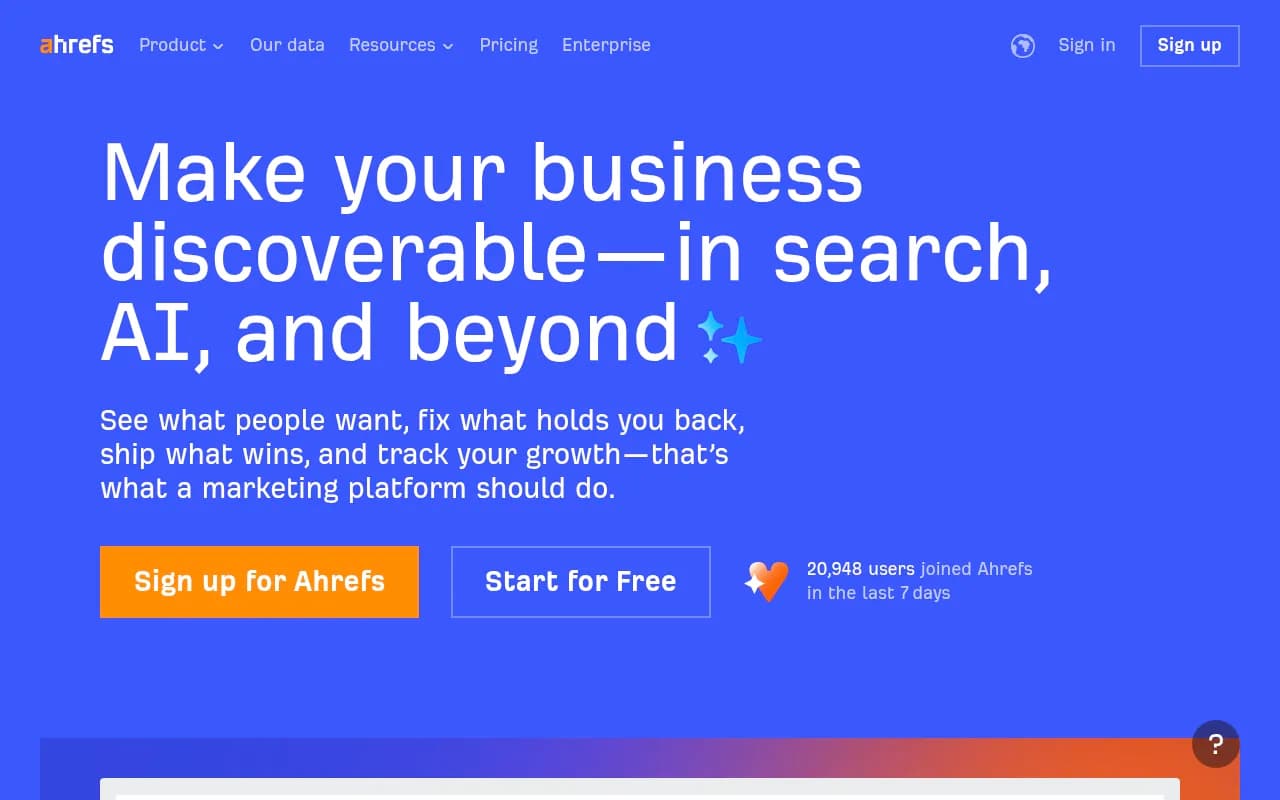
8. Ahrefs Brand Radar -- best for teams already on Ahrefs
Ahrefs Brand Radar is the AI visibility add-on for Ahrefs users. It tracks brand mentions across AI search and gives you a sense of how often you're being cited relative to competitors. The Ahrefs data ecosystem around it (backlinks, keywords, content explorer) is genuinely useful context.
The limitations are real though: fixed prompts (you can't customize what queries get tracked), no AI traffic attribution, and no content generation. It's a starting point for Ahrefs users, not a replacement for a dedicated AI visibility platform.
9. Semrush -- traditional SEO with AI visibility add-ons
Semrush has added AI visibility features to its platform, and for teams that live in Semrush, having some AI monitoring data in the same interface has obvious appeal. The breadth of Semrush's traditional SEO data is unmatched.
But the AI visibility features are clearly secondary. Fixed prompts, limited LLM coverage, and no content optimization tools specifically designed for AI search. Semrush is still the best traditional SEO platform -- it's just not where you'd go if AI visibility is your primary concern.
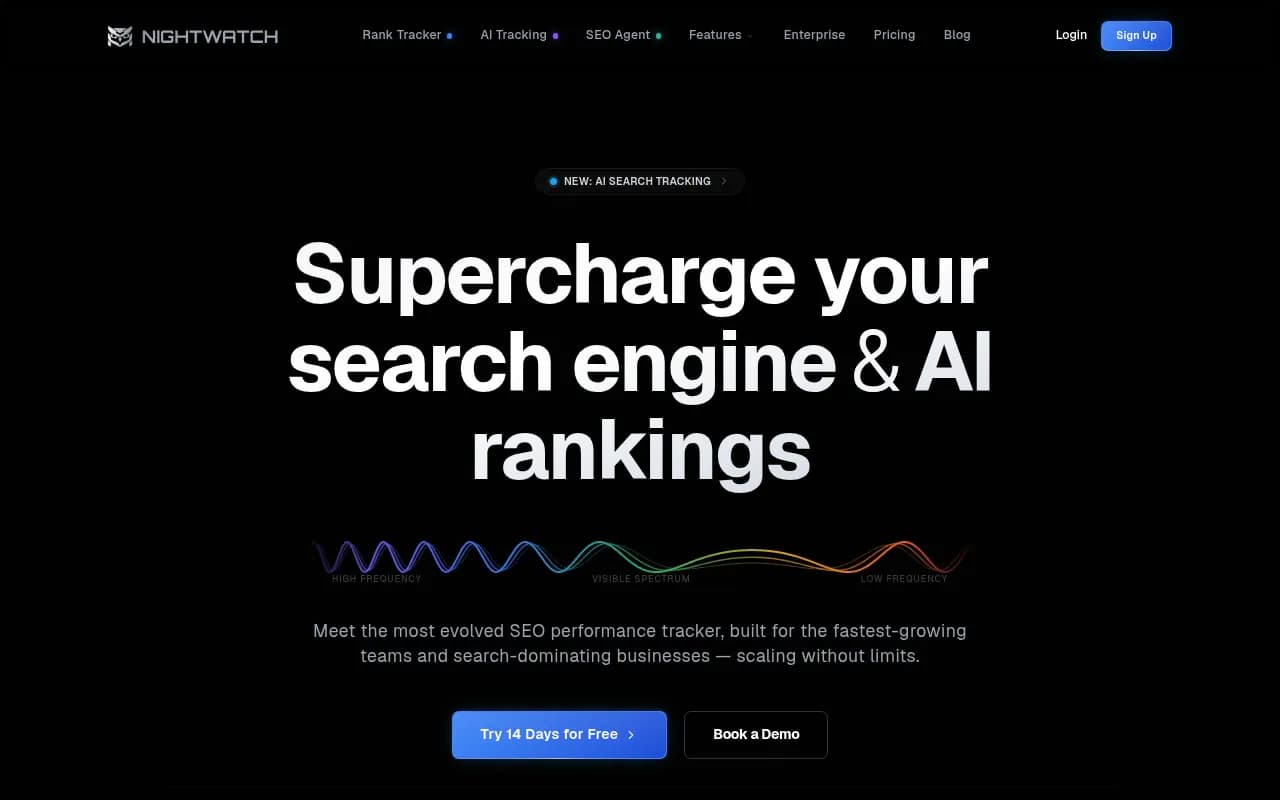
10. Nightwatch -- good for AI Overview tracking
Nightwatch has added AI search monitoring to its rank tracking product, with a particular focus on Google AI Overviews. If Google AI Overviews is your main concern (rather than ChatGPT or Perplexity), Nightwatch is worth a look -- the integration with traditional rank tracking is clean.
For broader LLM monitoring across multiple AI models, it's less comprehensive than the dedicated platforms above.
Comparison table
| Tool | LLMs covered | Content generation | Crawler logs | Competitor gap analysis | Reddit/YouTube tracking | Starting price |
|---|---|---|---|---|---|---|
| Promptwatch | 10 | Yes (built-in AI writer) | Yes | Yes | Yes | $99/mo |
| Profound | 6+ | No | No | Limited | No | Higher |
| Otterly.AI | 5+ | No | No | Basic | No | Low |
| Peec AI | 5+ | No | No | Basic | No | Mid |
| AthenaHQ | 8+ | No | No | Basic | No | Mid |
| SE Visible | 5+ | No | No | Limited | No | Mid |
| Scrunch AI | 5+ | No | No | Limited | No | Mid |
| Ahrefs Brand Radar | 3-4 | No | No | No | No | Add-on |
| Semrush | 3-4 | No | No | No | No | Add-on |
| Nightwatch | 3-4 | No | No | No | No | Low-Mid |
The monitoring-vs-optimization gap
This is the thing most comparisons gloss over. Almost every tool in this category can tell you that your brand appeared in 12% of relevant ChatGPT responses last month. That's useful to know. But what do you do with it?
Most platforms leave you to figure that out. You see the number, you feel vaguely concerned, and then you're back to guessing what content to write or which pages to optimize.
The tools that actually move the needle are the ones that close that loop. Specifically: showing you which exact prompts competitors rank for that you don't, surfacing the specific topics and questions your site is missing, and then helping you create content that's engineered to get cited -- not just generic blog posts, but content built around real citation data and prompt volumes.
That's the distinction between a monitoring dashboard and an optimization platform. Right now, only a small number of tools in this space have crossed that line.
How to choose the right tool for your situation
A few honest recommendations based on team type:
If you're a small marketing team just starting to understand AI visibility, Otterly.AI or Peec AI give you a low-cost way to see where you stand. Expect to outgrow them.
If you're a mid-size brand that wants to actually improve your AI visibility -- not just track it -- Promptwatch is the clearest choice. The Answer Gap Analysis and built-in content generation mean you're not just watching a number, you're doing something about it.
If you're an agency managing multiple clients, Scrunch AI handles multi-brand workflows reasonably well, though Promptwatch also has agency and enterprise pricing with custom configurations.
If you're an enterprise with a dedicated SEO team and existing Ahrefs or Semrush contracts, the Brand Radar and AI visibility add-ons are a reasonable starting point -- just know their limitations before you commit to them as your primary AI visibility layer.
If you're operating across multiple countries and languages, Peec AI's multi-language support is worth prioritizing.
What the research shows about this market
One pattern that comes up consistently across independent reviews: the tools that get the most positive coverage are the ones that help users take action, not just observe. A Reddit thread from the B2B marketing community noted that many AI visibility tools feel like "dashboards that generate anxiety" -- you see that competitors are outranking you in ChatGPT responses, but the tool gives you no clear path to fix it.
That's a real problem with how most of this category is built. The monitoring layer is relatively easy to build. Running queries against LLMs, recording brand mentions, building a dashboard -- that's table stakes. The hard part is the optimization layer: understanding why certain content gets cited, what gaps exist in your coverage, and how to generate content that actually performs in AI search.
That's where the market is headed, and it's the right question to ask of any tool you're evaluating: "After I see the data, what does this platform help me do about it?"
Final thoughts
AI search visibility is no longer optional for brands that care about organic reach. The share of users who get their answers from ChatGPT, Perplexity, and Google AI Overviews is large enough that being invisible in those channels is a real business problem.
The good news is the tooling has matured quickly. You don't need to guess whether your brand is being cited -- you can measure it, benchmark it against competitors, and now, with the right platform, systematically improve it.
The tools in this guide cover the range from basic monitoring to full optimization. Where you start depends on your budget and goals. Where you end up, if you're serious about AI search, is somewhere that does more than just show you numbers.