Key takeaways
- Promptwatch is the most complete option if you need more than monitoring -- it tracks visibility across 10 AI models and includes content gap analysis, AI writing tools, crawler logs, and traffic attribution in one platform.
- LLMrefs is the best value for pure tracking -- $79/mo for 500 prompts with no seat limits, covering ChatGPT, Claude, Grok, Meta AI, and more.
- Otterly.AI is the cheapest entry point at $29/mo, good for small teams that just want to know if they're showing up.
- Semrush makes sense if you're already paying for it -- the AI Visibility add-on is useful, but it's a bolt-on to an SEO suite, not a dedicated GEO tool.
- Peec.ai is worth considering for multi-language, multi-country tracking with a clean interface that marketing teams tend to like.
- Scrunch AI and SE Ranking sit in the mid-market, both solid but with different strengths -- Scrunch for deeper competitive analysis, SE Ranking for teams that want traditional SEO and AI visibility in one place.
Radarkit does a decent job at what it promises: track your brand's visibility across ChatGPT, Perplexity, Gemini, and Google AI Overviews, with sentiment analysis and some content optimization features baked in. For a tool that appears to start around $29/mo, it covers a lot of ground.
But there are real reasons people look elsewhere. Radarkit's pricing isn't publicly listed beyond the trial, which makes budgeting awkward. The platform covers six AI models -- useful, but some competitors track ten or more. And if you want to go beyond monitoring into actually fixing your visibility gaps with AI-generated content, the tool's optimization features are relatively light compared to what some alternatives now offer.
There's also the question of scale. If you're managing multiple brands or client accounts, Radarkit's structure may not fit. And if you want crawler log analysis, Reddit/YouTube citation tracking, or traffic attribution that connects AI visibility to actual revenue, you'll need to look at more capable platforms.
Here's an honest look at the best alternatives.
Promptwatch

Promptwatch is the most fully-featured GEO platform in this comparison -- and the one that goes furthest beyond just showing you a dashboard. Most tools in this space will tell you where you're invisible. Promptwatch tells you why, and then helps you do something about it.
The core workflow is what sets it apart. The Answer Gap Analysis identifies specific prompts where competitors are getting cited but you're not. You see the exact content your site is missing -- the questions, angles, and topics that AI models want to answer but can't find on your pages. From there, the built-in AI writing agent generates articles, listicles, and comparison pages grounded in real citation data (over 880 million citations analyzed). This isn't generic content -- it's structured to get picked up by ChatGPT, Claude, Perplexity, and others. Then you track whether it works, at the page level, with traffic attribution via GSC integration, a code snippet, or server log analysis.
That loop -- find gaps, create content, measure results -- is genuinely different from what Radarkit and most other tools offer.
A few other things worth knowing: Promptwatch monitors 10 AI models (including Grok, DeepSeek, Meta AI, and Mistral, which Radarkit doesn't cover). It has real-time AI crawler logs showing which pages ChatGPT, Claude, and Perplexity are actually reading on your site. It tracks Reddit and YouTube citations, which matter more than most people realize because AI models frequently pull from those sources. And it has ChatGPT Shopping tracking for brands that sell products.
The trade-off is price. Radarkit appears to start around $29/mo. Promptwatch's Essential plan is $99/mo (1 site, 50 prompts, 5 articles), Professional is $249/mo (2 sites, 150 prompts, 15 articles, crawler logs), and Business is $579/mo (5 sites, 350 prompts, 30 articles). There's a 7-day free trial. For a solo blogger or tiny startup, the price gap is real. For a marketing team or agency that needs to actually move the needle on AI visibility, the gap closes fast when you factor in what you'd otherwise spend on separate tools.
Promptwatch is used by 6,700+ brands including Booking.com and Center Parcs, and has been cited in the Wall Street Journal.
Best for: Marketing teams, SEO teams, and agencies that want to track AI visibility AND improve it -- not just watch the numbers.
LLMrefs
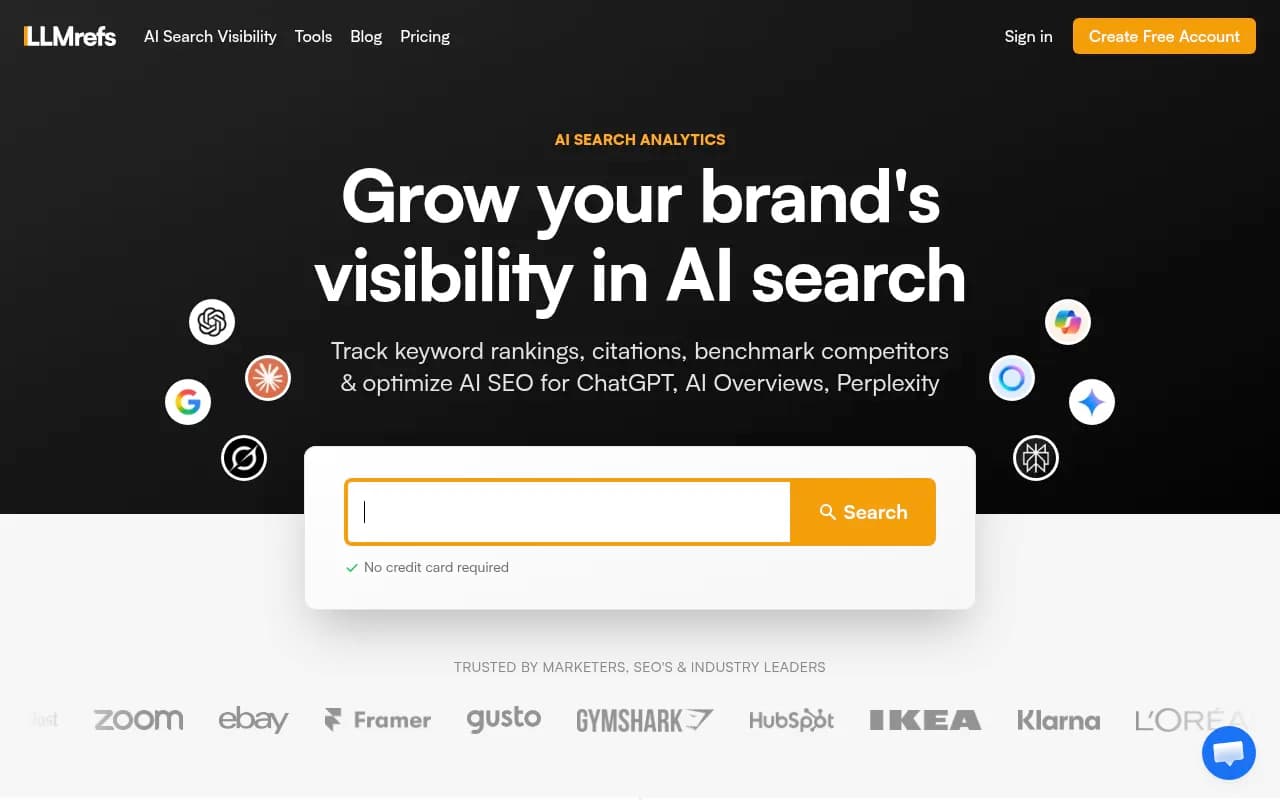
LLMrefs takes a different approach to pricing that's genuinely refreshing: $79/mo for 500 prompts, unlimited projects, and unlimited team seats. No per-seat fees, no per-project limits. That's a strong value proposition, especially for agencies managing multiple clients.
Coverage is broad -- ChatGPT, Claude, Grok, Meta AI, Gemini, Perplexity, Google AI Overviews, Google AI Mode, and Copilot. That's more models than Radarkit covers, and the 500-prompt allowance at $79 is better than what most competitors offer at that price point. The platform tracks keyword rankings, citations, and competitor visibility across 50+ countries.
Where LLMrefs is weaker: it's primarily a tracking and analytics tool. There's no built-in content generation, no crawler logs, and no traffic attribution. You get good data on where you stand, but the "now what?" question is left to you. For teams that have their own content workflows and just need reliable visibility data, that's fine. For teams that want an end-to-end optimization platform, it's not enough.
Compared to Radarkit, LLMrefs covers more AI models and has a cleaner pricing structure. Compared to Promptwatch, it's monitoring-only.
Best for: SEO teams and agencies that want broad AI model coverage and unlimited seats at a predictable flat rate, and who have their own content production process.
Semrush
Semrush is the 800-pound gorilla of digital marketing tools, and it's been adding AI visibility features aggressively. The AI Visibility Toolkit is a real product -- not a checkbox feature -- and it includes brand monitoring across AI search engines, competitor benchmarking, and some content optimization guidance.
The honest case for Semrush: if you're already paying for it (plans start at $165/mo), the AI Visibility add-on at $99/mo gives you AI tracking without switching tools. The integration with Semrush's existing keyword data, backlink analysis, and content tools is genuinely useful for teams that think about AI visibility as part of a broader SEO strategy.
The honest case against: Semrush uses fixed prompt sets rather than letting you define your own, which limits how precisely you can track the queries that actually matter to your business. There's no AI traffic attribution, no crawler logs, and no Reddit/YouTube citation tracking. It's a broad platform that does AI visibility adequately, not a dedicated GEO tool that does it deeply.
Compared to Radarkit, Semrush is significantly more expensive but comes with a full SEO suite. Compared to Promptwatch, it lacks the content generation loop and the depth of AI-specific features.
Pricing: Starter $165/mo, Pro+ $249/mo, Business+ $499/mo. AI Visibility add-on is $99/mo on top of that. 7-day free trial.
Best for: Teams already using Semrush for SEO who want to add AI visibility tracking without managing another tool.
Otterly.AI

Otterly.AI is the budget option in this space, and it's honest about what it is: a monitoring tool. At $29/mo (Lite plan, 15 prompts), it's the cheapest way to get structured AI visibility data. The Standard plan at $189/mo gives you 100 prompts and covers ChatGPT, Perplexity, Google AI Overviews, Google AI Mode, Gemini, and Copilot.
The GEO Audit feature is a nice addition -- it analyzes 25+ on-page factors to show what might be holding your site back from earning more citations. That's more than pure monitoring, even if it's not as deep as Promptwatch's Answer Gap Analysis.
What Otterly.AI doesn't have: content generation, crawler logs, traffic attribution, Reddit/YouTube tracking, or prompt volume/difficulty scoring. It's a visibility dashboard, not an optimization platform. The 14-day free trial (no credit card required) makes it easy to test.
Compared to Radarkit, Otterly.AI is similarly positioned -- both are primarily monitoring tools at accessible price points. Radarkit appears to have slightly more content optimization features; Otterly.AI has a cleaner entry price and a longer free trial.
Best for: Small businesses, solo marketers, or anyone who wants a simple, affordable way to check whether they're showing up in AI search results.
Peec AI
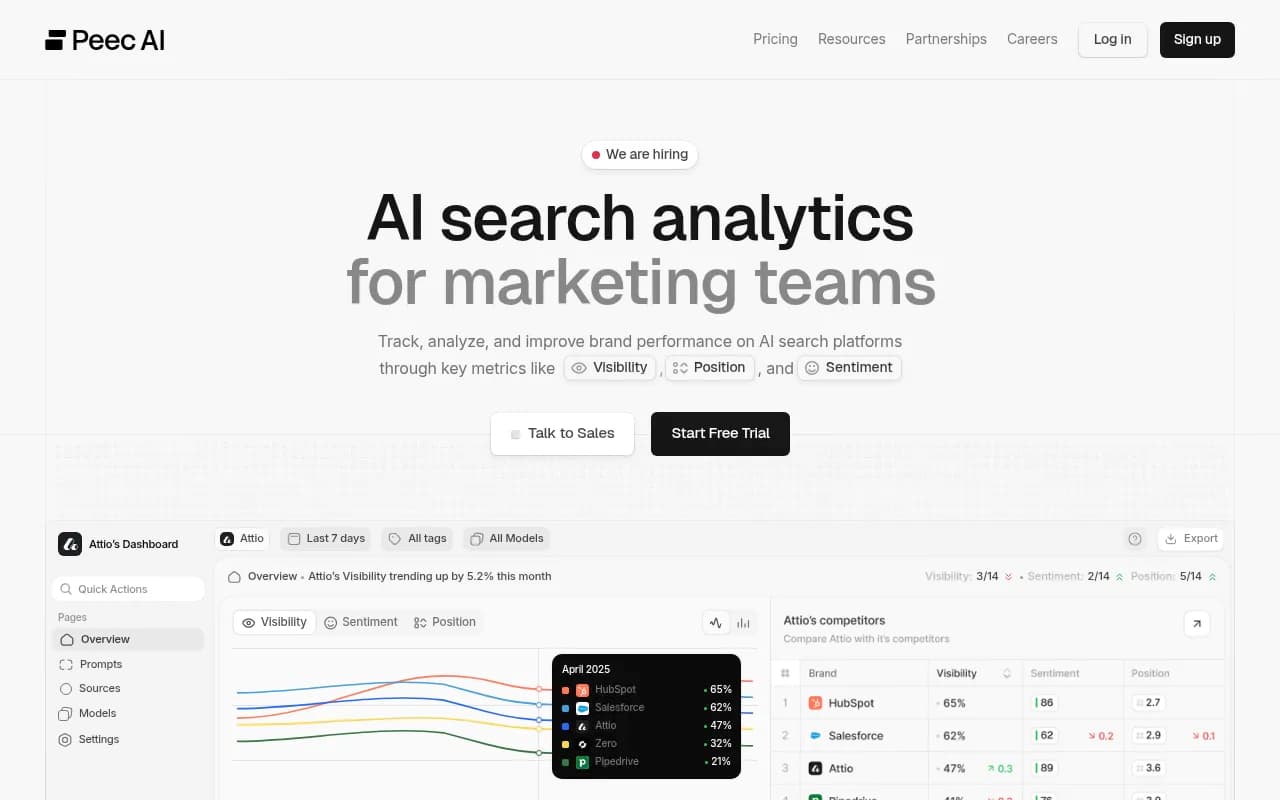
Peec AI has carved out a clear niche: multi-language, multi-country AI visibility tracking with a clean interface that marketing teams actually enjoy using. The Starter plan at €89/mo covers 25 prompts across 3 countries; Professional at €199/mo expands to 75 prompts, 10 countries, and all AI models.
The platform tracks visibility, position, and sentiment across ChatGPT, Perplexity, and Gemini, with competitor benchmarking built in. The UI is notably clean -- this is one of the better-looking tools in the category, which matters more than it should when you're trying to get non-technical stakeholders to engage with the data.
Peec AI is monitoring-focused. There's no content generation, no crawler logs, and no traffic attribution. The multi-language and multi-country support is genuinely strong, though -- if you're a European brand tracking visibility in French, German, Spanish, and English simultaneously, Peec AI handles that better than most.
Compared to Radarkit, Peec AI is more expensive but has stronger international coverage. Compared to Promptwatch, it's monitoring-only but has a cleaner interface.
Best for: Marketing teams at international or European brands who need multi-language AI visibility tracking and want a tool their whole team will actually use.
Profound
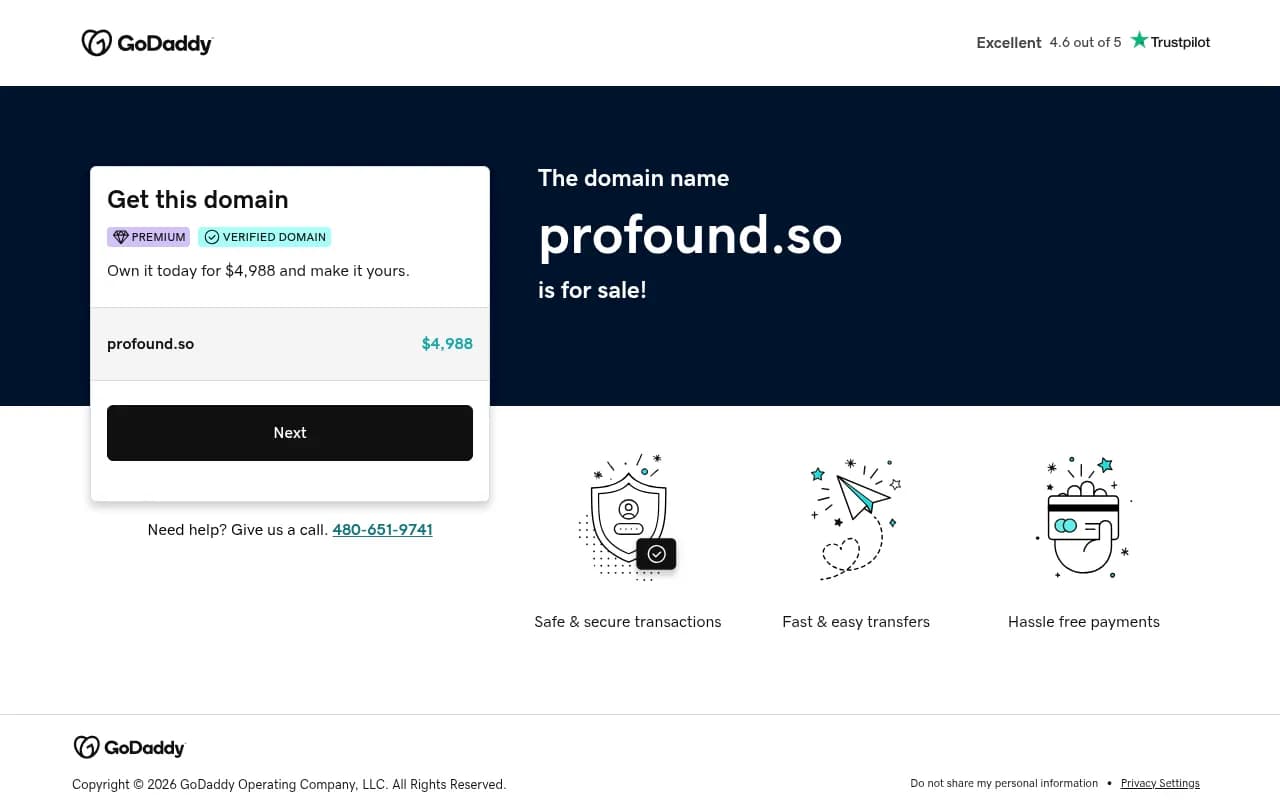
A note upfront: Profound's website (profound.so) appears to be for sale as of March 2026, which raises real questions about the company's status. The domain is listed on GoDaddy for $4,988. This is worth knowing before you consider it as a long-term platform.
Setting that aside, Profound was previously known as a strong enterprise-focused GEO platform with granular prompt tracking, competitive analysis, and solid coverage of major AI models. It was often mentioned alongside Promptwatch as one of the more capable tools in the space, with pricing that started around $99/mo and scaled to $579/mo for larger deployments.
Given the current domain situation, it's hard to recommend Profound with confidence right now. If you were considering it for its enterprise features, Promptwatch covers similar ground with a more stable track record.
Best for: Worth revisiting if the domain situation resolves, but currently not a safe choice for new customers.
Ahrefs Brand Radar
Ahrefs has been repositioning itself as an "AI Marketing Platform" and Brand Radar is its answer to the GEO tracking trend. It's included in Ahrefs plans starting at $83/mo (annual) or $99/mo monthly, which makes it attractive if you're already an Ahrefs user.
Brand Radar tracks brand mentions across AI search engines alongside traditional search, which is a reasonable integration. The Ahrefs ecosystem -- keyword data, backlink analysis, content explorer -- is genuinely powerful, and having AI visibility data in the same place as your SEO data has real workflow benefits.
The limitations are similar to Semrush's: fixed prompts rather than custom ones, no AI traffic attribution, and no content generation. Ahrefs is also primarily a traditional SEO tool that has added AI features, not a GEO-native platform. The depth of AI-specific analysis is shallower than dedicated tools.
Compared to Radarkit, Ahrefs Brand Radar is more expensive as a standalone but cheaper if you're already paying for Ahrefs. Compared to Promptwatch, it lacks the optimization loop entirely.
Best for: Existing Ahrefs users who want to add AI visibility monitoring without switching tools, and who don't need deep GEO optimization features.
SE Ranking
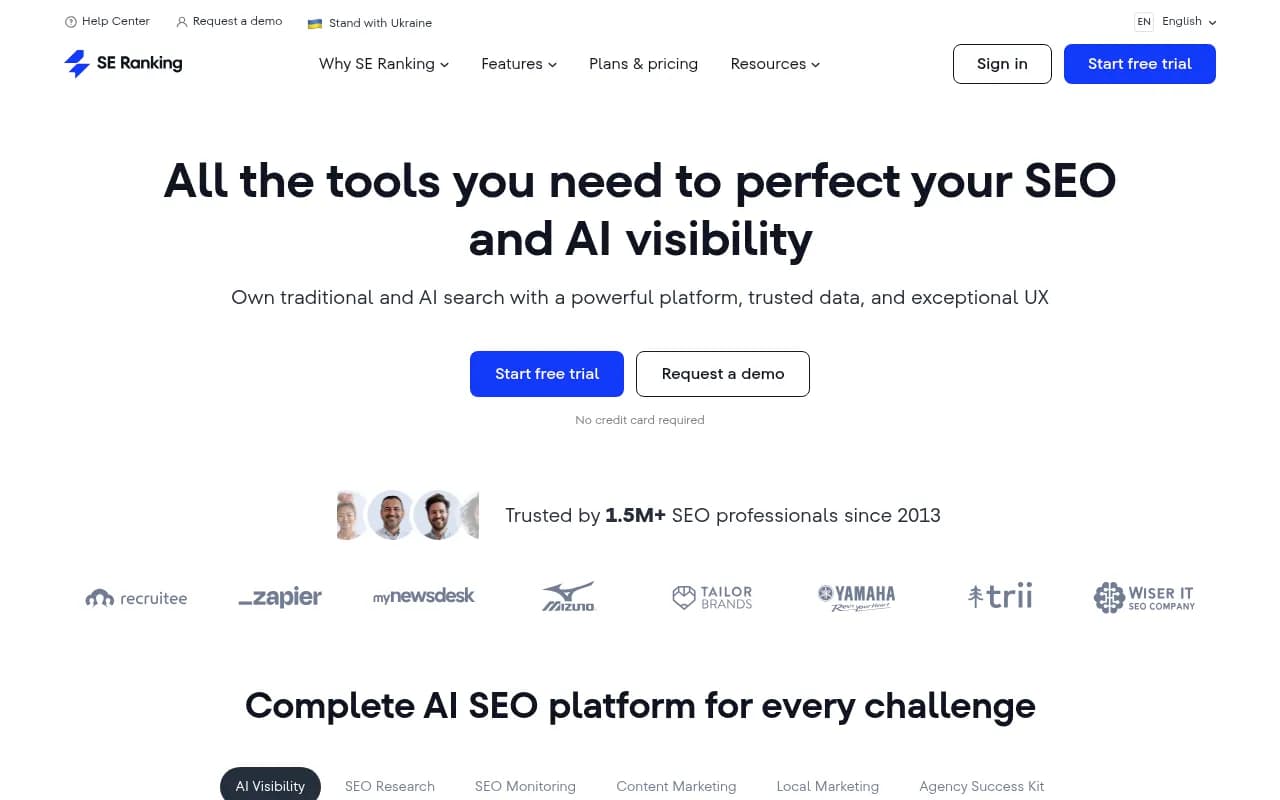
SE Ranking has built a reputation as the "affordable Semrush alternative" for traditional SEO, and it's applying the same logic to AI visibility with its SE Visible add-on. The AI Search add-on is $71.20/mo on top of Core plans starting at $103.20/mo, so you're looking at roughly $175/mo to get both traditional SEO and AI visibility tracking.
The AI visibility features cover the basics well: brand monitoring across major AI models, competitor benchmarking, and strategic insights presented in a clear interface. SE Ranking's UX has always been one of its strengths -- it's approachable for teams that don't have dedicated SEO specialists.
What it lacks: content generation, crawler logs, traffic attribution, and the depth of prompt-level analysis that dedicated GEO tools provide. It's a solid addition to an SEO workflow, not a standalone GEO platform.
Compared to Radarkit, SE Ranking is more expensive but comes with a full SEO suite. The 14-day free trial (no credit card required) is generous.
Best for: Small to mid-sized teams that want traditional SEO and AI visibility tracking in one affordable platform, without needing deep GEO optimization features.
Scrunch AI
Scrunch AI sits at the higher end of this comparison -- Starter plans run $250-300/mo for 1 brand and 100 prompts, Professional is $500/mo for 3 brands and 300 prompts with white-label reporting. That's a significant step up from Radarkit's estimated $29/mo entry point.
What you get for that price: strong competitive analysis, multi-LLM tracking (ChatGPT, Perplexity, Claude, and others), and white-label reporting that agencies can send directly to clients. The platform is clearly built with agencies in mind -- the reporting features are polished, and the competitive benchmarking is more detailed than what you get from budget tools.
Scrunch AI is primarily a monitoring and analysis platform. Content generation isn't a core feature. Compared to Promptwatch, it's more expensive and doesn't close the optimization loop. Compared to Radarkit, it's significantly pricier but has better competitive analysis and agency-ready reporting.
Best for: Agencies that need white-label AI visibility reports for clients and are willing to pay for polished competitive analysis.
Which one should you pick?
The honest answer depends on what you actually need.
If you're a solo marketer or small business just starting to think about AI visibility, Otterly.AI at $29/mo is the lowest-risk way to get started. LLMrefs at $79/mo is a better deal if you need more prompts or want to track more AI models.
If you're a marketing or SEO team that needs to actually improve your AI visibility -- not just measure it -- Promptwatch is the strongest option. The combination of Answer Gap Analysis, AI content generation, crawler logs, and traffic attribution means you're not just watching a dashboard, you're doing something with the data. The $99/mo Essential plan is a reasonable starting point, and the 7-day free trial lets you see whether the content gap analysis surfaces anything useful for your specific situation.
If you're already deep in the Semrush or Ahrefs ecosystem and don't want to add another tool, the AI visibility features in those platforms are good enough for basic monitoring. Just don't expect them to replace a dedicated GEO platform.
For agencies specifically, LLMrefs (unlimited seats at $79/mo) or Scrunch AI (white-label reporting at $250+/mo) are worth serious consideration depending on your client volume and reporting needs.
Radarkit is a reasonable starting point, but most teams that get serious about AI visibility will eventually want either more AI model coverage, more prompt volume, or actual optimization tools -- and that's when the alternatives above start to make more sense.