Summary
- Promptwatch – Best for AI search visibility and optimization. Goes beyond monitoring to help you create content that ranks in ChatGPT, Claude, and Perplexity. Includes crawler logs, content gap analysis, and AI writing tools.
- Semrush – Best all-in-one platform for traditional SEO plus AI visibility tracking. Comprehensive but expensive, with fixed prompts and limited optimization features.
- SE Ranking – Best for clear strategic insights. User-friendly interface with strong AI visibility features at a mid-tier price point.
- Ubersuggest – Best budget option. Neil Patel's affordable SEO toolkit with lifetime plans, though it lacks AI search tracking entirely.
- Google Search Console – Best free baseline. Essential for tracking Google performance, but limited to traditional search and offers no competitor insights.
Diib positions itself as an automated SEO analyzer that syncs with Google Analytics and delivers easy-to-use growth plans. It's designed for small business owners who want simple insights without the complexity of enterprise tools. But if you're looking for more depth, better AI search coverage, or specific features Diib doesn't offer, here's what else is out there.
Why look for Diib alternatives?
Diib works well for basic SEO monitoring and automated recommendations, but it has real gaps. The free tier is extremely limited, and the Pro pricing isn't publicly listed -- always a red flag. More importantly, Diib focuses almost entirely on traditional SEO metrics. In 2026, that's only half the story. AI search engines like ChatGPT, Claude, Perplexity, and Google's AI Overviews are driving a growing share of traffic, and Diib doesn't track any of it.
If you need deeper technical audits, competitor analysis that goes beyond surface-level metrics, or visibility tracking across AI models, you'll hit Diib's ceiling fast. The interface is beginner-friendly, which is great if you're just starting out -- but if you're running an agency, managing multiple clients, or trying to optimize for AI search, you need tools that can keep up.
Promptwatch

Promptwatch is the only platform on this list built specifically for AI search visibility. While Diib shows you traditional SEO metrics, Promptwatch tracks how your brand appears in ChatGPT, Claude, Perplexity, Gemini, and eight other AI models. But here's the key difference: it doesn't just show you the data and leave you stuck. It helps you fix it.
The core workflow is simple. Answer Gap Analysis shows you exactly which prompts competitors are visible for but you're not -- the specific content your website is missing. Then the built-in AI writing agent generates articles grounded in real citation data (880M+ citations analyzed), prompt volumes, and competitor analysis. This isn't generic SEO filler. It's content engineered to get cited by AI models. Finally, page-level tracking shows your visibility scores improve as AI models start citing your new content.
Most competitors (Semrush, SE Ranking, Ahrefs Brand Radar) stop at monitoring. Promptwatch closes the loop with optimization tools, traffic attribution (GSC integration, code snippet, or server logs), and AI crawler logs that show exactly which AI engines are reading your site and how often. You also get Reddit and YouTube insights -- channels that directly influence AI recommendations but most tools ignore entirely.
Pricing starts at $99/mo (Essential: 1 site, 50 prompts, 5 articles), $249/mo (Professional: 2 sites, 150 prompts, 15 articles, crawler logs), and $579/mo (Business: 5 sites, 350 prompts, 30 articles). There's a 7-day free trial. If AI search is driving traffic in your industry -- or you want it to -- Promptwatch is the only tool that actually helps you rank there.
Best for: Marketing teams, SEO teams, and agencies that want to be visible in AI search results and need actionable tools to get there, not just dashboards.
Semrush
Semrush is the 800-pound gorilla of SEO platforms. It does everything: keyword research, site audits, backlink analysis, rank tracking, content optimization, social media scheduling, PPC campaign planning. The AI Visibility add-on ($99/mo extra) tracks how your brand appears in ChatGPT, Perplexity, and other AI models, but it uses a fixed set of prompts -- you can't customize them or add your own.
The data is solid. Semrush has been around since 2008 and has one of the largest keyword databases in the industry. The interface is polished, the reports are detailed, and the integrations (Looker Studio, Google Analytics, etc.) work well. But the platform is complex. There are so many features that finding what you need can feel like navigating a maze. And the pricing reflects that complexity: $165.17/mo for Starter (which is pretty limited), $249/mo for Pro+, $499/mo for Business+. The AI Visibility add-on is another $99/mo on top of that.
Compared to Diib, Semrush gives you far more depth and control. Compared to Promptwatch, it's a traditional SEO tool with AI monitoring bolted on. You can see where you're visible in AI search, but you can't customize the prompts, analyze content gaps, or generate optimized content. It's monitoring without optimization.
Best for: Agencies and in-house teams that need a comprehensive SEO platform and are willing to pay for it. If you're already using Semrush for traditional SEO, the AI Visibility add-on is a decent way to start tracking AI search -- just know it's limited.
Ahrefs Brand Radar
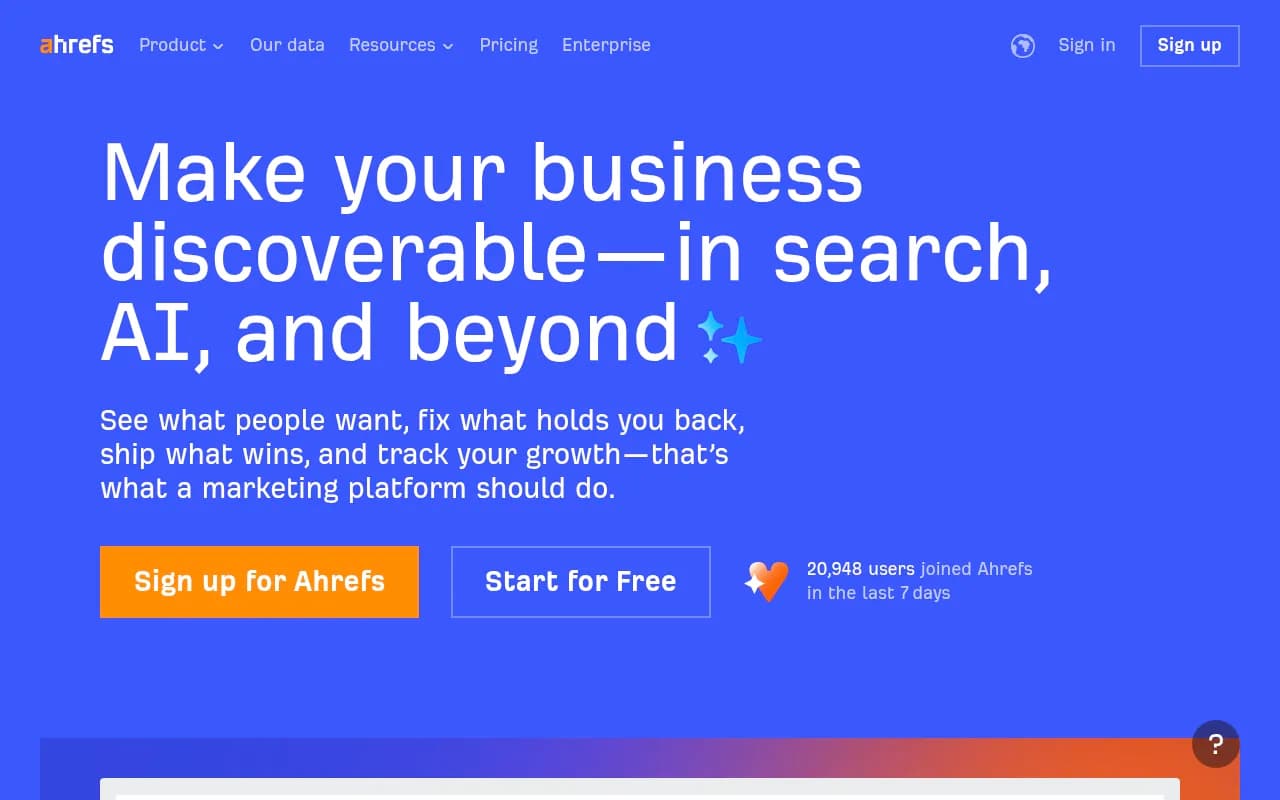
Ahrefs is known for having the best backlink database in the industry, and Brand Radar is their AI search monitoring feature. It tracks mentions and visibility across AI search engines and traditional search, showing you when and where your brand appears.
The core Ahrefs platform is excellent for technical SEO. The Site Audit tool is fast and thorough, the keyword explorer is intuitive, and the Content Explorer helps you find link-building opportunities. Brand Radar adds AI search tracking on top of that, but like Semrush, it's monitoring-only. You can see where you're visible, but there's no content gap analysis, no optimization recommendations, and no traffic attribution to connect AI visibility to actual revenue.
Pricing starts at $83/mo (annual) or $99/mo (monthly), with a 7-day trial for $7. Brand Radar is included in all plans, which is nice -- you're not paying extra for AI tracking like you do with Semrush. But the fixed prompts and lack of optimization tools mean you're still just watching the scoreboard without a playbook.
Compared to Diib, Ahrefs gives you far more technical depth and better competitor analysis. Compared to Promptwatch, it's a traditional SEO tool with basic AI monitoring. If you're already using Ahrefs and want to start tracking AI search, Brand Radar is a solid add-on. But if AI visibility is a priority, you'll need something more robust.
Best for: SEO teams and agencies already using Ahrefs who want to add basic AI search monitoring without paying extra. Good for backlink analysis and technical audits, limited for AI optimization.
SE Ranking
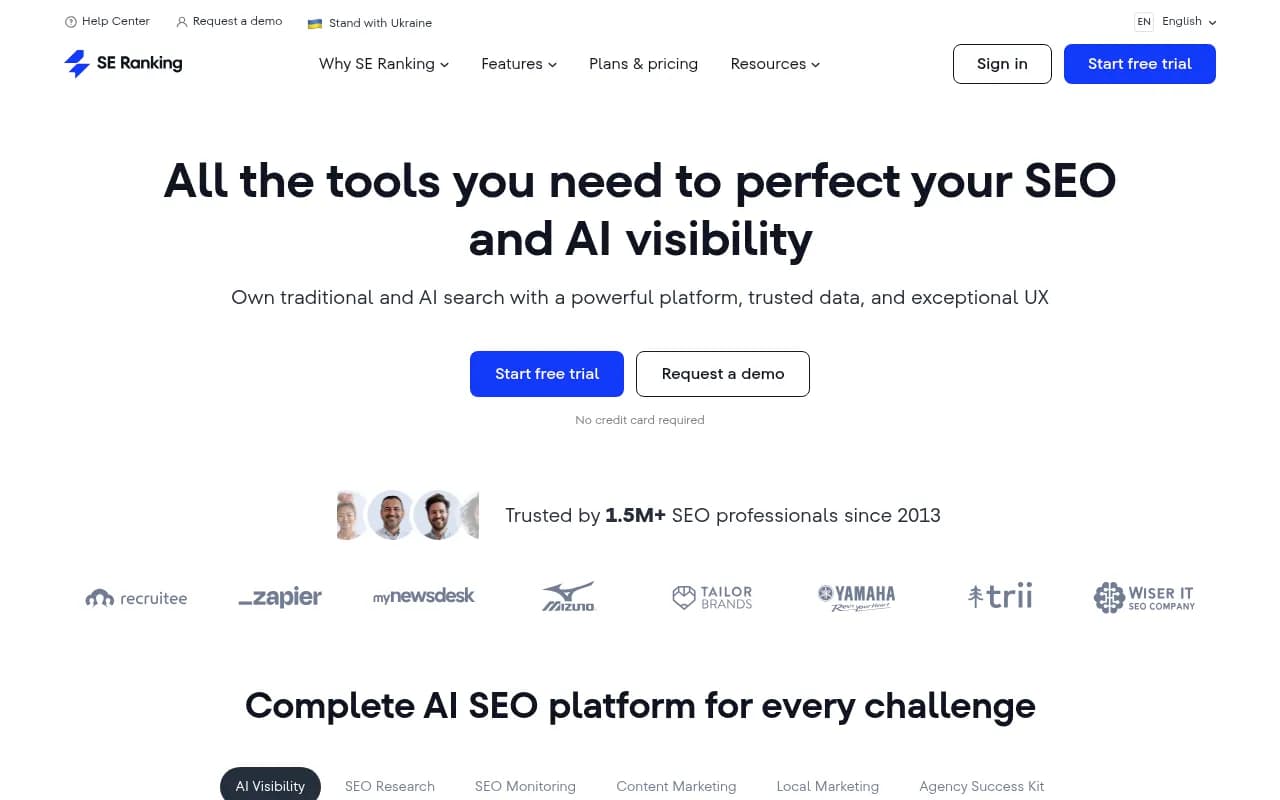
SE Ranking is the user-friendly middle ground. It's not as overwhelming as Semrush, not as expensive as Ahrefs, and the AI visibility tool (SE Visible) provides clear strategic insights without drowning you in data. The interface is clean, the reports are easy to understand, and the AI Search add-on ($71.20/mo) tracks visibility across multiple AI models.
The core platform includes keyword research, rank tracking, site audits, backlink monitoring, and competitor analysis. The AI Search add-on shows you where your brand appears in AI responses, which competitors are outranking you, and which prompts are driving visibility. It's not as deep as Promptwatch's content gap analysis or optimization tools, but it's more strategic than Semrush's fixed-prompt monitoring.
Pricing starts at $103.20/mo (Core plan), $223.20/mo (Growth plan), with a 14-day free trial and no credit card required. The AI Search add-on is $71.20/mo extra. Compared to Diib, SE Ranking gives you more control and better competitor insights. Compared to Promptwatch, it's monitoring-focused with some strategic guidance but no content generation or optimization loop.
Best for: Marketing teams that want a balance between ease of use and depth. Good for traditional SEO with solid AI visibility tracking, but limited optimization features.
Moz Pro
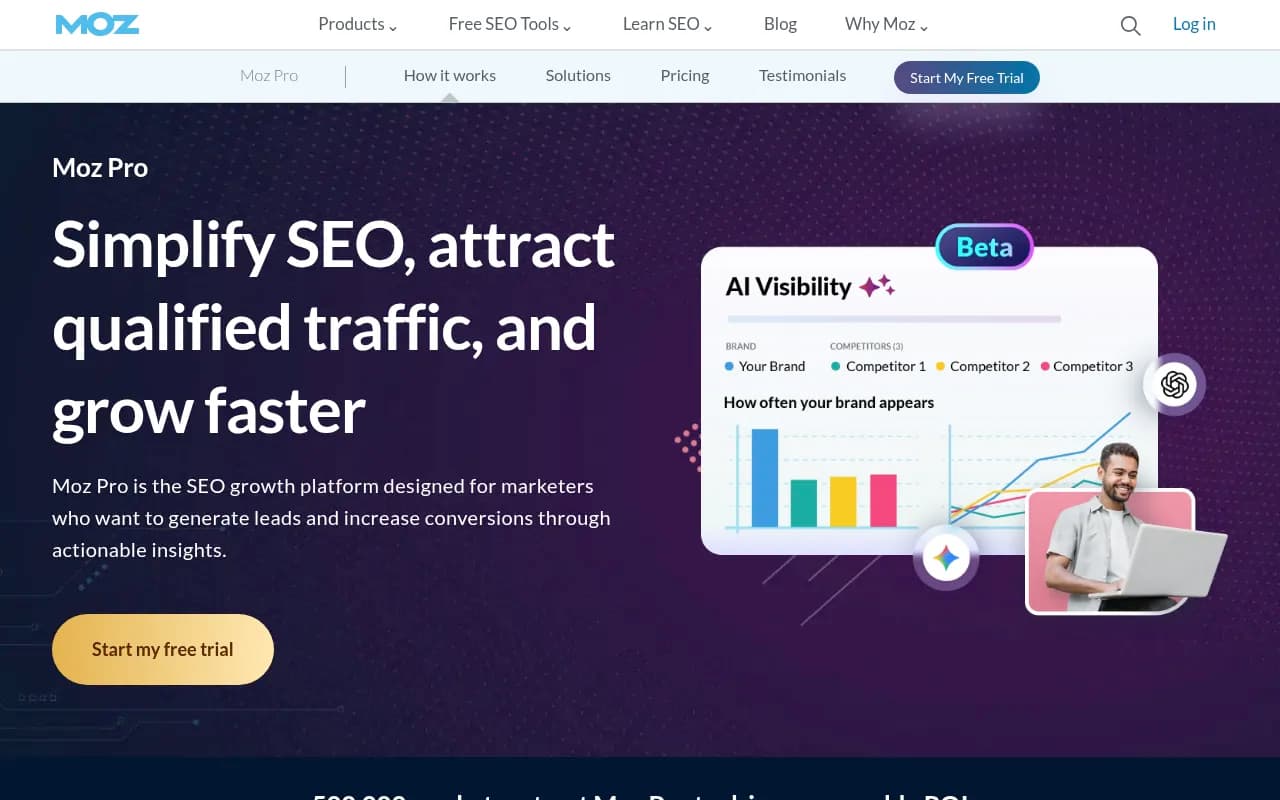
Moz Pro is the OG SEO platform, trusted by 500,000+ marketers. It's known for Domain Authority (DA) and Page Authority (PA) metrics, which are industry standards for measuring site strength. The platform includes keyword research, rank tracking, site audits, backlink analysis, and on-page optimization recommendations.
The AI-powered search intent analysis is a nice touch -- it helps you understand what users are really looking for when they search a keyword. The interface is clean and beginner-friendly, which makes it a good alternative to Diib if you want more depth without the complexity of Semrush. But Moz doesn't track AI search at all. No ChatGPT monitoring, no Perplexity tracking, no AI visibility insights. In 2026, that's a big gap.
Pricing starts at $49/mo (Starter) and goes up to $299/mo (Large), with a 30-day free trial. Annual billing saves 20%. Compared to Diib, Moz gives you more detailed keyword research and better competitor analysis. Compared to Promptwatch, it's a traditional SEO tool with no AI search capabilities.
Best for: Marketers who prioritize traditional SEO and want a trusted, beginner-friendly platform. Not suitable if AI search visibility matters to you.
Ubersuggest
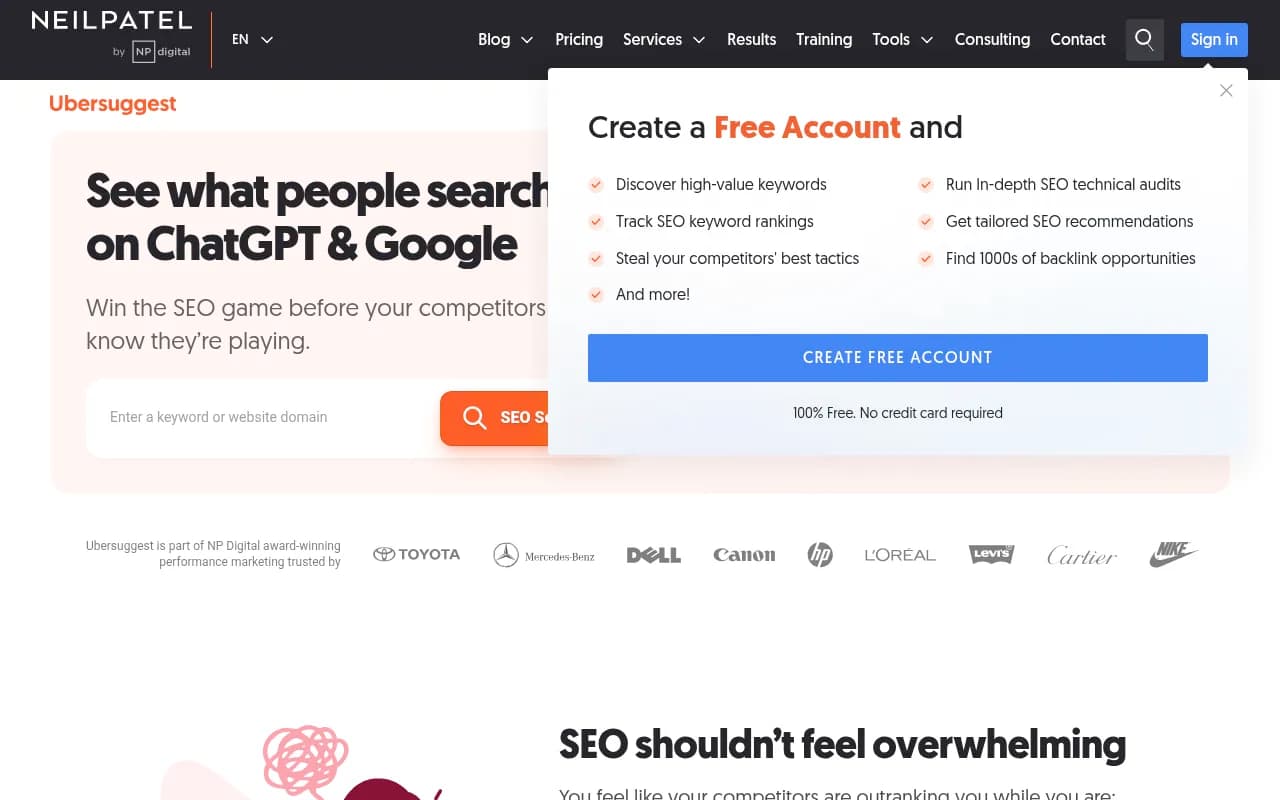
Ubersuggest is Neil Patel's answer to expensive SEO tools. It offers keyword research, competitor analysis, site audits, and rank tracking at a fraction of the cost. The lifetime plans are the big draw: $120 (Individual), $200 (Business), $400 (Enterprise). Pay once, use forever. There's also a free tier with limited searches and monthly plans starting at $12/mo.
The interface is simple and the data is decent for basic SEO work. Keyword suggestions are solid, the site audit catches common issues, and the backlink checker gives you a starting point for link building. But the data isn't as comprehensive as Ahrefs or Semrush, and there's no AI search tracking at all. If you're looking for Diib alternatives because you want AI visibility insights, Ubersuggest won't help.
Compared to Diib, Ubersuggest is cheaper and gives you more control over your SEO data. Compared to Promptwatch, it's a budget traditional SEO tool with no AI capabilities. If you're a solopreneur or small business owner on a tight budget and AI search isn't a priority, Ubersuggest is a solid pick.
Best for: Budget-conscious marketers and small business owners who need basic SEO tools and don't care about AI search visibility.
Screaming Frog
Screaming Frog is a desktop SEO crawler used by 15,000+ agencies and in-house teams to audit technical SEO issues. It crawls websites like a search engine, identifying broken links, redirect chains, duplicate content, and indexing problems. It's not a full SEO platform like Diib or Semrush -- it's a specialized tool for technical audits.
The free version crawls up to 500 URLs, which is enough for small sites. The paid version (£149/year, ~$185) gives you unlimited crawling, advanced features like JavaScript rendering, and integrations with Google Analytics and Search Console. If you're a technical SEO or developer, Screaming Frog is essential. If you're a marketer looking for an all-in-one platform, it's not.
Compared to Diib, Screaming Frog is far more technical and requires SEO knowledge to use effectively. It doesn't track rankings, suggest keywords, or monitor AI search. It just crawls your site and tells you what's broken. But it does that job better than any other tool.
Best for: Technical SEOs, developers, and agencies that need deep site audits. Not suitable for beginners or anyone looking for an all-in-one platform.
Google Search Console
Google Search Console is Google's official webmaster platform. It shows how your site performs in Google Search: clicks, impressions, rankings, indexing status. You get alerts for technical issues, submit sitemaps, inspect URLs, and monitor Core Web Vitals. It's free, it's essential, and every site should be using it.
But it's limited to Google Search. No competitor insights, no keyword suggestions, no backlink analysis, and no AI search tracking. It tells you what's happening on your site in Google's eyes, but it doesn't tell you what to do about it or how you compare to competitors.
Compared to Diib, Search Console is free but far more limited. It's a baseline tool, not a growth platform. Compared to Promptwatch, it only tracks traditional Google Search -- no AI models, no optimization tools, no content gap analysis.
Best for: Everyone. It's free and essential. But it's not a replacement for a full SEO platform or AI visibility tool -- it's a supplement.
Which Diib alternative should you choose?
If AI search visibility matters to you -- and in 2026, it should -- Promptwatch is the only tool that tracks, analyzes, and helps you optimize for it. The content gap analysis and AI writing agent close the loop between monitoring and action, which is something no other tool on this list does.
If you need a comprehensive traditional SEO platform and budget isn't an issue, Semrush or Ahrefs are solid choices. SE Ranking is the middle ground for teams that want depth without the complexity. Ubersuggest is the budget pick for basic SEO work. Screaming Frog is essential for technical audits. And Google Search Console is free and necessary for everyone.
But if you're looking for Diib alternatives because you want more than automated recommendations and basic SEO metrics, ask yourself this: are you optimizing for where search is today, or where it's going? AI models are answering more queries every month. The brands that show up in those answers are the ones that will win the next decade of search traffic.